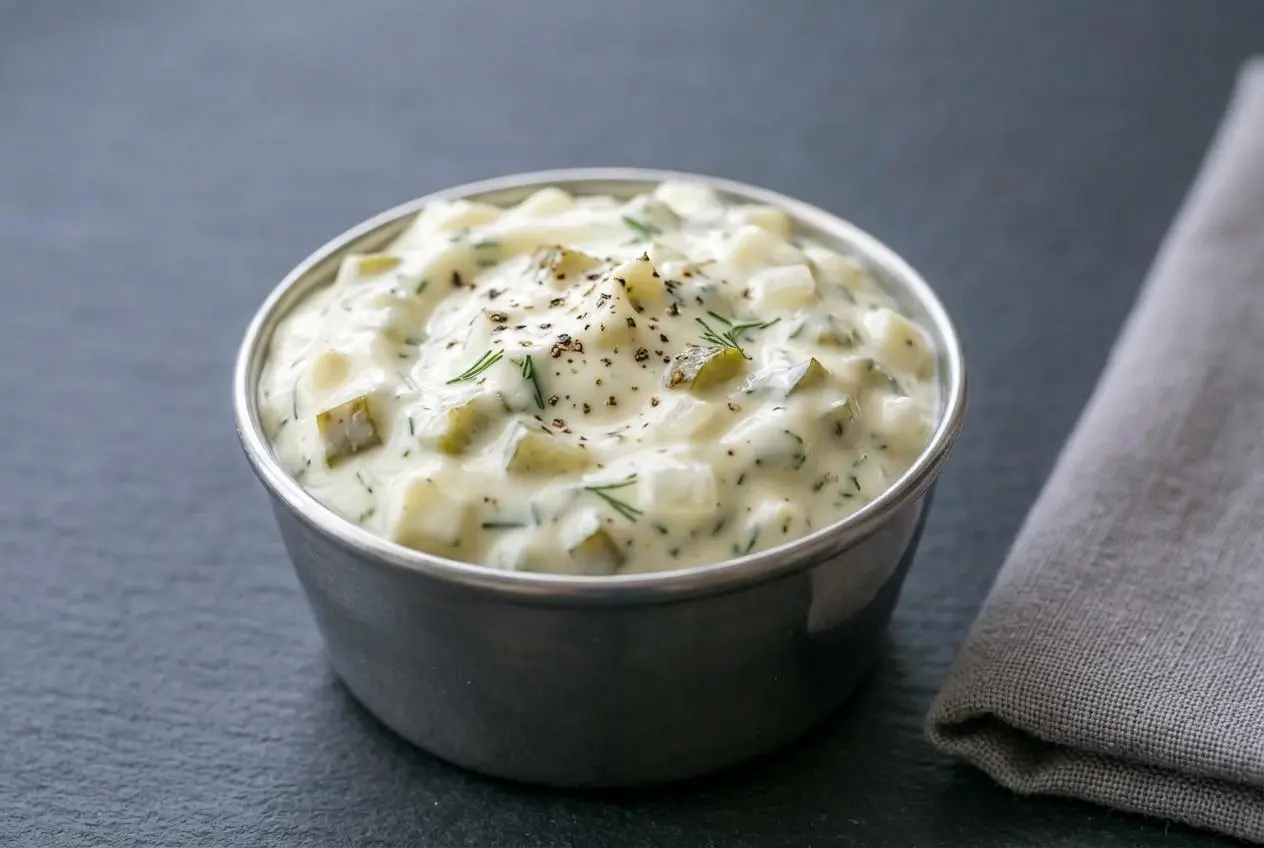
A tartar sauce recipe is a quick mix of mayonnaise, finely chopped dill pickles, lemon juice, herbs, and seasoning for a creamy, tangy condiment with crisp texture and bright flavor.
This classic sauce tastes fresher and more lively than most store-bought versions. The pickles stay crunchy, the lemon keeps it clean, and the mayo gives it that smooth, rich body you want with seafood.
It comes together fast, but a couple of small details make a big difference. The biggest one is keeping extra pickle moisture out of the bowl.
Chop the pickles finely and pat them dry before mixing so the sauce stays thick and creamy.
Essential Tartar Sauce Ingredients
Each ingredient has a real job here, from building creamy structure to adding crunch, brightness, and balance.
- 1 cup mayonnaise
- 1 cup dill pickles, finely chopped
- 1 Tbsp dill, fresh or frozen, or 1 tbsp finely chopped fresh parsley
- 1 tsp lemon juice
- 1 tsp sugar
- 1/4 tsp black pepper, freshly ground
- 2 Tbsp onion, finely chopped, optional
Mayonnaise forms the base and holds everything together in a smooth emulsion. Dill pickles bring the tang and the bite, while herbs freshen the whole bowl so it does not taste flat or heavy. Lemon juice sharpens the flavor, sugar softens the edges, black pepper adds a little bite, and onion gives extra savory depth if you want it.
I reach for crisp baby dills when I can because they stay snappy after chopping, while soft relish tends to disappear into the mayo and can make the texture feel loose.
The Mayonnaise Base
Use real mayonnaise if you want the fullest flavor and the best body. It has a richer, cleaner texture than salad dressing spreads, which are usually sweeter and thinner. Since mayo is the main ingredient, its flavor shows up in every bite.
A good mayonnaise also helps the sauce cling to fish instead of sliding off. That matters with hot fried fillets, crab cakes, and salmon patties where you want a cool, creamy contrast.
Dill Pickles vs Sweet Relish
Classic tartar sauce leans savory and tangy, so dill pickles are the better fit. They add crunch and a sharper briny flavor that cuts through fried seafood without making the sauce candy-sweet.
Freshly chopped baby dills give you the most texture control. Dill relish works in a pinch, but it is usually softer and wetter. Sweet relish creates a totally different profile, so use it only if that sweeter style is what you want.
Fresh Herbs and Acid
Fresh dill gives this sauce its bright, cool finish. Parsley is milder, but it still lifts the richness of the mayo and keeps the sauce from tasting too dense.
Fresh lemon juice tastes cleaner and more vivid than bottled concentrate. Since the recipe uses a small amount, that little squeeze matters. It wakes up the pickles and herbs without thinning the sauce too much.
Classic vs Gourmet Tartar Sauce
The classic version keeps things simple: mayo, dill pickles, lemon, herbs, and seasoning. It is easy to make, familiar, and exactly right when you want a straightforward fish-house style sauce.
A gourmet style usually adds deeper savory notes like capers, Dijon mustard, lemon zest, or Worcestershire sauce. Those additions can make the flavor more layered and restaurant-like, but they are optional. The base recipe already stands on its own.
Fresh vs Dried Herbs in Sauces
Fresh dill gives the brightest flavor and the cleanest aroma in a cold sauce. Dried dill can work, but it tastes flatter and a little dustier unless it has had time to soften in the mayo.
If you need to swap, use less dried dill than fresh because its flavor is more concentrated. Fresh herbs also add moisture, so the sauce may loosen slightly as it sits. That is another reason to keep the pickles well drained before mixing.
Why This Recipe Works: The Science of Umami and Acid
This sauce works because it balances fat, acid, salt, and crunch. Mayonnaise is rich and coating, so it needs sharp ingredients around it to keep the flavor from feeling heavy.
Lemon juice brightens the base and helps cut through fried food. Pickles add acidity and salt, which wake up the mild flavor of fish. If you choose to add Worcestershire sauce in a variation, it brings a savory depth that makes the sauce taste fuller without turning it into something overly complicated.
Texture matters just as much as flavor. Finely chopped pickles spread their crunch through every spoonful, while a creamy mayo base softens the edges. That contrast is why tartar sauce tastes so good with crisp breading, flaky fish, and anything golden from the skillet.
How to Make Homemade Tartar Sauce
This comes together quickly, but a little prep keeps the texture thick and even instead of watery.
- Place the mayonnaise, finely chopped dill pickles, dill or parsley, lemon juice, sugar, black pepper, and optional onion in a mixing bowl, then stir until fully blended.
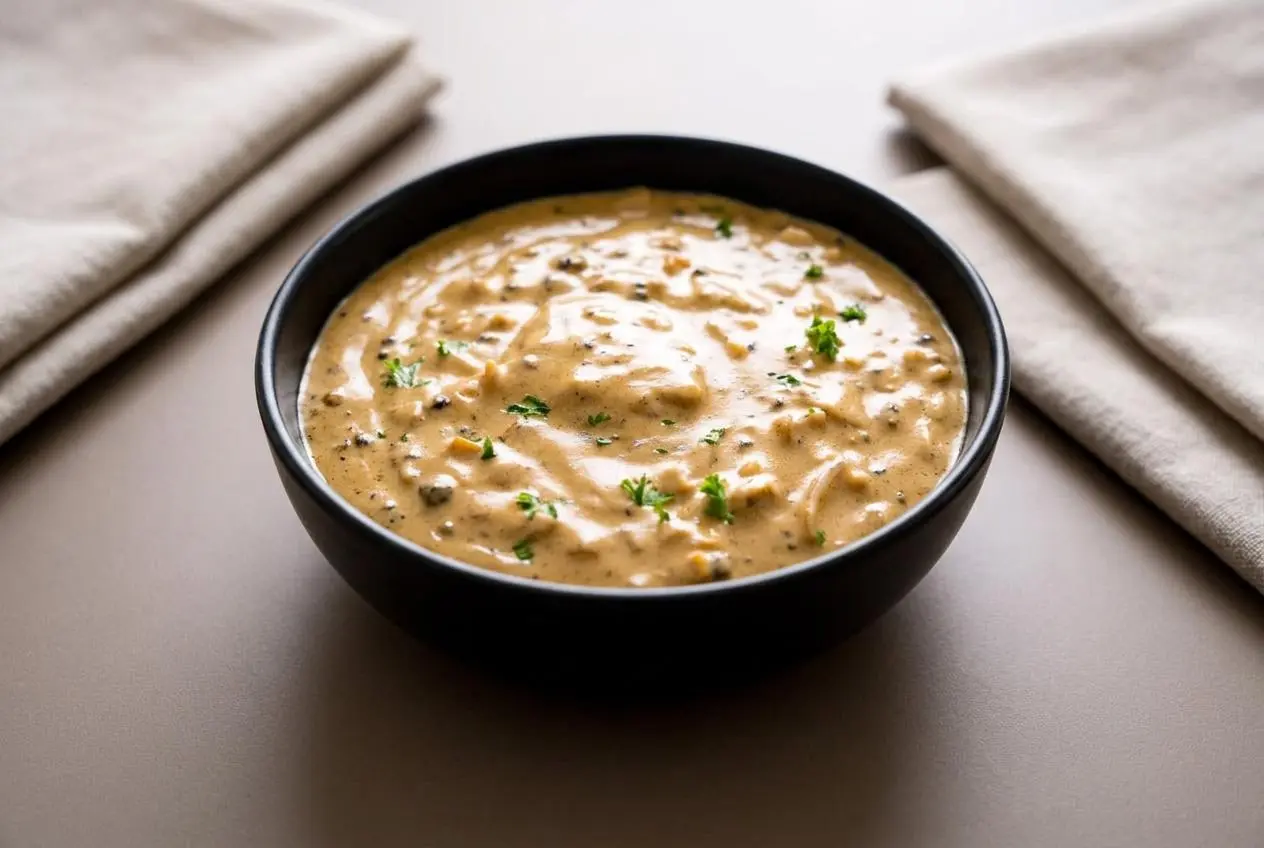
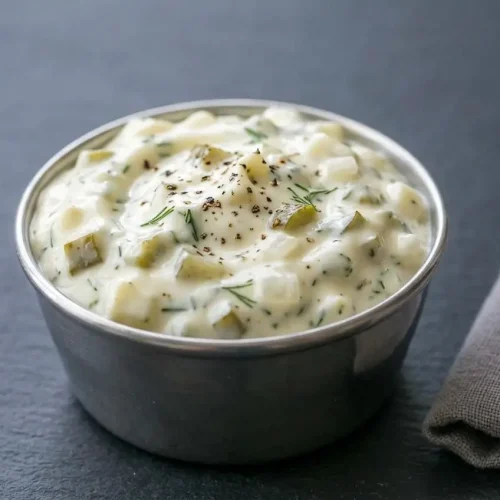
The sauce should look creamy and evenly speckled, with no streaks of plain mayonnaise left behind. - Taste the sauce and adjust with a little more lemon juice or more pickles if you want a brighter or chunkier finish.
The flavor should land tangy and balanced, and the texture should stay thick enough to hold on a spoon.
Before the pickles go into the bowl, press them gently with paper towels to remove extra moisture. That one step helps prevent the sauce from loosening as it sits. A blender is not helpful here because it can shred the pickles too finely and turn the sauce loose instead of chunky and creamy.
Once mixed, chill the sauce before serving so the flavors settle together. Taste it again after chilling, because cold temperatures can mute salt and acid a bit. You may find it needs a tiny extra squeeze of lemon right before it hits the table.
The Secret to Mincing Onions Without Harshness
If you use the optional onion, chop it very finely so it blends into the sauce instead of dominating each bite. Large pieces can make the texture rough and the flavor too sharp.
For a milder onion flavor, rinse the minced onion briefly under cold water, then dry it well before adding it. This softens some of the raw bite without washing away the savory note completely. If you are making the sauce ahead for later the same day, skip reactive metal bowls and use glass or ceramic so the lemon stays clean-tasting.
Tips for the Best Tartar Sauce
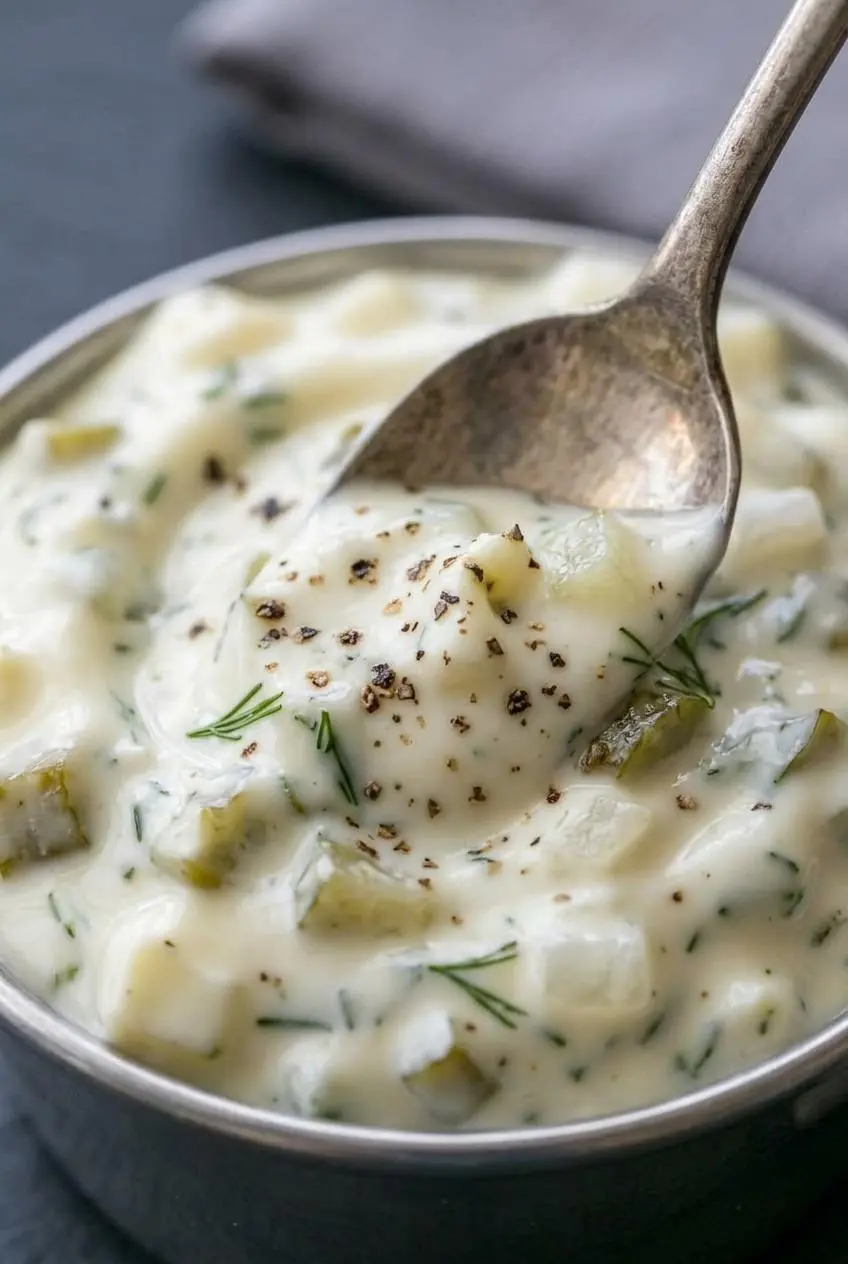
Small handling choices make this sauce taste brighter and feel creamier.
- Dry the chopped pickles well before mixing. Extra brine is the fastest way to end up with a watery sauce.
- Chop everything finely. Tiny, even pieces spread flavor better and keep the texture smooth instead of lumpy.
- Use fresh lemon juice for the sharpest flavor. Bottled juice can taste dull or slightly harsh in a cold sauce.
- Let the sauce rest in the refrigerator for at least 30 minutes before serving. The herbs soften, the onion settles, and the flavor tastes more rounded.
- Taste again after chilling. Cold sauce often needs a final little adjustment to lemon or salt perception.
Troubleshooting and Flavor Adjustments
If the sauce tastes or looks off, it is usually easy to fix.
- Too watery: This usually happens when the pickles were too wet or too coarsely chopped. Stir in a little more mayonnaise until the sauce tightens back up, then chill it again.
- Separated or loose after resting: The vegetables likely released moisture into the bowl. Give it a good stir first, then add a bit more mayonnaise if it still looks thin.
- Too salty: Pickles and mayo can both bring salt. Add a touch more mayonnaise, and if needed, a tiny pinch of sugar to soften the edges.
- Too sour: Lemon and pickle brine can pile up quickly. Balance it with a little more mayonnaise or a small pinch of sugar rather than more salt.
- Flat flavor: Add another drop of lemon juice or a tiny splash of Worcestershire sauce for deeper savory contrast.
- Raw onion tastes harsh: Rinse the minced onion under cold water before using it, then dry it thoroughly so you keep the flavor without the sharp sting.
Storage and Make-Ahead Instructions
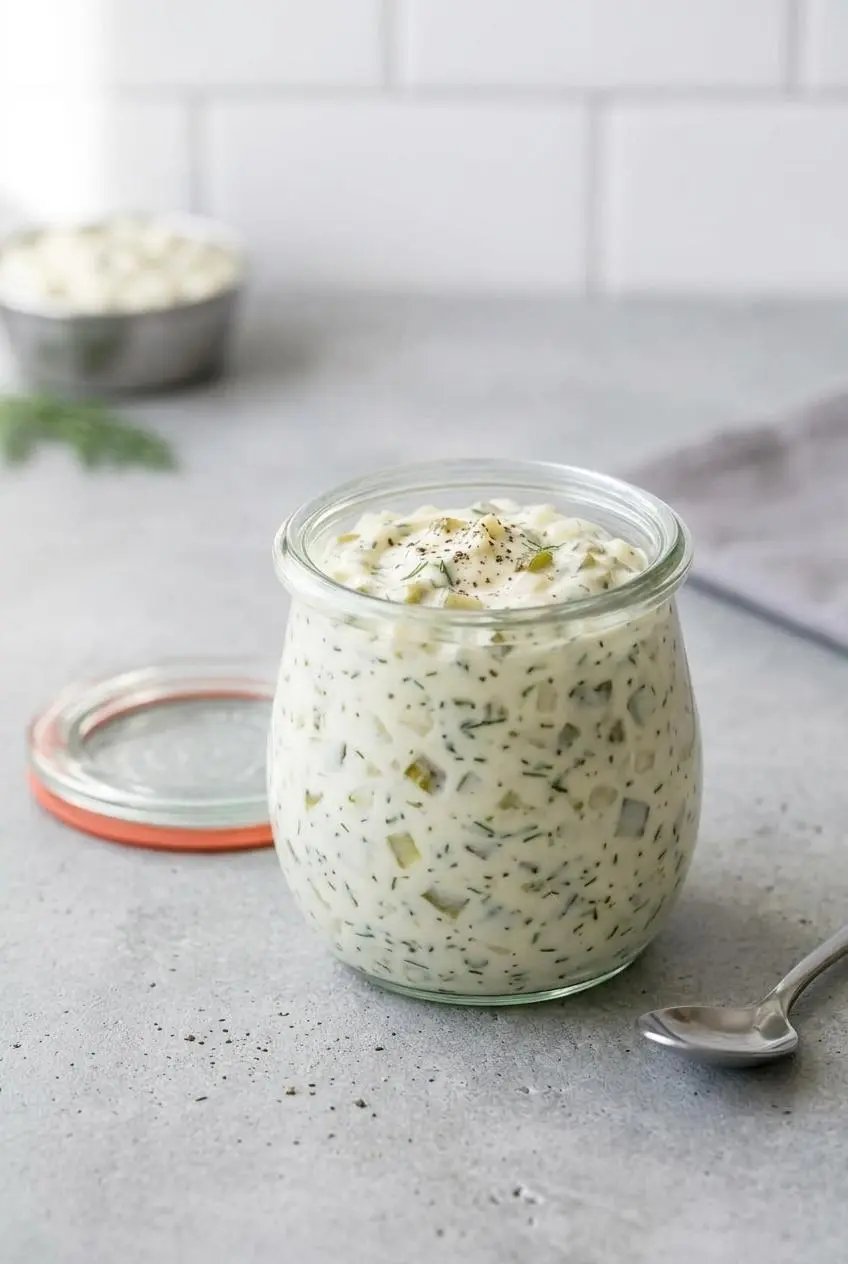
Store the sauce in a clean, airtight container in the refrigerator. For the best texture and flavor, keep it cold and give it a stir before serving if a little moisture separates.
Homemade tartar sauce can be kept in the fridge for up to one to two weeks when stored well. Because it is mayonnaise-based, do not leave it sitting out for long, and keep it promptly chilled for safer handling under USDA egg safety guidance.
Freezer storage is not a great fit for this kind of sauce. The texture tends to turn broken and watery after thawing, so it is much better made fresh and kept refrigerated.
If it smells off, looks curdled, or tastes unusually sharp or stale, it is better to discard it and make a fresh batch.
Flavor Variations to Try
Once you know the classic version, it is easy to steer the flavor in a different direction without changing the main recipe.
Gourmet Pub-Style
For a deeper, more savory tartar sauce, stir in chopped capers, a little Dijon mustard, and a splash of Worcestershire sauce. This version pairs especially well with richer seafood like salmon patties or crab cakes because it has more briny and umami depth.
Spicy Tartar Sauce
Add a pinch of cayenne, a few drops of hot sauce, or some finely minced pickled jalapeños if you want heat. This works especially well for fish tacos, where the cool creamy base helps round out the spice.
Adding a Spicy Kick
Start gently so the heat supports the seafood instead of taking over. The best spicy tartar sauce still tastes like tartar sauce first, with a warm finish that lingers after the tang and dill.
Lighter Yogurt Blend
Swap half of the mayonnaise for plain Greek yogurt for a lighter texture and tangier finish. If you like creamy sauces with that cool, fresh profile, creamy tzatziki sauce is another good direction to explore.
Streamlined Gourmet Additions
If you want a more polished flavor without turning this into a long project, a few optional extras go a long way. Finely chopped capers add briny pop, lemon zest adds aroma without extra liquid, and microplaned garlic gives the sauce a sharper savory edge.
Use a light hand with all three. You want the base to stay creamy, tangy, and pickle-forward. This is the same kind of thinking behind other mayo-based condiments like homemade big mac sauce, where balance matters more than piling in extras.
What to Serve with Tartar Sauce
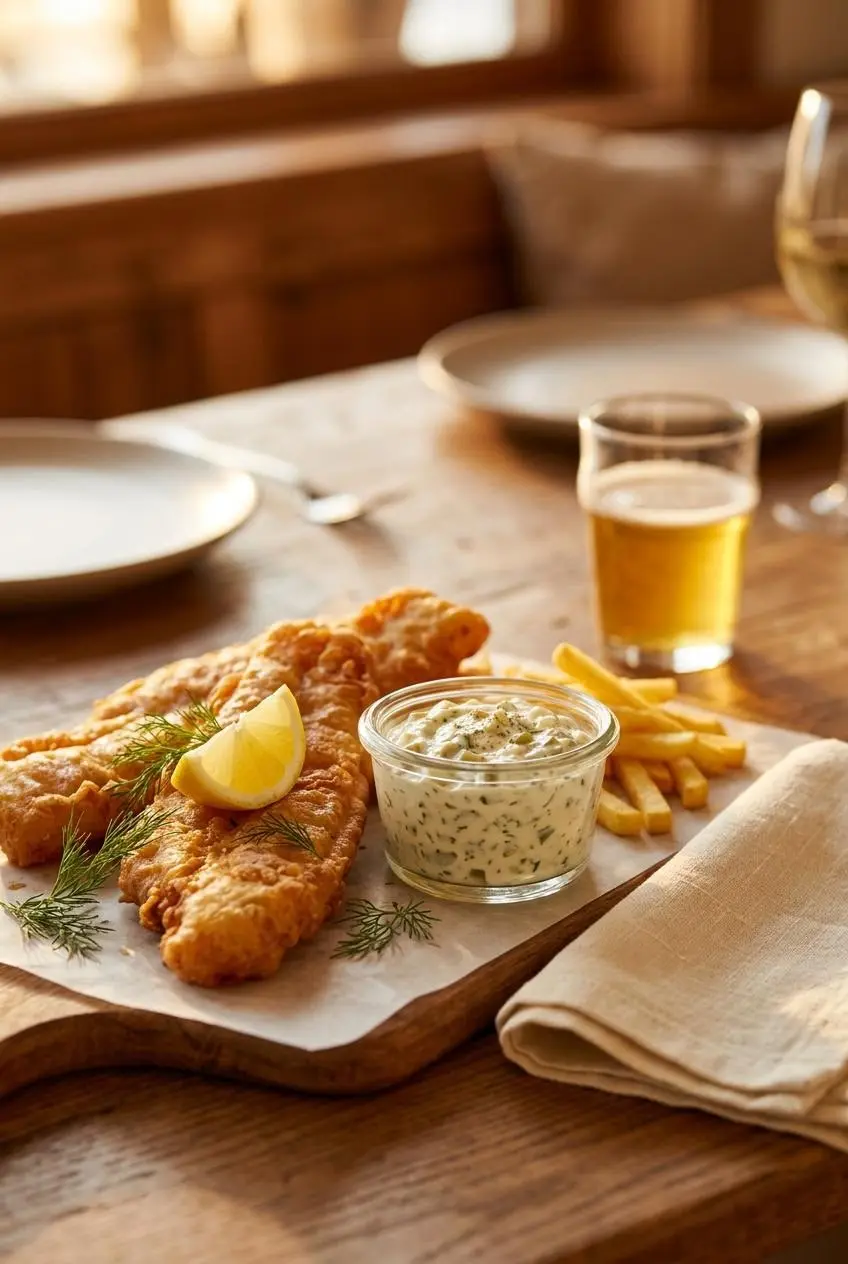
This sauce belongs anywhere you want a cool, tangy contrast against crisp, rich, or flaky seafood.
- Serve it with crispy beer-battered fish and chips for the classic pairing.
- Set it next to pan-seared crab cakes or salmon patties when you want something creamy but bright.
- Use it as a spread for fried fish tacos or seafood sliders.
- If you are putting together a dipping platter, a bowl of sweet and sour sauce adds a very different sweet tangy contrast alongside it.
Conclusion
Homemade tartar sauce is fast, creamy, tangy, and easy to tune to your taste. A good mayo, crisp dill pickles, and fresh lemon do most of the heavy lifting.
Dry the pickles well and give the sauce time to chill before serving. Those two little moves make the whole bowl taste sharper, smoother, and more put together.
Frequently Asked Questions
What Is Basic Tartar Sauce Made Of?
Basic tartar sauce starts with mayonnaise as the creamy base. It usually includes chopped dill pickles or relish for tang and texture. A little lemon juice or vinegar adds brightness, and herbs help freshen the flavor.
How Long Does Homemade Tartar Sauce Last in the Fridge?
Keep it in a clean, airtight container in the refrigerator. It generally keeps for up to one to two weeks. Stir before serving and discard it if the smell, taste, or texture seems off.
Can You Freeze Homemade Tartar Sauce?
It is better not to freeze it. Cold storage in the freezer tends to damage the creamy texture and can leave the sauce watery after thawing. For the best result, make it fresh and keep it refrigerated instead.
What Is the Difference Between Tartar Sauce and Remoulade?
Tartar sauce is usually simpler and cleaner in flavor. It focuses on mayonnaise, dill pickles, lemon, and herbs. Remoulade is typically bolder and more seasoned, often with mustard, paprika, garlic, and Cajun-style spices.
Tartar Sauce Recipe

Equipment
- Mixing Bowl
- Chef knife
- Cutting board
- Measuring Cups
- Measuring spoons
Ingredients
- 1 cup mayonnaise
- 1 cup dill pickles, finely chopped
- 1 Tbsp dill, fresh or frozen, or 1 tbsp finely chopped fresh parsley
- 1 tsp lemon juice
- 1 tsp sugar
- 1/4 tsp black pepper, freshly ground
- 2 Tbsp onion, finely chopped, optional
Instructions
- Place the mayonnaise, finely chopped dill pickles, dill or parsley, lemon juice, sugar, black pepper, and optional onion in a mixing bowl, then stir until fully blended. The sauce should look creamy and evenly speckled, with no streaks of plain mayonnaise left behind.
- Taste the sauce and adjust with a little more lemon juice or more pickles if you want a brighter or chunkier finish. The flavor should land tangy and balanced, and the texture should stay thick enough to hold on a spoon.