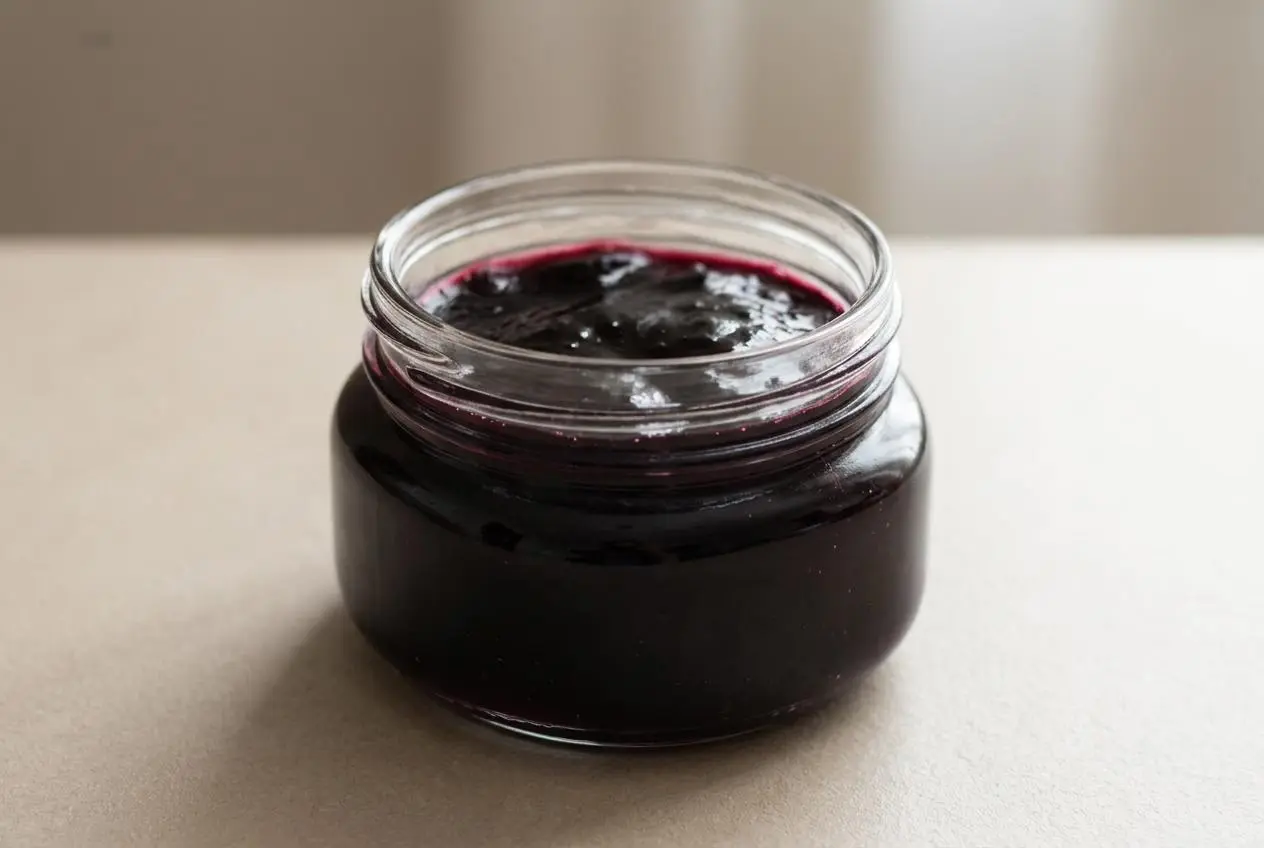
This blueberry jelly recipe turns 4 cups of blueberry juice, powdered pectin, and 5 cups of sugar into a smooth, seedless spread. Add optional lemon juice for brightness, then boil hard for exactly 1 minute after adding the sugar and returning the mixture to a full rolling boil.
Blueberry jelly captures the berry’s flavor without its skins or pulp. The jewel-toned spread slips neatly over toast, with a silky texture that makes straining the fruit worthwhile.
Fresh berries, frozen berries, and purchased juice all offer a starting point. Accurate measuring and a clearly timed boil matter more than the route you choose. Watch the bubbles, not the clock alone.
Measure the sugar before heating the juice so you can add it all at once without interrupting the boil.
Ingredients Needed and the Role of Each
Blueberry juice supplies berry flavor and purple color, sugar contributes sweetness and gel structure, and powdered pectin creates the set. Optional lemon juice adds brightness to balance the sweet spread.
- 4 cups blueberry juice, purchased, or extracted from fresh berries
- 5 cups sugar
- 1 box powdered pectin, 1.75 oz box, such as Sure-Jell
- 2 Tbsp lemon juice, fresh or bottled, optional
The juice should be strained rather than pulpy. Sugar does more than sweeten: it works with standard powdered pectin to form the jelly’s structure. Lemon juice sharpens the flavor, but its optional status here does not establish this formula’s suitability for pantry canning.
I prefer spooning sugar into dry measuring cups and leveling each cup with a straight edge rather than estimating from a scoop.
Fresh or Frozen Berries Versus Bottled Blueberry Juice
- Fresh berries: Simmer, mash, and strain them to separate the juice from the skins and seeds.
- Frozen berries: Use them without thawing first, following the same extraction approach. Freezing disrupts cell walls, which can help juice escape.
- Bottled juice: Skip extraction and measure the juice directly, checking that the product fits your pectin package’s directions.
For planning, 4 quarts of berries simmered with 4 cups of water may provide about 4 cups of strained juice. That is an estimate, not a guaranteed yield. Berry condition and how thoroughly you drain the pulp both affect the result.
Bottled Blueberry Juice Shortcut
Purchased juice skips the simmering and minimum 2-hour draining period. Choose 100% unsweetened blueberry juice without preservatives, subject to compatibility with your pectin package.
Measure the same 4 cups and keep the other ingredient quantities unchanged. Products vary in tartness, color, and berry intensity, so bottled juice will not necessarily taste identical to freshly extracted juice.
Choosing the Right Pectin and Sugar Ratio
This formula uses a 1.75 oz box of standard powdered pectin and all 5 cups of sugar. Do not reduce the sugar and expect the same set. Reduced-sugar pectin requires a different formula.
Liquid pectin, including Certo, is not a one-for-one replacement. Its amount and cooking order differ. Also, do not double this batch in one pot: a larger volume changes heating and evaporation, making the timed boil less predictable.
How to Make Blueberry Jelly Step by Step
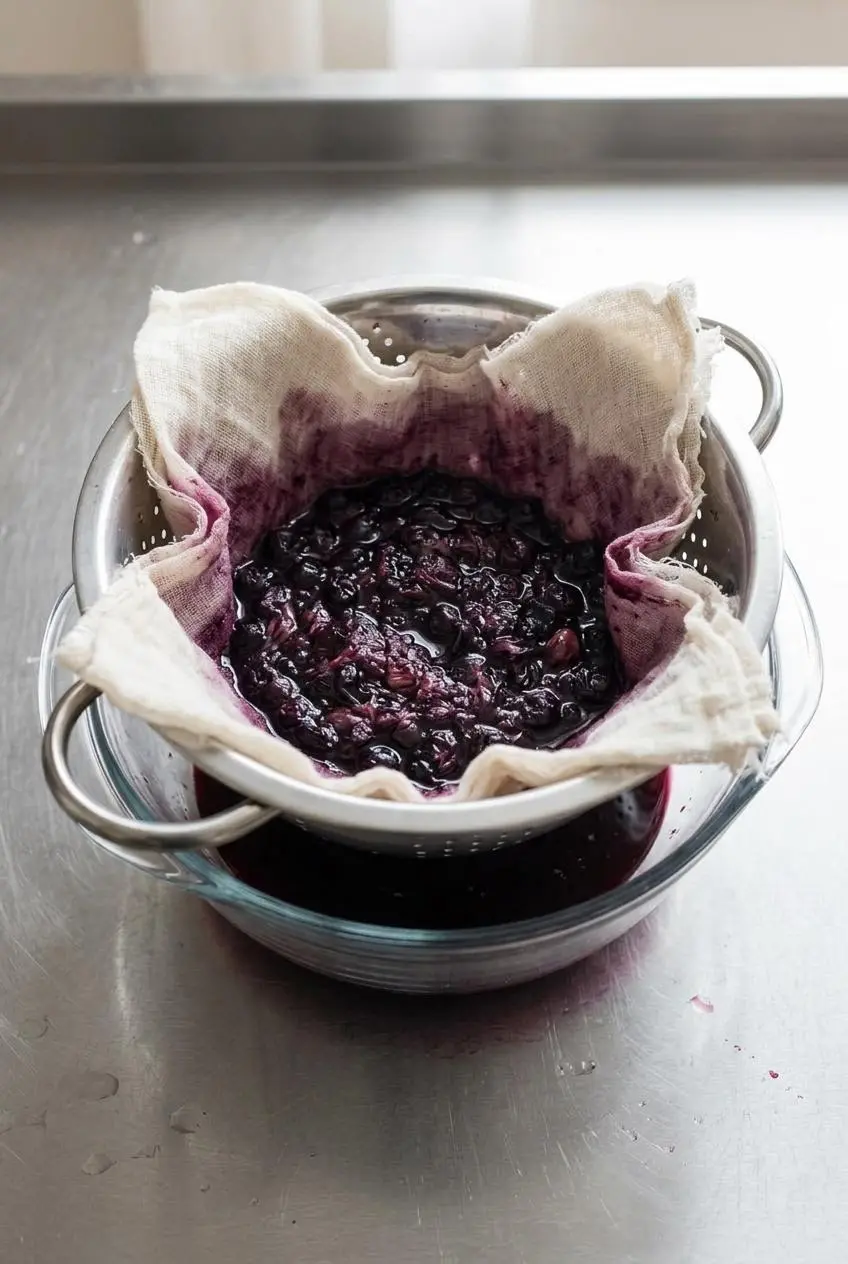
Extract the juice first, then cook one measured batch. Before choosing pantry storage, confirm a tested blueberry jelly formula that matches your juice, pectin, sugar, acid, jar size, and elevation. Without that confirmation, treat this as refrigerator jelly rather than a verified shelf-stable preserve.
Extracting Blueberry Juice
- Combine the berries with 1 cup of water per quart of fruit in a large saucepan, then cook over medium heat at a simmer for about 10 minutes while crushing them.
The berries should collapse into soft pulp and release deeply colored juice. - Drain the cooked fruit for at least 2 hours through a jelly bag or a colander fitted with several layers of damp cheesecloth, gently squeezing the bag if desired.
Measure 4 cups of collected juice, using a little apple or cranberry juice to complete the measure if needed.
Support the strainer securely over a bowl large enough to catch the juice. Keep the damp cloth spread across the colander so pulp cannot slip around its edges. The goal is juice without loose pieces of skin.
Making Blueberry Jelly
- Ready the jars and lids, along with a water bath canner if following a verified canning formula, and hold the prepared equipment hot until filling.
The containers should be ready before the jelly reaches its final boil. - Whisk the powdered pectin into the measured blueberry juice and optional lemon juice in a deep pot, then heat on high while stirring frequently.
No pectin clumps should remain when vigorous bubbles spread across the surface. - Pour in the entire measured sugar quantity, stir until dissolved, and bring the mixture back to a rolling boil before timing exactly 1 minute of hard boiling with constant stirring.
Bubbles should continue breaking across the surface even while the spoon moves through the jelly. - Take the pot off the burner and skim away the surface foam.
The liquid beneath the foam should look glossy and uniformly purple. - Fill the prepared jars with hot jelly to 1/4 inch below the rim, clean the rims, and attach two-piece lids; for a matching verified canning formula, use the 10-minute boiling-water processing time only with its required altitude adjustment.
After processing, switch off the heat and leave the jars in the canner for 5 minutes before removing them, keeping the filled jars upright.
A simmer has scattered bubbles and relatively calm patches between them. The final rolling boil is much more vigorous. Start the timer only after that full boil returns following the sugar addition, not while the mixture is still climbing back to temperature.
Tips and Troubleshooting for Blueberry Jelly
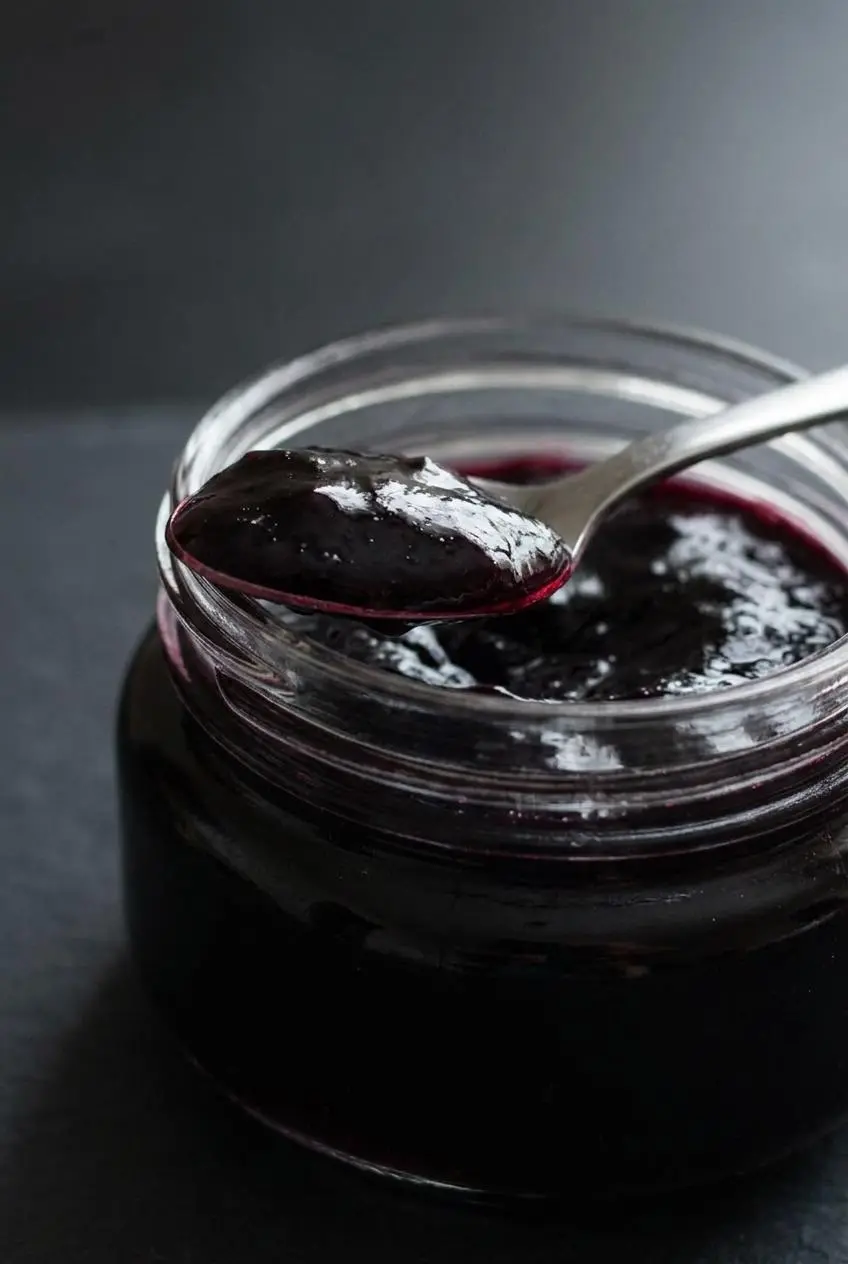
Judge the finished texture after cooling, not by how thick the jelly looks in the pot. Use these checks before changing anything:
- Runny jelly: Allow it to cool and finish setting under appropriate storage conditions, then review measurements and boiling technique before attempting a remake.
- Overly firm jelly: Check for too little juice, excess pectin, or boiling beyond the required time; use accurate measurements and a timer for the next batch.
- Excess foam: Give the mixture room in a deep pot and skim after cooking rather than shortening the required boil.
Cooked Extraction Versus Raw Berry Pressing
Simmering softens blueberry skins and pulp, helping release juice before straining. Raw crushing can leave more juice trapped in the fruit, though the difference varies with the berries and equipment.
Passive draining produces clearer juice. Gentle squeezing collects more, but it can push fine particles through the cloth and make the jelly cloudy. It can also stain your hands and cloth purple.
If the measure falls short, use the apple or cranberry juice option described in the method rather than extra water. Unsweetened white grape juice is another optional flavor direction, but it can soften the blueberry character. Any juice change needs separate consideration before pantry canning.
Why Hot Jelly Looks Thin
Powdered-pectin jelly develops its structure as it cools. A fluid-looking pot is normal; trying to cook it until it resembles cold jelly can produce an overly stiff spread.
Keep refrigerator jelly chilled while it finishes setting. The cooling instructions for correctly processed preserves are not permission to leave uncanned jars on the counter.
What to Do if Jelly Is Still Runny
- Confirm cooling and storage: Check the pectin package’s setting guidance before deciding the batch has failed.
- Review the formula: Confirm the juice measure, full sugar quantity, correct powdered pectin, and single-batch size.
- Review the boil: The mixture needed to return to a vigorous boil after the sugar dissolved before the timed cooking began.
- Choose a tested repair: Obtain the pectin manufacturer’s product-specific remake directions rather than guessing extra pectin, sugar, or recooking time.
If you kept the unset jelly properly refrigerated, it can still serve as a berry syrup over fluffy blueberry pancakes. A soft set does not automatically mean the batch has no use.
For overly firm jelly, review measurement errors and overcooking. Do not pour water into a stored jar or assume an altered preserve remains suitable for pantry storage.
Keeping Foam Below the Rim
A deep, heavy-bottomed pot gives rising foam room and helps distribute heat. Stay beside it during the hard boil, and skim after removing it from the heat.
Some pectin packages permit butter to reduce foaming. If yours does, that is an optional addition outside this ingredient list, not a requirement or a substitute for adequate pot space. It will not necessarily eliminate all foam.
Blueberry Jelly Canning and Refrigerator Storage
Hot filling, a firm set, and a sealed-looking lid do not by themselves establish pantry suitability. The processing method must match a tested formula.
Water Bath Processing and Checking the Seal
The processing sequence above includes a base time and a heat-off rest, but it does not establish a verified altitude schedule for this exact formula and jar size. Before canning, obtain matching tested directions, including the correct elevation band. Do not assume a single adjustment works at every elevation above 6,000 feet.
The pause before lifting jars out helps reduce siphoning, when hot purple liquid escapes beneath the lids. It does not replace the required processing time.
Once processed jars have fully cooled, press the center of each lid. A lid that flexes or clicks indicates an incomplete seal. Keep that jar refrigerated rather than placing it in the pantry, and seek product-specific instructions before attempting reprocessing.
Keeping a Batch Without Canning
For refrigerator jelly, use clean, heat-appropriate containers and keep the batch covered and chilled. Do not rely on hot filling to preserve it at room temperature.
A verified refrigerator storage limit for this exact formula is not established here, so no firm shelf life is given. Use clean utensils when serving and return the covered container to the refrigerator.
Choosing Containers and Protecting the Jars
Choose containers designed for hot preserves, and inspect glass for cracks or chipped rims before filling. Keep hot glass away from cold or wet surfaces that could cause sudden temperature changes.
For canning, container size and lid preparation must match the tested directions you select. For refrigerated jelly, use a secure cover and avoid handling the inside of the container or lid.
Blueberry Jelly Flavor Variations, Pectin Swaps, and Serving Ideas
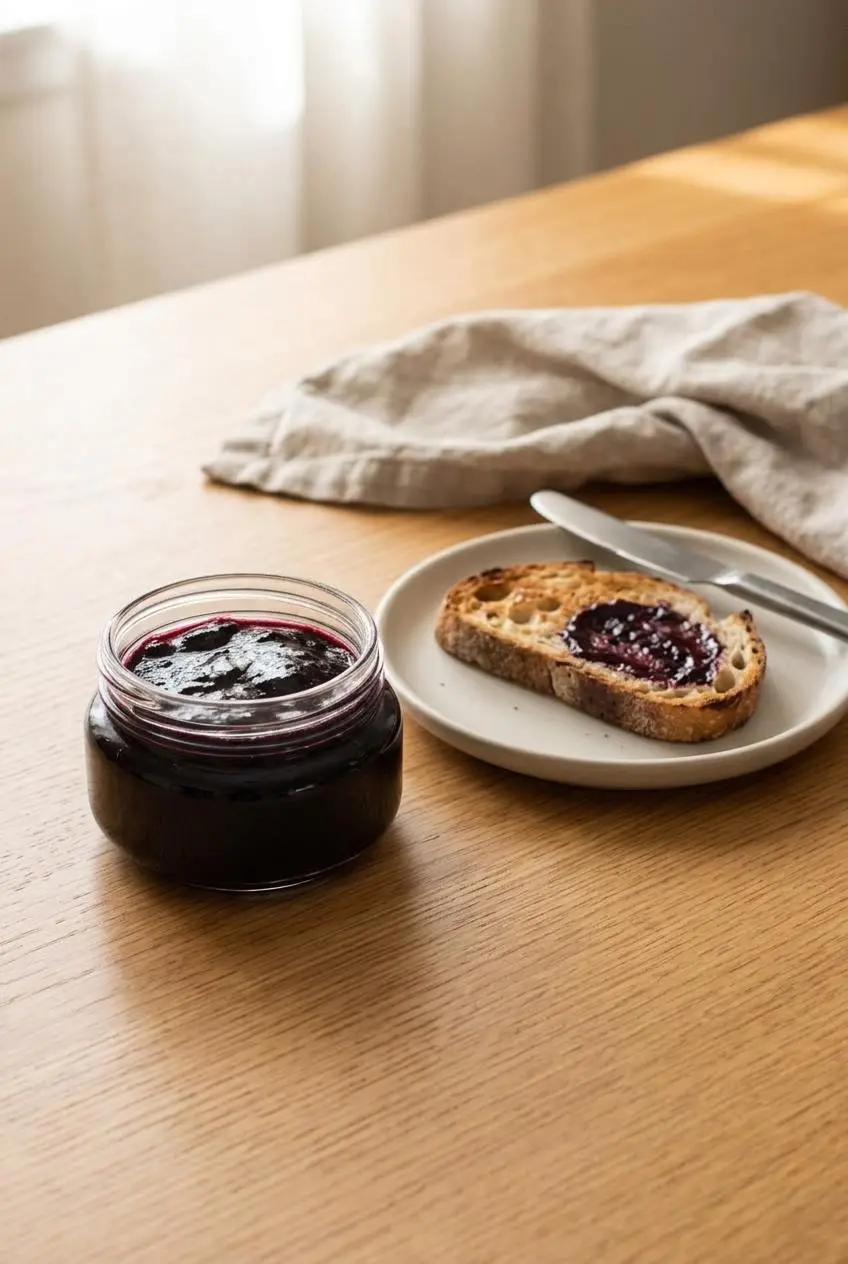
Keep flavor experiments and alternate pectins separate from the measured formula above. A pleasant flavor change does not automatically retain pantry-canning suitability.
Low-Sugar Blueberry Jelly and Alternative Pectin Options
- Low-sugar powdered pectin: Follow that product’s blueberry jelly formula instead of cutting sugar in this one.
- Pomona’s pectin: Calcium-activated pectin uses its own preparation and proportions; use honey only where its tested directions allow it.
- Liquid Certo: Use a recipe specifically written for liquid pectin because quantities and cooking order differ.
- No added pectin: Choose a separate tested method rather than simply omitting the box from this recipe.
Lemon, Vanilla, and Wild Blueberry Options
- Lemon peel: A strip during extraction offers a citrus aroma beyond the optional juice.
- Vanilla bean: Use a compatible separate formula for a warmer, rounder flavor.
- Spices or sea salt: A restrained spice direction or a tiny pinch of fine sea salt after skimming can change the flavor balance of a refrigerator batch.
- Wild blueberries: They can give deeper color and a tangier profile, but their juice yield still varies.
What to Do with Leftover Blueberry Pulp
Stir the strained pulp into oatmeal or yogurt, or consider it for muffin or pancake batter. Baking ideas such as lemon blueberry muffins offer a flavor pairing, but drained pulp is not an automatic equal-quantity replacement for whole berries.
The pulp remains moist but contains less free juice than intact fruit. Treat it as an adjustment to the batter, or use a separate blueberry butter preparation rather than inventing a second preserve from the jelly instructions.
From Breakfast Toast to a Cheese Board
- Breakfast breads: Spread jelly over warm buttermilk biscuits, sourdough toast, or English muffins.
- Bowls: Swirl it through plain yogurt or oatmeal for pockets of concentrated berry flavor.
- Cheese boards: Pair a spoonful with brie or sharp cheddar for a sweet contrast.
- Dinner: Use it as an optional glossy finishing glaze for roasted pork.
Conclusion
Smooth blueberry jelly starts with strained juice and accurate measurements. Keep the full sugar quantity with standard powdered pectin, and time the exact 1-minute hard boil only after vigorous bubbling returns.
Give the jelly time to develop its texture under appropriate storage conditions. A little patience preserves the silky spread you worked to make.
Frequently Asked Questions
What Is the Difference Between Blueberry Jam and Blueberry Jelly?
Jelly uses strained blueberry juice for a smooth, seedless texture. Jam uses mashed whole berries, so it contains skins and pulp and looks more opaque.
How Long Does Blueberry Jelly Take to Set?
It needs to cool and develop its gel, so follow your pectin package’s setting guidance rather than judging it hot. Keep uncanned jelly refrigerated during setting, and use the troubleshooting checks if it remains liquid.
Can I Use Frozen Blueberries to Make Blueberry Jelly?
Yes. Add frozen berries directly to the extraction saucepan without thawing first, then simmer and strain as described. Measure the required 4 cups of juice rather than assuming a fixed whole-fruit yield.
What Can I Do with the Leftover Blueberry Pulp?
Use it in oatmeal, yogurt, muffin batter, or pancake batter, allowing for its different moisture content. Blueberry butter is another possibility, but it requires a separate preparation.
Can I Make Blueberry Jelly with Bottled Juice?
Yes. Use 4 cups of compatible 100% unsweetened blueberry juice and skip extraction and straining. Keep the remaining ingredient quantities unchanged.
Why Didn’t My Blueberry Jelly Set and How Do I Fix It?
First allow it to finish cooling, then check the sugar, juice, pectin type, batch size, and rolling-boil timing. If a remake is necessary, use the pectin manufacturer’s tested procedure rather than guessing additional ingredients or cooking time.
Blueberry Jelly Recipe

Equipment
- Water bath canner
- Canning Jars, Lids, and Rings
Ingredients
- 4 cups blueberry juice purchased, or extracted from fresh berries
- 5 cups sugar
- 1 box powdered pectin 1.75 oz box, such as Sure-Jell
- 2 Tbsp lemon juice fresh or bottled, optional
Instructions
Extracting Blueberry Juice
- Combine the berries with 1 cup of water per quart of fruit in a large saucepan, then cook over medium heat at a simmer for about 10 minutes while crushing them. The berries should collapse into soft pulp and release deeply colored juice.
- Drain the cooked fruit for at least 2 hours through a jelly bag or a colander fitted with several layers of damp cheesecloth, gently squeezing the bag if desired. Measure 4 cups of collected juice, using a little apple or cranberry juice to complete the measure if needed.
Making Blueberry Jelly
- Ready the jars and lids, along with a water bath canner if following a verified canning formula, and hold the prepared equipment hot until filling. The containers should be ready before the jelly reaches its final boil.
- Whisk the powdered pectin into the measured blueberry juice and optional lemon juice in a deep pot, then heat on high while stirring frequently. No pectin clumps should remain when vigorous bubbles spread across the surface.
- Pour in the entire measured sugar quantity, stir until dissolved, and bring the mixture back to a rolling boil before timing exactly 1 minute of hard boiling with constant stirring. Bubbles should continue breaking across the surface even while the spoon moves through the jelly.
- Take the pot off the burner and skim away the surface foam. The liquid beneath the foam should look glossy and uniformly purple.
- Fill the prepared jars with hot jelly to 1/4 inch below the rim, clean the rims, and attach two-piece lids; for a matching verified canning formula, use the 10-minute boiling-water processing time only with its required altitude adjustment. After processing, switch off the heat and leave the jars in the canner for 5 minutes before removing them, keeping the filled jars upright.