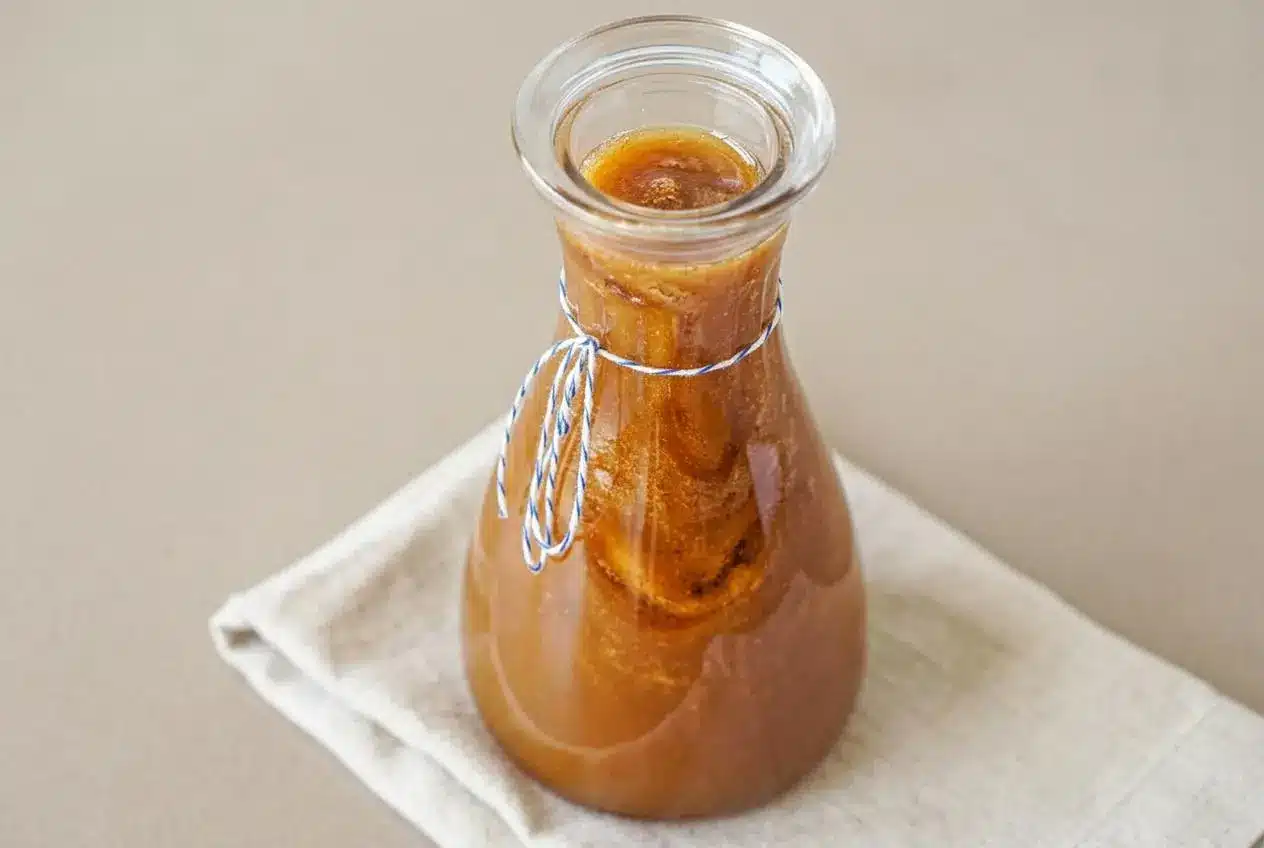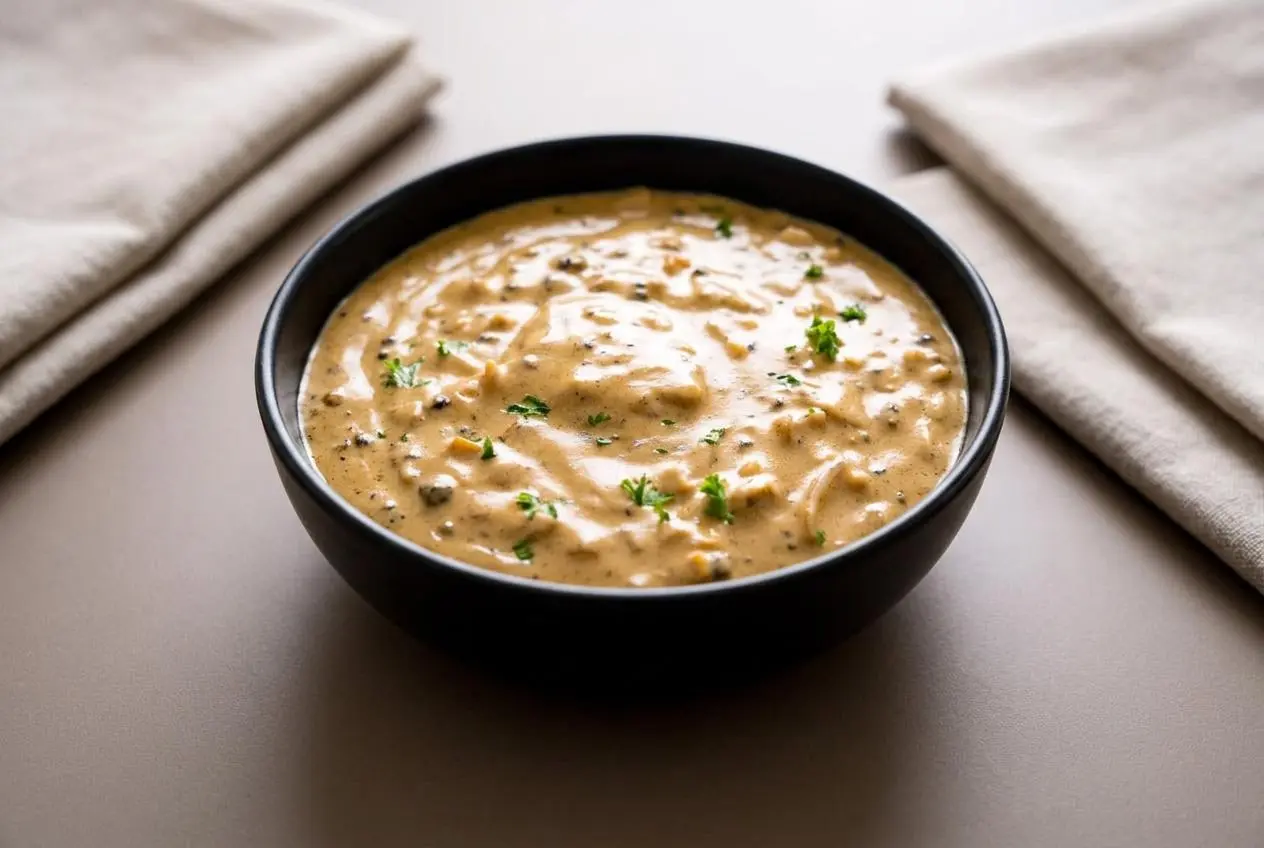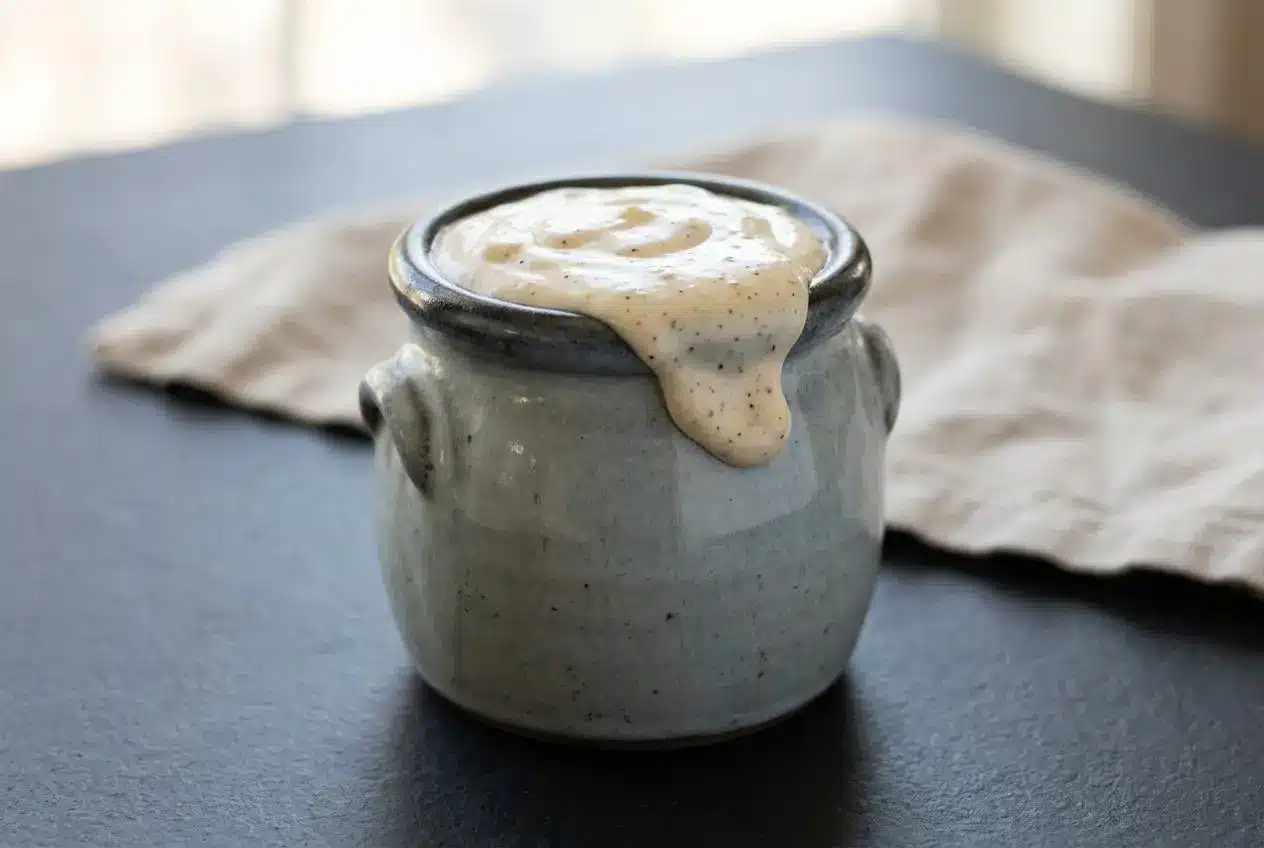
Creamy, tangy, and peppery, alabama white sauce is a Northern Alabama barbecue sauce built on mayonnaise and vinegar. Use it as a chicken marinade, a finishing sauce for grilled meat, or a cold dip with a horseradish kick.
Unlike a sticky red barbecue sauce, this version pours easily and brings a bright, savory bite. Honey rounds out the vinegar, while mustard, pepper, and horseradish keep the creamy base lively.
You don’t need to cook the sauce, and standard apple cider vinegar works as an optional alternative to the specialty vinegar. The trick is in the whisking.
Dissolve the honey in the vinegar before adding mayonnaise so you aren’t chasing sticky pockets around the bowl.
What Makes This Tangy White BBQ Sauce Unique
White barbecue sauce puts acidity and creaminess ahead of tomato sweetness. Associated with Northern Alabama, especially Decatur, it brings a refreshing contrast to smoky chicken and rich pork.
Compared with a tomato-based homemade BBQ sauce, this mayonnaise-and-vinegar style tastes sharper and feels lighter on the tongue. This particular version uses honey and a specialty sweet-and-tangy vinegar; those ingredients aren’t universal to every regional variation.
Creamy Tang and a Peppery Horseradish Kick
Think of a pourable creamy slaw dressing with more pepper and a pungent finish. Vinegar supplies the mouthwatering sharpness, while prepared horseradish brings a nose-tingling sensation. Cayenne adds a warmer, lingering heat.
Mayonnaise cushions those strong flavors, and honey softens their edges without turning the sauce into a sweet glaze.
Ingredients You Need and Easy Pantry Swaps
Mayonnaise gives the sauce body, vinegar brings brightness, and honey balances the sharpness. Horseradish and mustard add pungency, while Worcestershire and the seasonings build savory depth, warmth, and a smoky finish.
- 1 cup of mayonnaise
- 1/3 cup Desert Hibiscus Honey Vinegar (or other Sweet & Tangy line vinegar)
- 1 tablespoon of honey
- 2 tablespoons of prepared horseradish
- 1 teaspoon of ground mustard powder
- ½ teaspoon of salt
- ½ teaspoon of fresh ground black pepper
- ¼ teaspoon of ground ginger
- ¼ teaspoon of cayenne pepper
- ¼ teaspoon garlic powder
- ¼ teaspoon paprika (smoked is best)
- 2 teaspoons of Worcestershire sauce
The Creamy Mayonnaise Base
Full-fat mayonnaise is a good choice for richness and body. Its emulsified oil-and-egg mixture holds the vinegar and seasonings in a creamy coating rather than leaving them as a watery dressing.
On poultry, that coating can help limit surface drying. It doesn’t seal in juices or rescue overcooked chicken, so careful cooking still matters.
Choosing Your Vinegar and Sweetener
If you don’t have the listed vinegar, optionally replace it with the same 1/3 cup of apple cider vinegar and retain the listed 1 tablespoon of honey. This keeps the method accessible without changing the ingredient list above.
Expect a different balance of acidity, sweetness, and aroma. Cider vinegar gives a familiar barbecue tang, but it won’t duplicate the specialty vinegar’s flavor exactly. Taste after chilling before considering further adjustments.
Horseradish and Savory Spices
Use prepared horseradish, not freshly grated root or creamy horseradish sandwich sauce. Mustard powder reinforces its pungency, while Worcestershire contributes savory depth.
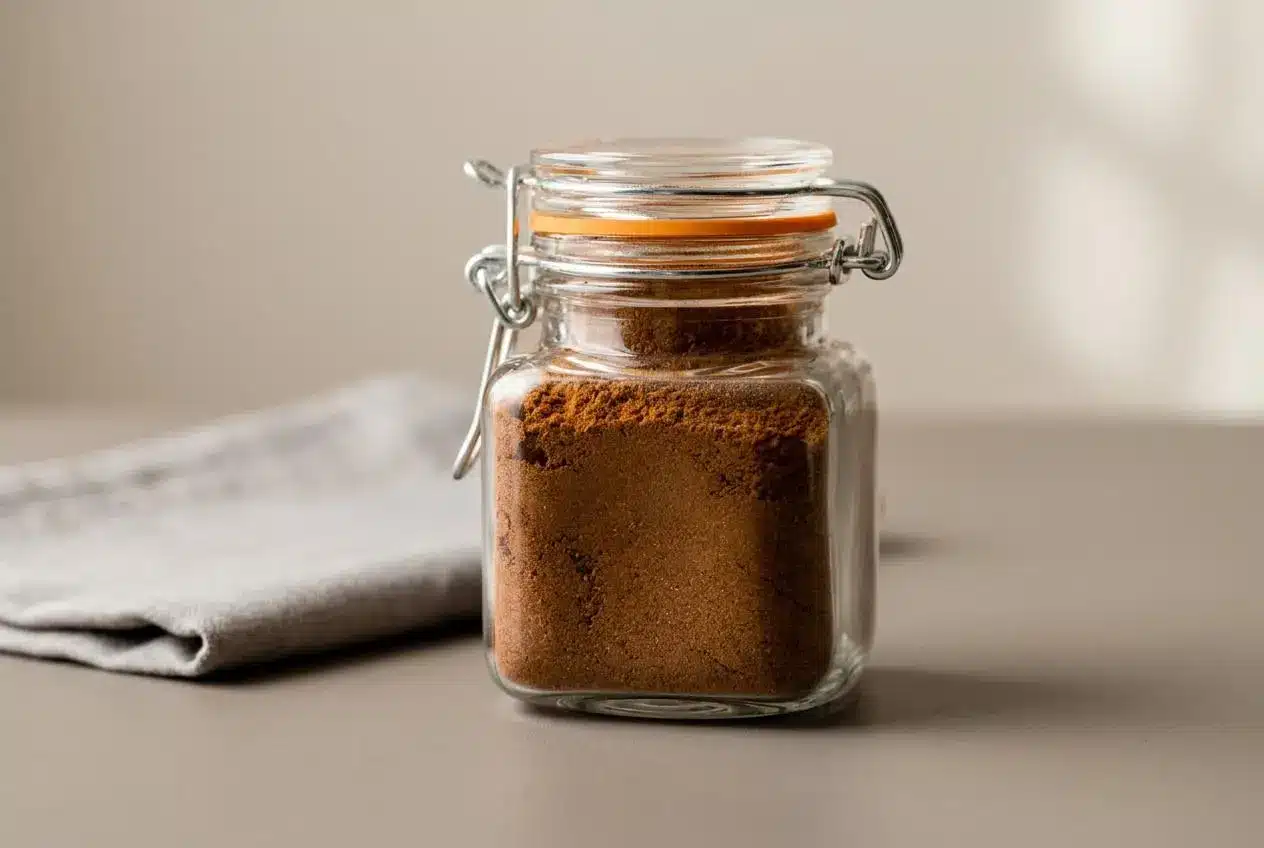
Black pepper and cayenne provide distinct kinds of heat. Smoked paprika adds a smoky accent, ginger brings gentle warmth, and garlic powder rounds out the seasoning without adding pieces of fresh garlic.
I prefer to stir prepared horseradish in its jar before measuring so the solids and liquid are evenly mixed.
How to Make Smooth Alabama White Sauce Step by Step
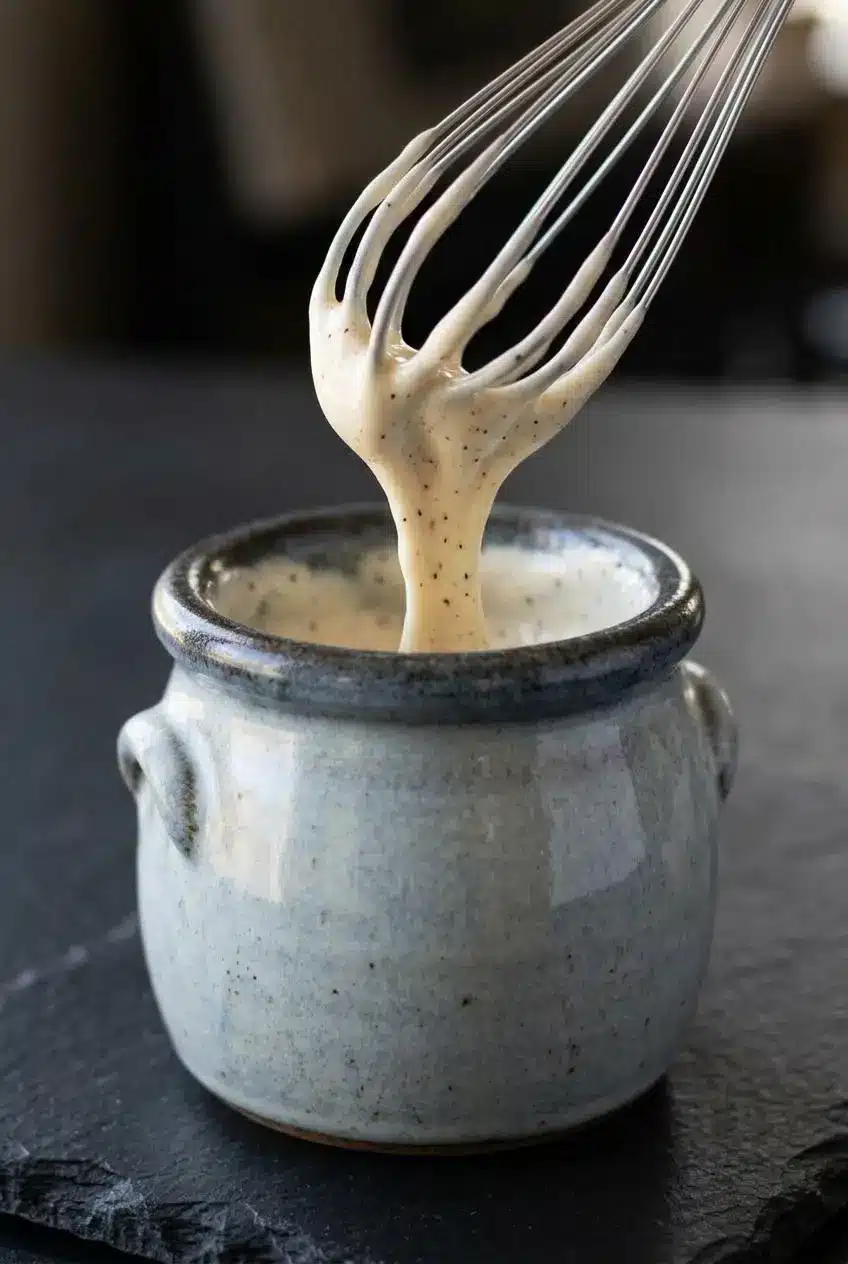
Use a medium bowl and whisk for this no-cook sauce. The total preparation time is about 20 minutes, including the refrigerator rest, and the yield is approximately 1.5 cups.
- Combine the vinegar and honey in a medium bowl, stirring until the honey disappears, then whisk in the mayonnaise and all remaining ingredients.
Once the pale streaks and mayonnaise lumps disappear and the spices look evenly scattered, refrigerate for at least 15 minutes to blend the flavors, then taste and adjust the salt and pepper as needed. - Use the chilled sauce to marinate chicken under refrigeration for at least 15 minutes, or brush a clean portion over chicken near the end of grilling.
A thin, even coating is the goal, with light browning rather than a blackened surface.
The sauce’s chilling time and the optional chicken-marinating time are separate. Chilling lets dried seasonings hydrate and the horseradish flavor spread through the mixture; it shouldn’t turn the sauce into a stiff spread.
Before marinating poultry, reserve a clean portion for finishing, drizzling, or dipping.
Tips for Smooth White Sauce and Grilling Without Scorching
Judge the sauce after its refrigerator rest, when the seasonings have had time to blend. Then make any optional corrections gradually.
- Mayonnaise lumps: Incomplete whisking can leave white pockets. Dissolve the honey first, then whisk thoroughly, working through any lumps against the bowl.
- Too sharp: Vinegars vary in intensity. After chilling, optionally add a little more mayonnaise to soften the acidity or honey to balance it, tasting between additions.
- Too much horseradish heat: More mayonnaise can dilute the pungency. Extra honey may soften the overall impression, but it won’t remove the horseradish.
- Too thin: A drizzle-friendly consistency is expected. If it seems watery, check the measurements and complete the required chill before adjusting; refrigeration won’t correct every imbalance.
- Burnt coating: Honey can scorch, and mayonnaise fat can contribute to flare-ups. Avoid prolonged exposure to high direct flames and add finishing sauce near the end.
Watch the surface closely on the grill. Golden-brown patches add flavor; blackened sugar can taste bitter. Move chicken away from flare-ups rather than waiting for the coating to darken further.
Optional Warm-Spice and Lemon Zest Finish
For an untested variation, gently warming the vinegar with the dried spices before cooling it offers a different approach, with grated garlic and fresh lemon zest as optional additions. This changes the cold-whisk method and adds ingredients, so keep it separate from the preparation above.
Best Ways to Use and Serve White BBQ Sauce
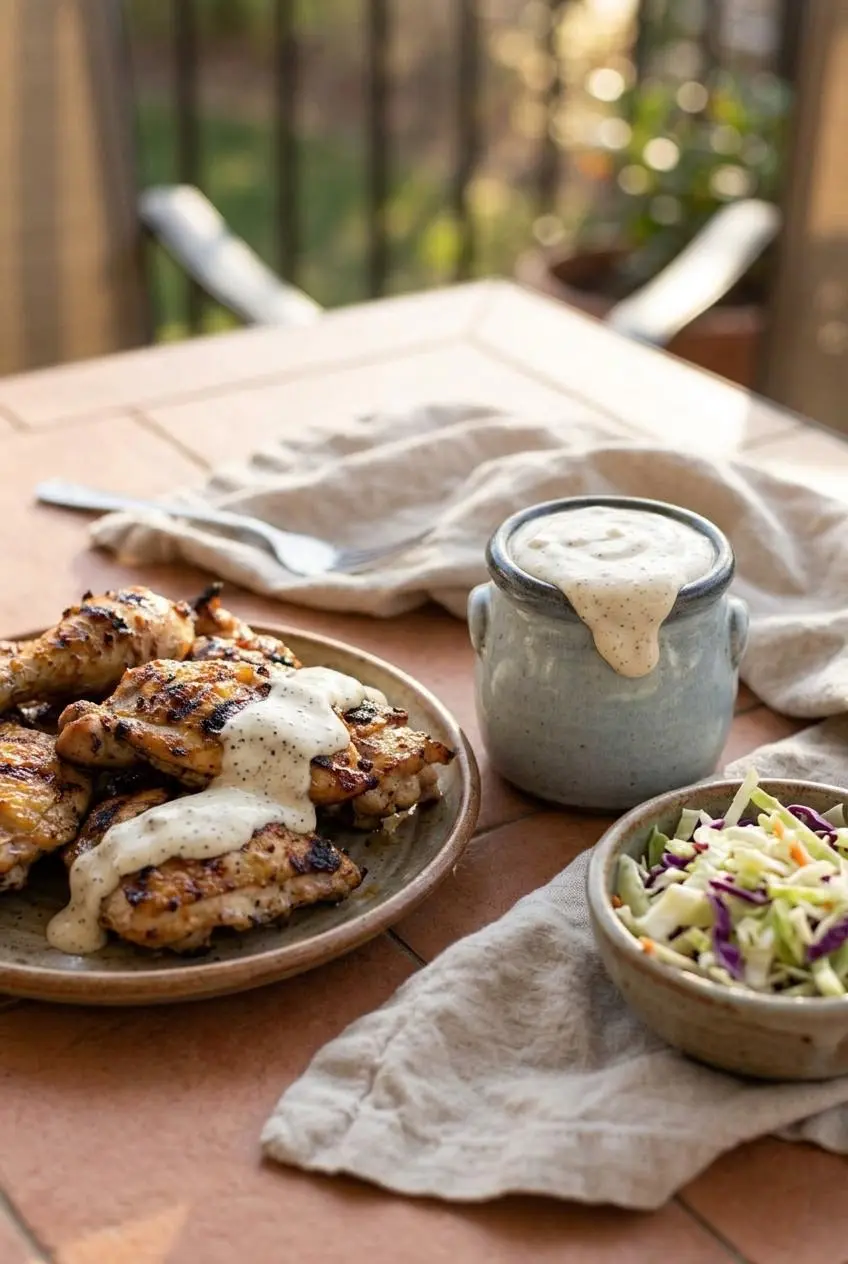
Divide the batch by purpose before the cookout begins. A clean portion for dressing and dipping gives you more flexibility than putting all the sauce into a marinade.
Marinating and Basting Smoked or Grilled Chicken
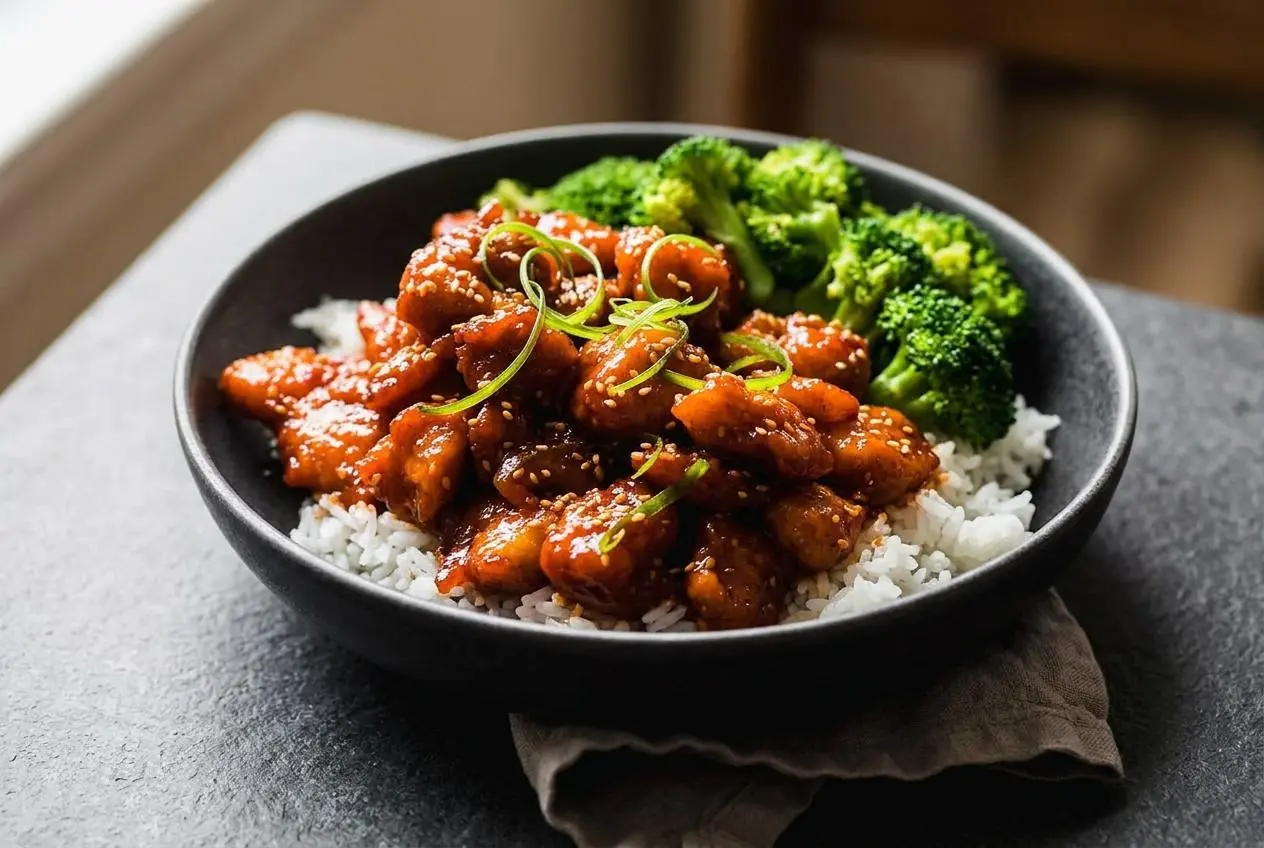
For marinating, coat the chicken and keep it refrigerated for at least 15 minutes. For a finish, brush on reserved sauce just before grilling ends, or dunk cooked smoked chicken into a separate clean portion.
Marinate poultry in the refrigerator, keep it separate from ready-to-eat foods, and check that it reaches a minimum internal temperature of 165 °F with a food thermometer.
Use clean utensils for cooked chicken. Discard marinade that touched raw poultry rather than offering it as a dip.
Tangy Alabama White Coleslaw Dressing
Toss a clean portion with shredded cabbage for a peppery slaw that cuts through rich barbecue. Add the sauce gradually and toss until the cabbage has a light, even coating rather than a pool of dressing underneath.
Dress the cabbage close to serving if you want its crunch to stand out. This is an optional use for the finished sauce, not an addition to the sauce ingredients.
Dipping Sauce for Pork, Ribs, and Fried Veggies
Drizzle it over pulled pork sandwiches or cooked ribs for a creamy contrast to smoke and rich meat. These are serving suggestions, not separate meat-cooking methods.
Serve it cold with fried green tomatoes, crispy okra, or fries, much as you might use a tangy remoulade sauce. Put out a small clean portion and keep the rest refrigerated.
Easy White BBQ Sauce Variations for Different Tastes
Keep the mayonnaise-and-vinegar foundation, then choose an optional flavor direction. Each adjustment changes the balance, so taste gradually rather than making several changes at once.
Classic Cider Vinegar and Lemon Pit Style
- Apple cider vinegar and lemon juice create a cider-and-citrus direction.
- Granulated sugar offers a different sweetness from honey.
- Coarse black pepper makes the peppery character more prominent.
This classic-style direction differs from the honey-based version above; it isn’t a second recipe with interchangeable measured ratios.
Mild Horseradish Family Version
- Reduce prepared horseradish for less nose-tingling pungency.
- Reduce cayenne for less lingering heat.
- Optionally increase honey slightly for a rounder sweet-and-tangy balance.
These changes soften the signature kick while keeping the creamy vinegar character.
Quick Backyard BBQ Rub Shortcut
An all-purpose peppery barbecue seasoning can optionally replace some individual seasonings. Blends vary in salt, sugar, garlic, and heat, so there’s no universal replacement ratio. Check the label before adding the recipe’s full salt amount alongside a salty rub.
Making White BBQ Sauce Ahead and Keeping It Chilled
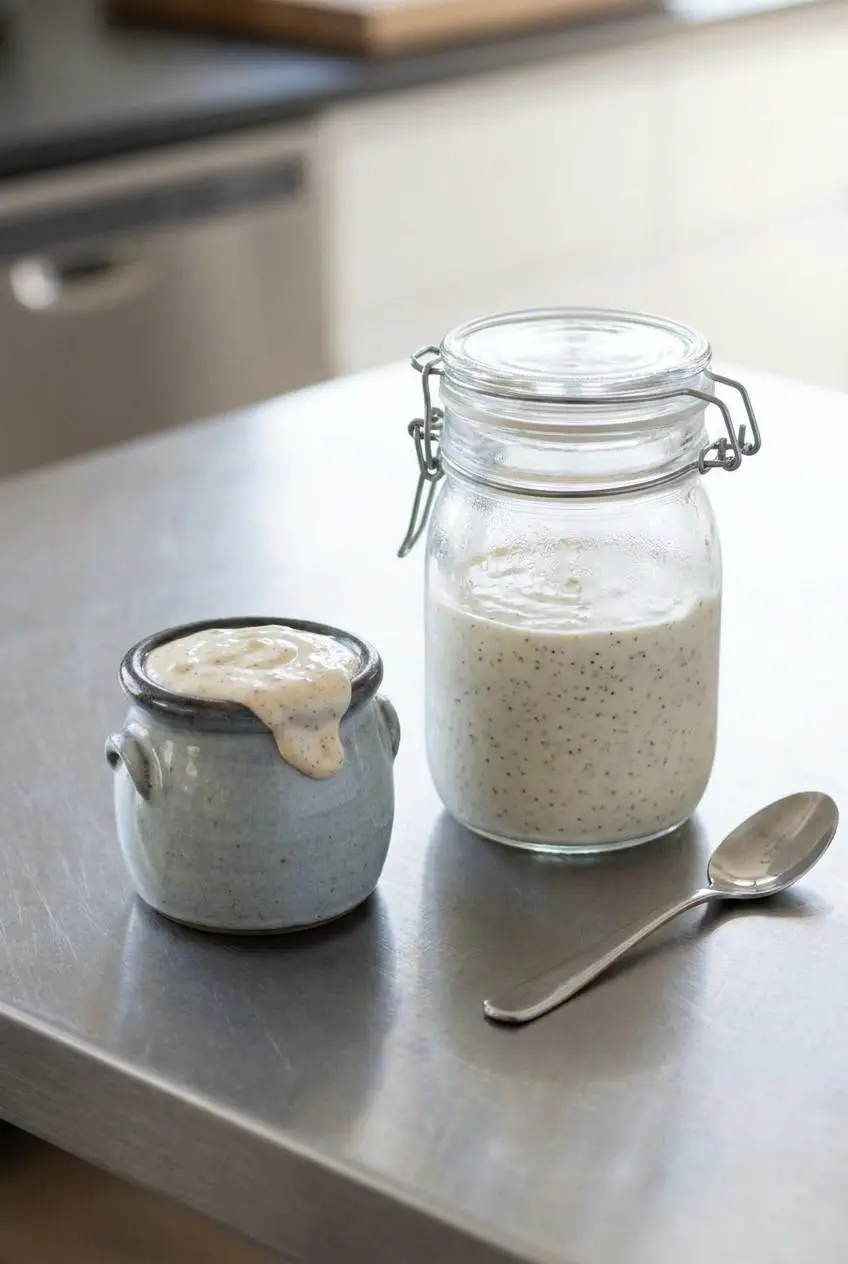
Plan around the required refrigerator rest so the sauce is chilled and blended when the food is ready. Transfer clean sauce to a clean, airtight jar or bottle, and keep it refrigerated between uses.
If slight separation appears, whisk or shake it back together before pouring. Use clean utensils, and keep unused sauce separate from food that has already been served.
A verified refrigerator shelf life isn’t established for this particular homemade mixture, so don’t assume a fixed storage window. Make an amount you expect to use promptly and follow the applicable storage instructions for your ingredients. This guidance applies only to sauce that never contacted raw poultry.
Conclusion
White barbecue sauce brings creamy tang, pepper, and horseradish to chicken, pork, slaw, and fried vegetables. Thorough whisking and the refrigerator rest give it an even, pourable finish.
Keep a clean portion aside before marinating, and watch sugary coatings closely on the grill. Then let that bright, peppery drizzle do its work.
Frequently Asked Questions
What Does Alabama White Sauce Taste Like?
It tastes creamy and tangy, with mayonnaise richness and a sharp vinegar edge. Black pepper, horseradish, and cayenne add bite, while honey provides subtle sweetness.
What Vinegar Can I Use if I Do Not Have Hibiscus Honey Vinegar?
Apple cider vinegar is an optional substitute at the same volume discussed above. Keep the listed honey, but expect a different flavor from the specialty vinegar.
How Long Does Homemade Alabama White Sauce Last in the Refrigerator?
There isn’t a verified storage duration for this specific mixture, so a fixed refrigerator life isn’t established here. Keep clean sauce covered and refrigerated, follow ingredient storage instructions, and discard any portion used on raw poultry.
Can I Use Alabama White Sauce on Foods Other Than Chicken?
Yes, optionally drizzle it over pulled pork and ribs or toss it with shredded cabbage. Use a clean reserved portion as a dip for fried okra, fried green tomatoes, or fries.

Alabama White Sauce

Equipment
- Medium bowl
- Whisk
Ingredients
- 1 cup of mayonnaise
- 1/3 cup Desert Hibiscus Honey Vinegar (or other Sweet & Tangy line vinegar)
- 1 tablespoon of honey
- 2 tablespoons of prepared horseradish
- 1 teaspoon of ground mustard powder
- ½ teaspoon of salt
- ½ teaspoon of fresh ground black pepper
- ¼ teaspoon of ground ginger
- ¼ teaspoon of cayenne pepper
- ¼ teaspoon garlic powder
- ¼ teaspoon paprika (smoked is best)
- 2 teaspoons of Worcestershire sauce
Instructions
- Combine the vinegar and honey in a medium bowl, stirring until the honey disappears, then whisk in the mayonnaise and all remaining ingredients. Once the pale streaks and mayonnaise lumps disappear and the spices look evenly scattered, refrigerate for at least 15 minutes to blend the flavors, then taste and adjust the salt and pepper as needed.
- Use the chilled sauce to marinate chicken under refrigeration for at least 15 minutes, or brush a clean portion over chicken near the end of grilling. A thin, even coating is the goal, with light browning rather than a blackened surface.