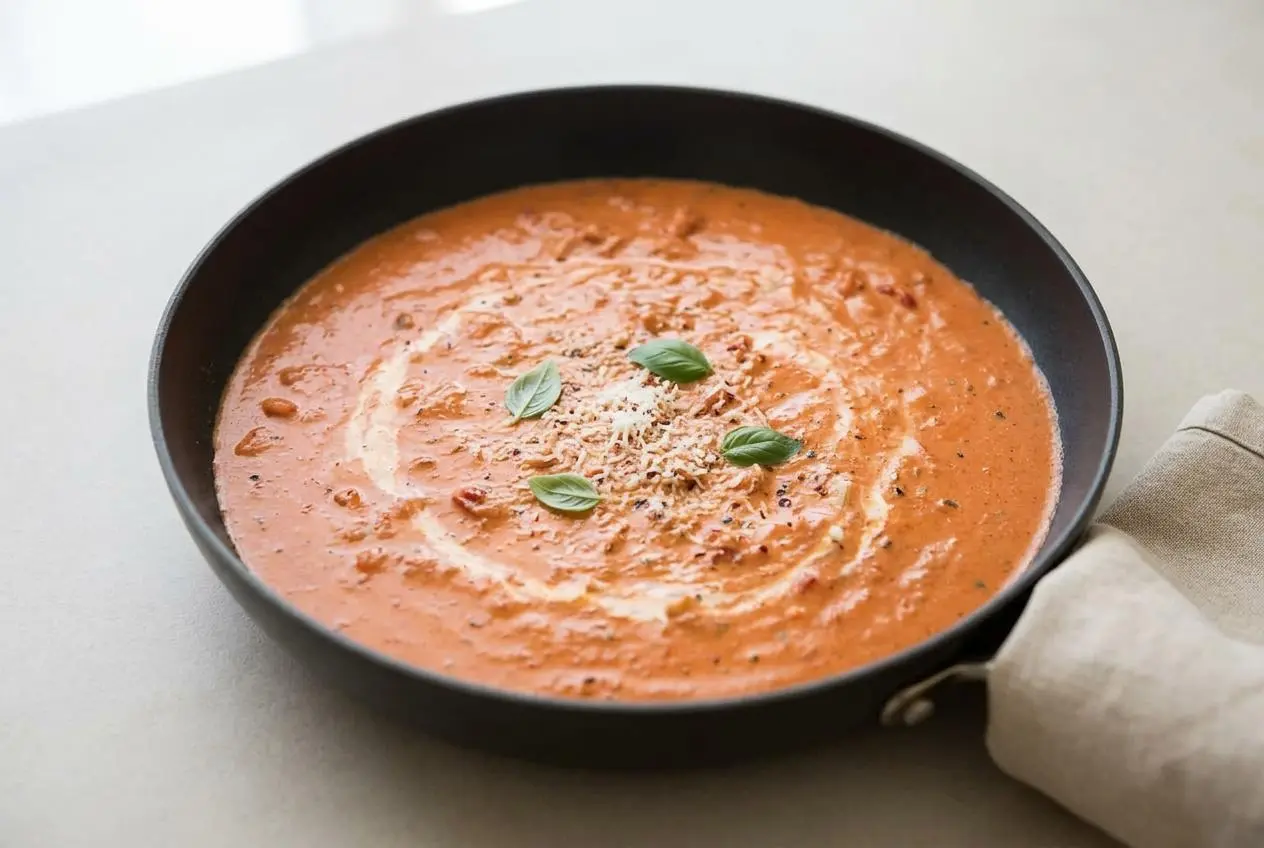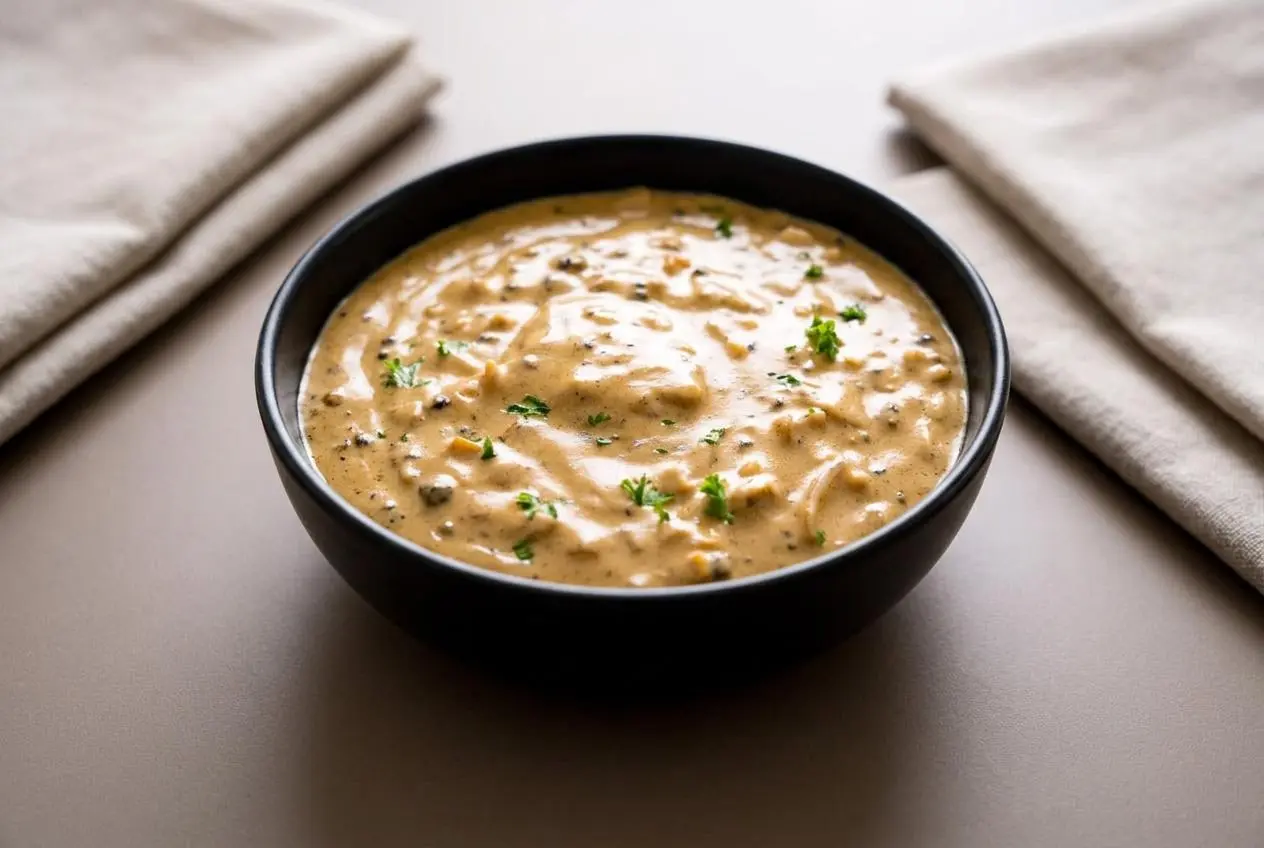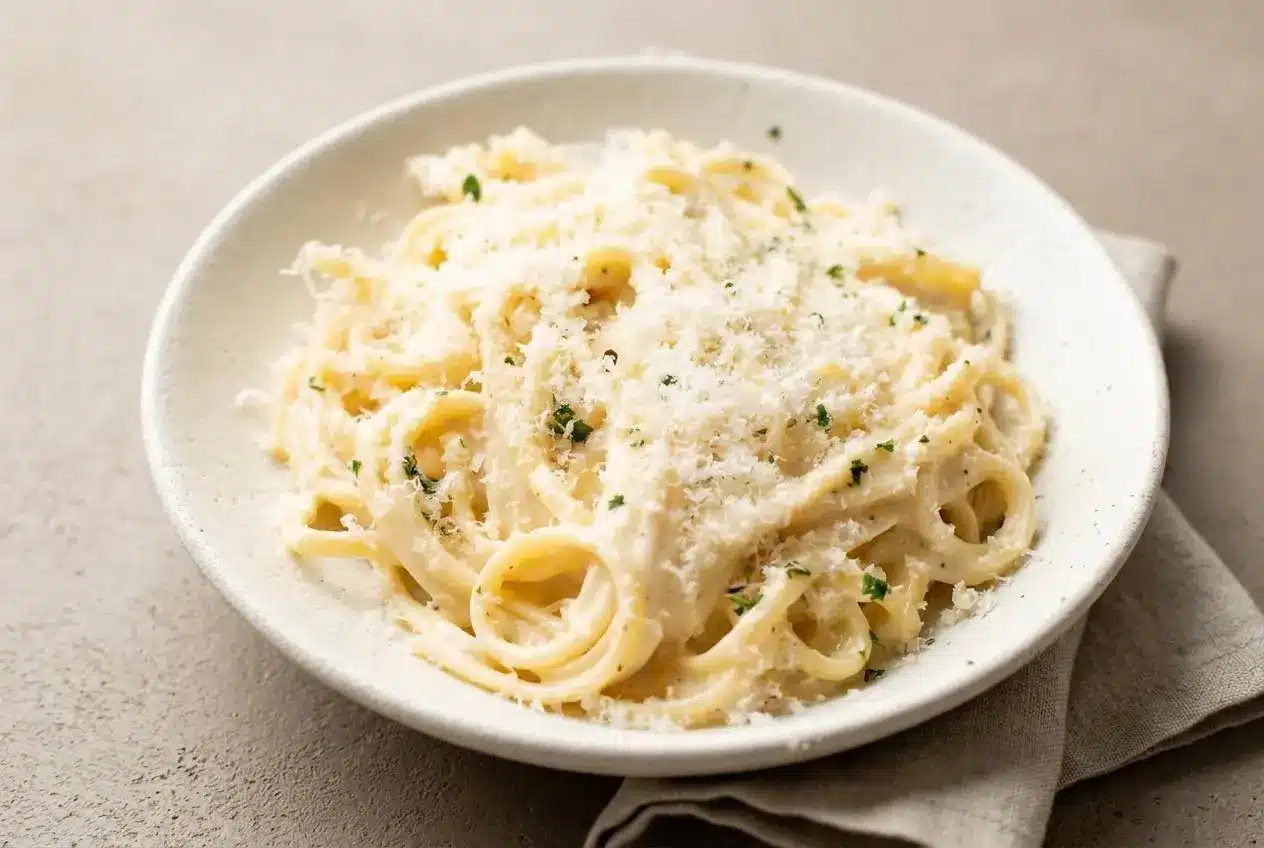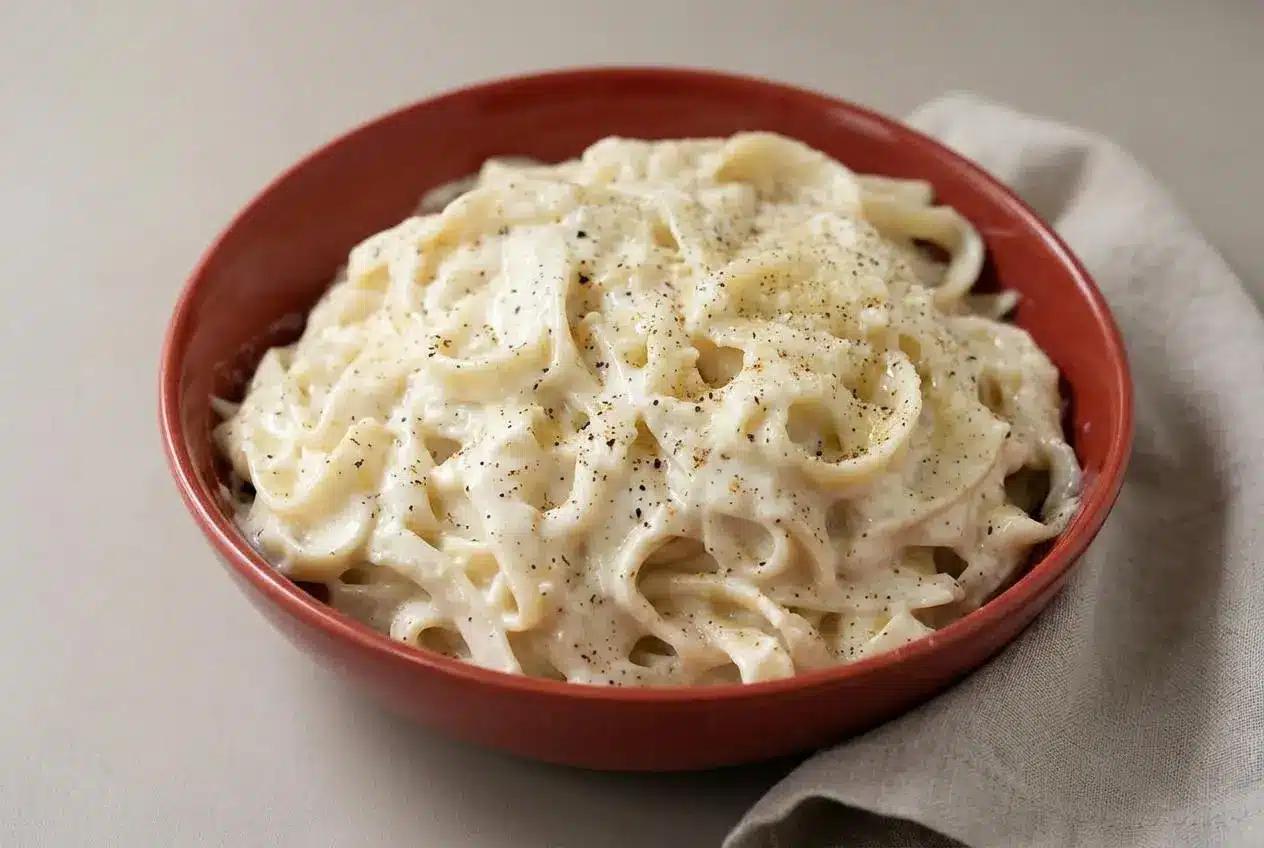
Make this sauce by softening garlic in butter, whisking cubed cream cheese with milk until smooth, then stirring in fresh parmesan off the heat for a glossy finish.
Alfredo sauce with cream cheese turns butter, milk, garlic, and parmesan into a rich, velvety pasta sauce without relying on a flour roux. The cream cheese gives it body while helping the dairy stay blended as it warms.
You’ll smell the garlic soften in the butter before the sauce turns from lumpy white to satin-smooth. The off-heat parmesan finish makes the difference.
Set the cream cheese out while you mince the garlic so it loses its refrigerator chill and melts more evenly.
Why Cream Cheese Works as an Emulsifier
Cream cheese helps butterfat, milk, and melted cheese stay together instead of separating into an oily layer and a thin liquid. Its proteins and gentle tang create a sturdier dairy mixture, which is especially helpful on a home stovetop where heat can change quickly.
This is a practical American-style approach rather than a traditional Roman preparation. A classic alfredo sauce relies on careful handling of butter, cheese, and pasta water, while cream cheese offers more forgiveness when using milk.
As the cream cheese melts, it may look curdled or dotted with soft white lumps at first. Keep whisking gradually as the milk goes in. Those lumps should loosen into a glossy sauce rather than remain distinct pieces.
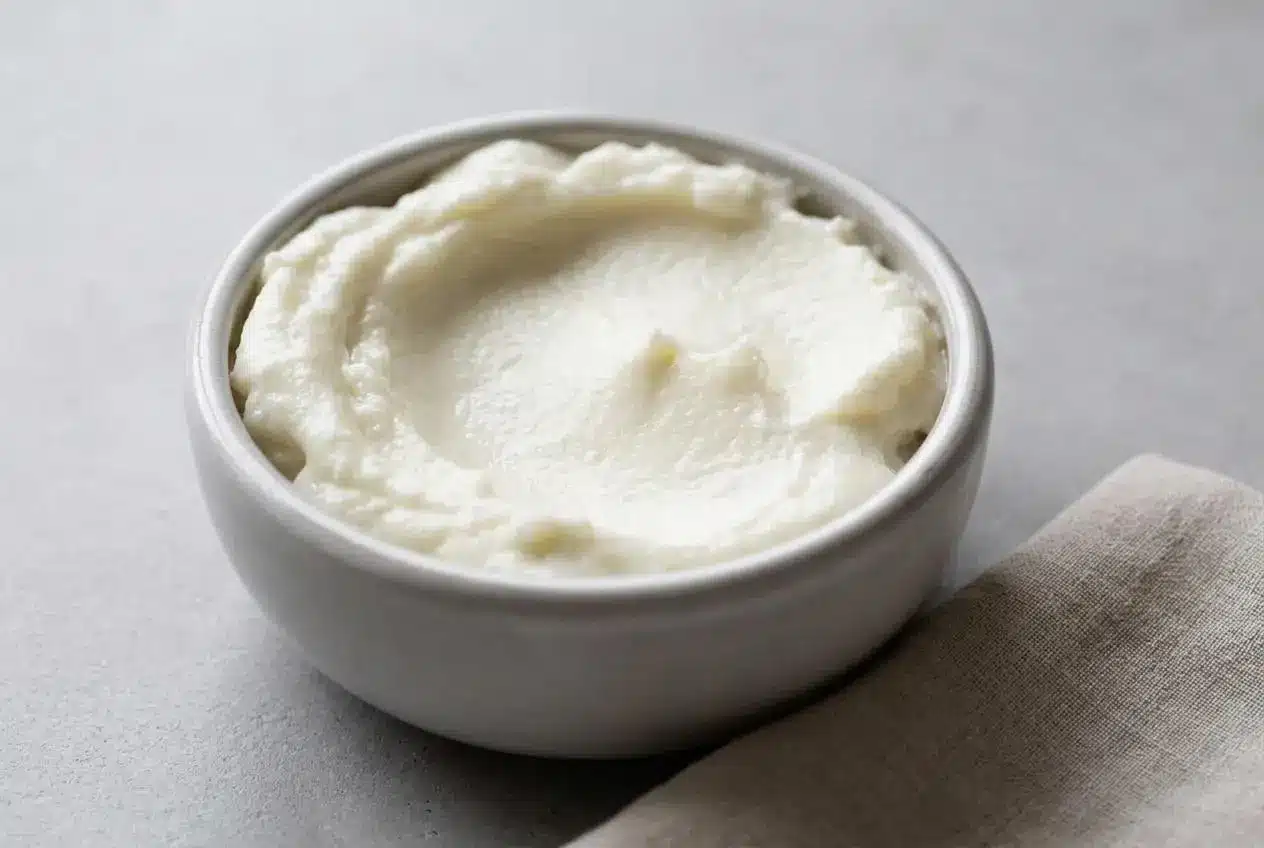
Use block cream cheese, not whipped or spreadable cream cheese from a tub. Tub varieties contain extra air and moisture, which can make the sauce looser and less predictable. Block cream cheese has a denser texture that melts into a fuller, more stable sauce.
Essential Ingredients for Homemade Alfredo
Butter carries the garlic aroma, cream cheese gives the sauce structure, milk creates flow, parmesan brings savory depth, and the seasonings round out the rich dairy flavor.
- 2 tablespoons unsalted butter
- 2 cloves garlic (minced)
- 8 ounces cream cheese (cut into small cubes)
- 1 1/2 cups skim milk ((skim, 2%, whole, or half & half or heavy cream))
- 1 1/2 cups grated parmesan cheese ((good quality))
- 1/8 teaspoon salt
- 1/8 teaspoon black pepper
- 1/8 teaspoon grated nutmeg ((optional))
Unsalted butter lets you control the final seasoning, while fresh garlic builds a fragrant base without competing with the parmesan. Nutmeg is optional, but its warm flavor can soften the sharper edges of aged cheese.
I grate parmesan from a wedge right before cooking because it melts into a smoother sauce with a cleaner cheesy flavor.
The Role of Block Cream Cheese
Choose brick-style cream cheese and cut it into small cubes before cooking. It melts faster when it is closer to room temperature, so the skillet does not need aggressive heat to break it down. Lower-fat versions and spreadable tubs can produce a thinner sauce that is more likely to look separated.
The cubes do not need to disappear instantly. Give them time to soften in the butter, then use the milk and a steady whisk to bring everything together. A little patience here prevents the grainy texture that comes from turning up the burner too soon.
Choosing Your Dairy: Milk vs. Heavy Cream
This recipe works with skim milk, 2% milk, whole milk, half-and-half, or heavy cream because the cream cheese supplies much of the sauce’s body. Skim milk creates a lighter result, while whole milk and 2% milk give a richer feel without making heavy cream necessary.
Half-and-half or heavy cream makes the finished sauce more lush and thicker. If using a richer dairy option, keep the heat moderate and whisk often so the sauce stays smooth rather than greasy.
Why Freshly Grated Parmesan Is Essential
Freshly grated parmesan melts more cleanly than packaged shredded cheese. Many pre-shredded cheeses contain cellulose or other anti-caking ingredients that can resist melting and leave a sandy texture in a delicate cream sauce.
Look for finely grated parmesan from a wedge, then add it after moving the skillet away from direct heat. The residual warmth is enough to melt the cheese while protecting it from the high heat that can make it seize.
How to Make Alfredo Sauce With Cream Cheese
Have the whisk ready before the cream cheese goes into the skillet. The sauce comes together quickly once the milk starts loosening the softened cheese.
- Warm a large skillet over medium heat, melt the butter, and add the minced garlic.
Stir just until the garlic smells fragrant and softens, keeping it pale rather than browned. - Add the cubed cream cheese and whisk in the milk gradually as the cheese begins to soften.
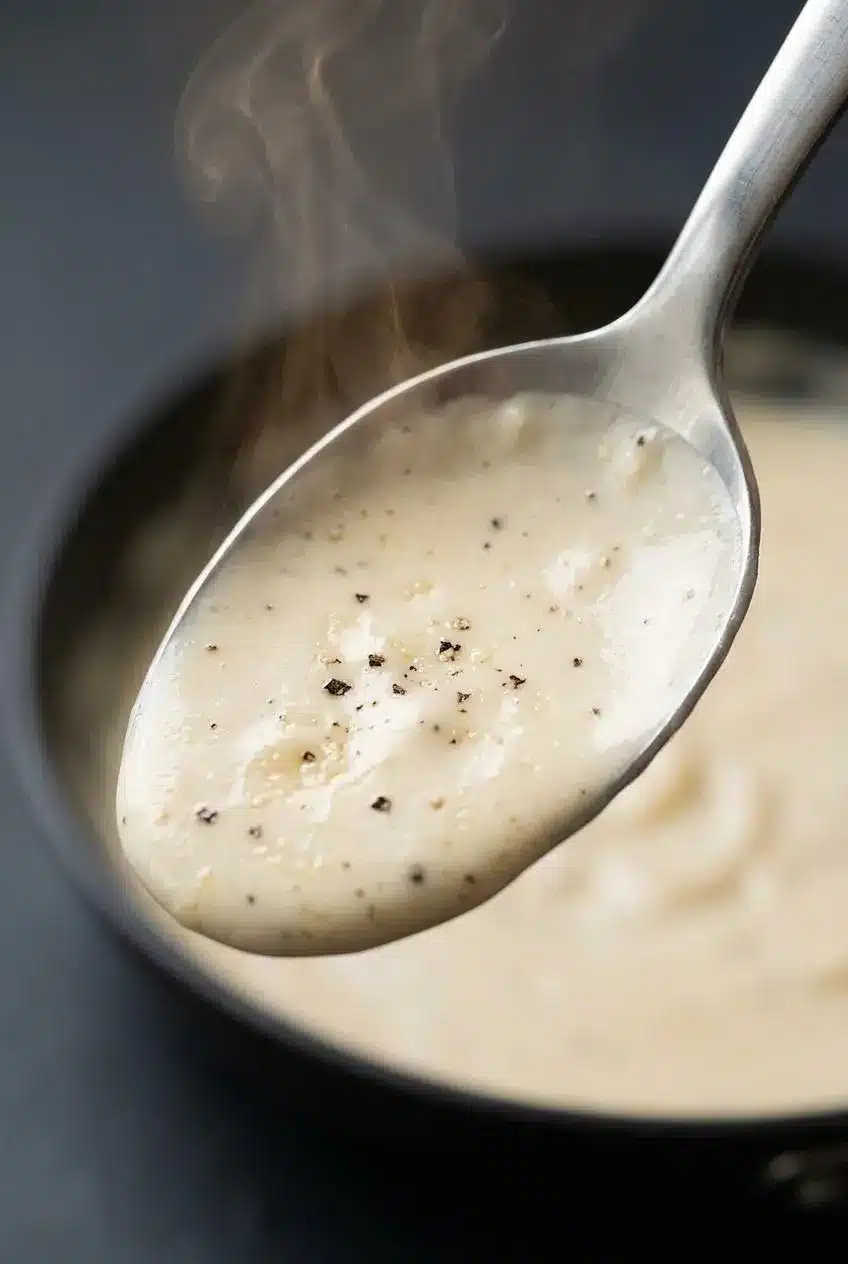
The mixture may look lumpy and white at first, then becomes smooth and satin-like once all the milk is incorporated. - Move the skillet off the heat, then whisk in the parmesan, salt, black pepper, and nutmeg if desired.
The sauce will thicken quickly as the parmesan melts and should look glossy and cohesive when served immediately.
If you are tossing the sauce with pasta, reserve some cooking water before draining. Add warm pasta water a little at a time after combining the sauce and pasta, stopping as soon as the sauce lightly coats the noodles instead of pooling at the bottom of the bowl.
Critical Success Tips and Troubleshooting
Gentle heat and steady whisking solve most cream sauce problems before they start. Keep the skillet at medium for the garlic, then avoid letting the dairy boil hard once the cream cheese and milk are in the pan.
- Garlic is browning: The pan is too hot. Pull it from the burner briefly and stir so the garlic softens without turning bitter.
- Sauce looks oily: The dairy got too hot or was added too quickly. Lower the heat, whisk steadily, and let the mixture settle into a smooth emulsion.
- Sauce is thin: Keep whisking gently over low heat until it reduces slightly. Parmesan will also add body as it melts.
- Sauce is overly thick: Loosen it with warm pasta water, adding a little at a time until it flows smoothly.
- Sauce tastes flat: Check the salt and pepper after the parmesan melts, since parmesan brings its own salty flavor.
For a brighter finish, stir in a little lemon zest after removing the skillet from the heat, along with warm pasta water if needed. The citrus aroma cuts through the richness without changing the sauce into a lemon sauce.
How to Fix a Broken or Grainy Sauce
Graininess usually comes from parmesan getting too hot, while a broken sauce often follows high heat or cold milk added too fast. Pre-shredded parmesan can also leave stubborn gritty bits because of its anti-caking coating.
- For grainy parmesan: Take the skillet off the heat and whisk patiently. A small splash of warm milk can help loosen the cheese.
- For separated sauce: Set the burner to low and whisk until the butterfat blends back into the dairy. Avoid boiling it while trying to fix it.
- For persistent lumps: Use an immersion blender briefly, keeping the blade submerged, until the sauce returns to a smoother consistency.
- For cream cheese lumps: Continue whisking over gentle heat. The early lumpy stage is normal as long as the sauce is gradually becoming smoother.
Adjusting Thickness With Pasta Cooking Water
Starchy pasta water is the best final adjustment because it loosens the sauce while helping it cling to pasta. Use water from the pot while it is still warm and stir it in gradually until the sauce coats the back of a spoon in a thin, even layer.
Fettuccine often needs a little loosening because broad noodles pick up a generous amount of sauce. For penne or rigatoni, keep the sauce slightly thicker so it settles into the ridges and hollow centers.
Storage and Gentle Reheating
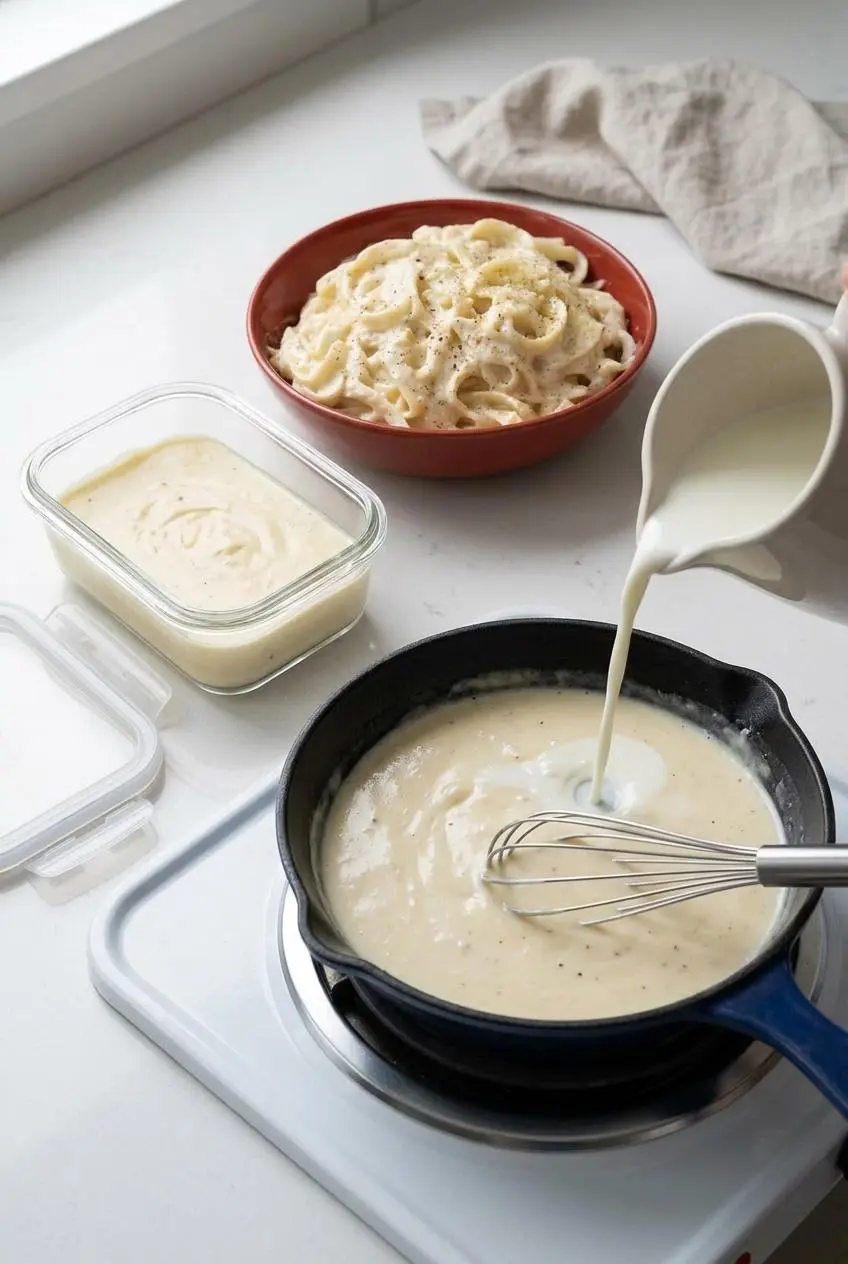
Cool leftover sauce, transfer it to an airtight container, and keep it chilled. Dairy-based foods need refrigeration and temperature control to limit bacterial growth, as described in food safety information for milk products and high-moisture cheeses.
For the best texture, reheat only the portion you plan to use. Warm it slowly in a skillet over low heat with a splash of milk or broth, whisking often until the sauce becomes smooth again. Avoid a hard boil, which can make the butterfat separate and the parmesan turn grainy.
Making the sauce far ahead is not ideal because cream sauces thicken as they sit. If you need to hold it briefly before dinner, keep it covered over very low heat and whisk in a little warm milk only if it tightens too much.
Serving Suggestions and Flavor Variations
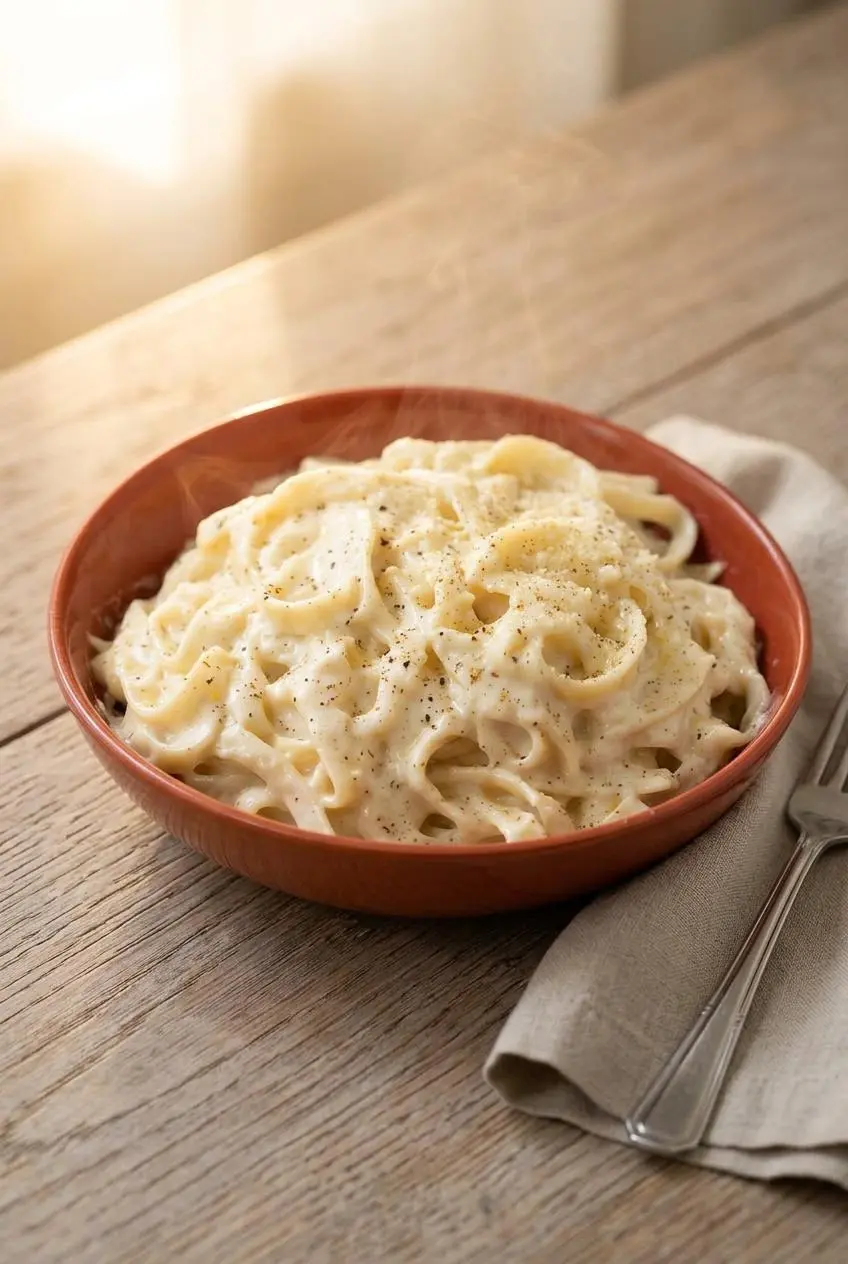
This silky sauce works far beyond a bowl of plain noodles. Serve it right away while it is glossy, then add a crisp or savory contrast to keep the meal from feeling too heavy.
- Garlic herb Alfredo: Finish with Italian herbs, fresh parsley, and cracked black pepper for a more aromatic pasta dinner.
- Spicy Alfredo: Add crushed red pepper flakes or a little Calabrian chili paste for gentle heat that stands up to the rich cheese.
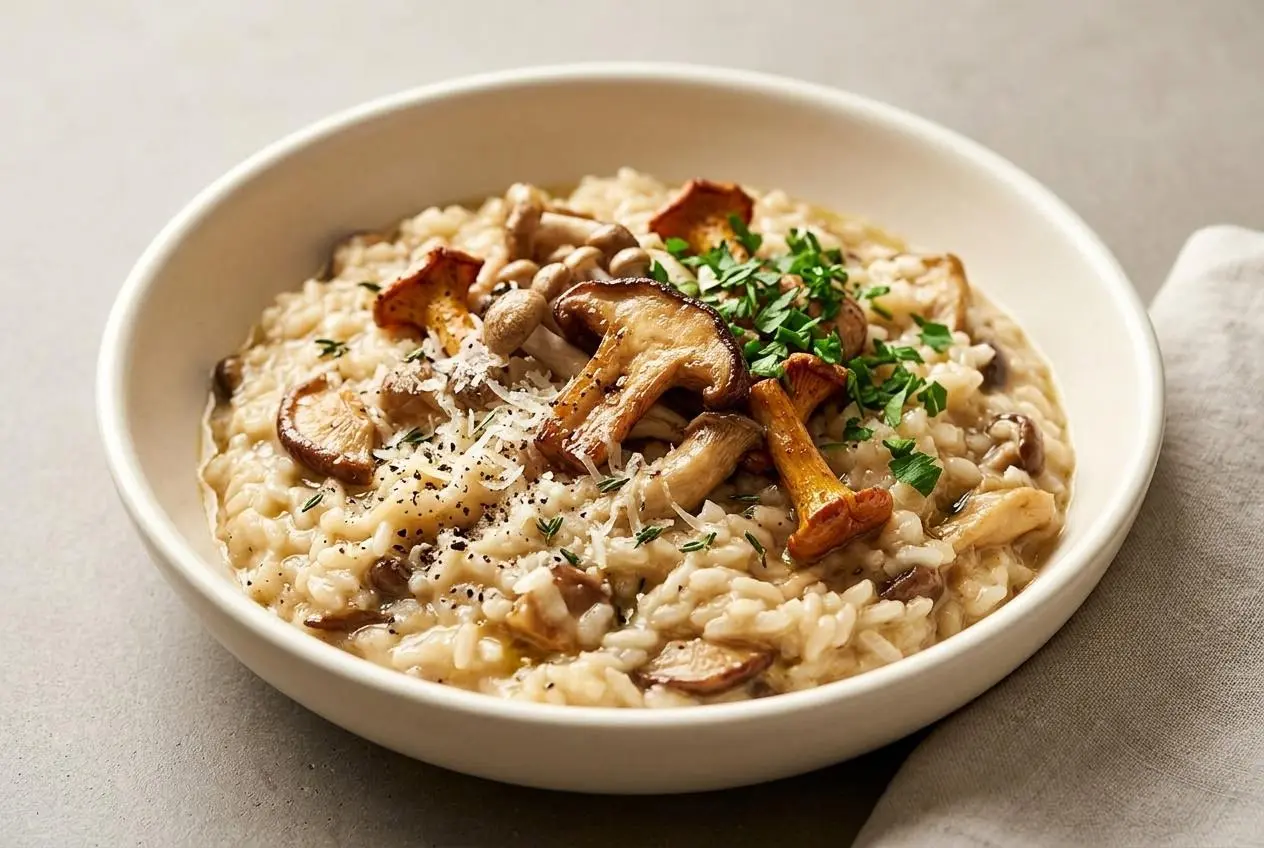
- Vegetable-forward dinner: Spoon the sauce over roasted broccoli, cauliflower, or mushrooms, then add parmesan at the table.
- White pizza base: Spread a thin layer over pizza dough, then top with cooked vegetables or chicken before baking.
For another cozy dinner built around creamy pasta flavors, try alfredo lasagna soup.
Best Pasta Shapes to Pair
Fettuccine and pappardelle are classic choices because their broad ribbons carry a generous layer of sauce. Penne rigate and rigatoni work beautifully too, especially when you want sauce to collect in the ridges and centers.
Cook pasta until it still has a little bite, then toss it with the sauce rather than spooning sauce over a mound of noodles. The pasta absorbs some flavor as it is coated, and a touch of pasta water helps the sauce cling evenly.
Adding Proteins: Chicken, Shrimp, and Bacon
Cook proteins separately, then fold them into the warmed sauce just before serving. Sliced seared chicken breast, garlic shrimp, or crisp bacon all bring a savory contrast without interfering with the sauce’s smooth texture.
If you want a tender chicken-based pairing with a creamy spinach-style dinner, chicken ricotta meatballs make a satisfying addition. Keep cooked proteins warm, but avoid simmering them in the sauce for long, which can make the sauce tighten.
Conclusion
This Alfredo sauce delivers rich garlic and parmesan flavor in about 20 minutes, with cream cheese helping it stay smooth and dependable. Use block cream cheese, add the milk gradually, and keep the skillet calm rather than fiercely hot.
The most useful rule is also the easiest: take the pan off the heat before adding parmesan. That small move keeps the sauce glossy, silky, and ready for a comforting dinner.
Frequently Asked Questions
Why Put Cream Cheese in Alfredo Sauce?
Cream cheese gives the sauce body and helps the butterfat and milk stay blended. It creates a rich texture even when using milk instead of heavy cream. It also makes the sauce more forgiving on a standard home burner.
Can You Make Alfredo Sauce Without Heavy Cream?
Yes. This recipe uses cream cheese to provide richness and thickness. Skim milk, 2% milk, whole milk, half-and-half, or heavy cream all work in the official ingredient options. Whole milk and 2% milk offer a richer result, while skim milk keeps the sauce lighter.
Why Did My Cream Cheese Alfredo Sauce Turn Grainy?
High heat can cause dairy proteins to tighten and parmesan to become grainy. Packaged pre-shredded parmesan may also leave a gritty texture because it does not melt as smoothly. Use freshly grated parmesan and stir it in off the direct heat for the smoothest result.
Can You Freeze Homemade Cream Cheese Alfredo Sauce?
Freezing is not recommended for this sauce because the dairy mixture can separate as it freezes and thaws. The thawed texture may become watery, curdled, or grainy and can be difficult to restore. For the best silky texture, enjoy the sauce fresh or gently reheat chilled leftovers.

Alfredo Sauce With Cream Cheese

Equipment
- Large Skillet
- Whisk
Ingredients
- 2 tablespoons unsalted butter
- 2 cloves garlic minced
- 8 ounces cream cheese cut into small cubes
- 1 1/2 cups skim milk (skim, 2%, whole, or half & half or heavy cream)
- 1 1/2 cups grated parmesan cheese (good quality)
- 1/8 teaspoon salt
- 1/8 teaspoon black pepper
- 1/8 teaspoon grated nutmeg (optional)
Instructions
- Warm a large skillet over medium heat, melt the butter, and add the minced garlic. Stir just until the garlic smells fragrant and softens, keeping it pale rather than browned.
- Add the cubed cream cheese and whisk in the milk gradually as the cheese begins to soften. The mixture may look lumpy and white at first, then becomes smooth and satin-like once all the milk is incorporated.
- Move the skillet off the heat, then whisk in the parmesan, salt, black pepper, and nutmeg if desired. The sauce will thicken quickly as the parmesan melts and should look glossy and cohesive when served immediately.