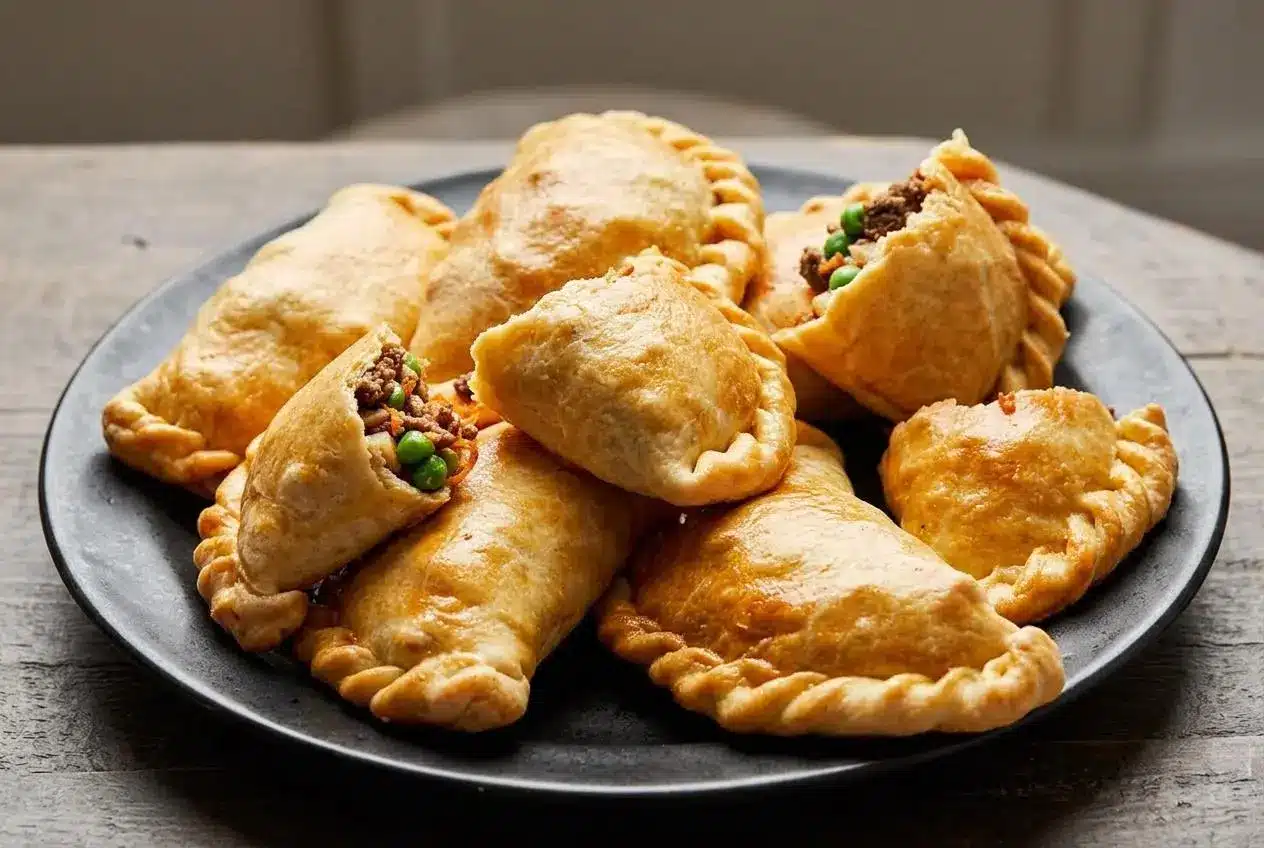
These baked beef empanadas wrap juicy ground beef, potatoes, and warm spices in flaky, buttery pastry. Make the dough, cook the filling until cohesive, then fold, seal, and bake at 375°F until the crust turns deep golden brown.
Grated onion and carrot blend into the meat rather than leaving big vegetable chunks, while diced potato helps hold the savory filling together. Each half-moon has a tender crust with enough structure to pick up and dip.
The recipe makes 10 empanadas, with 30 minutes of prep and 55 minutes of cooking. Allow for at least 30 minutes of dough chilling, which can overlap with preparing the filling, plus the final cooling period. The reward is that first flaky bite.
Keep the butter cold and the filling out of the dough until it has cooled slightly.
Key Ingredients and Why They Matter
Butter creates flaky pockets, egg gives the pastry structure, and ice water brings it together. Beef supplies richness, vegetables add moisture and sweetness, and potatoes bind the stock-moistened filling so it stays juicy without soaking the crust.
Empanada Dough
- 2 ½ cups all purpose flour
- ½ teaspoon sea salt
- ½ cup (1 stick) unsalted butter, chilled, cut into ¼- inch cubes
- 2 large eggs, room temperature
- ⅓ cup ice water, plus more as needed
Beef Filling
- 1 medium russet potato, peeled and cut into ⅓-inch diced (about 1½ cups)
- ¾ pound 80/20 ground beef
- ½ medium yellow onion, grated
- 1 medium carrot, grated
- 1 celery rib, minced
- 2 garlic cloves, minced
- ½ teaspoon chili powder
- 1 teaspoon ground cumin
- ½ teaspoon ground cinnamon
- 1 teaspoon sea salt
- ¼ teaspoon freshly cracked black pepper
- ½ cup frozen peas, thawed
- ¾ cup beef stock
Leave small, visible butter pieces in the dough rather than blending everything into a paste. Those pieces help create a flaky texture during baking. One egg goes into the pastry; the remaining egg becomes the wash that helps seal the edges and gives the tops their golden finish.
Ice water hydrates the flour while keeping the butter cool. The right amount produces dough that holds together when pressed, without feeling wet or sticky.
The 80/20 ground beef supplies richness. Grated onion and carrot soften into the meat, celery adds savory flavor, and russet potato absorbs some stock while helping the filling stay cohesive. Peas add little bursts of sweetness. Cumin and cinnamon give warm, savory depth rather than making the filling especially hot.
Chicken stock is an optional substitute for beef stock, though it gives a lighter flavor. Keep the same moisture cue: the finished filling should hold together, with no loose puddle around it.
I’d grate the onion and carrot before handling the butter so the pastry ingredients stay cold while the vegetables are prepared.
How to Make Beef Empanadas Step by Step
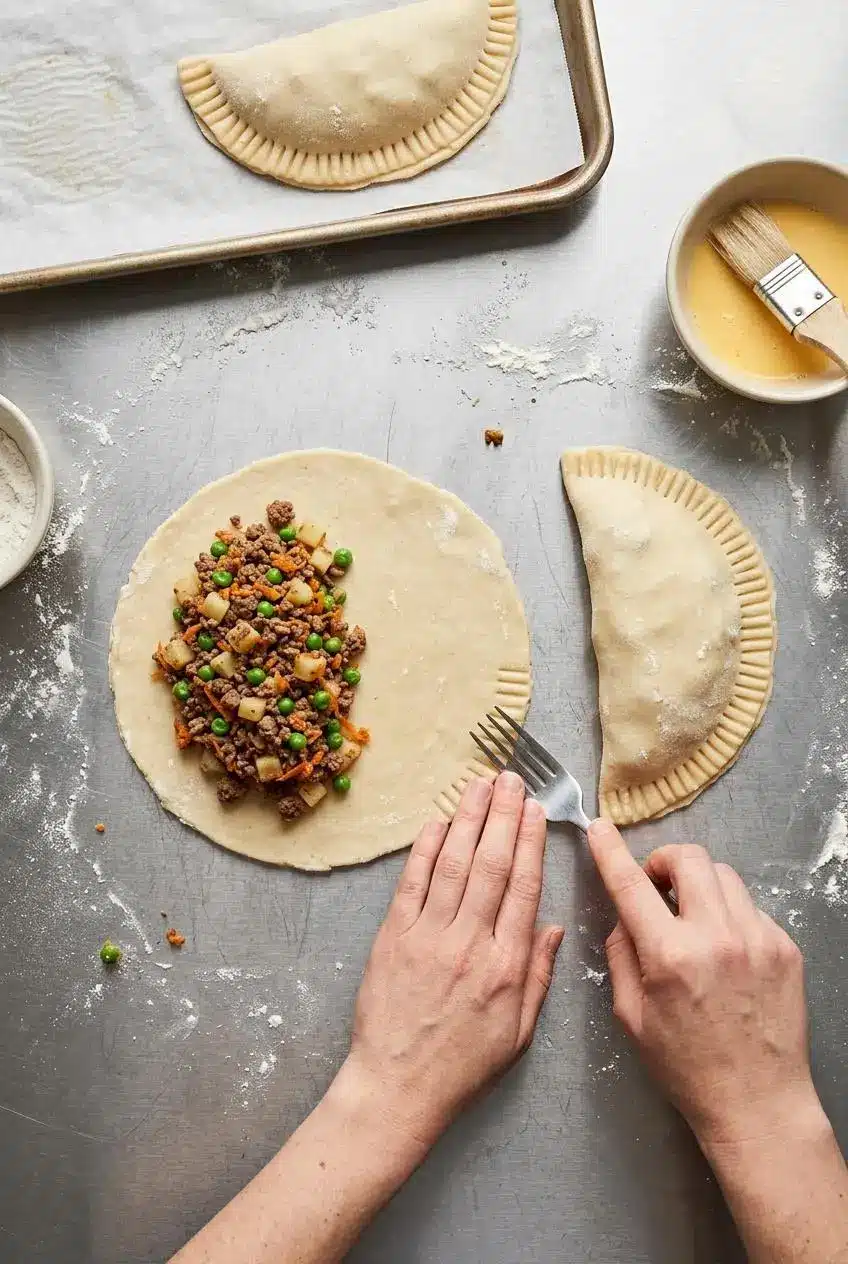
Start with the pastry, then prepare the filling while the dough chills. Have a food processor, medium saucepan, large skillet, rolling pin, parchment-lined rimmed sheet pan, pastry brush, and fork ready.
Mix and Chill the Flaky Empanada Dough
- Give the flour and salt about 5 pulses in a food processor, then add the butter, 1 egg, and ice water and pulse about 20 times, adding extra ice water by the tablespoon only if necessary.
Stop when the mixture gathers under gentle pressure but still looks crumbly, with some larger butter pieces visible. - Gather the mixture on your work surface into a ball, cover it snugly with plastic wrap, and refrigerate for at least 30 minutes.
The chilled dough should feel firm, with the butter kept cold for a flaky crust.
Simmer the Savory Beef and Potato Filling
- Boil salted water in a medium saucepan over high heat, cook the diced potato for 3 to 4 minutes, and drain it.
The cubes should be just tender and still hold their shape. - Set a large skillet over medium-high heat and cook the beef, onion, carrot, and celery for 8 to 10 minutes, using a wooden spoon to break the meat into small pieces.
Look for browned beef and softened vegetables that blend into the mixture. - Add the cooked potato, garlic, chili powder, cumin, cinnamon, salt, pepper, peas, and beef stock, then cook for about 5 minutes with occasional stirring before taking the skillet off the heat to cool slightly.
The filling should gather together with most of the stock absorbed, and the cool-down helps protect the cold butter in the pastry.
Roll, Fill, Seal, and Bake Until Golden
- Heat the oven to 375°F with its rack in the center, line a rimmed sheet pan with parchment, and divide the chilled dough into 10 portions of about 2.2 ounces each before rolling them on a lightly floured surface into thin, 7-inch circles.
Aim for even thickness so the pastry bakes consistently from the folded edge to the center. - Spoon a heaping ⅓ cup of filling onto half of each circle with a ½-inch border, beat the remaining egg with 1 tablespoon water, brush the border with this wash, and fold the empty half over before sealing firmly with fork marks or hand-crimped edges.
The finished pocket should have a continuous seam with no filling caught between the edges. - Transfer the sealed pockets to the lined sheet pan, coat their tops with the remaining egg wash, and bake for 30 to 35 minutes.
Use a deep golden-brown crust as the finishing cue rather than pale pastry. - Give the empanadas 5 minutes to cool before serving.
This short pause lets the hot filling settle while the pastry remains crisp.
Expert Tips and Troubleshooting for Flaky Empanadas
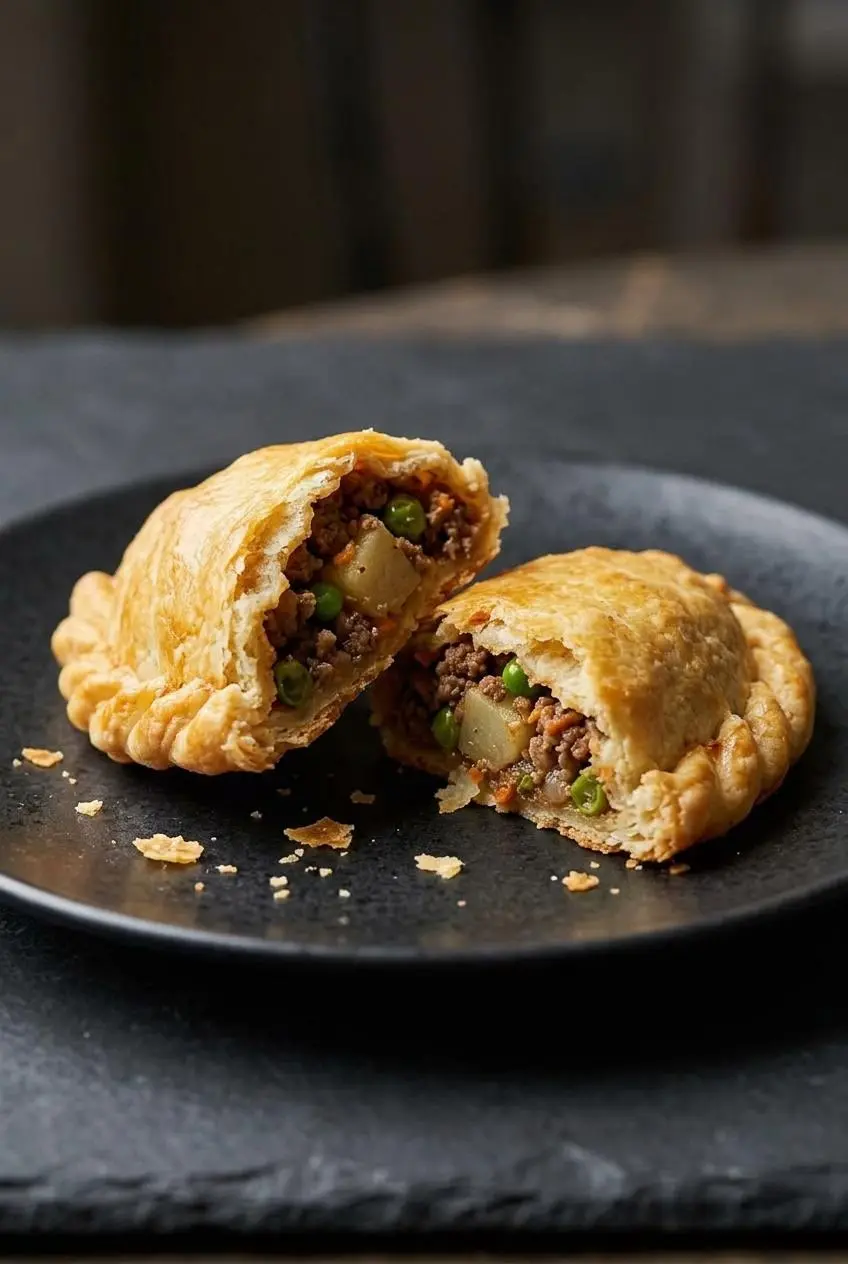
Most pastry problems come down to dough moisture, butter temperature, or filling that is too wet. Match the fix to the problem rather than adding more flour automatically.
- Cracking while folding: Crumbly dough may need more hydration during mixing. Use the tablespoon-at-a-time ice-water adjustment and stop once it holds together.
- Firm dough that resists rolling: Cold dough isn’t necessarily dry. An optional brief counter rest can make it more pliable; don’t let the butter become soft or greasy.
- Tough crust: Too much processing or rolling flour can make pastry less tender. Stop mixing while small butter pieces remain and dust the work surface lightly.
- Soggy bottoms: Loose stock and hot filling work against crisp pastry. Follow the simmering cue and slight cool-down before assembly.
- Splitting seams: Respect the filling amount and clean border. If air collects above the filling, gently ease it out before completing the seal.
- Dry baked pastry: Avoid baking past the deep-golden endpoint. A darkening crust won’t become more tender with extra oven time.
Making the Dough Without a Food Processor
Use the same dough ingredients and quantities. Stir the flour and salt together, then cut in the cold butter with a pastry cutter or rub it in lightly with your fingertips. Leave small, roughly pea-sized pieces rather than making the mixture uniformly sandy.
Beat the dough egg, then stir it in with the ice water. Gather the mixture gently, adjusting the water as described above, and stop once it holds together. Don’t knead it smooth. Wrap and chill for the same minimum period before rolling. A blender is not a direct substitute for this gentle mixing method.
Baking, Air Frying, or Pan-Frying
- Oven baking: The method above uses 375°F for 30 to 35 minutes and suits these large, 7-inch pockets.
- Air frying: A basket limits capacity, and circulating heat can brown the outside differently. Use a method developed for your appliance and pastry size rather than transferring the oven settings unchanged.
- Pan-frying: Direct heat and cooking fat produce a different crust. This butter-rich dough has no established pan-frying settings here, so choose a frying-specific method if that is your preferred result.
Check that the ground beef reaches a minimum internal temperature of 160°F with a food thermometer. Brown color alone does not confirm doneness.
Flavor Variations and Regional Styles
Keep these flavor directions optional. Empanada fillings vary widely, and this beef, vegetable, and potato combination is not an exact version of every regional style.
Argentine and Chilean Style With Olives and Egg
Chopped green olives and hard-boiled egg appear in some Argentine empanadas and Chilean pino fillings. Olives bring a salty contrast to the beef, while egg adds a tender, distinct texture. Leave room for these additions rather than packing the pastry more tightly.
Smoky Beef and Chorizo Empanadas
For a smoky direction, brown finely chopped cured chorizo with the beef. Its seasoning and richness can dominate, so taste the cooked filling before adding more salt. There is no fixed substitution ratio here; keep this separate from the measured beef filling above.
Cheesy, Spicy Mexican-Style Empanadas
Jalapeños or cayenne add heat, while cheddar or mozzarella brings a melted-cheese center. Think of these as Mexican-inspired options rather than an exact Mexican picadillo filling. If you enjoy the seasoning in ground beef tacos, this is a natural flavor direction to explore.
Extra cheese and vegetables still count toward the filling volume. Keep the border clear so the edges can meet without stretching.
Mini Party Empanadas and Store-Bought Dough Shortcuts
- Mini empanadas: Smaller pockets suit appetizer platters, but need less filling and their own baking checks. Don’t assume the full-size yield or timing applies.
- Packaged empanada discos: Check both diameter and whether the dough is intended for baking or frying, then follow package directions.
- Pie crust: This gives a shortcrust texture that differs from the homemade dough. Handle it gently and use the package’s baking guidance.
- Puff pastry: Expect a more pronounced layered rise and a different texture around the filling. Keep it cold and follow its baking directions.
- Optional savory brightness: Stir tomato paste and apple cider vinegar into the filling during its final simmer for deeper savoriness and a brighter contrast.
Make-Ahead and Storage Guide
Keep the dough and cooked filling separate until assembly to protect the pastry’s texture. Covered, chilled components are easier to manage than warm filling sitting inside raw dough.
- Dough: Keep it tightly wrapped in the refrigerator so its surface doesn’t dry out. If it feels rigid when you’re ready to roll, use the brief optional rest described above.
- Cooked filling: Transfer it to a covered container and refrigerate promptly when holding it for later assembly. Keep it separate from the pastry.
- Baked leftovers: Refrigerate promptly in a covered container. Avoid leaving a platter on the counter while deciding what to save.
- Reheating: An oven helps restore a crisper exterior than a microwave, which tends to soften pastry. Warm portions until the filling is hot throughout, without treating the fresh-bake timing as a reheating schedule.
What to Serve With Beef Empanadas
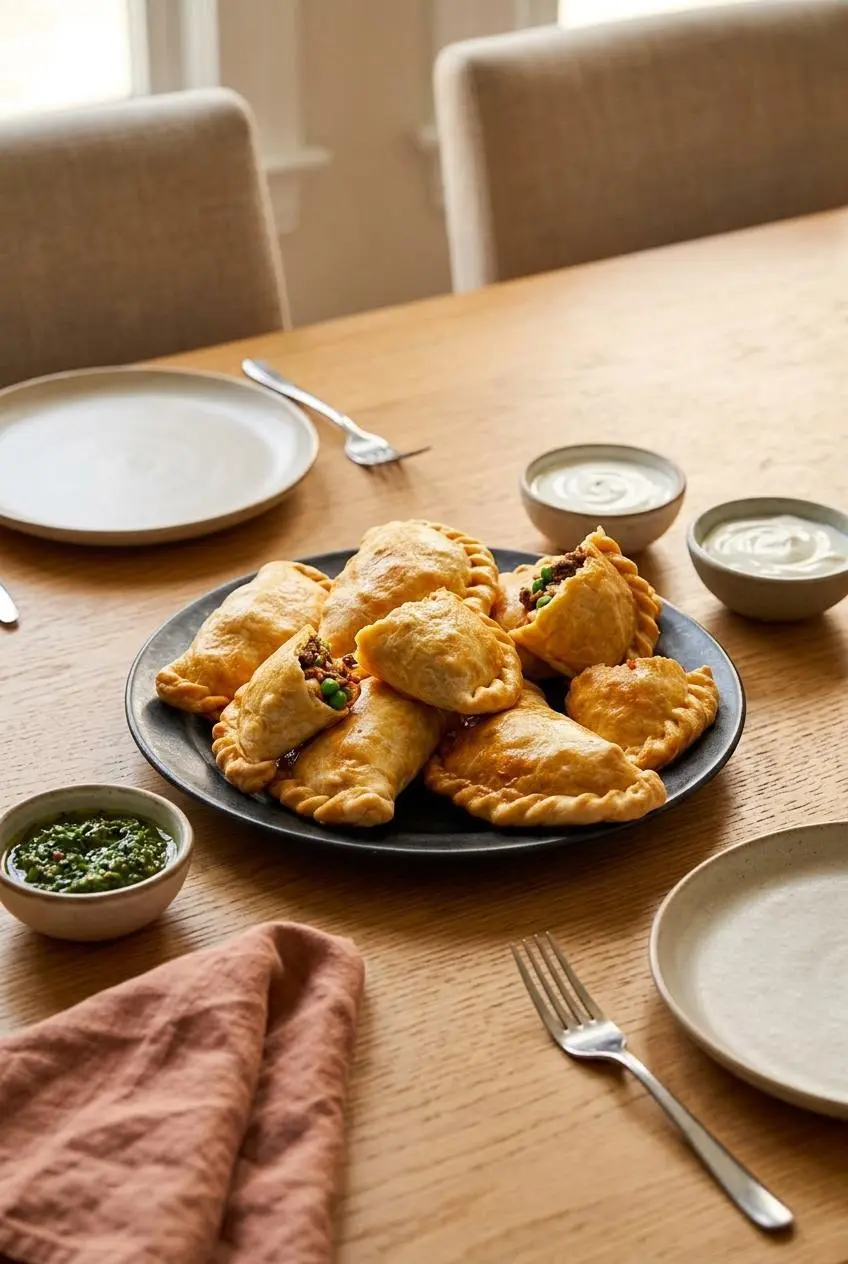
A bright or creamy dip balances the rich pastry and warm-spiced filling. Choose the contrast that suits your meal.
- Herby: Chimichurri sauce brings a lively, fresh contrast to the beef.
- Bright: Salsa verde or tomato salsa cuts through the buttery crust.
- Spicy and creamy: A mayonnaise-based pink sauce with ketchup and sriracha adds gentle heat.
- Cooling: Sour cream softens the impression of spice without competing with the filling.
For dinner, add a crisp green salad and black beans. For game day or holiday gatherings, arrange the empanadas with separate dipping bowls; roast beef sliders can round out a larger handheld-food spread.
For a packed lunch, refrigerate the cooled empanadas and transport them in an insulated bag with cold packs. Keep them chilled until eating rather than treating the pastry shell as protection from warm temperatures.
Conclusion
Flaky pastry and a juicy, warm-spiced filling make these empanadas satisfying enough for dinner and easy to serve as handheld party food.
Leave butter pieces in the dough, simmer away loose stock, and give each pocket a firm seal. Those details make the golden crust worth looking forward to.
Frequently Asked Questions
Why Did My Empanada Crust Turn Out Dry or Crack When Folding?
Too little water can leave dough crumbly. Adjust during mixing by the tablespoon until it holds together. Very cold dough may simply need a brief optional counter rest before rolling. Excess flour, overworking, and baking beyond deep golden brown can all make the finished crust dry or tough.
Can I Make the Empanada Dough by Hand Without a Food Processor?
Yes. Cut or rub cold butter into the salted flour, leaving small butter pieces. Stir in the dough egg and ice water, then gather gently without prolonged kneading. Keep the same chilling requirement before rolling.
How Should I Store Baked Empanadas?
Refrigerate leftovers promptly in a covered container rather than leaving them on a serving platter. Use the oven when reheating for a crisper crust, and heat the filling thoroughly. Keep packed portions chilled during transport, as described above.
What Dipping Sauces Go Best With Baked Beef Empanadas?
Chimichurri adds herbs and tang; salsa verde or tomato salsa brings brightness. Pink sauce gives a creamy, gently spicy contrast. Sour cream is a cool, mellow option alongside the warm spices.

Beef Empanadas

Equipment
- Food processor
- Medium saucepan
- Large Skillet
- Wooden Spoon
- Rimmed sheet pan
- Parchment Paper
- Rolling Pin
- Pastry brush
- Fork
Ingredients
Empanada Dough
- 2 ½ cups all purpose flour
- ½ teaspoon sea salt
- ½ cup unsalted butter (1 stick) chilled, cut into ¼- inch cubes
- 2 large eggs room temperature
- ⅓ cup ice water plus more as needed
Beef Filling
- 1 medium russet potato peeled and cut into ⅓-inch diced (about 1½ cups)
- ¾ pound 80/20 ground beef
- ½ medium yellow onion grated
- 1 medium carrot grated
- 1 celery rib minced
- 2 garlic cloves minced
- ½ teaspoon chili powder
- 1 teaspoon ground cumin
- ½ teaspoon ground cinnamon
- 1 teaspoon sea salt
- ¼ teaspoon freshly cracked black pepper
- ½ cup frozen peas thawed
- ¾ cup beef stock
Instructions
Mix and Chill the Flaky Empanada Dough
- Give the flour and salt about 5 pulses in a food processor, then add the butter, 1 egg, and ice water and pulse about 20 times, adding extra ice water by the tablespoon only if necessary. Stop when the mixture gathers under gentle pressure but still looks crumbly, with some larger butter pieces visible.
- Gather the mixture on your work surface into a ball, cover it snugly with plastic wrap, and refrigerate for at least 30 minutes. The chilled dough should feel firm, with the butter kept cold for a flaky crust.
Simmer the Savory Beef and Potato Filling
- Boil salted water in a medium saucepan over high heat, cook the diced potato for 3 to 4 minutes, and drain it. The cubes should be just tender and still hold their shape.
- Set a large skillet over medium-high heat and cook the beef, onion, carrot, and celery for 8 to 10 minutes, using a wooden spoon to break the meat into small pieces. Look for browned beef and softened vegetables that blend into the mixture.
- Add the cooked potato, garlic, chili powder, cumin, cinnamon, salt, pepper, peas, and beef stock, then cook for about 5 minutes with occasional stirring before taking the skillet off the heat to cool slightly. The filling should gather together with most of the stock absorbed, and the cool-down helps protect the cold butter in the pastry.
Roll, Fill, Seal, and Bake Until Golden
- Heat the oven to 375°F with its rack in the center, line a rimmed sheet pan with parchment, and divide the chilled dough into 10 portions of about 2.2 ounces each before rolling them on a lightly floured surface into thin, 7-inch circles. Aim for even thickness so the pastry bakes consistently from the folded edge to the center.
- Spoon a heaping ⅓ cup of filling onto half of each circle with a ½-inch border, beat the remaining egg with 1 tablespoon water, brush the border with this wash, and fold the empty half over before sealing firmly with fork marks or hand-crimped edges. The finished pocket should have a continuous seam with no filling caught between the edges.
- Transfer the sealed pockets to the lined sheet pan, coat their tops with the remaining egg wash, and bake for 30 to 35 minutes. Use a deep golden-brown crust as the finishing cue rather than pale pastry.
- Give the empanadas 5 minutes to cool before serving. This short pause lets the hot filling settle while the pastry remains crisp.