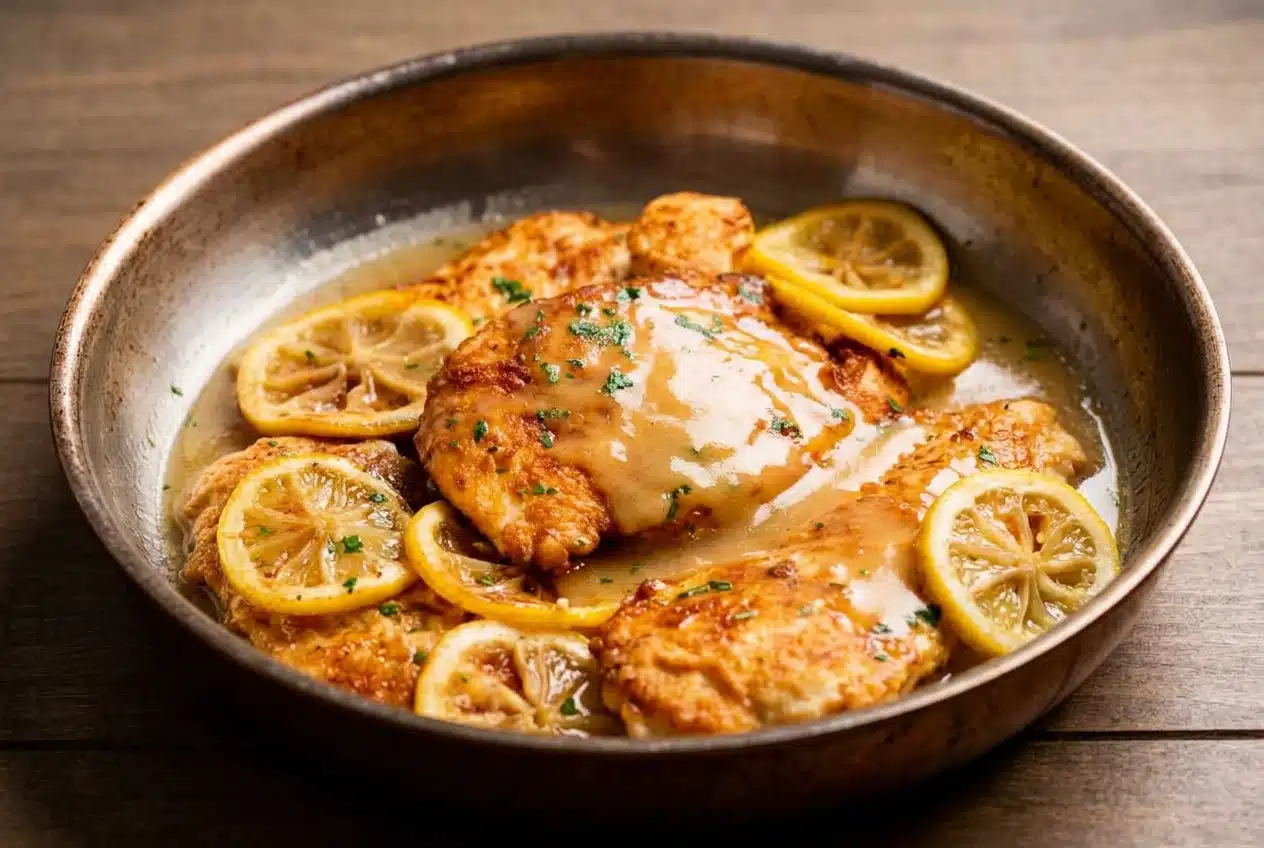
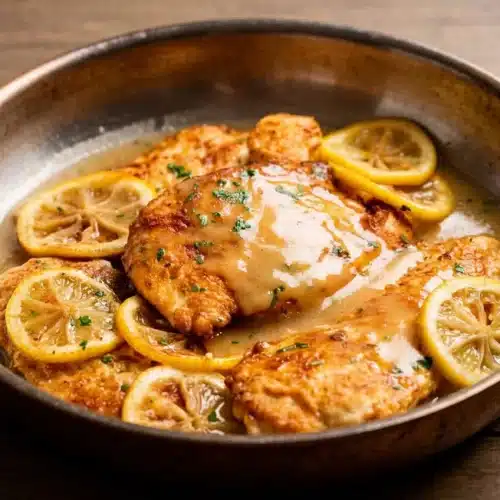
Chicken francese is an Italian-American dish of thin chicken cutlets coated in flour, dipped in egg, and pan-fried until golden, then finished with a velvety lemon, white wine, butter, and chicken stock sauce.
The egg coating gives chicken francese its distinctive tender crust. Unlike breaded chicken, these cutlets have a delicate golden surface that welcomes a generous spoonful of sauce.
This version builds the sauce with a butter-and-flour roux, giving it enough body to cling to the chicken instead of pooling thinly underneath. Seared lemon slices bring citrus flavor and lightly browned edges. Save room for that sauce.
Keep the coating flour and sauce flour separate so each is ready when you need it.
Ingredients
Every ingredient contributes to the balance: chicken provides the tender center, flour and egg build the coating, butter gives the sauce richness, and lemon and dry white wine bring brightness.
- 2 large chicken breasts (, skinless boneless (250-300g / 8-10oz each))
- 1/4 cup flour (, plain / all-purpose)
- 1 tsp cooking salt / kosher salt
- 1 tsp black pepper
- 2 large eggs
- 1 tbsp milk ( (any fat %))
- 3 tbsp extra virgin olive oil
- 1 lemon (, thinly sliced 0.3cm / 1/8″)
- 50g / 3 tbsp unsalted butter
- 2 tbsp flour (, plain / all-purpose)
- 2 cups chicken stock/broth (, low sodium)
- 1/3 cup Chardonnay or other dry white wine ((Note 1))
- 1/2 tsp cooking salt / kosher salt ((no pepper!))
- 1 tbsp finely chopped parsley (, for garnish (optional))
The measurements above separate the flour and seasonings for the chicken from those for the sauce. Thin breast cutlets provide a broad surface for the egg coating, while milk loosens the beaten eggs for an even covering. Olive oil supplies the frying fat.
Butter and the second portion of flour form the roux, which thickens the stock into a smooth sauce. Low-sodium stock gives you more control over seasoning. Thin lemon slices soften in the skillet, and optional parsley adds fresh flavor and green color at serving.
Note 1: Chardonnay or Pinot Grigio are suitable dry white wine choices. Choose a wine with a flavor you enjoy, rather than a sweet wine that would change the sauce’s balance.
I’d choose evenly shaped chicken breasts here; they’re easier to slice into cutlets with matching thickness from edge to center.
How to Make Chicken Francese
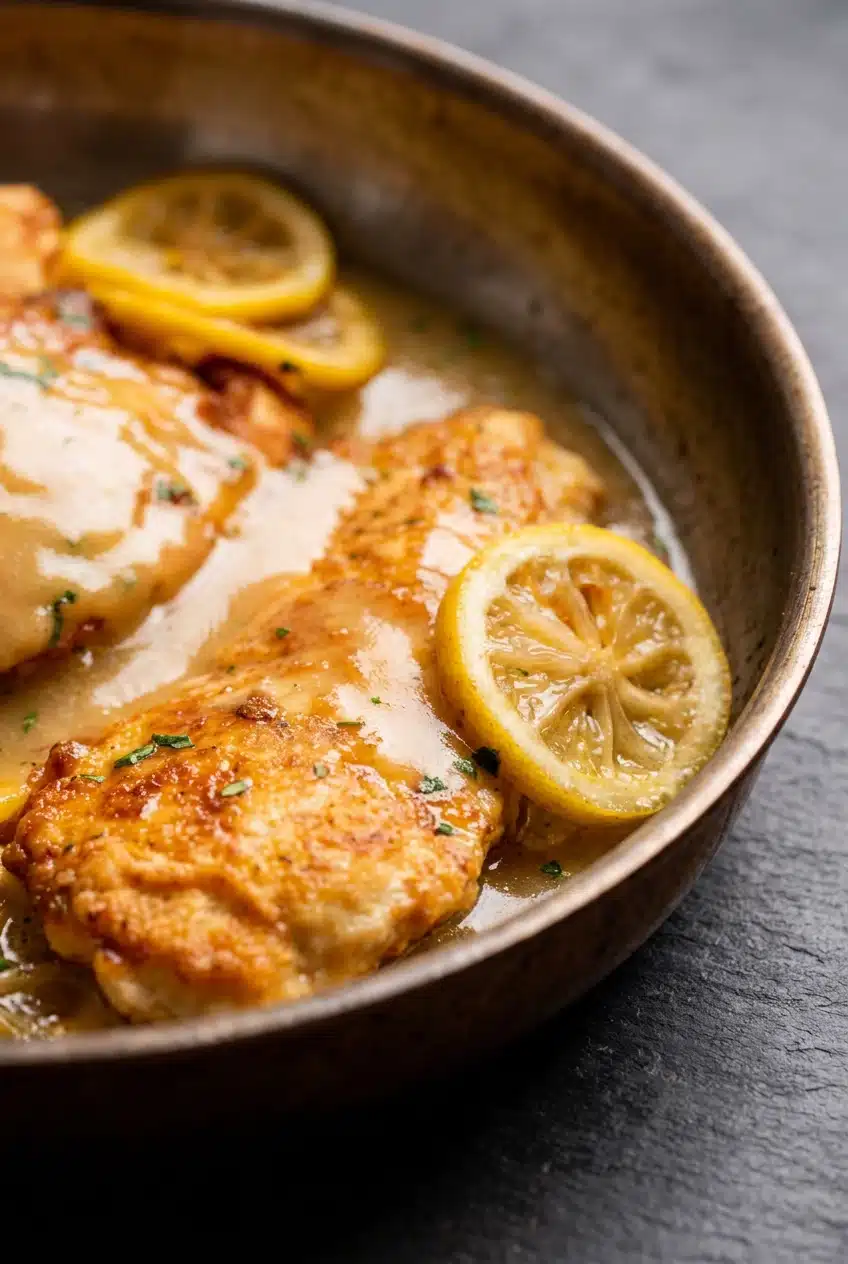
Follow the sequence below so the cutlets brown first, the lemon softens next, and the sauce comes together in a clean pan.
- Slice horizontally through each chicken breast to create 4 thin cutlets altogether.
Aim for matching thickness across each piece so the centers and edges cook evenly. - Beat the eggs together with the milk in a small bowl and reserve the mixture for dipping.
The wash should look evenly blended, without distinct streaks of egg white. - Combine the coating flour, salt, and pepper on a plate, then dredge each cutlet, shake away loose flour, and transfer to another plate.
A light, even dusting gives the egg something to cling to without leaving thick flour patches. - Place a large nonstick skillet over medium-high heat and add the olive oil.
Let the oil become hot and gently shimmering before adding the coated chicken. - Pass each floured cutlet through the egg wash, let the surplus drip away, and fry for 3 minutes before turning, reducing the heat to medium, and cooking for 4 minutes more; transfer to a plate once cooked through.
Look for golden coating on both sides, but check doneness with a food thermometer rather than relying on crust color alone. - Sear the lemon slices in the same skillet for 1 minute, turn them over for another 30 seconds, then transfer them to a plate.
The slices should soften and develop browned patches without blackening. - Carefully clear the skillet with paper towels before starting the sauce.
Remove the remaining egg fragments and dark residue for a cleaner-looking sauce. - Over medium heat, melt the butter, add the sauce flour, and work the mixture with a wooden spoon for 1 minute.
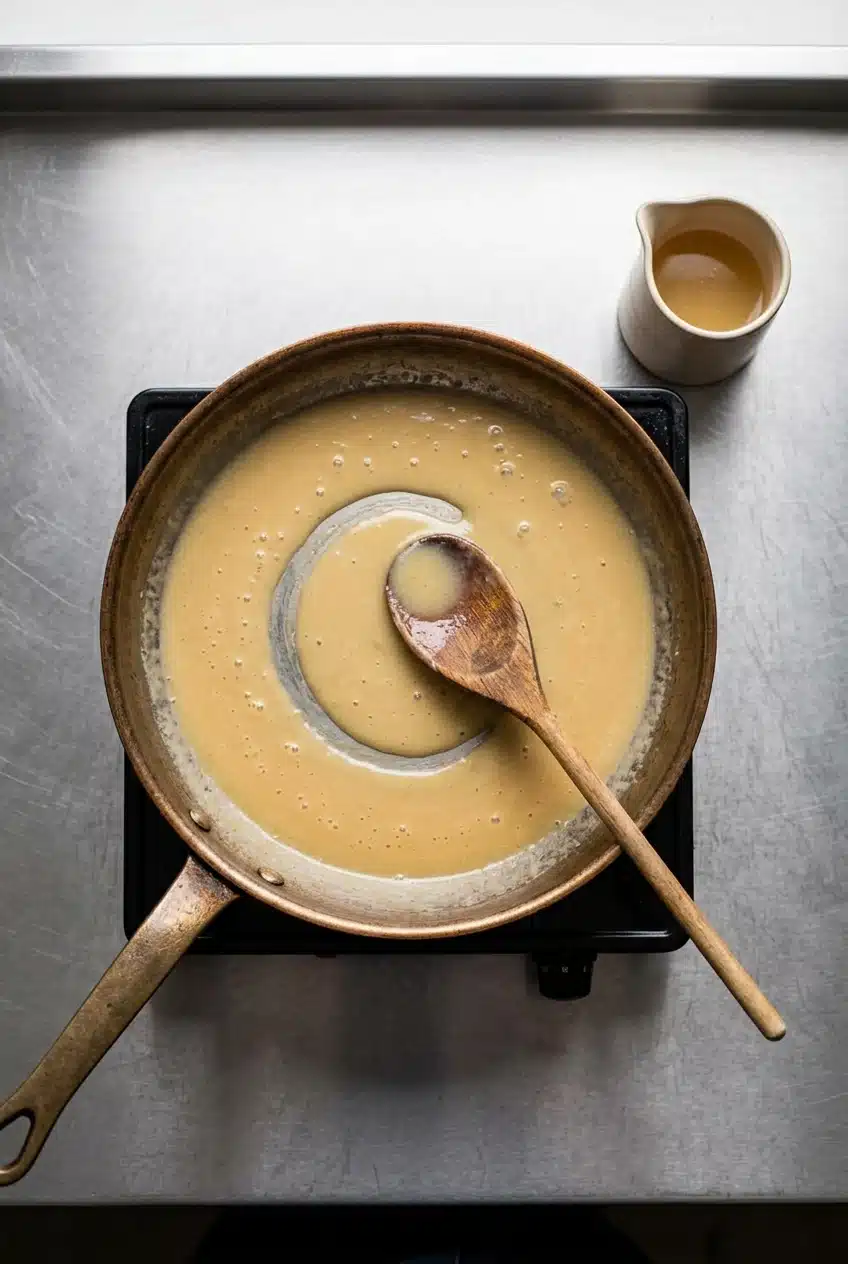
The flour should blend evenly into the butter rather than remain in dry pockets. - Slowly add half the stock while stirring, then incorporate the remaining stock once the flour mixture is smooth, followed by the wine and sauce salt.
The liquid should become uniform as the roux disperses, with no visible flour clumps. - Raise the heat slightly and let the sauce simmer for 3 to 4 minutes.
Stop reducing when it looks glossy and syrupy enough to coat the back of a spoon. - Put the chicken and lemon slices back into the skillet, spoon sauce over the cutlets, and finish with parsley if using.
Serve with all the sauce, leaving each cutlet generously coated.
Spelling and Piccata Comparison
The defining feature of this Italian-American dish is its flour-then-egg coating, paired with a lemon-wine butter sauce. The name can vary on menus without changing that central idea.
Chicken Francese vs. Chicken Francaise
These names generally describe the same dish. “Francese” is the Italian spelling for “French,” while “Francaise” reflects French spelling, commonly written “française” in French. On American menus, you may hear “fran-CHAY-zay” for Francese and “frahn-SEZ” for Francaise; pronunciation varies.
Chicken Francese vs. Chicken Piccata
Francese typically has an egg coating over flour, while piccata usually has a flour-only dredge. Piccata commonly includes capers in a thinner, sharper lemon sauce. This Francese version has no capers and uses a roux for a fuller-bodied sauce, though restaurant styles differ.
Pro Tips and Troubleshooting for a Crisp Crust and Silky Sauce
A light coating and controlled heat matter more than chasing a deeply browned crust. Once sauced, the egg coating will soften, which is part of the dish’s character.
- Coating slips off: Excess flour can create a loose layer beneath the egg, so shake each cutlet thoroughly before dipping it just before frying.
- Chicken looks pale: Crowding cools the pan and traps moisture; give the cutlets space rather than squeezing them against one another.
- Egg browns too quickly: Maintain the stated heat change after turning the chicken, since the delicate coating can darken before the center finishes cooking.
- Bottom coating turns damp: Steam collects beneath resting cutlets; an optional wire rack can reduce that contact moisture, although the method uses a plate.
- Lemon makes wet patches: Keep the cooked slices beside the resting chicken rather than stacked on it, then return both to the sauce as directed.
- Sauce contains dark flecks: Leftover fried egg fragments can muddy its appearance, so wipe the skillet before melting the butter.
- Sauce turns lumpy: Adding stock too quickly makes the roux harder to disperse; stir steadily with the wooden spoon and smooth out the first addition before continuing.
For the coating station, discard egg wash that has contacted raw chicken rather than saving it for another dish. Golden color alone does not establish poultry doneness.
Easy Variations and Ingredient Substitutions
These optional directions change the flavor or ingredients without becoming part of the ingredient list above.
Alcohol-Free / No-Wine Sauce Swap
- Non-alcoholic white wine is an optional alternative to regular wine; check the product label if avoiding alcohol is essential.
- Extra chicken stock with lemon juice offers a no-wine direction, with a more stock-forward flavor and citrus brightness.
Parmesan Egg-Wash Crust
Optional grated Parmigiano Reggiano brings a nutty, savory flavor to the egg-wash crust. It changes the seasoning profile, so expect a more cheese-forward result.
Gluten-Free Dredge and Sauce Thickener
A gluten-free all-purpose flour blend is an optional choice for both the dredge and sauce thickener. Blends differ in texture and thickening behavior; check all ingredient labels if gluten avoidance is necessary.
Boneless Chicken Thighs Swap
Boneless, skinless chicken thighs offer a darker-meat alternative with a richer flavor and different texture. Their less uniform shape means they aren’t an identical replacement for breast cutlets.
Best Side Dishes to Serve with the Cutlets
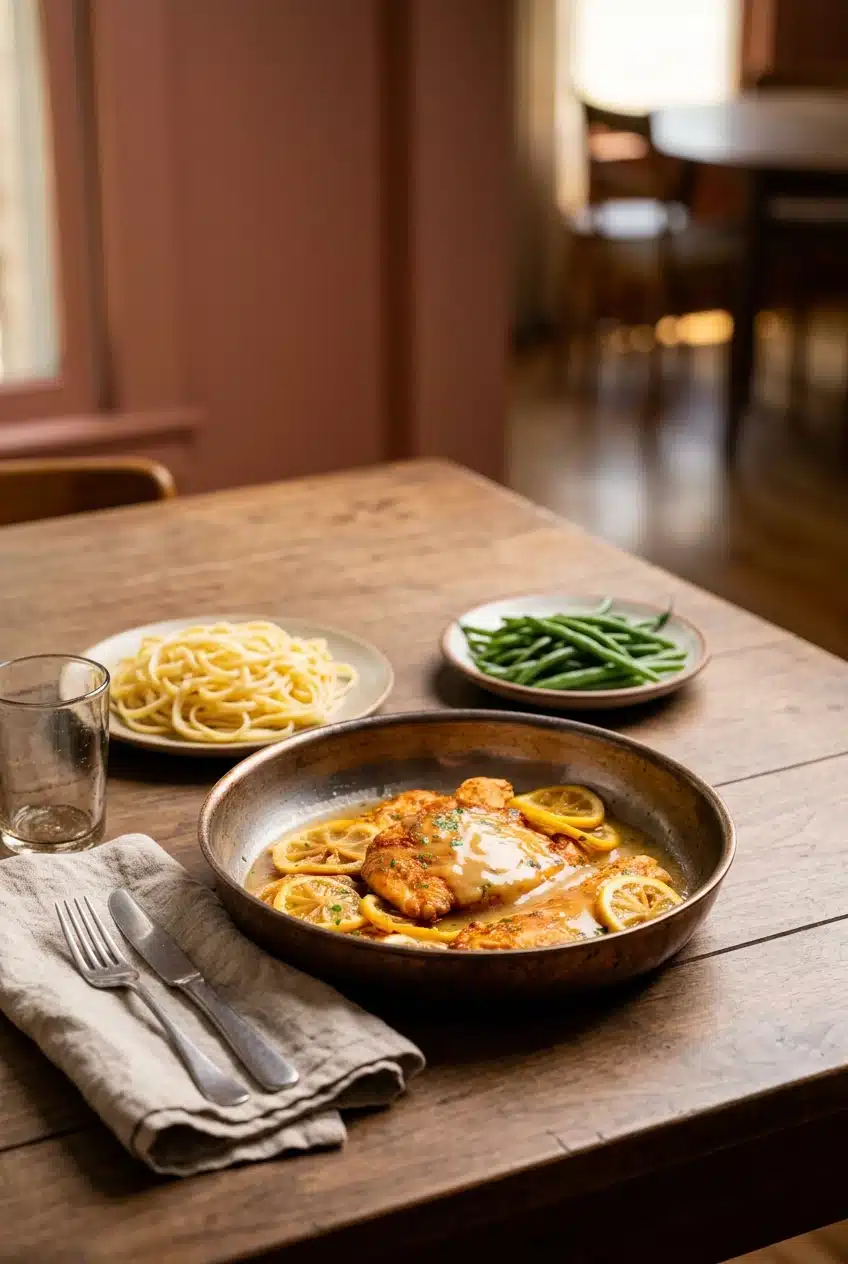
Choose something that welcomes sauce, then add a vegetable with contrasting texture.
Pasta, Potatoes, Rice, and Bread
Angel hair or linguine catches the sauce between the strands. Mashed potatoes, rice, orzo, and risotto provide softer foundations, while crusty bread gives you a crisp way to enjoy what remains on the plate.
Light Vegetable and Salad Pairings
Asparagus, green beans, spinach, or crisp salad greens balance the buttery sauce with fresh flavor and contrasting texture. Spoon the sauce generously as directed, and arrange the softened lemon slices on top at serving for a tidy finish.
Make-Ahead, Storage, and Reheating Tips
Plan to serve the chicken after its final coating in sauce, when the contrast between the golden exterior and glossy sauce is most noticeable. Measure the sauce ingredients before frying so the transition between stages stays manageable.
For leftovers, refrigerate promptly in a covered, airtight container rather than leaving the dish out. Keep the sauce with the chicken to limit drying. Reheat gently in the sauce, check that the chicken heats thoroughly throughout, and expect a softer coating rather than a freshly fried texture.
Final Thoughts on Making This Dish at Home
Thin cutlets, a light flour dredge, and careful heat control give this dish its golden exterior. Gradual stock additions turn the butter-and-flour mixture into a smooth, glossy sauce.
Watch for softened lemon slices and sauce that coats a spoon. Bring everything together at the end, and enjoy the chicken while the sauce is ready to spoon generously.
Frequently Asked Questions
What Is the Difference Between Chicken Francese and Chicken Piccata?
Francese generally uses flour followed by egg; piccata typically uses flour alone. Piccata commonly includes capers, while this Francese has a thicker lemon-wine sauce without them.
What Is the Difference Between Chicken Francaise and Chicken Francese?
They generally refer to the same Italian-American chicken dish. The difference is spelling: Francese is Italian, while Francaise reflects French.
Can You Make Chicken Francese Without White Wine?
Yes, non-alcoholic white wine is an optional alternative. Extra chicken stock with lemon juice offers another direction, with a different flavor balance.
Can I Use Chicken Thighs or Gluten-Free Flour Instead?
Boneless, skinless thighs are an optional alternative with richer flavor and a less uniform shape. A gluten-free all-purpose flour blend can replace the flour in the coating and sauce, though results vary by blend.
How Should Leftover Chicken Francese Be Stored and Reheated Safely?
Refrigerate leftovers promptly in a covered, airtight container, keeping the sauce with the chicken. Reheat gently in the sauce and check that the chicken heats thoroughly throughout; the coating will be softer than when freshly cooked.
Chicken Francese

Equipment
- Large nonstick skillet
- Small bowl
- Wooden Spoon
- Food thermometer
Ingredients
- 2 large chicken breasts skinless boneless (250-300g / 8-10oz each)
- 1/4 cup flour plain / all-purpose
- 1 tsp cooking salt / kosher salt
- 1 tsp black pepper
- 2 large eggs
- 1 tbsp milk any fat %
- 3 tbsp extra virgin olive oil
- 1 lemon thinly sliced 0.3cm / 1/8″
- 50 g unsalted butter 3 tbsp
- 2 tbsp flour plain / all-purpose
- 2 cups chicken stock/broth low sodium
- 1/3 cup Chardonnay or other dry white wine (Note 1)
- 1/2 tsp cooking salt / kosher salt (no pepper!)
- 1 tbsp finely chopped parsley for garnish (optional)
Instructions
- Slice horizontally through each chicken breast to create 4 thin cutlets altogether. Aim for matching thickness across each piece so the centers and edges cook evenly.
- Beat the eggs together with the milk in a small bowl and reserve the mixture for dipping. The wash should look evenly blended, without distinct streaks of egg white.
- Combine the coating flour, salt, and pepper on a plate, then dredge each cutlet, shake away loose flour, and transfer to another plate. A light, even dusting gives the egg something to cling to without leaving thick flour patches.
- Place a large nonstick skillet over medium-high heat and add the olive oil. Let the oil become hot and gently shimmering before adding the coated chicken.
- Pass each floured cutlet through the egg wash, let the surplus drip away, and fry for 3 minutes before turning, reducing the heat to medium, and cooking for 4 minutes more; transfer to a plate once cooked through. Look for golden coating on both sides, but check doneness with a food thermometer rather than relying on crust color alone.
- Sear the lemon slices in the same skillet for 1 minute, turn them over for another 30 seconds, then transfer them to a plate. The slices should soften and develop browned patches without blackening.
- Carefully clear the skillet with paper towels before starting the sauce. Remove the remaining egg fragments and dark residue for a cleaner-looking sauce.
- Over medium heat, melt the butter, add the sauce flour, and work the mixture with a wooden spoon for 1 minute. The flour should blend evenly into the butter rather than remain in dry pockets.
- Slowly add half the stock while stirring, then incorporate the remaining stock once the flour mixture is smooth, followed by the wine and sauce salt. The liquid should become uniform as the roux disperses, with no visible flour clumps.
- Raise the heat slightly and let the sauce simmer for 3 to 4 minutes. Stop reducing when it looks glossy and syrupy enough to coat the back of a spoon.
- Put the chicken and lemon slices back into the skillet, spoon sauce over the cutlets, and finish with parsley if using. Serve with all the sauce, leaving each cutlet generously coated.