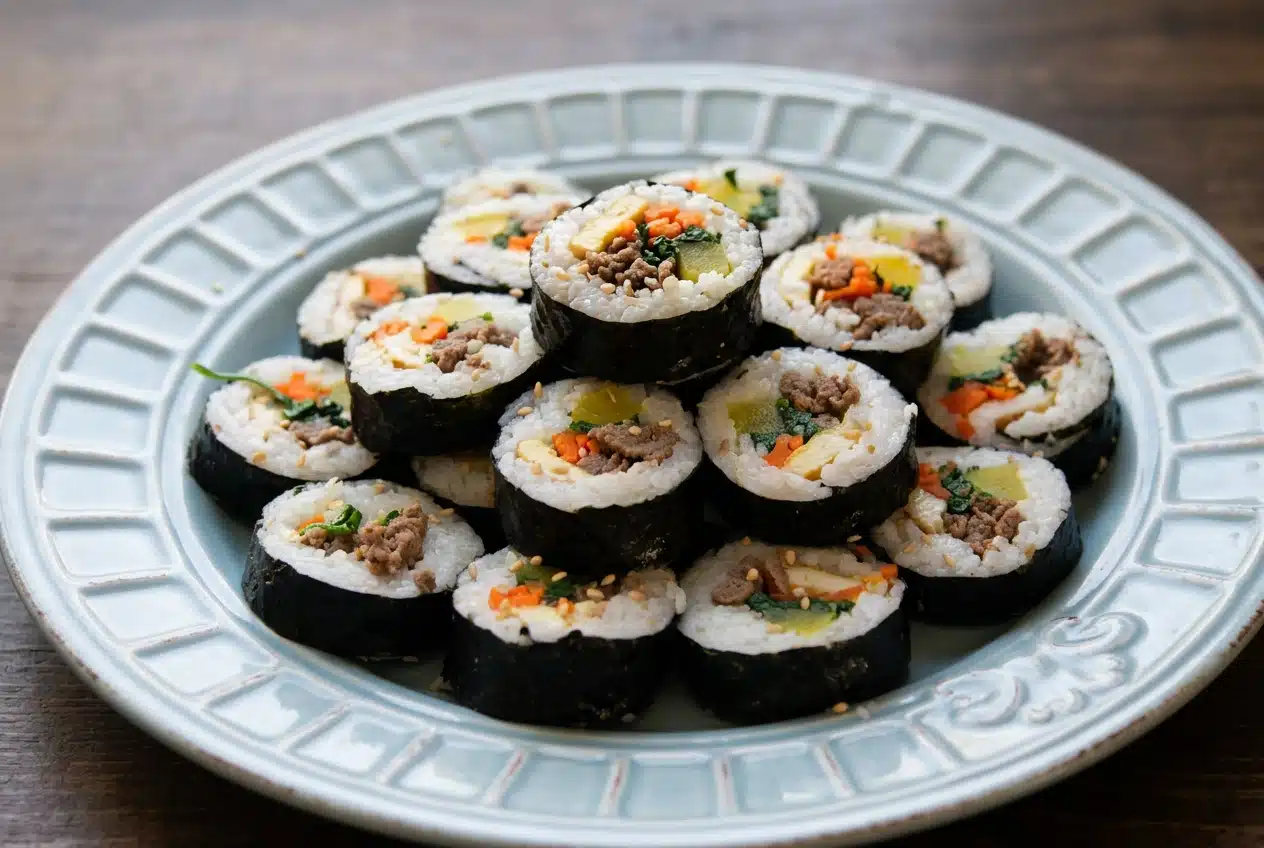
Beef kimbap is a Korean seaweed rice roll filled with seasoned cooked beef, vegetables, and egg. Sesame rice gives it a nutty aroma, while pickled radish adds crisp contrast. Thin rice layers, dry fillings, and even pressure help create tight rolls and clean slices.
These colorful rolls tuck savory beef, tender egg strips, carrots, and spinach inside dried laver seaweed, also called gim. Each bite brings together soft rice and bright, crunchy danmuji.
The fillings take some organizing, but assembly becomes much easier when everything is ready before you season the rice. The neat-slice trick starts before rolling.
Give the spinach a thorough squeeze: it should feel compact and damp, without releasing droplets when pressed.
Essential Ingredients and Substitutions
Every component contributes flavor or structure: rice binds the fillings, seaweed wraps them, beef supplies savory richness, and vegetables add color and contrast. Egg softens the bite, while sesame oil, seeds, garlic, soy sauce, sugar, and salt round out the seasoning.
- 6-7 Sheets dried laver seaweed
- A 9 or 10 oz bag of ready to use spinach
- 1 log of yellow pickled radish (or “danmuji”)
- 1 large carrot (or 2 medium sized carrots, peeled)
- 5 Eggs
- Kosher salt (divided)
- Sesame oil (divided)
- Olive oil (divided)
- Roasted sesame seeds (divided)
- 1 lb ground beef
- 2 cloves garlic (finely minced)
- 3 Tbsp soy sauce
- 2 Tbsp sugar
- 2 tsp sesame oil
- 6 cups cooked ((3 cups uncooked) short grain or sushi rice)
- ½ Tbsp sesame oil
- ½ Tbsp olive oil
- ½ Tbsp toasted sesame seeds
- ¼-½ tsp kosher salt (or to taste)
Why Kimbap Rice Uses Sesame Oil Instead of Vinegar
Kimbap rice gets its character from sesame oil and salt rather than the vinegar seasoning used for sushi rice. Short-grain rice provides the cling needed to hold the roll together; sesame seeds add nutty texture. Rice labeled “sushi rice” works here, but you won’t season it with vinegar.
Key Fillings and Accessible Substitutes for Danmuji
Soy sauce, garlic, sugar, and sesame oil give the beef a savory-sweet balance. Carrots and spinach bring contrasting textures, while egg strips add a tender layer.
Danmuji is yellow pickled radish, prized for its sweet-tangy crunch. It cuts through the richness of beef and sesame rice. If you can’t find it, the optional pickled vegetable alternatives below offer different kinds of tang rather than an identical replacement.
How to Make Beef Kimbap Step by Step
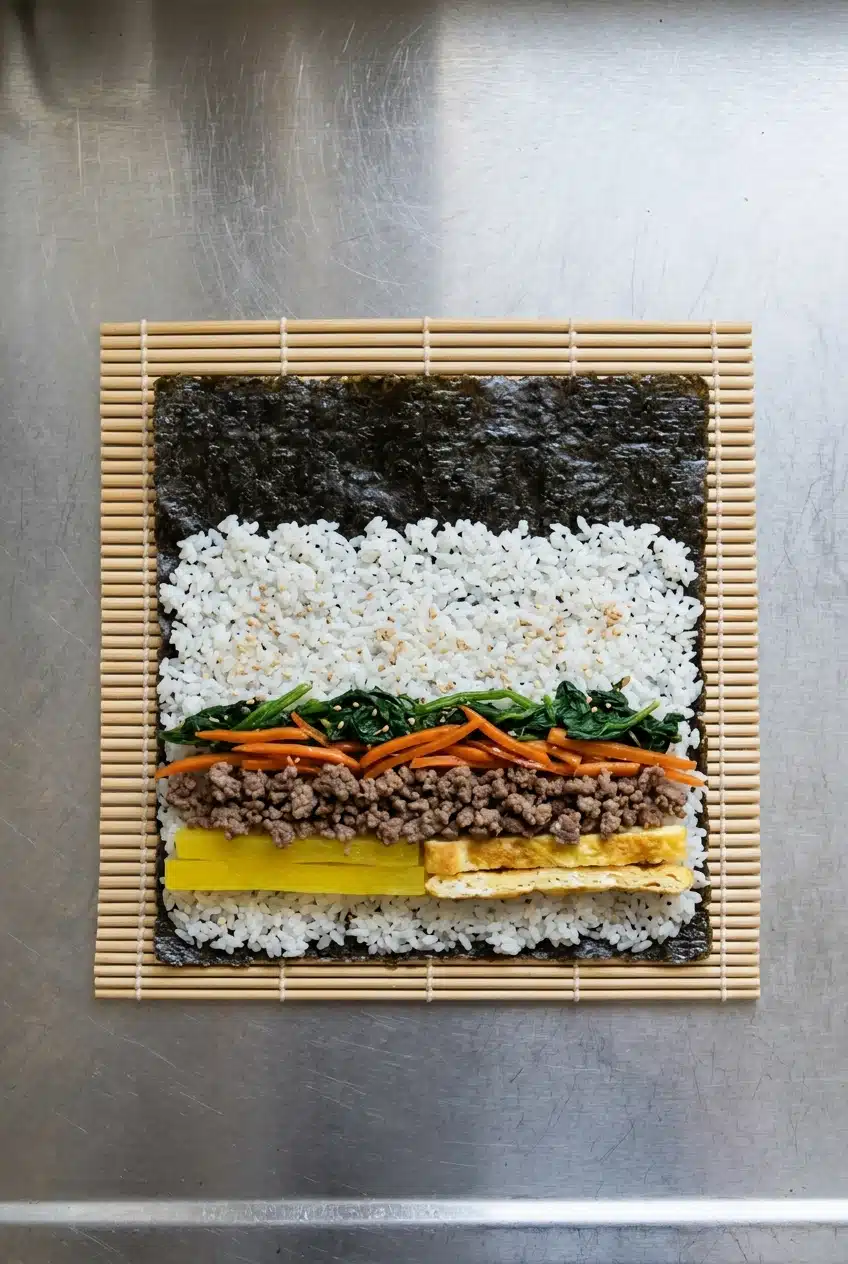
Start the beef marinade first, prepare the remaining fillings, then finish cooking the beef before seasoning the rice. Keep each component separate until assembly.
For the beef:
- Work the ground beef, garlic, soy sauce, sugar, and 2 tsp sesame oil together by hand in a bowl, then leave it to marinate while preparing the other components.
The seasoning should coat the beef evenly. - After the other fillings are ready, fry the marinated beef in a large pan with olive oil, then lift it into a bowl with a slotted spoon.
Look for browned beef, leaving loose cooking liquid behind in the pan.
For the carrots:
- Cut the peeled carrot diagonally into thin slices, stack them flat for lengthwise slicing into julienne, then sauté in olive oil with a couple pinches of salt and set aside.
The finished pieces should be slender enough to form an even row inside the roll.
For the “danmuji,” or pickled radish:
- Cut the radish log into ½-inch slices, then divide those slices into long strips about ½ inch thick and set aside.
A consistent thickness helps distribute the crunchy filling evenly.
For the eggs:
- Whisk the 5 eggs with a couple pinches of salt, then warm a large pan over medium-low heat with olive oil and use a paper towel to spread the oil evenly.
The pan should have a thin, uniform coating. - Pour the beaten eggs into the pan, cook until the underside firms and turns light golden brown, then flip and cook the other side before transferring to a plate and cutting into half-inch strips.
Both surfaces should show light golden coloring.
For the spinach:
- Blanch the entire 9 or 10 oz bag of spinach in salted boiling water for 30 seconds, drain, rinse under cold water, and squeeze thoroughly by hand.
The squeezed greens should hold together without dripping. - Toss the spinach in a bowl with 1 teaspoon sesame oil and a couple pinches of kosher salt, then set aside.
The greens should carry a light coating of seasoning without pooled water.
For the rice:
- Once the fillings are prepared and the beef is cooked, gently fold the 6 cups cooked rice with ½ Tbsp sesame oil, ½ Tbsp olive oil, ½ Tbsp toasted sesame seeds, and ¼-½ tsp kosher salt in a large bowl.
The grains should look evenly seasoned without becoming mashed.
Assembly and slicing:
- Set a seaweed sheet shiny-side down on a bamboo mat and spread rice from the bottom upward over about ⅔ of its surface.
Keep the layer thin and even, with the upper edge uncovered. - Arrange the fillings starting 1 inch from the bottom, leaving 2 inches of rice above them: position radish and egg with a gap between, fill that gap with beef, then place carrot and spinach side by side on top.
Each filling should form an orderly row across the sheet. - Use the mat to tuck the bottom edge over the fillings onto the exposed rice, then advance the mat while rolling and pressing gently, finishing with firm pressure along its full length.
The roll should feel compact throughout, with a few rice grains at the seaweed edge helping any loose seam stick. - Coat the roll exterior with sesame oil using a brush or gloved hand, lightly oil a sharp knife blade, and cut into thin half-inch or bite-sized rounds, adding roasted sesame seeds if desired.
The exterior should look glossy, and the slices should hold their layered shape.
Rolling, Slicing, and Texture Troubleshooting Tips
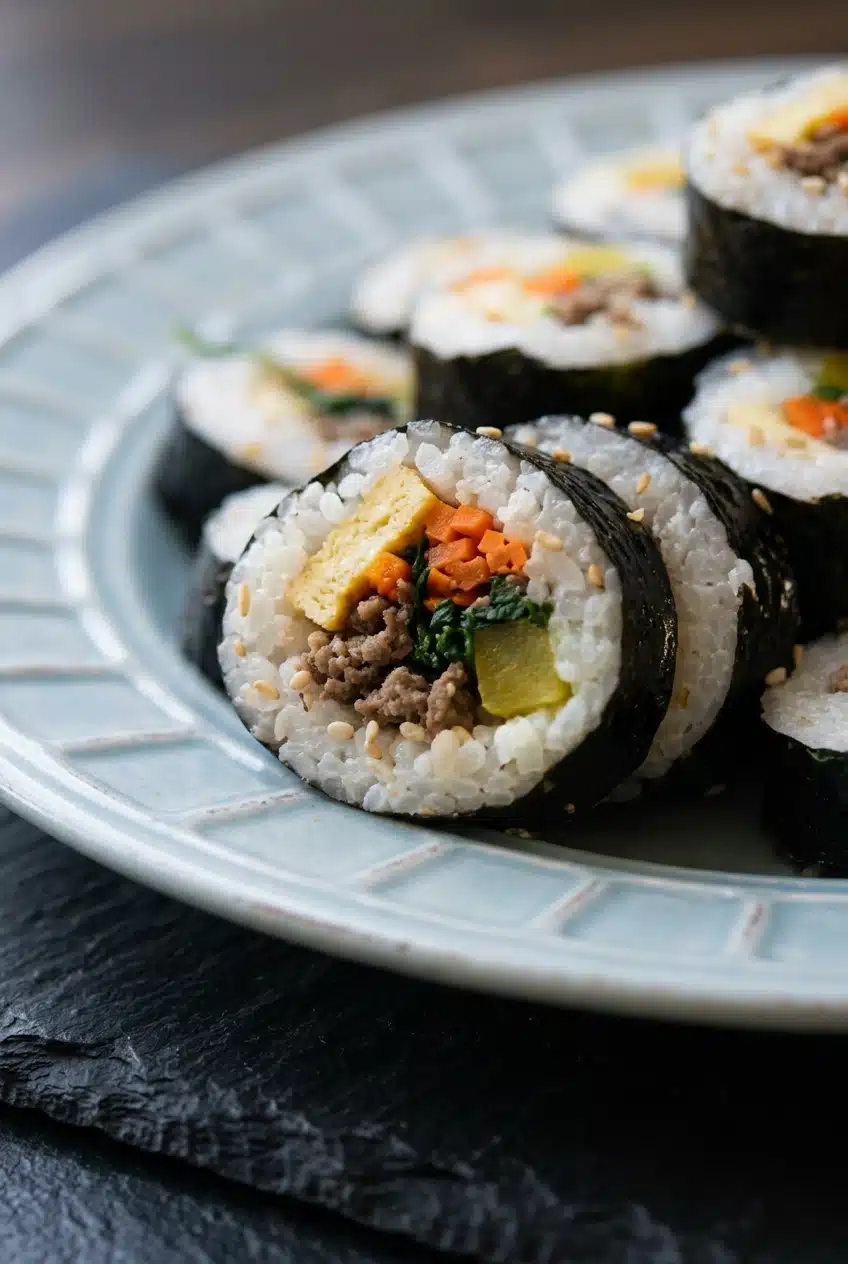
Most rolling problems begin with excess moisture or more filling than the wrapper can comfortably hold.
Preventing Soggy Seaweed and Splitting Seams
- Soggy wrapper: Wet spinach or excess beef liquid can soften the seaweed; squeeze the greens thoroughly and use the slotted spoon when transferring beef.
- Splitting seam: Thick rice and crowded fillings strain the wrapper; follow the thin rice layout and keep the filling rows compact.
- Loose or uneven roll: Uneven placement leaves gaps; distribute fillings across the sheet and apply steady pressure along the mat’s length.
- Edge won’t stick: Press a few rice grains onto the loose edge to help seal it.
Getting Clean Slices Without Crushing the Roll
A dull blade can compress the roll before cutting through the seaweed. Use a sharp knife with a light sesame-oil coating, and remember that a firmly rolled cylinder supports the fillings better than a loose one.
I’d prioritize a thin rice layer over an oversized roll; it makes that first tuck much more manageable.
Popular Variations to Try
Keep these optional filling directions separate from the ground beef recipe above.
Thinly Sliced Bulgogi-Style Beef vs. Ground Beef
Ground beef distributes evenly through the filling, giving savory flavor throughout each slice. Thinly sliced sirloin or ribeye offers a more distinct, tender beef bite. For that flavor direction, explore this beef bulgogi recipe.
Traditional Korean Deli Add-Ins (Burdock Root, Fish Cake, Imitation Crab)
- Seasoned burdock root: Adds earthy sweetness and a pleasantly firm bite.
- Korean fish cake: Brings another savory layer with a springy texture.
- Imitation crab: Adds mild sweetness and a softer contrast to crunchy vegetables.
Vegetable & Pickled Radish Swaps (Cucumber, Kimchi, Danmuji Alternatives)
- Cucumber: Offers fresh crispness as an optional alternative to spinach.
- Well-drained kimchi: Adds acidity and spice that complement savory beef.
- Pickled daikon or sweet-tart pickled turnip: Offers tangy crunch, though the flavor differs from danmuji.
- Lightly pickled cucumber: Gives a gentler pickled contrast without duplicating radish’s firm bite.
Organize Components Before Rolling
Plan assembly around prepared filling bowls rather than seasoning the rice first. Finish the vegetables, egg strips, and beef, then mix the rice and bring everything together at the rolling mat. This keeps the sequence manageable without relying on advance storage.
Egg-dipped, pan-fried leftover kimbap is another serving concept, but it’s separate from the freshly rolled method here.
Serving Ideas and Traditional Pairings
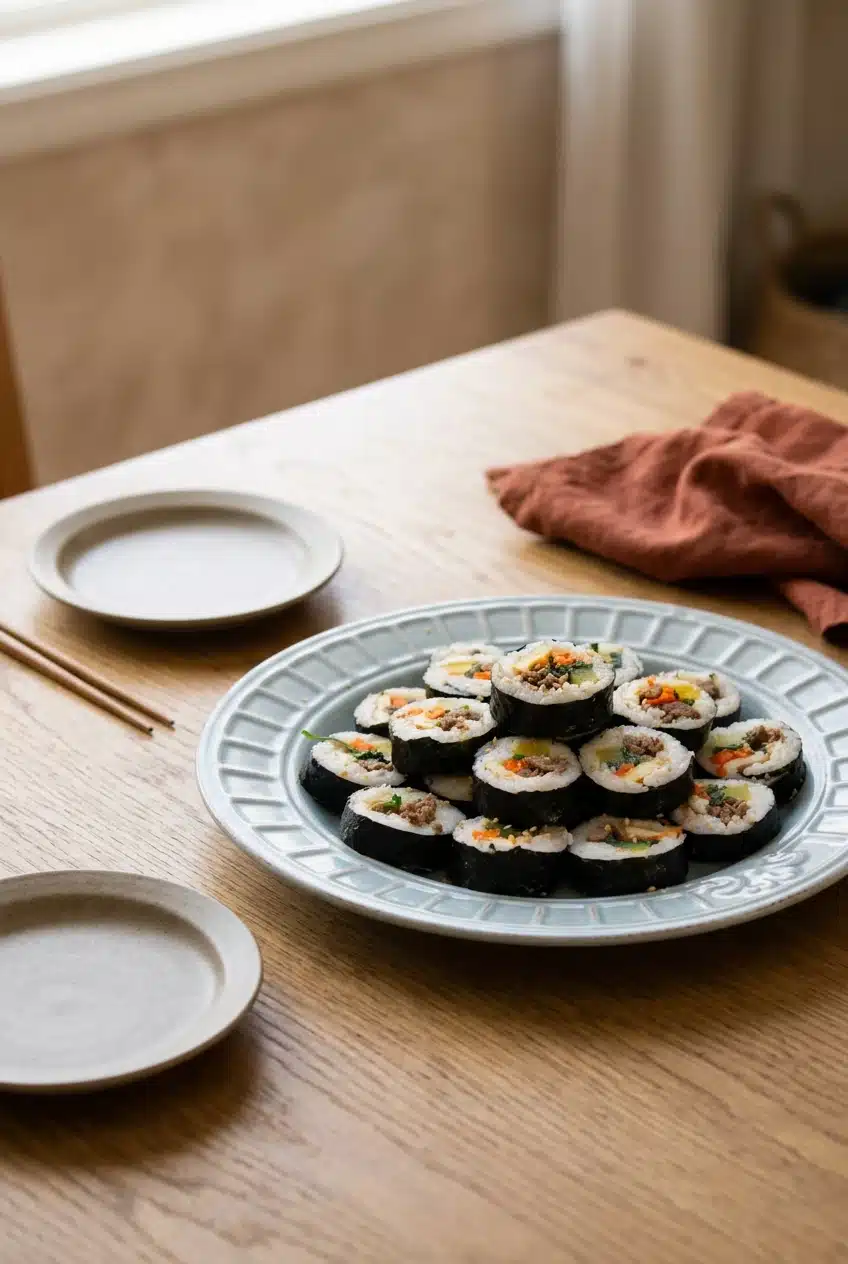
The seasoned rice and fillings make these rolls satisfying without a required dipping sauce.
- Lunchbox or picnic menu: Pair the slices with pickled vegetables for a bright contrast.
- Party platter: Arrange the rounds with their colorful centers facing up.
- Casual meal: Add light Korean broth or kimchi alongside.
Bringing Homemade Rolls Together
Well-seasoned fillings and sesame rice give these rolls their savory, nutty character. Thoroughly squeezed spinach helps keep that balance from turning soggy.
Keep the rice layer thin and the rolling pressure even. Finish with a sesame-oiled sharp blade, and let those colorful slices do the rest.
Frequently Asked Questions
Is Kimbap Just Korean Sushi?
No. Kimbap is a distinct Korean dish with sesame-oil-and-salt-seasoned rice rather than vinegar-seasoned sushi rice. This version uses cooked beef, egg, and vegetables; it is separate from yukhoe, Korean seasoned raw beef.
Should I Use Ground Beef or Thinly Sliced Beef for Beef Kimbap?
Use ground beef to follow the quantities and method above; it distributes evenly throughout the roll. Thinly sliced bulgogi-style beef is an optional direction for a more distinct beef texture.
What Can I Use if I Cannot Find Danmuji Pickled Radish?
Optional alternatives include pickled daikon, sweet-tart pickled turnip, or lightly pickled cucumber. Each brings tang and crunch, but none exactly duplicates danmuji’s sweet-tangy character.
How Do I Keep Kimbap From Falling Apart When Slicing?
Use a thin rice layer, thoroughly squeezed spinach, evenly arranged fillings, and firm bamboo-mat pressure. Lightly coat the roll and a sharp knife blade with sesame oil before slicing.
How Many Calories Are in a Serving of Beef Kimbap?
A verified calorie count isn’t available for this recipe. An accurate estimate requires calculating the specific ingredients used and defining the serving size.
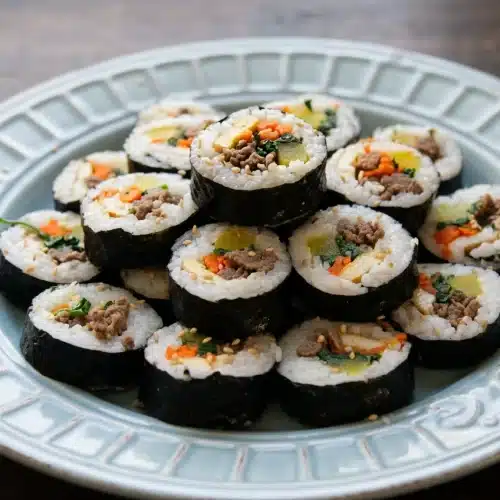
Beef Kimbap

Equipment
- Bamboo mat
- Large pan
- large bowl
- Slotted spoon
- Sharp knife
Ingredients
- 6-7 Sheets dried laver seaweed
- 1 bag ready to use spinach 9 or 10 oz
- 1 log yellow pickled radish or “danmuji”
- 1 large carrot or 2 medium sized carrots, peeled
- 5 Eggs
- Kosher salt divided
- Sesame oil divided
- Olive oil divided
- Roasted sesame seeds divided
- 1 lb ground beef
- 2 cloves garlic finely minced
- 3 Tbsp soy sauce
- 2 Tbsp sugar
- 2 tsp sesame oil
- 6 cups cooked short grain or sushi rice 3 cups uncooked
- ½ Tbsp sesame oil
- ½ Tbsp olive oil
- ½ Tbsp toasted sesame seeds
- ¼-½ tsp kosher salt or to taste
Instructions
For the beef:
- Work the ground beef, garlic, soy sauce, sugar, and 2 tsp sesame oil together by hand in a bowl, then leave it to marinate while preparing the other components. The seasoning should coat the beef evenly.
- After the other fillings are ready, fry the marinated beef in a large pan with olive oil, then lift it into a bowl with a slotted spoon. Look for browned beef, leaving loose cooking liquid behind in the pan.
For the carrots:
- Cut the peeled carrot diagonally into thin slices, stack them flat for lengthwise slicing into julienne, then sauté in olive oil with a couple pinches of salt and set aside. The finished pieces should be slender enough to form an even row inside the roll.
For the “danmuji,” or pickled radish:
- Cut the radish log into ½-inch slices, then divide those slices into long strips about ½ inch thick and set aside. A consistent thickness helps distribute the crunchy filling evenly.
For the eggs:
- Whisk the 5 eggs with a couple pinches of salt, then warm a large pan over medium-low heat with olive oil and use a paper towel to spread the oil evenly. The pan should have a thin, uniform coating.
- Pour the beaten eggs into the pan, cook until the underside firms and turns light golden brown, then flip and cook the other side before transferring to a plate and cutting into half-inch strips. Both surfaces should show light golden coloring.
For the spinach:
- Blanch the entire 9 or 10 oz bag of spinach in salted boiling water for 30 seconds, drain, rinse under cold water, and squeeze thoroughly by hand. The squeezed greens should hold together without dripping.
- Toss the spinach in a bowl with 1 teaspoon sesame oil and a couple pinches of kosher salt, then set aside. The greens should carry a light coating of seasoning without pooled water.
For the rice:
- Once the fillings are prepared and the beef is cooked, gently fold the 6 cups cooked rice with ½ Tbsp sesame oil, ½ Tbsp olive oil, ½ Tbsp toasted sesame seeds, and ¼-½ tsp kosher salt in a large bowl. The grains should look evenly seasoned without becoming mashed.
Assembly and slicing:
- Set a seaweed sheet shiny-side down on a bamboo mat and spread rice from the bottom upward over about ⅔ of its surface. Keep the layer thin and even, with the upper edge uncovered.
- Arrange the fillings starting 1 inch from the bottom, leaving 2 inches of rice above them: position radish and egg with a gap between, fill that gap with beef, then place carrot and spinach side by side on top. Each filling should form an orderly row across the sheet.
- Use the mat to tuck the bottom edge over the fillings onto the exposed rice, then advance the mat while rolling and pressing gently, finishing with firm pressure along its full length. The roll should feel compact throughout, with a few rice grains at the seaweed edge helping any loose seam stick.
- Coat the roll exterior with sesame oil using a brush or gloved hand, lightly oil a sharp knife blade, and cut into thin half-inch or bite-sized rounds, adding roasted sesame seeds if desired. The exterior should look glossy, and the slices should hold their layered shape.