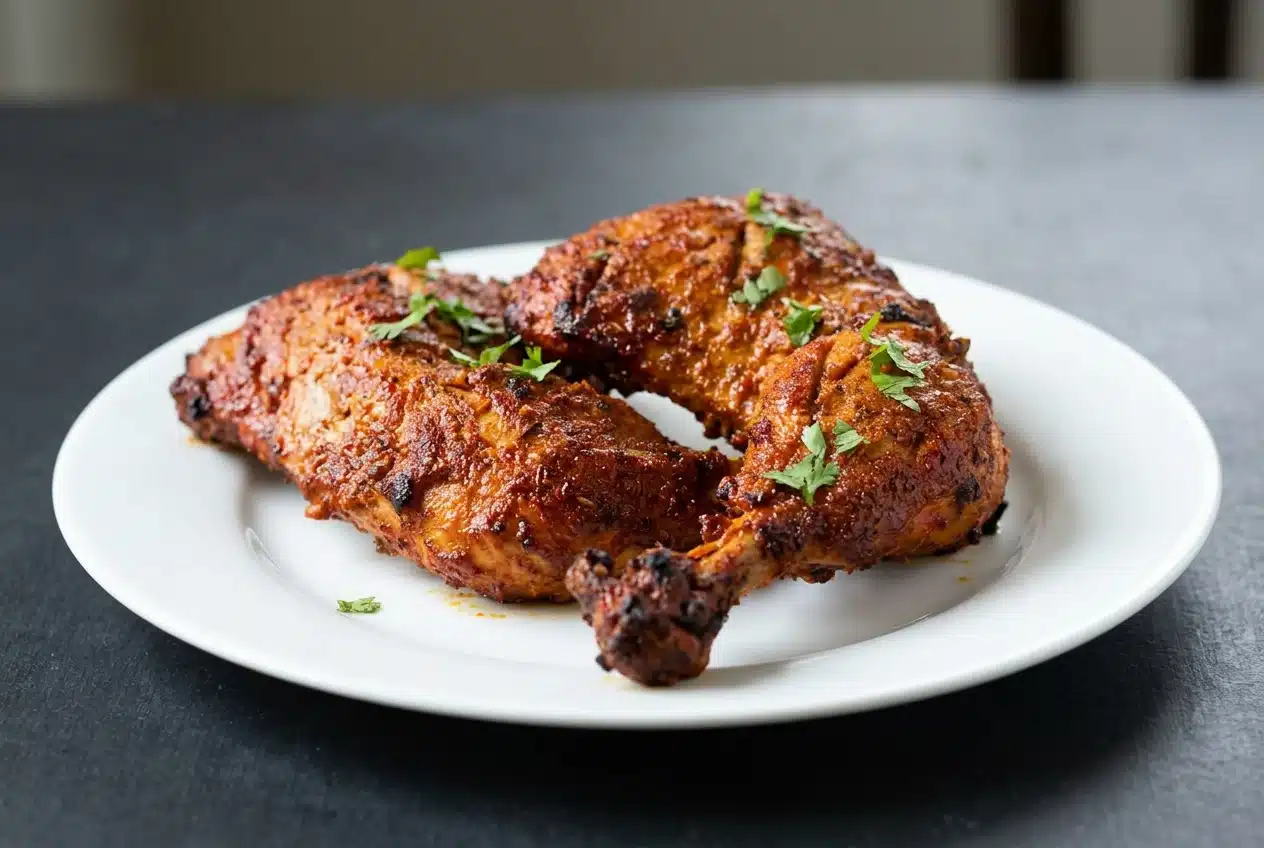
Tandoori chicken is skinless chicken marinated in thick yogurt, ginger, garlic, and warming spices, then cooked over intense heat. A hot oven and broiler bring restaurant-style char to your kitchen, with tangy seasoning and dark, blistered edges.
This tandoori chicken uses bone-in thighs, legs, or drumsticks coated in a fragrant yogurt marinade. Kashmiri chili adds color, cumin and coriander bring earthy warmth, and dried fenugreek gives the coating its distinctive savory aroma.
The oven does most of the work, while the final broil creates those deeply browned ridges. There’s an air fryer option, too. Watch for the blistered edges.
Choose yogurt thick enough to coat a spoon rather than run off it.
Essential Tandoori Marinade Ingredients and Substitutions
Yogurt gives the spices a coating that clings, ginger and garlic add pungency, and lemon brings brightness. Ground spices supply warmth and color, oil enriches the surface, and coriander leaves add a fresh finish.
- ¾ kg (1½ lbs.) chicken thighs or legs (/ quarters/ 8 drumsticks (4 portions total, skinless bone-in))
- ½ cup Greek yogurt ((hung curd))
- 1 tablespoon ginger garlic paste ((or ¾ tbsp each, grated))
- 1 teaspoon garam masala ((more if you prefer))
- 1 to 2 teaspoon Kashmiri red chili powder ((or paprika, adjust to heat preference))
- ¼ teaspoon black pepper crushed ((powder))
- 1½ teaspoon coriander powder ((daniya powder))
- ½ teaspoon cumin powder ((jeera powder))
- ½ teaspoon sea salt ((+ more to adjust or use ¼ tsp each sea salt & black salt / kala namak))
- ¼ teaspoon turmeric ((haldi, optional))
- 1 teaspoon kasuri methi ((dried fenugreek leaves))
- 1½ tablespoon oil ((any or neutral oils like avocado/grapeseed/ refined coconut or use mustard oil))
- 1 tablespoon lemon juice ((or 1 teaspoon amchur/ dried mango powder or use ½ teaspoon chaat masala))
- 1 tablespoon chopped coriander leaves (to garnish)
- 1 to 2 teaspoon Kashmiri red chili powder
- 1 to 2 tablespoon oil ((any or neutral oil or use mustard oil))
Best Chicken Cuts and Why Skinless Works Best
Skinless, bone-in thighs, legs, quarters, and drumsticks suit this preparation. The exposed meat holds the yogurt coating directly, rather than leaving a layer of skin between the chicken and its spiced crust.
Buy skinless portions or remove the skin before marinating. The scoring instructions differ by cut, so check which pieces you’re using before making the slashes. Similar-sized pieces also make the cooking easier to monitor.
Why Thick Greek Yogurt or Hung Curd Matters
Greek yogurt and hung curd provide the thick consistency this coating needs. It should sit in the chicken’s slashes and cover the surface, not immediately slide into the bowl.
A watery yogurt produces a loose coating and more runoff. Thickness matters more here than extra marinade: a generous puddle beneath the chicken won’t create the same spiced exterior.
I’d choose yogurt by its texture first: a spoonful should hold a soft mound, not spread into a milky pool.
Tandoori Spice Blend and Supermarket Substitutions
The spices do different jobs, so garam masala alone won’t give the same balance. Coriander contributes citrusy earthiness, cumin adds roasted warmth, and black pepper provides a sharper bite. Kasuri methi brings an herbal, slightly bitter aroma.
- Kashmiri chili: Paprika is a listed alternative; optional sweet paprika with a little cayenne gives you more control over heat, though the flavor will differ.
- Kasuri methi: There isn’t a close supermarket herb equivalent, and ground fenugreek seed is not the same ingredient. If unavailable, omission is preferable to treating another herb as an exact replacement.
- Oil: The listed neutral oils let the spices lead, while mustard oil gives the marinade a more assertive character.
- Lemon juice: Amchur or chaat masala are listed alternatives for tang. They change the seasoning profile, so treat them as alternatives rather than automatic additions.
- Ginger and garlic: Use the paste or the listed grated alternative for the aromatic foundation.
The final chili powder and oil entries are for the chili-oil basting option, separate from the oil and chili in the yogurt marinade.
How to Get Natural Red Color Without Food Dye
Kashmiri red chili powder contributes a red-orange tone; paprika offers another natural color direction. Yogurt, spice brand, and browning all affect the finished shade, so expect variation rather than a guaranteed bright red.
The chili-oil option adds color to the surface, while broiling creates darker patches. No food dye is needed for a richly colored, appetizing crust.
How to Make Tandoori Chicken Step by Step
Allow time for marinating before you start cooking. This recipe serves four, and the refrigerated rest is separate from the active preparation and roasting.
Prepare Chicken Marinade
- Combine the yogurt, ginger garlic paste, garam masala, chili powder, pepper, coriander, cumin, optional turmeric, salt, kasuri methi, oil, and lemon juice or its listed alternative in a large bowl.
Taste and adjust the seasoning before adding chicken; the mixture should look evenly colored and thick. - Cut 3 to 4 deep slashes into legs or quarters, or 2 to 3 into drumsticks, thighs, or breasts, then work the marinade over the chicken and into the cuts.
The coating should cover the exposed meat and remain tucked inside the slashes. - Cover the bowl with cling wrap and refrigerate for at least 6 hours, preferably overnight, without exceeding 36 hours.
The chicken should remain covered throughout this marinating stage. - Remove the chicken from the refrigerator as you get ready to cook.
Keep its thick coating in place rather than wiping the surface clean.
How to Make Tandoori Chicken
- Heat the oven to 470 °F / 240 °C, or 430 °F / 220 °C for a smaller oven such as an OTG, and set an oiled wire rack over a foil-lined baking tray.
The rack holds the chicken above the tray so the underside doesn’t sit in collected juices. - Set the chicken on the rack with 1 to 2 inches between pieces, roast for 15 minutes, then baste with chili oil.
Leave the gaps open so the pieces aren’t crowded together. - For quarters, legs, or thighs, turn the pieces with tongs and roast for another 12 to 15 minutes, then brush with chili oil or melted butter, or spray with oil.
Skip this additional roasting stage for drumsticks and breasts, and judge their progress carefully before the broiling stage. - Move the tray to the upper rack and broil for 3 to 4 minutes, adjusting for your oven and the size of the pieces.
Look for scattered dark spots along the raised edges rather than an entirely blackened coating. - Check the thickest part with an instant-read thermometer and confirm that the chicken is cooked through before finishing.
Surface char alone doesn’t tell you whether the center has finished cooking. - Finish with melted butter, a few pinches of chaat masala if desired, and the chopped coriander leaves.
The butter gives the crust a glossy sheen, while the herbs brighten the finished chicken.
Air Fryer Chicken Tandoori
- Heat the air fryer to 390 °F / 200 °C, grease the basket, and add the marinated chicken for a 20-minute cooking period, turning after 10 to 12 minutes.
Check that the pieces are cooked through with an instant-read thermometer rather than relying on color or time alone. - Brush with red chili oil if desired and air fry for another 2 minutes, then finish with melted butter.
The final coating should look glossy, with browned edges around the chicken.
What Makes Restaurant-Style Tandoori Authentic
The defining combination is yogurt-spice marination and intense dry heat. Traditionally, a clay tandoor supplies that heat; a home oven and broiler offer a practical way to develop a roasted coating and blistered surface without one.
Closely associated with Punjabi and North Indian cooking, the dish tastes tangy, savory, and warmly spiced. Smokiness and char are part of its appeal, but overwhelming chili heat isn’t the goal.
Tandoori chicken usually features larger bone-in portions. Chicken tikka generally uses smaller, boneless pieces on skewers, although both share the yogurt-and-spice approach.
Cooking Methods and Recipe Variations
The oven and air fryer instructions above provide the cooking details for this recipe. Other formats are optional directions, not interchangeable schedules.
Air Fryer Tandoori Chicken
Use the air fryer stages above for the same marinated chicken with a circulated-heat finish. Keep the turning point and final chili-oil option in that sequence rather than borrowing the oven’s roasting stages.
Outdoor Charcoal or Gas Grill Tandoori Chicken
An outdoor grill offers an optional flame-charred direction, with charcoal adding its own aroma. It’s a different heat environment from an oven, so don’t assume the oven schedule transfers directly.
For another boldly seasoned chicken option for outdoor cooking, try jerk chicken thighs.
Stovetop Grill Pan and Boneless Cut Adaptation
Boneless thigh or breast pieces suit smaller grill-pan portions, wraps, or tikka-style presentations. They change the shape and thickness of the dish, so the bone-in roasting schedule isn’t a substitute for cut-specific cooking guidance.
A whole spatchcocked chicken offers a family-style presentation, but it needs its own cooking method rather than the portioned-chicken timing above.
Optional Dhungar Charcoal Smoke and Chaat Masala Finish
Dhungar is an optional charcoal-smoking finish that adds a distinct smoky aroma. It’s separate from roasting and isn’t necessary to produce a flavorful spiced crust.
Melted butter supplies the finish used here; ghee is an optional flavor direction with a different aroma. Chaat masala adds tangy, savory contrast, so use it as an accent rather than burying the roasted spices beneath it.
Expert Tips for Juicy, Smoky, Charred Results
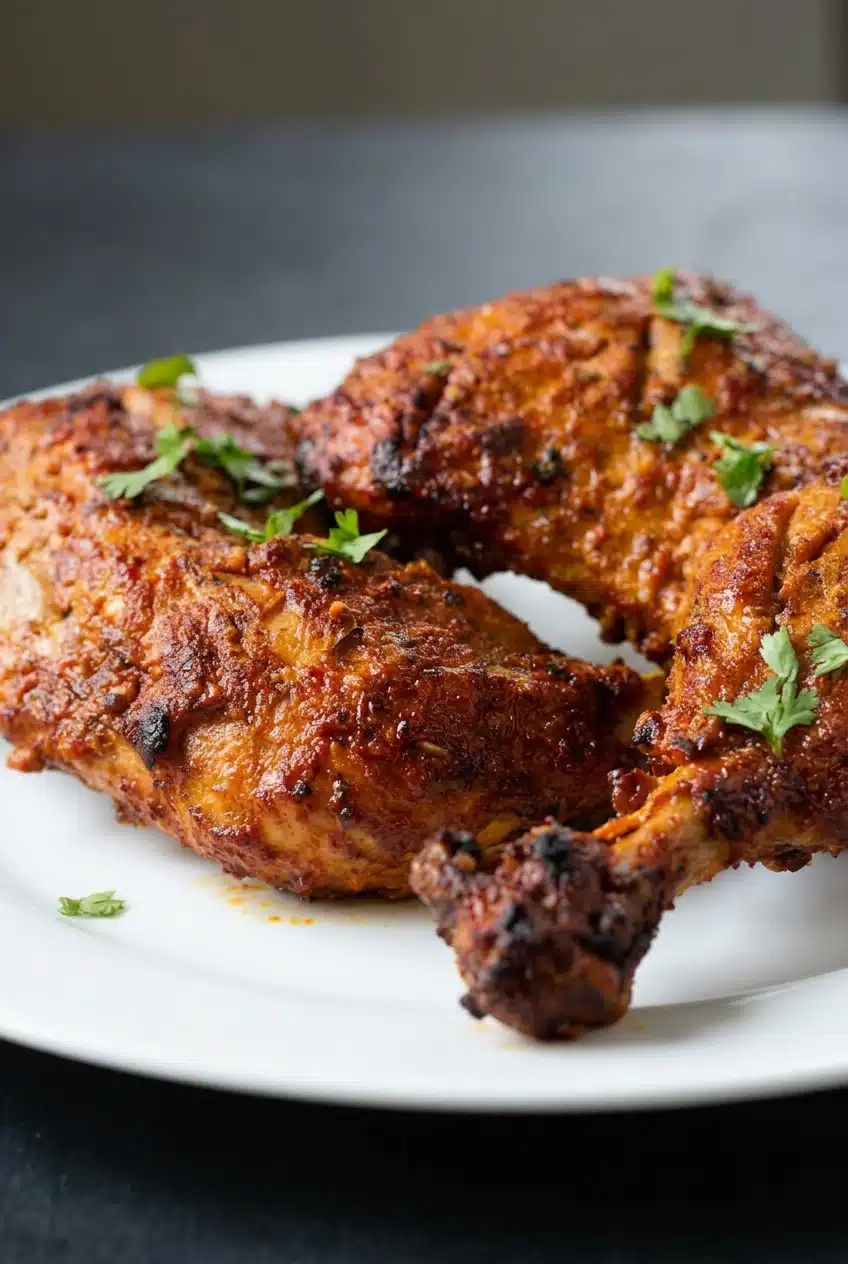
The most useful checks are coating consistency, cut-specific cooking, and the difference between browned spots and burnt spices.
- Watery coating: Thin yogurt can run off the meat. Start with thick Greek yogurt or hung curd so the marinade stays on the chicken.
- Overly soft texture: Don’t improvise by adding extra lemon or extending the marinating window. Keep the acid balance and refrigerated rest as written.
- Dry breast meat: Breast pieces don’t follow the additional roasting stage used for quarters, legs, and thighs. Follow the cut-specific instructions and check doneness rather than chasing darker color.
- Pale exterior: Crowding and a loose coating work against a roasted crust. Use the specified rack spacing and the broiling stage, watching for blistered ridges.
- Bitter spice flavor: An entirely blackened surface can overwhelm the aromatic spices. Aim for scattered char and avoid increasing garam masala simply to make the chicken taste stronger.
- Basting confusion: Choose the chili-oil option or melted butter for the finishing stages. As a precaution, keep marinade that has touched raw chicken out of the final garnish or serving sauce.
Traditional Side Dishes, Chutneys, and Serving Ideas
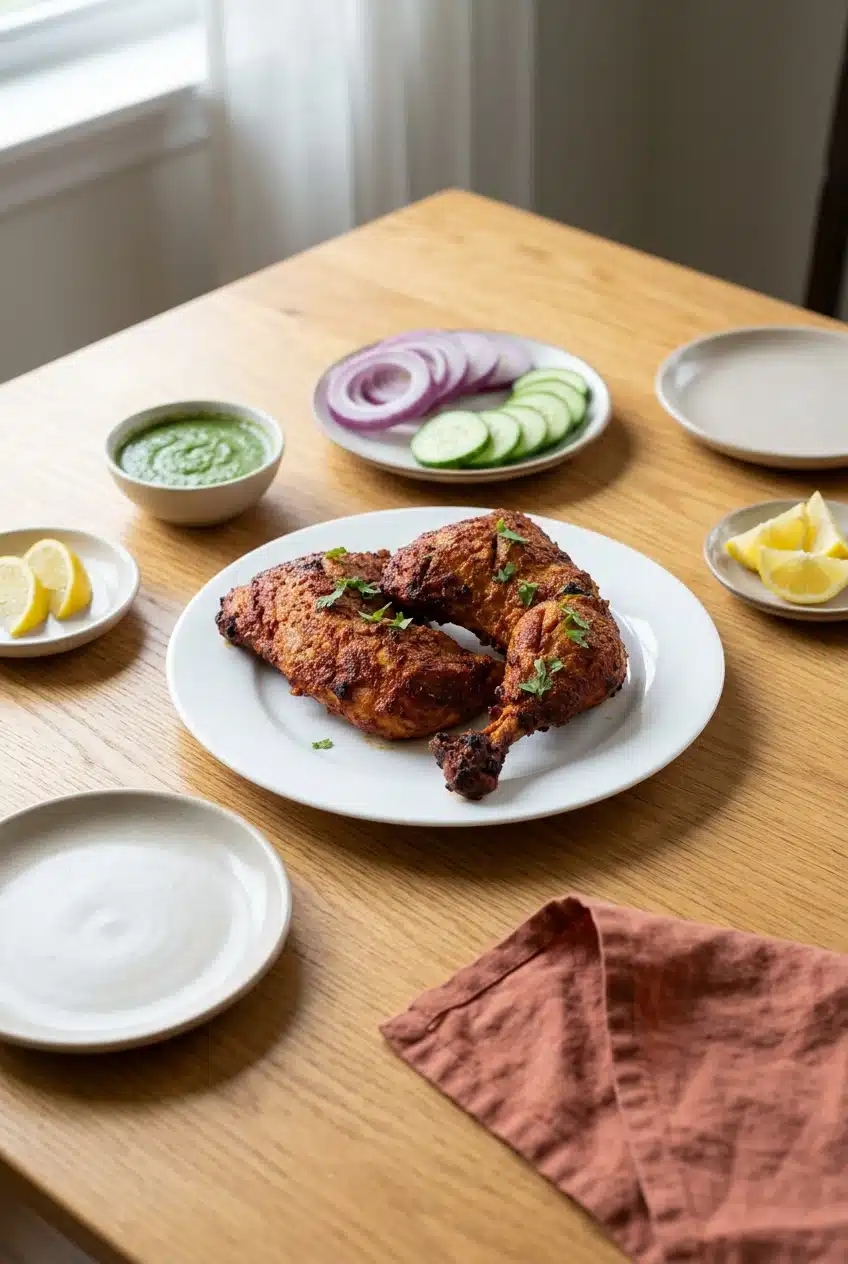
Fresh, cooling accompaniments balance the warm spices and charred coating. Choose a starter platter or build a full dinner around the chicken.
- Starter platter: Serve mint or cilantro chutney with sliced red onions, cucumber, and lemon wedges.
- Rice dinner: Pair with turmeric rice, basmati rice, or saffron rice, plus cucumber raita and kachumber salad.
- Bread dinner: Add warm naan with chutney and a crisp tomato-onion salad.
- Leftover serving direction: Sliced chicken suits flatbread wraps and grain bowls, where its strongly seasoned crust provides the main flavor.
For a saucy direction, the smoky flavor also pairs with creamy spiced tomato sauces, such as those used in a spiced chicken curry.
Make-Ahead Marinating and Meal Planning
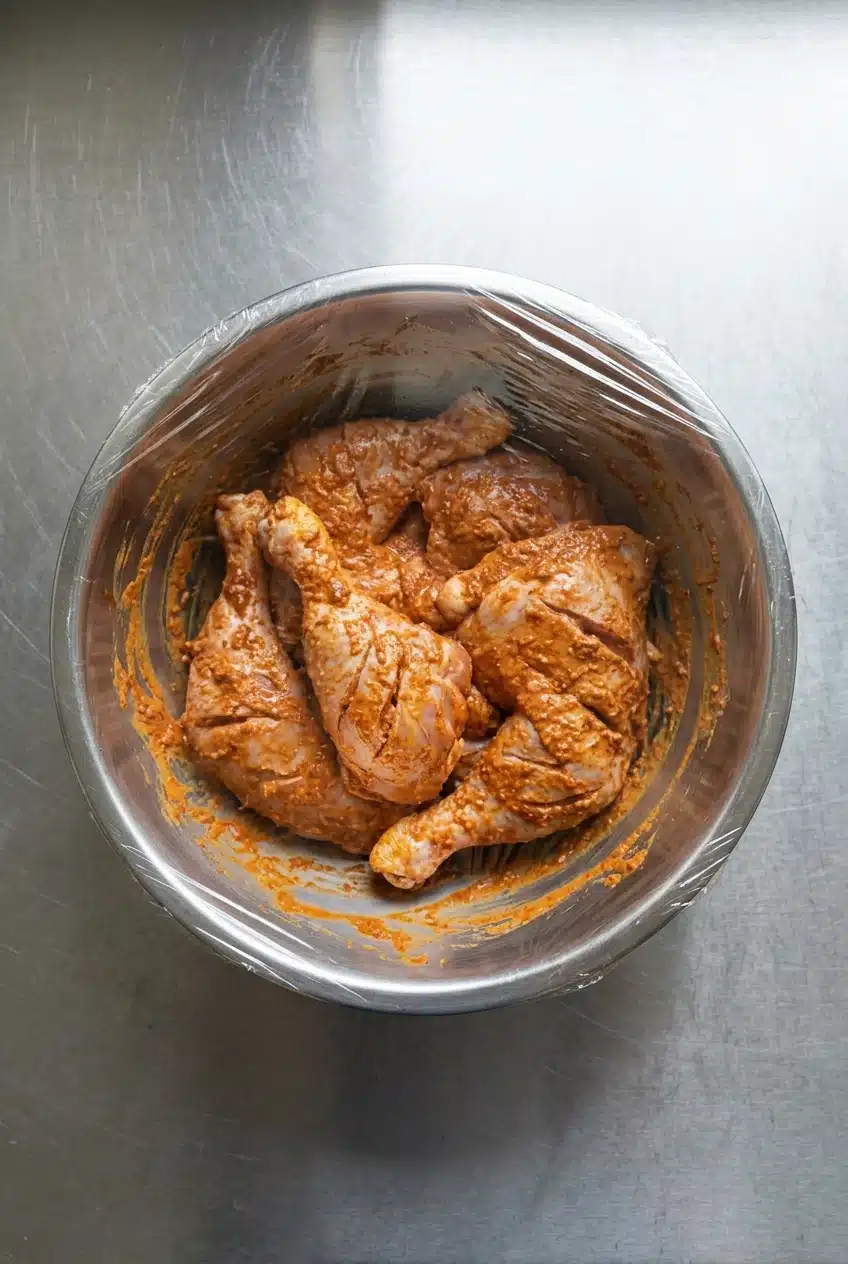
Use the refrigerated marinating stage as your main preparation window. Plan backward from dinner so the chicken gets its rest without stretching the stated limit.
Choose the oven or air fryer before cooking, and organize the chutney, salad, and rice separately. Keep raw chicken and its marinade apart from ready-to-eat accompaniments, and add the fresh coriander finish when serving.
Final Thoughts on Homemade Tandoori
A thick yogurt coating, balanced spices, and a closely watched broil give this chicken its character. Look for a crust that clings, with dark spots along the raised edges.
Adjust the chili to your taste and choose a cooling chutney, rice, or warm bread alongside it. Let the aromatic spices lead.
Frequently Asked Questions
What Does Tandoori Chicken Have in It?
Skinless chicken coated in yogurt, ginger, garlic, oil, and lemon juice or a listed tangy alternative. Kashmiri chili, garam masala, coriander, cumin, pepper, salt, and dried fenugreek leaves provide the seasoning; turmeric is optional.
What Is the Flavor of Tandoori Chicken?
It’s tangy, savory, earthy, and warmly spiced, with aromatic ginger, garlic, and fenugreek. Roasted edges add charred flavor; charcoal cooking or an optional smoking finish adds a more distinct smoky aroma.
Is Tandoori Chicken Spicy or Not?
It can be gently warming or more assertive, depending on the chili powder and your preference. The recipe allows you to adjust the chili, and paprika offers another seasoning direction without making intense heat the focus.
Is Eating Tandoori Chicken Healthy?
There isn’t a universal answer: portion size, added butter and oil, and the rest of the meal all matter. This version uses yogurt-marinated chicken and dry-heat cooking rather than deep frying, but that preparation alone doesn’t establish whether it suits your individual dietary needs.
How Do You Get Red Tandoori Chicken Without Food Coloring?
Use the listed Kashmiri chili powder or paprika for natural red-orange color. The chili-oil finish contributes surface color, but the final shade varies with the spices, yogurt, and browning.
What Is the Difference Between Tandoori Chicken and Chicken Tikka?
Tandoori chicken traditionally uses larger bone-in portions, such as legs, quarters, or drumsticks. Chicken tikka usually consists of smaller boneless pieces cooked on skewers, often with a similar yogurt-spice marinade.
Tandoori Chicken

Equipment
- large bowl
- Baking tray
- Wire rack
- Tongs
- Instant-read thermometer
Ingredients
- ¾ kg chicken thighs or legs (1½ lbs.) (/ quarters/ 8 drumsticks (4 portions total, skinless bone-in))
- ½ cup Greek yogurt ((hung curd))
- 1 tablespoon ginger garlic paste ((or ¾ tbsp each, grated))
- 1 teaspoon garam masala ((more if you prefer))
- 1 to 2 teaspoon Kashmiri red chili powder ((or paprika, adjust to heat preference))
- ¼ teaspoon black pepper crushed ((powder))
- 1½ teaspoon coriander powder ((daniya powder))
- ½ teaspoon cumin powder ((jeera powder))
- ½ teaspoon sea salt ((+ more to adjust or use ¼ tsp each sea salt & black salt / kala namak))
- ¼ teaspoon turmeric ((haldi, optional))
- 1 teaspoon kasuri methi ((dried fenugreek leaves))
- 1½ tablespoon oil ((any or neutral oils like avocado/grapeseed/ refined coconut or use mustard oil))
- 1 tablespoon lemon juice ((or 1 teaspoon amchur/ dried mango powder or use ½ teaspoon chaat masala))
- 1 tablespoon chopped coriander leaves (to garnish)
- 1 to 2 teaspoon Kashmiri red chili powder
- 1 to 2 tablespoon oil ((any or neutral oil or use mustard oil))
Instructions
Prepare Chicken Marinade
- Combine the yogurt, ginger garlic paste, garam masala, chili powder, pepper, coriander, cumin, optional turmeric, salt, kasuri methi, oil, and lemon juice or its listed alternative in a large bowl. Taste and adjust the seasoning before adding chicken; the mixture should look evenly colored and thick.
- Cut 3 to 4 deep slashes into legs or quarters, or 2 to 3 into drumsticks, thighs, or breasts, then work the marinade over the chicken and into the cuts. The coating should cover the exposed meat and remain tucked inside the slashes.
- Cover the bowl with cling wrap and refrigerate for at least 6 hours, preferably overnight, without exceeding 36 hours. The chicken should remain covered throughout this marinating stage.
- Remove the chicken from the refrigerator as you get ready to cook. Keep its thick coating in place rather than wiping the surface clean.
How to Make Tandoori Chicken
- Heat the oven to 470 °F / 240 °C, or 430 °F / 220 °C for a smaller oven such as an OTG, and set an oiled wire rack over a foil-lined baking tray. The rack holds the chicken above the tray so the underside doesn’t sit in collected juices.
- Set the chicken on the rack with 1 to 2 inches between pieces, roast for 15 minutes, then baste with chili oil. Leave the gaps open so the pieces aren’t crowded together.
- For quarters, legs, or thighs, turn the pieces with tongs and roast for another 12 to 15 minutes, then brush with chili oil or melted butter, or spray with oil. Skip this additional roasting stage for drumsticks and breasts, and judge their progress carefully before the broiling stage.
- Move the tray to the upper rack and broil for 3 to 4 minutes, adjusting for your oven and the size of the pieces. Look for scattered dark spots along the raised edges rather than an entirely blackened coating.
- Check the thickest part with an instant-read thermometer and confirm that the chicken is cooked through before finishing. Surface char alone doesn’t tell you whether the center has finished cooking.
- Finish with melted butter, a few pinches of chaat masala if desired, and the chopped coriander leaves. The butter gives the crust a glossy sheen, while the herbs brighten the finished chicken.
Air Fryer Chicken Tandoori
- Heat the air fryer to 390 °F / 200 °C, grease the basket, and add the marinated chicken for a 20-minute cooking period, turning after 10 to 12 minutes. Check that the pieces are cooked through with an instant-read thermometer rather than relying on color or time alone.
- Brush with red chili oil if desired and air fry for another 2 minutes, then finish with melted butter. The final coating should look glossy, with browned edges around the chicken.