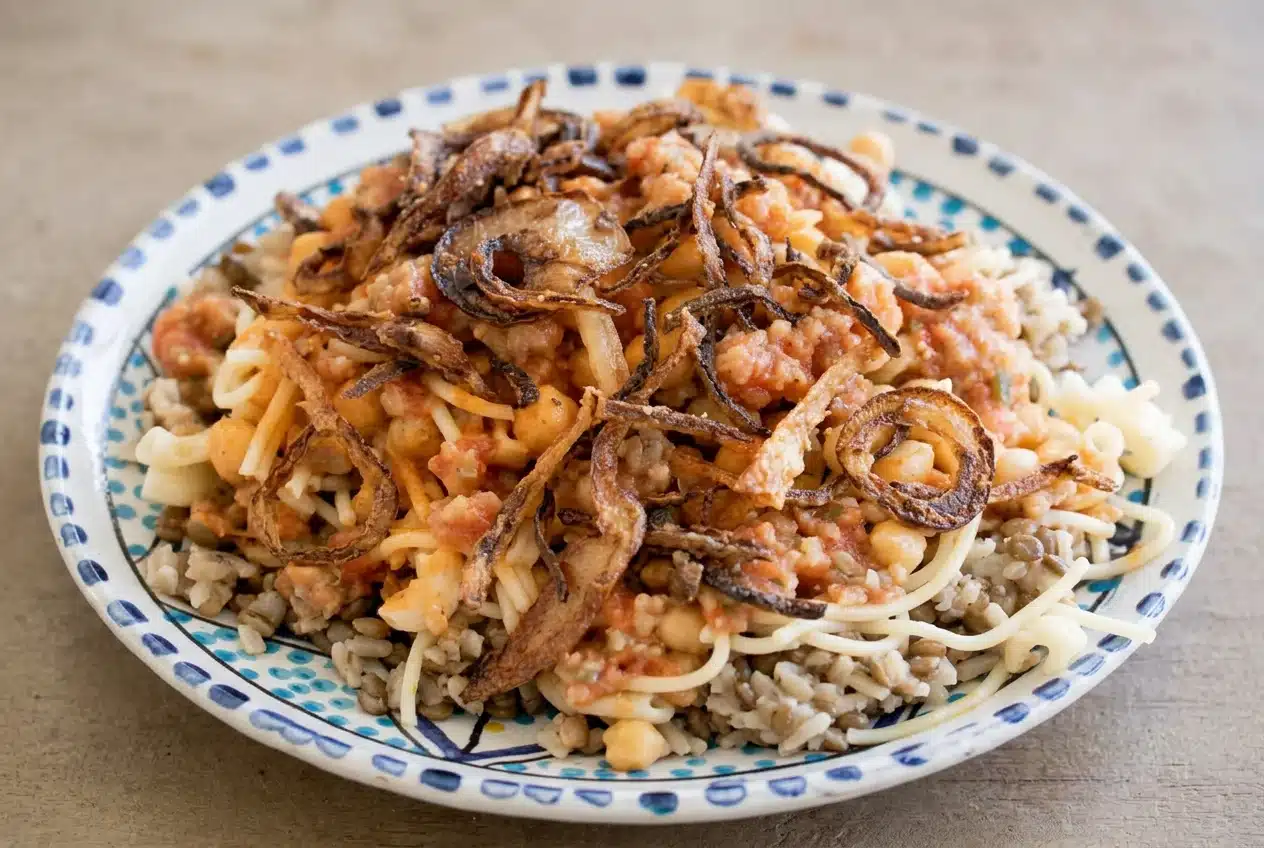
This koshari recipe builds a layered Egyptian bowl of lentil rice, pasta, cumin-seasoned chickpeas, tangy tomato sauces, and crispy fried onions. Save the onion-frying oil to carry savory flavor into the rice and optional fresh sauce.
Koshari brings grains, legumes, and pasta together without losing their individual textures. The cooked garlic-vinegar sauce adds sharpness, while the optional tomato and bell pepper sauce brings fresh contrast.
There are several components, so give yourself room on the stove and counter. Each stage has a clear purpose, and the final assembly is quick. The onion crown makes the difference.
Set aside a container for the reserved onion oil before you begin frying.
Essential Ingredients and Smart Substitutions
Each ingredient contributes to the bowl: legumes and grains provide structure, onions add sweetness and crunch, spices supply aroma, and tomatoes, lime, and vinegar balance the richness with acidity.
- 1 cup dried chickpeas (or 2 – 15 ounce cans of chickpeas** See note 3)
- 2 tsp ground cumin
- ½ lime
- 1½ lbs onion (about 2 large onions)
- 6 tbsp flour (to toss the onions in prior to frying)
- oil for frying (preferably sunflower oil** See note 5)
- salt to taste
- 1 lb tomatoes
- 6 ounces green bell pepper
- 6 ounces onion
- 3 garlic cloves
- 1 tsp ground coriander
- 1 tsp ground cumin
- 1 tbsp oil (from the fried onions)
- 1 lime
- salt and pepper to taste
- 1 spicy pepper (optional)
- 1 cup dried brown lentils (see note 8)
- 2 cups dry Calrose rice (or short-grain rice **See note 4)
- 1¼ lbs onion (about 1½ large onions)
- 4 tbsp oil (from the fried onions)
- 4 cups water
- 8 ounces elbow pasta
- 8 ounces dried spaghetti
- 2¼ lbs tomatoes (see note 7 for substitution of canned passata)
- 2 tbsp ghee
- 1 tsp chili flakes or cayenne powder (optional)
- 9 garlic cloves
- 3 tbsp tomato paste
- 3 tbsp white vinegar
- ½ tsp sugar
- 1 tsp salt (or to taste)
- 1 tsp black pepper (or to taste)
Grains, Legumes, and Dual Pastas
Chickpeas add a rounded bite; brown lentils nestle into the rice. Calrose is the rice choice here, with short-grain rice also listed as an option. Elbows and broken spaghetti give each spoonful different shapes and textures. Canned chickpeas are an approved alternative to dried.
Aromatic Fried Onions and Infused Oil
Flour coats the onion rings for a crisp topping. Their frying oil also flavors the blended-onion rice mixture and optional fresh sauce, tying the separate components together.
I’d protect the onion topping above all else: keep it separate from the sauces until the bowl is ready.
Cooked Vinegar Sauce vs. Fresh Red Sauce
The cooked sauce combines tomatoes, garlic, tomato paste, and white vinegar for concentrated tang. The optional fresh sauce blends tomatoes with bell pepper, onion, lime, and spices. Canned tomato passata can replace the tomatoes in the cooked sauce; no conversion amount is specified.
Strictly Vegan Oil Swap
The listed ghee makes this version vegetarian rather than vegan. For a plant-based variation, choose neutral oil or reserved onion-frying oil instead of ghee in the cooked sauce.
How to Make Koshari Step by Step
Serves 8. Listed preparation time is 30 minutes, cooking time is 2 hours, and total time is 2 hours 30 minutes. Plan separately for the initial 3-hour soak.
Soak Dry Lentils and Dry Chickpeas Ahead of Time
- Cover the dried lentils and dried chickpeas with water and soak for 3 hours before starting the cooking stages.
The legumes will hydrate and swell during this preparation.
Prepare the Chickpeas
- Boil the soaked dried chickpeas for 45 minutes to an hour, drain, then replenish the water and add the cumin for a second 30-minute boil.
Once the chickpeas are tender, finish them with the juice from the lime half.
Fry the Onions
- Slice the onions into rings, coat them with the flour, and leave them for 30 minutes before frying.
The flour should cling to the onion surfaces. - Fry the coated rings in oil, preferably sunflower oil, then lift them onto paper towels with a frying spatula and salt to taste.
Reserve the frying oil for the rice and optional fresh sauce, keeping the crisp onions separate.
Make the Fresh Red Sauce (Optional)
- Process the tomatoes, bell pepper, onion, and garlic, including the optional spicy pepper if desired, then blend in cumin, coriander, reserved onion oil, lime juice, salt, and pepper.
The vegetables should form a spoonable blended sauce.
Make the Koshari Lentil Rice
- Process the onions, then cook them in the reserved onion oil in a high-rimmed pot over low heat for about 10 minutes.
The onion mixture should soften slowly. - Add the drained soaked lentils and water, bring to a boil, then cover and simmer for about 10 minutes or until softened.
The soaked lentils will measure about 2.25 cups and should become tender before the rice goes in. - Reduce the heat to medium-low, stir in the rice, salt, and pepper, and cook covered for about 12 to 15 minutes before switching off the heat and resting covered for 5 minutes.
Check for tender rice before beginning the covered rest.
Cook the Pasta
- Bring water to a boil with about 1 tbsp salt, and break the spaghetti into quarters by snapping it in half twice, working with about 15 strands at a time.
The shortened strands should fit comfortably on a spoon alongside the elbows. - Boil the broken spaghetti and elbow pasta together until they reach your preferred firmness, then drain and set aside.
Keep the pasta firm enough to retain its shape beneath the sauces.
Koshari Vinegar Red Sauce
- Purée the tomatoes in a blender and pass them through a strainer into a bowl, or choose canned passata, then mince the garlic.
The strained tomato mixture should be smooth. - Heat the ghee, or oil for the vegan variation, with the optional chili for 30 seconds, add the garlic, then add tomato paste and vinegar for about 30 seconds before pouring in the tomatoes.
The garlic and chili should become aromatic without burning. - Stir in cumin, coriander, salt, sugar, and black pepper, then simmer for about 10 minutes.
The tomato, garlic, and vinegar should come together into a tangy sauce.
Assemble the Dish
- Build each portion with lentil rice, pasta, chickpeas, vinegar tomato sauce, optional fresh sauce, and finally fried onions.
The onion crown should remain distinct above the sauced layers.
What Is Egyptian Koshari and Its Street Food Origins
Koshari is an Egyptian street-food bowl combining rice, lentils, pasta, chickpeas, tomato sauce, and fried onions. You may also see it spelled koshary or kushari; these are English transliterations of the same dish. Its defining appeal is the contrast between tender starches, sharp sauce, and crisp onions.
Expert Checkpoints and Troubleshooting Common Mistakes
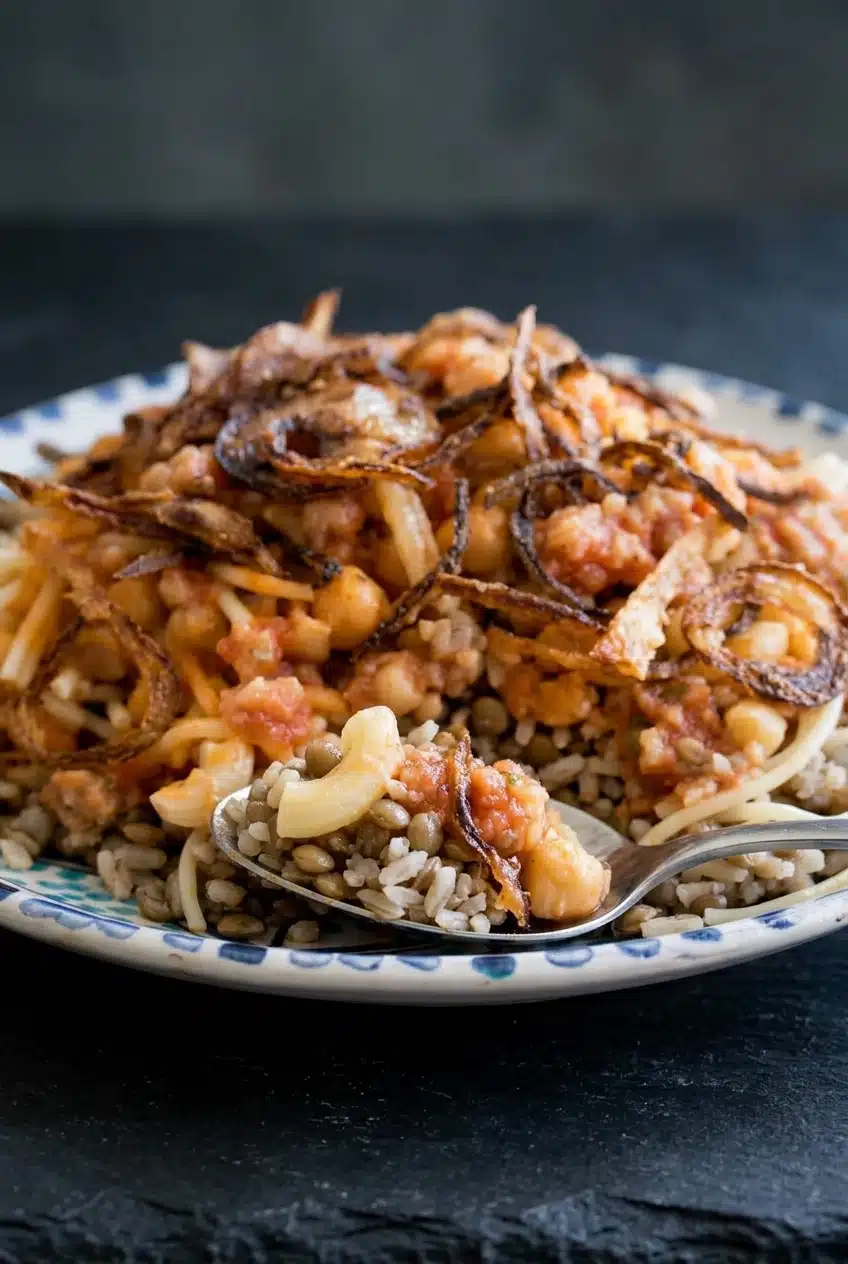
Check texture at each stage rather than expecting the sauces to hide an undercooked or overcooked component.
- Bitter onions: Excessive browning overwhelms their sweetness, so watch their color closely during frying rather than aiming for very dark rings.
- Crunchy lentil rice: Firm lentils or escaping steam can leave an uneven result; soften the lentils before adding rice and keep the pot covered during cooking and resting.
- Mushy grains: Lentils that collapse before the rice goes in lose definition; aim for tender lentils that still hold their skins.
- Soft pasta: Overcooking weakens the separate pasta layer; check firmness before draining.
- Flat flavor: Unseasoned starches can dull the bowl; use the salt and pepper called for and retain the vinegar and lime brightness.
- Soggy topping: Sauce moistens fried onions, so add them last rather than mixing them into the rice.
Regional Flavors and Easy Customizations
Keep these optional choices separate from the main ingredients and method.
Smart Stove-Top Sequencing for Smooth Prep
Follow the component order and its dependencies: soak the legumes first, prepare the chickpeas, then fry the onions before making anything that needs their oil. The optional fresh sauce follows, then lentil rice, pasta, cooked sauce, and assembly. Keep each finished component identifiable rather than combining everything early.
Weeknight Pantry Shortcut Version
Canned chickpeas remove the dried-chickpea preparation burden, while passata replaces blending and straining tomatoes for the cooked sauce. Leaving out the optional fresh sauce also reduces preparation without removing the vinegar tomato sauce.
Cairo Street-Cart Condiments (Daqqah & Shatta)
For optional table-side flavor, daqqah offers a garlicky cumin-vinegar direction, while shatta adds fiery chili heat. Neither replaces the two red sauces or belongs in the official ingredient list.
Alternative Rice, Whole-Grain & Protein Add-Ons
- Brown rice or basmati: These change the grain texture and have different moisture needs; the stated rice method is for Calrose or short-grain rice.
- Whole-wheat pasta: This optional choice adds a more pronounced grain flavor.
- Eggs, spiced chicken, or lamb: These are optional, nontraditional toppings; the koshari itself is meatless.
For another rice-and-legume meal with its own distinct character, try classic gallo pinto.
How to Layer and Serve a Classic Koshari Bowl
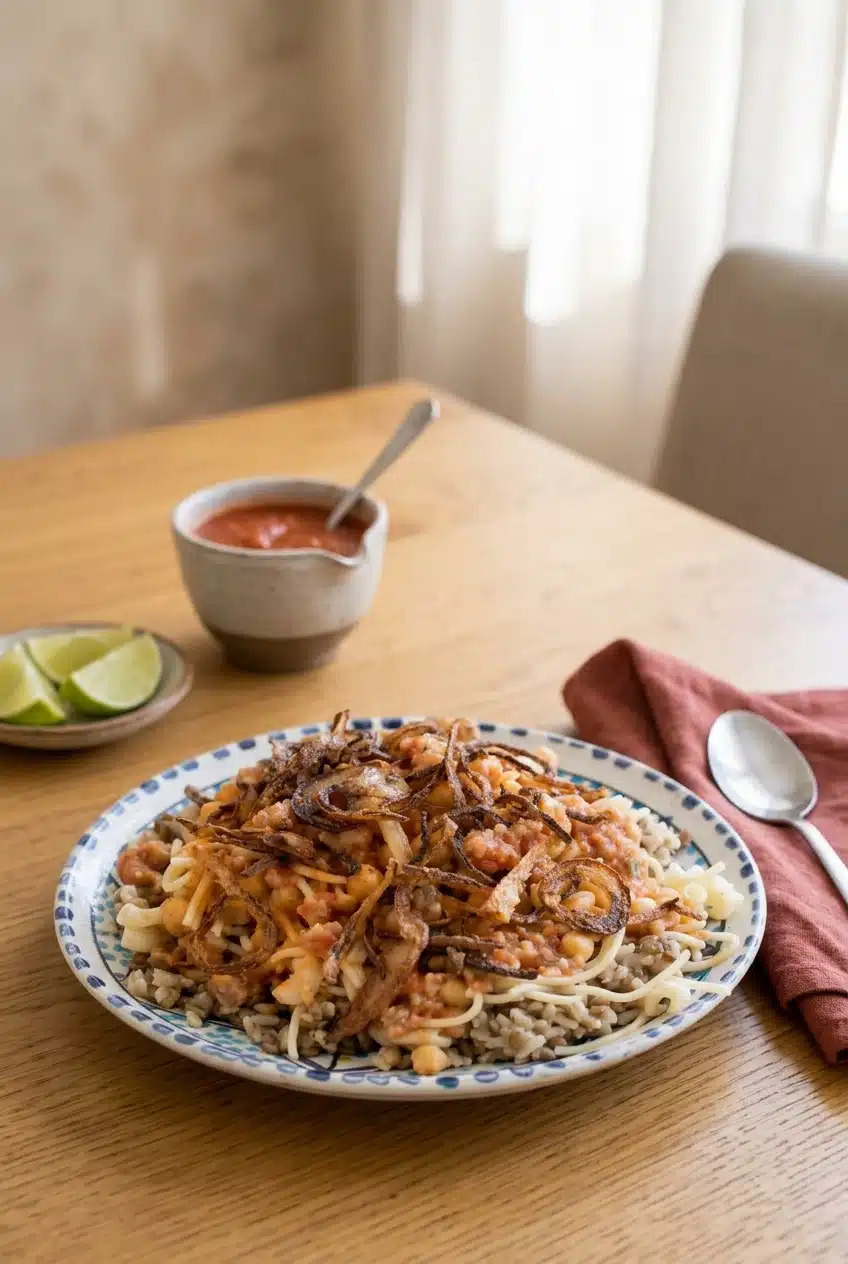
Keep the heavier lentil rice underneath, followed by pasta and chickpeas, with sauces above and onions last. This arrangement lets a deep spoonful catch every texture.
For a group, a build-your-own setup works better than an early-assembled pan: guests can choose their sauce and onion levels. The customizable approach also suits a layered buddha bowl.
Offer chopped cucumber-tomato-herb salad, lime wedges, or optional halved boiled eggs alongside.
Organizing Components Before Serving
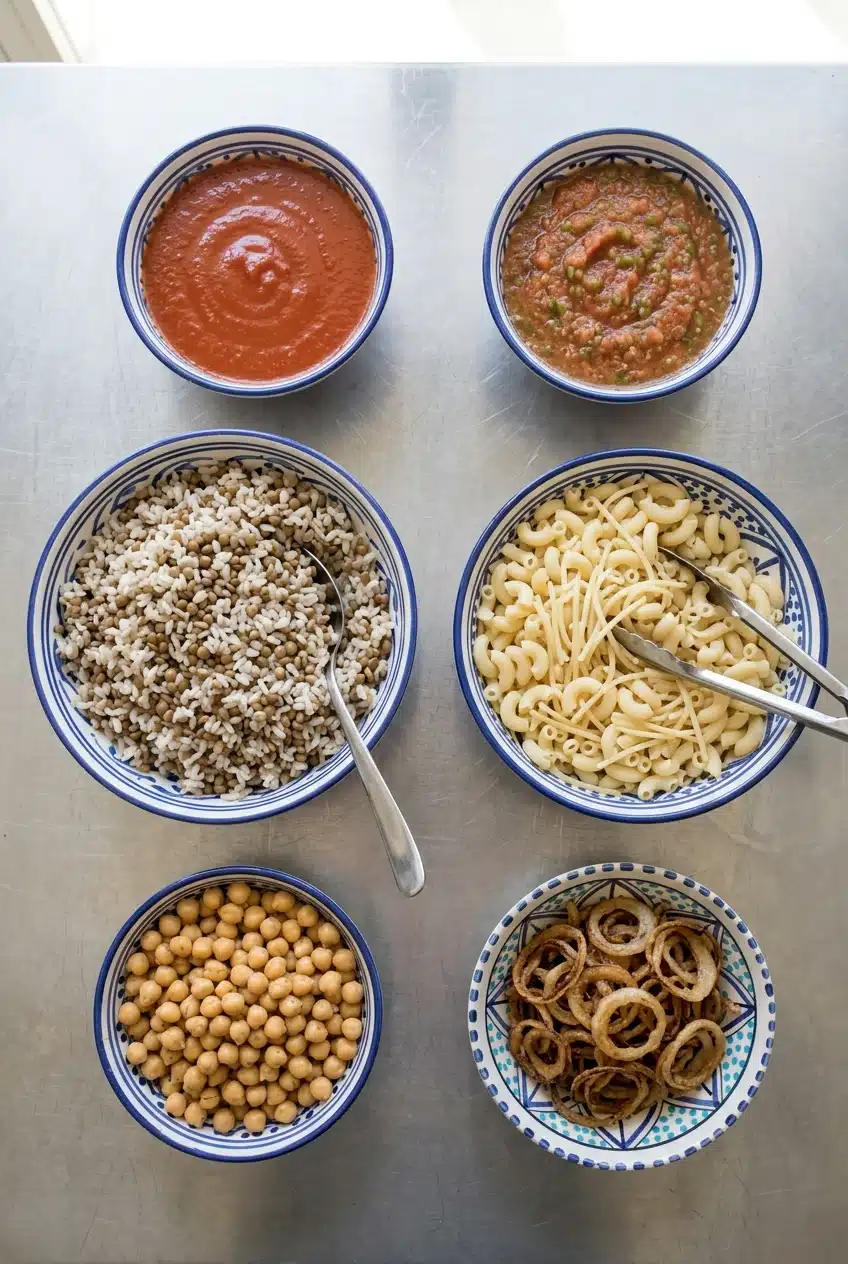
Give lentil rice, pasta, chickpeas, cooked sauce, fresh sauce, and fried onions their own places in your serving setup. Keep the onions away from the sauces, and postpone layering until you’re ready to eat. This organization preserves the contrast without requiring a fully assembled dish to wait.
Final Thoughts on Homemade Egyptian Koshari
Koshari rewards careful component cooking: tender lentil rice, firm pasta, tangy sauce, and a crisp onion crown all have a role.
Keep the layers distinct and adjust the optional heat and sauce at the table. Finish each bowl with the crunch it deserves.
Frequently Asked Questions About Koshari
Is Egyptian Koshari Vegan and Vegetarian?
This version is vegetarian, but the listed ghee is dairy. Choose neutral oil or reserved onion oil instead of ghee for the vegan variation.
Should You Layer Koshari in Individual Bowls or Mix Everything in a Large Dish?
Individual bowls preserve the distinct layers and let everyone choose their toppings. For a crowd, offer components separately and add onions only at assembly.
Why Is My Koshari Lentil Rice Crunchy or Mushy?
Crunchiness can follow insufficiently softened lentils, escaping steam, or a rice substitution with different moisture needs. Mushiness can follow overcooked lentils; check their tenderness before adding rice.
Are Koshari Sauces Served Warm or at Room Temperature?
The vinegar sauce is cooked and added after simmering. The optional fresh sauce is blended without a heating step; it does not need to follow the cooked sauce’s method.
Is Koshari Healthy?
A blanket health label is less useful than considering your portion, dietary needs, and toppings. This bowl combines grains, legumes, pasta, vegetables, and fried onions; no particular health outcome is promised.
What Is Koshari B Laban Made Of, and How Is It Different From Traditional Koshari?
For koshari b laban, check a recipe specifically bearing that name rather than substituting ingredients in this dish. The koshari here is savory, with lentils, rice, pasta, chickpeas, garlic-tomato sauces, and fried onions.
Koshari Recipe

Equipment
- High-rimmed pot
- Frying spatula
- Food processor
- Blender
- Strainer
Ingredients
- 1 cup dried chickpeas (or 2 – 15 ounce cans of chickpeas** See note 3)
- 2 tsp ground cumin
- ½ lime
- 1½ lbs onion (about 2 large onions)
- 6 tbsp flour (to toss the onions in prior to frying)
- oil for frying (preferably sunflower oil** See note 5)
- salt to taste
- 1 lb tomatoes
- 6 ounces green bell pepper
- 6 ounces onion
- 3 garlic cloves
- 1 tsp ground coriander
- 1 tsp ground cumin
- 1 tbsp oil (from the fried onions)
- 1 lime
- salt and pepper to taste
- 1 spicy pepper (optional)
- 1 cup dried brown lentils (see note 8)
- 2 cups dry Calrose rice (or short-grain rice **See note 4)
- 1¼ lbs onion (about 1½ large onions)
- 4 tbsp oil (from the fried onions)
- 4 cups water
- 8 ounces elbow pasta
- 8 ounces dried spaghetti
- 2¼ lbs tomatoes (see note 7 for substitution of canned passata)
- 2 tbsp ghee
- 1 tsp chili flakes or cayenne powder (optional)
- 9 garlic cloves
- 3 tbsp tomato paste
- 3 tbsp white vinegar
- ½ tsp sugar
- 1 tsp salt (or to taste)
- 1 tsp black pepper (or to taste)
Instructions
Soak Dry Lentils and Dry Chickpeas Ahead of Time
- Cover the dried lentils and dried chickpeas with water and soak for 3 hours before starting the cooking stages. The legumes will hydrate and swell during this preparation.
Prepare the Chickpeas
- Boil the soaked dried chickpeas for 45 minutes to an hour, drain, then replenish the water and add the cumin for a second 30-minute boil. Once the chickpeas are tender, finish them with the juice from the lime half.
Fry the Onions
- Slice the onions into rings, coat them with the flour, and leave them for 30 minutes before frying. The flour should cling to the onion surfaces.
- Fry the coated rings in oil, preferably sunflower oil, then lift them onto paper towels with a frying spatula and salt to taste. Reserve the frying oil for the rice and optional fresh sauce, keeping the crisp onions separate.
Make the Fresh Red Sauce (Optional)
- Process the tomatoes, bell pepper, onion, and garlic, including the optional spicy pepper if desired, then blend in cumin, coriander, reserved onion oil, lime juice, salt, and pepper. The vegetables should form a spoonable blended sauce.
Make the Koshari Lentil Rice
- Process the onions, then cook them in the reserved onion oil in a high-rimmed pot over low heat for about 10 minutes. The onion mixture should soften slowly.
- Add the drained soaked lentils and water, bring to a boil, then cover and simmer for about 10 minutes or until softened. The soaked lentils will measure about 2.25 cups and should become tender before the rice goes in.
- Reduce the heat to medium-low, stir in the rice, salt, and pepper, and cook covered for about 12 to 15 minutes before switching off the heat and resting covered for 5 minutes. Check for tender rice before beginning the covered rest.
Cook the Pasta
- Bring water to a boil with about 1 tbsp salt, and break the spaghetti into quarters by snapping it in half twice, working with about 15 strands at a time. The shortened strands should fit comfortably on a spoon alongside the elbows.
- Boil the broken spaghetti and elbow pasta together until they reach your preferred firmness, then drain and set aside. Keep the pasta firm enough to retain its shape beneath the sauces.
Koshari Vinegar Red Sauce
- Purée the tomatoes in a blender and pass them through a strainer into a bowl, or choose canned passata, then mince the garlic. The strained tomato mixture should be smooth.
- Heat the ghee, or oil for the vegan variation, with the optional chili for 30 seconds, add the garlic, then add tomato paste and vinegar for about 30 seconds before pouring in the tomatoes. The garlic and chili should become aromatic without burning.
- Stir in cumin, coriander, salt, sugar, and black pepper, then simmer for about 10 minutes. The tomato, garlic, and vinegar should come together into a tangy sauce.
Assemble the Dish
- Build each portion with lentil rice, pasta, chickpeas, vinegar tomato sauce, optional fresh sauce, and finally fried onions. The onion crown should remain distinct above the sauced layers.