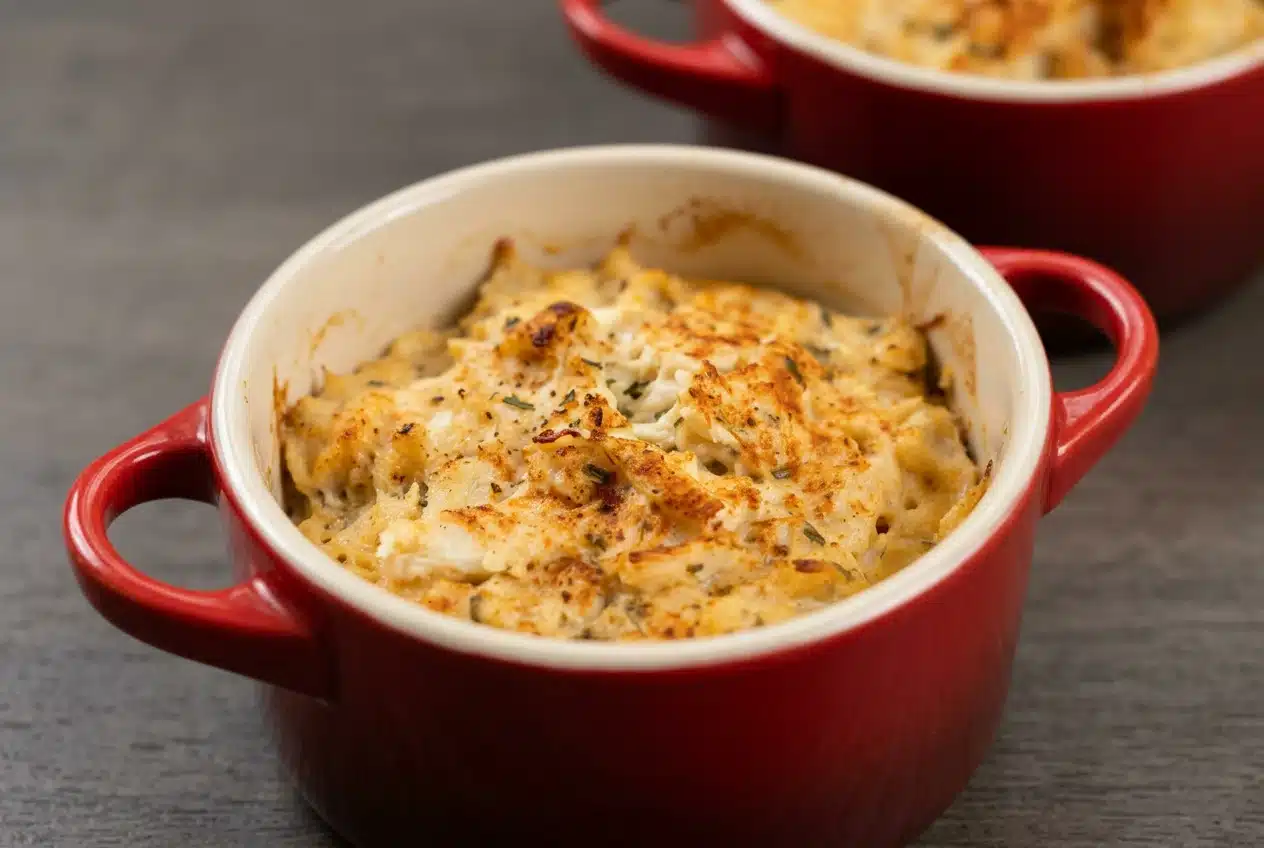
Classic crab imperial is a rich, filler-free baked crab dish with a seasoned mayonnaise-and-egg sauce. Gentle mixing keeps the crab tender, while a brief broil gives the creamy, sweet interior a golden top.
This crab imperial lets the seafood take center stage. Lemon brightens the dressing, Worcestershire adds savory depth, and Old Bay gives each ramekin its familiar Chesapeake-style flavor without breadcrumbs mixed through the crab.
You get an elegant seafood dinner without shaping patties or fussing over a skillet. The key is to finish mixing the dressing before the crab goes in. Keep those delicate flakes intact.
Let the fork loosen compacted crab rather than pressing it against the bowl.
Key Ingredients and Choosing the Best Crab Meat
Crab supplies sweetness and tender texture; mayonnaise and egg give the sauce richness and structure. Lemon, Worcestershire, Old Bay, and dried parsley balance that richness with brightness, savory flavor, spice, and herbal aroma.
- 1 lb. refrigerated crab meat (crab special)
- 1/2 cup mayonnaise
- 1 teaspoon Old Bay seasoning, plus more for dusting
- 1 tablespoon Worcestershire sauce
- 1 egg
- 1/2 tablespoon dried parsley
- 1/2 fresh lemon
The Creamy Imperial Sauce
Mayonnaise gives the dressing its smooth, creamy body, while egg helps it set during baking. Together, they make a binder that coats the crab rather than turning it into a firm patty.
Old Bay contributes warm spice and savory seasoning. Worcestershire deepens the flavor, and fresh lemon juice keeps the sauce from tasting heavy. Dried parsley adds green flecks and a gentle herbal note without the extra moisture of a generous handful of fresh herbs.
Jumbo Lump vs. Lump vs. Crab Special
Choose crab for the texture you want and the amount you’re comfortable spending. Refrigerated crab special is the choice here; you don’t need to buy the most expensive tub.
- Jumbo lump: Larger, showier pieces make an impressive presentation, usually at a higher price.
- Lump: A useful middle ground when you want noticeable pieces without paying a premium for the largest lumps.
- Crab special: Smaller flakes give a more delicate texture and often cost less, while still bringing sweet crab flavor.
Sweetness varies with the crab itself, not just the label. Look at the condition and appearance of the meat rather than assuming a higher price automatically means better flavor.
Why to Skip Claw and Imitation Crab
Claw meat has a darker appearance and a more pronounced flavor that changes this dish’s delicate character. It has its uses, but it wouldn’t be the first choice for highlighting pale, sweet flakes.
Shelf-stable canned crab can have finer pieces and a more noticeable canned flavor. That differs from refrigerated pasteurized crab, which may also come in a can. Imitation crab has a firmer, springier texture and won’t give the same flaky result. These are flavor and texture trade-offs, not judgments about every product.
How to Make Crab Imperial Step by Step
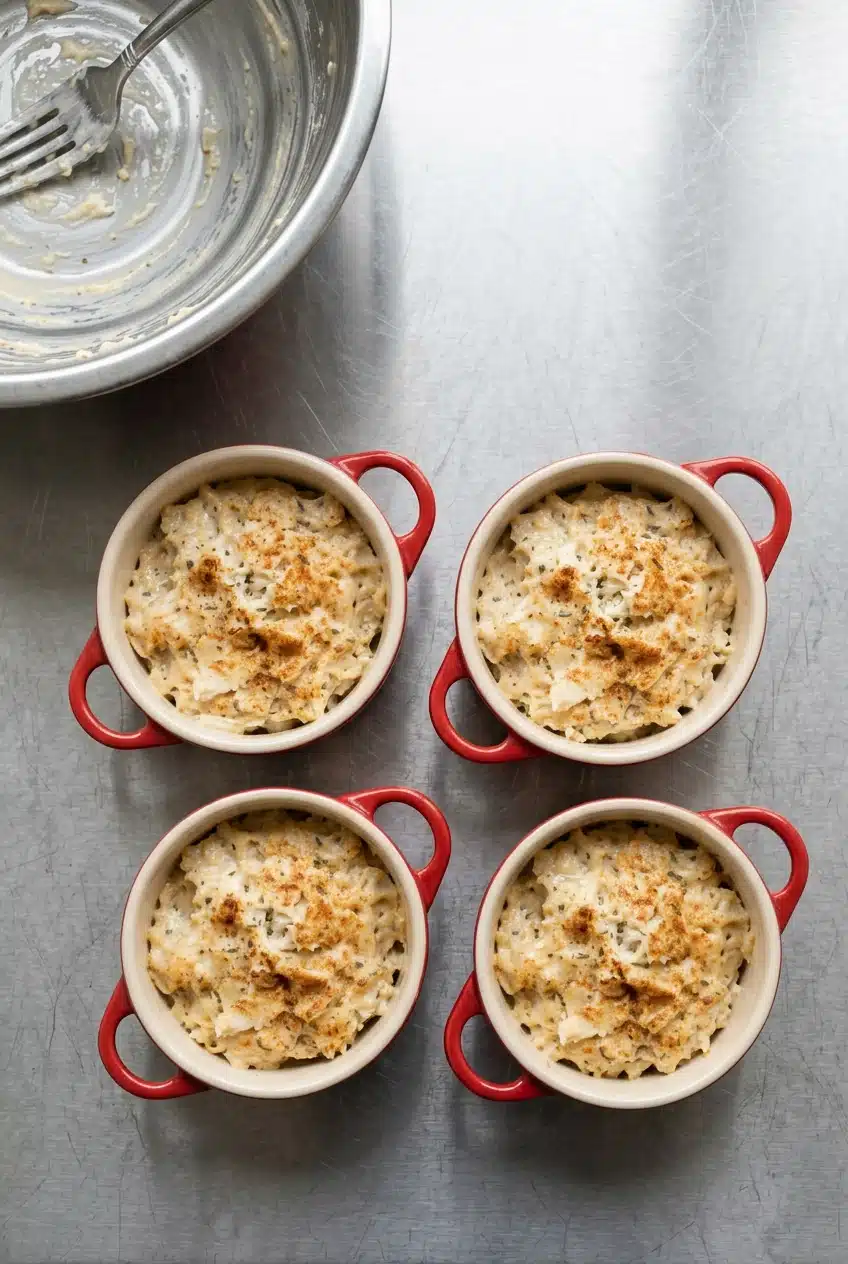
This recipe makes four portions. Build a smooth dressing first, handle the crab lightly, and leave time for the refrigerator rest before baking.
- Set the oven to 350°F to preheat.
This is the baking temperature before the final broiling stage. - Combine the mayonnaise, egg, Worcestershire sauce, Old Bay, and dried parsley in a large mixing bowl.
The dressing ingredients should surround the egg before you begin stirring. - Juice the lemon half into the bowl, then stir the dressing thoroughly.
Look for an even mixture with no visible streaks of egg or mayonnaise. - Transfer the refrigerated crab to the dressing and tease apart any compacted sections with a fork.
Keep recognizable flakes and lumps instead of reducing the meat to fine shreds. - Turn the crab gently through the dressing until it has an even coating.
The finished mixture should still contain distinct pieces of seafood. - Refrigerate the bowl for 20 minutes.
The mixture will chill while the seasoning flavors come together. - Distribute the mixture equally among four ramekins or small baking dishes and lightly level each surface.
Avoid pressing the crab into a tightly packed layer. - Dust the tops with additional Old Bay.
The seasoning should leave a light layer of color across the pale dressing. - Bake for 10 to 25 minutes, checking for crab heated through and a set dressing with no bubbling.
The surface should look more opaque and settled than the loose dressing did before baking. - Switch to broil for a two-minute finish, watching closely throughout.
The top should develop a golden-brown crust without scorching.
Imperial Crab vs. Crab Cakes and Deviled Crab
The easiest distinction is how each dish holds together and how you serve it.
- Crab imperial: A creamy mayonnaise-and-egg binder surrounds the crab, and a baking vessel supports its spoonable texture.
- Crab cakes: Patties need enough structure to hold their shape, often with breadcrumbs or cracker crumbs supporting the binder.
- Deviled crab: Versions often include crumbs, chopped vegetables, mustard, and hotter seasoning for a denser, more assertive bite.
Recipes vary, so these aren’t rigid rules. For a contrasting meal built around shaped patties, a crab cake salad offers a different balance of crisp edges and fresh greens.
Expert Tips for Tender Lumps and a Golden Top
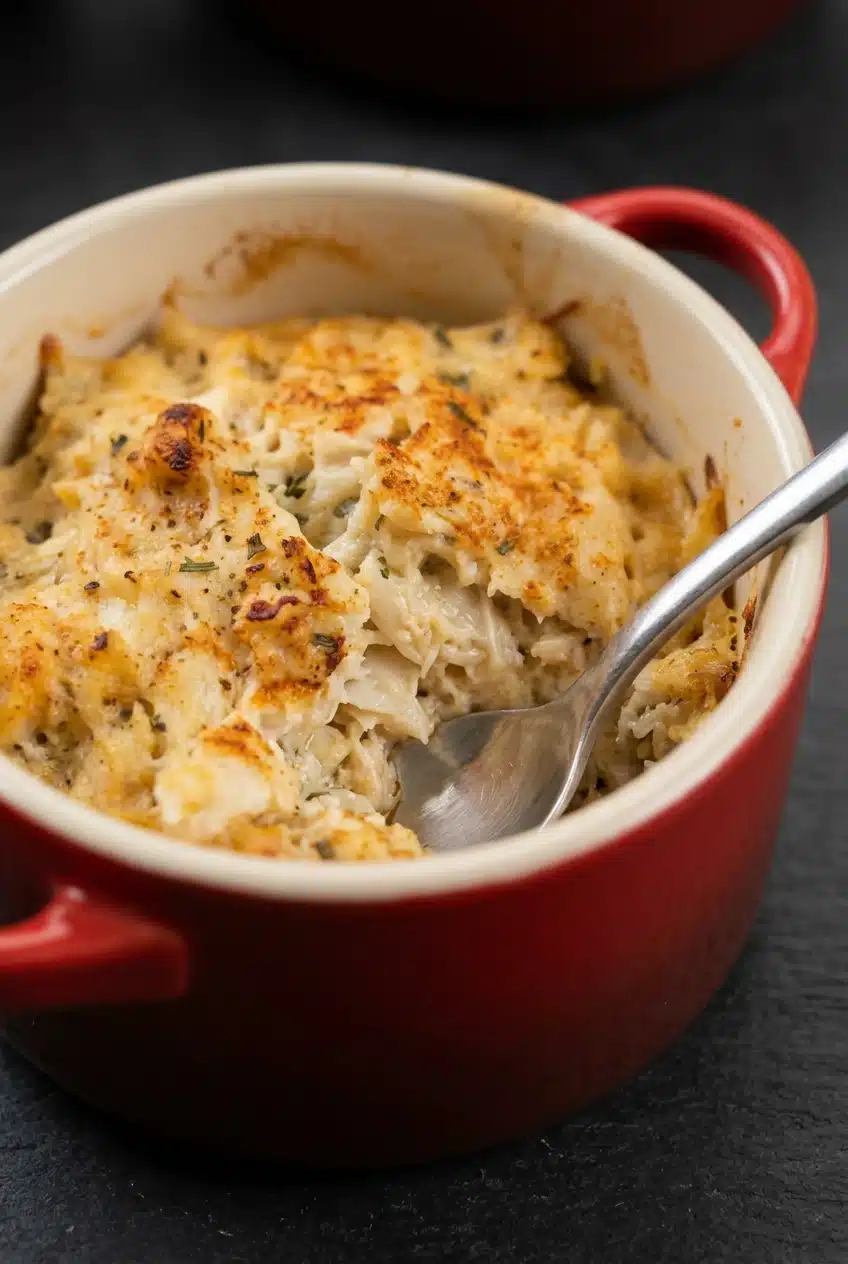
Most texture problems start with too much stirring or too much heat. Neither improves delicate crab.
- Mushy texture: Vigorous mixing breaks the flakes down, so finish the dressing thoroughly before adding seafood and use gentle turns afterward.
- Watery sauce: Wet additions can dilute the binder, so keep extra vegetables and generous fresh-herb additions out of this version.
- Oily dressing or dry crab: Excessive baking can separate the dressing and toughen the seafood, so check within the stated baking range rather than automatically using the longest time.
- Scorched topping: Broiler heat changes the surface quickly, so watch the finish continuously rather than stepping away.
Keeping Crab Lumps Intact While Mixing
Refrigerated crab sometimes keeps the cylindrical shape of its tub. Loosen that shape with the fork tines instead of mashing the whole mass flat. Once it separates, gentle stirring should coat the pieces without crushing them.
As optional preparation, inspect the meat with clean fingers for stray shell or cartilage, lifting pieces rather than squeezing them. A chilled bowl can also help keep the ingredients cool while you work; it doesn’t replace the refrigerator rest.
I’d rather leave a slightly uneven surface than smooth away the crab’s texture. Distinct flakes matter more than a perfectly polished top.
Restaurant-Style Whipped Imperial Sauce Cap
A restaurant-style variation features a thin seasoned-binder cap with a glossy, golden finish, sometimes accented with paprika. It looks smoother than the lightly textured, Old Bay-dusted surface used here. Treat it as an optional presentation style, not a required part of the method.
Choosing Ramekins, Shells, or Baking Dishes
Ramekins or small baking dishes are the vessels for this recipe. Cocottes offer a similar individual presentation, while natural crab or scallop shells give the dish a coastal feel. Any vessel intended for cooking needs to suit the heat it will encounter, especially the broiler.
A shallow shared dish feels more casual than individual portions. These presentation choices don’t come with interchangeable cooking times. For another individual crab preparation with a distinctive surface finish, try savory crab brulee.
Classic Topping Options and Regional Variations
The seasoned, broiled top keeps the focus on crab, but optional variations can change the crunch, tang, or serving style.
Buttered Breadcrumb or Cracker Topping
- Buttered panko: Offers a light, crisp contrast to the creamy filling.
- Fresh bakery crumbs: Give a softer, more substantial bread texture.
- Crushed buttery crackers: Bring savory crunch and extra richness.
These are topping alternatives, not ingredients in the filler-free crab mixture. The Old Bay finish remains the choice in the method above.
Shared Casserole Dip vs. Individual Shells or Ramekins
A shared casserole presentation suits casual appetizer service, while individual ramekins or shells make a more composed dinner. If a scoopable party appetizer is your main goal, creamy crab dip is another useful option.
Mustard, Seasoning, and Sweet Crab Tweaks
- Dry or Dijon mustard: Adds a sharper, tangier flavor direction.
- Paprika: Brings warm color and, depending on the variety, mild pepper flavor.
- Sweeter Japanese-style mayonnaise: Shifts the dressing toward a sweeter profile.
- Bell peppers or onions: Sometimes stretch portions, but add vegetable flavor and change the crab-focused texture.
Snow Crab or Alternative Sweet Crab Grades
Snow crab leg meat offers sweet flavor with longer, more fibrous pieces than the delicate flakes of crab special. Other sweet crab choices can also change the texture and presentation. Refrigerated crab special remains the choice for the quantities and method given here.
How to Serve This Dish for Dinner or Entertaining
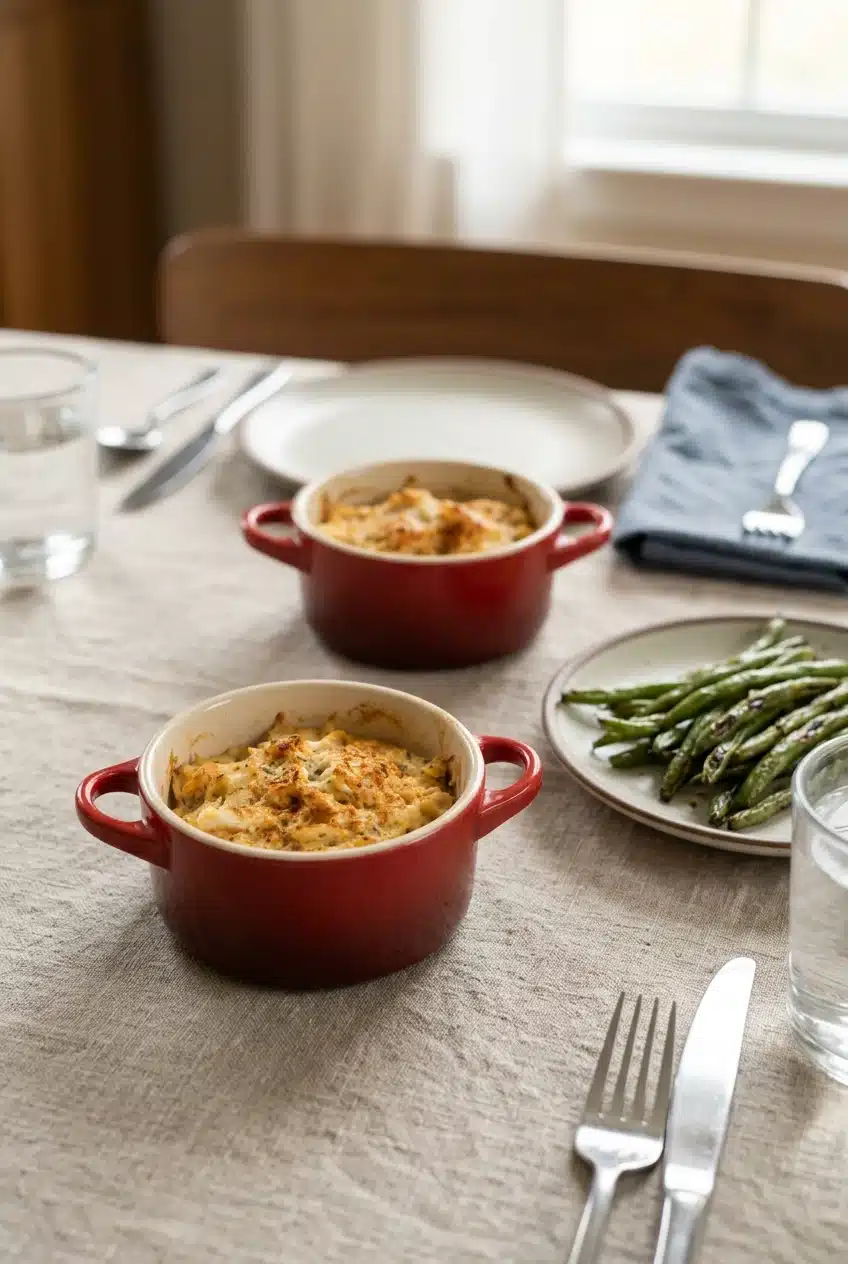
Balance the rich sauce with something crisp, green, or bright rather than making every part of the meal equally creamy.
- Vegetable sides: Asparagus almondine, roasted green beans, or other roasted vegetables add contrast.
- Salads: A citrus-dressed green salad or a crisp wedge salad brings welcome crunch.
- Starches: Risotto makes the dinner more substantial; roasted potatoes offer a less creamy alternative.
- Appetizer service: Toasted baguette slices or saltine crackers suit a shared presentation.
The imperial mixture also suggests a rich topping or stuffing direction for mild white fish or jumbo shrimp. Those combinations need their own cooking instructions rather than the ramekin timing above.
Planning Prep and Leftovers
Plan the meal around the refrigerator rest included in the method rather than treating it as an extended make-ahead holding period. Have the side dishes organized so you can serve the crab after its golden finish.
Keep any leftovers covered and chilled. For storage limits and reheating decisions, follow handling directions applicable to the crab product and the finished seafood-and-egg dish; the preparation times above aren’t leftover-storage or reheating instructions.
Final Thoughts on the Classic Dish
Crab imperial delivers tender seafood, creamy dressing, and a golden top without the work of shaping crab cakes. Its appeal comes from letting the crab remain the main attraction.
Mix gently once the seafood goes in, check the dressing during baking, and stay close for the broil. Protect the flakes, and let the golden crust finish the dish.
Frequently Asked Questions
What Is the Difference Between Crab Imperial and Deviled Crab?
Crab imperial emphasizes crab pieces in a creamy, filler-free mayonnaise-and-egg sauce. Deviled crab often includes crumbs, vegetables, and bolder seasoning for a denser, spicier result.
What Is Traditional Crab Imperial Topping?
This version uses a dusting of Old Bay and a brief broil for its golden finish. Other styles feature a seasoned sauce cap or optional buttered crumbs and crackers.
Do I Have to Use Jumbo Lump Crab Meat for Crab Imperial?
No. Refrigerated crab special is the choice in this recipe. Jumbo lump offers larger pieces, but careful handling also preserves the appealing texture of smaller flakes.
Can I Use Canned or Imitation Crab Meat in This Recipe?
Refrigerated pasteurized crab may come in a can, so check the product type rather than the container alone. Shelf-stable canned crab and imitation crab can change the flavor and texture; refrigerated crab is preferred here.
What Foods and Side Dishes Pair Best With Crab Imperial?
Asparagus, roasted vegetables, and bright green salads balance the rich dressing. Risotto suits dinner service, while toasted baguette slices or saltines suit an appetizer presentation.
Can Crab Imperial Be Made Ahead of Time and How Should Leftovers Be Stored?
The method includes a refrigerator rest, but it doesn’t establish a longer advance-assembly window. Keep leftovers covered and chilled, and use product-specific handling directions rather than assuming a storage limit from the cooking time.
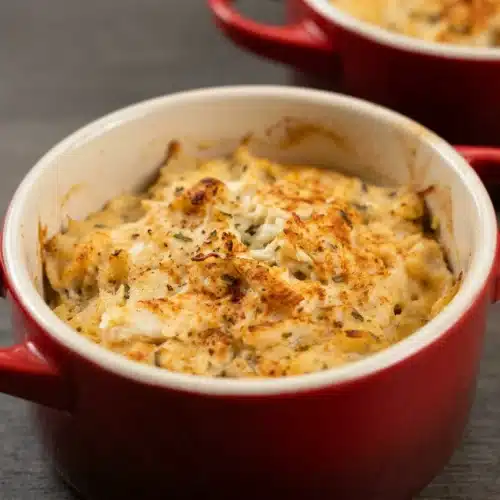
Crab Imperial

Equipment
- Large Mixing Bowl
- Fork
- 4 ramekins or small baking dishes
Ingredients
- 1 lb. refrigerated crab meat (crab special)
- 1/2 cup mayonnaise
- 1 teaspoon Old Bay seasoning plus more for dusting
- 1 tablespoon Worcestershire sauce
- 1 egg
- 1/2 tablespoon dried parsley
- 1/2 fresh lemon
Instructions
- Set the oven to 350°F to preheat. This is the baking temperature before the final broiling stage.
- Combine the mayonnaise, egg, Worcestershire sauce, Old Bay, and dried parsley in a large mixing bowl. The dressing ingredients should surround the egg before you begin stirring.
- Juice the lemon half into the bowl, then stir the dressing thoroughly. Look for an even mixture with no visible streaks of egg or mayonnaise.
- Transfer the refrigerated crab to the dressing and tease apart any compacted sections with a fork. Keep recognizable flakes and lumps instead of reducing the meat to fine shreds.
- Turn the crab gently through the dressing until it has an even coating. The finished mixture should still contain distinct pieces of seafood.
- Refrigerate the bowl for 20 minutes. The mixture will chill while the seasoning flavors come together.
- Distribute the mixture equally among four ramekins or small baking dishes and lightly level each surface. Avoid pressing the crab into a tightly packed layer.
- Dust the tops with additional Old Bay. The seasoning should leave a light layer of color across the pale dressing.
- Bake for 10 to 25 minutes, checking for crab heated through and a set dressing with no bubbling. The surface should look more opaque and settled than the loose dressing did before baking.
- Switch to broil for a two-minute finish, watching closely throughout. The top should develop a golden-brown crust without scorching.