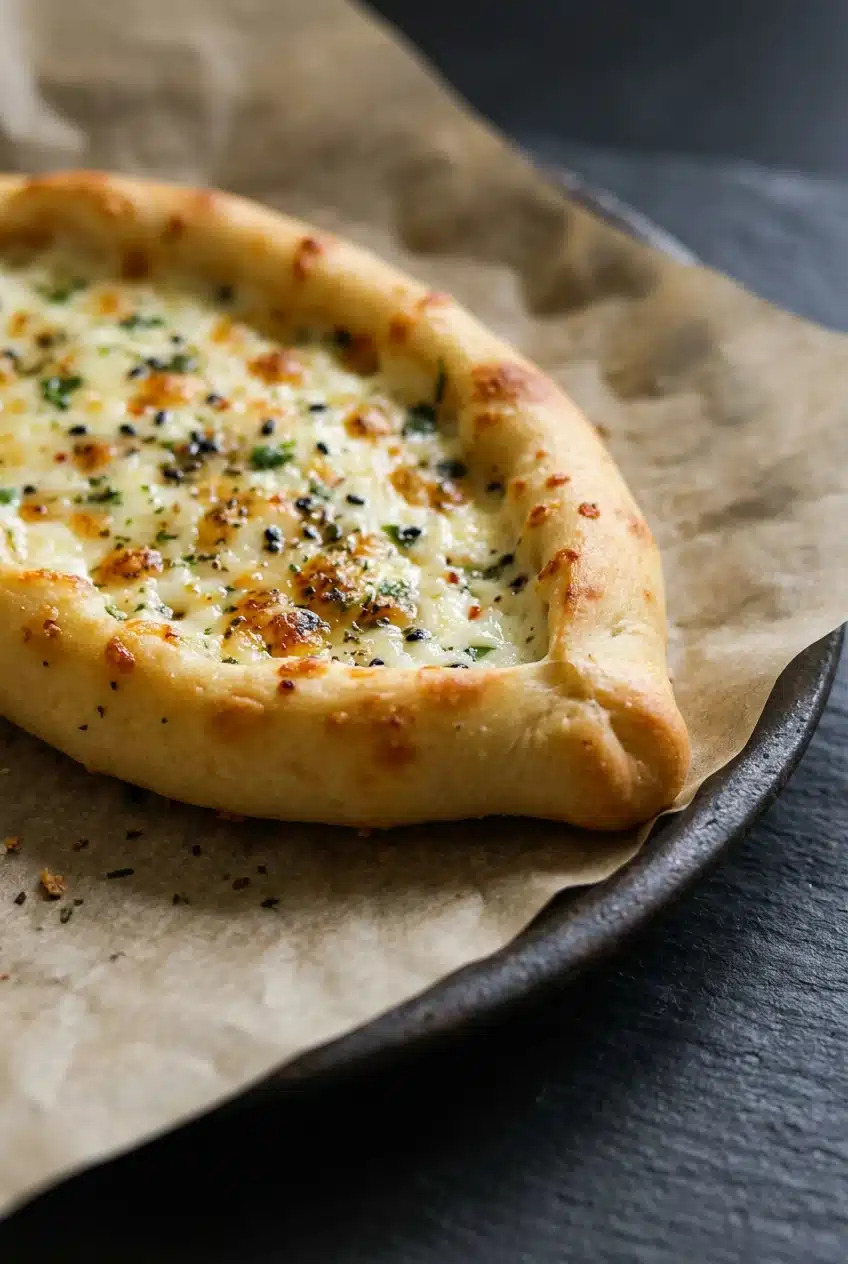
Cheese fatayer are Levantine baked pastries filled with herbed cheese and shaped into open boats. This version combines soft yogurt yeast dough with mozzarella, feta, mint, parsley, and nigella seeds for pillowy bread, golden edges, and a warm, melty center.
These cheese fatayer bring together the comfort of fresh bread and the salty tang of white cheese. The open centers leave room for the filling to bubble while the folded rims turn golden.
The dough needs time to rise, but the mixing and assembly are approachable. A milk or cream brush finishes the exposed edges. The real trick is in the pinched tips.
Keep the dough slightly tacky rather than flouring it until completely dry.
Key Ingredients and Cheese Substitutions
Each ingredient contributes structure, tenderness, flavor, or color: yogurt and olive oil soften the bread, the cheeses balance stretch with tang, and herbs, spices, and nigella seeds give the filling its savory aroma.
- 3 cups shredded mozzarella cheese
- 1 cup crumbled feta cheese
- 1 tablespoon parsley (finely chopped)
- 1 large egg (beaten)
- 1/2 teaspoon onion powder
- 1 teaspoon dried mint
- 1 teaspoon Aleppo pepper
- 1/2 teaspoon black pepper
- 1/2 teaspoon garlic powder
- 1 teaspoon nigella seeds
- 2 2/3 cups all-purpose flour (additional as needed)
- 1/2 tablespoon salt
- 1/2 tablespoon instant yeast
- 1 cup lukewarm water
- 1/2 tablespoon sugar
- 2 tablespoons olive oil
- 2 tablespoons plain yogurt
- milk or heavy cream (for brushing)
Yogurt-Enriched Yeast Dough Essentials
Yeast lifts the dough, while yogurt contributes moisture and tenderness. Olive oil adds richness and helps keep the crumb supple. Flour provides structure; water hydrates it, sugar supports fermentation, and salt seasons the bread.
The finished dough should feel soft and elastic, with a slight tack against your palm. It shouldn’t feel stiff or heavily dusted with flour.
Best Cheeses and Traditional Swaps
Mozzarella provides melt and stretch; feta adds a crumbly texture and salty tang. Low-moisture mozzarella is a useful choice for an open filling. Mild queso blanco is an optional white-cheese direction, though its melting behavior differs from mozzarella.
I favor block mozzarella shredded at home when a smooth, stretchy filling is the priority.
Traditional Akkawi or Halloumi Cheese Swap
Optional desalted Akkawi brings a traditional mild white-cheese character alongside mozzarella. Halloumi offers a firmer, chewier bite and doesn’t melt into the same stretchy texture. Saltiness varies, so neither choice should automatically mean adding more seasoning.
Herbs, Spices, and Aleppo Pepper Substitutes
Parsley adds freshness, dried mint brings a cooling herbal aroma, and nigella seeds contribute a gently oniony, peppery flavor. Aleppo pepper supplies mellow warmth; sweet paprika with cayenne is an optional flavor alternative. The beaten egg binds the filling as it bakes, while onion powder, garlic powder, and black pepper deepen the savory flavor.
How to Make Cheese Fatayer Step by Step
Follow the rise and dough-feel cues before shaping. The recipe makes 12 pies, with listed prep time of 120 minutes, cook time of 20 minutes, and total time of 140 minutes; the baking stage itself takes 10 to 12 minutes.
MAKE THE DOUGH
- Measure the flour, salt, instant yeast, water, sugar, olive oil, and yogurt into a large bowl.
The flour should be ready to absorb the liquid and yogurt as you mix. - Use a stand mixer fitted with a dough hook, a wooden spoon, or a rubber spatula to combine, then knead with the mixer or by hand for 2 to 3 minutes.
Aim for an elastic, softly tacky dough, adding flour a tablespoon at a time only if it remains difficult to handle. - Place the dough in a greased bowl and cover it for a warm rise of about 1 hour.
Look for roughly twice its starting volume before continuing.
THE CHEESE FILLING
- During the rise, mix the mozzarella, feta, parsley, beaten egg, onion powder, dried mint, Aleppo pepper, black pepper, garlic powder, and nigella seeds in another bowl.
Distribute the herbs and seasonings throughout the cheeses rather than leaving concentrated patches. - Reserve the mixed filling for assembly.
It should look evenly combined, with flecks of herbs and seeds throughout.
ASSEMBLY
- Set the oven to 475°F.
The oven needs to reach this temperature before the pastries go in. - After the hour-long rise, press down the dough to release the gas, divide it into 12 equal pieces, and gather each into a tight ball.
The portions should look rounded and compact. - Lengthen each ball into an oval with tapered ends.
Keep the center broad enough to hold the filling. - Place a generous portion of filling down the center, bring both long edges inward, and firmly pinch the two pointed ends together.
The resulting boat should have upright sides and an exposed cheese center. - Move each boat onto a parchment-lined baking sheet and lightly brush its dough rim with milk or heavy cream, repeating with the remaining portions.
Keep the cheese centers open and the pointed seams tightly joined. - Bake for 10 to 12 minutes.
Look for golden-brown rims and melted cheese that bubbles lightly in the center. - Remove the baking sheet and let the pastries cool for a few minutes before eating warm.
The rims should feel pillowy around the soft cheese filling.
What Is Fatayer?
Fatayer are savory pastries shared across Palestine, Lebanon, Syria, and Jordan. The cheese version is called fatayer bi jibneh, roughly “cheese pies.” Pronunciation varies by dialect; “fah-TAH-yer bee JIB-neh” is a useful English approximation.
In English, you’ll often see “Middle Eastern hand pies,” “cheese pies,” or “cheese boats.” Unlike a typically enclosed Italian calzone, these boats expose their filling. Manakish are topped flatbreads; Turkish pide are related-looking boat-shaped breads; sfeeha commonly feature seasoned meat. Cheese sambousek are enclosed pastries often served fried.
Expert Shaping Tips and Troubleshooting
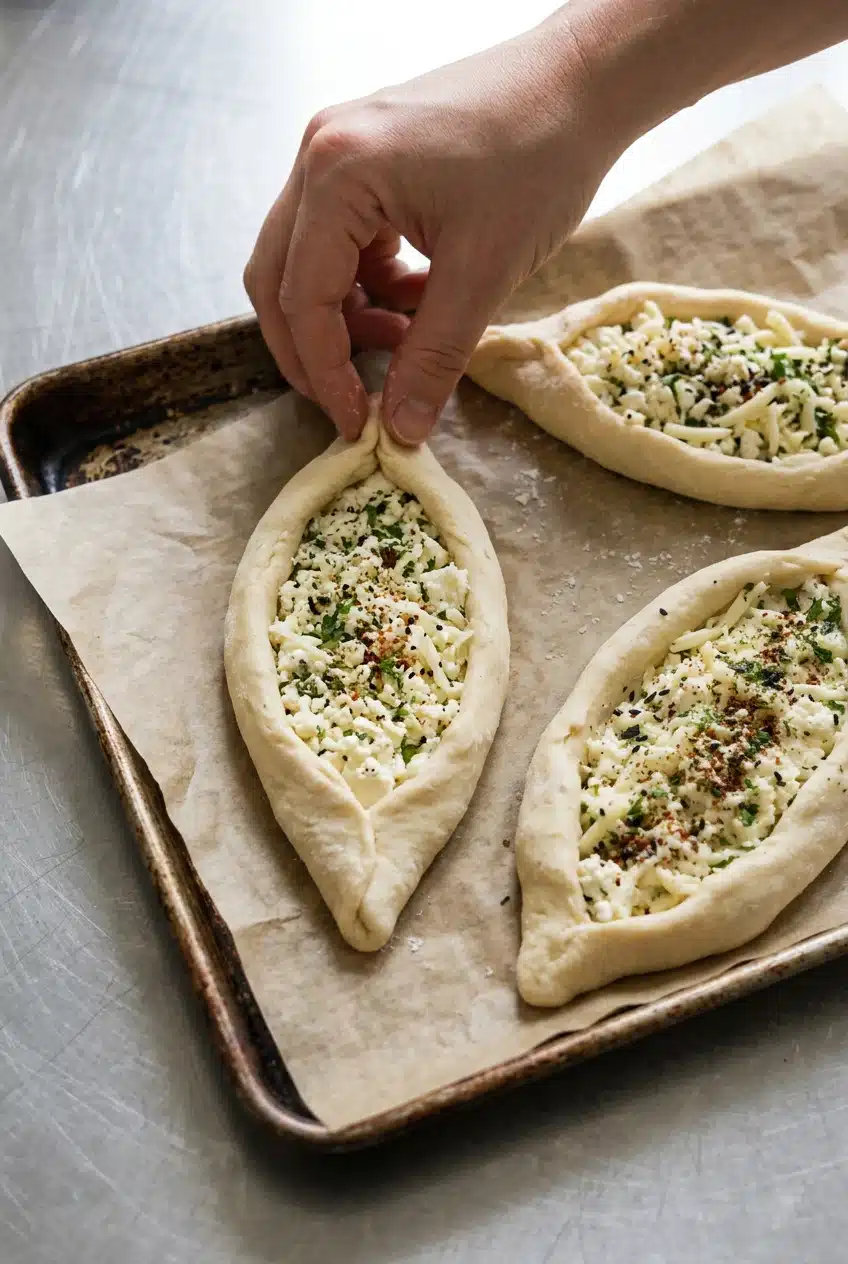
Most shaping problems come from stiff dough, wet filling, or loosely joined ends.
- Dough sticks excessively: Use the flour adjustment in the method gradually, stopping when the dough becomes manageable rather than dry.
- Ovals spring back: A rushed rise can make shaping harder; let the dough reach the doubled-size cue rather than relying only on the clock.
- Boat tips open: Loose seams can separate as the dough expands; firmly fuse the ends, leaving them slightly thicker than the side rims.
- Filling spills or wets the bottom: Excess brine and overfilling work against the open shape; optionally blot brined cheese before mixing and keep filling away from the seams.
- Filling tastes too salty: Brined cheese already supplies salt; taste the cheese before combining it with the raw egg and avoid extra salt additions.
Optionally brush the warm baked rims lightly with olive oil for a little sheen and a softer surface. This finish stays separate from the milk or cream brush used before baking.
Regional Shapes and Popular Filling Variations
These optional variations offer different flavors and appearances without changing the open-boat method above.
Open Boats vs. Closed Triangles and Turnovers
Open boats display their cheese filling and give you a generous border of bread. Enclosed pastries hide the filling inside, creating a more compact hand pie.
Closed Triangular and Half-Moon Fatayer
Triangular fatayer have three pointed corners, while half-moon versions have a curved turnover silhouette. Both are alternatives to the elongated, open boats made here.
Spinach and Cheese Fatayer (Fatayer bi Sabanekh)
Spinach and cheese offer an earthier filling direction. Fatayer bi sabanekh refers to spinach fatayer, which needn’t contain cheese. Spiced meat sfeeha belong to a related savory pastry tradition.
Shortcut Dough Options for Busy Bakers
Convenience dough trades the yogurt-enriched crumb for less mixing work. Puff pastry produces flaky layers, not the soft yeasted bread texture of these boats.
Store-Bought Pizza or Dinner Roll Dough Shortcut
Store-bought pizza dough can give a chewier result; dinner roll dough may taste softer, richer, or sweeter. Both are optional convenience choices rather than exact matches for this dough.
What to Serve with These Cheese Boats
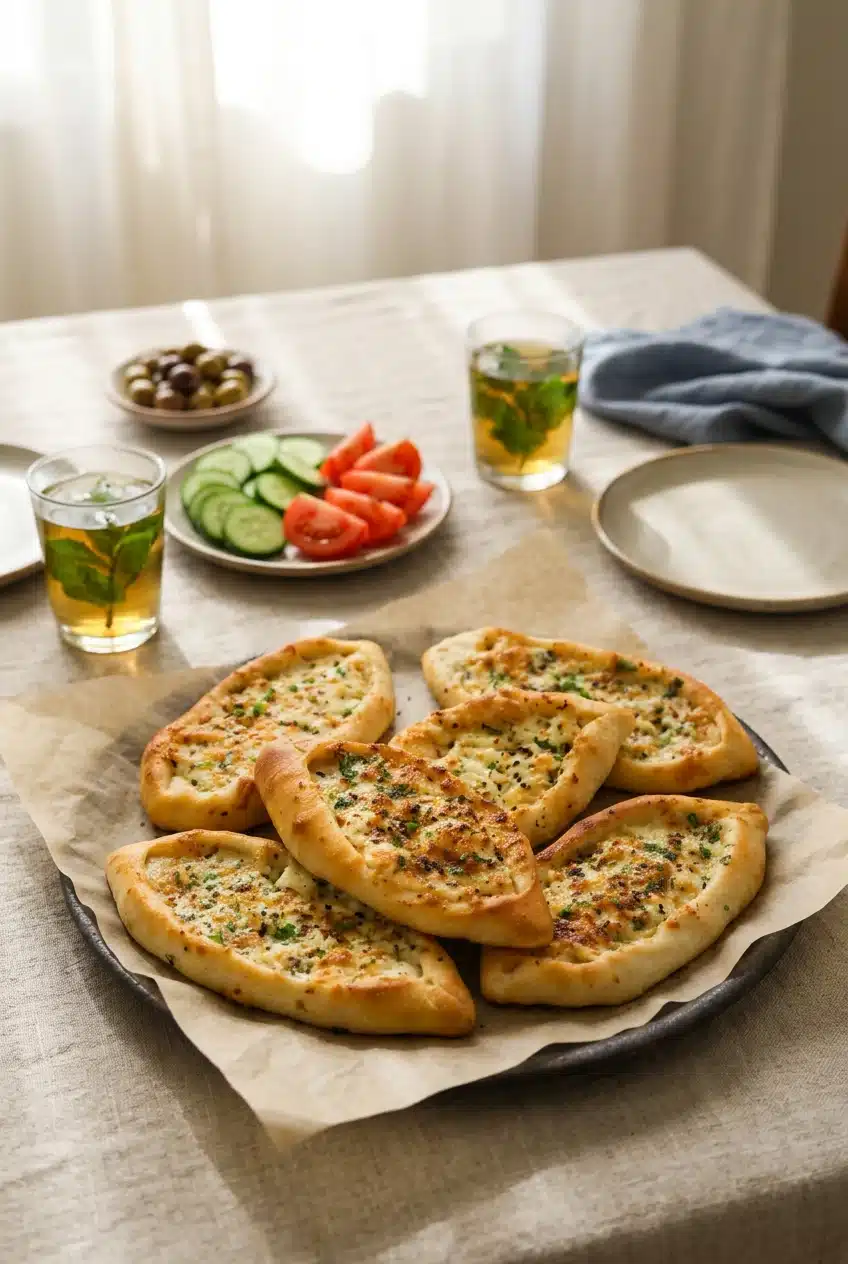
Fresh, crisp accompaniments balance the warm bread and salty cheese.
- Breakfast or brunch: Pair with mint tea, olives, sliced cucumbers, and ripe tomatoes.
- Mezze: Add hummus, labneh, fresh greens, and pickled vegetables.
- Ramadan iftar: Serve alongside lentil soup and a fresh vegetable platter.
Make-Ahead, Storage, and Reheating Guide
Use the dough’s rise to prepare the filling, keeping the two components separate until assembly. This organizes the work without extending the dough’s proof or requiring advance storage.
For leftovers, use a covered container and keep chilled rather than treating cheese-filled pastries as room-temperature bread. Reheat gently in an oven, skillet, or air fryer until hot throughout, watching the exposed rims so they don’t dry out. No specific storage duration or reheating schedule is established here.
Final Thoughts on Homemade Fatayer
Pillowy yogurt dough and tangy, herbed cheese make these pastries equally welcome at breakfast or on a mezze spread. Firmly pinched tips help each boat keep its shape.
Choose the mozzarella-feta filling or explore an optional cheese direction while keeping the same shaping care. Enjoy that first warm bite of golden bread and melted cheese.
Frequently Asked Questions
What Is a Fatayer and What Is Its English Name?
Fatayer are savory Middle Eastern pastries. English names include hand pies, turnovers, and, for open cheese versions, cheese boats.
Is Cheese Fatayer Palestinian or Lebanese?
Both cuisines embrace it. Fatayer belongs to shared Levantine traditions across Palestine, Lebanon, Syria, and Jordan.
Is Fatayer Like a Calzone?
Both use bread dough with savory fillings. These fatayer are individual open boats with herbed white cheese rather than enclosed Italian turnovers.
What Cheese Is Best for Cheese Fatayer if I Cannot Find Akkawi?
Mozzarella and feta make a useful combination. Mozzarella supplies stretch, while feta provides salty tang.
Can You Fry Cheese Fatayer Instead of Baking Them?
Keep these open boats baked. Enclosed fried cheese pastries are commonly called cheese sambousek and require a different approach.
How Should Leftover Cheese Fatayer Be Stored and Reheated Safely?
Keep leftovers covered and chilled, then heat thoroughly before serving. Avoid assuming a shelf life or judging the heated center only by browned edges.

Cheese Fatayer

Equipment
- large bowl
- Stand mixer
- Baking Sheet
- Parchment Paper
Ingredients
- 3 cups shredded mozzarella cheese
- 1 cup crumbled feta cheese
- 1 tablespoon parsley finely chopped
- 1 large egg beaten
- 1/2 teaspoon onion powder
- 1 teaspoon dried mint
- 1 teaspoon Aleppo pepper
- 1/2 teaspoon black pepper
- 1/2 teaspoon garlic powder
- 1 teaspoon nigella seeds
- 2 2/3 cups all-purpose flour additional as needed
- 1/2 tablespoon salt
- 1/2 tablespoon instant yeast
- 1 cup lukewarm water
- 1/2 tablespoon sugar
- 2 tablespoons olive oil
- 2 tablespoons plain yogurt
- milk or heavy cream for brushing
Instructions
MAKE THE DOUGH
- Measure the flour, salt, instant yeast, water, sugar, olive oil, and yogurt into a large bowl. The flour should be ready to absorb the liquid and yogurt as you mix.
- Use a stand mixer fitted with a dough hook, a wooden spoon, or a rubber spatula to combine, then knead with the mixer or by hand for 2 to 3 minutes. Aim for an elastic, softly tacky dough, adding flour a tablespoon at a time only if it remains difficult to handle.
- Place the dough in a greased bowl and cover it for a warm rise of about 1 hour. Look for roughly twice its starting volume before continuing.
THE CHEESE FILLING
- During the rise, mix the mozzarella, feta, parsley, beaten egg, onion powder, dried mint, Aleppo pepper, black pepper, garlic powder, and nigella seeds in another bowl. Distribute the herbs and seasonings throughout the cheeses rather than leaving concentrated patches.
- Reserve the mixed filling for assembly. It should look evenly combined, with flecks of herbs and seeds throughout.
ASSEMBLY
- Set the oven to 475°F. The oven needs to reach this temperature before the pastries go in.
- After the hour-long rise, press down the dough to release the gas, divide it into 12 equal pieces, and gather each into a tight ball. The portions should look rounded and compact.
- Lengthen each ball into an oval with tapered ends. Keep the center broad enough to hold the filling.
- Place a generous portion of filling down the center, bring both long edges inward, and firmly pinch the two pointed ends together. The resulting boat should have upright sides and an exposed cheese center.
- Move each boat onto a parchment-lined baking sheet and lightly brush its dough rim with milk or heavy cream, repeating with the remaining portions. Keep the cheese centers open and the pointed seams tightly joined.
- Bake for 10 to 12 minutes. Look for golden-brown rims and melted cheese that bubbles lightly in the center.
- Remove the baking sheet and let the pastries cool for a few minutes before eating warm. The rims should feel pillowy around the soft cheese filling.