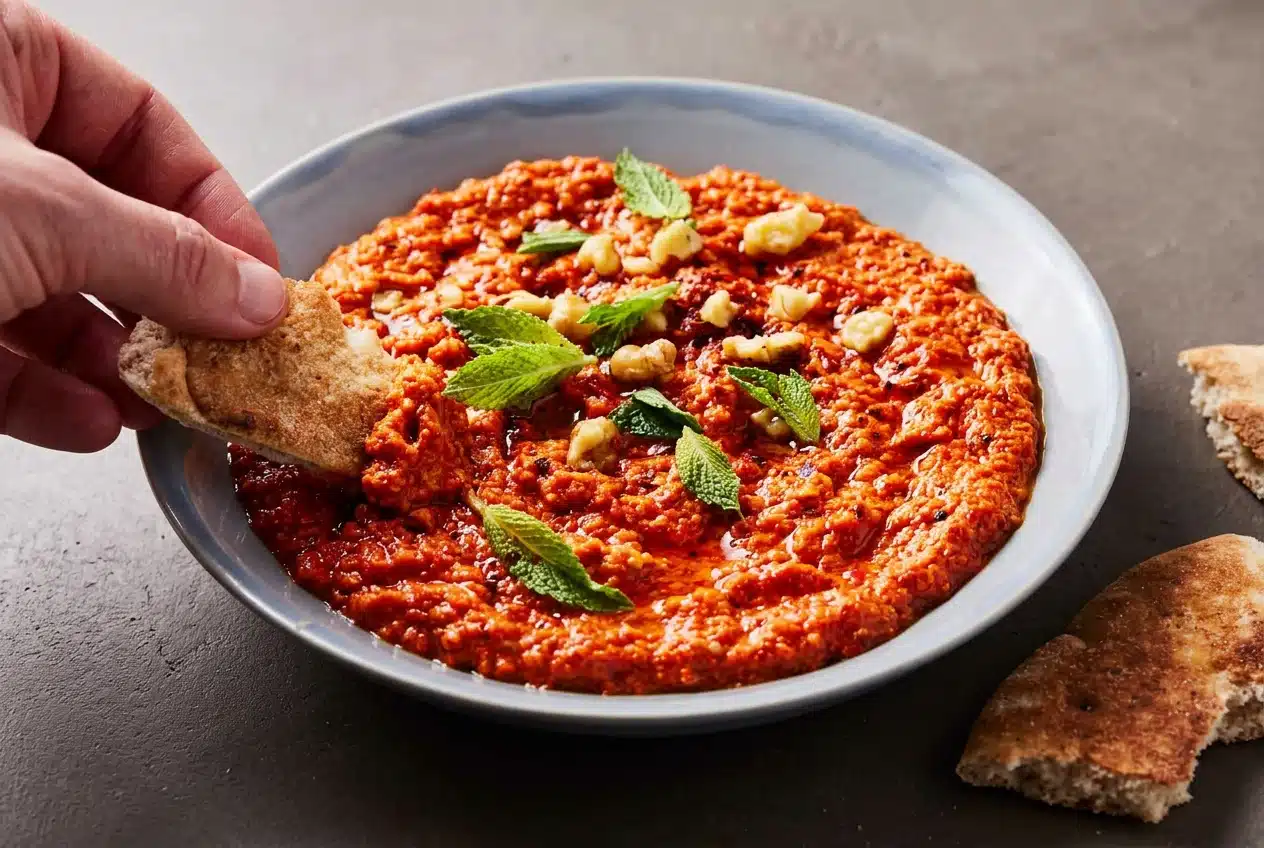
Muhammara is a thick Syrian roasted red pepper and walnut dip with smoky sweetness and a tangy pomegranate finish. Pulse the ingredients in a food processor until creamy, then finish with mint and serve with pita.
This muhammara recipe brings together sweet peppers, earthy walnuts, and fruity chile heat in a scoopable spread. Breadcrumbs give it body, while olive oil rounds out the texture.
With roasted peppers ready to go, it takes 10 minutes and serves four. It works equally well as an appetizer or a flavorful addition to dinner. Aim for creamy, with a little walnut texture.
I look for roasted peppers without a puddle of packing liquid; extra moisture makes it harder to get a thick dip.
Muhammara Ingredients and Smart Substitutions
Each ingredient contributes to the balance: roasted peppers bring sweetness and color, walnuts and breadcrumbs build body, and olive oil adds richness. Pomegranate molasses, lemon, garlic, and spices provide contrast, while mint freshens the finish and pita supplies the scoop.
- 3 roasted red bell peppers
- ½ cup bread crumbs (fresh or store-bought)
- ½ cup walnuts
- 2 tablespoons extra-virgin olive oil
- 1½ tablespoons pomegranate molasses*
- 1 garlic clove
- 1 teaspoon fresh lemon juice
- 1 teaspoon Aleppo pepper or ½ teaspoon red pepper flakes
- ½ teaspoon ground cumin
- Freshly ground black pepper
- Fresh mint (for garnish)
- Pita bread (for serving)
Walnuts lend a gently earthy richness rather than obvious crunch. Breadcrumbs absorb pepper moisture, helping the dip hold its shape. Garlic adds savory sharpness, cumin supplies warm depth, and black pepper gives a different, woodsy bite from the chile.
*Pomegranate molasses is a concentrated, sweet-tart pomegranate syrup. Optional alternatives appear below, but they won’t reproduce its fruity depth exactly.
Jarred vs. Freshly Roasted Red Peppers
Jarred peppers make this a quick food processor recipe. Choose roasted red bell peppers rather than hot pickled peppers, and drain them well. Excess brine can dilute the flavor and loosen the texture.
Home-roasted peppers can bring a more pronounced char, depending on how they’re roasted. Either choice works with the quantities listed above; moisture matters more than whether the peppers came from a jar.
Pomegranate Molasses and Aleppo Pepper Explained
Pomegranate molasses provides both sweetness and acidity. Look for it at Middle Eastern markets, international grocery aisles, or online. Lemon juice paired with maple syrup or sugar offers an optional tart-sweet alternative, though the flavor will be less distinctly fruity.
Aleppo pepper, also called Halaby pepper, adds fruity, moderate heat. Middle Eastern markets and spice shops often carry it. Mild red pepper flakes offer a similar direction; standard crushed red pepper can taste sharper and hotter, which is why the ingredient list gives a smaller amount.
How to Make Muhammara Step by Step
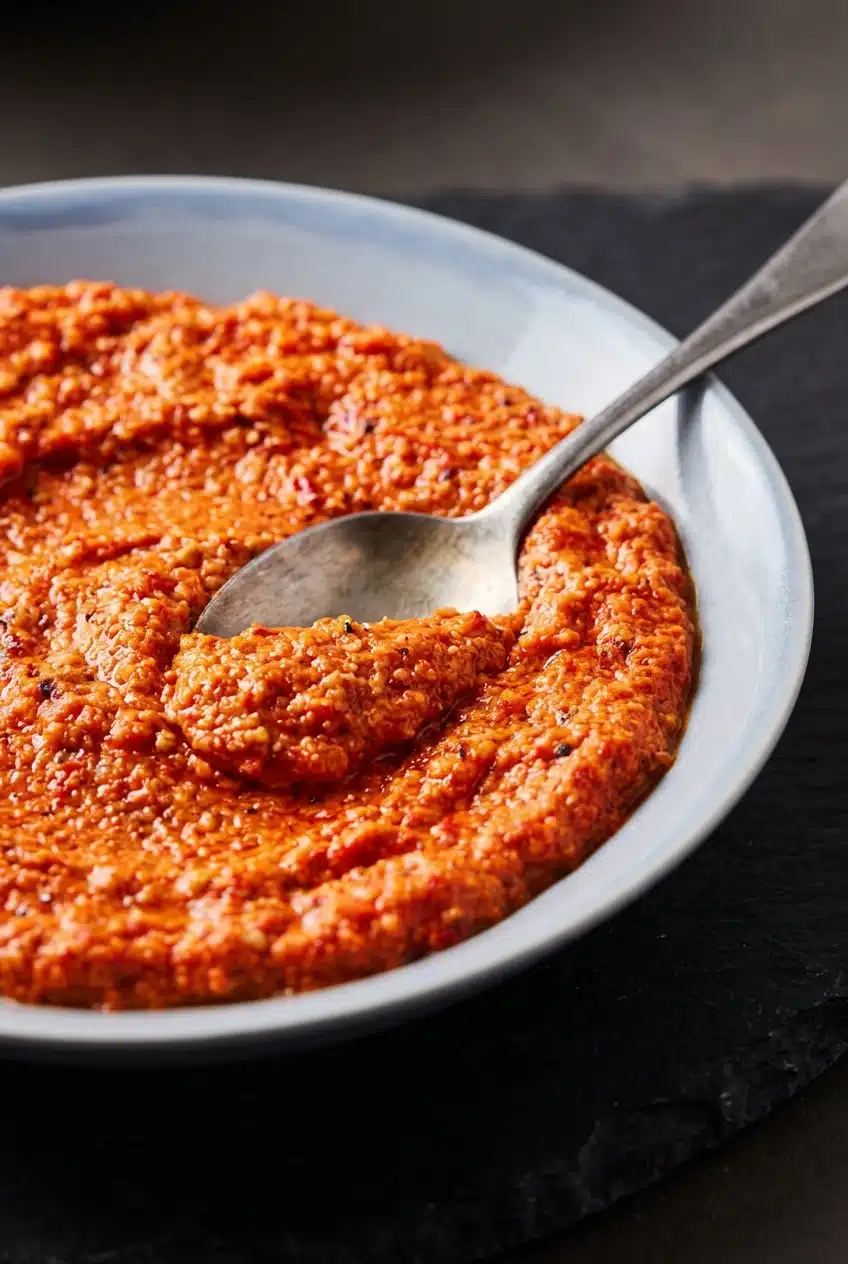
The food processor does the mixing, so there’s no need for a perfectly smooth puree. Look for a creamy spread with tiny walnut flecks.
Prep and total time: 10 minutes. Servings: 4, using peppers that are already roasted.
- Load the food processor with the roasted peppers, breadcrumbs, walnuts, olive oil, pomegranate molasses, garlic, lemon juice, Aleppo pepper, cumin, and several turns of black pepper.
Use the pulse setting to bring everything to a creamy, lightly textured consistency, then taste and adjust the seasoning. - Finish the dip with fresh mint and offer pita bread alongside.
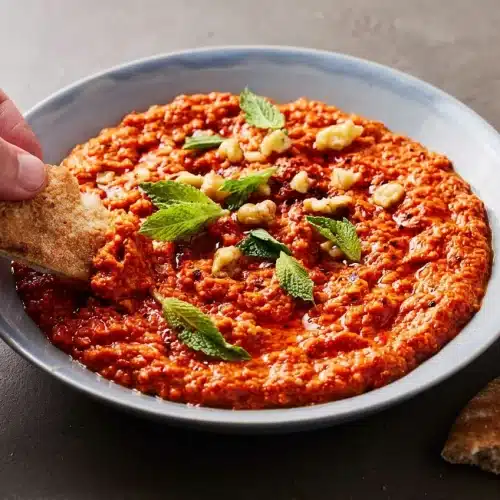
The mint should stand out against the coral-red spread, which should be thick enough to scoop.
What Is Muhammara? Origin, Flavor, and Pronunciation
Muhammara comes from Aleppo, Syria, and appears throughout Levantine mezze spreads. A common English pronunciation is moo-HAH-mah-rah. Its Arabic name means “reddened,” a fitting description of its rich red color.
Its character comes from the balance of smoky peppers, nutty walnuts, tangy-sweet pomegranate, and gentle chile heat. Spanish romesco can look similar, but it commonly features almonds and vinegar. Walnuts and pomegranate molasses give muhammara a different flavor.
Expert Tips and Common Mistakes to Avoid
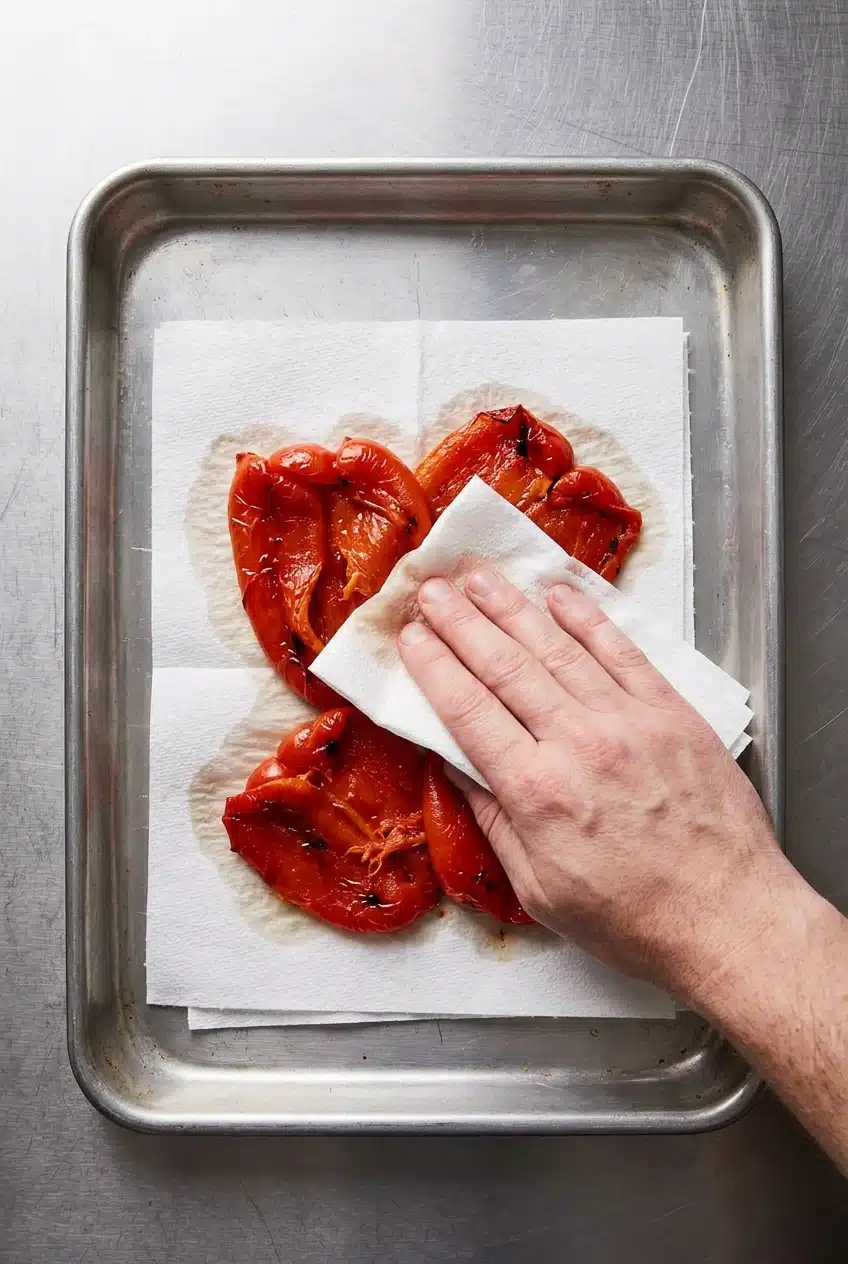
Most texture problems begin with pepper moisture or the absorbency of the breadcrumbs.
- Thin dip: Wet peppers contribute excess liquid. Drain and blot them before blending; breadcrumbs provide body if the finished dip needs more structure.
- Stiff dip: Particularly dry crumbs can absorb more moisture. A little additional olive oil can soften the texture without making the dip more sour.
- Overly sharp flavor: Extra lemon can mask the peppers and pomegranate. Keep the measured lemon as your starting point rather than treating it as the main flavor.
- Bitter finish: Stale or scorched walnuts can dominate the whole bowl. Choose walnuts that smell pleasantly nutty, not harsh or musty.
Optional Prep: Roasting Fresh Peppers and Toasting Walnuts
Home-roasted peppers and toasted walnuts are optional flavor choices, not requirements for this recipe. Charred peppers offer smoky sweetness; lightly toasted walnuts have a warmer aroma and slightly deeper color. Dark, scorched nuts bring bitterness rather than useful richness.
Pulsing for the Ideal Thick Texture
Use the creamy texture as your stopping cue, not complete smoothness. The mixture should cling to the processor sides as a thick spread, with fine walnut flecks still visible. Liquid pooling at the bottom points to excess moisture, not a need for more processing.
Delicious Muhammara Variations
These optional adaptations change the flavor or texture while keeping the roasted pepper character.
Muhammara Without Pomegranate Molasses
Lemon juice with a mild sweetener such as maple syrup or sugar provides a tart-sweet direction. Expect a brighter, less fruity result rather than an exact match.
Gluten-Free Muhammara
Gluten-free breadcrumbs are an optional replacement for regular crumbs. Their absorbency varies, so the finished texture may differ. Choose accompanying bread that suits your dietary needs, too.
Nut-Free or Walnut-Free Muhammara
Roasted sunflower or pumpkin seeds offer a possible seed-based direction, with a different earthy flavor. Pine nuts are an option only for someone avoiding walnuts who otherwise tolerates them. Neither substitution establishes allergy suitability; ask a qualified professional when allergies are involved.
Turkish and Lebanese Pepper-Paste Style
Some Turkish and Lebanese versions feature sweet red pepper paste or tomato paste for a deeper, more concentrated savory flavor. These are optional regional directions, not universal formulas or required additions here.
How to Serve and Pair Muhammara
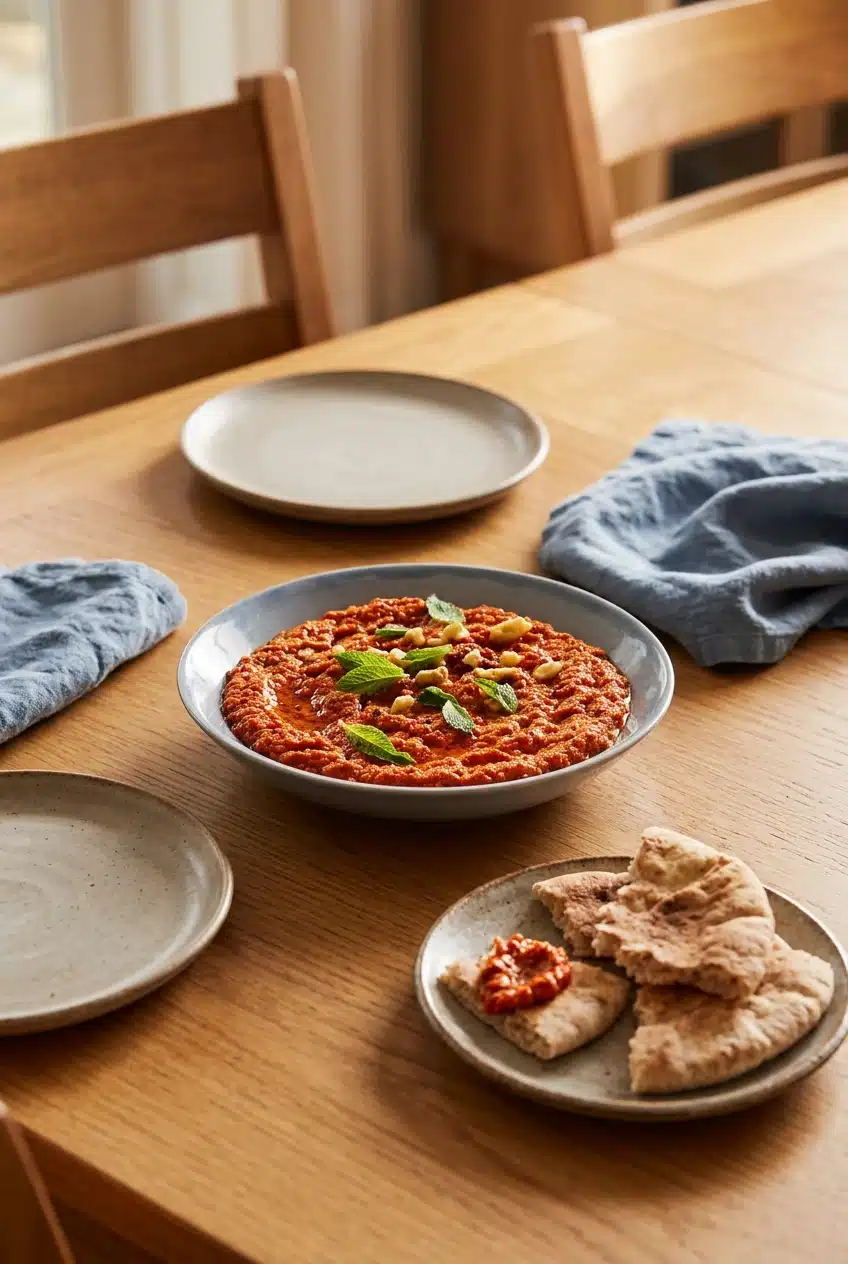
A shallow bowl makes scooping easy. Use the back of a spoon to create swirls that hold an optional olive oil drizzle, then finish with mint.
- For dipping: Offer warm pita, pita chips, or crisp crudites.
- For mezze: Pair it with hummus, baba ganoush, labneh, olives, and halloumi for contrasting creamy, smoky, and salty flavors.
- For sandwiches: Spread it into grilled vegetable and halloumi sandwiches, or serve alongside warm lamb gyros.
- For meals: Spoon it onto couscous or chickpea bowls, frittata slices, grilled meat, or fish.
Preparing for Serving and Storing Leftovers
For an event, plan around having the roasted peppers ready before you begin. Keep the pita separate so it stays ready for dipping, and reserve the mint garnish for serving.
Keep leftover muhammara covered and chilled. There isn’t a verified recipe-specific storage duration here, so avoid relying on a promised shelf life or an olive oil topping as a preservation method.
Final Thoughts on Making Homemade Muhammara
Muhammara brings sweet, smoky, nutty flavor to the table with a quick food processor method. The goal is a creamy, scoopable spread that retains a little texture.
Keep the heat gentle or choose a bolder serving partner. Whether it’s mezze night or a weekday sandwich, give that thick red spread something good to scoop it with.
Frequently Asked Questions About Muhammara
How Do You Pronounce Muhammara?
Say moo-HAH-mah-rah, with emphasis on the second syllable. The Arabic name means “reddened,” referring to its red color.
What Can I Use Instead of Pomegranate Molasses in Muhammara?
Lemon juice paired with maple syrup or sugar offers an optional sweet-tart alternative. It won’t have the same concentrated pomegranate flavor.
What Is the Best Substitute for Aleppo Pepper?
Mild red pepper flakes are a useful alternative. Standard crushed red pepper works too, but brings sharper heat; use the alternative amount in the ingredient list.
Can I Make Muhammara Nut-Free or Gluten-Free?
Gluten-free breadcrumbs offer an alternative to regular breadcrumbs. Seeds offer a possible walnut replacement, but substitutions alone don’t establish allergy suitability.
Should I Use Jarred Roasted Red Peppers or Roast Fresh Bell Peppers?
Both work. Jarred peppers offer convenience; home-roasted peppers can provide more char. Drain jarred peppers thoroughly so packing liquid doesn’t thin the dip.
How Should Leftover Muhammara Be Stored?
Keep it covered and chilled, with pita stored separately. No verified recipe-specific shelf life is available here, so don’t assume a particular storage limit.
Muhammara Recipe

Equipment
- Food processor
Ingredients
- 3 roasted red bell peppers
- ½ cup bread crumbs (fresh or store-bought)
- ½ cup walnuts
- 2 tablespoons extra-virgin olive oil
- 1½ tablespoons pomegranate molasses*
- 1 garlic clove
- 1 teaspoon fresh lemon juice
- 1 teaspoon Aleppo pepper or ½ teaspoon red pepper flakes
- ½ teaspoon ground cumin
- Freshly ground black pepper
- Fresh mint (for garnish)
- Pita bread (for serving)
Instructions
- Load the food processor with the roasted peppers, breadcrumbs, walnuts, olive oil, pomegranate molasses, garlic, lemon juice, Aleppo pepper, cumin, and several turns of black pepper. Use the pulse setting to bring everything to a creamy, lightly textured consistency, then taste and adjust the seasoning.
- Finish the dip with fresh mint and offer pita bread alongside. The mint should stand out against the coral-red spread, which should be thick enough to scoop.