Christmas Cookies made with this buttery vanilla dough need no chilling before rolling. Cut them into festive shapes, roll thin for a crisp bite or thicker for softer centers, and finish with icing, chocolate, powdered sugar, or nothing at all.
These Christmas Cookies are classic vanilla cutouts with a tender crumb and lightly golden edges. The dough goes straight from mixing to shaping, making it a practical choice when holiday baking already fills the counter.
You can keep the whole batch plain or give stars, trees, and stockings different finishes. The same dough suits both crisp-cookie fans and soft-cookie fans. Thickness makes the difference.
Leave space for the baking sheets to cool undisturbed; these cookies finish setting right on their trays.
Essential Ingredients for Holiday Cutouts
Butter brings richness, sugar adds sweetness and texture, and flour gives the cutouts structure. Egg binds the dough, vanilla supplies its warm aroma, baking powder lightens the crumb, and salt balances the sweetness. Icing provides a decorative finish.
- 225g / 1 cup unsalted butter (, softened (or use salted, skip salt))
- 1 cup caster/superfine sugar ((granulated/ordinary white sugar ok too))
- 1 1/2 tsp vanilla extract
- 1 large egg ((55-60g / 1.9-2oz))
- 3 cups flour (, plain / all purpose)
- 3/4 tsp baking powder
- 3/4 tsp salt
- Icing for Sugar Cookies
Butter, Sugar, and Flour for US Kitchens
Softened butter blends smoothly with sugar. Caster sugar and superfine sugar mean the same finely textured white sugar; regular granulated sugar also works here. “Plain flour” means all-purpose flour, not self-rising flour.
If you choose salted butter, omit the added salt as indicated above. Keep the flour for dusting separate from the measured dough ingredients so you don’t accidentally work extra flour into the mixture.
Flavorings and Leavening for Clean Cutout Edges
The egg supplies moisture and helps the dough come together when you pat it into discs. Vanilla flavors the buttery crumb, while baking powder gives the cookies a little lift. Measure the leavening rather than estimating it.
How to Make Shape-Holding Christmas Cookies
Plan on 25 minutes of prep and 10 minutes of baking per oven batch, plus complete cooling on the sheets. The recipe yields about 40 cookies, depending on your cutters and rolling thickness.
Mixing the Dough Until Clumpy and Cohesive
The dough should look creamy before the flour goes in, then change to a clumpy, pebble-like mixture. That clumpy stage is expected. Patting it together on the work surface turns those pieces into a cohesive dough.
Rolling, Cutting Shapes, and Baking Until Pale Golden
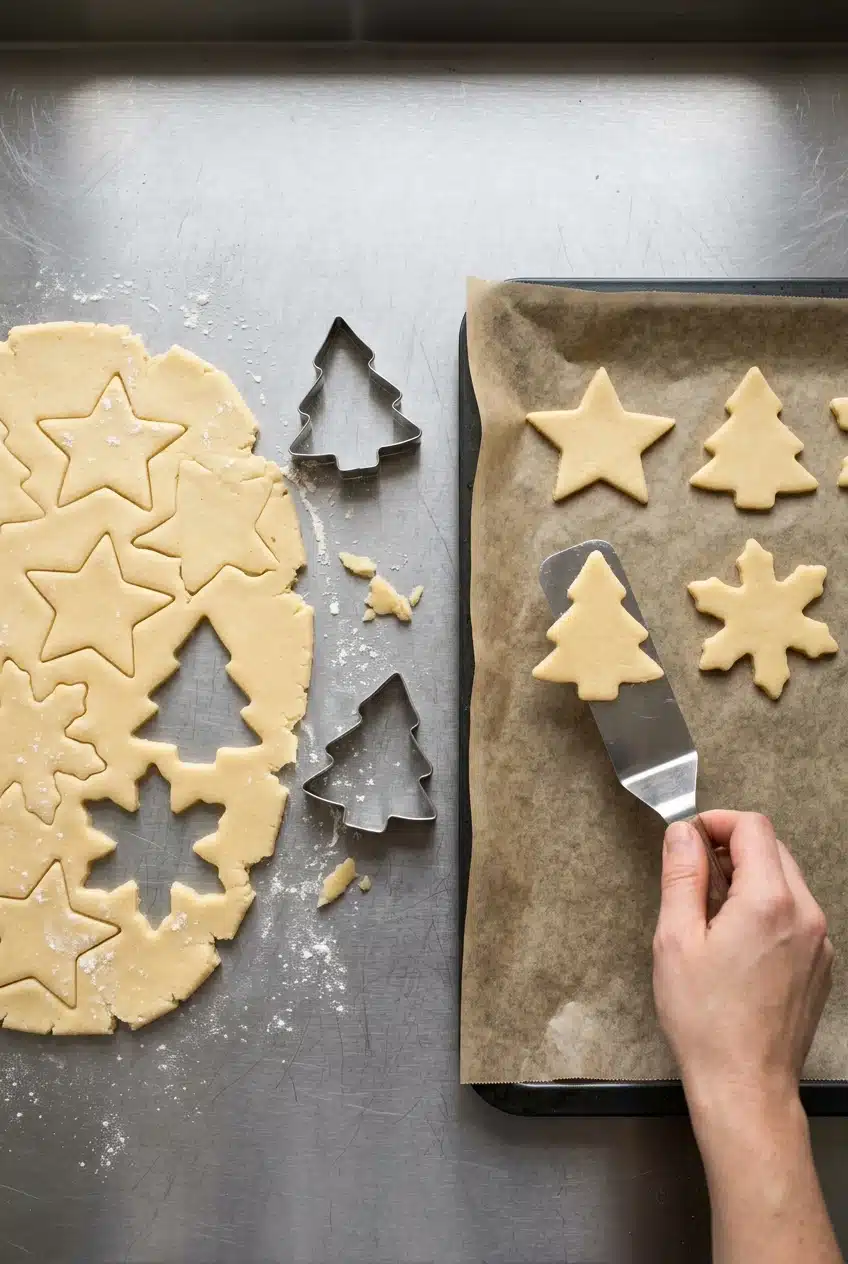
Choose your thickness before cutting, and support delicate points with a flat knife or spatula during transfer. Watch the color rather than waiting for the cookies to feel firm: warm cutouts remain soft until they cool.
- Set the oven to 180°C / 350°F, or 160°C fan, and cover 2 baking sheets with parchment paper.
The parchment should lie flat beneath the cutouts. - Cream the butter and sugar in a large bowl for 1 minute on speed 5.
Look for a creamy mixture rather than an airy, whipped texture. - Beat the egg and vanilla into the butter mixture.
Continue until no separate streaks of egg remain. - Put the flour, baking powder, and salt into the bowl.
The dry ingredients will sit over the creamy mixture before mixing. - Run the mixer slowly at first, then beat until the flour disappears into the dough.
Expect distinct clumps rather than a smooth ball. - Scrape the mixture onto a flour-dusted work surface, press it together, divide it in half, and form 2 discs.
Each portion should hold together instead of remaining loose crumbs. - Roll each portion to 0.3cm / 1/8″ for crisp cookies or 0.6cm / 1/4″ for softer cookies, dusting beneath and above the dough with flour as needed.
An even thickness helps the cutouts color consistently. - Stamp out the dough with cookie cutters and lift each shape onto the lined sheets using a knife or spatula, refrigerating dough that must wait for oven space.
Support narrow points and branches so they retain their shape during transfer. - Bake for 10 minutes, exchanging the trays’ positions halfway through.
Remove them when the tops look pale golden and the edges show their first light golden color. - Leave the cookies on their baking sheets until completely cool.
They will continue setting on the warm trays and become firmer as they cool.
Decorating Options:
- Choose sugar-cookie icing for an iced finish.
It provides a canvas for festive colors and designs. - Melt chocolate and dip the cookie surface into it.
The chocolate creates a contrasting finish over the vanilla cookie. - Add icing dots and silver decorating balls.
The small accents suit stars, trees, and other holiday shapes. - Give the cookies a dusting of powdered sugar.
The white finish leaves the cutter shapes easy to recognize. - Leave some cookies undecorated.
The buttery vanilla flavor stands on its own.
Easy Holiday Icing and Decorating Ideas
Choose a finish around how you want to serve the cookies, rather than feeling every shape needs intricate piping.
Smooth Cookie Glaze vs Royal Icing vs Buttercream
- Cookie glaze: Choose this for a smooth coating and a less detailed decorating style.
- Royal icing: Consider it for fine outlines, lettering, and more precise designs.
- Buttercream: Choose it for a creamy, soft-frosted cookie presented in a single layer.
For stacking or gifting, select an icing recipe specifically designed for that purpose and follow its setting and storage instructions. A finish’s appearance alone doesn’t tell you whether it will tolerate packing.
Chocolate-Dipped & Peppermint-Sprinkled Cutouts
As an optional variation, dark chocolate gives the sweet vanilla crumb a bittersweet contrast, while white chocolate makes a sweeter finish. Crushed peppermint adds a cool holiday flavor; festive sprinkles offer color without the mint.
Quick Powdered Sugar Dusting and Kid-Friendly Toppings
Powdered sugar, icing dots with silver balls, and plain cookies all belong on the same platter. For a family decorating session, let each person choose a finish and give everyone their own workspace.
If bright toppings are the main attraction, colorful sprinkle cookies offer another option for the holiday baking lineup.
Tips for Sharp Edges and Soft or Crisp Textures
Most cutout problems begin during mixing, rolling, or transfer. Use the dough’s appearance to decide what it needs.
- Clumpy dough: Don’t mistake the expected mixer texture for failure; use the patting stage to bring the pieces together before rolling.
- Sticking: Dust beneath and above the dough as directed, using enough flour to release it without coating everything heavily.
- Dry scraps: Repeated flour dusting can work extra flour into the dough; keep it light rather than adding a fresh heavy layer each time.
- Distorted shapes: Unsupported points can stretch during lifting; slide a flat knife or spatula underneath instead of pulling them up by hand.
- Softened waiting dough: Keep dough awaiting oven space in the refrigerator, as directed, rather than leaving it beside the oven.
- Uneven color: Don’t skip the halfway tray swap; it helps compensate for different positions in the oven.
- Overbaked cookies: Waiting for deep browning takes these past their intended finish; look for pale tops and lightly golden edges.
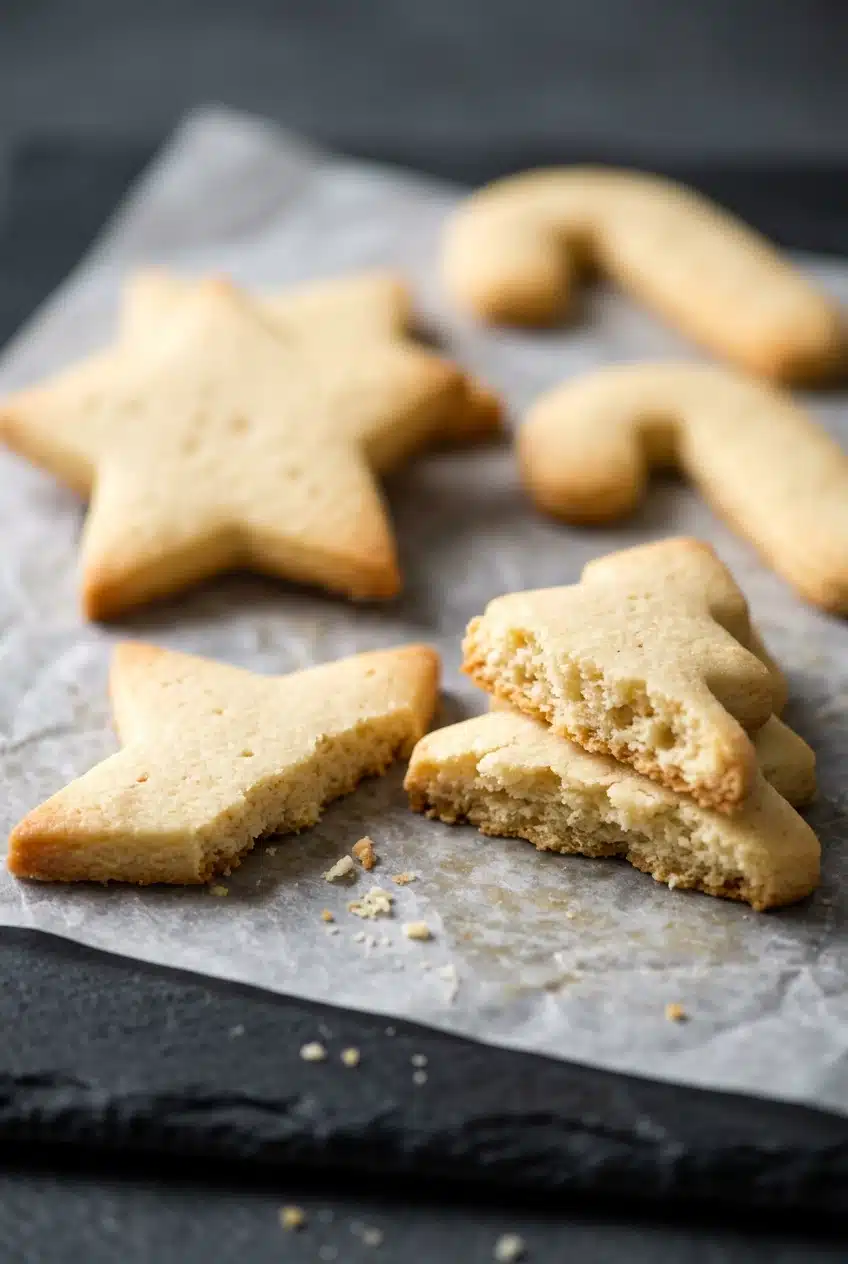
Thin cutouts give a crisp, snappy bite that may appeal to fans of classic shortbread cookies. Thicker cutouts keep a softer center, without changing the dough ingredients.
I’d use the edge color, not a firm center, as the signal to pull the tray; the cookies need their cooling time to finish setting.
Festive Flavor Variations and Classic Holiday Cookie Styles
Keep these optional flavor directions separate from the vanilla recipe. They offer variety for a holiday assortment without turning the ingredient list into a different formula.
Citrus-Zested Vanilla Cutouts
- Orange: A rounded citrus aroma complements buttery vanilla.
- Lemon: A brighter, sharper citrus note gives the cookies a fresh direction.
- Grapefruit: A fragrant, slightly bitter citrus character offers a less familiar holiday option.
Warm Spiced Holiday Biscuits
- Cinnamon: A warm, familiar flavor alongside vanilla.
- Ginger: A livelier spice direction with a gingerbread-inspired character.
- Nutmeg: A rounded, aromatic holiday accent.
- Cardamom: A floral, gently citrusy alternative to cinnamon.
Jam-Filled Linzer-Style Sandwich Cookies
For an optional sandwich-cookie presentation, raspberry, cranberry, or apricot preserves offer a colorful contrast to vanilla cutouts. A powdered-sugar finish gives them a Linzer-inspired appearance, rather than making them traditional nut-based Linzer cookies.
Popular Classics to Pair on a Christmas Cookie Tray
Gingerbread brings spice, snowballs contribute a powdered-sugar coating, and thumbprints add a jam center. Pressed spritz cookies and chocolate crinkles provide different shapes and textures. Christmas butter cookies also complement rolled vanilla cutouts.
Planning Baking Sessions and Holiday Gifts
Separate baking from decorating by planning around complete tray cooling. Set out cutters and prepare the baking sheets first, then organize decorating supplies while the baked cookies cool.
The refrigerator instruction here covers dough waiting for oven space during baking. It doesn’t establish a longer make-ahead storage period. For a pause beyond that baking session, use storage instructions specifically suited to raw cookie dough rather than assuming the same approach applies.
When planning gift tins, choose the finish first and follow that icing or chocolate recipe’s packing and storage directions. Plain, glazed, and soft-frosted cookies shouldn’t automatically share the same storage plan.
Holiday Cookie Platter and Serving Suggestions
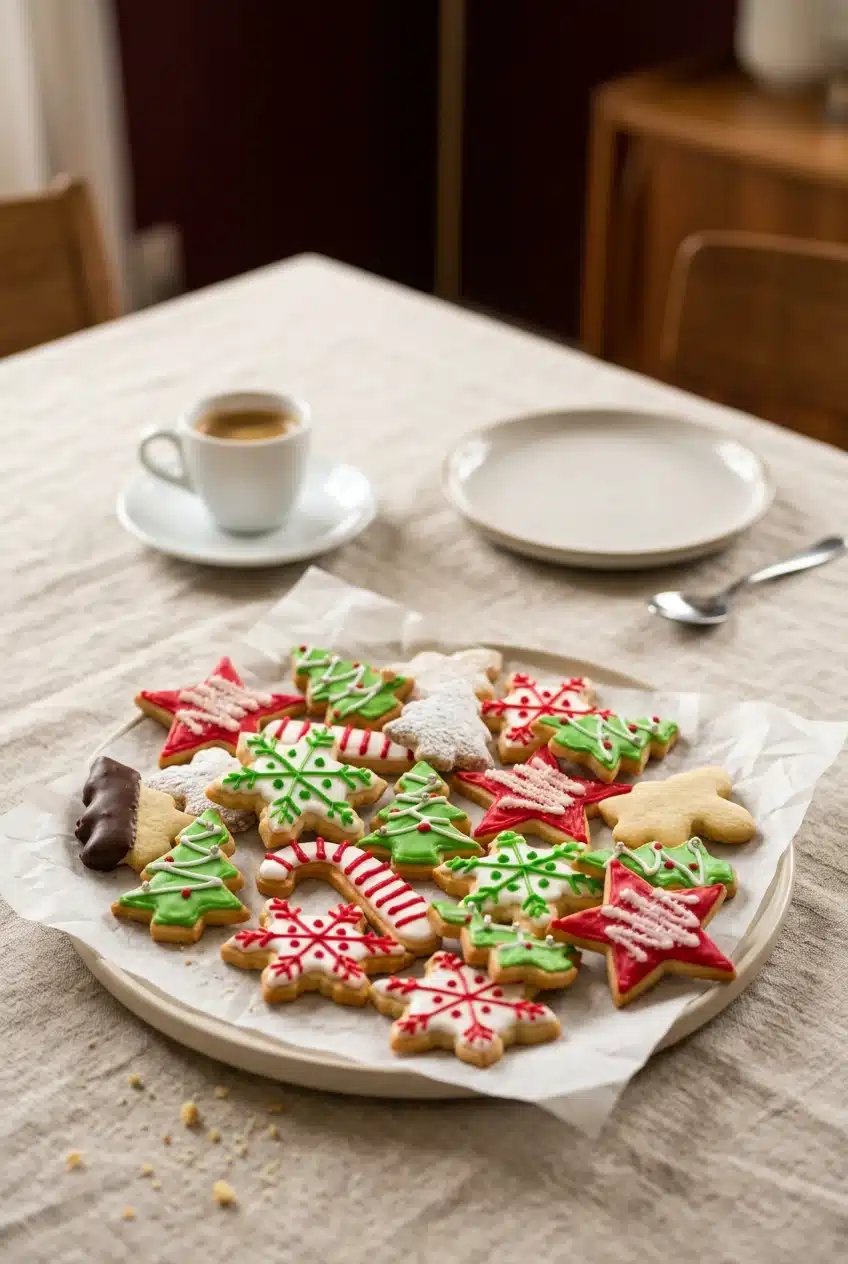
Vary the finishes as well as the shapes so a single batch makes an inviting assortment.
- Cookie exchanges: Combine iced stars, chocolate-dipped trees, and powdered-sugar cutouts, with festive eggnog cookies for another seasonal flavor.
- Holiday tables: Personalized cutouts make cheerful place-setting favors, while a selection of smaller shapes suits a Santa plate.
- After-dinner sweets: Serve plain vanilla cookies with hot cocoa, nonalcoholic spiced cider, tea, or espresso.
Final Thoughts on Baking Classic Holiday Cutouts
This no-chill dough makes buttery vanilla cutouts with whichever texture you prefer: thin and crisp or thicker and soft. Pale-golden tops and lightly golden edges tell you when to stop baking.
Keep them plain, choose a quick finish, or make decorating part of the celebration. Pick the texture and presentation that fit your holiday table.
Frequently Asked Questions
What Are Common Christmas Cookies for Holiday Platters?
Vanilla cutouts, gingerbread, and snowballs provide contrasting flavors and finishes. Thumbprints, spritz cookies, and chocolate crinkles add variety in shape and texture.
What Is the Best Frosting for Christmas Sugar Cookies?
Choose glaze for a smooth finish, royal icing for detailed designs, or buttercream for soft-frosted serving. For stacking and gifts, follow an icing recipe specifically intended for packing.
Do You Have to Chill This Christmas Cookie Dough Before Rolling?
No chilling stage is needed before rolling and cutting this dough. Refrigerate dough waiting for oven space while earlier batches bake.
How Do You Make Cutout Christmas Cookies Soft Versus Crispy?
Roll thinner for crisp cookies or thicker for softer centers. Use the pale-golden color cue and allow complete cooling on the baking sheets.
Can I Prepare the Cookie Dough Ahead and Bake Batches Later?
This method supports refrigerating dough while it waits for oven space during the baking session. For longer pauses, use separate raw-dough storage instructions; no longer holding period is established here.
Can I Use Regular Granulated Sugar Instead of Caster or Superfine Sugar?
Yes, ordinary white granulated sugar works in this recipe. Caster and superfine sugar are finer-textured alternatives, not different amounts.

Christmas Cookies

Equipment
- Baking Sheets
- Electric Mixer
- Rolling Pin
- cookie cutters
Ingredients
- 225g / 1 cup unsalted butter (, softened (or use salted, skip salt))
- 1 cup caster/superfine sugar ((granulated/ordinary white sugar ok too))
- 1 1/2 tsp vanilla extract
- 1 large egg ((55-60g / 1.9-2oz))
- 3 cups flour (, plain / all purpose)
- 3/4 tsp baking powder
- 3/4 tsp salt
- Icing for Sugar Cookies
Instructions
- Set the oven to 180°C / 350°F, or 160°C fan, and cover 2 baking sheets with parchment paper. The parchment should lie flat beneath the cutouts.
- Cream the butter and sugar in a large bowl for 1 minute on speed 5. Look for a creamy mixture rather than an airy, whipped texture.
- Beat the egg and vanilla into the butter mixture. Continue until no separate streaks of egg remain.
- Put the flour, baking powder, and salt into the bowl. The dry ingredients will sit over the creamy mixture before mixing.
- Run the mixer slowly at first, then beat until the flour disappears into the dough. Expect distinct clumps rather than a smooth ball.
- Scrape the mixture onto a flour-dusted work surface, press it together, divide it in half, and form 2 discs. Each portion should hold together instead of remaining loose crumbs.
- Roll each portion to 0.3cm / 1/8″ for crisp cookies or 0.6cm / 1/4″ for softer cookies, dusting beneath and above the dough with flour as needed. An even thickness helps the cutouts color consistently.
- Stamp out the dough with cookie cutters and lift each shape onto the lined sheets using a knife or spatula, refrigerating dough that must wait for oven space. Support narrow points and branches so they retain their shape during transfer.
- Bake for 10 minutes, exchanging the trays’ positions halfway through. Remove them when the tops look pale golden and the edges show their first light golden color.
- Leave the cookies on their baking sheets until completely cool. They will continue setting on the warm trays and become firmer as they cool.
Decorating Options:
- Choose sugar-cookie icing for an iced finish. It provides a canvas for festive colors and designs.
- Melt chocolate and dip the cookie surface into it. The chocolate creates a contrasting finish over the vanilla cookie.
- Add icing dots and silver decorating balls. The small accents suit stars, trees, and other holiday shapes.
- Give the cookies a dusting of powdered sugar. The white finish leaves the cutter shapes easy to recognize.
- Leave some cookies undecorated. The buttery vanilla flavor stands on its own.