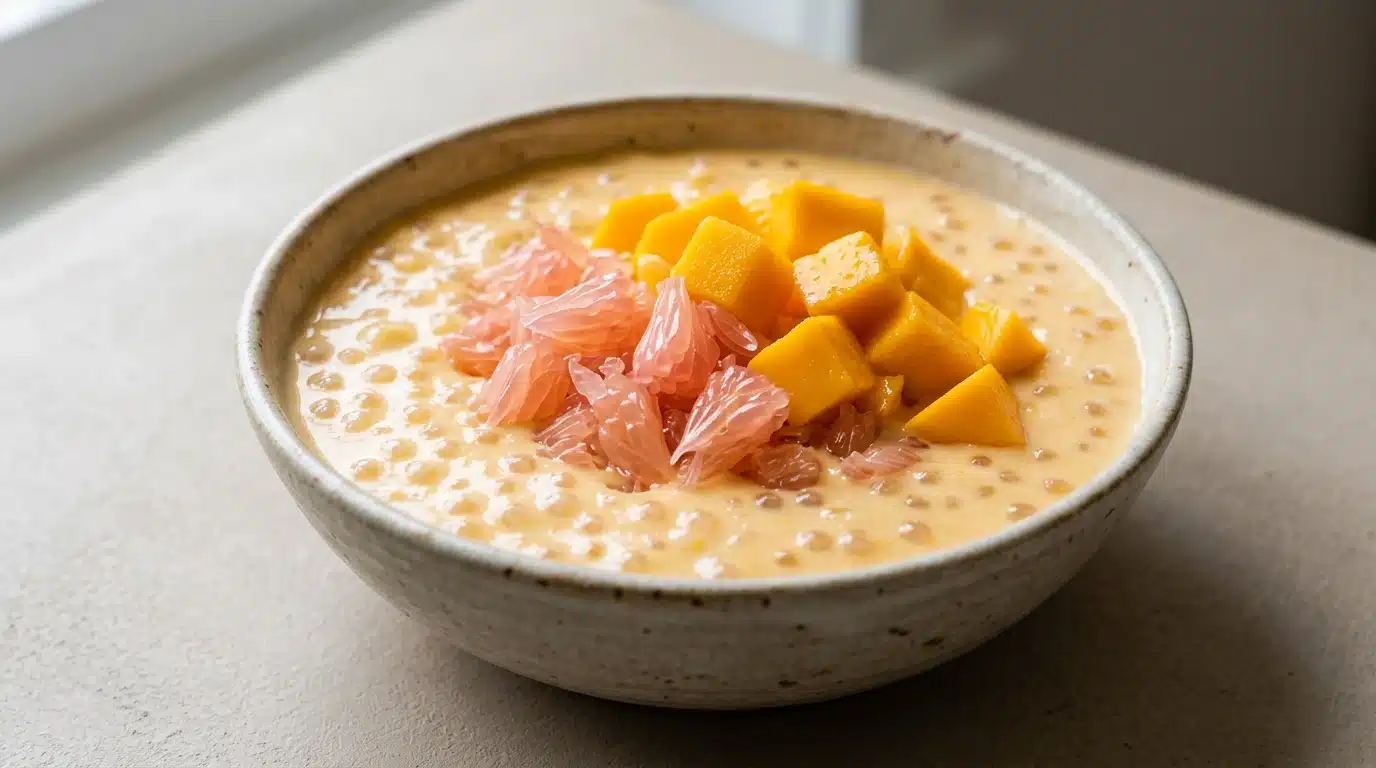
Mango pomelo sago is a chilled Hong Kong Cantonese dessert soup, or tong sui, with silky mango cream, translucent chewy pearls, and juicy citrus. Its poetic name, Yeung Ji Gam Lo, evokes “willow branch sweet dew.” Cook and rinse the pearls, blend the cream, combine, and chill.
Think of mango pomelo sago as a spoonable mango dessert with contrast in every bite. Coconut milk and evaporated milk soften the fruit’s sweetness, while pomelo brings little bursts of tart juice.
The trick is keeping those textures distinct: smooth puree, separate pearls, and clean citrus sacs without bitter membrane. Ripe mango does much of the flavor work. The pearls deserve a little attention, too.
Reserve the neatest mango cubes for garnish and use uneven pieces for the puree.
Key Ingredients and Smart Substitutions
Mango supplies fruity sweetness and body, the milks add richness, and sugar balances the fruit’s acidity. Pearls bring a gentle chew, while pomelo adds juicy brightness that keeps the creamy dessert refreshing.
- ½ cup small sago pearls (tapioca)
- 2 large ripe mangos (1 diced for garnish, 1 for puree)
- 1 cup coconut milk
- ½ cup evaporated milk (or extra coconut milk for vegan)
- 3 tbsp sugar (adjust to mango sweetness)
- ½ cup pomelo segments (or grapefruit), pulled into small sacs
Coconut milk contributes tropical aroma and richness. Evaporated milk adds a mellow dairy creaminess alongside it, rather than another layer of coconut flavor. Use the sugar adjustment to suit the mango, not to compensate for fruit that tastes sharply underripe.
Best Mangos for Smooth, Sweet Puree
Ataulfo, also sold as Honey mango, and Carabao are good choices for their sweet flesh and relatively low fiber. Tommy Atkins can work, but its stringier flesh may need the optional texture tip below.
Look for a fruity aroma near the stem and a little give under gentle pressure. Skin color alone isn’t a dependable ripeness cue across varieties. The mango should taste pleasantly sweet before it becomes the center of the dessert.
I’d choose a fragrant, slightly yielding mango over a brightly colored but firm one here; the puree depends on the fruit’s flavor.
Frozen mango is an optional off-season choice for the puree. Fresh mango gives you the cleanest-looking garnish cubes.
Small Sago Pearls vs. Mini Tapioca Pearls
Shop for small white pearls, sometimes labeled “sago” or “tapioca” in Asian markets. This recipe uses the small tapioca pearls identified in the ingredient list, rather than large bubble-tea pearls.
Don’t assume the front-of-package name tells you everything about the starch. Check the ingredient label if its plant origin matters to you. Pearl size matters for this method, so avoid treating large or specialty quick-cooking pearls as identical substitutes.
Choosing and Peeling Pomelo Without Bitterness
Choose a pomelo that feels substantial for its size, without obvious soft or damaged areas. Its thick rind hides firm segments whose juice sacs separate more readily than those of many other citrus fruits.
Remove the thick peel, pull the fruit into segments, and strip away the white pith. Open each segment’s tough membrane and lift out the flesh. Gently tease it into small clusters of intact juice sacs rather than squeezing it into juice.
Be thorough with the membrane removal. Even sweet citrus can taste bitter when shreds of pith remain. Pink or ruby grapefruit is the approved alternative when pomelo is unavailable.
How to Make Mango Pomelo Sago Step by Step
This recipe serves 4. Allow for the covered pearl rest and refrigerator chilling as well as the active preparation; the dessert needs time to become thoroughly cold.
- Add the dry pearls to boiling water in a large pot, cook for 10 minutes, then remove from the heat and leave covered for another 10 minutes.
The finished pearls should look translucent rather than chalky white. - Use cold running water to rinse the drained pearls, then transfer them to a bowl filled with cold water.
They should feel cool and slippery, with individual beads remaining distinct. - Blend the mango designated for puree together with both milks and the sugar.
A smooth, evenly colored mango cream is the goal, without visible fruit chunks. - Drain the cooled pearls and stir them into the mango cream in a large serving bowl, adding half the citrus sacs.
The mixture should contain separate pearls and small pockets of pomelo throughout. - Refrigerate the combined dessert for at least 1 hour.
It should feel thoroughly chilled before serving. - Finish the cold dessert with the reserved diced mango and the remaining pomelo sacs.
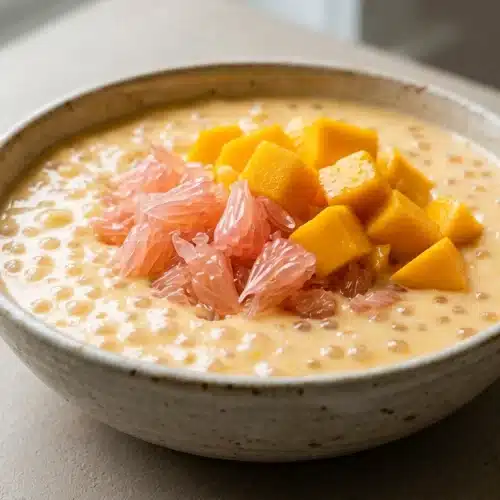
The fresh fruit should remain distinct against the smooth mango cream.
Expert Tips for Translucent Sago and Velvety Mango Puree
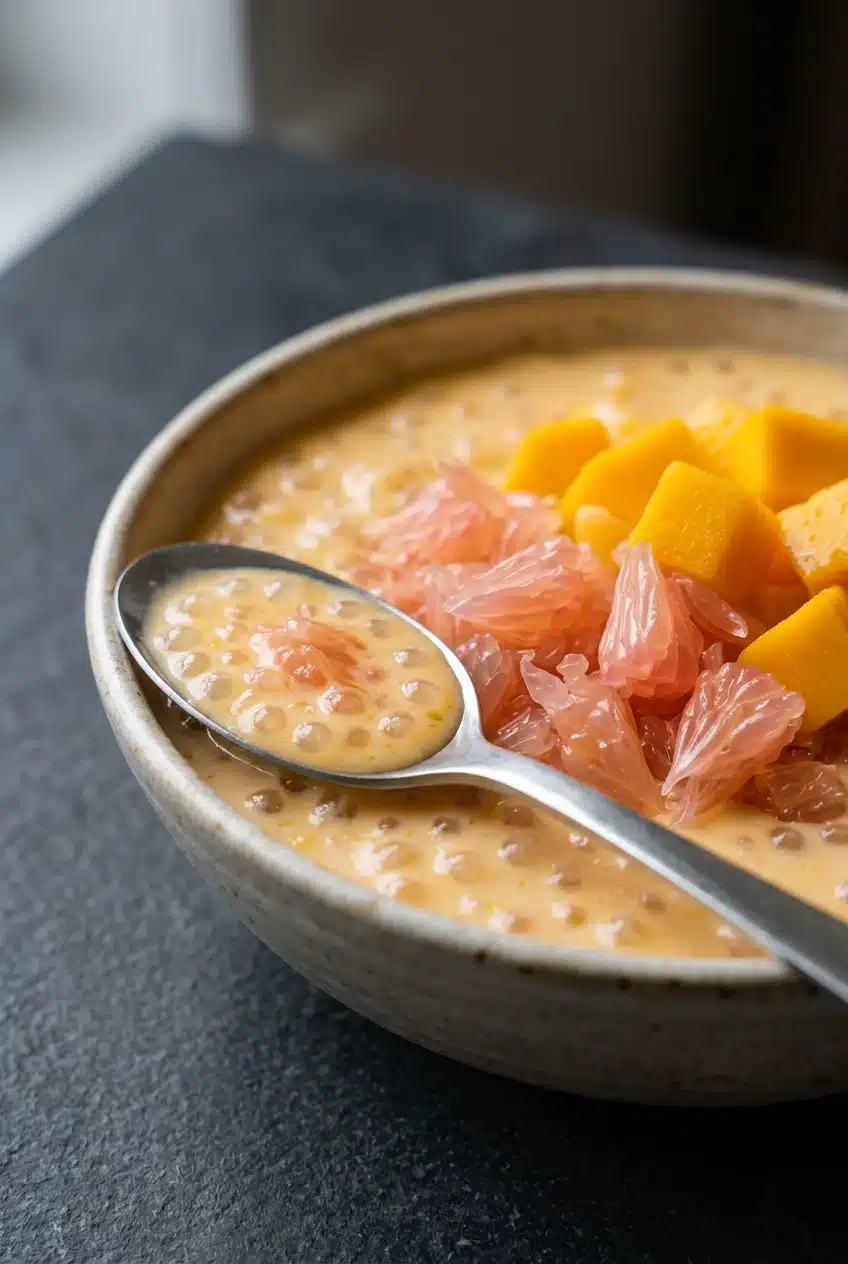
Most texture problems start with the pearls or the fruit, so check those before changing the creamy mixture.
- Mushy pearls: Pre-soaking small pearls can soften their exterior too early. Start with dry pearls and use the direct-to-boiling-water method.
- White centers: During boiling, a shrinking white pinpoint can remain inside an increasingly clear bead. Keep the covered resting stage; the final cue is translucency, not simply finishing the boiling timer.
- Sticky clumps: Surface starch and drained pearls sitting together encourage sticking. Rinse thoroughly and keep the pearls submerged in cold water until the combining step.
- Stringy puree: Fibrous mango can leave threads even after blending. As an optional texture refinement, pass the puree through a fine-mesh strainer outside the main method.
- Flat or overly sweet flavor: Mango sweetness varies. Taste the fruit and use the ingredient list’s sugar adjustment rather than automatically treating every mango alike.
- Bitter citrus: Leftover pith or segment membrane can overpower the cream. Remove those pieces carefully instead of trying to hide bitterness with sugar.
How to Layer and Serve Hong Kong Style
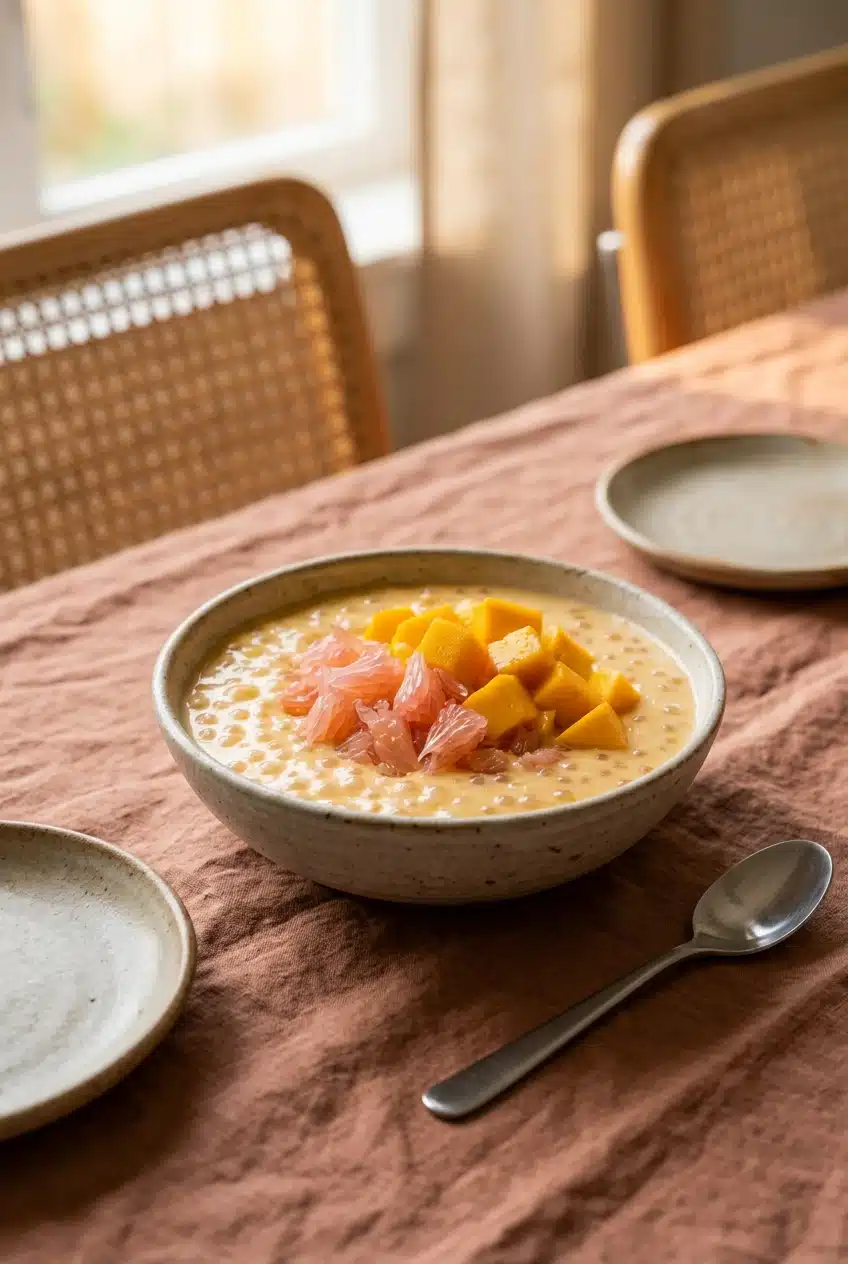
The stirred serving bowl gives each spoonful a mix of cream, pearls, and citrus. Small dessert bowls make that classic presentation easy to share.
For an optional café-style presentation, clear glasses show off bands of mango cream and pearls beneath the bright fruit garnish. The puree’s body varies with the mango, so don’t expect every cube to stay perched on the surface.
Serve after dim sum, a Cantonese dinner, or savory fried rice. It also fits a summer fruit spread when you want something creamy alongside fresh fruit.
Popular Variations and Dietary Swaps
Keep these optional choices separate from the main recipe. For an off-season version, frozen mango is an alternative for the puree; its sweetness still matters.
Vegan and Dairy-Free Mango Pomelo Sago
The listed extra-coconut-milk option replaces evaporated milk for a more coconut-forward dessert. If you’re cooking for a vegan or dairy-free diet, check the packaged ingredient labels as well as making that substitution.
Grapefruit Substitution for Out-of-Season Pomelo
Pink or ruby grapefruit brings a sharper sweet-tart contrast than a mild pomelo. That extra brightness pairs especially well with very sweet mango, though the citrus flavor will be more noticeable.
Mango Pomelo Sago Bubble Tea Drink Variation
A sippable dessert-shop variation has a lighter consistency, with milk or coconut beverage contributing a more drinkable character. It’s a different serving style from the spoonable cream above, rather than a change to the official method.
For a mango drink without the pearls, try a creamy mango smoothie.
Make-Ahead Strategy and Refrigerator Storage
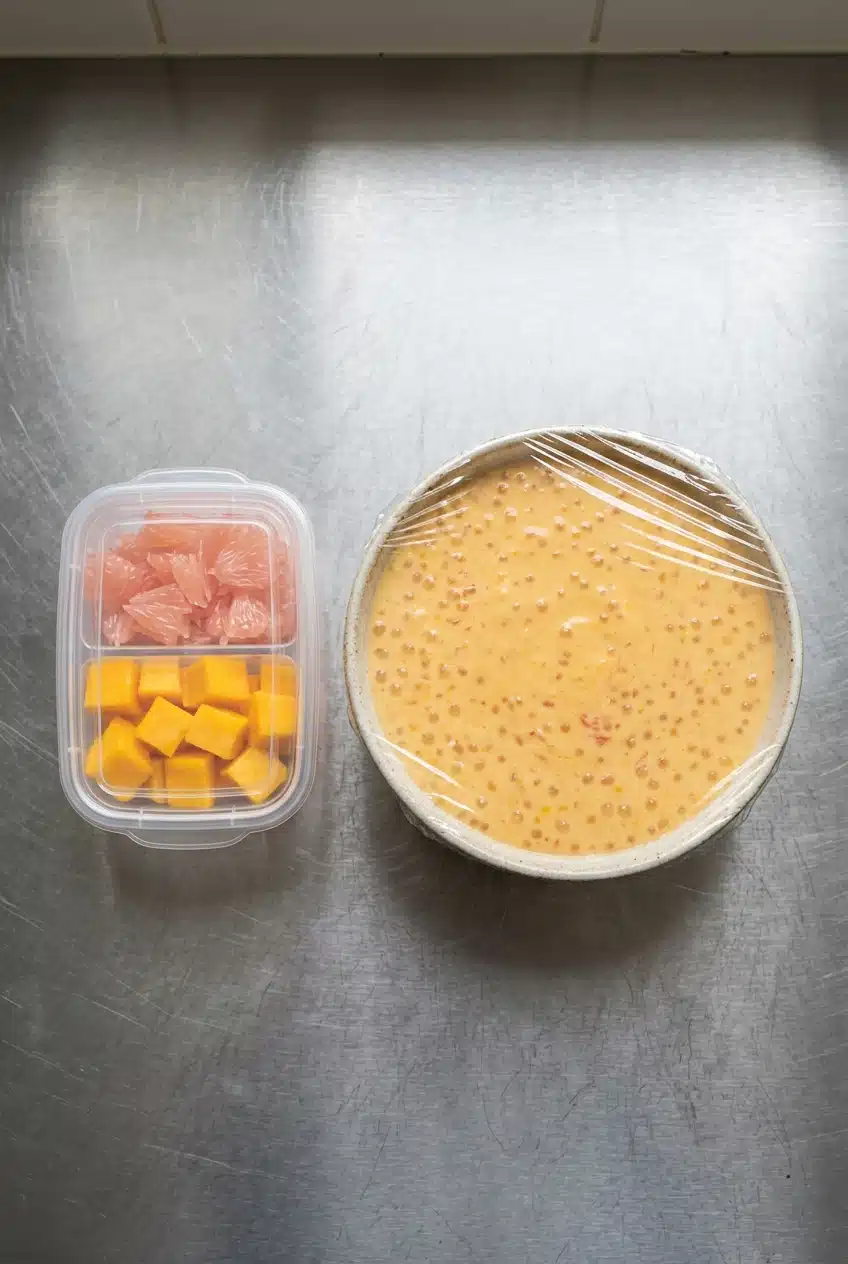
Plan around the recipe’s required chilling stage rather than treating this as a dessert to serve straight after blending. Keep the garnish reserved until serving so its cubes and citrus sacs remain distinct.
For preparation organization, consider the puree, fruit garnish, and cooked pearls as separate tasks, with final assembly following the method above. Keep prepared ingredients covered and chilled rather than leaving them on the counter while you finish other cooking.
Keep leftovers covered in the refrigerator. The chilling step establishes the serving texture; it does not establish a refrigerator shelf life, so avoid treating it as a storage guarantee.
Final Thoughts
Sweet, ripe mango, translucent rinsed pearls, and pith-free pomelo give this dessert its silky, chewy, juicy contrast. Careful fruit preparation makes a noticeable difference.
Let your mango guide the sweetness, and enjoy the dessert well chilled. Those little citrus bursts keep every spoonful bright.
Frequently Asked Questions
Where Is Mango Pomelo Sago From?
It’s associated with modern Hong Kong Cantonese dessert culture. It belongs to the tong sui family of sweet soups and is commonly called Yeung Ji Gam Lo.
Should I Soak Sago Before Cooking?
No pre-soak is needed for the small pearls used here; add them dry to boiling water. Keep the covered resting stage, which is part of the cooking method.
What Is the Difference Between Sago and Tapioca Pearls?
The names appear on different packaged starch pearls, so check the ingredient label rather than assuming they identify the same product. For this recipe, choose the small white tapioca pearls specified in the ingredient list, not large bubble-tea pearls.
Can I Use Grapefruit Instead of Pomelo in Mango Pomelo Sago?
Yes. Pink or ruby grapefruit is the listed substitute. Remove its pith and membranes carefully, and expect a somewhat sharper citrus flavor.
Can I Make Mango Pomelo Sago Ahead of Time or Store Leftovers?
The recipe includes refrigerator chilling before serving, so build that into your preparation plan. Keep the garnish reserved for serving and refrigerate leftovers in a covered container, without assuming a guaranteed storage duration.
Mango Pomelo Sago

Equipment
- Large Pot
- Blender
- large serving bowl
Ingredients
- ½ cup small sago pearls (tapioca)
- 2 large ripe mangos (1 diced for garnish, 1 for puree)
- 1 cup coconut milk
- ½ cup evaporated milk (or extra coconut milk for vegan)
- 3 tbsp sugar (adjust to mango sweetness)
- ½ cup pomelo segments (or grapefruit), pulled into small sacs
Instructions
- Add the dry pearls to boiling water in a large pot, cook for 10 minutes, then remove from the heat and leave covered for another 10 minutes. The finished pearls should look translucent rather than chalky white.
- Use cold running water to rinse the drained pearls, then transfer them to a bowl filled with cold water. They should feel cool and slippery, with individual beads remaining distinct.
- Blend the mango designated for puree together with both milks and the sugar. A smooth, evenly colored mango cream is the goal, without visible fruit chunks.
- Drain the cooled pearls and stir them into the mango cream in a large serving bowl, adding half the citrus sacs. The mixture should contain separate pearls and small pockets of pomelo throughout.
- Refrigerate the combined dessert for at least 1 hour. It should feel thoroughly chilled before serving.
- Finish the cold dessert with the reserved diced mango and the remaining pomelo sacs. The fresh fruit should remain distinct against the smooth mango cream.