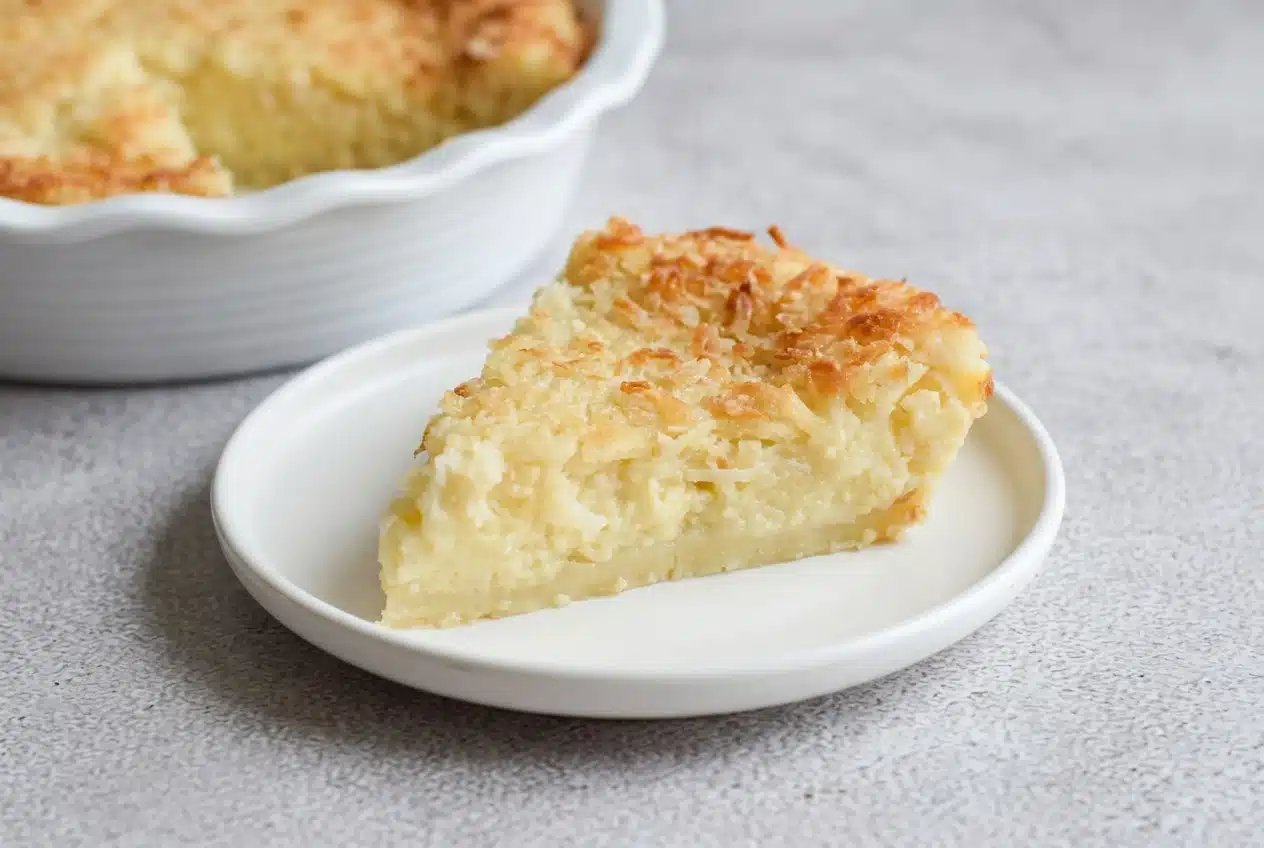
Impossible coconut pie is a crustless coconut custard pie that forms a soft bottom layer as it bakes. Whisk the batter in one bowl, bake until the center passes a toothpick check, then let it set on a rack for silky custard beneath golden, chewy coconut.
The batter starts surprisingly thin, almost like milk with coconut stirred through it. There’s no pastry to roll or separate filling to cook, and the finished pie has a tender bottom rather than a crisp pastry shell.
Vanilla rounds out the rich custard, while the coconut gives each wedge a pleasantly chewy top. The mixing takes little effort; cooling deserves patience. That golden surface hides a silky center.
Grease the pie plate thoroughly, including the sloping sides, so the tender bottom releases more easily.
Ingredients You Need and Why Each One Matters
Eggs, milk, and flour give the pie its custard structure and tender bottom. Sugar provides sweetness, butter adds richness, vanilla and salt balance the flavor, and shredded coconut supplies the chewy golden surface.
- 4 eggs
- 1 1/4 cups sugar
- 1/2 cup flour
- 1/4 cup butter (melted)
- 1 tablespoon vanilla
- 1/2 teaspoon salt
- 2 cups milk
- 1 1/4 cups shredded sweetened coconut
The eggs set the milk into a sliceable custard. Flour helps bind the batter and gives the bottom more body, but it won’t produce the flaky texture of a rolled crust.
Sugar sweetens the filling and contributes to browning. Melted butter enriches the custard, vanilla adds aroma, and salt keeps the sweetness from tasting flat. Sweetened shredded coconut provides the intended sweetness and strand-like texture.
I’d keep the coconut strands intact rather than grind them finer; their chew gives the smooth custard a useful contrast.
How to Make Impossible Coconut Pie
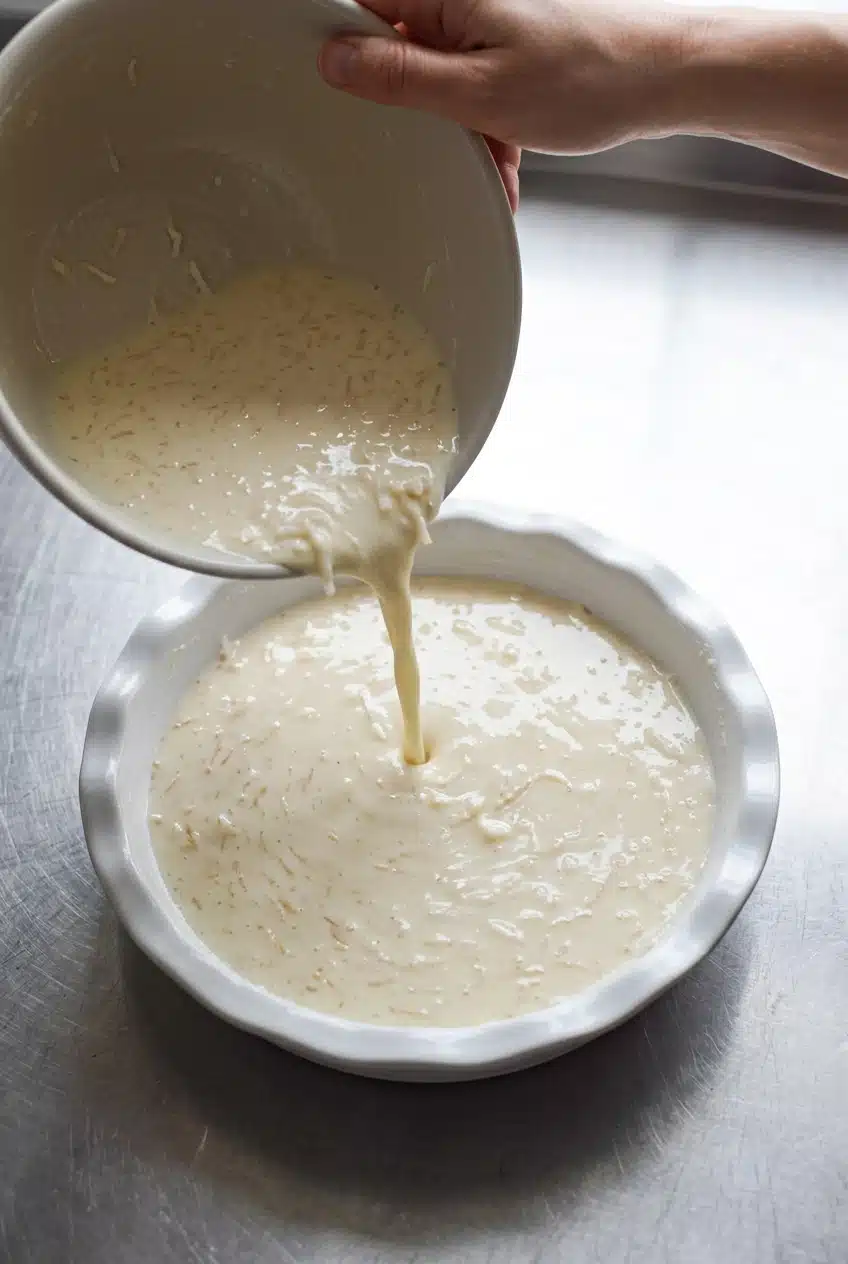
Follow the mixing order so you can smooth out the flour before the milk thins the batter. No separate crust preparation is needed.
Prep: 10 minutes. Cook: 40 minutes. Total: 1 hour 50 minutes, including setting time. Servings: 8.
- Set the oven to 350°F and coat the inside of a 9-inch pie plate with grease.
Cover the bottom and sides evenly to help the pie release. - Use a large mixing bowl to beat the eggs until uniform.
The yolks and whites should blend together without distinct streaks. - Whisk the sugar, flour, melted butter, vanilla, and salt into the beaten eggs.
Work through any visible flour pockets until the mixture looks evenly combined. - Pour in the milk, then add the shredded coconut.
The milk loosens the mixture considerably, while the coconut remains in visible strands. - Stir everything together and transfer the batter to the greased pie plate.
Expect a thin, pourable mixture rather than a thick pie filling. - Bake for 40–45 minutes, checking the center with a toothpick for a clean result.
The coconut surface should look golden, with the center showing only gentle movement rather than a liquid ripple. - Transfer the baked pie to a wire rack and leave it undisturbed for at least an hour.
The custard firms as it cools, giving the wedges enough structure for slicing. - Cut and serve the pie warm, adding whipped topping if desired.
The filling should feel tender and set beneath the chewy coconut surface.
Troubleshooting and Custard Doneness Tips
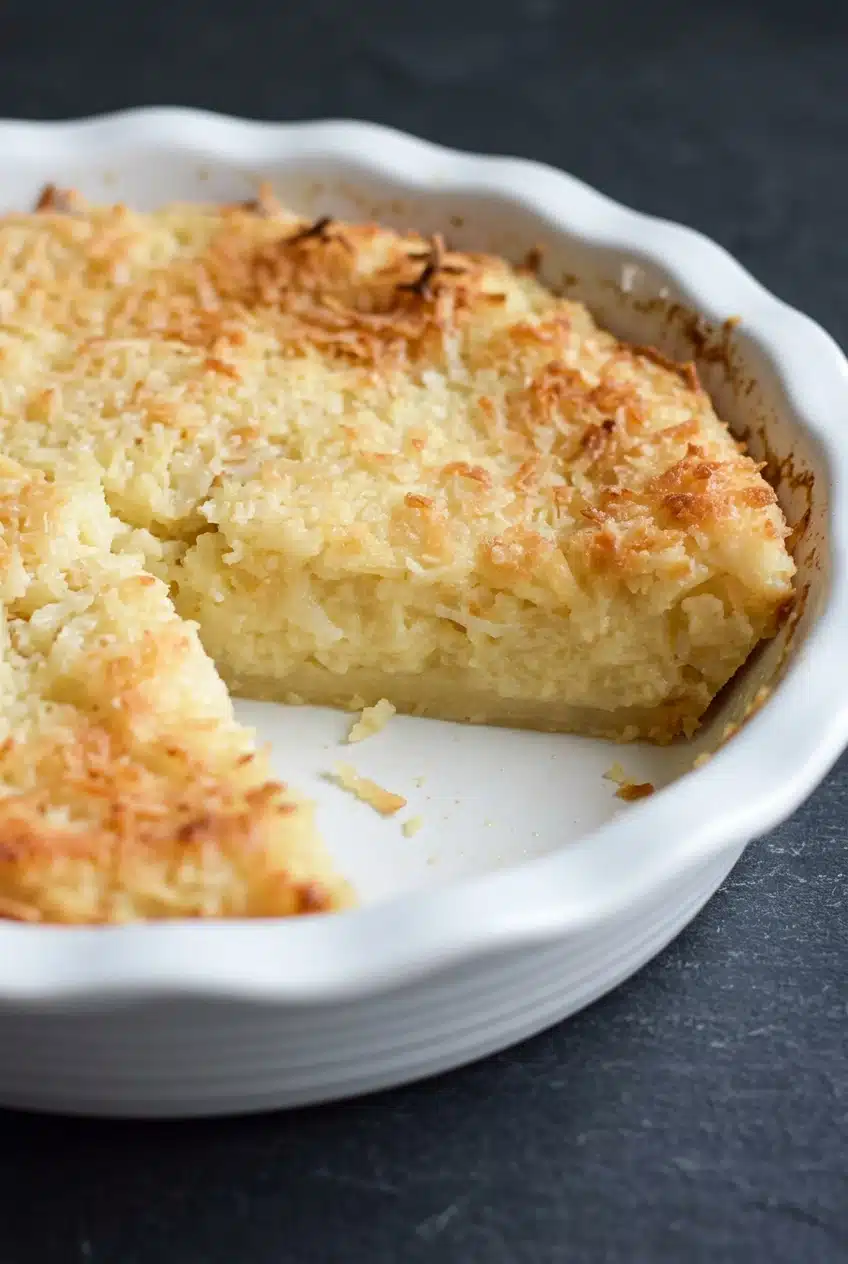
A thin batter is expected here. The more useful checkpoints are smooth mixing, a clean center tester, and enough rack cooling before cutting.
- Flour lumps: Dry pockets left during whisking can remain uneven in the filling; smooth the egg-and-flour mixture before adding milk.
- Butter clumps: Temperature differences can make melted butter collect into flecks; slightly cooled, still-fluid butter is easier to combine than piping-hot butter.
- Runny wedges: Underbaking or cutting too soon can leave the middle loose; use the center toothpick check and complete the prescribed rack cooling.
How the Batter Separates in the Oven
The textures develop together as the eggs set and the flour starch thickens. The flour-containing mixture gives the bottom a soft, cohesive layer, while coconut gathers toward the surface and browns.
Think of the bottom as a tender custard crust, not pastry. The layers may blend at their edges rather than form perfectly sharp divisions. A little puffing during baking and gentle settling on the rack are normal.
Visual Cues That Your Custard Pie Is Set
Look for golden coconut and a set outer edge. A gentle nudge may leave the middle with a small, cohesive jiggle, but it shouldn’t slosh like the raw batter.
Those observations support the toothpick test; they don’t replace it. Coconut can brown before the center finishes cooking. Once the tester comes out clean, don’t keep baking merely to eliminate every trace of movement. Cooling is part of setting the custard.
Preventing Overflow and Over-Browned Edges
Pie plates with the same diameter can have different depths. A shallow plate leaves less room for the liquid batter and its rise, so notice how close the filling sits to the rim before moving it.
A rimmed baking sheet beneath a shallow plate can catch drips, though it doesn’t increase the plate’s capacity. Watch the coconut around the perimeter as well: darker edges alone don’t establish that the center is done. Keep the center tester as your deciding check.
Variations and Ingredient Swaps
These optional directions change sweetness, aroma, or texture. Keep them separate from the measured recipe above, especially when a swap affects the custard’s structure.
Vintage Bisquick or Self-Rising Flour Style
Vintage impossible pies often use baking mix. Bisquick includes ingredients beyond flour, while self-rising flour contains leavening and salt. Either can give a different rise and texture from the plain-flour version here.
They aren’t interchangeable replacements without other adjustments. Choose a recipe written for that flour or mix rather than treating either as a direct swap.
Sweetened vs. Unsweetened Shredded or Flaked Coconut
- Sweetened shreds: The choice for this recipe, with a sweet, chewy finish.
- Unsweetened shreds: A less sweet direction that may taste drier and more distinctly coconut-forward.
- Wide flakes: A coarser bite and less uniform surface, with exposed edges that may brown differently.
Coconut Extract and Milk Alternatives
Coconut extract offers a stronger coconut aroma, while vanilla keeps the flavor rounded and custard-forward. Extract strength varies, so avoid assuming the two have identical intensity.
Different dairy milks can change richness. Plant-based milks also vary in sweetness, fat, and composition, so they may change how the filling tastes and sets. Neither direction promises the same result as the listed ingredients.
Mini Impossible Coconut Pie Muffin Cups
Individual coconut custard portions are an optional format, but this pie’s baking instructions don’t establish a method for smaller cups. For a related individual dessert with its own directions, try baby lemon impossible pies.
Serving Suggestions
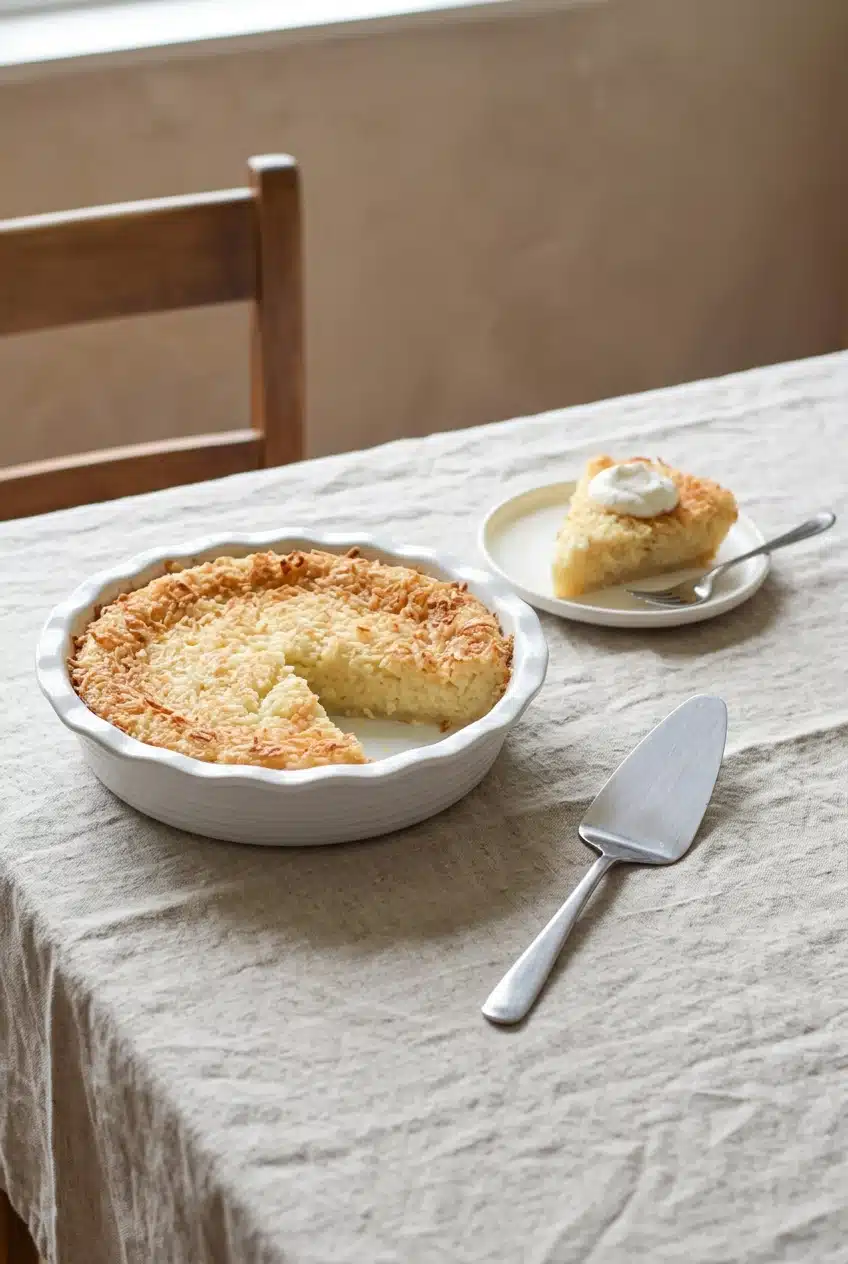
Serve the pie warm after its rack-setting period, with whipped topping if desired. The contrast between the pale custard and golden coconut makes a plain wedge satisfying on its own.
- Softly whipped cream: Adds a light, creamy finish.
- Toasted coconut: Reinforces the coconut flavor and adds surface texture.
- Berries or tropical fruit: Bring freshness alongside the sweet custard.
- Vanilla ice cream: Makes a warm wedge feel especially suited to a Sunday dinner dessert.
If you prefer a chilled coconut dessert, coconut cream pie bars offer another serving style. This pie’s defining texture comes from its baked egg custard.
Make-Ahead and Safe Storage Tips
Plan serving around the rack-setting stage, not just the oven time. Cutting immediately after baking sacrifices the structure the custard develops as it cools.
For leftovers, a cautious approach is to keep the pie covered and chilled rather than leave it on the dessert table. Add toppings when serving to preserve their texture. Avoid assuming a storage life for this egg-and-milk dessert.
Conclusion
This crustless pie brings together a soft bottom, silky vanilla custard, and a golden coconut top without rolling pastry or cooking a separate filling.
Give the center its toothpick check, then give the pie time on the rack. Patient cooling makes that first wedge easier to serve.
Frequently Asked Questions
Why Do They Call It Impossible Coconut Pie?
The name points to the surprising result: one crustless batter develops a soft bottom, custard middle, and coconut surface. There’s no separate pastry shell to prepare.
How Do You Tell When Impossible Coconut Pie Is Done Baking?
A toothpick inserted into the center should come out clean. Golden coconut and a gentle center jiggle are supporting cues, followed by the rack-setting stage.
Why Is My Impossible Coconut Pie Runny in the Middle?
The center may be underbaked, or the pie may have been sliced before it set. Check the middle during baking and allow the prescribed cooling before cutting.
Can I Use Bisquick or Self-Rising Flour in This Recipe?
Neither is a direct replacement for the plain flour here. Both contain additional ingredients that affect the result, so use directions specifically developed for them.
Should I Use Sweetened or Unsweetened Coconut?
Use sweetened shredded coconut for the intended result. Unsweetened coconut makes a less sweet variation and may give the topping a drier texture.
How Should Impossible Coconut Pie Be Stored?
As a precaution, keep leftovers covered and chilled. Add toppings at serving time, and avoid treating the pie as a dessert for extended room-temperature display.
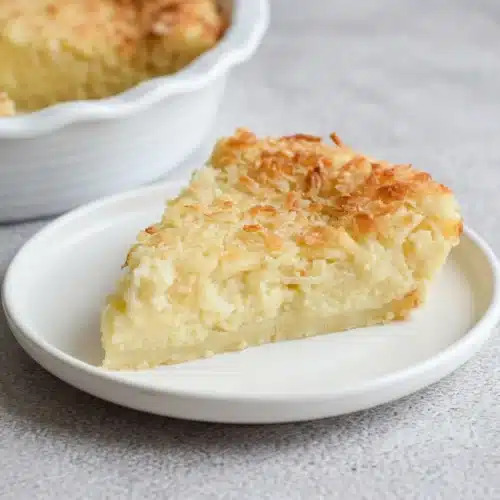
Impossible Coconut Pie

Equipment
- 9-inch pie plate
- Large Mixing Bowl
- Whisk
- Wire rack
Ingredients
- 4 eggs
- 1 1/4 cups sugar
- 1/2 cup flour
- 1/4 cup butter (melted)
- 1 tablespoon vanilla
- 1/2 teaspoon salt
- 2 cups milk
- 1 1/4 cups shredded sweetened coconut
Instructions
- Set the oven to 350°F and coat the inside of a 9-inch pie plate with grease. Cover the bottom and sides evenly to help the pie release.
- Use a large mixing bowl to beat the eggs until uniform. The yolks and whites should blend together without distinct streaks.
- Whisk the sugar, flour, melted butter, vanilla, and salt into the beaten eggs. Work through any visible flour pockets until the mixture looks evenly combined.
- Pour in the milk, then add the shredded coconut. The milk loosens the mixture considerably, while the coconut remains in visible strands.
- Stir everything together and transfer the batter to the greased pie plate. Expect a thin, pourable mixture rather than a thick pie filling.
- Bake for 40–45 minutes, checking the center with a toothpick for a clean result. The coconut surface should look golden, with the center showing only gentle movement rather than a liquid ripple.
- Transfer the baked pie to a wire rack and leave it undisturbed for at least an hour. The custard firms as it cools, giving the wedges enough structure for slicing.
- Cut and serve the pie warm, adding whipped topping if desired. The filling should feel tender and set beneath the chewy coconut surface.