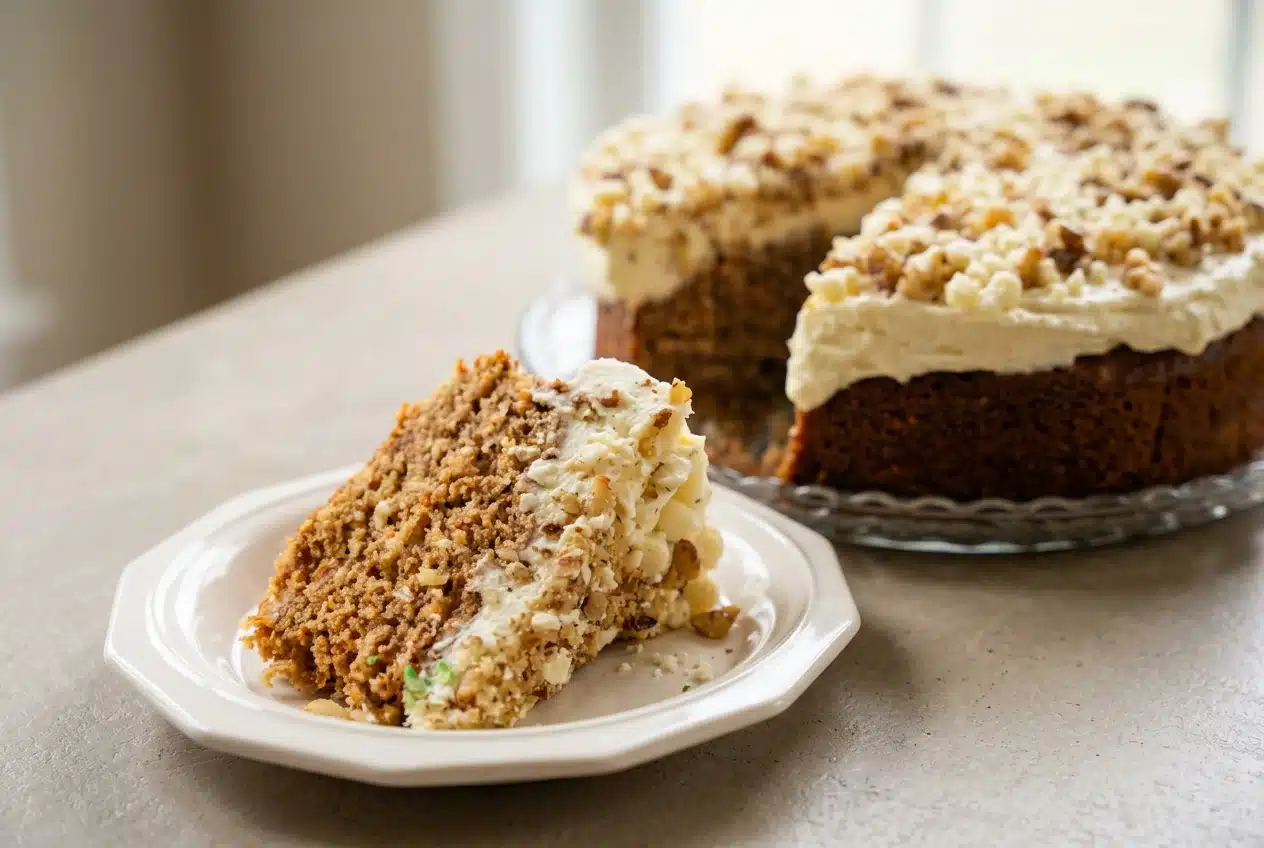
This carrot cake cheesecake cake pairs a baked, moist spice cake with an airy, no-bake cheesecake layer. Bake and cool the carrot cake in a springform pan, fold whipped cream into sweetened cream cheese, then layer and chill until firm.
Grated carrot, coconut, and vanilla Greek yogurt give the spiced cake moisture and texture, while the whipped cheesecake provides a cool, velvety contrast. This version has two distinct layers rather than batters swirled and baked together.
One springform pan carries the dessert from baking through chilling, so there’s no separate cheesecake to move or stack. Most of the waiting happens while the cake cools and the topping sets. The contrast is worth the wait.
Check that the cake has no lingering warmth before spreading on the cheesecake mixture.
Ingredients and Equipment You Need
Each ingredient contributes spice, moisture, structure, richness, or contrast: carrot and coconut texture the cake, butter and yogurt tenderize it, cream cheese and whipped cream build the topping, and walnuts and white chocolate add a crunchy, sweet finish.
- 1 box spice cake mix
- 1 cup grated carrot
- 1 cup coconut
- 4 eggs
- 1 stick butter, melted
- 2/3 cup vanilla Greek yogurt
- 1 cup heavy whipping cream
- 3 tablespoons sugar
- 8 ounces cream cheese, softened
- 1 teaspoon vanilla
- 1/2 cup powdered sugar
- 1/2 cup chopped walnuts
- 1/2 cup chopped white chocolate chips
The spice cake mix supplies the seasoned cake foundation. Carrot adds moisture and bright flecks throughout the crumb; coconut contributes chew. Eggs provide structure, melted butter adds richness, and vanilla Greek yogurt brings moisture with a gentle tang.
For the cheesecake layer, granulated sugar sweetens the whipped cream, while powdered sugar blends into the softened cream cheese. Vanilla rounds out the flavor. Whipping the cream separately creates the airy structure that distinguishes this topping from a dense baked cheesecake.
Have a springform pan, hand mixer, and separate mixing bowls ready. A flexible spatula helps with folding, and a grater is useful for preparing the carrot. Parchment paper is an optional release aid. No pan diameter is specified, so check your pan’s capacity before filling it.
I’d pay particular attention to the cream cheese: it should yield easily when pressed, rather than feel firm in the center.
How to Make the Carrot Cake Cheesecake Cake

Keep the cake and cheesecake stages separate until the baked layer has cooled completely. Plan for 20 minutes of prep, 30 minutes of baking, and the chilling stage below, with additional time as needed for cooling. The dessert serves 8.
- Set the oven to 350°F before starting the batter.
The oven should reach the baking temperature before the filled pan goes in. - Distribute the grated carrot and coconut through the spice cake mix, then use a hand mixer to incorporate the eggs, melted butter, and vanilla Greek yogurt.
Expect a thick batter dotted with carrot and coconut, without dry patches of cake mix. - Transfer the batter to a greased springform pan, bake for 30 minutes, and leave the cake in its pan until completely cool.
The cooled cake should have no remaining warmth that could soften the cheesecake layer. - Beat the heavy whipping cream with the sugar using a hand mixer, stopping when the cream holds stiff peaks, then set the bowl aside.
When the beaters lift, the peaks should retain upright points rather than curl over and sink. - In another bowl, beat the softened cream cheese with the vanilla and powdered sugar until uniformly smooth.
The mixture should look glossy and cohesive, with no visible cream cheese lumps or dry pockets. - Gently fold the whipped cream into the cream cheese mixture, then spread it across the completely cooled cake inside the springform ring.
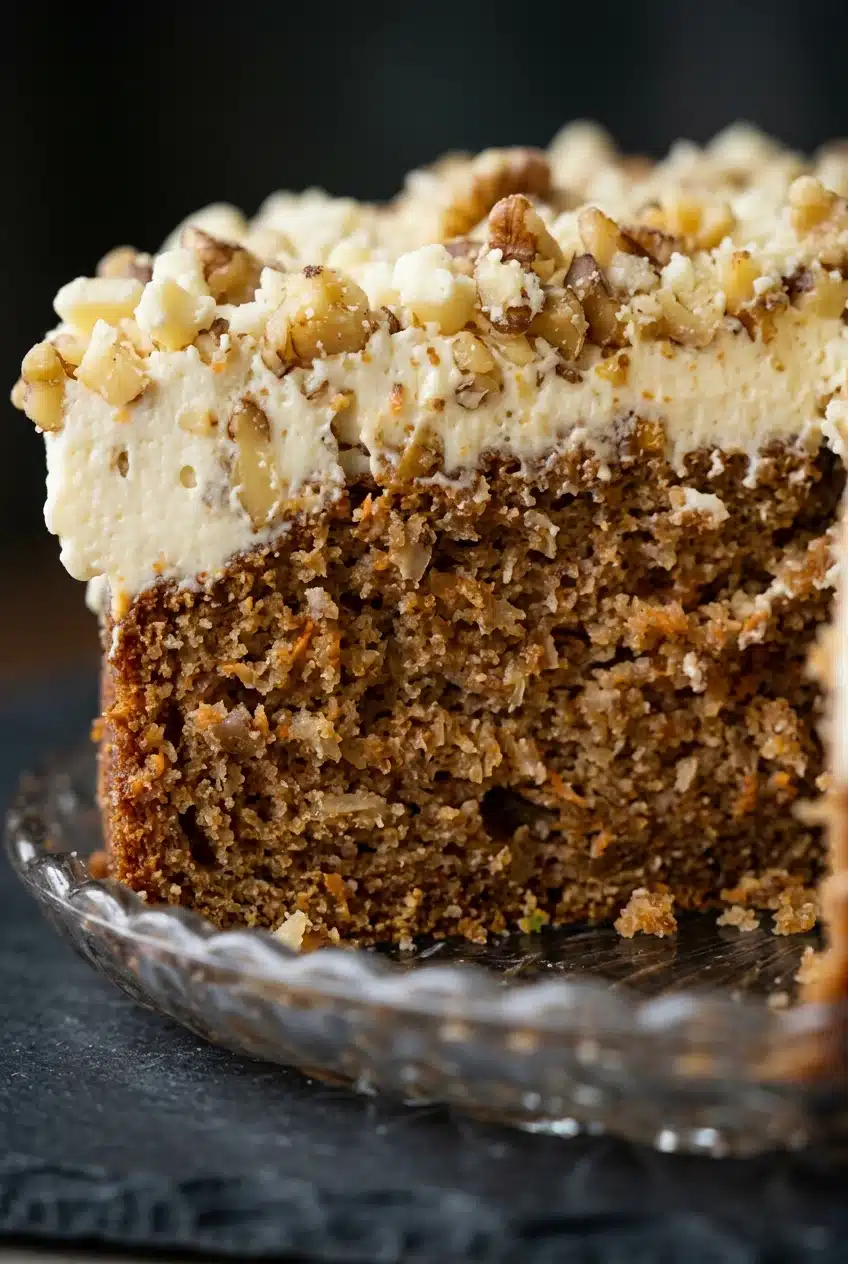
The combined filling should look evenly blended and airy, with a distinct boundary above the cake. - Keep the assembled cake refrigerated for at least 4 hours or overnight before releasing the springform ring.
The chilled cheesecake layer should look firm enough to hold its edges without the ring’s support.
Baking Tips and Troubleshooting
A smooth filling and a clean release depend more on texture and patience than elaborate equipment.
- Lumpy cheesecake mixture: Cream cheese that is still cold resists smooth blending. Start with fully softened cream cheese and finish smoothing it with the vanilla and powdered sugar before introducing the whipped cream.
- Heavy filling: Vigorous stirring knocks air out of whipped cream. Fold with broad, gentle movements, lifting the mixture over itself and stopping once the color and texture look uniform.
- Soft or blurred layers: A warm cake can soften the filling on contact. Let the cake cool completely inside the pan rather than relying on a cool-looking surface.
- Sticking at the bottom: An optional parchment circle beneath the batter can help with release. Grease the pan as directed, including the sides.
- Slumping edges: Removing the ring before the chilling stage is complete leaves the soft filling unsupported. Keep the ring fastened while the dessert sets, then release it gently rather than pulling it away abruptly.
- Smeared slices: Filling left on the blade drags through the next cut. Wipe the knife clean between slices for more distinct layers.
- Less crunchy toppings: Contact with the creamy surface softens garnishes. If crunch matters most, keep the walnuts and white chocolate separate until serving.
The same smooth-mixing and gentle-folding principles apply to a standalone no-bake cheesecake recipe, where whipped cream also contributes lift.
Popular Variations and Garnish Swaps
Choose variations by the texture you want, but keep these optional directions separate from the ingredient list and method above.
Baked-Together and Stacked Layer Cake Styles
The featured version combines a baked cake with a chilled, whipped cheesecake topping. It offers a tender crumb beneath a lighter, mousse-like layer, without baking the cheesecake mixture or handling separate cheesecake rounds.
Fully Baked Layered or Swirled Carrot Cake Cheesecake
Baked-together versions place carrot cake and cheesecake batters in the same dessert, creating alternating sections or swirls. Their cheesecake portions typically have a denser, custardy texture.
Stacked celebration cakes take another approach: separate carrot cake rounds surround a baked cheesecake layer. Those are different constructions, not interchangeable assembly options for this whipped filling.
From-Scratch Cake and Topping Upgrades
- Dry-toasted walnuts: An optional flavor direction for a deeper, nuttier finish than untoasted walnuts.
- Pecans: An optional walnut swap with a buttery flavor and a different crunch.
- Seasonal accents: Festive candies can give the dessert an Easter or spring celebration finish without changing its cake and cheesecake layers.
Toasted or Caramelized Pecan and Caramel Topping
Toasted pecans emphasize nutty depth, while caramelized pecans add a sweet crunch. Caramel drizzle brings a richer, sweeter finish. These optional flavors suit anyone drawn to caramel carrot cake, though they aren’t part of the method above.
Classic Cream Cheese Frosting Finish
Cream cheese frosting gives traditional carrot cakes a thicker, sweeter finish than whipped cheesecake. Consider it a separate style preference rather than a direct replacement: its texture and role differ from this dessert’s generous chilled layer.
From-Scratch Carrot Cake Without Coconut
A scratch-made, coconut-free carrot cake is another option for bakers who prefer a more uniform crumb and control over the spice blend. That calls for a separately developed formula, not a promise that removing coconut from this batter will produce an equivalent result.
Make-Ahead Prep and Storage
Build your serving schedule around complete cooling followed by the full chilling stage. The refrigerator rest is part of assembly, not an optional finishing touch.
For a gathering, leave the cake inside its springform ring while it chills and keep crunchy garnishes separate until serving. Make room in the refrigerator before assembly so the filled pan can sit level and remain undisturbed.
Keep the finished dessert and leftovers covered and refrigerated, with the cover clear of the soft top where possible. Return remaining portions to the refrigerator after serving rather than leaving the whole cake on the table. The setting time in the method is not a storage-life recommendation; there isn’t a verified leftover duration to give for this particular cake.
Serving and Presentation Ideas
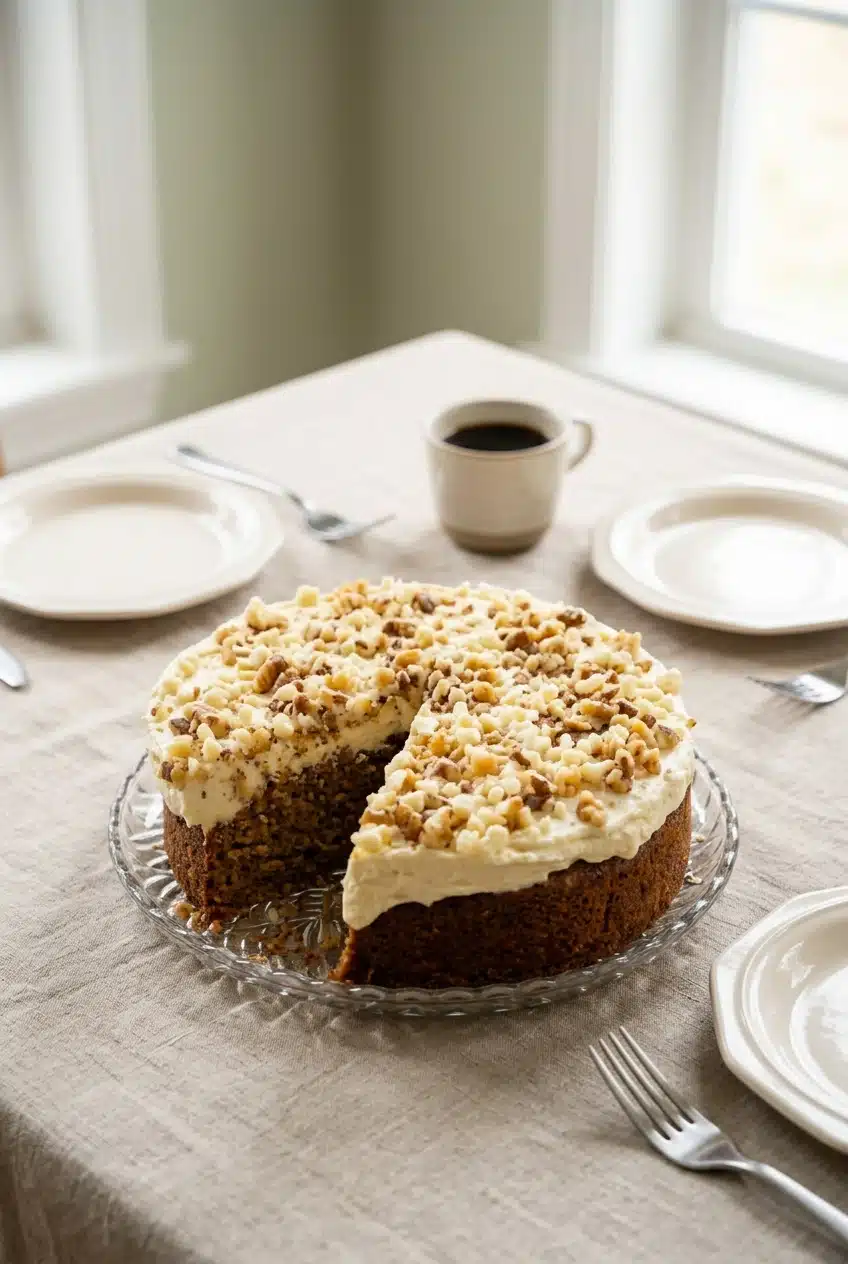
Serve the cake chilled to highlight the contrast between the spiced crumb and creamy topping. Chopped walnuts and white chocolate chips provide a textured finish, whether arranged over the cake or offered with individual portions.
Freshly brewed coffee balances the sweet layers, while spiced tea echoes the cake’s warm flavor. For Easter brunch or a spring celebration, a festive platter and seasonal accents are enough to make it feel occasion-ready.
If you’re planning a dessert spread with a handheld option alongside the chilled centerpiece, carrot cake bars offer a different serving format.
Bringing Your Cake Together
Moist spiced cake and airy cheesecake make a satisfying pair, with the springform pan supporting both layers from baking through chilling. The most useful checkpoint is a completely cooled cake before the filling goes on.
Give the assembled dessert its full refrigerator rest, then save crunchy finishing touches for serving. The questions below cover release and substitution concerns, so you can bring clean, distinct layers to the table.
Frequently Asked Questions
How Do You Cleanly Remove a Carrot Cake Cheesecake Cake From a Springform Pan?
Grease the pan before baking; an optional parchment circle can help release the bottom. Complete the chilling stage with the ring fastened, then unclasp it gently once the filling holds its shape.
Can I Make This Carrot Cake Cheesecake Cake Ahead of Serving?
Yes. The method includes advance chilling so the whipped cheesecake can set before unmolding. Follow the cooling and chilling sequence above, and keep crunchy toppings separate until serving if you prefer more contrast.
How Should Leftovers Be Stored and How Long Do They Keep Safely?
Keep leftovers covered and refrigerated, protecting the soft topping from contact with the cover. No verified storage duration is available for this particular dessert, so the chilling instructions shouldn’t be treated as a shelf-life guarantee.
What Is the Difference Between a Baked Cheesecake Layer and a Whipped No-Bake Cheesecake Layer?
Baked cheesecake typically uses eggs to create a denser, custardy set. This filling folds stiffly whipped cream into sweetened cream cheese for a lighter texture that sets in the refrigerator, without a water bath.
Can I Swap Walnuts for Pecans or Omit the Coconut and White Chocolate Chips?
Pecans are an optional walnut swap, and leaving off the white chocolate changes the finish rather than the cake’s structure. Coconut is part of the cake batter, not just a garnish. Omitting it may change the crumb, so don’t expect an identical result.
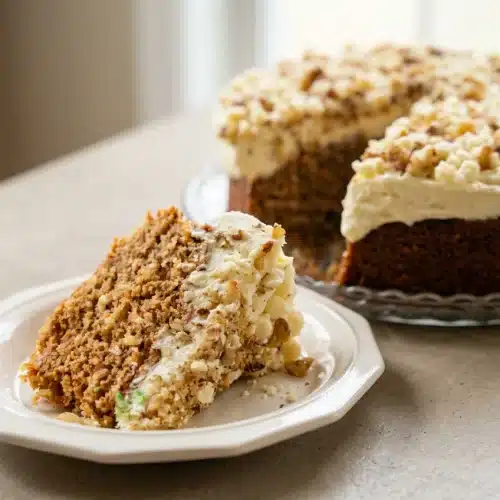
Carrot Cake Cheesecake Cake

Equipment
- Springform pan
- Hand mixer
- Mixing Bowls
Ingredients
- 1 box spice cake mix
- 1 cup grated carrot
- 1 cup coconut
- 4 eggs
- 1 stick butter melted
- 2/3 cup vanilla Greek yogurt
- 1 cup heavy whipping cream
- 3 tablespoons sugar
- 8 ounces cream cheese softened
- 1 teaspoon vanilla
- 1/2 cup powdered sugar
- 1/2 cup chopped walnuts
- 1/2 cup chopped white chocolate chips
Instructions
- Set the oven to 350°F before starting the batter. The oven should reach the baking temperature before the filled pan goes in.
- Distribute the grated carrot and coconut through the spice cake mix, then use a hand mixer to incorporate the eggs, melted butter, and vanilla Greek yogurt. Expect a thick batter dotted with carrot and coconut, without dry patches of cake mix.
- Transfer the batter to a greased springform pan, bake for 30 minutes, and leave the cake in its pan until completely cool. The cooled cake should have no remaining warmth that could soften the cheesecake layer.
- Beat the heavy whipping cream with the sugar using a hand mixer, stopping when the cream holds stiff peaks, then set the bowl aside. When the beaters lift, the peaks should retain upright points rather than curl over and sink.
- In another bowl, beat the softened cream cheese with the vanilla and powdered sugar until uniformly smooth. The mixture should look glossy and cohesive, with no visible cream cheese lumps or dry pockets.
- Gently fold the whipped cream into the cream cheese mixture, then spread it across the completely cooled cake inside the springform ring. The combined filling should look evenly blended and airy, with a distinct boundary above the cake.
- Keep the assembled cake refrigerated for at least 4 hours or overnight before releasing the springform ring. The chilled cheesecake layer should look firm enough to hold its edges without the ring’s support.