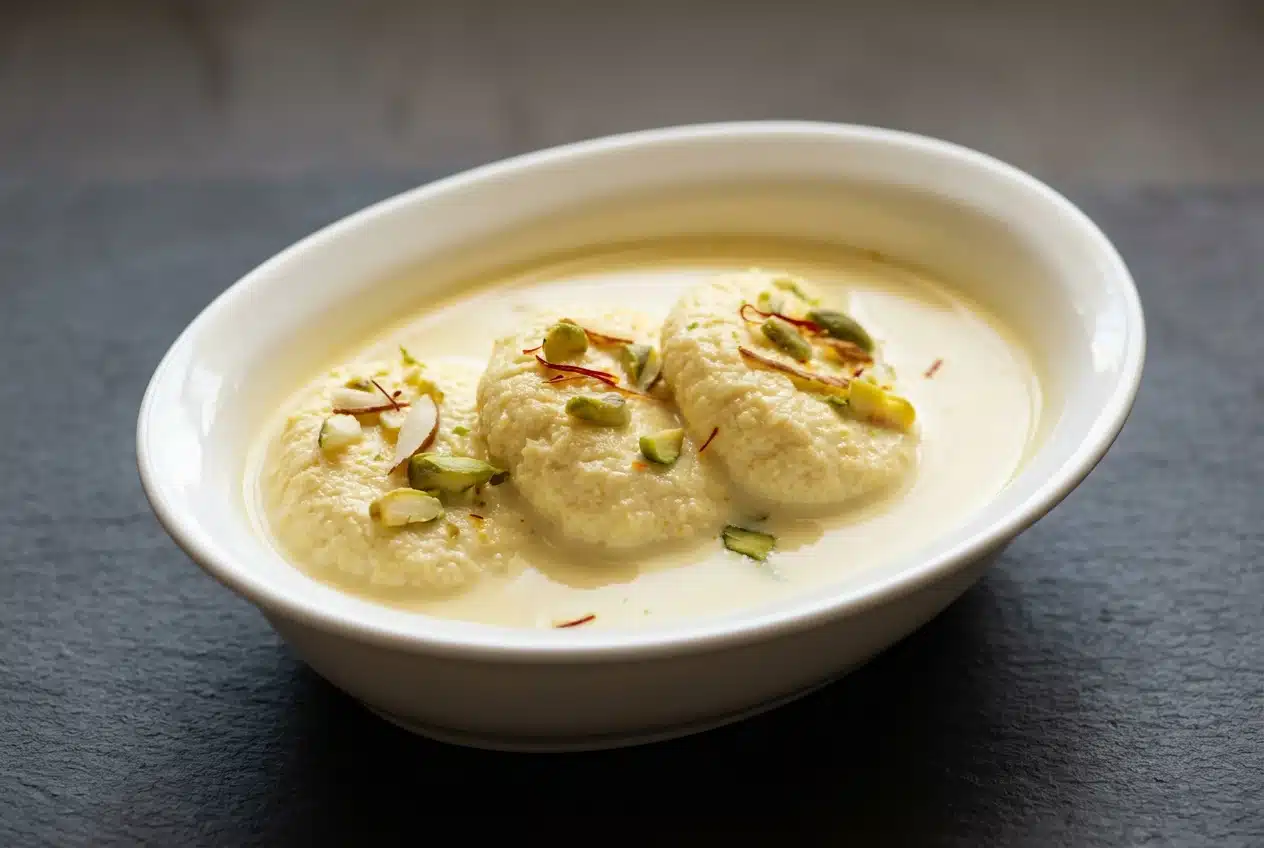
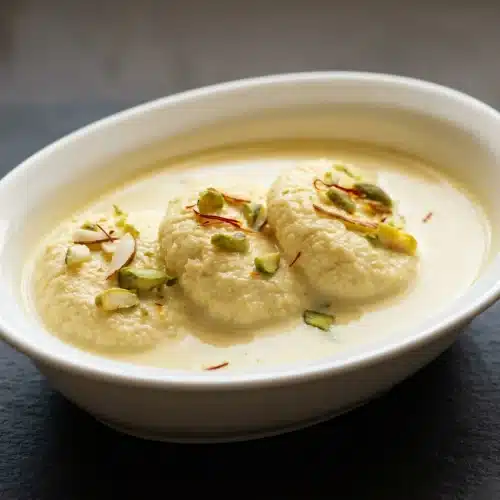
This rasmalai recipe makes soft, spongy fresh-cheese discs soaked in sweetened milk. Curdle full-fat milk, knead the drained chenna until smooth rather than gritty, cook the discs in cardamom sugar syrup, then soak them in rabri and finish with chilled milk and nuts.
Rasmalai is a Bengali sweet with a lovely contrast: delicate chenna sponges surrounded by creamy milk. Saffron adds a floral note, cardamom perfumes the syrup, and chopped pistachios or almonds bring a little crunch.
The preparation takes patience, but clear texture checkpoints make each stage manageable. You’ll learn what properly drained curds feel like and when to stop kneading. Tenderness starts before the syrup.
Have the ice water ready before curdling the milk so you can cool the curds as soon as they separate.
Ingredients You’ll Need for Homemade Rasmalai
Milk provides the tender curds and creamy rabri, acid separates the chenna, and ice water cools it promptly. Sugar supplies sweetness, cardamom and optional saffron add fragrance, and pistachios or almonds finish the dessert with contrasting texture.
- 1¼ liter milk (or 5 cups full fat milk for chenna)
- 1 to 2 tbsp lemon juice ( or vinegar (mix with 2 to 3 tbsp water) or 4 to 6 tbsp curd)
- 1 liter ice water (or ice cubes)
- 1 cup refined white sugar
- 3½ cups water
- ¼ tsp cardamom powder (or elaichi powder)
- ¾ liter milk ((3 cups full fat))
- ½ cup sugar (for rabri)
- pinch saffron ( or kesar (optional))
- 2 tbsp pista (or almonds sliced)
Full-fat milk: Use the larger milk portion for chenna and the smaller portion for rabri. They serve different purposes: the chenna becomes the sponge, while the reduced milk surrounds and soaks it.
Curdling acid: Lemon juice, diluted vinegar, and curd are the listed alternatives. Here, curd means plain yogurt. Rinse the separated curds thoroughly to wash away the acidic liquid and keep sourness from competing with the sweet milk.
Sugar and aromatics: Keep the syrup sugar separate from the rabri sugar. Cardamom belongs in the syrup in this method; optional saffron goes into the milk. Pista means pistachios, with sliced almonds offered as the alternative.
The traditional chenna preparation is eggless and contains dairy and nuts. The optional milk-powder variation below uses egg and flour, so it isn’t interchangeable with this ingredient list.
How to Make Rasmalai Step by Step
Prepare the rabri first, then work through curdling, draining, shaping, and syrup cooking. The finished texture matters more than rushing to the next stage, especially when draining and kneading the chenna.
Prepare the Rabri
Make Rabri (Thickened Milk)
- Heat 3 cups milk in a heavy-bottomed pot until it reaches a boil, then stir in the saffron, if using, and the rabri sugar.
The milk will begin taking on the saffron’s color as it heats. - Adjust the heat to medium and stir at 2 to 3 minute intervals, nudging any surface cream to the side.
The bottom should remain free of scorched milk while the cream collects around the edges. - Continue reducing until half the starting volume remains, then take the pot off the heat.
The rabri should look creamy and thickened but still pour easily. - Divide the rabri into equal portions, cooling and refrigerating one while reserving the other warm.
You now have warm milk for the initial soak and cold milk for the finish.
Curdle and Drain the Milk
Make chenna
- Heat 5 cups milk to boiling, switch off the burner, and stir in the lemon juice.
Soft curds should separate from the liquid whey. - Add more of the listed curdling acid if separation remains incomplete, continuing to stir.
Look for distinct curds surrounded by clearer whey rather than uniformly milky liquid. - Return the pot to low heat only if the milk still hasn’t separated, stirring until curds form.
The whey may appear pale greenish as separation becomes complete. - Stop the heat and add the ice water or ice cubes, then leave the mixture for 2 minutes.
The cold addition cools the freshly formed curds promptly. - Empty the pot into a colander lined with muslin and rinse the curds thoroughly with fresh water.
The rinse washes acidic whey away from the chenna. - Gather the cloth around the curds, gently press out surplus whey, and knot the bundle.
The chenna should remain moist rather than tightly compressed and dry. - Suspend the bundle for about 45 minutes to 1 hour, checking its moisture before proceeding.
Ready chenna feels moist and grainy, without dripping whey, heavy stickiness, or a dry, crumbly texture.
Knead and Shape the Discs
Kneading chena
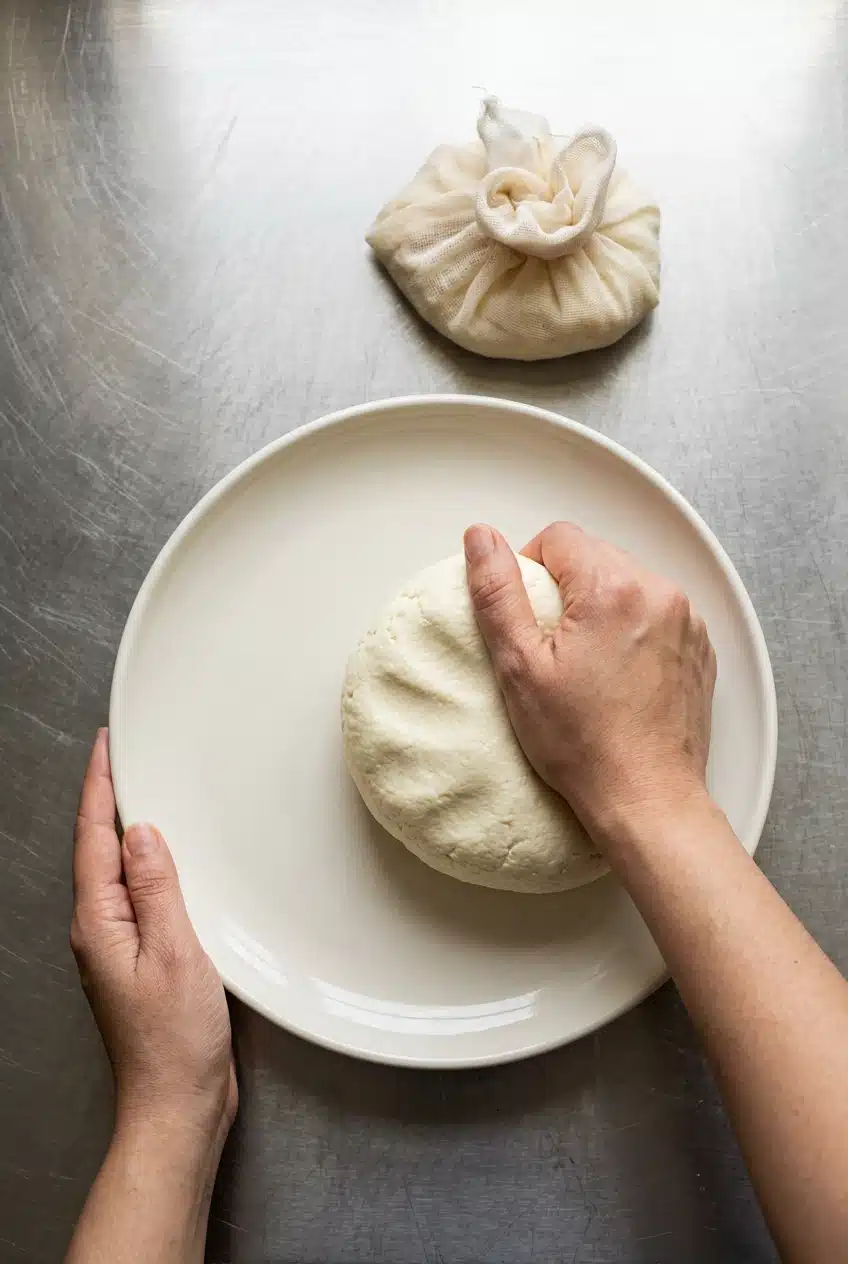
- Unwrap the drained chenna onto a plate and work it with the heel of your palm for about 3 to 5 minutes.
Stop when the curds form a smooth, non-grainy, non-sticky mass, using texture rather than elapsed time as the deciding cue. - Divide the mass into 12 equal portions, round each portion, and gently flatten it.
The discs should have even surfaces and softly rounded edges. - Smooth minor edge cracks by gently rolling those edges, then set the shaped discs aside.
Visible splits should close without forceful pressing.
Cook the Discs in Syrup
Sugar syrup
- Heat 3½ cups water with 1 cup sugar, stirring until no crystals remain, then add the cardamom powder.
The syrup should look clear before the discs go in. - Wait for a rapid boil, then carefully lower the discs into the syrup and cover the pot.
The liquid should be actively bubbling as cooking begins. - Maintain moderately high heat for about 9 to 10 minutes with the lid in place.
The discs should puff as they cook. - Switch off the heat, move the pot away from the hot burner, and leave it covered for 20 minutes.
The cooked discs settle into the syrup during this undisturbed rest.
Soak and Finish the Rasmalai
How to Make Rasmalai
- Lift the rested discs onto a plate and allow them to cool.
They should feel delicate and spongy rather than firm. - Hold each disc between your palms and apply light, even pressure to release excess syrup.
Stop short of flattening or splitting the sponge. - Transfer the gently pressed discs to the reserved warm rabri.
The milk should surround the discs rather than sit on them like a thick coating. - Allow 3 to 4 hours for soaking, keeping the dessert refrigerated during the rest, then add the reserved chilled rabri just before serving.
The finished discs should be milk-soaked and surrounded by a creamy, pourable sauce. - Scatter the chopped nuts over the finished rasmalai.
The garnish adds a crisp contrast to the soft discs.
Troubleshooting Soft and Spongy Chenna Discs
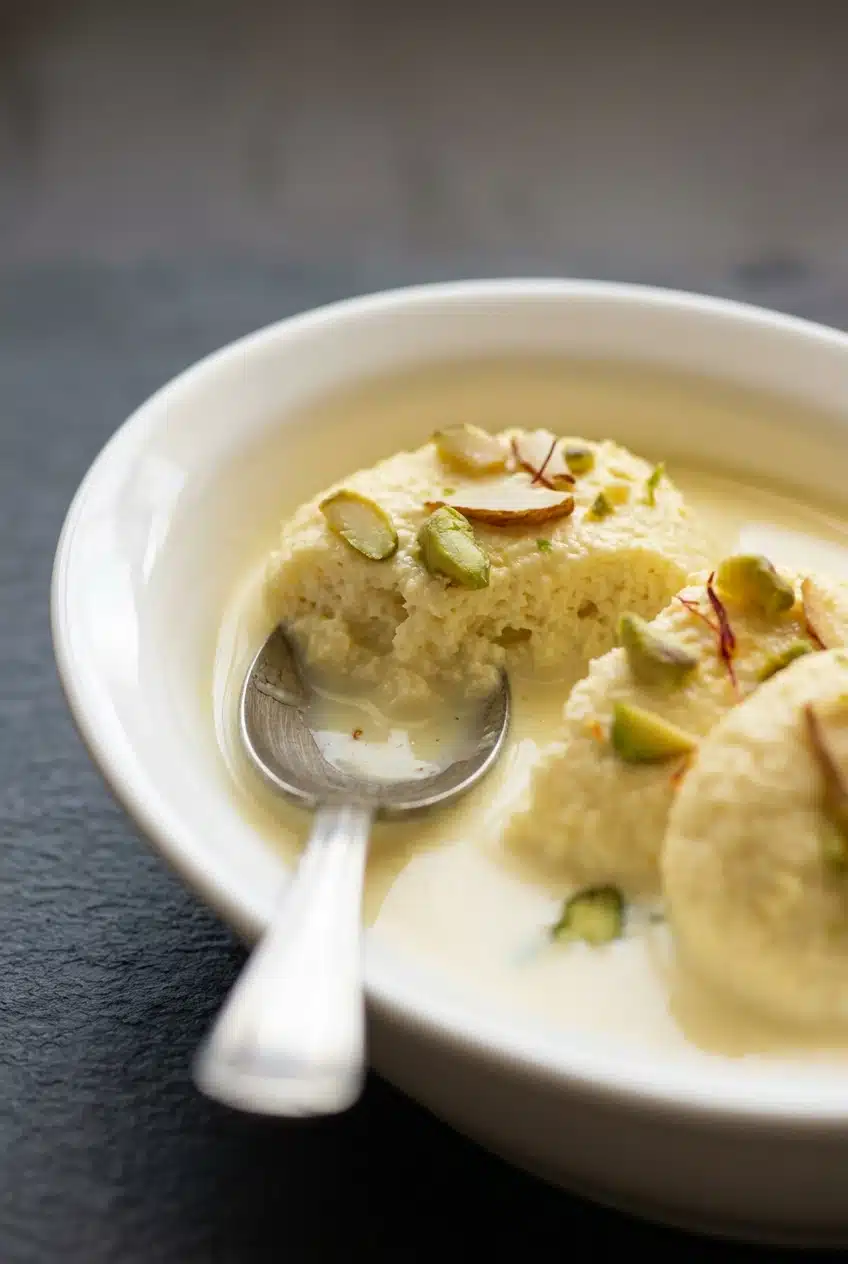
Check moisture first when the texture goes wrong. The chenna should begin moist and grainy, become smooth through kneading, and hold together without feeling sticky or dry.
Homogenized vs. Non-Homogenized Milk
Whole milk is the full-fat choice for this recipe. Homogenization and pasteurization describe different processing steps, so those words aren’t alternatives to each other on a milk label.
- Unsure about homogenized milk: Keep the acid-addition order given above rather than changing it based on the label; watch for actual curd separation.
- Using non-homogenized milk: Judge the curds by their moisture and texture rather than assuming they need a different kneading endpoint.
- Considering UHT or ultra-pasteurized milk: Don’t assume every carton will behave identically during curdling; use the separation and draining checkpoints rather than expecting a guaranteed yield or softness.
- Milk remains cloudy: Follow the gradual acid addition and low-heat fallback in the method instead of continuing to boil already separated curds.
Checking Chenna Moisture Before Kneading
A countertop smear comparison helps describe the goal: properly kneaded chenna feels smooth when rubbed, rather than sandy, wet, or greasy. It isn’t another required preparation step.
- Wet and sticky: Excess whey remains, so complete the draining stage before shaping; kneading doesn’t replace draining.
- Dry and crumbly: The chenna has lost too much moisture, so avoid squeezing or draining it further; don’t force cracked pieces into the syrup.
- Moist but grainy: This is the expected starting texture after draining; knead until the graininess disappears.
- Smooth and cohesive: Stop kneading at this point rather than continuing just to reach the upper end of the suggested time.
I favor the feel of the chenna over the clock: smooth and moist is the target, not shiny or greasy.
Preventing Hard Centers or Broken Discs
- Hard or chewy discs: Review whether the curds stayed on the heat after separating, dried too much, or underwent excessive kneading; use the cold-water step and stop at the smooth endpoint.
- Discs breaking in syrup: Check for leftover whey and visible cracks before cooking; begin with properly drained chenna and gently smooth the edges.
- Uneven puffing: Avoid packing the discs tightly together and repeatedly lifting the lid; preserve the covered cooking and resting sequence.
- Dense centers despite a creamy exterior: Keep the rabri pourable instead of reducing it beyond the stated endpoint; a heavy coating isn’t the same as a soaked sponge.
- Discs splitting during pressing: Reduce palm pressure and release syrup gently; the goal is to remove excess liquid, not wring the discs dry.
- Shrunken discs: Don’t skip the covered rest or leave the pot sitting on the hot burner after cooking.
Popular Rasmalai Variations and Quick Shortcuts
These optional approaches use different foundations, so they need their own recipes and ratios. They aren’t ingredient swaps for the fresh-chenna method above.
Milk Powder Rasmalai Shortcut
This version uses full-fat milk powder, flour, egg, and baking powder rather than freshly separated milk curds. Its egg-bound structure differs from traditional eggless chenna. Dairy whitener isn’t the same ingredient as full-fat milk powder, and baking soda isn’t a direct replacement for baking powder.
Baked Ricotta Shortcut
Ricotta offers a cheese-based alternative for cooks who want to avoid curdling milk. Variations often pair it with condensed milk, evaporated milk, and whole milk, sometimes with cinnamon or nutmeg. Expect a different cheese texture rather than an identical chenna sponge.
Instant Rasgulla and Condensed Milk Method
Store-bought rasgulla supplies the ready-made cheese sweets, while sweetened condensed milk provides a convenient sweet-milk direction. Saffron and cardamom keep the flavor familiar. The starting rasgulla determines much of the final sweetness and texture.
For optional flavor changes, choose an accent rather than competing with every aromatic at once:
- Rosewater: Adds a floral fragrance alongside the cardamom.
- Kewra: Offers a distinct floral direction in place of rosewater.
- Extra nuts: Increase the crunchy contrast without changing the chenna preparation.
Make-Ahead and Storage
Plan around the soaking stage rather than treating rasmalai as a last-minute dessert. Prepare the rabri first and reserve its chilled portion separately so the final pour stays part of serving, not an extra task afterward.
Begin with warm rabri as directed, then keep the soaking dessert covered and refrigerated. Reserve the chopped-nut garnish until serving if you want its crisp contrast. Keep leftover rasmalai covered and chilled rather than leaving it on the dessert table.
The preparation and soaking times above describe the recipe, not a storage-life limit. Make the dessert for your planned serving occasion without assuming an extended holding period.
How to Garnish and Serve Rasmalai
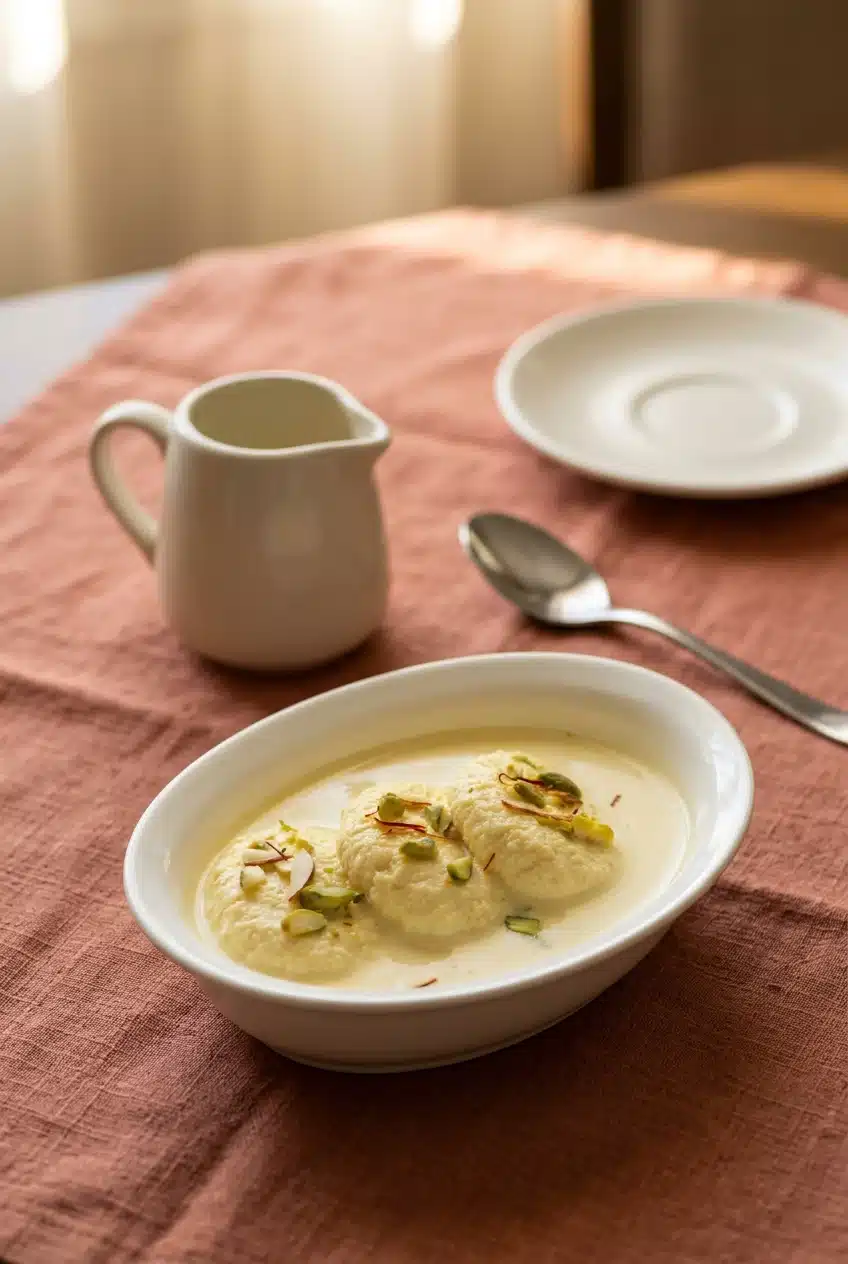
Pour the reserved chilled rabri around and over the soaked discs just before serving. Shallow bowls make it easy to spoon up the sponge and milk together without cutting through a stack of delicate discs.
- Classic finish: Use the chopped pistachios or almonds listed in the ingredients.
- Saffron accent: Optional saffron threads echo the milk’s floral flavor and golden color.
- Festive finish: Optional food-grade edible dried rose petals add color without changing the chenna mixture.
Serve rasmalai after biryani or a savory Indian curry meal, or include it on a Diwali or Holi dessert spread. Its appeal is the contrast between cool, creamy milk, fragrant spice, and a sponge tender enough to yield to a spoon.
Final Thoughts on Making Classic Rasmalai
Soft rasmalai starts with gently curdled milk and properly drained chenna. Knead until smooth, follow the covered syrup cooking and resting stages, and handle the cooked discs lightly.
Use the quantities and timings above as your guide, with texture as your final checkpoint. Give the discs their soak, save the cold rabri for the finish, and bring the bowls to the table ready for spooning.
Frequently Asked Questions
Why Did My Rasmalai Turn Hard or Dense?
Dry or rubbery curds can produce firm discs; review the cooling and draining stages. Excessive kneading or prolonged cooking can undermine tenderness; stop at the smooth endpoint and follow the stated syrup timing. Overly thick rabri can leave the center less thoroughly soaked.
Why Do Chenna Discs Break or Dissolve in Sugar Syrup?
Excess whey leaves the chenna sticky and fragile; finish draining before kneading. Grainy dough and cracked edges need attention before cooking; aim for a smooth mass and closed edges. Crowding makes delicate discs harder to accommodate as they puff; leave them room.
How Should I Keep Rasmalai Before Serving?
Keep the soaking dessert covered and refrigerated. Reserve the chilled rabri portion and chopped nuts for the serving finish.
What Is the Origin of Rasmalai?
Rasmalai belongs to Bengali sweet-making traditions and is enjoyed widely across South Asia. Its name combines “ras,” meaning juice, and “malai,” meaning cream.
Can I Make Rasmalai Ahead of Time?
Yes. The method includes a soaking stage before the final chilled-rabri finish. Organize serving around that rest, keeping the dessert chilled and the finishing milk separate until needed.
Can I Flavor Rasmalai With Rosewater or Use Different Milks?
A light touch of rosewater or kewra is an optional floral variation, separate from the listed ingredients. Use full-fat dairy milk for the chenna and rabri in this method; milk-powder and ricotta versions require different recipes.
Rasmalai Recipe

Equipment
- Heavy-bottomed pot
- Colander
- Muslin cloth
- Plate
Ingredients
- 1¼ liter milk or 5 cups full fat milk for chenna
- 1 to 2 tbsp lemon juice or vinegar (mix with 2 to 3 tbsp water) or 4 to 6 tbsp curd
- 1 liter ice water or ice cubes
- 1 cup refined white sugar
- 3½ cups water
- ¼ tsp cardamom powder or elaichi powder
- ¾ liter milk (3 cups full fat)
- ½ cup sugar for rabri
- pinch saffron or kesar (optional)
- 2 tbsp pista or almonds sliced
Instructions
Make Rabri (Thickened Milk)
- Heat 3 cups milk in a heavy-bottomed pot until it reaches a boil, then stir in the saffron, if using, and the rabri sugar. The milk will begin taking on the saffron’s color as it heats.
- Adjust the heat to medium and stir at 2 to 3 minute intervals, nudging any surface cream to the side. The bottom should remain free of scorched milk while the cream collects around the edges.
- Continue reducing until half the starting volume remains, then take the pot off the heat. The rabri should look creamy and thickened but still pour easily.
- Divide the rabri into equal portions, cooling and refrigerating one while reserving the other warm. You now have warm milk for the initial soak and cold milk for the finish.
Make chenna
- Heat 5 cups milk to boiling, switch off the burner, and stir in the lemon juice. Soft curds should separate from the liquid whey.
- Add more of the listed curdling acid if separation remains incomplete, continuing to stir. Look for distinct curds surrounded by clearer whey rather than uniformly milky liquid.
- Return the pot to low heat only if the milk still hasn’t separated, stirring until curds form. The whey may appear pale greenish as separation becomes complete.
- Stop the heat and add the ice water or ice cubes, then leave the mixture for 2 minutes. The cold addition cools the freshly formed curds promptly.
- Empty the pot into a colander lined with muslin and rinse the curds thoroughly with fresh water. The rinse washes acidic whey away from the chenna.
- Gather the cloth around the curds, gently press out surplus whey, and knot the bundle. The chenna should remain moist rather than tightly compressed and dry.
- Suspend the bundle for about 45 minutes to 1 hour, checking its moisture before proceeding. Ready chenna feels moist and grainy, without dripping whey, heavy stickiness, or a dry, crumbly texture.
Kneading chena
- Unwrap the drained chenna onto a plate and work it with the heel of your palm for about 3 to 5 minutes. Stop when the curds form a smooth, non-grainy, non-sticky mass, using texture rather than elapsed time as the deciding cue.
- Divide the mass into 12 equal portions, round each portion, and gently flatten it. The discs should have even surfaces and softly rounded edges.
- Smooth minor edge cracks by gently rolling those edges, then set the shaped discs aside. Visible splits should close without forceful pressing.
Sugar syrup
- Heat 3½ cups water with 1 cup sugar, stirring until no crystals remain, then add the cardamom powder. The syrup should look clear before the discs go in.
- Wait for a rapid boil, then carefully lower the discs into the syrup and cover the pot. The liquid should be actively bubbling as cooking begins.
- Maintain moderately high heat for about 9 to 10 minutes with the lid in place. The discs should puff as they cook.
- Switch off the heat, move the pot away from the hot burner, and leave it covered for 20 minutes. The cooked discs settle into the syrup during this undisturbed rest.
How to Make Rasmalai
- Lift the rested discs onto a plate and allow them to cool. They should feel delicate and spongy rather than firm.
- Hold each disc between your palms and apply light, even pressure to release excess syrup. Stop short of flattening or splitting the sponge.
- Transfer the gently pressed discs to the reserved warm rabri. The milk should surround the discs rather than sit on them like a thick coating.
- Allow 3 to 4 hours for soaking, keeping the dessert refrigerated during the rest, then add the reserved chilled rabri just before serving. The finished discs should be milk-soaked and surrounded by a creamy, pourable sauce.
- Scatter the chopped nuts over the finished rasmalai. The garnish adds a crisp contrast to the soft discs.