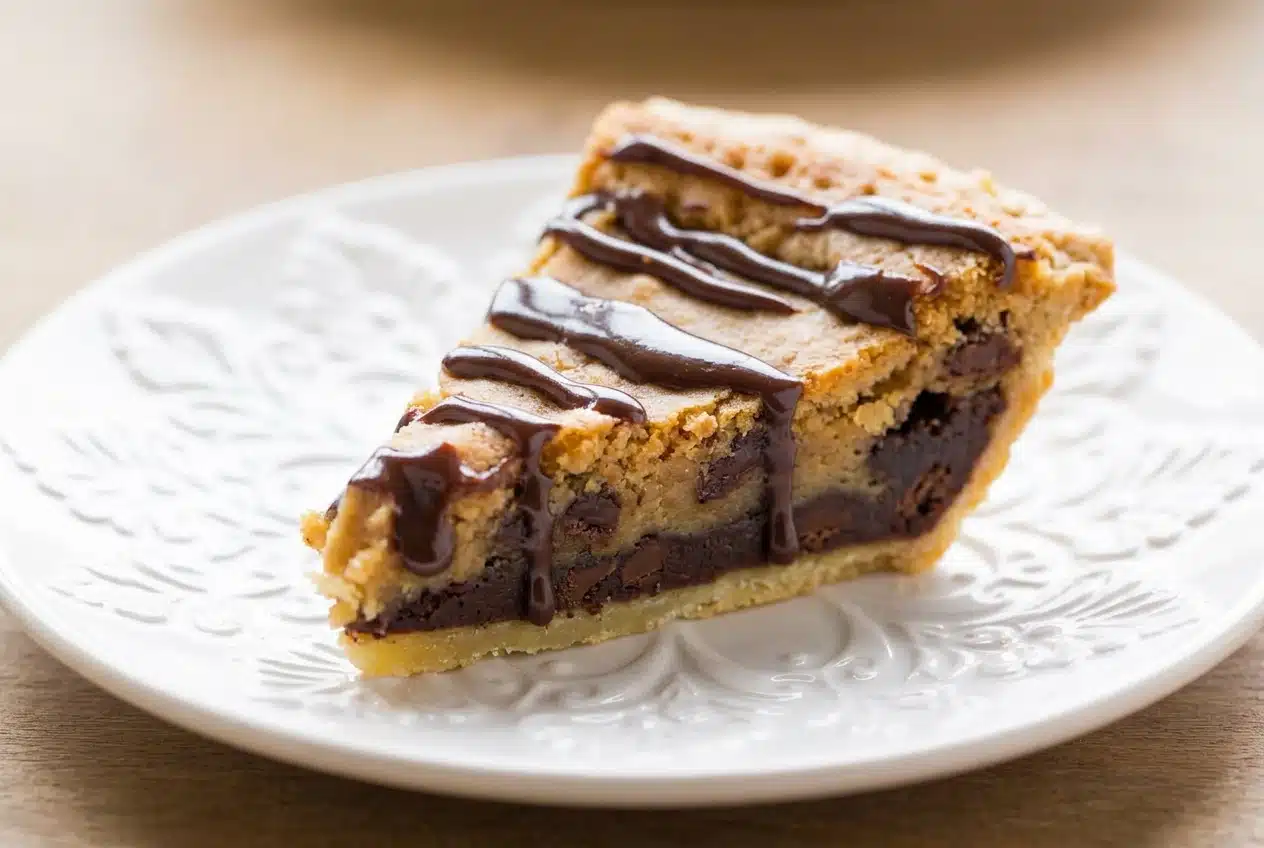
Chocolate chip cookie pie combines a gooey, buttery cookie filling with a flaky pastry shell. Beat the eggs until foamy, mix the filling, and bake in an unbaked deep-dish crust. The key is testing between the center and edge, then letting the pie cool before slicing.
This chocolate chip cookie pie has the richness of a soft cookie, with semi-sweet chocolate throughout and pastry around every wedge. The filling starts as a creamy batter rather than firm, scoopable dough.
A thawed deep-dish shell keeps preparation convenient, while homemade pastry works too. Most of the patience comes after baking, when the filling needs time to settle. That wait makes the wedges.
Set out the wire rack before baking so the finished pie has a ready cooling spot.
Key Ingredients and Equipment
Each ingredient contributes to the contrast between pastry and soft filling: eggs and flour provide structure, butter brings richness, sugars shape sweetness and texture, and chocolate chips create pockets of chocolate.
- 2 large eggs
- 1/2 cup all-purpose flour
- 1/2 cup granulated sugar
- 1/2 cup light brown sugar (packed)
- 2 teaspoons vanilla extract
- 1/2 teaspoon salt (or to taste)
- 3/4 cup unsalted butter (1 1/2 sticks, softened)
- 1 1/4 cups semi-sweet chocolate chips
- 1 unbaked 9-inch deep-dish pie shell (4-cup volume, thawed completely (or substitute with your favorite homemade buttery pie crust))
- 1/3 cup hot fudge (homemade or store-bought, optional for drizzling)
Eggs help the filling hold together, while the flour gives it structure without turning it into firm cookie dough. Granulated sugar supplies sweetness; packed light brown sugar adds moisture and caramel-like flavor. Softened butter creates a creamy mixture, and semi-sweet chips balance the sweet filling with deeper chocolate flavor.
I’d pay particular attention to the softened butter here: the mixing sequence calls for creamy butter, not a melted-butter batter.
Choose an unbaked deep-dish shell, completely thawed if purchased frozen. Homemade buttery pastry is also an option, but it needs room for the filling. A shallow shell isn’t an equivalent choice.
Gather a stand mixer with its paddle attachment, a spatula, a rimmed baking sheet, and a wire rack. Keep a toothpick or knife handy for checking doneness. Use the recipe card for exact measurements and execution times.
How to Make Chocolate Chip Cookie Pie
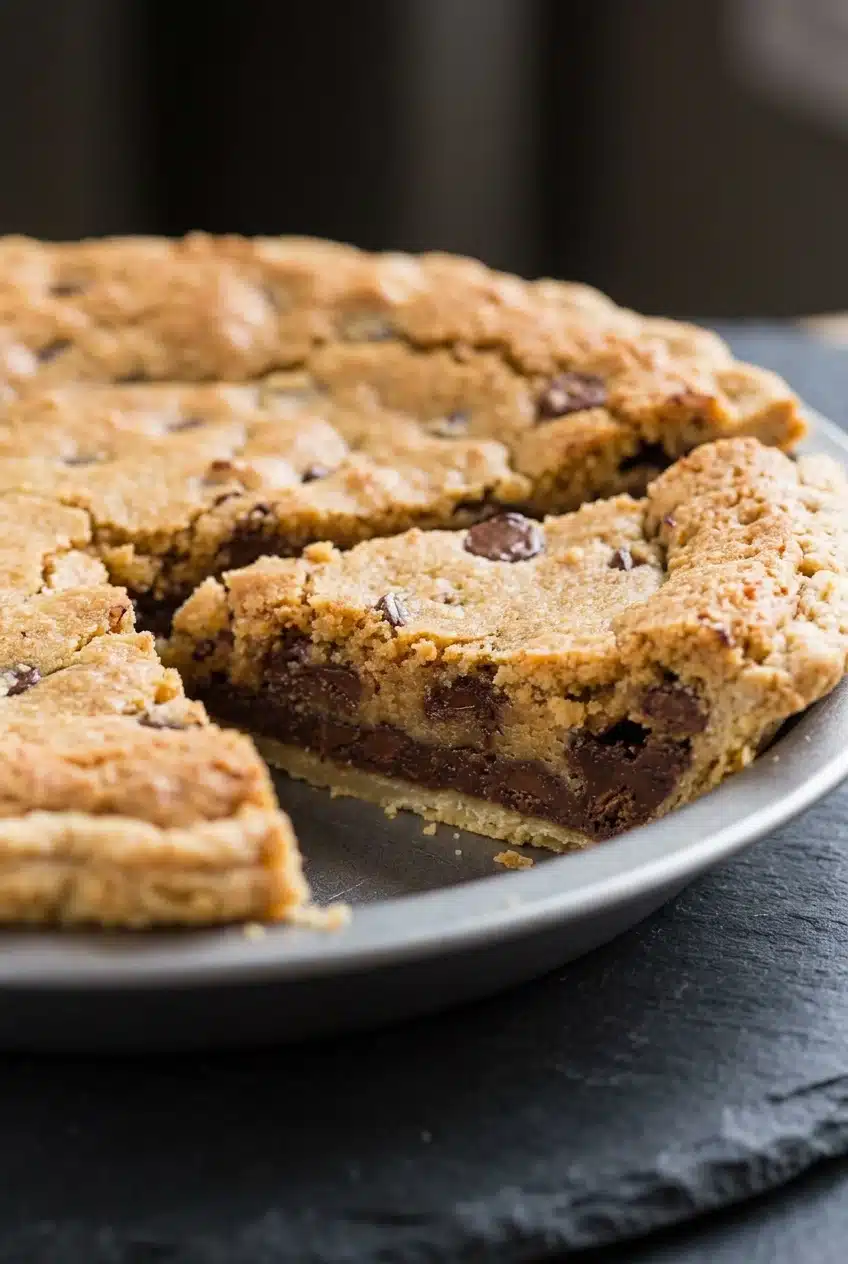
Follow the mixing order even if you usually cream butter and sugar first for cookies. Here, the eggs become foamy before the flour, sugars, and softened butter enter the bowl.
Prep: 5 minutes · Bake: about 50–52 minutes · Cooling: at least 2 hours · Total: about 2 hours 55 minutes · Yield: 8 servings
- Set the oven to 325°F and allow it to preheat.
The oven should reach the selected temperature before the filled shell goes in. - Fit the stand mixer with its paddle and whip the eggs at medium-high speed.
Continue until bubbles form throughout and the eggs look foamy. - Mix in the flour, both sugars, vanilla, and salt at medium speed for about 1 to 2 minutes, scraping the bowl as needed.
The ingredients should form an evenly combined mixture without dry patches along the sides. - Work the softened butter into the mixture at medium-high speed for about 1 to 2 minutes, pausing to scrape the bowl where necessary.
Look for a creamy batter with the butter fully incorporated. - Distribute the chocolate chips through the batter on low speed for about 1 minute.
Stop once the chips are incorporated rather than continuing to beat. - Scrape the filling into the unbaked deep-dish shell and lightly level its surface with a spatula.
The batter should sit evenly inside the pastry. - Set the filled pie on a baking sheet and bake for about 50 to 52 minutes, checking with a toothpick or knife halfway between the center and crust edge.
A clean tester at that location signals the intended gooey result, while an additional 5 to 10 minutes of baking gives a less-gooey filling. - Transfer the baked pie to a wire rack and leave it to cool for at least 2 hours before cutting.
The filling needs this cooling stage to firm enough for wedges rather than slumping onto the plate.
Estimated nutrition per serving: 604 calories; 36 g fat; 20 g saturated fat; 1 g trans fat; 13 g unsaturated fat; 65 g carbohydrates; 3 g fiber; 41 g sugar; 6 g protein; 88 mg cholesterol; 301 mg sodium.
The batter will look softer than scoopable cookie dough. After the butter becomes creamy, use low speed for the chips so you incorporate them without extending the mixing unnecessarily.
Baking Tips and Troubleshooting
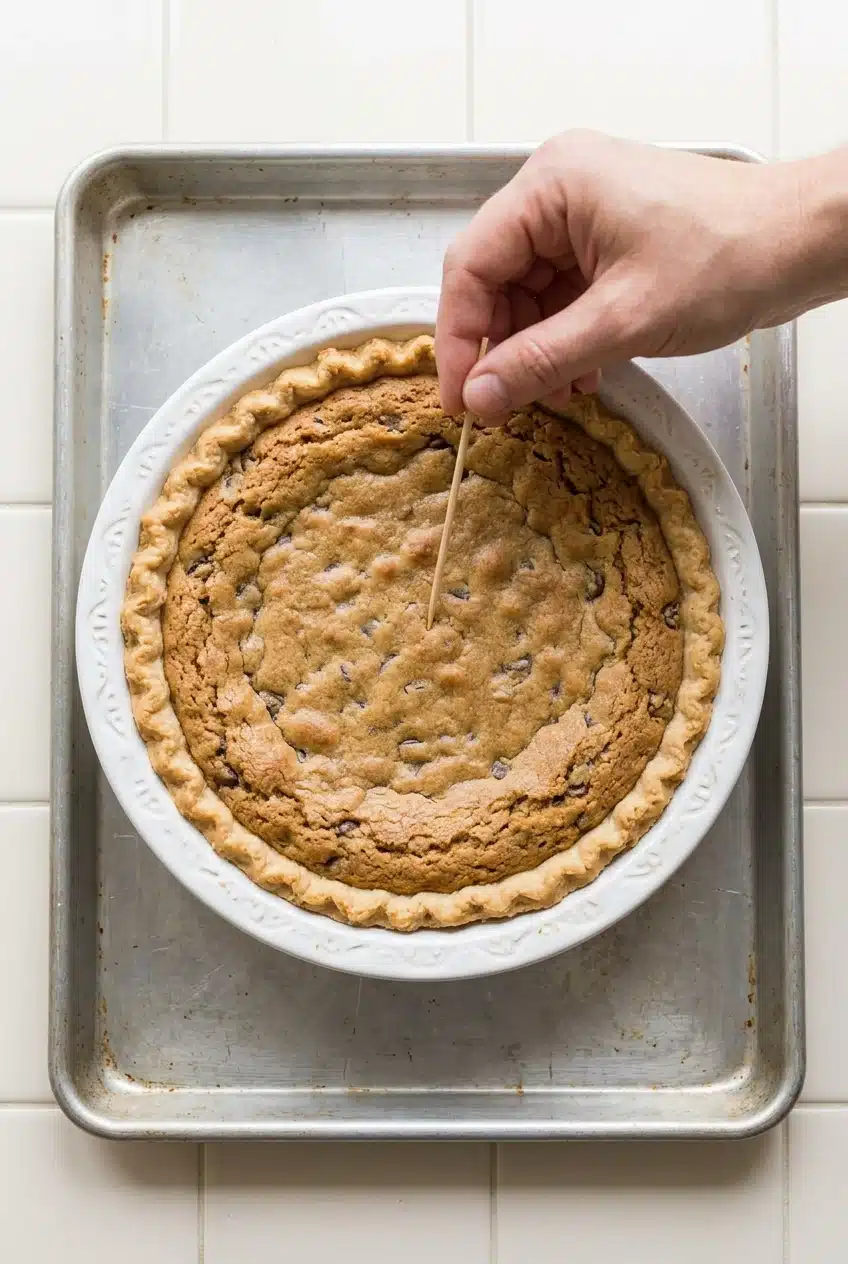
Doneness, crust color, and cooling each need attention. A browned rim alone doesn’t tell you whether the filling has reached the right stage.
Testing Doneness Without Drying the Center
- A wet tester from the very middle: That isn’t the prescribed testing location for this gooey pie. Check halfway between the center and edge instead.
- A dry filling: Waiting for the center itself to test clean can push the surrounding filling beyond the intended texture. Use the specified testing point and baking range.
- A soft pie straight from the oven: Don’t judge sliceability while it’s hot. Complete the wire-rack cooling stage before cutting.
Protecting Crust Edges and Preventing Overflow
- The rim browns ahead of the filling: Optional foil strips or a pie shield can protect the pastry edge while the filling finishes baking.
- Filling crowds the crust: A shallow shell leaves insufficient room. Choose the specified deep-dish shell and resist piling in extra mix-ins.
- Drips reach the oven floor: Keep the baking sheet beneath the pie as directed. It catches potential overflow and supports the shell during transfers.
Fixing Common Texture Issues
- Loose-looking batter: This filling differs from the scoopable dough used for classic Toll House cookies. Don’t add flour just to make it resemble drop-cookie dough.
- Messy wedges: Cutting before the required cooling stage leaves the soft filling without time to firm. Plan around cooling, not just oven time.
- A sunken center or perimeter cracks: Appearance alone doesn’t identify the cause or establish doneness. Minor cracks can occur; rely on the baking check rather than chasing a perfectly smooth top.
- Chips concentrated near the bottom: Check that the chips were distributed through the batter before filling the shell. Their final position alone doesn’t establish a mixing or baking failure.
Flavor Variations and Crust Options
These optional directions change the flavor or format. They aren’t replacements for the ingredient amounts or method above.
Chopped Nuts for a Derby-Style Pie
Pecans bring buttery crunch, while walnuts offer a slightly earthy contrast to the chocolate. Either suggests a Derby-style direction. Keep additions restrained so the filling doesn’t crowd the pastry rim.
Crustless and Graham Cracker Options
The pastry shell provides a flaky boundary around the soft filling. A graham cracker crust suggests a sweeter, crumbly contrast, while a crustless version removes that boundary entirely. Treat both as separate adaptations requiring their own suitable recipes, not interchangeable shells with the same baking instructions.
Chocolate Chip Swaps and Browned-Butter Flavor
- Milk chocolate chips: A sweeter, milkier chocolate direction.
- White chocolate chips: Creamy sweetness without semi-sweet chocolate’s deeper cocoa flavor.
- Butterscotch chips: A caramel-like alternative with a distinctly sweeter profile.
- Chocolate chunks: Larger, less uniform pockets of chocolate.
- Browned butter: Toasted, nutty flavor, as in brown butter cookies, but a separate adaptation from this softened-butter method.
Gluten-Free and Dairy-Free Adaptations
Gluten-free flour and plant-based fats would be untested changes to this pie. They may alter the filling’s structure and texture, and changing the flour or butter alone doesn’t establish the suitability of the whole dessert for a particular dietary need.
Serving Suggestions and Toppings
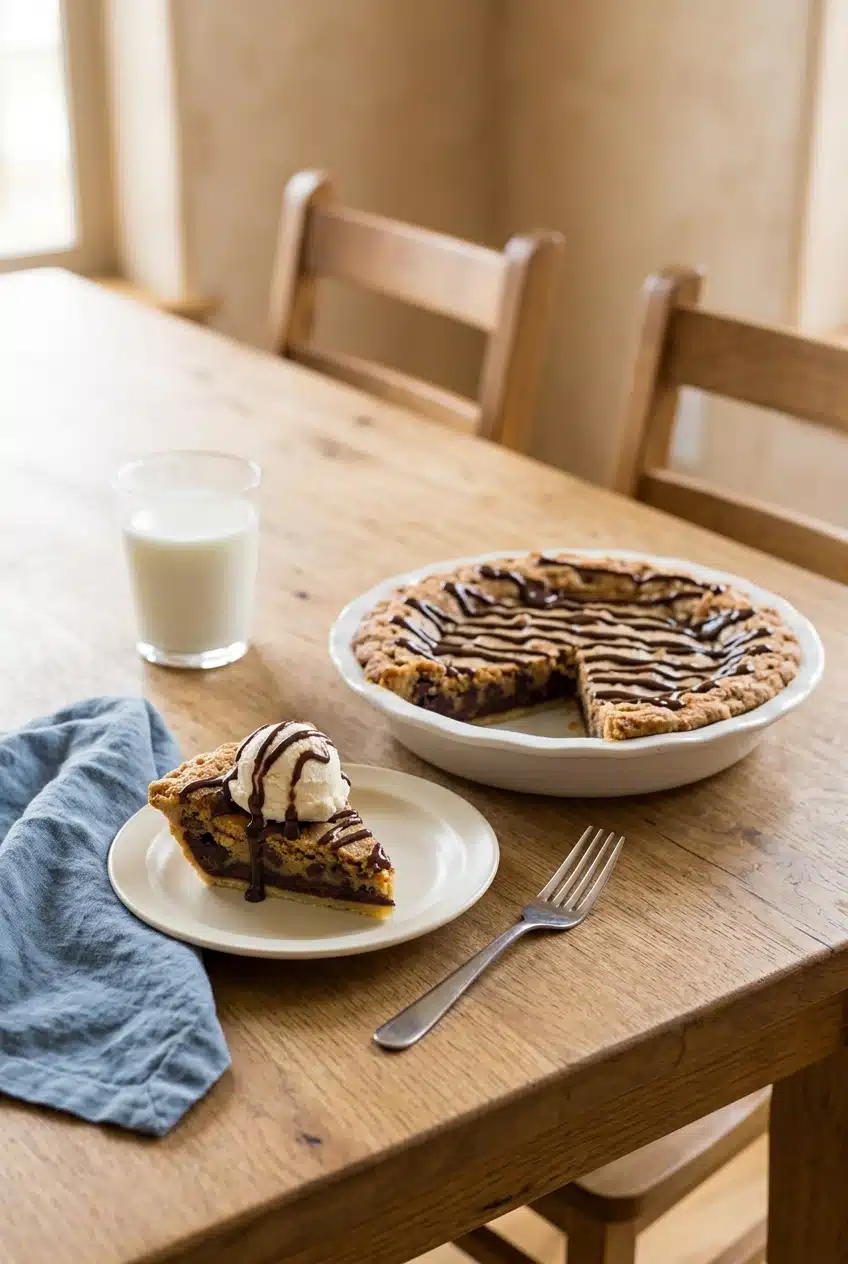
Let the filling complete its cooling stage before choosing toppings. For defined wedges, cooling matters more than decoration.
- Hot fudge: Drizzle the optional sauce over the top before serving for an extra chocolate finish.
- Vanilla ice cream: Its cool, creamy texture contrasts with a warm-serving preference for the pie.
- Whipped topping: Add a soft contrast to the dense filling.
- Cold milk: Serve alongside when you want the familiar cookie-and-milk pairing.
Planning Ahead and Handling Leftovers
Build the required wire-rack cooling stage into your serving plans. Oven time alone doesn’t tell you when the pie will be ready to cut, especially if you want wedges that hold together.
Before planning leftover storage, confirm handling advice specific to egg-containing baked pies, including when to cover, whether refrigeration is required, and how to reheat a portion. The cooling instruction here is a texture step, not a shelf-life recommendation or reheating method.
Conclusion
A gooey cookie center and flaky pastry shell make this pie a rich alternative to individual cookies. Test between the center and edge, then give the filling its full cooling stage.
Use the recipe card for exact measurements, baking and cooling times, and estimated nutrition. Leave room in your plans for that cooling pause, and the first wedge will be easier to serve.
Frequently Asked Questions
Why Is Chocolate Chip Cookie Pie Batter Thinner Than Regular Chocolate Chip Cookie Dough?
The flour proportion creates a soft pie filling rather than firm, scoopable dough. Follow the listed amounts instead of adding flour to imitate regular cookie dough.
How Can I Tell When My Chocolate Chip Cookie Pie Is Done Baking?
Check with a toothpick or knife halfway between the center and crust edge; it should come out clean there. Complete the cooling stage before judging how well the filling slices.
How Do I Keep the Pie Crust Edges From Over-Browning in the Oven?
Use optional foil strips or a pie shield if the rim browns before the filling finishes. Protect the outer pastry edge rather than covering the entire filling.
Can I Add Nuts or Swap the Chocolate Chips in This Recipe?
Optional pecans, walnuts, alternative chips, or chocolate chunks offer different flavor directions. Avoid excessive additions that crowd the deep-dish shell.
How Should Leftover Chocolate Chip Cookie Pie Be Stored and Reheated?
Confirm storage conditions and reheating instructions appropriate for an egg-containing baked pie before planning leftovers. Don’t treat the cooling requirement as permission for extended room-temperature storage.
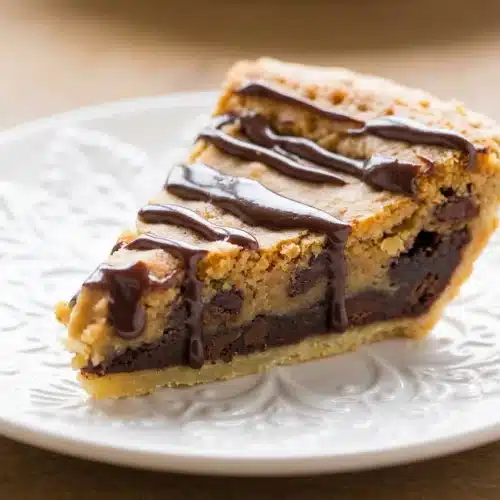
Chocolate Chip Cookie Pie

Equipment
- Stand mixer with paddle attachment
- Spatula
- Baking Sheet
- Wire rack
Ingredients
- 2 large eggs
- 1/2 cup all-purpose flour
- 1/2 cup granulated sugar
- 1/2 cup light brown sugar packed
- 2 teaspoons vanilla extract
- 1/2 teaspoon salt or to taste
- 3/4 cup unsalted butter 1 1/2 sticks, softened
- 1 1/4 cups semi-sweet chocolate chips
- 1 unbaked 9-inch deep-dish pie shell 4-cup volume, thawed completely (or substitute with your favorite homemade buttery pie crust)
- 1/3 cup hot fudge homemade or store-bought, optional for drizzling
Instructions
- Set the oven to 325°F and allow it to preheat. The oven should reach the selected temperature before the filled shell goes in.
- Fit the stand mixer with its paddle and whip the eggs at medium-high speed. Continue until bubbles form throughout and the eggs look foamy.
- Mix in the flour, both sugars, vanilla, and salt at medium speed for about 1 to 2 minutes, scraping the bowl as needed. The ingredients should form an evenly combined mixture without dry patches along the sides.
- Work the softened butter into the mixture at medium-high speed for about 1 to 2 minutes, pausing to scrape the bowl where necessary. Look for a creamy batter with the butter fully incorporated.
- Distribute the chocolate chips through the batter on low speed for about 1 minute. Stop once the chips are incorporated rather than continuing to beat.
- Scrape the filling into the unbaked deep-dish shell and lightly level its surface with a spatula. The batter should sit evenly inside the pastry.
- Set the filled pie on a baking sheet and bake for about 50 to 52 minutes, checking with a toothpick or knife halfway between the center and crust edge. A clean tester at that location signals the intended gooey result, while an additional 5 to 10 minutes of baking gives a less-gooey filling.
- Transfer the baked pie to a wire rack and leave it to cool for at least 2 hours before cutting. The filling needs this cooling stage to firm enough for wedges rather than slumping onto the plate.