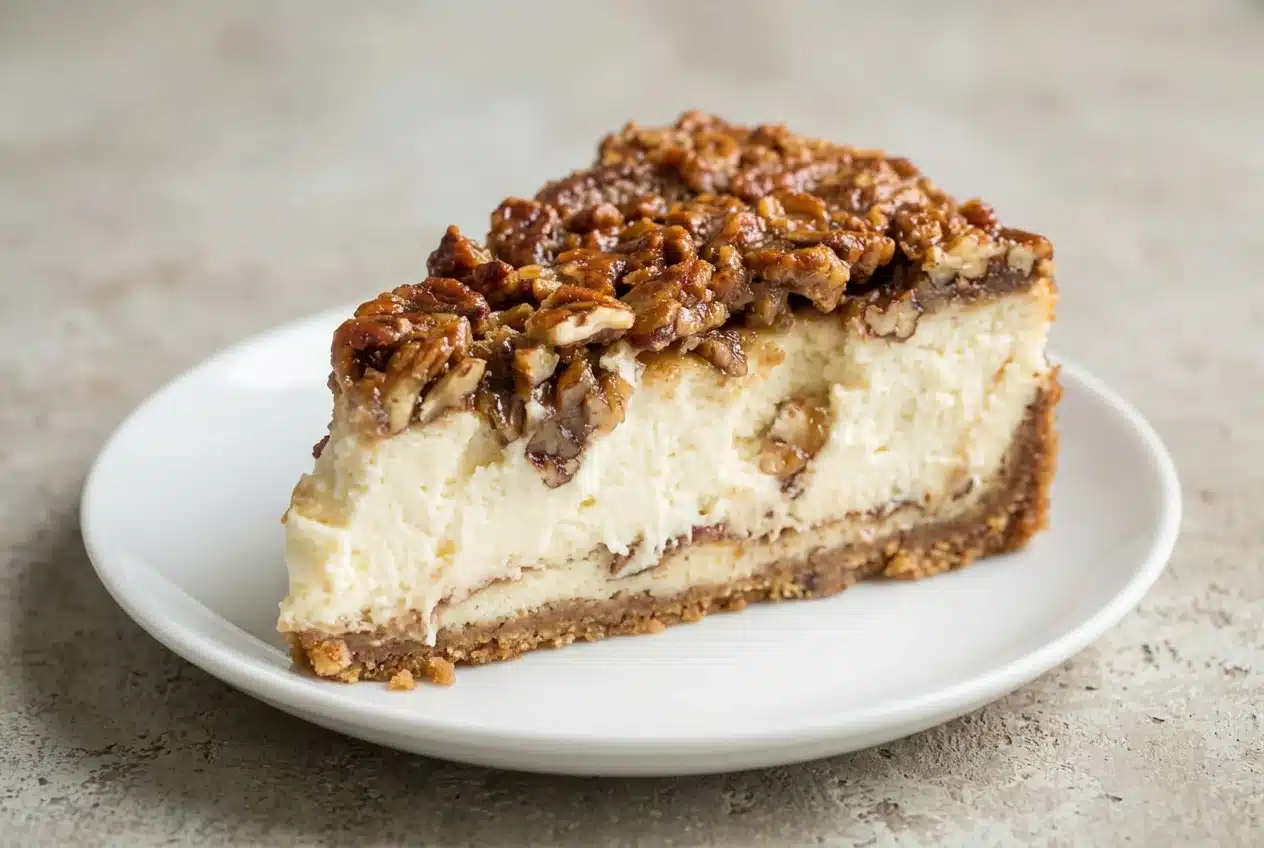
Pecan pie cheesecake combines a nutty graham cracker crust, creamy cheesecake filling, and a baked topping of gooey syrup and crunchy pecans. A tall crust wall, restrained syrup pouring, and thorough chilling help keep the layers clearly defined.
This pecan pie cheesecake brings the tang of sour cream and cream cheese together with brown sugar, butter, and toasted-tasting nuts. The pecan topping bakes directly over the partially baked filling rather than going on as a separate caramel sauce.
It’s a generous holiday dessert, but the technique comes down to manageable stages. Give the crust enough height, mix the filling gently, and leave room for chilling. The clean slices start at the crust.
Set out the softened cream cheese, room-temperature sour cream, and filling eggs before mixing so the batter comes together smoothly.
Ingredients You Need
Each component has a job: graham crumbs and ground pecans form the crust, cream cheese and sour cream create a tangy filling, and brown sugar, syrup, butter, and eggs give the pecan topping its richness and structure.
- 2 cups graham cracker crumbs (about 18 whole crackers)
- 1 cup pecans (finely ground)
- ¼ cup light brown sugar (packed)
- ½ cup unsalted butter (melted)
- 16 ounces cream cheese (softened)
- ½ cup granulated sugar
- ½ cup sour cream (room temperature)
- 1 tablespoon vanilla extract
- ¼ teaspoon salt
- 2 large eggs (room temperature, lightly beaten)
- 1 cup light brown sugar (packed)
- ⅔ cup dark corn syrup
- 1 tablespoon dark rum
- ¼ cup unsalted butter
- 3 large eggs
- ¼ cup heavy cream
- 2 ½ coarsely chopped pecans
Before starting: The chopped-pecan quantity is missing its measurement unit, and no separate salt amount is specified for the topping. Confirm those details before baking rather than guessing.
Crust Components
Graham cracker crumbs provide the foundation, while finely ground pecans add nutty flavor throughout the crust. Melted butter binds the crumbs, and packed brown sugar contributes sweetness and a caramel-like flavor.
The ground nuts belong in the crust; the coarsely chopped nuts belong in the topping. Keeping those textures distinct gives the shell a more even crumb and the topping a noticeable crunch.
Cheesecake Filling Essentials
Softened cream cheese blends more readily into a smooth filling. Room-temperature sour cream adds moisture and tang without introducing a cold ingredient into the mixture. Vanilla rounds out the flavor, salt balances sweetness, and gently incorporated eggs provide structure.
Pecan Pie Topping Ingredients
Brown sugar and dark corn syrup give the topping its deep sweetness and glossy body. Butter and heavy cream contribute richness, while eggs help the syrup set during baking. Dark rum adds aromatic depth without changing the dessert into a rum-forward cake.
How to Make Pecan Pie Cheesecake Step by Step
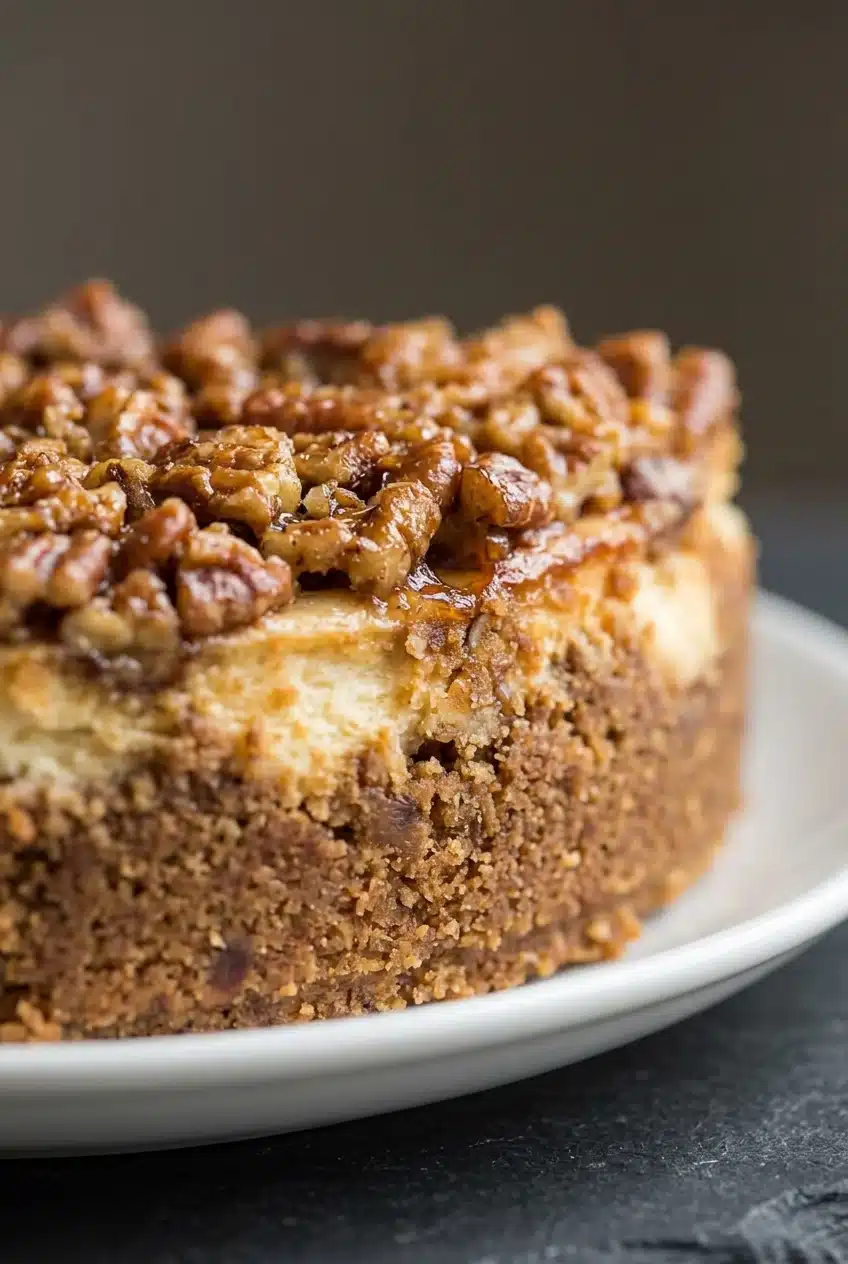
Work through the crust, filling, and topping in order. Begin the syrup while the cheesecake layer bakes so it has time to cool before meeting the eggs.
Make the crust
- Position a rack in the oven’s center, preheat to 350°F, and line the bottom and inner walls of a 9-inch springform pan with parchment or foil, lightly coat with nonstick spray, and wrap the exterior base in foil.
The lining should cover the inside surfaces, with a separate foil barrier around the outside bottom. - Combine the graham crumbs, ground pecans, brown sugar, and melted butter, then firmly press the mixture across the base and at least 3/4 of the way up the pan walls.
The moistened crumbs should resemble wet sand and form a tall shell for the filling and topping. - Give the crust 10 minutes in the oven, then set it aside while preparing the cheesecake mixture.
Keep the pressed shell intact as it cools.
Make the filling
- Turn the oven down to 300°F.
This lower setting is used for the cheesecake and topping stages. - Work the softened cream cheese in a large bowl with an electric mixer at medium to medium-high speed for about 1 minute.
Stop when the cheese looks creamy and smooth. - Mix in the granulated sugar, sour cream, vanilla, and salt at medium speed.
The mixture should look uniform, without streaks of sour cream. - Fold the lightly beaten eggs into the filling with a silicone spatula, stopping as soon as they disappear, then transfer the batter to the crust and level it with an offset spatula.
The surface should sit evenly inside the tall crumb walls. - Bake the filling for 40 minutes and begin preparing the pecan topping as soon as the pan enters the oven.
This is the initial bake, not the finished cheesecake stage.
Make the topping
- Heat the brown sugar, corn syrup, rum, and butter in a medium saucepan over medium heat, stirring continuously, and maintain a boil for 2 minutes.
The mixture should be bubbling throughout the boiling stage. - Take the saucepan off the heat to cool during the cheesecake bake, and separately whisk the topping eggs, cream, and salt once its amount has been confirmed.
Keep the egg mixture separate from the hot syrup while the syrup cools. - Take the cheesecake out after its 40-minute initial bake.
Leave the filling in its crust for the topping stage. - Gradually whisk the egg mixture into the cooled syrup, then incorporate the chopped pecans.
The syrup and eggs should blend evenly around the nuts. - Distribute the pecans gently over the cheesecake, then spoon in only enough syrup to remain within the crust.
The liquid must stay below the crust’s upper edge to limit seepage underneath. - Bake again for 40–50 minutes, shielding the top with foil if the outer pecans darken too quickly.
Look for a golden-brown surface with crisp nuts at the end of baking. - Set the pan on a wire rack until the cheesecake has cooled completely, then cover and refrigerate for at least 4 hours.
The cheesecake should be thoroughly chilled before releasing the pan.
To serve
- Release the springform sides slowly, using a butter knife around any stuck edges and gentle upward pressure on the base before lifting away the ring.
The ring and base should separate without pulling against the crust. - Move the cheesecake carefully onto a serving platter and, if desired, freeze for 1–2 hours before cutting.
This optional firming step helps the layers hold a neater cut. - Warm a sharp knife under hot water, dry it completely, and repeat the warming and drying between every cut.
A clean, dry blade leaves less filling and syrup dragged across each wedge. - Allow slices cut after the optional freezing step to stand at room temperature for 30 minutes before serving.
The wedges should lose their hard frozen edge while retaining their shape.
Expert Tips and Troubleshooting for Fewer Cracks and Leaks
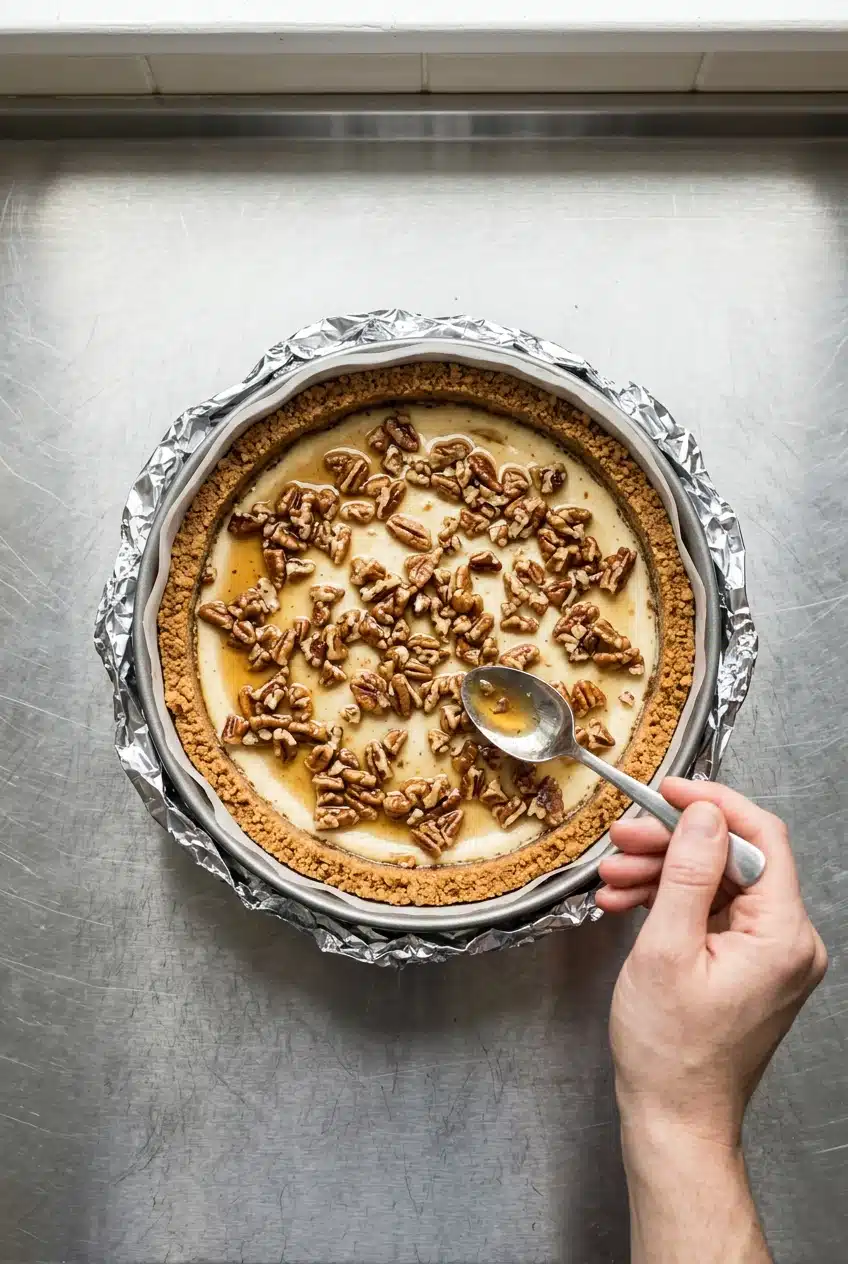
The most useful precautions happen before the final bake. Focus on crust height, syrup level, and gentle handling rather than trying to repair the layers afterward.
Preventing Syrup Leaks and Stuck Springform Pans
- Syrup under the crust: An overflowing topping can run down the sides, so spoon on the nuts first and stop adding syrup before it reaches the rim.
- Soggy bottom: Excess liquid can collect beneath the shell; keep the tall crust wall intact instead of relying on the exterior foil alone.
- Stuck springform ring: Baked syrup can bind the pan together; loosen resistant edges carefully rather than forcing the ring open.
- Not enough room: A shallow ready-made crust lacks the wall height intended for these layers and isn’t an equivalent replacement.
I’d rather leave excess syrup behind than squeeze it over the crust rim; keeping that boundary intact matters more than using every drop.
Baked Pecan Topping vs. Stovetop Caramel Glaze
This topping contains eggs and finishes baking over the cheesecake, giving it the character of a classic pecan pie filling. The nuts become crisp on top while the syrup forms the gooey layer beneath them.
A stovetop caramel pecan glaze is a different topping style. Treat it as an alternative dessert direction, not an interchangeable mixture for the baking steps above.
Water Bath vs. Middle-Rack Baking
This method uses middle-rack baking without a water bath. Follow that setup rather than adding another baking arrangement.
- Puffed or cracked filling: Vigorous mixing after adding eggs introduces excess air; use the prescribed gentle spatula mixing instead.
- Dark topping edges: The outside nuts may brown before the topping finishes; shield them with foil when needed.
- Unclear initial doneness: Follow the stated initial bake rather than inventing a firmness test; the golden, crisp topping is the specified final appearance cue.
Delicious Variations and Crust Swaps
Keep these optional flavor ideas separate from the measured ingredients and method above. Changes to crusts, toppings, and portion size may need a separately developed recipe.
Crust and Flavor Variations
A maple-caramel pecan topping offers a different flavor direction from the dark-rum, baked egg-containing topping here. Think of it as a separate interpretation rather than a direct syrup substitution.
Bourbon or Alcohol-Free Vanilla Pecan Topping
- Bourbon: An optional alternative to dark rum for a different oak-and-caramel flavor profile.
- Alcohol-free vanilla: An optional aromatic direction when you want vanilla rather than a spirit-based flavor.
Gingersnap or Spiced Crust Swap
- Gingersnaps: An optional ginger-forward crust direction that contrasts with the sweet pecan topping.
- Spiced graham crackers: An optional cinnamon flavor direction that stays closer to the graham character.
For another warm-spiced dessert, explore this spiced Biscoff cheesecake.
Chocolate Pecan or Mini Cheesecake Format
- Chocolate chips: An optional flavor idea for pairing chocolate with the tangy filling and sweet nuts.
- Mini portions: An individual-serving concept, not a direct conversion of this full-size cheesecake’s baking schedule.
How to Slice and Serve Clean Bakery-Style Wedges
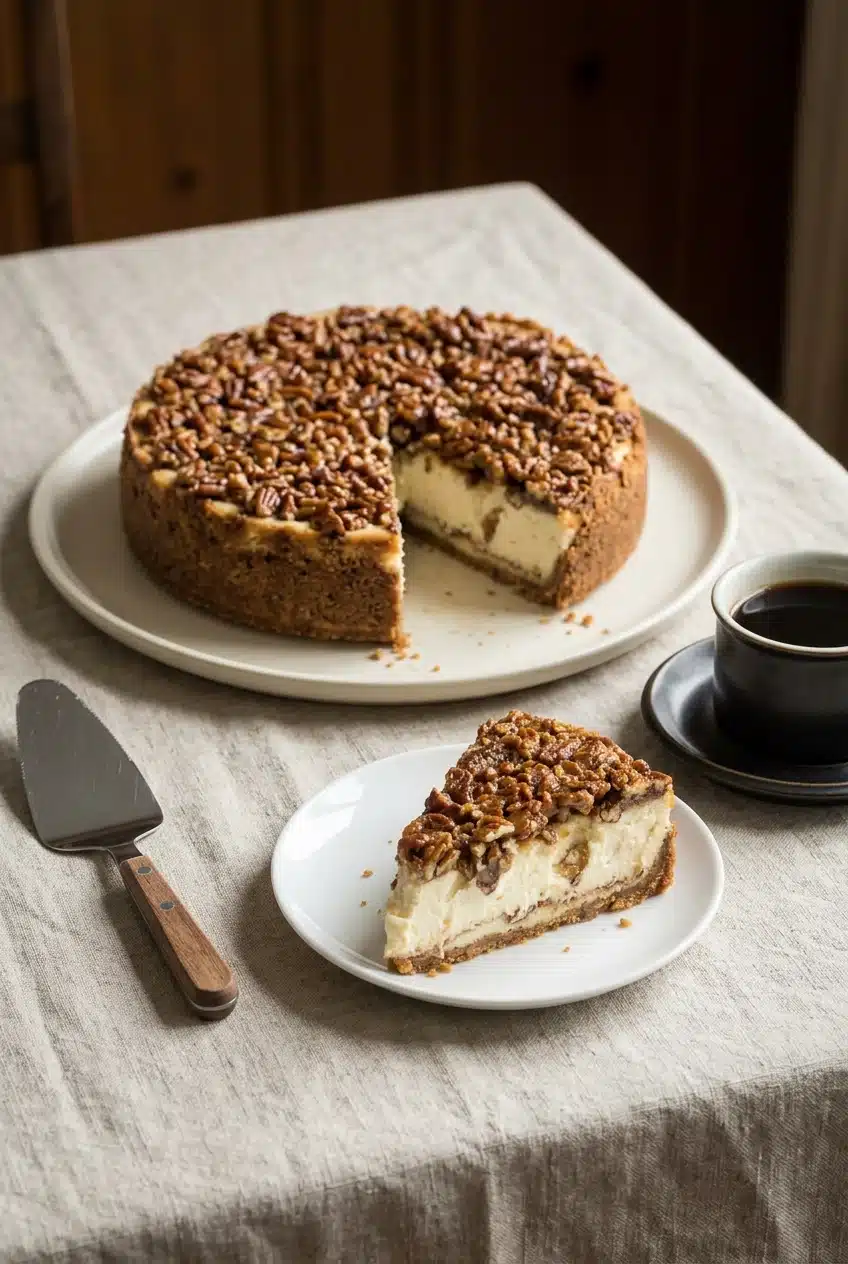
Release the springform only after thorough chilling. If it resists, work a butter knife carefully around the edge and ease the base upward instead of tugging at the crust.
The optional brief freezing step firms the cheesecake for slicing; it isn’t a long-term storage instruction. Follow it with the serving interval given in the method.
Warm the knife, then wipe it completely dry before every cut. Water left on the blade can smear the creamy layer, while crumbs and syrup left from the previous cut can drag through the next wedge.
Serve with optional whipped cream and black coffee or spiced tea. Those pairings let the tangy filling and rich pecan topping stay at the center of the plate.
Make-Ahead, Refrigeration, and Brief Freezing
Plan backward from serving so you can complete both the cooling and refrigeration stages without rushing. Leave the cheesecake in its pan through chilling, and save the release and slicing for afterward.
Keep the chilled cheesecake covered in the refrigerator, including any leftovers. The chilling requirement in the method describes preparation for serving, not a refrigerator shelf-life limit.
The supported freezing step here is brief firming before slicing. It does not establish a long-term freezer-storage duration or a thawing procedure, so don’t treat it as a storage plan.
Bringing Together Two Classic Holiday Desserts
A nutty crumb crust, velvety cheesecake, and crisp-topped pecan filling give this dessert its contrast. Keep the syrup below the crust rim so those layers stay contained.
Allow room in your baking schedule for the full chilling stage, then take your time releasing and slicing. A patient finish gives each wedge its best chance to arrive neatly on the plate.
Frequently Asked Questions
Why Did My Pecan Topping Seep Under the Crust and Stick to the Springform Pan?
The crust wall may have been too low, or the syrup may have overflowed its edge. Press the crust high, spoon on the pecans first, and hold back syrup that would rise above the rim.
Do I Need a Water Bath for Pecan Pie Cheesecake?
No water bath is called for in this method. Use the middle-rack setup and gentle egg incorporation described above.
How Can I Tell When Pecan Pie Cheesecake Is Fully Baked?
The specified final cue is a golden-brown topping with crisp pecans. Follow the initial bake as written, and shield the topping if its edges darken early.
What Can I Substitute for Dark Rum in the Pecan Topping?
Bourbon is an optional flavor alternative. Alcohol-free vanilla offers a different aromatic direction; no substitution ratio is specified here.
How Should Leftover Pecan Pie Cheesecake Be Stored Safely?
Keep leftovers covered and refrigerated. The preparation instructions do not establish a storage shelf life, so don’t use the chilling time as a storage limit.
Can I Make Pecan Pie Cheesecake Ahead or Freeze It for Later?
Plan ahead for the complete cooling and chilling stages before serving. The freezing instruction covers brief pre-slice firming only, not extended freezer storage.
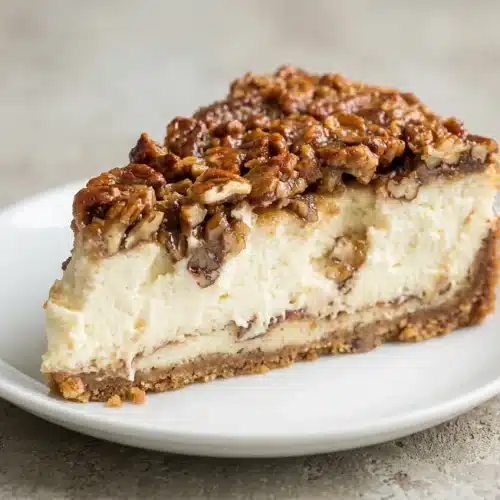
Pecan Pie Cheesecake

Equipment
- 9-inch Springform Pan
- Electric Mixer
- Silicone spatula
- Offset spatula
- Medium saucepan
- Wire rack
Ingredients
- 2 cups graham cracker crumbs about 18 whole crackers
- 1 cup pecans finely ground
- ¼ cup light brown sugar packed
- ½ cup unsalted butter melted
- 16 ounces cream cheese softened
- ½ cup granulated sugar
- ½ cup sour cream room temperature
- 1 tablespoon vanilla extract
- ¼ teaspoon salt
- 2 large eggs room temperature, lightly beaten
- 1 cup light brown sugar packed
- ⅔ cup dark corn syrup
- 1 tablespoon dark rum
- ¼ cup unsalted butter
- 3 large eggs
- ¼ cup heavy cream
- 2 ½ coarsely chopped pecans
Instructions
Make the crust
- Position a rack in the oven’s center, preheat to 350°F, and line the bottom and inner walls of a 9-inch springform pan with parchment or foil, lightly coat with nonstick spray, and wrap the exterior base in foil. The lining should cover the inside surfaces, with a separate foil barrier around the outside bottom.
- Combine the graham crumbs, ground pecans, brown sugar, and melted butter, then firmly press the mixture across the base and at least 3/4 of the way up the pan walls. The moistened crumbs should resemble wet sand and form a tall shell for the filling and topping.
- Give the crust 10 minutes in the oven, then set it aside while preparing the cheesecake mixture. Keep the pressed shell intact as it cools.
Make the filling
- Turn the oven down to 300°F. This lower setting is used for the cheesecake and topping stages.
- Work the softened cream cheese in a large bowl with an electric mixer at medium to medium-high speed for about 1 minute. Stop when the cheese looks creamy and smooth.
- Mix in the granulated sugar, sour cream, vanilla, and salt at medium speed. The mixture should look uniform, without streaks of sour cream.
- Fold the lightly beaten eggs into the filling with a silicone spatula, stopping as soon as they disappear, then transfer the batter to the crust and level it with an offset spatula. The surface should sit evenly inside the tall crumb walls.
- Bake the filling for 40 minutes and begin preparing the pecan topping as soon as the pan enters the oven. This is the initial bake, not the finished cheesecake stage.
Make the topping
- Heat the brown sugar, corn syrup, rum, and butter in a medium saucepan over medium heat, stirring continuously, and maintain a boil for 2 minutes. The mixture should be bubbling throughout the boiling stage.
- Take the saucepan off the heat to cool during the cheesecake bake, and separately whisk the topping eggs, cream, and salt once its amount has been confirmed. Keep the egg mixture separate from the hot syrup while the syrup cools.
- Take the cheesecake out after its 40-minute initial bake. Leave the filling in its crust for the topping stage.
- Gradually whisk the egg mixture into the cooled syrup, then incorporate the chopped pecans. The syrup and eggs should blend evenly around the nuts.
- Distribute the pecans gently over the cheesecake, then spoon in only enough syrup to remain within the crust. The liquid must stay below the crust’s upper edge to limit seepage underneath.
- Bake again for 40–50 minutes, shielding the top with foil if the outer pecans darken too quickly. Look for a golden-brown surface with crisp nuts at the end of baking.
- Set the pan on a wire rack until the cheesecake has cooled completely, then cover and refrigerate for at least 4 hours. The cheesecake should be thoroughly chilled before releasing the pan.
To serve
- Release the springform sides slowly, using a butter knife around any stuck edges and gentle upward pressure on the base before lifting away the ring. The ring and base should separate without pulling against the crust.
- Move the cheesecake carefully onto a serving platter and, if desired, freeze for 1–2 hours before cutting. This optional firming step helps the layers hold a neater cut.
- Warm a sharp knife under hot water, dry it completely, and repeat the warming and drying between every cut. A clean, dry blade leaves less filling and syrup dragged across each wedge.
- Allow slices cut after the optional freezing step to stand at room temperature for 30 minutes before serving. The wedges should lose their hard frozen edge while retaining their shape.