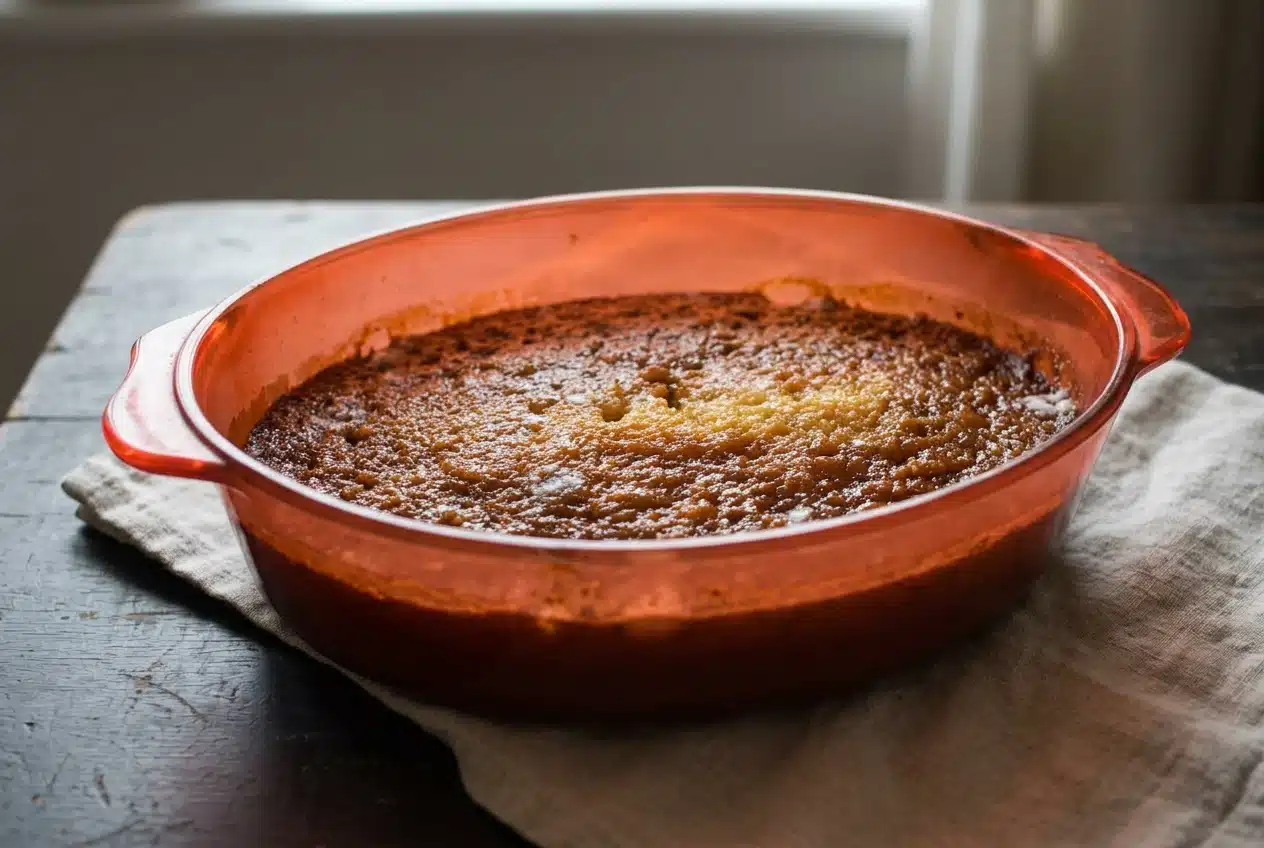
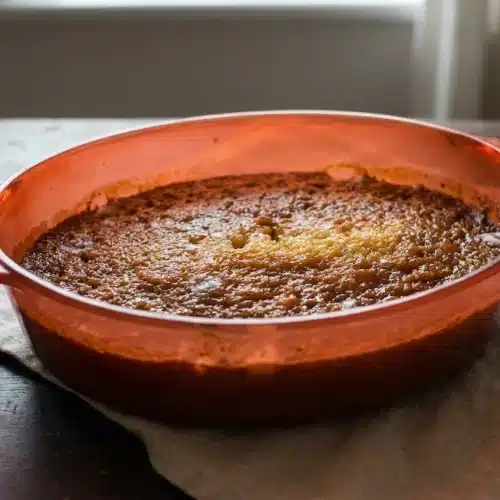
This malva pudding recipe makes a warm South African sponge flavored with apricot jam and soaked in rich butter and cream sauce. Beat the batter, bake until a knife picks up spongy crumbs, then prick the pudding and slowly pour the sauce over it.
Think of a baked pudding with caramelized sweetness rather than a chilled, spoonable custard. Apricot jam brings fruity depth to the brown sugar sponge, while the cream sauce gives it a moist, sticky finish.
The mixing is approachable, and the pudding stays in its baking dish for soaking and serving. Don’t let the thin batter worry you. The sauce is where it all comes together.
Set the room-temperature butter out with your other measured ingredients so it blends readily with the sugar, jam, and egg.
Authentic Malva Pudding Ingredients and US Pantry Swaps
Each ingredient contributes to the pudding’s structure, moisture, or flavor: flour and egg support the sponge, jam and brown sugar add fruity caramel depth, vinegar and baking soda help it rise, and butter and cream give the soaking sauce its richness.
- 1 tbsp butter (room temperature)
- 1 cup brown sugar
- 4 tbsp apricot jam
- 1 large egg
- 1 cup milk
- 2 tbsp vinegar
- 2 tsp vanilla essence
- 1 cup all-purpose flour
- 1 tsp baking soda
- ½ tsp salt
- 2 tbsp butter
- 125 ml cream
- 4 tbsp brown sugar
- 2 tbsp water
Core Sponge and Cream Sauce Components
The ingredients through salt belong to the sponge. The remaining butter, cream, brown sugar, and water make the sauce.
Apricot jam supplies sweetness and fruit flavor without making this taste like a fruit cake. Brown sugar contributes color and caramel notes, while vanilla rounds out both. Keep the sugar as written rather than making a substantial reduction, since it affects texture as well as sweetness.
Vinegar reacts with baking soda to help aerate the batter. Milk provides moisture, and the egg helps the baked sponge hold its shape. In the sauce, butter adds richness while water helps keep the mixture pourable.
US Supermarket Equivalents and Weighing Tips
- Fresh cream: US heavy cream or heavy whipping cream is a practical choice for this sauce.
- Double cream: British double cream is richer than US heavy cream, so they aren’t identical products, though heavy cream works for the creamy sauce here.
- Ideal milk: This means evaporated milk, not sweetened condensed milk. Treat it as an optional sauce adaptation.
- Bicarb or bicarbonate of soda: Both mean baking soda, not baking powder.
- Vanilla essence: US vanilla extract is a practical alternative, although strength and flavor vary by product.
- Caster sugar: This means superfine granulated sugar. This pudding uses brown sugar, so there’s no need to seek it out.
If you’re looking for malva pudding in grams, avoid guessing at cup-to-weight conversions. Flour and brown sugar have different densities, and packing changes the weight. Follow the measurements above rather than attaching an unverified gram value to them.
I’d pay particular attention to the butter’s softness here: it should yield easily when pressed, rather than feel cold and firm.
How to Make Malva Pudding
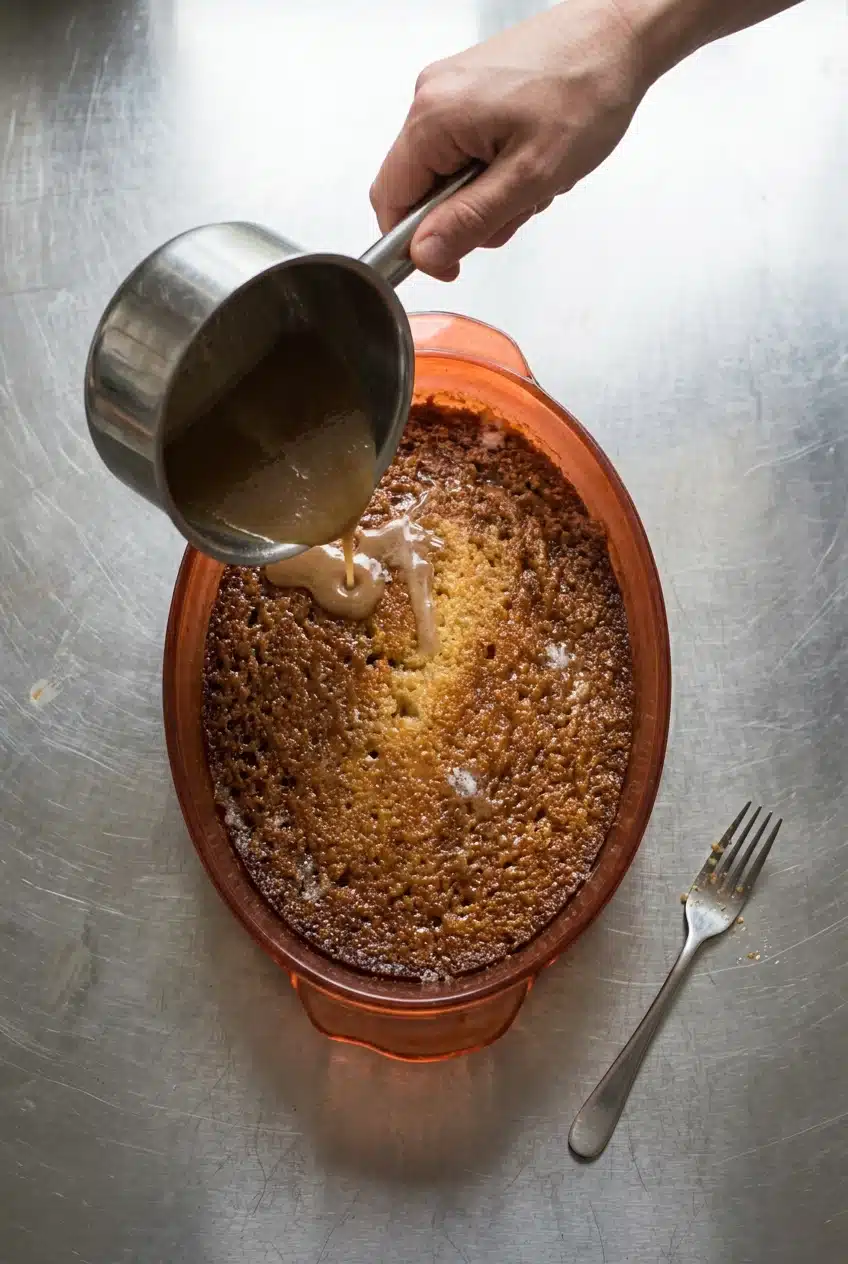
The pudding and sauce come together separately, then meet in the baking dish. Keep the knife-check cue in mind: moist sponge crumbs are different from liquid, uncooked batter.
Prep: 30 minutes. Cook: 45 minutes. Total: 75 minutes. Servings: 8.
Pudding
- Set the oven to 180 °C (350 °F), allowing for any known calibration difference in your oven.
The oven should be fully heated when the batter goes in. - Beat the room-temperature butter, brown sugar, apricot jam, and egg together in a large bowl.
Look for a lighter mixture with some aeration, although mixing with a fork may produce less fluffiness. - Whisk the milk with the vinegar and vanilla essence in a large measuring cup or separate bowl.
The liquids should look evenly combined. - Stir the flour, baking soda, and salt together in another bowl or measuring cup.
Distribute the baking soda throughout the flour rather than leaving concentrated patches. - Mix alternating additions of the milk mixture and flour mixture into the butter mixture until combined.
Expect a loose, pourable batter rather than a thick cake mixture. - Transfer the batter to a lightly greased ovenproof dish measuring 30 × 15 cm.
The batter should spread across the bottom of the dish. - Bake for 45 minutes, checking with a knife, and leave the baked pudding in its dish for saucing and resting.
Spongy crumbs on the blade indicate readiness, whereas uncooked batter means it needs further baking.
Sauce
- Heat the sauce butter, cream, brown sugar, and water together in a pot until boiling.
Bubbles should break across the surface of the mixture. - Maintain a simmer for 3 minutes while stirring continuously.
The sauce should develop a fuller buttery aroma as it cooks. - Make several fork holes across the baked pudding, pour the sauce slowly over the entire surface, and let the pudding rest in its dish.
The sauce should gradually soak into the sponge rather than collect only around its edges.
Troubleshooting Common Malva Pudding Mistakes
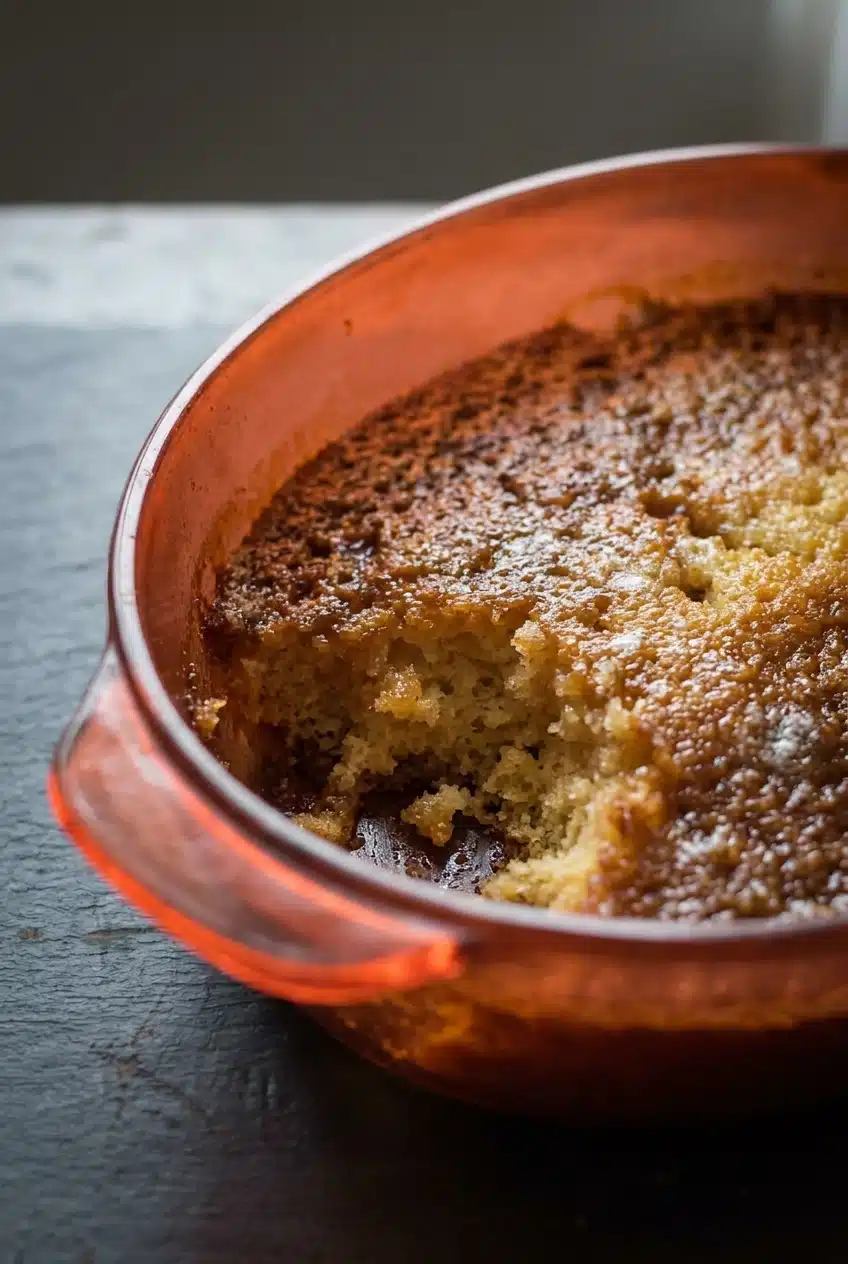
Most texture problems come down to the batter balance, baking, or sauce absorption. Use these clues before changing the formula.
- The batter looks too thin: A pourable consistency is expected. Don’t add flour just to make it resemble a conventional cake batter, which can leave the pudding heavy.
- Sauce pools at the edges: An unpricked surface or a rushed pour can encourage uneven soaking. Follow the fork-pricking and slow-pouring steps, then allow the pudding to rest.
- The sponge is pale and bready: A substantial sugar reduction changes both browning and texture. Keep the brown sugar amount intact and judge baking by the knife check rather than color alone.
- The crumb is dense: Excessive mixing after adding flour or baking soda that has lost strength can contribute. Mix until combined and check that your baking soda is fresh before starting.
- The pudding tastes dry: Overbaking can dry the crumb, while serving before the sauce absorbs can leave an uneven texture. Stop at spongy crumbs rather than waiting for a completely clean knife.
- One side browns faster: Oven hot spots can produce uneven color. Watch the pudding as it bakes instead of assuming every oven behaves identically.
Malva Pudding Variations and Dietary Adaptations
Keep the recipe above unchanged for the intended sponge and cream sauce. The following ideas are optional directions, not interchangeable formulas with confirmed identical results.
Gluten-Free and Dairy Swap Options
Flour changes affect structure, while dairy changes affect richness and flavor. Choose an adaptation for a specific need rather than combining several substitutions and expecting the same pudding.
- Gluten-free baking blend: A blend intended for cakes is a possible adaptation, though the crumb and sauce absorption may differ.
- Lactose-free dairy: Lactose-free milk and cream are optional directions; product differences can affect the result.
- Evaporated milk: This offers a different sauce style rather than a promise of heavy cream’s texture.
Gluten-Free Malva Pudding
A gluten-free baking flour blend is a more relevant starting point than a single alternative flour. Check product labeling for your dietary needs, and don’t assume that a flour swap alone makes the finished dessert suitable for someone with celiac disease.
Evaporated Milk (Ideal Milk) Sauce Swap
Ideal milk is evaporated milk, a concentrated, unsweetened dairy product. As an optional cream replacement, it gives the sauce a more pronounced cooked-milk character and a different level of richness. It isn’t sweetened condensed milk.
Flavor Variations and Individual Portions
You can also take the dessert toward a syrup-style finish or an individual-serving presentation. Both move away from the cream-soaked baking-dish version above.
Golden Syrup or Honey Glaze Style
Golden syrup suggests a buttery toffee-like sweetness, while honey adds its own floral character. Either belongs to a distinct glaze-style variation, not an extra required ingredient in this cream sauce.
Classic Cream Sauce for Everyone
The cream, butter, brown sugar, and water sauce needs no additional flavoring to complement the apricot sponge. Keep it unchanged when you want the caramel and fruit notes to stay at the center of the dessert.
Individual Cupcake or Muffin-Tin Portions
Individual portions offer a neat presentation for a dessert table. They are a separate baking adaptation, however, so don’t assume the full-dish baking guidance transfers unchanged to smaller servings.
How to Serve Malva Pudding Like a South African Classic
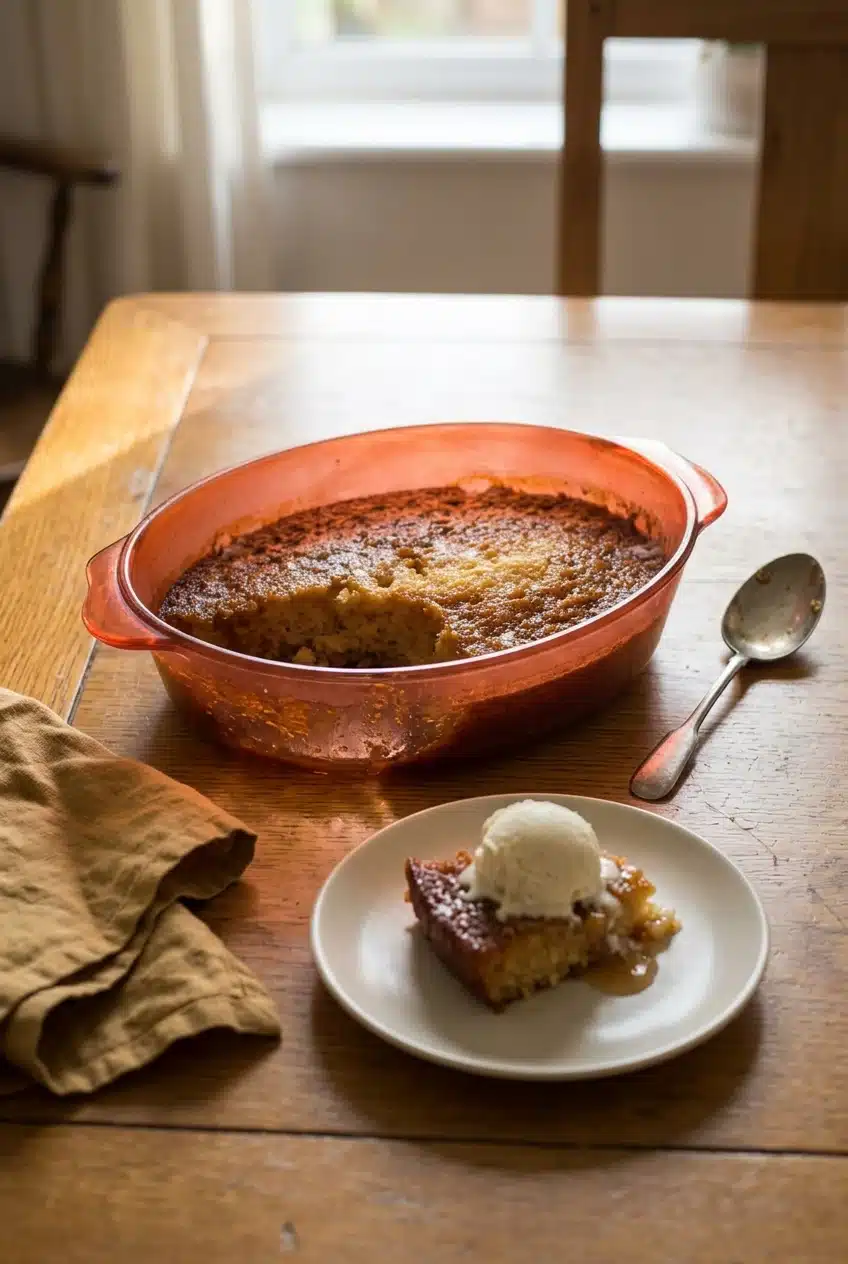
Serve the pudding warm after the sauce has had a chance to soak in. A creamy accompaniment gives each spoonful a little contrast.
Classic Custard, Ice Cream, and Garnish Pairings
- Warm pourable custard: Choose this for a soft, comforting pudding-and-custard combination.
- Cold vanilla ice cream: Its temperature contrasts with the warm sponge and sauce.
- Lightly whipped cream: Keep it unsweetened if you want a gentler counterpoint to the brown sugar.
- Mint and berries: Optional garnishes add freshness and color for a dinner-party serving.
- Hot coffee: Its bitterness provides a pleasant contrast alongside the sweet dessert.
If you enjoy warm baked desserts with custard or ice cream, classic bread pudding is another comforting option, with a bread-based texture rather than malva’s cake-like sponge.
South African Heritage and Malva vs. Sticky Toffee Pudding
Malva pudding is a South African dessert, though its precise naming history is less certain than its place at the dessert table. Treat specific origin stories as culinary lore rather than a settled account.
It shares the warm sponge-and-sauce appeal of sticky toffee pudding. The useful flavor distinction is that sticky toffee pudding typically features dates, whereas this malva pudding gets its fruit character from apricot jam, with vinegar in the batter.
Storage and Reheating Tips
For leftovers, focus on keeping the sauce-soaked crumb covered and chilled rather than leaving the dish out for continued serving.
Refrigerate leftovers in a covered container. When reheating, use gentle heat and keep the pudding covered to help limit moisture loss. Warm only the portion you intend to serve, and avoid prolonged heating that dries the edges.
For the most straightforward serving plan, follow the baking and saucing sequence above. The resting stage belongs after the sauce goes on, allowing it to absorb before you spoon out the pudding.
Bringing This Warm South African Dessert to Your Table
Apricot jam, brown sugar sponge, and rich cream sauce make a pudding with plenty of caramel character. The most useful baking cue is spongy crumbs on the knife, not a perfectly clean blade.
Follow the quantities and timing above, pour the sauce slowly, and give it time to settle into the sponge. Then choose custard, ice cream, or cream and serve a warm spoonful.
Frequently Asked Questions
What Are the Ingredients for Authentic Malva Pudding?
The sponge uses butter, brown sugar, apricot jam, egg, milk, vinegar, vanilla, flour, baking soda, and salt. The soaking sauce combines butter, cream, brown sugar, and water.
Why Is It Called Malva Pudding, and Where Did It Originate?
Malva pudding is a South African dessert. Its exact naming history is disputed, so a single origin story shouldn’t be treated as established fact.
How Does Malva Pudding Differ From Sticky Toffee Pudding?
Both are baked sponge desserts served with a sweet sauce. Sticky toffee pudding typically contains dates; this malva pudding uses apricot jam and vinegar in its sponge.
What Should US Bakers Use for Fresh Cream, Double Cream, or Ideal Milk?
Heavy cream or heavy whipping cream is a practical US choice for the cream sauce, though it isn’t identical to British double cream. Ideal milk means evaporated milk, which is an optional adaptation rather than the cream listed here.
How Should Leftover Malva Pudding Be Stored and Reheated Safely?
Keep leftovers covered and refrigerated. Reheat the portion you plan to serve gently and covered to help protect the moist crumb.
Malva Pudding Recipe

Equipment
- Large Mixing Bowl
- Measuring cup
- 30 x 15 cm ovenproof dish
- Pot
Ingredients
- 1 tbsp butter room temperature
- 1 cup brown sugar
- 4 tbsp apricot jam
- 1 large egg
- 1 cup milk
- 2 tbsp vinegar
- 2 tsp vanilla essence
- 1 cup all-purpose flour
- 1 tsp baking soda
- ½ tsp salt
- 2 tbsp butter
- 125 ml cream
- 4 tbsp brown sugar
- 2 tbsp water
Instructions
Pudding
- Set the oven to 180 °C (350 °F), allowing for any known calibration difference in your oven. The oven should be fully heated when the batter goes in.
- Beat the room-temperature butter, brown sugar, apricot jam, and egg together in a large bowl. Look for a lighter mixture with some aeration, although mixing with a fork may produce less fluffiness.
- Whisk the milk with the vinegar and vanilla essence in a large measuring cup or separate bowl. The liquids should look evenly combined.
- Stir the flour, baking soda, and salt together in another bowl or measuring cup. Distribute the baking soda throughout the flour rather than leaving concentrated patches.
- Mix alternating additions of the milk mixture and flour mixture into the butter mixture until combined. Expect a loose, pourable batter rather than a thick cake mixture.
- Transfer the batter to a lightly greased ovenproof dish measuring 30 × 15 cm. The batter should spread across the bottom of the dish.
- Bake for 45 minutes, checking with a knife, and leave the baked pudding in its dish for saucing and resting. Spongy crumbs on the blade indicate readiness, whereas uncooked batter means it needs further baking.
Sauce
- Heat the sauce butter, cream, brown sugar, and water together in a pot until boiling. Bubbles should break across the surface of the mixture.
- Maintain a simmer for 3 minutes while stirring continuously. The sauce should develop a fuller buttery aroma as it cooks.
- Make several fork holes across the baked pudding, pour the sauce slowly over the entire surface, and let the pudding rest in its dish. The sauce should gradually soak into the sponge rather than collect only around its edges.