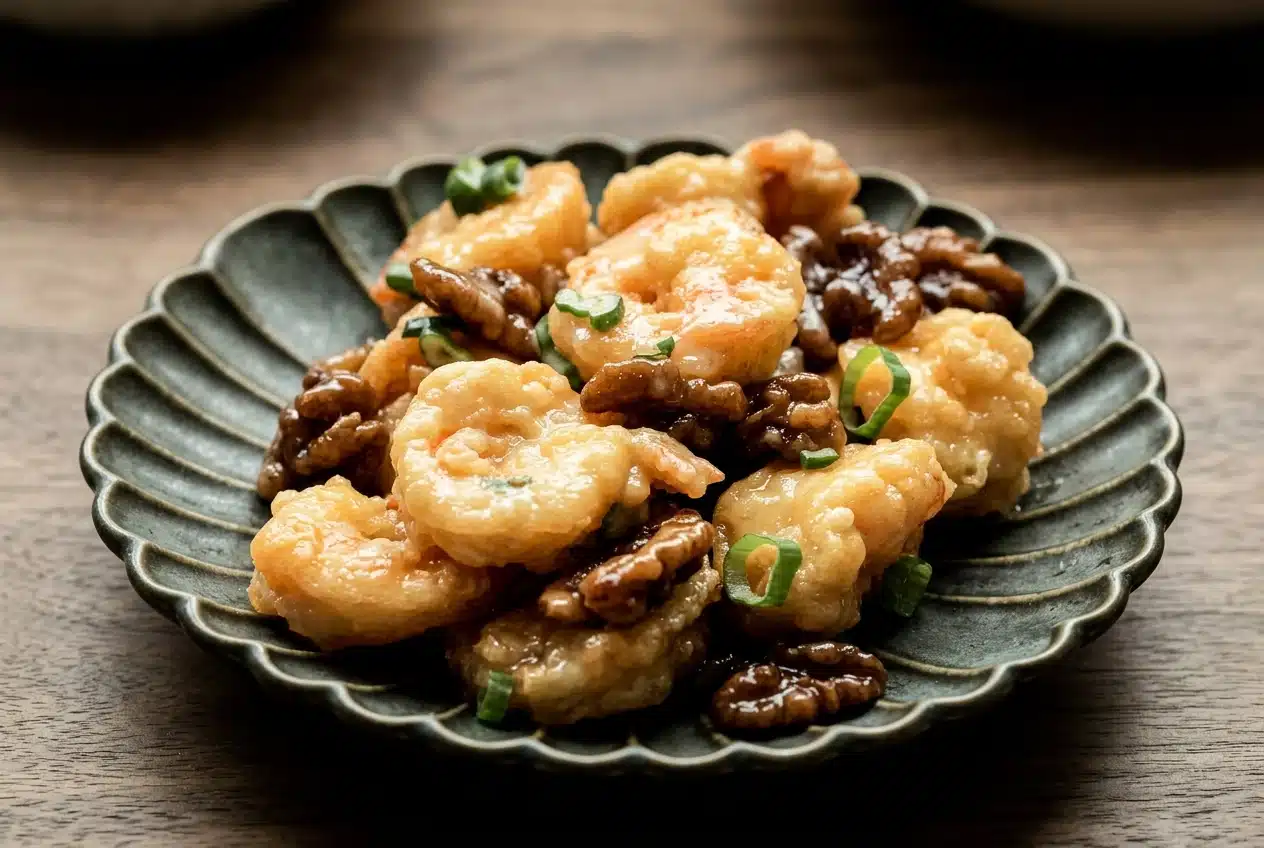
Honey walnut shrimp combines golden, crisp-coated shrimp, a sweet mayonnaise glaze, and crunchy candied walnuts. This homemade version uses butterflied shrimp, a cornstarch coating, and double frying for crunch, followed by a brief cooling pause before the creamy sauce goes on.
With its rich glaze and caramelized nuts, honey walnut shrimp brings takeout-style flavor to your kitchen. The sauce balances mayonnaise and sweetened condensed milk or honey with rice vinegar and soy sauce, so the sweetness has a savory edge.
The trick is organizing the components before frying, then bringing them together without rushing the final toss. That little pause protects the creamy finish.
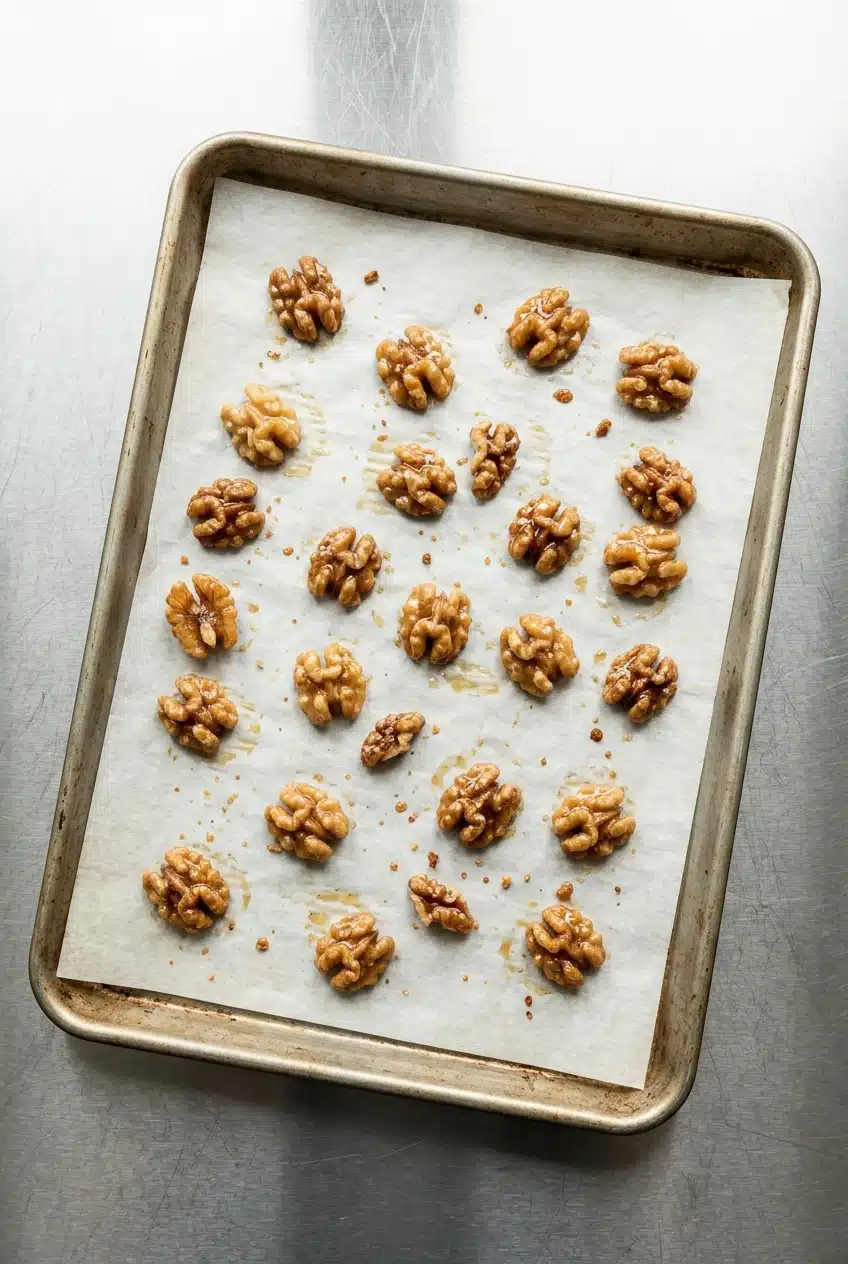
Set out the parchment-lined plate before candying the walnuts so you can separate them while the coating is still soft.
Ingredients You Need
Each ingredient builds a different part of the dish: egg and cornstarch form the crust, walnuts supply crunch, butter adds richness, and mayonnaise creates the creamy glaze. Vinegar, soy sauce, and green onion balance the sweetness.
- 12 large shrimp ((size 21/25))
- 1 stalk green onion ((finely chopped))
- 1 egg ((or egg whites, for crispier batter))
- ½ teaspoon onion powder
- 1 teaspoon soy sauce
- ½ cup cornstarch
- 1 cup walnuts
- 1 tablespoon oil
- 1¾ tablespoons sugar ((or honey))
- ¼ teaspoon salt ((optional, if you like sweet and salty walnuts))
- ½ tablespoon butter
- ¼ cup mayonnaise ((or Japanese kewpie mayo))
- 2 tablespoons sweetened condensed milk ((or 1½ tablespoons of honey))
- ¼ teaspoon rice vinegar
- ½ teaspoon soy sauce
Butterflying opens up the shrimp so more surface can hold the coating. Egg helps the cornstarch cling, while onion powder and soy sauce season the layer beneath the crust. The whole egg works well; egg whites are the listed option for a crispier finish.
The walnuts have their own coating of sugar or honey, butter, and oil. Salt stays optional. It gives the nuts a sweet-salty contrast rather than changing the character of the dish.
Mayonnaise supplies the glaze’s body. Sweetened condensed milk adds milky sweetness, while the listed honey alternative gives a more honey-forward flavor. Rice vinegar brightens the sauce, soy sauce adds savory depth, and green onion keeps the finish from tasting one-note.
I’d pay particular attention to the butterfly slit when coating the shrimp; that opened surface is valuable space for extra crunch.
Use the ingredient list for exact measurements and the grouped method below for timing. You’ll also need oil for deep frying, as directed in the method; the measured oil in the list belongs to the walnuts.
How to Make Crispy Honey Walnut Shrimp
Prepare the walnuts first so their coating can set while you mix the sauce and cook the shrimp. Plan on 15 minutes of prep and 20 minutes of cooking, for 35 minutes total and 3 servings.
Prepare the Candied Walnuts
- Cover the walnuts completely with kettle-boiled water in a small pot.
The nuts should sit beneath the water rather than remain partly exposed. - Stir with a spoon for a few seconds, drain, and repeat the hot-water rinse once more, draining thoroughly.
The rinse water should lose its cloudy appearance as some of the bitter surface compounds wash away. - Add the oil and stir the walnuts over medium-low heat for 5 minutes.
Keep the nuts moving so they toast evenly without scorching. - Stir in the sugar or honey, optional salt, and butter.
The coating should become syrupy as the sweetener and butter combine. - Continue stirring over the heat for about 4–5 minutes, then remove the pot when the nuts are golden and the butter solids on the bottom turn brown.
Watch the bottom of the pot closely because the browned butter is the stopping cue. - Separate the coated walnuts in one layer on a large plate or parchment-lined cookie sheet to cool.
Leave gaps between them so the coating sets around individual nuts rather than forming clusters.
Prepare the Honey Walnut Shrimp Sauce and Garnish
- Stir the mayonnaise, sweetened condensed milk or listed honey alternative, rice vinegar, and sauce portion of soy sauce together in a bowl.
The finished mixture should look smooth and evenly blended. - Finely chop the green onion and reserve it for assembly.
Small pieces will distribute through the glaze instead of collecting in large bites.
Prepare the Shrimp
- Start with fully thawed shrimp if using frozen, remove any shells, and cut about 1/4 inch into each back to butterfly it.
The cut should open the shrimp and expose more surface without separating it completely.
Batter the Shrimp
- Beat the egg or egg-white alternative with the onion powder and shrimp portion of soy sauce, then turn the shrimp through the mixture.
Each shrimp should have an even egg coating before it reaches the starch. - Spread the cornstarch on a large plate and coat the shrimp individually, opening each slit so starch reaches inside.
Look for coverage across both the outer surface and the butterflied opening.
Deep Fry the Shrimp
- Heat frying oil in a small pot over medium-high heat and dip in a wooden chopstick or wooden spoon handle to check for bubbles.
Bubbling around the wood is the readiness cue for starting the fry, not a check of shrimp doneness. - Cook the coated shrimp in uncrowded batches for about 2 minutes, until golden brown.
Leave space between pieces; if choosing the potato-starch variation, add them individually with about 10 seconds between additions so a crust can form before they touch. - Return the first-fried shrimp to the oil for a second fry lasting 30 seconds.
This brief finishing fry gives the coating extra crunch.
Assemble the Dish
- Let the shrimp cool slightly before adding the mayonnaise glaze.
Very hot shrimp can leave the sauce oily rather than creamy. - After a minute or two of cooling, turn the shrimp and chopped green onion through the sauce.
The glaze should cover the crust evenly without looking separated. - Fold in the candied walnuts last.
The finished dish should have distinct golden shrimp and coated nuts throughout.
Tips for Extra-Crispy Shrimp and Creamy Sauce
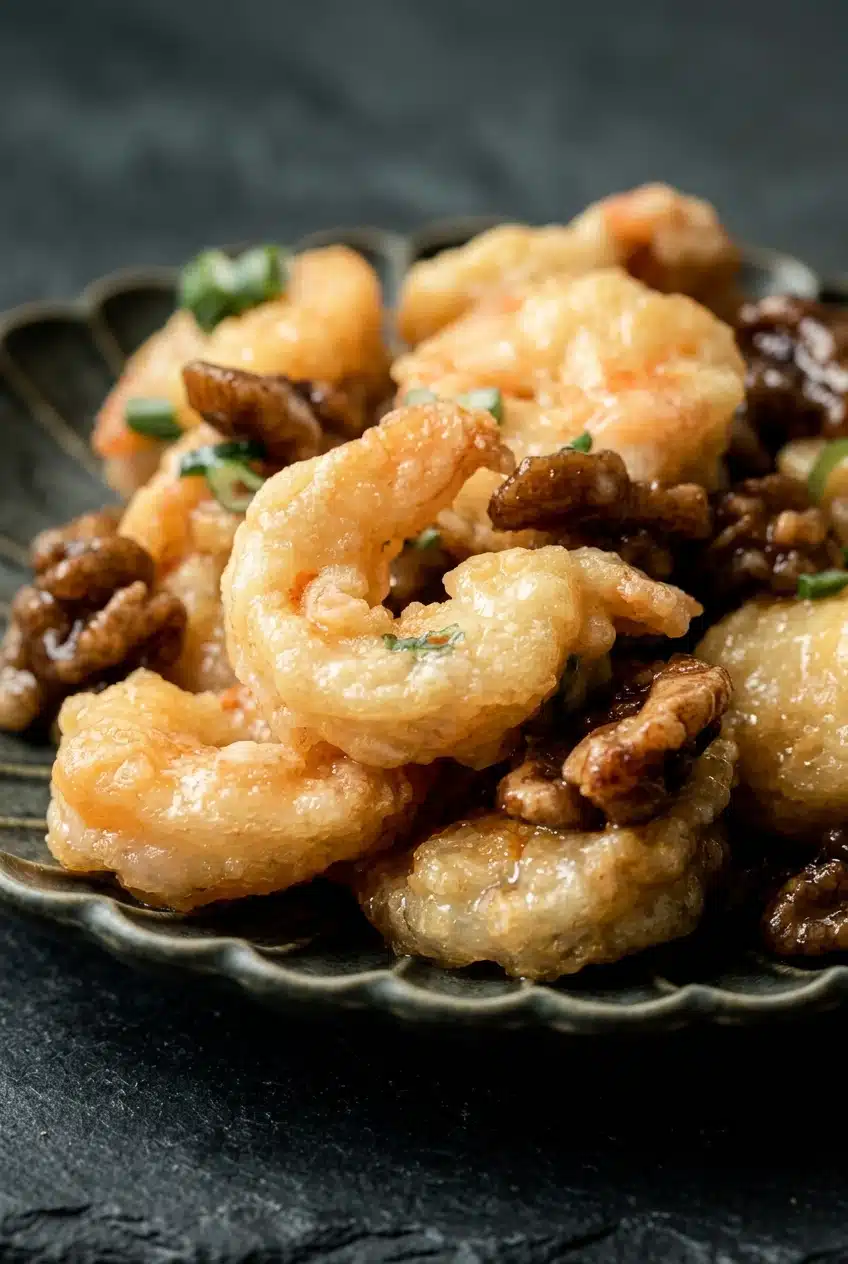
Most texture problems start before the final toss. Watch the coating, give the shrimp room in the oil, and treat the sauce as a finishing glaze rather than something to cook.
- Bitter walnuts: Skipping the hot-water rinse leaves more of the skins’ bitter taste behind. Stir during rinsing, watch for clearer water, and drain thoroughly before toasting.
- Walnuts stuck in a block: Warm candy coating joins neighboring nuts as it sets. Spread them apart immediately instead of leaving them piled in the pot.
- Patchy shrimp crust: The opened back is easy to miss during dredging. Coat inside that slit as well as around the outside.
- Pale or soft coating: A crowded pot makes consistent frying harder. Use batches, leaving enough room for the shrimp to stay separate and turn golden.
- Crunch that fades quickly: Don’t skip the finishing fry or sauce the shrimp before you’re ready to serve. The crust will gradually soften once it meets the glaze.
- Oily sauce: Tossing shrimp straight from the oil into mayonnaise can spoil the creamy finish. Follow the brief cooling pause before assembly rather than trying to fix the sauce afterward.
- A heavy-tasting finish: Keep the measured vinegar, soy sauce, and green onion in the dish. Their acidity, savoriness, and fresh onion flavor balance the sweet coating.
Think of the final stages as two separate jobs: the second fry develops crunch, and the cooling pause prepares the shrimp for the glaze. Neither replaces the other. Add the walnuts last so their candy coating stays distinct.
Easy Variations and Lighter Swaps
These optional directions change the flavor or texture of the dish. Keep them separate from the deep-fried method above, which is built around cornstarch-coated shrimp and a mayonnaise glaze.
Non-Fried Shrimp Options
A non-fried version can still capture the sweet sauce and walnut contrast, but it won’t necessarily reproduce the same crust. Choose the direction based on whether you care most about the shrimp itself or a takeout-style coating.
- Pan-seared shrimp: A direction for a more exposed shrimp texture rather than an all-over fried shell.
- Baked shrimp: An oven-based alternative that needs its own coating approach rather than a direct transfer of this frying method.
- Air-fried shrimp: Another possible direction for a coated version, though the crust and browning can differ from oil-fried shrimp.
These are alternatives to explore, not interchangeable cooking instructions for the dredge above. Avoid assuming that the frying time applies to another cooking method.
Condensed-Milk-Free Sauce Using Honey
Honey is already a listed alternative to sweetened condensed milk. It shifts the glaze away from milky sweetness toward a clearer honey flavor. Use the amount in the ingredient list rather than substituting equal volumes by guesswork.
Greek Yogurt and Honey Sauce
Plain Greek yogurt and honey offer an optional, tangier glaze direction in place of the mayonnaise-and-condensed-milk combination. Expect a different flavor and consistency, not an identical takeout sauce. Without a separate nutrition calculation, this swap shouldn’t be treated as a promise of fewer calories.
Spicy Chili or Aromatic Garlic Sauce
- Chili flakes: Add a direct peppery contrast to the sweet glaze.
- Chili sauce: Bring heat and another layer of sauce flavor, which will depend on the product.
- Garlic: Give the creamy coating a more pronounced savory edge.
For a different dinner built around sweet and savory garlic flavor, try honey garlic shrimp.
Coating Choices and Ingredient Labels
Sugar and honey can leave different finishes on the walnuts. Sugar tends toward a firmer candy shell, while honey can give a tackier coating. Either way, separating the nuts while they cool matters.
- Egg whites: The listed alternative emphasizes crispness compared with the whole-egg coating.
- Potato starch: An optional coating direction with a tendency for freshly added pieces to stick together, as addressed in the frying instructions.
- Sweet rice flour: A different batter direction, not a complete substitute formula for this cornstarch dredge.
If you’re considering gluten-free ingredients, check the starch, soy sauce, mayonnaise, and other packaged products individually. Tamari is a possible soy-sauce alternative to investigate, but its label still matters. A starch choice alone doesn’t establish the dietary suitability of the whole dish.
What to Serve with This Dish
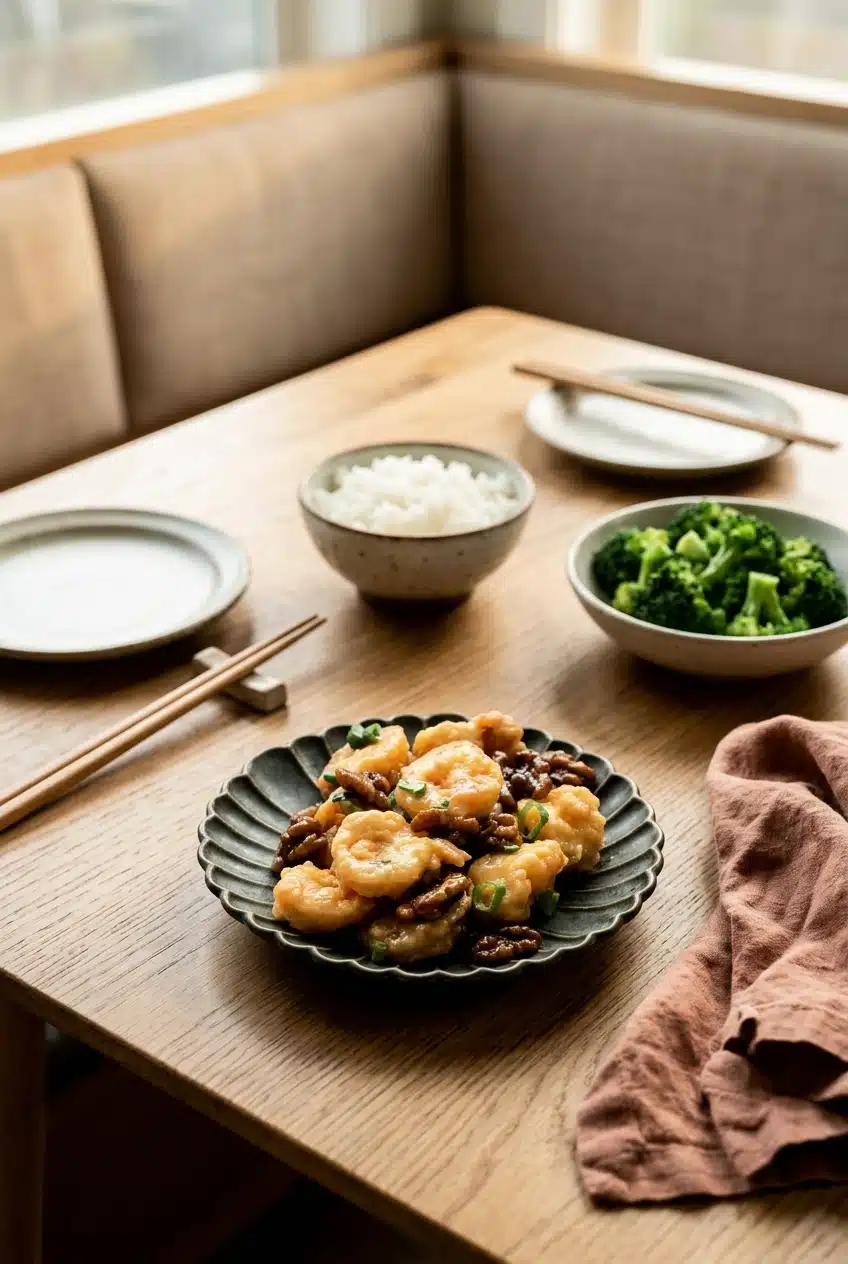
Choose sides that give the sweet, creamy shrimp some contrast. Plain rice and crisp vegetables let the glaze remain the center of the meal.
- Rice and broccoli: White or brown rice catches the sauce, while steamed broccoli adds a less-rich bite.
- A takeout-style spread: Egg fried rice or shrimp fried rice works alongside the sweet glaze when you want a fuller meal.
- Noodles and something fresh: Chow mein and cucumber salad bring savory flavor and cool crunch to the table.
Have the sides ready before the final toss. Serving promptly gives you the clearest contrast between crisp shrimp, creamy coating, and crunchy walnuts.
Make-Ahead Prep, Storage, and Reheating
Organize components rather than assembling the entire dish early. The cooking sequence already gives the walnuts time to cool while you mix the sauce and prepare the shrimp.
For advance planning, keep the walnuts and glaze separate, and leave frying and final assembly closest to serving. If you expect leftovers, keeping some shrimp unsauced helps protect the crust from moisture in the glaze. Store the candied walnuts separately from wet components to preserve their texture.
Keep leftover seafood covered and chilled, and treat proper handling as separate from texture preservation. Proper handling, storage, and thorough cooking of seafood help reduce foodborne illness risk; a crisp crust or creamy-looking sauce does not establish safe handling.
Reheating is a compromise for this dish: the fried coating and mayonnaise glaze don’t respond to heat in the same way. Don’t expect dressed leftovers to regain their freshly fried texture, and avoid treating reheating as another frying stage. Keeping components separate gives you more control over the final texture.
Final Thoughts
The best contrast comes from golden shrimp, an evenly creamy glaze, and candied walnuts that cool separately instead of clumping. Give the butterfly slit a thorough starch coating, and watch the walnuts’ color closely.
Use the ingredient list and grouped method for exact measurements and timing. Then give the shrimp that brief pause before saucing and bring the finished dish straight to the table.
Frequently Asked Questions
What Is the Sauce for Honey Walnut Shrimp Made Of?
The sauce combines mayonnaise, sweetened condensed milk or the listed honey alternative, rice vinegar, and soy sauce. Mayonnaise provides creaminess, while vinegar and soy sauce balance the sweetness.
Can You Make Honey Walnut Shrimp Without Deep Frying?
Yes, a non-fried interpretation can use a pan-seared, baked, or air-fried direction, but it needs a method designed for that approach. The instructions above are for deep frying; don’t transfer their cooking time directly to another method or expect identical crunch.
How Do You Keep Honey Walnut Shrimp Crispy After Tossing It in the Sauce?
Coat the butterflied openings thoroughly, fry in uncrowded batches, and complete the brief second fry. Let the shrimp cool slightly before saucing, add the walnuts last, and serve promptly for the best texture. No coating stays crisp indefinitely once it absorbs sauce.
What Is Chinese Honey Walnut Shrimp and Where Did It Originate?
It’s a sweet-savory shrimp dish with a crisp coating, creamy glaze, and candied walnuts, familiar on American Chinese restaurant menus. It is commonly associated with Hong Kong and Cantonese banquet cooking, though assigning it a single definitive birthplace is less straightforward.
Can You Make Honey Walnut Shrimp Without Sweetened Condensed Milk?
Yes. Honey is an alternative in the ingredient list. Use the listed honey amount and expect honey-forward sweetness rather than the same milky flavor.
How Many Calories Are in Honey Walnut Shrimp and How Should Leftovers Be Stored?
A dependable calorie total needs a calculation that matches the ingredients, frying-oil uptake, and portion size; substitutions can change that total. Keep leftover seafood covered and chilled, following the handling discussion above. When possible, keep shrimp, glaze, and walnuts separate to limit texture loss.
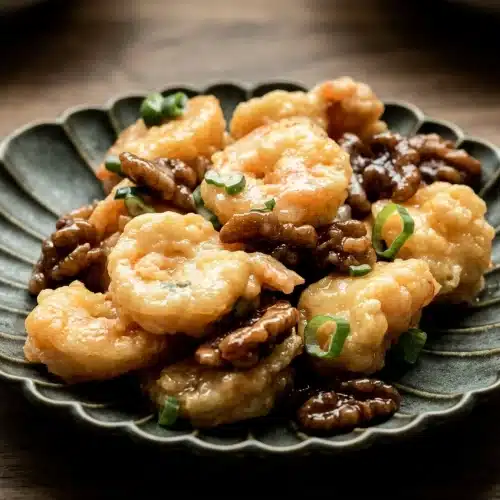
Honey Walnut Shrimp

Equipment
- Small Pot
- Kettle
- Mixing Bowl
- large plate
- Cookie sheet
- Parchment Paper
- Wooden chopstick or wooden spoon
Ingredients
- 12 large shrimp (size 21/25)
- 1 stalk green onion (finely chopped)
- 1 egg (or egg whites, for crispier batter)
- ½ teaspoon onion powder
- 1 teaspoon soy sauce
- ½ cup cornstarch
- 1 cup walnuts
- 1 tablespoon oil
- 1¾ tablespoons sugar (or honey)
- ¼ teaspoon salt (optional, if you like sweet and salty walnuts)
- ½ tablespoon butter
- ¼ cup mayonnaise (or Japanese kewpie mayo)
- 2 tablespoons sweetened condensed milk (or 1½ tablespoons of honey)
- ¼ teaspoon rice vinegar
- ½ teaspoon soy sauce
Instructions
Prepare the Candied Walnuts
- Cover the walnuts completely with kettle-boiled water in a small pot. The nuts should sit beneath the water rather than remain partly exposed.
- Stir with a spoon for a few seconds, drain, and repeat the hot-water rinse once more, draining thoroughly. The rinse water should lose its cloudy appearance as some of the bitter surface compounds wash away.
- Add the oil and stir the walnuts over medium-low heat for 5 minutes. Keep the nuts moving so they toast evenly without scorching.
- Stir in the sugar or honey, optional salt, and butter. The coating should become syrupy as the sweetener and butter combine.
- Continue stirring over the heat for about 4–5 minutes, then remove the pot when the nuts are golden and the butter solids on the bottom turn brown. Watch the bottom of the pot closely because the browned butter is the stopping cue.
- Separate the coated walnuts in one layer on a large plate or parchment-lined cookie sheet to cool. Leave gaps between them so the coating sets around individual nuts rather than forming clusters.
Prepare the Honey Walnut Shrimp Sauce and Garnish
- Stir the mayonnaise, sweetened condensed milk or listed honey alternative, rice vinegar, and sauce portion of soy sauce together in a bowl. The finished mixture should look smooth and evenly blended.
- Finely chop the green onion and reserve it for assembly. Small pieces will distribute through the glaze instead of collecting in large bites.
Prepare the Shrimp
- Start with fully thawed shrimp if using frozen, remove any shells, and cut about 1/4 inch into each back to butterfly it. The cut should open the shrimp and expose more surface without separating it completely.
Batter the Shrimp
- Beat the egg or egg-white alternative with the onion powder and shrimp portion of soy sauce, then turn the shrimp through the mixture. Each shrimp should have an even egg coating before it reaches the starch.
- Spread the cornstarch on a large plate and coat the shrimp individually, opening each slit so starch reaches inside. Look for coverage across both the outer surface and the butterflied opening.
Deep Fry the Shrimp
- Heat frying oil in a small pot over medium-high heat and dip in a wooden chopstick or wooden spoon handle to check for bubbles. Bubbling around the wood is the readiness cue for starting the fry, not a check of shrimp doneness.
- Cook the coated shrimp in uncrowded batches for about 2 minutes, until golden brown. Leave space between pieces; if choosing the potato-starch variation, add them individually with about 10 seconds between additions so a crust can form before they touch.
- Return the first-fried shrimp to the oil for a second fry lasting 30 seconds. This brief finishing fry gives the coating extra crunch.
Assemble the Dish
- Let the shrimp cool slightly before adding the mayonnaise glaze. Very hot shrimp can leave the sauce oily rather than creamy.
- After a minute or two of cooling, turn the shrimp and chopped green onion through the sauce. The glaze should cover the crust evenly without looking separated.
- Fold in the candied walnuts last. The finished dish should have distinct golden shrimp and coated nuts throughout.