Menemen is a Turkish skillet dish of beaten eggs gently stirred into softened green peppers and tomatoes. This menemen recipe guides you toward soft, glossy curds with mild chili warmth, ready to scoop up with crusty bread.
Think of it as Turkish scrambled eggs with the vegetables woven right through them. The tomato gives the eggs a saucy texture, while green peppers bring a savory flavor that keeps each bite from tasting too rich.
Everything cooks in one skillet, and the most useful skill is knowing when to stop stirring and take it off the heat. Watch for that last bit of gloss.
Keep the wooden spoon close once the eggs enter the pan; the final stage moves quickly.
Key Ingredients and Smart Substitutions
Olive oil carries the pepper flavor, tomato adds moisture and acidity, and eggs bind everything into soft curds. Optional butter adds richness, seasonings balance the vegetables, parsley brings freshness, and crusty bread gives the saucy eggs something sturdy to cling to.
- 2 tablespoons olive oil
- 1 tablespoon unsalted butter (optional)
- 1 onion (chopped about 1 cup – Optional)
- 2 green peppers
- 1 teaspoon kosher salt (divided)
- 1 tomato (cut into small ½-inch cubes, about 1 cup)
- 1 teaspoon Aleppo pepper (or paprika, plus more for seasoning in the end)
- ½ teaspoon black pepper (plus more for seasoning at the end)
- 4 large eggs (beaten)
- 1 tablespoon fresh parsley (as garnish (optional))
- A crusty loaf of bread (for serving)
Prep: 10 minutes. Cook: 20 minutes. Total: 30 minutes. Yield: 2 servings.
Olive oil provides the cooking fat whether or not you include butter. The optional butter gives the vegetables a rounder, richer finish, while the eggs provide the tender structure. Aleppo pepper adds gentle warmth; paprika is the listed alternative. Black pepper brings a sharper edge.
The optional parsley adds a fresh contrast at the finish. Bread belongs alongside the skillet rather than mixed into it, so its crust stays useful for scooping.
Choosing Peppers in US Supermarkets
Turkish sivri biber are slender green peppers. For a US supermarket substitute, look at the pepper’s flesh and heat level, not just its shape. Varieties and individual peppers can differ in heat.
- Anaheim peppers: Their relatively thin walls and green pepper flavor make them a useful alternative, though some have noticeable heat.
- Banana peppers: Fresh mild varieties offer tender walls and a gently sweet flavor; choose fresh peppers rather than pickled ones for this direction.
- Green bell peppers: These bring a familiar grassy flavor, but their thicker walls make the tenderness cue especially important.
The peppers should yield easily against the spoon rather than remain crisp. A little wrinkling is another useful sign that they have softened.
Fresh Versus Canned Tomatoes
A ripe fresh tomato gives this skillet bright acidity and soft pieces that remain noticeable among the curds. The listed preparation uses cubes. Peeled tomatoes offer less skin texture, while partially grated tomatoes give a smoother background with some pieces remaining.
Drained canned tomatoes are an optional off-season choice when fresh tomatoes taste flat. Their texture is usually softer and their flavor more cooked. Whichever direction you choose, remember that juicy eggs and a puddle of tomato water are different results.
The Onion Debate: With or Without
Both onion and onion-free menemen have devoted fans in Turkey. Onion adds sweetness and a mellow aromatic layer that balances the tomato’s acidity. It remains optional here, just like the butter and parsley.
Choose based on the flavor you want, rather than treating either preference as the only authentic answer.
Onion-Free Menemen
Without onion, the tomato and green pepper flavors come forward more clearly. This optional direction tastes brighter and less sweet, with the eggs providing richness against the vegetables. It’s a good choice when you want the peppers to be especially noticeable.
How to Make Menemen
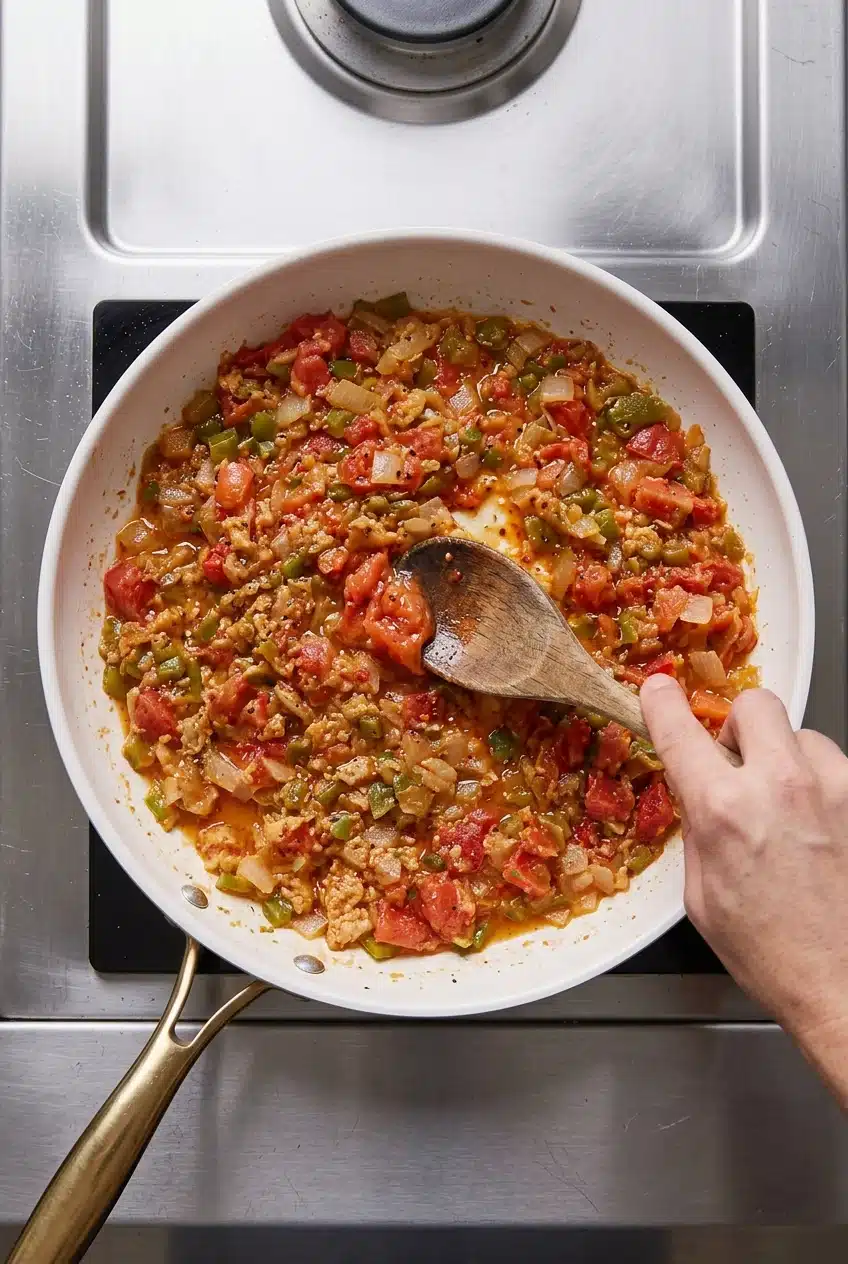
The vegetables need their time before the eggs join them. Soft peppers and tender tomato pieces create a cohesive mixture; frequent stirring and medium-low heat then help the eggs form delicate curds instead of a firm layer across the skillet bottom.
- Warm the olive oil and optional butter over medium heat in a 10-inch nonstick skillet.
If using butter, let it melt completely into the oil. - Stir the green peppers and optional chopped onion into the fat with ¼ teaspoon kosher salt, cooking for about 6-8 minutes and stirring frequently.
The vegetables should feel tender under the spoon, with the onion softened rather than crunchy. - Mix in the tomato cubes for about 3 minutes, then distribute ¼ teaspoon salt, the Aleppo pepper or paprika, and the black pepper through the vegetables.
The tomato pieces should soften and begin releasing their juices into the mixture. - Press the softened tomato pieces lightly with the back of a wooden spoon to blend them through the peppers and onion.
Leave some texture rather than crushing everything into a smooth purée. - While the vegetables cook, beat the eggs in a small bowl with ¼ teaspoon salt and a pinch of black pepper.
The whites and yolks should combine into an even yellow mixture. - Distribute the beaten eggs across the vegetables, turn the burner down to medium-low, and stir frequently with the wooden spoon for about 2-3 minutes.
Stop at barely set curds that still look glossy, watching closely as they thicken. - Move the skillet off the burner, finish with black pepper, and add the chopped parsley if using.
The finished eggs should look soft and spoonable rather than dry or crumbly.
Serve immediately with the crusty loaf of bread. The skillet’s remaining heat continues to affect the eggs, so there’s no advantage to leaving it sitting on the hot burner.
I look for soft ribbons that briefly reveal the skillet bottom as the spoon passes through; a completely dry trail is a sign to stop chasing a firmer texture.
Seasoning in stages matters here. Salt reaches the peppers and optional onion first, then the tomato, then the beaten eggs, rather than sitting only on the surface of the finished dish.
Common Mistakes and Texture Fixes

Most texture problems start before the eggs set. Use the vegetable stages and the final gloss as your checkpoints.
- Watery vegetables: Very juicy tomatoes or rushed vegetable softening can leave thin liquid around the curds. Let the vegetables reach the tenderness described in the method, and gently break the softened tomatoes so the mixture comes together before the eggs go in.
- Crunchy peppers: Thick-walled peppers can still feel firm even when their color has changed. Check tenderness with the spoon during the vegetable stage rather than using color alone.
- Dry or rubbery curds: Excess heat and waiting for a completely matte surface push the eggs too far. Use the specified lower heat, stir frequently, and stop at barely set; already dry curds won’t turn silky again.
- Flat flavor: Skipping the staged seasoning leaves the vegetables tasting separate from the eggs. Taste the vegetable mixture before adding the eggs, and follow the seasoning sequence rather than saving everything for the finish.
Popular Regional and Add-In Variations
Keep the beaten-egg version as your starting point, then choose an optional variation for a different flavor or presentation. These choices stay separate from the ingredient list and method above.
Menemen With Cheese (Feta, Beyaz Peynir, or Melting Cheese)
- Feta or beyaz peynir: Briny cheese adds tang and a salty contrast to the sweet vegetables, so consider its saltiness when judging the overall balance.
- Kaşar: This melting-cheese direction makes the skillet richer and more cohesive.
- Mozzarella: A milder option, it emphasizes creamy, stretchy texture rather than a briny finish.
Whole-Yolk Regional Menemen
Whole-yolk menemen is a regional alternative with distinct yolks against the tomato-and-pepper mixture. It offers a different presentation from the softly scrambled texture here, where beaten eggs mingle throughout the vegetables.
If intact yolks are your preference, this baked eggs recipe offers another egg-centered breakfast to try.
Meat Add-In Menemen (Sujuk, Ground Lamb, or Beef)
- Sujuk: This spiced sausage gives menemen a bolder, more intensely savory character.
- Ground lamb or beef: Either creates a heartier version with a more substantial texture than the vegetable-and-egg skillet.
- Tomato or pepper paste: These optional flavor directions add concentrated tomato depth or a stronger pepper presence.
Menemen vs. Shakshuka and Çılbır
Menemen typically blends beaten eggs through peppers and tomatoes, producing soft curds throughout the skillet. Shakshuka usually features distinct whole eggs in tomato sauce, often with a more pronounced spice profile.
Çılbır is different again: poached eggs sit over garlicky yogurt, commonly with spiced butter. The phrase “Turkish eggs” can refer to either çılbır or menemen, so the yogurt-versus-tomato distinction is useful.
Make-Ahead Prep and Leftover Storage
For planning ahead, keep the vegetable component separate from the eggs and reserve the egg stage for serving. This keeps the focus on freshly formed curds rather than asking cooked eggs to reproduce that texture after reheating.
Keep any prepared vegetable component or cooked leftovers covered and chilled. Treat them as separate storage situations, and check current food-handling advice for cooked vegetables or egg dishes before deciding how long to keep or how to reheat them. Don’t expect reheated menemen to match the freshly cooked gloss.
For a breakfast specifically designed around advance preparation, consider make-ahead egg muffins as another option.
Dietary Choices and Egg Doneness
Whether menemen fits your eating needs depends on the full meal, including the cooking fats, bread, and optional additions. “Healthy” isn’t a precise description of every portion or serving combination, and this dish doesn’t promise a particular health outcome.
Check the eggs, optional butter or cheese, and serving bread against any dietary restrictions or allergies. Choose ingredient labels and accompaniments that meet your needs rather than assuming every version has the same composition.
The method describes a barely set texture, not a safety guarantee. If you’re serving someone pregnant, very young, older, or immunocompromised, seek qualified advice about egg doneness rather than relying on gloss alone.
How to Serve Menemen Like a Turkish Breakfast

Bring the hot skillet to the table for family-style scooping, using a heatproof surface and taking care around the handle. Menemen’s soft texture makes bread part of the eating experience.
- For scooping: Choose crusty sourdough, baguette, pide, or sesame-crusted simit.
- For contrast: Offer olives and sliced cucumbers alongside the warm eggs.
- For a broader breakfast spread: Add brewed black tea and optional extra cheese.
You don’t need every accompaniment. Bread and the hot skillet already make a satisfying breakfast, while the other dishes give the table more variety.
Why This Menemen Method Works
Tender peppers, softened and seasoned tomatoes, and gently stirred eggs give menemen its cohesive, spoonable texture. The final cue is barely set curds with a little gloss remaining.
Start with this version before exploring cheese, spice, or meat additions. Have the bread ready so you can enjoy the eggs as soon as they leave the heat.
Frequently Asked Questions
What Is the Difference Between Menemen and Shakshuka?
Menemen usually has beaten eggs stirred through softened peppers and tomatoes. Shakshuka usually keeps the eggs whole and distinct within the tomato sauce.
Are You Supposed to Put Onions in Menemen?
Onion is optional here, and both preferences are enjoyed in Turkey. Include it for sweetness and aromatic depth, or leave it out for a more tomato-and-pepper-forward flavor.
What Peppers Can I Use Instead of Turkish Green Peppers?
Fresh mild Anaheim or banana peppers are useful alternatives with relatively thin walls. Green bell peppers also work, but their thicker flesh makes tenderness especially worth checking.
Is Menemen Healthy?
That depends on your dietary needs, portion, and accompaniments rather than the dish’s name alone. Consider the cooking fats, salt, bread, and optional cheese when deciding how it fits your meals.
Can Menemen Be Made Ahead or Reheated?
For the intended texture, plan the vegetable component separately and cook the eggs at serving time. Keep leftovers covered and chilled, and check current egg-dish storage and reheating advice before using them; reheating may not preserve the fresh texture.

Menemen Recipe

Equipment
- 10-inch nonstick skillet
- Wooden Spoon
- Small bowl
Ingredients
- 2 tablespoons olive oil
- 1 tablespoon unsalted butter optional
- 1 onion chopped about 1 cup – Optional
- 2 green peppers
- 1 teaspoon kosher salt divided
- 1 tomato cut into small ½-inch cubes, about 1 cup
- 1 teaspoon Aleppo pepper or paprika, plus more for seasoning in the end
- ½ teaspoon black pepper plus more for seasoning at the end
- 4 large eggs beaten
- 1 tablespoon fresh parsley as garnish (optional)
- A crusty loaf of bread for serving
Instructions
- Warm the olive oil and optional butter over medium heat in a 10-inch nonstick skillet. If using butter, let it melt completely into the oil.
- Stir the green peppers and optional chopped onion into the fat with ¼ teaspoon kosher salt, cooking for about 6-8 minutes and stirring frequently. The vegetables should feel tender under the spoon, with the onion softened rather than crunchy.
- Mix in the tomato cubes for about 3 minutes, then distribute ¼ teaspoon salt, the Aleppo pepper or paprika, and the black pepper through the vegetables. The tomato pieces should soften and begin releasing their juices into the mixture.
- Press the softened tomato pieces lightly with the back of a wooden spoon to blend them through the peppers and onion. Leave some texture rather than crushing everything into a smooth purée.
- While the vegetables cook, beat the eggs in a small bowl with ¼ teaspoon salt and a pinch of black pepper. The whites and yolks should combine into an even yellow mixture.
- Distribute the beaten eggs across the vegetables, turn the burner down to medium-low, and stir frequently with the wooden spoon for about 2-3 minutes. Stop at barely set curds that still look glossy, watching closely as they thicken.
- Move the skillet off the burner, finish with black pepper, and add the chopped parsley if using. The finished eggs should look soft and spoonable rather than dry or crumbly.