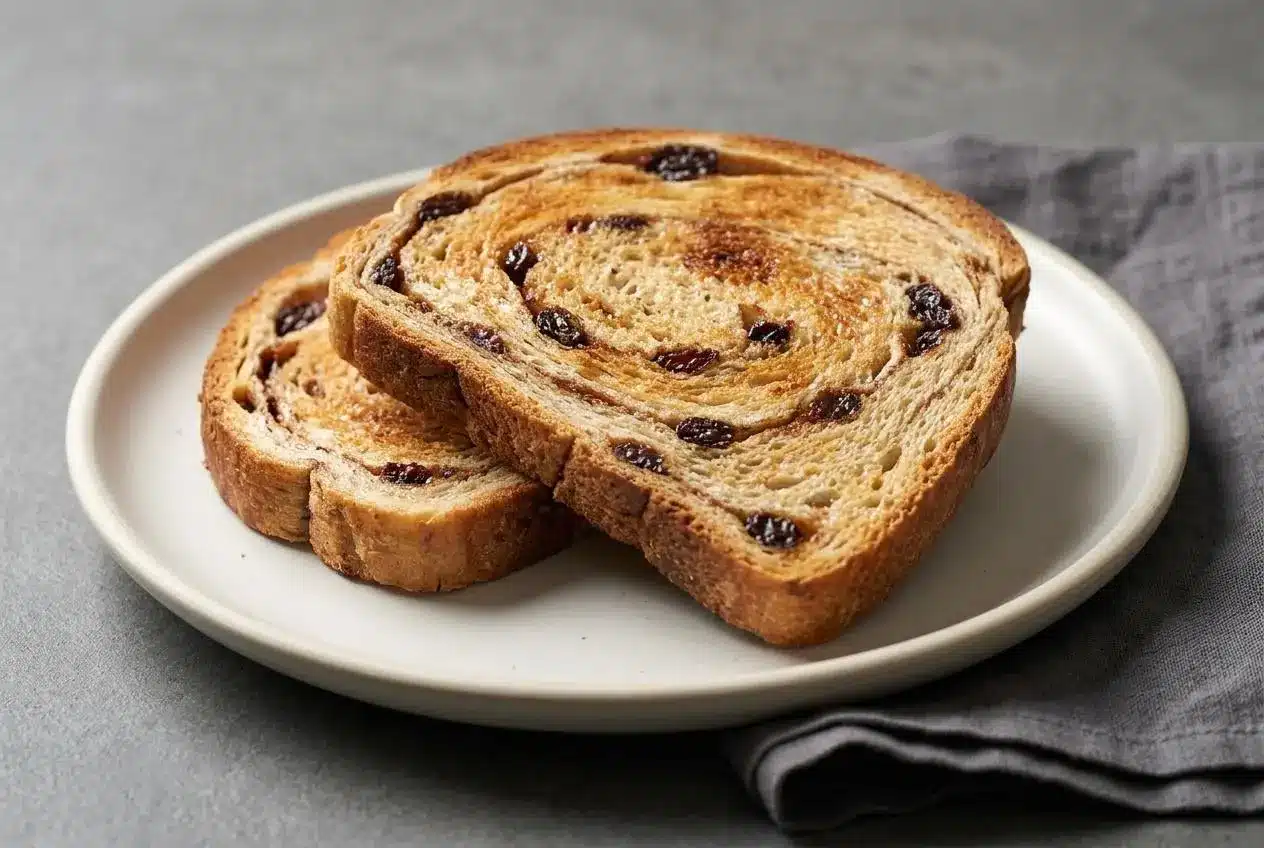
This cinnamon raisin sourdough bread is a soft, sliceable sandwich loaf made with starter or discard and instant yeast. Butter and egg enrich the crumb, while a cinnamon sugar swirl and raisins bring sweetness to every slice.
Toasted edges, melting butter, and warm cinnamon make this loaf especially welcome at breakfast. The dough bakes in a loaf pan, giving you tidy slices for toast and sandwiches.
You don’t need to rely on starter alone for the rise. Instant yeast supports the enriched dough, while careful shaping helps keep the cinnamon layers together. The little sealing edge matters.
Set out the butter before mixing so it softens enough to blend into the dough rather than remaining in firm lumps.
Ingredients Explained by Role
Each ingredient contributes to the loaf’s structure, tenderness, moisture, or flavor. Flour supports the dough, starter adds character, butter and egg enrich the crumb, and the cinnamon filling balances fragrant spice with sweet raisins.
- 1/2 cup (113g) sourdough starter, ripe or discard
- 3 cups (360g) King Arthur Unbleached All-Purpose Flour
- 2 1/2 teaspoons instant yeast
- 1 tablespoon granulated sugar
- 1 1/4 teaspoons (8g) table salt
- 1 large egg
- 5 tablespoons (71g) unsalted butter, softened
- 2/3 cup (150g) water, lukewarm
- 1/4 cup (50g) granulated sugar
- 1 1/2 teaspoons ground cinnamon
- 2 teaspoons King Arthur Unbleached All-Purpose Flour
- 1 large egg, beaten with 1 tablespoon water
- 1/2 cup (75g) raisins
Dough Ingredients
The first eight ingredients make the dough. All-purpose flour provides structure, while ripe starter or unfed discard contributes sourdough flavor. Keep the instant yeast in either version: this is a yeast-assisted loaf, not a naturally leavened-only formula.
The dough sugar adds gentle sweetness, and salt balances the filling. Egg and softened butter give the bread richness and a tender crumb. Lukewarm water helps bring everything together without leaving the butter in cold, stubborn pieces.
Starter condition matters more than the label alone. Discard may taste more acidic, but its age and feeding history affect the result, so neither option guarantees a particular level of tang.
Cinnamon Raisin Swirl Filling
The second portion of sugar belongs in the filling, followed by cinnamon for aroma and the 2 teaspoons of flour. That flour helps absorb moisture within the swirl and reduces the chance of separated layers.
The second egg, beaten with water, makes the egg wash. It helps the filling adhere to the dough and leaves a useful sealing surface at the final edge. Raisins provide chewy pockets of sweetness. Together, these details encourage a connected swirl, though no single trick guarantees perfectly closed layers.
I prefer weighing the flour because a packed measuring cup can make this tender dough unnecessarily stiff.
How to Make Cinnamon Raisin Sourdough Bread
This recipe makes 1 loaf, or 16 servings. Allow about 25 minutes of preparation, a first rise of 1 1/2 to 2 hours, a second rise of about 1 hour, and 40 to 45 minutes of baking, plus complete cooling before slicing.
- Measure the dough flour by weight, or spoon it gently into a measuring cup and level the top, then combine the first eight ingredients and knead by hand, with a dough-hook mixer, or using a bread machine’s dough cycle.
For a mixer, allow about 6 to 8 minutes at medium-low speed, looking for a soft dough with a smooth surface. - Lightly grease a container, add the dough, and let it rise for 1 1/2 to 2 hours.
Its volume should approach double before shaping begins. - Stir the filling sugar, cinnamon, and 2 teaspoons of flour together during the first rise.
The mixture should look evenly colored, without pockets of plain flour or concentrated cinnamon. - Press the risen dough gently to release the gas, then move it onto a lightly greased work surface.
The dough should remain soft and pliable rather than flattened with force. - Use a rolling pin and your hands to form a rectangle approximately 6 inches wide and 20 inches long.
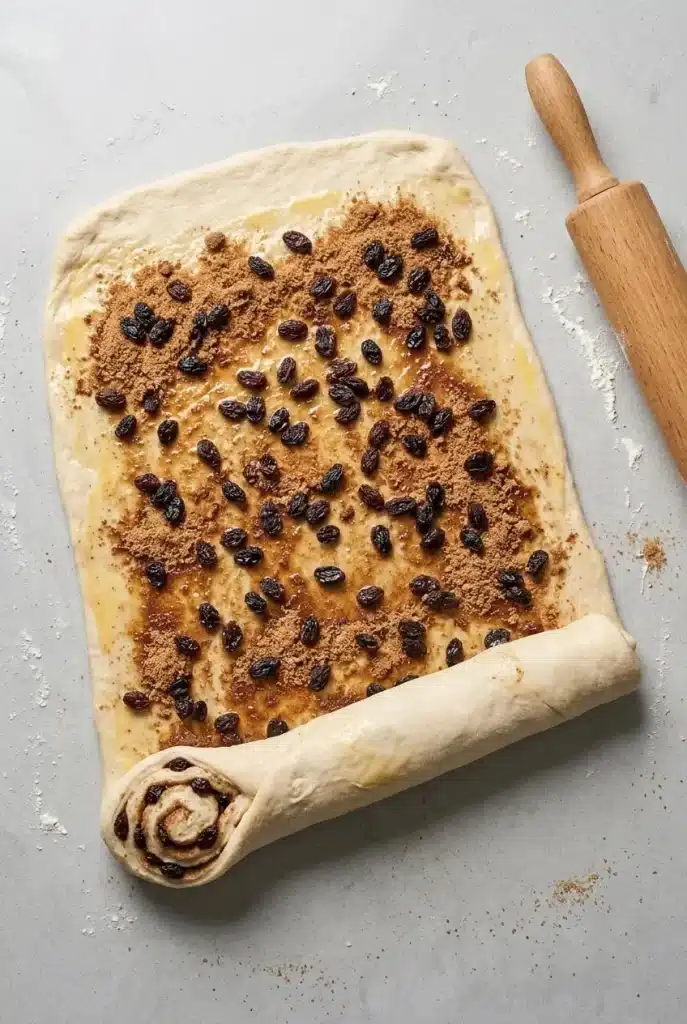
A reasonably even thickness helps the filling form consistent layers. - Coat the rectangle with egg wash, then distribute the cinnamon filling and raisins evenly while keeping a 1-inch strip free of filling along one short edge.
This clean final edge gives the dough a surface that can seal without sugar and fruit getting in the way. - Roll from the filled short edge toward the bare strip, keeping the log snug, then pinch both ends and the lengthwise seam closed.
The layers should sit close together without stretching the dough until it tears. - Grease a 9 x 5-inch loaf pan or the stoneware loaf pan, place the log inside with its seam underneath, cover, and let rise for about 1 hour.
Look for a crest about 1 inch above the metal pan’s rim, or dough level with the stoneware pan’s top. - Heat the oven to 350°F during the second rise.
The shaped loaf should reach its pan-specific rise cue before baking. - Brush the loaf with remaining egg wash if desired, bake for 40 to 45 minutes, and loosely cover the top with aluminum foil after the first 15 to 20 minutes.
For this loaf, look for a golden crust and a center reading of 190°F on a digital thermometer. - Release the baked loaf’s edges, lift it out of the pan, and brush the hot top with butter if desired, then let it cool completely before cutting.
The optional butter gives the crust a soft finish, while cooling helps the crumb and swirl hold their shape. - Wrap the fully cooled loaf well for room-temperature storage, or freeze it for longer keeping.
Wait until the bread has released its warmth so moisture does not collect inside the wrapping.
Knead and Bulk Rise the Dough
Judge kneading by texture as well as the clock. The mixer timing is a guide for that method, not a promise for hand kneading or every bread machine. Look for soft, smooth dough before beginning the first rise.
Prepare the dry filling while the dough rises, but keep it separate. The cinnamon and raisins belong in the shaped layers, not in the initial dough mixture.
Roll, Fill, and Seal the Swirl Log
Orient the rectangle so you can roll from one short end toward the other. Spread the filling across the dough rather than piling it in the middle, and scatter the raisins so one slice doesn’t get all the fruit.
Roll snugly, not forcefully. Finish at the bare edge, then pinch the seam closed before moving the loaf. A log that looks tidy on the counter is easier to transfer without opening the seam.
Second Rise and Bake to 190°F
The pan-specific rise cue is more useful than a rigid timer. Check the dough’s height before baking, especially if cold discard or a cool kitchen has changed its pace.
Once the loaf enters the oven, protect the top with the foil tent at the stated point. Browning can happen before the center finishes, so use the recipe’s thermometer target alongside crust color.
Tips for a Tight, Gap-Free Cinnamon Swirl
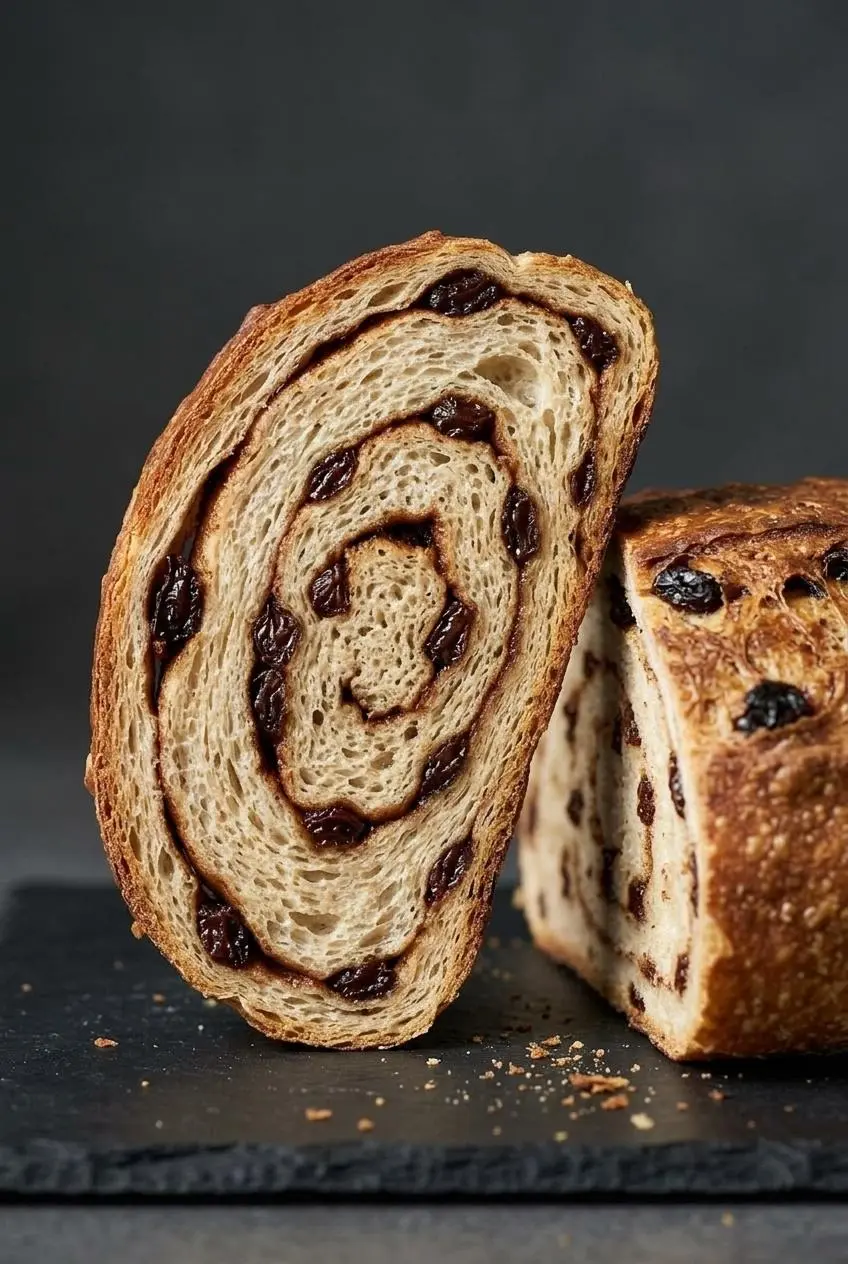
A connected swirl depends on moisture control, even filling, and a well-sealed roll. These checks help reduce hollow tunnels without making shaping complicated.
- Separated layers: Loose rolling can trap air, while a wet filling can encourage separation. Keep the filling flour and egg wash, then roll with gentle, steady tension.
- Dense crumb: Stiff dough or an incomplete rise can leave the loaf heavy. Check flour measurement, knead to the soft, smooth target, and follow the rise cues rather than rushing ahead.
- Leaking filling: Heaped sugar and weak seams create escape routes. Spread the filling evenly and keep the final sealing strip clear.
- Dry fruit: Very dry raisins can feel tough in the finished bread. Consider the optional soaking method below, then dry them thoroughly.
- Dark top: An exposed crust can brown faster than the center bakes. Tent with foil after the first 15 to 20 minutes rather than ending the bake early.
- Smeared slices: Warm bread compresses under the knife. Let the loaf cool completely before slicing through the swirl.
When to Add Cinnamon and Raisins
Add both during shaping, after the first rise. Mixing the filling during that rise saves time, but it doesn’t mean adding it to the dough yet. Keeping the cinnamon in a separate layer also gives you the distinct swirl this loaf is designed to have.
Optional Vanilla-Soaked Raisins
For an optional plumper fruit texture and gentle vanilla aroma, soak the recipe’s raisins in warm water with a splash of vanilla extract for 10 minutes. Drain and pat them completely dry before shaping. Use the same raisin quantity, and keep the soaking liquid out of the dough.
A Soft Crust Without an Underbaked Center
Brush with butter after unmolding if you want a softer, satiny crust. This finish is separate from doneness: a browned top still needs a fully baked center. Keep the baking checks intact rather than shortening the bake to protect crust softness.
Cinnamon Swirl Variations and Refrigerator Rise Options
Choose starter according to what you have available, and treat fruit swaps or a chilled rise as optional adaptations rather than changes to the main method.
Ripe Sourdough Starter vs Cold Discard
- Ripe starter: Use the listed 1/2 cup (113g) and retain all the instant yeast; its flavor may be milder, depending on the starter.
- Cold discard: Use the same amount straight from the refrigerator and keep the yeast unchanged; acidity varies, so extra tang isn’t guaranteed.
For a loaf without the sweet filling, sourdough discard sandwich bread offers another way to use unfed starter.
Refrigerator Proofing Considerations
A covered, shaped loaf can use a refrigerator rise as an optional alternative to the room-temperature second rise. Refrigeration slows fermentation rather than stopping it, so don’t finish the full proof and then automatically add a chilled hold.
No fixed refrigerator duration is established here. Follow the same pan-height cues to judge readiness, and retain the stated oven temperature, baking range, foil protection, and center-doneness check. Avoid planning a precise morning baking time around this adaptation.
Golden Raisin, Cranberry, or Dried Apple Swirls
These optional flavor ideas haven’t been established as equivalent replacements:
- Golden raisins: Offer a lighter fruit flavor alongside the cinnamon.
- Dried cranberries: Bring a tart contrast to the sweet filling.
- Chopped dried apples: Suggest an apple-cinnamon profile; this means dried apple, not fresh apple.
Keeping Cinnamon Raisin Slices Soft for Toast and Breakfast
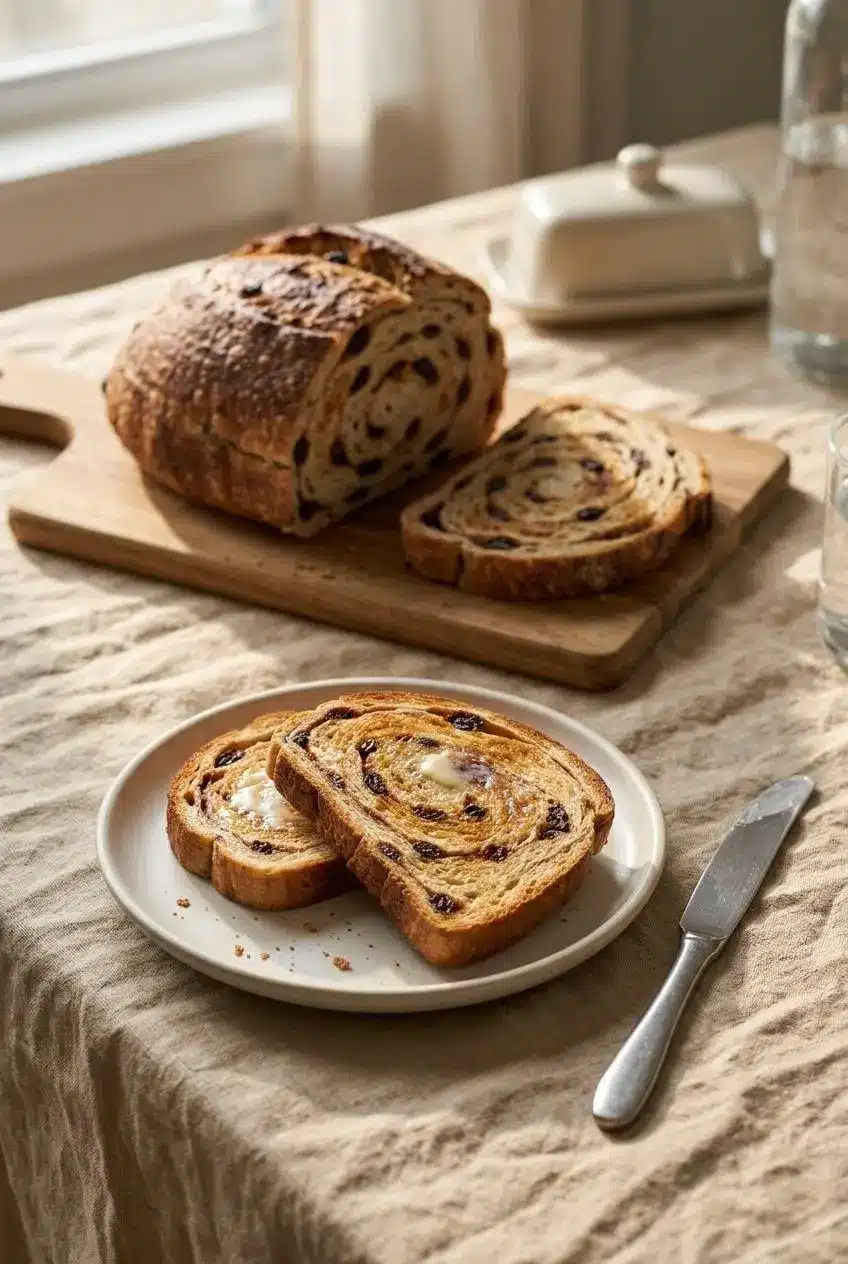
Cool the loaf completely before wrapping it well. Keep it at room temperature, protected from air and moisture, and freeze what you want to save for longer storage. Wrapping warm bread traps condensation against the crust.
Freeze Individual Slices for Breakfast
Slice the cooled loaf before freezing if you want convenient breakfast portions. Package the slices securely to limit air exposure and make individual pieces easy to remove. You can then toast a portion without handling the whole loaf.
Buttered Toast, Apple Paninis, and French Toast
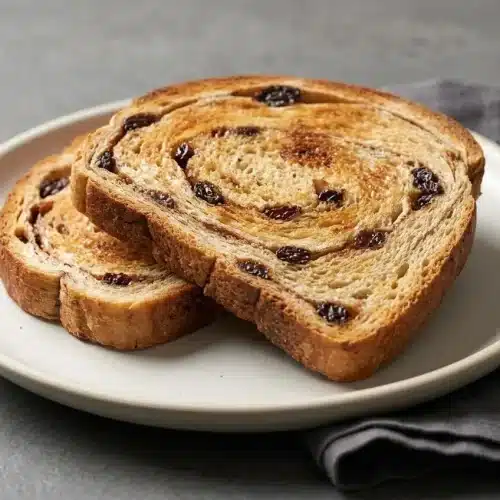
- Buttered toast: Toast slices and spread with salted butter to balance the sweet swirl.
- Apple paninis: Fill slices with peanut butter and thinly sliced apple for a sweet-savory sandwich.
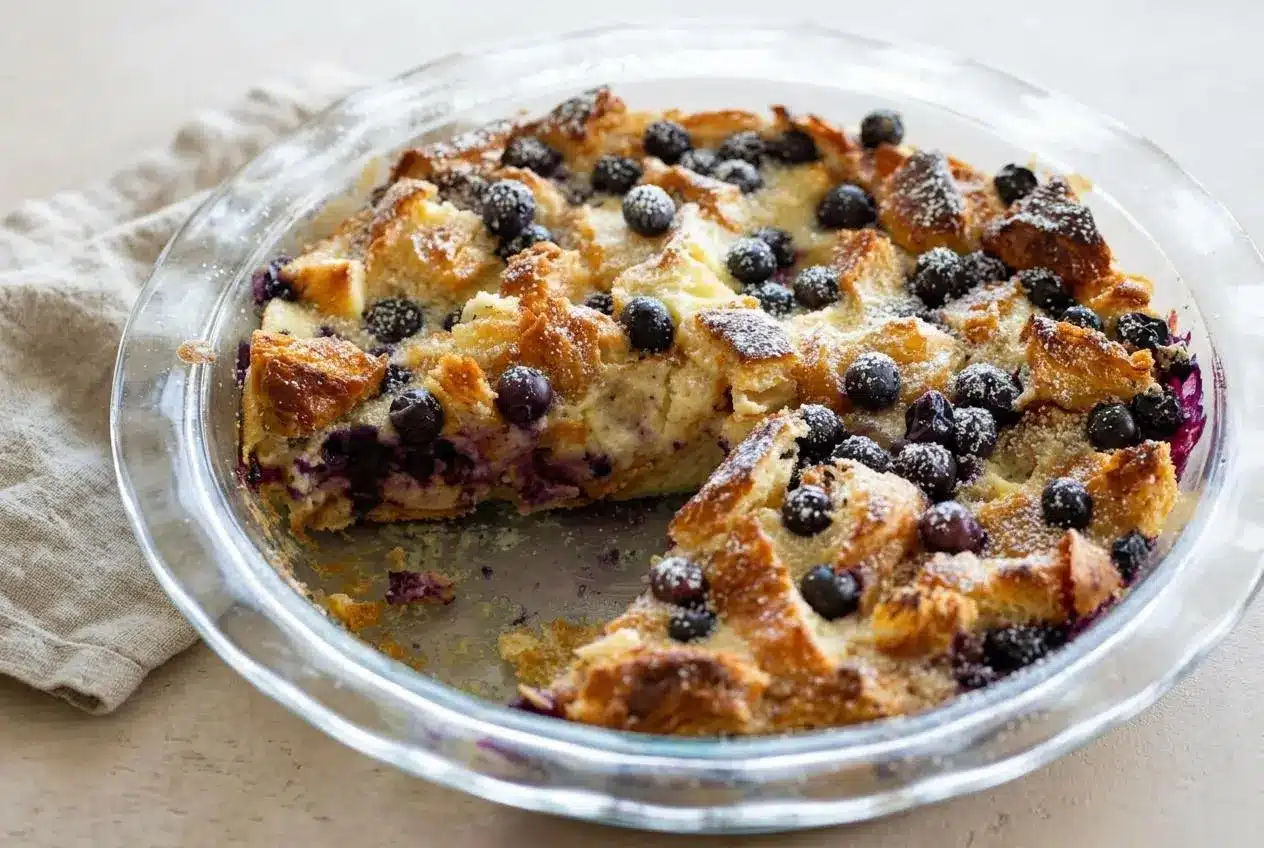
- French toast or pudding: Use leftover slices for French toast or warm breakfast bread pudding, letting the cinnamon and raisins supply extra flavor.
Conclusion
This soft pan loaf brings sourdough character, sweet raisins, and a fragrant cinnamon swirl to breakfast without relying on starter alone for its rise.
Take care with the sealing edge, then give the finished loaf time to cool. Those neat slices will be worth the wait when the toaster is ready.
Frequently Asked Questions
When Should I Add Cinnamon and Raisins to My Sourdough?
Add them during shaping, after the first bulk rise, over the 6 x 20-inch rectangle. Prepare the filling during the rise, but keep it separate until you’re ready to roll.
Can I Use Unfed Sourdough Discard for Cinnamon Raisin Bread?
Yes, use 1/2 cup (113g) of unfed discard in place of ripe starter. Keep the instant yeast because this formula uses it for rising power; the discard’s condition determines how much tang it contributes.
How Do I Prevent a Hollow Gap in My Cinnamon Swirl Bread?
Keep the 2 teaspoons of flour in the filling and brush the dough with egg wash to help the layers adhere. Roll snugly and seal at the clean edge; these measures reduce separation without guaranteeing a completely closed swirl.
Is Cinnamon Raisin Sourdough Bread Healthy?
This is an enriched sweet bread containing added sugar and butter, rather than a bread that is inherently healthy because it contains sourdough. Portion size and the rest of your meal matter when deciding how it fits your eating preferences and needs.
Cinnamon Raisin Sourdough Bread

Equipment
- stand mixer fitted with the dough hook
- bread machine
- 9 x 5 Loaf Pan
- Stoneware Loaf Pan
- Aluminum Foil
- Digital thermometer
Ingredients
- 1/2 cup sourdough starter (113g) ripe or discard
- 3 cups King Arthur Unbleached All-Purpose Flour (360g)
- 2 1/2 teaspoons instant yeast
- 1 tablespoon granulated sugar
- 1 1/4 teaspoons table salt (8g)
- 1 large egg
- 5 tablespoons unsalted butter (71g) softened
- 2/3 cup water (150g) lukewarm
- 1/4 cup granulated sugar (50g)
- 1 1/2 teaspoons ground cinnamon
- 2 teaspoons King Arthur Unbleached All-Purpose Flour
- 1 large egg beaten with 1 tablespoon water
- 1/2 cup raisins (75g)
Instructions
- Measure the dough flour by weight, or spoon it gently into a measuring cup and level the top, then combine the first eight ingredients and knead by hand, with a dough-hook mixer, or using a bread machine’s dough cycle. For a mixer, allow about 6 to 8 minutes at medium-low speed, looking for a soft dough with a smooth surface.
- Lightly grease a container, add the dough, and let it rise for 1 1/2 to 2 hours. Its volume should approach double before shaping begins.
- Stir the filling sugar, cinnamon, and 2 teaspoons of flour together during the first rise. The mixture should look evenly colored, without pockets of plain flour or concentrated cinnamon.
- Press the risen dough gently to release the gas, then move it onto a lightly greased work surface. The dough should remain soft and pliable rather than flattened with force.
- Use a rolling pin and your hands to form a rectangle approximately 6 inches wide and 20 inches long. A reasonably even thickness helps the filling form consistent layers.
- Coat the rectangle with egg wash, then distribute the cinnamon filling and raisins evenly while keeping a 1-inch strip free of filling along one short edge. This clean final edge gives the dough a surface that can seal without sugar and fruit getting in the way.
- Roll from the filled short edge toward the bare strip, keeping the log snug, then pinch both ends and the lengthwise seam closed. The layers should sit close together without stretching the dough until it tears.
- Grease a 9 x 5-inch loaf pan or the stoneware loaf pan, place the log inside with its seam underneath, cover, and let rise for about 1 hour. Look for a crest about 1 inch above the metal pan’s rim, or dough level with the stoneware pan’s top.
- Heat the oven to 350°F during the second rise. The shaped loaf should reach its pan-specific rise cue before baking.
- Brush the loaf with remaining egg wash if desired, bake for 40 to 45 minutes, and loosely cover the top with aluminum foil after the first 15 to 20 minutes. For this loaf, look for a golden crust and a center reading of 190°F on a digital thermometer.
- Release the baked loaf’s edges, lift it out of the pan, and brush the hot top with butter if desired, then let it cool completely before cutting. The optional butter gives the crust a soft finish, while cooling helps the crumb and swirl hold their shape.
- Wrap the fully cooled loaf well for room-temperature storage, or freeze it for longer keeping. Wait until the bread has released its warmth so moisture does not collect inside the wrapping.