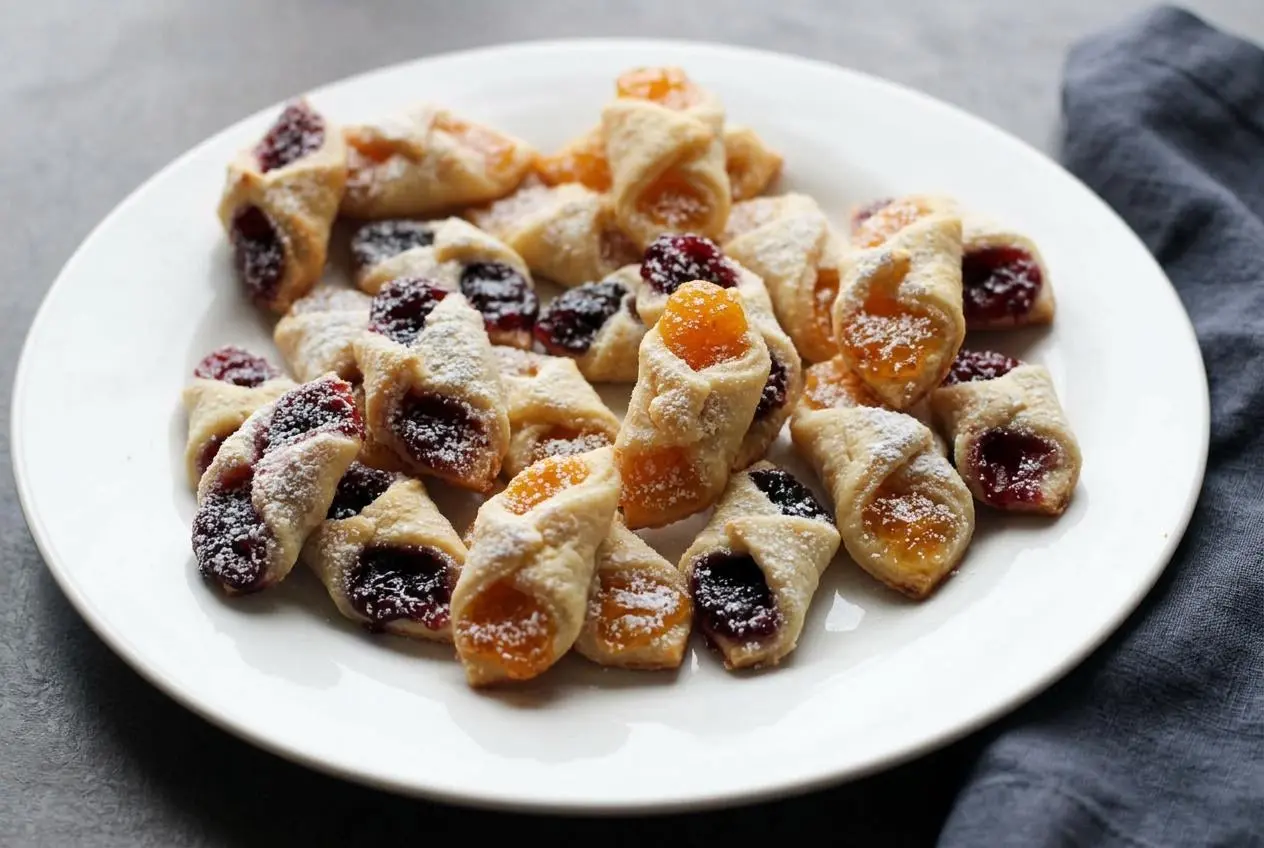
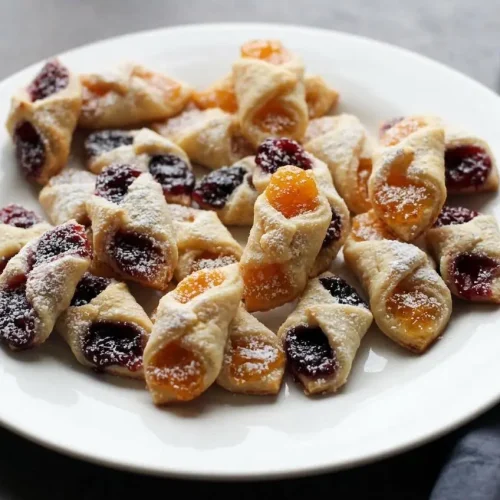
Cream cheese kolacky are tender, flaky folded cookies with sweet fruit centers. This recipe makes 60 cookies from butter and cream cheese pastry, with a one-hour dough chill, thick fruit filling, and a powdered sugar finish.
These Polish-style cookies pair a gently tangy dough with a bright ribbon of fruit. Their folded shape leaves the filling peeking out at both ends, adding color to a Christmas cookie platter without elaborate decorating.
The pastry contains no yeast, so there’s no rising to manage. Give the dough its full chill, keep the filling controlled, and pay attention to where the corners overlap. That little seal makes the difference.
Choose a filling that holds a small mound on a spoon rather than running off the edges.
Key Ingredients and Why They Matter
Butter and cream cheese provide richness and tenderness, flour gives the pastry structure, and vanilla and salt round out its flavor. Thick fruit pastry filling adds sweetness and contrast while helping the centers stay neatly contained.
- 1 cup unsalted butter (softened)
- 8 ounce package cream cheese (softened)
- ¼ teaspoon vanilla extract
- 2¼ cups all purpose flour
- ½ teaspoon salt
- 12 ounce can fruit pastry filling
Use full-fat block cream cheese, such as Philadelphia-style brick cream cheese, for the intended dough texture. Whipped cream cheese, reduced-fat versions, and tub spreads have different formulations and may change how the pastry mixes, rolls, and spreads.
Softened butter blends evenly with the cream cheese to form a rich pastry without yeast. Softened doesn’t mean melted: both should yield to pressure while still holding their shape.
I look for block cream cheese that gives easily under a spoon but still holds its shape, so it blends without leaving firm lumps.
Flour supports the folded shape. Salt keeps the rich dough from tasting flat, while vanilla supplies a quiet background aroma. The dough itself isn’t heavily sweetened; the fruit center and final dusting provide the sweet contrast.
Canned fruit pastry filling is the dependable choice here because its thick consistency helps it stay in place during baking. Look for pastry filling rather than assuming any jar of jelly will behave the same way.
How to Make Cream Cheese Kolacky Step by Step
Plan for the full dough chill before rolling. Have plastic wrap, a baking sheet, and wire racks ready.
Yield: 60 cookies. Prep: 15 minutes. Overall cooking time: 30 minutes. Chill: 1 hour. Total: 1 hour 45 minutes. Each baking sheet needs 12 to 15 minutes in the oven, rather than the full overall cooking time.
- Beat the softened butter with the cream cheese, then blend in the vanilla once the mixture becomes fluffy.
Look for an evenly combined mixture without visible cream cheese lumps. - Stir the salt through the flour in a separate bowl, then work this mixture into the butter mixture in four additions, incorporating each portion before adding the next.
The flour should disappear into a cohesive, soft dough. - Enclose the dough in plastic wrap and refrigerate for 1 hour.
This chill firms the fat so the dough becomes easier to handle. - Set the oven to 400°F and allow it to preheat.
The oven should reach the baking temperature before the cookies go in. - On a lightly floured work surface, roll the dough to approximately ⅛-inch thickness and cut it into 2-inch squares.
A consistent thickness helps the cookies bake evenly. - Portion a little more than a ½ teaspoon of fruit pastry filling onto each square’s center and draw it into a diagonal strip.
Keep the two corners that will fold together free of fruit. - Bring the two clean, opposite corners over the filling, dampen their contact area with a little water, press the overlap firmly together, and arrange the cookies about an inch apart on a baking sheet.
The overlapping layers should touch dough to dough, with no filling between them. - Bake for 12 to 15 minutes, transfer the cookies to wire racks to cool completely, and dust with powdered sugar before eating.
Look for set edges and lightly golden bottoms rather than deeply browned tops.
After chilling, the dough should feel pliable, somewhat like soft modeling dough, rather than sticky. If it smears across the counter or clings to the rolling pin, pause and let it firm up in the refrigerator.
Start checking doneness at 12 minutes. The tops can remain fairly pale even when the cookies are ready, so carefully check underneath one cookie before deciding they need more time.
Tips and Troubleshooting for Kolacky That Stay Sealed
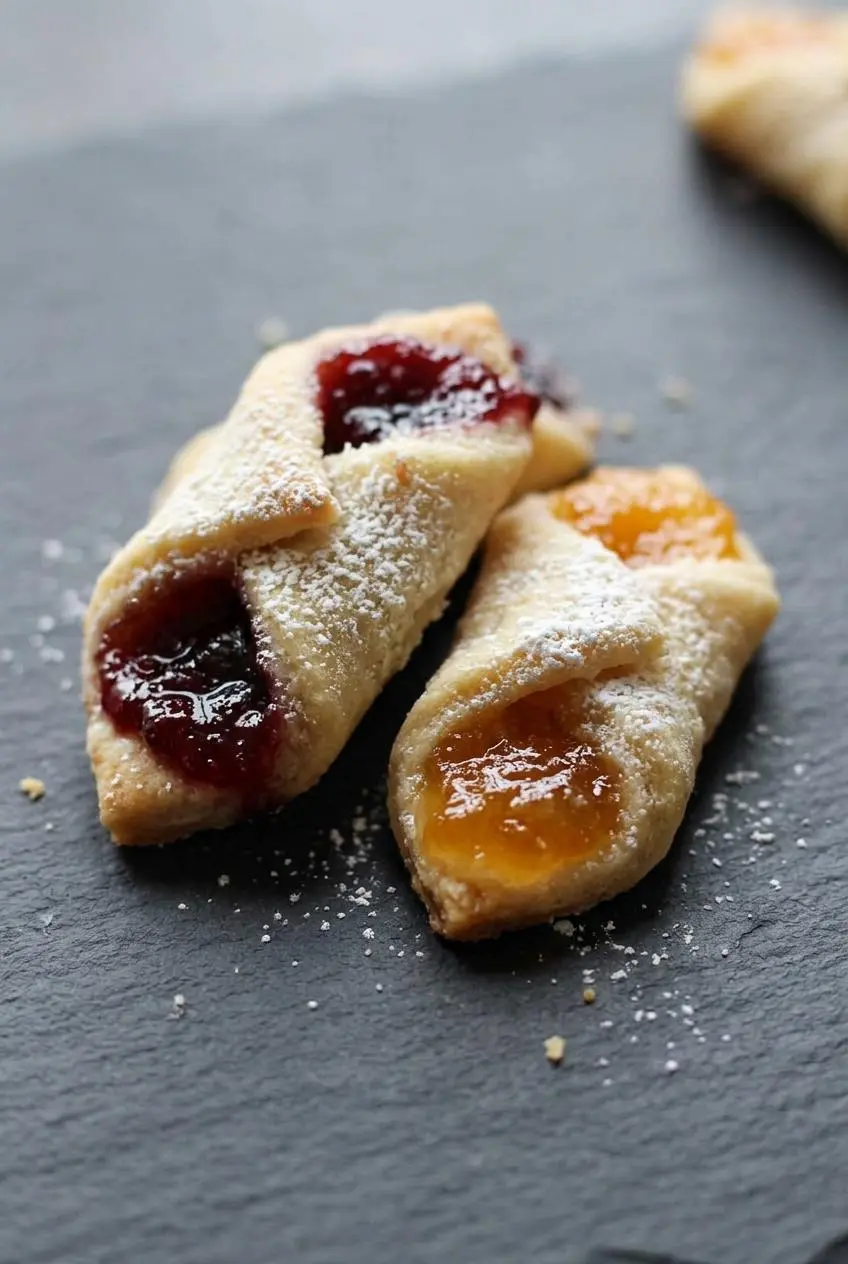
A clean overlap matters more than an especially dramatic pinch. Filling between the dough layers makes the seam slippery and harder to secure.
The Corner-Sealing Technique
Think of each square as a diamond. Spread the fruit diagonally between the two corners that will remain open, leaving the other pair clean for folding.
Bring those clean corners together over the center. Touch a small drop of water to the contact area, overlap the dough, and press firmly enough that the layers join. Avoid soaking the seam; you’re moistening the surface, not making it wet.
A few cookies may still unfold. If the pastry has baked properly, an opened shape doesn’t spoil the tender dough or sweet fruit center.
Common Kolacky Mistakes and How to Fix Them
- Sticky dough: Warm fat makes rolling difficult. Work with smaller portions and keep unused dough chilled instead of adding flour to the mixing bowl.
- Opening seams: Filling on the corners or a loosely pressed overlap can weaken the join. Keep the folding corners clean, moisten the contact area, and press firmly.
- Spreading cookies: Dough that becomes too warm during shaping can lose definition. Return soft dough to the refrigerator until it feels manageable.
- Leaking or scorching filling: An oversized scoop or runny filling can escape onto the pan. Keep to a little more than a ½ teaspoon and choose thick pastry filling.
Rolling the entire batch at once gives the dough more time to warm up. Smaller portions make it easier to maintain clean cuts and lift the squares without stretching them.
Best Fillings and Traditional Variations for Kolacky
Choose consistency first, then flavor. Every alternative below is optional and stays separate from the fruit pastry filling used in the method.
Canned Pastry Filling vs Thick Jam
- Canned pastry filling: The most dependable choice for this method, with enough body to hold a small mound and stay within the folded dough.
- Thick fruit preserves: A possible alternative, but less predictable during baking; choose preserves that don’t flow across the dough.
- Thin jam or jelly: More likely to bubble out and leave sticky, scorched patches on the baking sheet.
Classic Apricot, Raspberry, Cherry, and Prune Fillings
- Apricot: Bright, gently tart fruit contrasts with the buttery pastry.
- Raspberry: A lively berry flavor adds a sharper sweet-tart center.
- Cherry: A bold fruit flavor and deep color stand out on a cookie platter.
- Prune: A mellow, rounded sweetness offers a traditional flavor choice.
- Peach: A softer fruit flavor works well for those who prefer less tartness.
Poppy Seed and Sweet Cheese Fillings
Poppy seed and sweet cheese fillings are traditional options associated with related Eastern European pastries. Choose a filling intended for baking rather than improvising a loose mixture.
Sweet cheese filling is separate from the cream cheese already mixed into this dough. Nut fillings offer another optional direction, though each filling’s consistency can affect how neatly the cookies hold their shape.
Optional Lemon Zest for a Brighter Flavor
For an optional citrus accent, rub fresh lemon zest into the softened butter and cream cheese before mixing. It adds fragrant contrast to the rich pastry and sweet fruit without changing the official ingredient list.
If that citrus-and-cream-cheese combination appeals to you, lemon cream cheese bars offer another dessert with a similar flavor pairing.
Making Kolacky Ahead for Holiday Baking
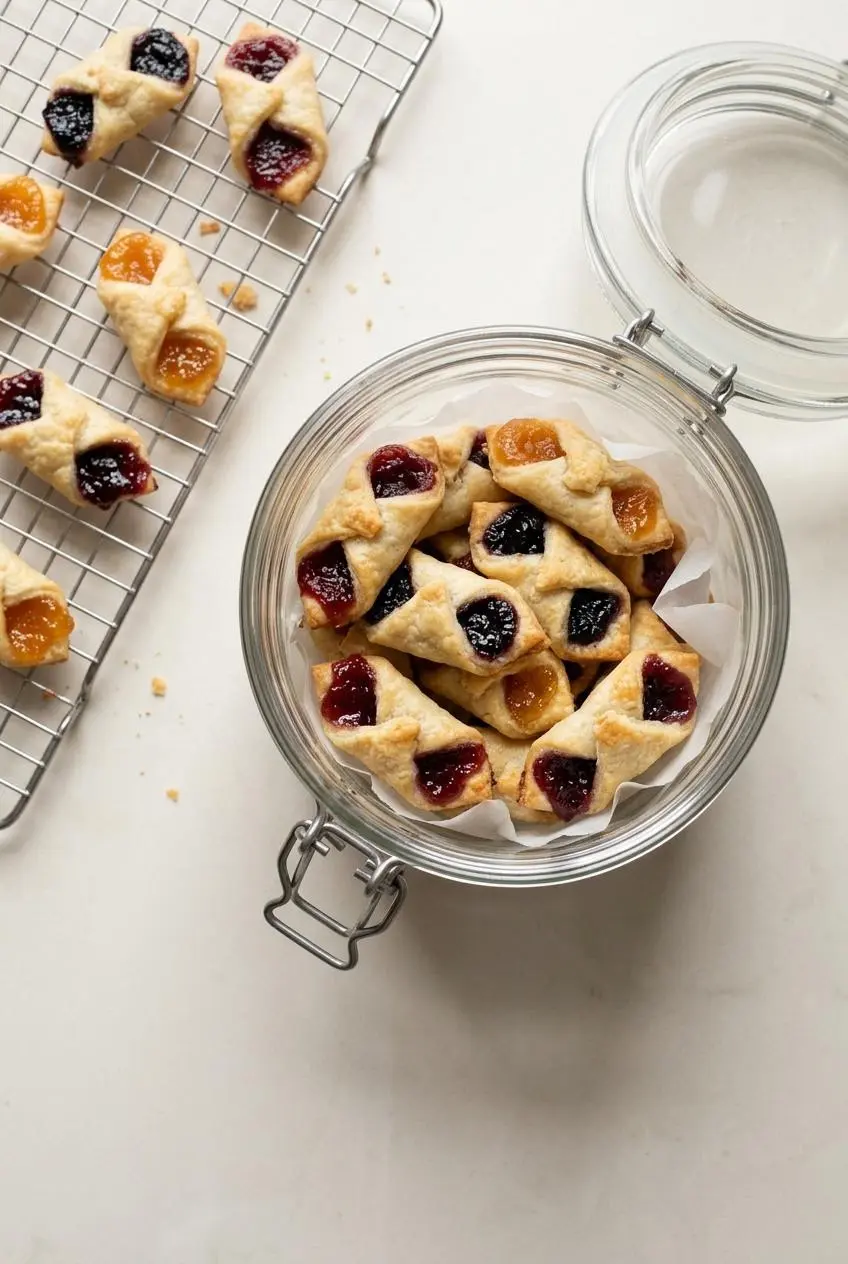
Use the required dough chill as a natural break in your baking session. Mix and wrap the dough first, then organize your rolling area, filling, baking sheets, and cooling racks while it firms.
Wrapping and Chilling Cream Cheese Dough
Keep the dough enclosed in plastic wrap during its required refrigerator rest so the surface doesn’t dry out. When you begin shaping, uncover only the portion you’re working with and keep the remainder chilled.
The useful handling cue is firmness without stiffness: the dough should roll without smearing and bend without tearing. Avoid forcing dough that feels too soft to lift cleanly.
Keeping Baked Kolacky Fresh
Let the cookies cool completely on wire racks before packing them in an airtight container. Trapping warmth inside the container encourages moisture to collect and soften the pastry.
Leave off the powdered sugar until serving. Storage conditions depend on the filling, so follow any applicable filling instructions rather than assuming every variation belongs at room temperature. As a precaution, keep cookies with a perishable sweet cheese filling refrigerated; cream cheese baked into the dough is a different situation from a separate cheese center.
Serving Kolacky on Holiday Cookie Trays
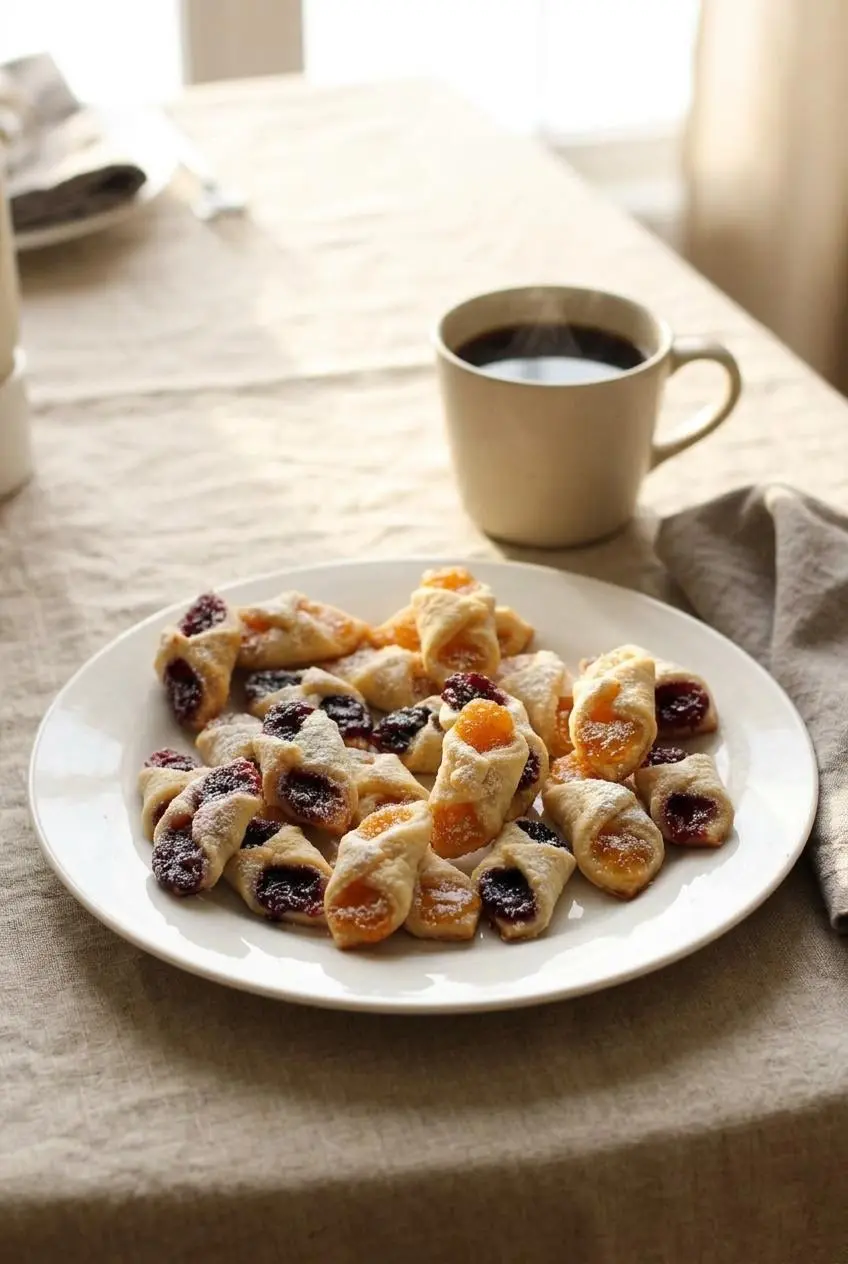
Serve fruit-filled kolacky at room temperature with coffee or tea. Arrange contrasting filling colors together so apricot, raspberry, and cherry centers bring variety to a Christmas cookie platter.
Dust fully cooled cookies close to serving. Powdered sugar can melt into a warm or damp surface instead of leaving a delicate white finish.
For a broader dessert spread, pair them with flaky cream cheese squares, keeping the kolacky’s colorful fruit centers as the contrast.
Conclusion
Tender pastry and sweet fruit centers make these folded cookies a welcome addition to a holiday tray. Full-fat block cream cheese and thick pastry filling give the dough and centers the right starting point.
Keep the dough cool, control the filling portion, and press clean overlaps together firmly. A little care at the shaping stage leaves you with cookies worth sharing, even if a corner or two unfolds.
Frequently Asked Questions
Is It Kolache or Kolacky?
Kolacky, also spelled kolaczki, commonly means folded Polish-style cookies such as these. Kolache commonly refers to Czech yeast-raised buns with filled centers. Regional naming varies, so the names aren’t universally interchangeable.
How Do You Keep Cream Cheese Kolacky From Popping Open?
Keep the dough cool and the overlapping corners free of filling. Moisten the contact area with a drop of water, then press firmly. Use the stated portion of a little more than a ½ teaspoon rather than a heaping scoop.
Can I Use Regular Jam Instead of Canned Pastry Filling?
Thick preserves may work as an optional substitution, but they’re less predictable than pastry filling. Runny jam or jelly can bubble out. Choose a filling that holds its shape rather than flowing across the square.
Can I Prepare the Dough and Cookies Ahead?
Organize preparation around the required dough chill, keeping the dough wrapped and chilled until shaping. Once baked, cool the cookies completely before packing, and leave the powdered sugar off until serving. Follow filling-specific storage instructions.
Cream Cheese Kolacky

Equipment
- Baking Sheet
- Wire Racks
- Plastic wrap
Ingredients
- 1 cup unsalted butter (softened)
- 8 ounce package cream cheese (softened)
- ¼ teaspoon vanilla extract
- 2¼ cups all purpose flour
- ½ teaspoon salt
- 12 ounce can fruit pastry filling
Instructions
- Beat the softened butter with the cream cheese, then blend in the vanilla once the mixture becomes fluffy. Look for an evenly combined mixture without visible cream cheese lumps.
- Stir the salt through the flour in a separate bowl, then work this mixture into the butter mixture in four additions, incorporating each portion before adding the next. The flour should disappear into a cohesive, soft dough.
- Enclose the dough in plastic wrap and refrigerate for 1 hour. This chill firms the fat so the dough becomes easier to handle.
- Set the oven to 400°F and allow it to preheat. The oven should reach the baking temperature before the cookies go in.
- On a lightly floured work surface, roll the dough to approximately ⅛-inch thickness and cut it into 2-inch squares. A consistent thickness helps the cookies bake evenly.
- Portion a little more than a ½ teaspoon of fruit pastry filling onto each square’s center and draw it into a diagonal strip. Keep the two corners that will fold together free of fruit.
- Bring the two clean, opposite corners over the filling, dampen their contact area with a little water, press the overlap firmly together, and arrange the cookies about an inch apart on a baking sheet. The overlapping layers should touch dough to dough, with no filling between them.
- Bake for 12 to 15 minutes, transfer the cookies to wire racks to cool completely, and dust with powdered sugar before eating. Look for set edges and lightly golden bottoms rather than deeply browned tops.