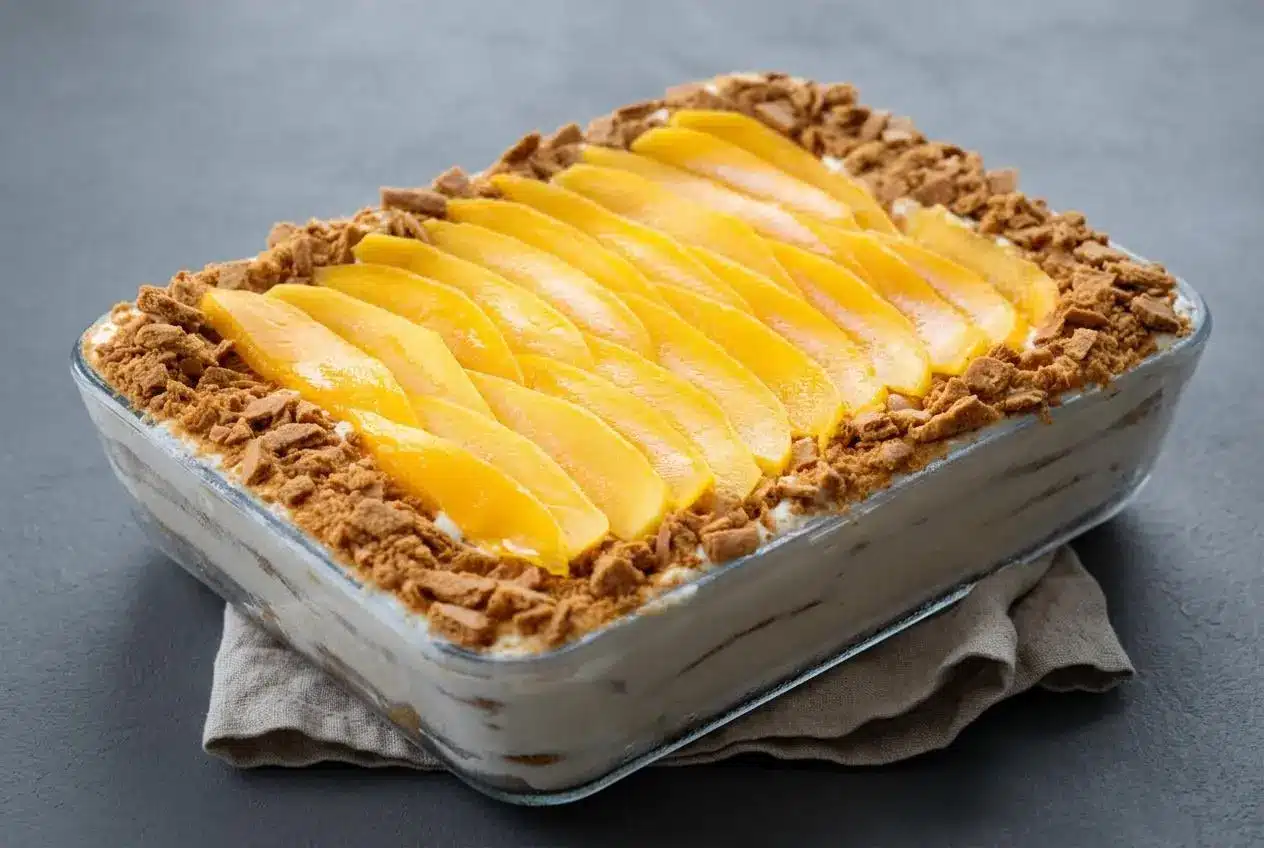
This mango float recipe layers ripe mangoes, graham crackers, all-purpose cream, and sweetened condensed milk into a Filipino no-bake dessert. Refrigeration turns the crackers soft and cake-like beneath sweet fruit and creamy layers.
Also called crema de mangga or mango royale, this Filipino icebox cake puts sweet mangoes front and center. Thin fruit slices and chilled cream make each bite smooth, tropical, and rich without any baking.
You can serve it soft enough to spoon or freeze it after chilling for firmer squares. The important part is giving the crackers time to absorb moisture. That’s where the cake-like texture begins.
Before you start, make room in the refrigerator for the assembled dish to sit level.
Essential Ingredients and Smart Substitutions
Mangoes bring fragrance and freshness, cream adds richness, and condensed milk sweetens and binds the creamy filling. Graham crackers provide structure, then absorb moisture to become tender layers.
- 24 pieces Graham crackers ((20-24 pieces))
- 500 ml all-purpose cream ((2 packs))
- 300 ml sweetened condensed milk ((1 can))
- 4 small-medium ripe mangoes
The cream mixture does two jobs: it carries the mango flavor through each bite and supplies the moisture that softens the grahams. Keep the crackers in close contact with it rather than leaving exposed corners.
I prefer mangoes that yield gently when pressed but still hold their shape when sliced.
Best Mangoes for Soft, Even Layers
Manila, Carabao, and Ataulfo mangoes work well because their sweet flesh is generally smooth rather than stringy. Choose ripe fruit that you can cut into thin strips without crushing.
Underripe mangoes can taste sharp and feel firm against the soft cream. Fibrous fruit leaves stringy bites, while overly mushy mangoes release juice and make level layers difficult. Variety helps, but the condition of the fruit matters most.
Nestle All-Purpose Cream Versus Heavy Whipping Cream
Filipino all-purpose cream, such as Nestle, is a shelf-stable dairy cream sold in cartons or cans. It isn’t sweetened condensed milk, and it isn’t a ready-made whipped topping. Check the package because formulations vary.
- Chilled all-purpose cream: Gives a rich, relatively dense filling when stirred with condensed milk; suitable products can also gain volume with whipping.
- Heavy whipping cream: Offers an optional US adaptation with a lighter, airier texture when whipped cold and combined gently with condensed milk.
- Cool Whip: Provides a sweetened, stabilized whipped-topping shortcut, but changes the flavor and texture rather than acting as an identical cream replacement.
For the heavy cream adaptation, stop whipping once the cream holds soft peaks, then fold in the condensed milk gently. Avoid beating until grainy. More air makes the filling lighter, but the crackers still need their refrigerator rest.
Graham Crackers and Cookie Alternatives
Graham crackers begin crisp and gradually take up moisture from the filling. That transformation creates the soft, sliceable layers, so don’t judge the finished texture immediately after assembly.
- Digestive biscuits: Add a wheaty flavor and may create thicker layers.
- Ladyfingers: Make a more sponge-like dessert and absorb moisture differently from grahams.
- Gluten-free grahams: Offer an optional alternative, though brands differ in firmness and absorption; check all ingredient labels if needed.
How to Make Mango Float Step by Step
Allow about 15 minutes of active preparation, plus cream prechilling and a 3 to 5 hour assembled refrigerator chill. This recipe makes 8 servings. Readiness depends on softened crackers, not the shortest possible total time.
Use an 8×8 or 6×6 glass dish, or a similar vessel with enough depth for the layers. These sizes produce different layer heights, so check capacity before assembly.
- Give the all-purpose cream an overnight refrigerator chill, or place it in the freezer for 30 minutes before starting.
The cream should feel thoroughly cold when you pour it. - Peel the mangoes, separate the fleshy cheeks from the pits, and slice them lengthwise with their flat sides against the cutting board.
Thin, intact strips will lie flatter between the cracker layers. - Pour the cold cream into a large mixing bowl and, for an optional airier filling, use a hand mixer to increase its volume to roughly double.
Leave it unwhipped for a denser filling, or look for a noticeably lighter, fuller consistency when whipping. - Blend the condensed milk into the cream in gradual additions.
The finished mixture should look uniform, without separate streaks of condensed milk. - Cover the bottom of the dish with graham crackers, spread one-quarter of the cream mixture across them to the edges, and add mango slices.
A continuous cream coating helps the outer cracker corners soften along with the centers. - Continue stacking crackers, cream, and mango until you have four layers, finishing with cream and mango on top.
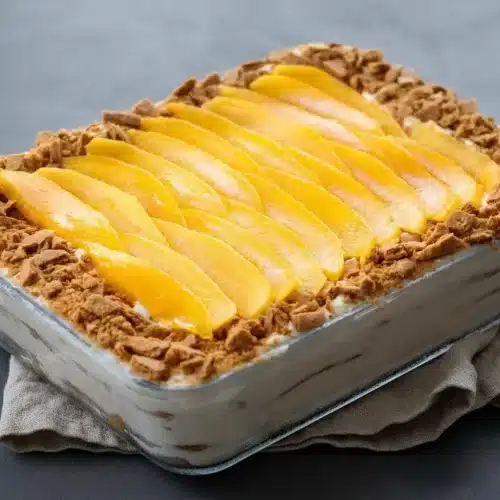
For an overlapping finish, lay the final mango slices partly over one another without piling them into a mound. - Refrigerate the assembled dessert for 3 to 5 hours, allowing longer if the crackers still feel dry, and freeze afterward only if you want a firmer result.
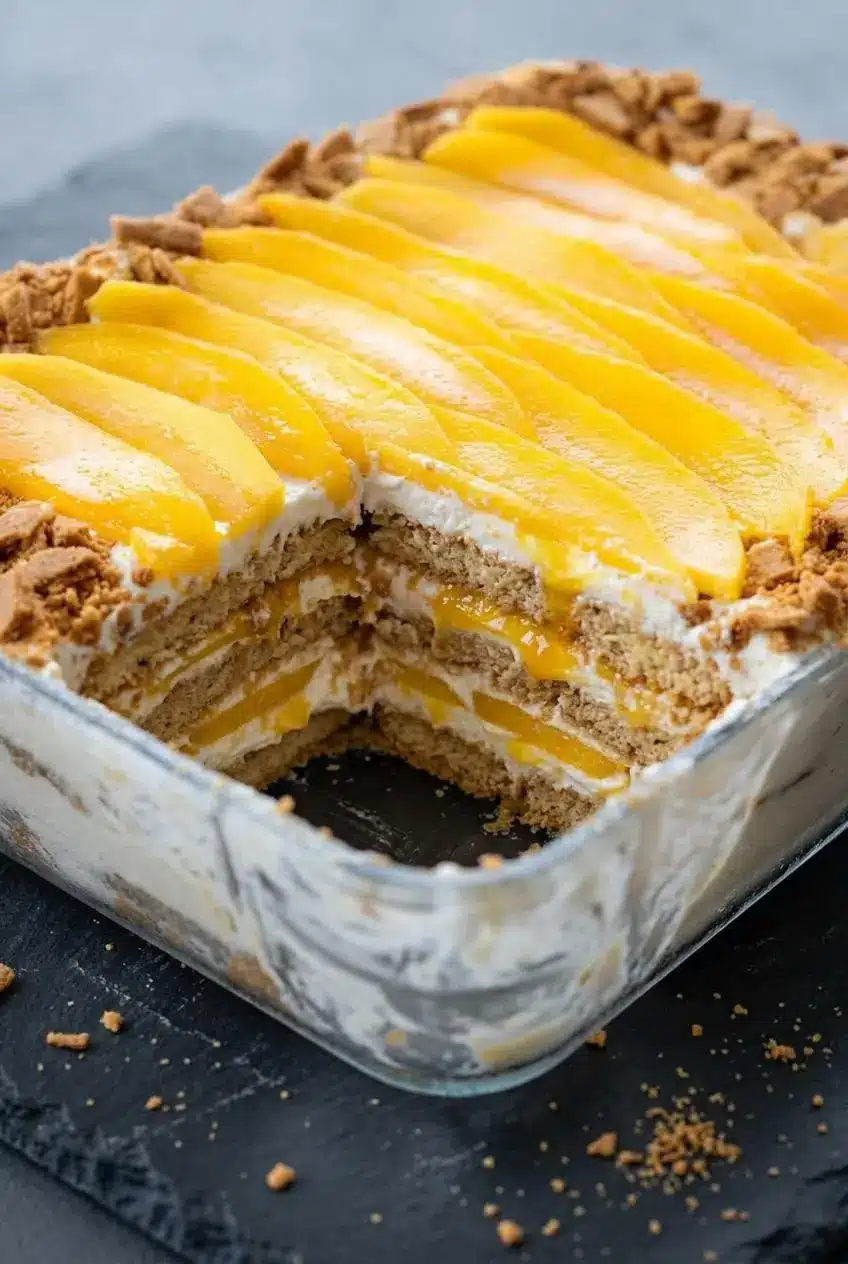
Check for plump grahams that yield easily to a butter knife without a dry, crunchy center.
Refrigeration lets moisture move from the filling into the crackers. Freezing immediately slows that movement and can leave hard graham layers inside a firm dessert. Check the center as well as an edge before choosing the frozen finish.
Expert Tips and Troubleshooting for Mango Float
Most texture problems come from cream temperature, fruit condition, or crackers that haven’t softened yet.
- Dry centers or corners: Give the dessert more refrigerator time if the grahams still crunch. Exposed corners also need cream contact, so spread each layer edge to edge during assembly. Freezing won’t replace this hydration stage.
- Pourable cream: Unwhipped all-purpose cream can naturally remain pourable. If you expected more volume, check that the product suits whipping and that it’s cold; a chilled bowl and beaters can help. Longer mixing won’t fix every formulation.
- Blender questions: A suitable blender can briefly combine cream and condensed milk, but it won’t create the same airy texture as a hand mixer. Check the appliance instructions and avoid prolonged blending.
- Watery bottoms: Overly soft mangoes and pooled fruit juice can loosen the filling. Choose fruit that holds a slice and leave excess juice behind rather than pouring it into the dish.
- Icy or weeping layers: Repeated thawing can worsen texture. Portion a firm dessert thoughtfully so you soften only what you plan to serve; there isn’t a dependable rescue for separated layers.
- Too much sweetness: Choose fragrant, balanced mangoes rather than overripe, syrupy fruit. Keep the stated condensed milk quantity for this version, and remember that sweeter cookie swaps change the balance.
- Difficult lifting: An optional parchment sling with overhanging sides can help lift a firm cake. It won’t turn a soft, pudding-like float into a freestanding cake.
- A plain-looking top: Add an optional scattering of crushed graham crumbs for contrast. Keep the mango slices visible rather than burying them.
Fruit that’s too soft for neat layers can still suit a fresh mango smoothie. Save those juicy trimmings for blending rather than forcing them into the float.
Biscoff, Coconut, and Party-Size Mango Float Variations
These optional adaptations change flavor or texture. Keep them separate from the four-ingredient version, and check the cracker or cookie layers for softness rather than expecting identical results.
Biscoff or Oreo Mango Float
Biscoff mango float pairs the fruit with caramelized, spiced cookies. It tastes sweeter and more warmly spiced than the graham version, so it suits mangoes with a little brightness.
Oreos bring a stronger chocolate flavor, and their filling changes both sweetness and moisture absorption. Cookie thickness matters too: a firm cookie layer may need a different setting period, so test its texture before serving.
Dairy-Free Coconut Mango Float
- Choose chilled coconut whipping cream formulated for whipping rather than assuming every canned coconut cream will gain volume.
- Use sweetened condensed coconut milk as the optional dairy-free condensed milk component.
- Expect coconut flavor and a potentially different set because product formulations vary.
- Check the cookies and both cream products before calling the finished dessert vegan or dairy-free.
How to Scale for a 1 Kilo Mango Float
First decide whether “1 kilo” means whole mangoes or prepared mango flesh. Those aren’t interchangeable: skins and pits don’t become dessert layers.
The four small-medium mangoes here don’t have a specified weight, so there’s no dependable fixed multiplier. Weigh the prepared flesh from a reference batch, then divide your target prepared-fruit weight by that amount. Apply the resulting factor consistently to the crackers, cream, condensed milk, and mangoes.
A 9×13 dish is a possible larger-pan choice, not a guaranteed match for a kilo of fruit. Check its depth and capacity, and keep the cream coverage and layer proportions consistent. Don’t force everything into a shallow pan just to use one dish.
Chilling, Freezing, and Storing Mango Float
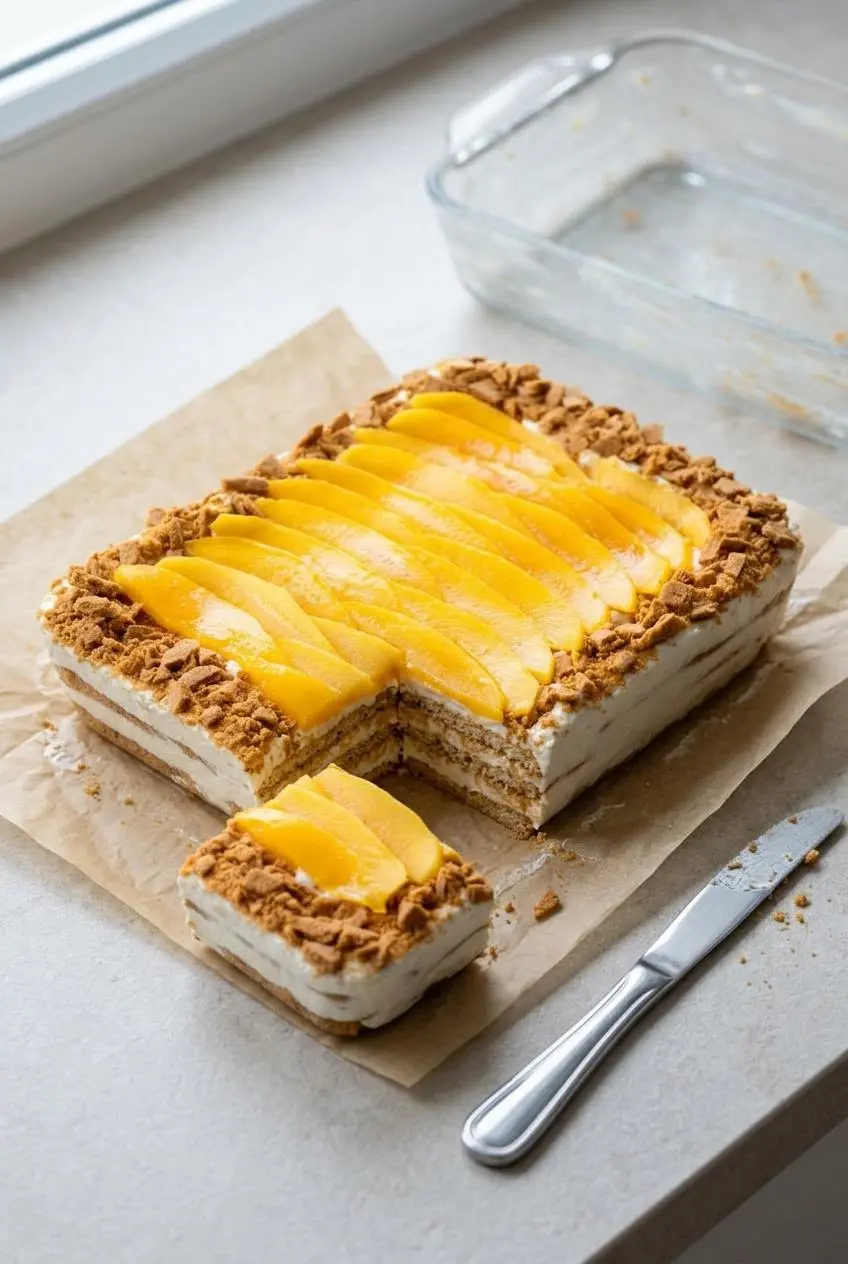
Refrigerated mango float is soft and pudding-like, while the frozen version becomes firmer and more like an icebox cake. Both start with the refrigerator rest in the method and a check that the grahams have softened.
For the frozen option, cover the hydrated dessert well before freezing. Let it soften enough for a knife to pass through without forcing it, checking the texture rather than relying on a fixed countertop wait.
If you prefer a frozen dessert without cracker layers, creamy mango ice cream offers a different way to enjoy that tropical flavor.
Keep refrigerated mango float covered to protect the surface from drying and absorbing refrigerator odors. For freezing, use a freezer-suitable covered container and protect exposed surfaces. Portioning the firm dessert lets you take out what you need without repeatedly softening the entire cake.
Treat it as a perishable fresh-fruit dairy dessert and keep it chilled between servings. These texture cues don’t establish a storage-life limit, so don’t use softness or firmness alone to decide how long to keep it.
Serving Mango Float for a Dessert Table
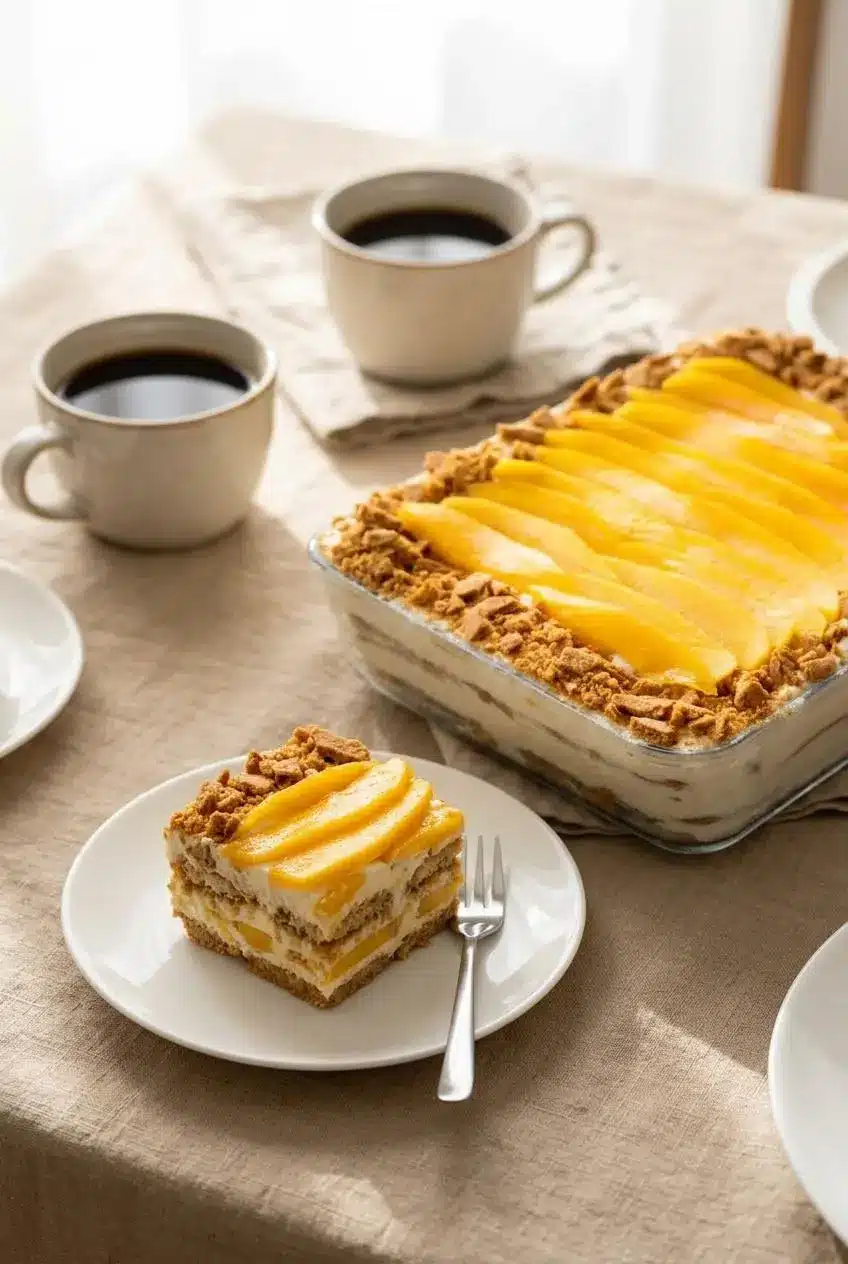
Choose the serving texture before planning the presentation. Soft refrigerated mango float works best spooned from the dish, while the firmer frozen version suits individual squares.
For a firm cake, use the optional parchment overhang to help lift it before cutting. Overlapping mango slices already provide a bright top, so extra decoration isn’t necessary. Offer hot coffee or black tea alongside the sweet cream and fruit.
Conclusion
Mango float turns four ingredients into a creamy, fruit-filled dessert without switching on the oven. Ripe mangoes and even cream coverage make every layer count.
Give the grahams time to soften in the refrigerator before optional freezing. Once they yield like cake, choose your favorite texture and serve.
Frequently Asked Questions
What Is the Difference Between Mango Graham and Mango Float?
The names commonly describe the same layered mango, cream, and graham dessert. Crema de mangga and mango royale are also common names, though household versions can differ.
Is Mango Float Meant to Be Frozen?
Either texture works: chilled is soft and spoonable; frozen is firmer. Refrigerate first until the crackers lose their dry centers, then freeze if desired.
What Is All-Purpose Cream and What Can I Substitute for It?
Filipino all-purpose cream is a shelf-stable dairy cream, not condensed milk. Cold heavy whipping cream is an optional adaptation; sweetened whipped topping produces a different result.
What Can I Use Instead of Graham Crackers in Mango Float?
Digestive biscuits, Biscoff cookies, and ladyfingers are optional alternatives. Their sweetness, thickness, and absorption differ, so check for soft layers instead of assuming identical setting behavior.
Can I Use a Blender to Mix the Cream and Condensed Milk?
Yes, briefly, if your appliance is suitable; expect a denser mixture. A hand mixer better suits the optional fluffy filling because it incorporates air. Avoid prolonged blending.
Mango Float Recipe

Equipment
- Cutting board
- large bowl
- Hand mixer
- rectangular or square (8×8 or 6×6) glass dish
Ingredients
- 24 pieces Graham crackers ((20-24 pieces))
- 500 ml all-purpose cream ((2 packs))
- 300 ml sweetened condensed milk ((1 can))
- 4 small-medium ripe mangoes
Instructions
- Give the all-purpose cream an overnight refrigerator chill, or place it in the freezer for 30 minutes before starting. The cream should feel thoroughly cold when you pour it.
- Peel the mangoes, separate the fleshy cheeks from the pits, and slice them lengthwise with their flat sides against the cutting board. Thin, intact strips will lie flatter between the cracker layers.
- Pour the cold cream into a large mixing bowl and, for an optional airier filling, use a hand mixer to increase its volume to roughly double. Leave it unwhipped for a denser filling, or look for a noticeably lighter, fuller consistency when whipping.
- Blend the condensed milk into the cream in gradual additions. The finished mixture should look uniform, without separate streaks of condensed milk.
- Cover the bottom of the dish with graham crackers, spread one-quarter of the cream mixture across them to the edges, and add mango slices. A continuous cream coating helps the outer cracker corners soften along with the centers.
- Continue stacking crackers, cream, and mango until you have four layers, finishing with cream and mango on top. For an overlapping finish, lay the final mango slices partly over one another without piling them into a mound.
- Refrigerate the assembled dessert for 3 to 5 hours, allowing longer if the crackers still feel dry, and freeze afterward only if you want a firmer result. Check for plump grahams that yield easily to a butter knife without a dry, crunchy center.