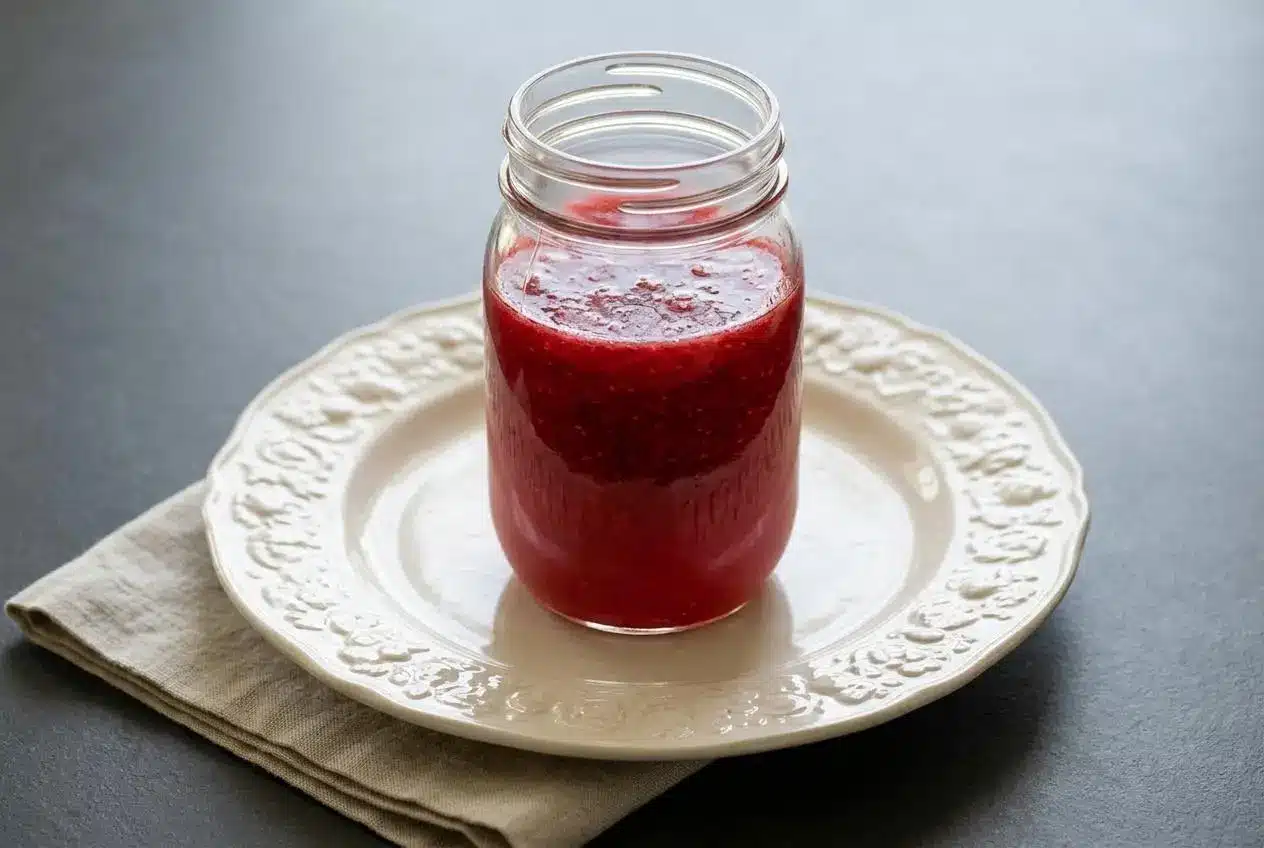
Strawberry lemonade concentrate canning requires a tested preservation recipe. This strawberry-raspberry sauce is not a validated canning formula, but it makes a smooth, tangy refrigerated drink base. Enjoy the bright aroma of simmering berries and lemon without treating the finished jar as shelf-stable.
Strawberries and raspberries cook with sugar, lemon juice, and water, then pass through a strainer for a ruby-red sauce. Think of it as a flexible berry concentrate for cold drinks and dessert drizzles, rather than a ready-to-can lemonade mix.
The berry blend brings sweetness, tartness, and enough character to stand up to cold water or a scoop of vanilla ice cream. You can adjust each drink at serving time instead of committing the whole batch. Start with a small taste.
Keep a spoon beside the saucepan before turning on the heat, because the first simmer needs constant stirring.
Ingredients and Why Each One Matters
Berries supply color and fruit flavor, sugar balances their tartness and gives the sauce body, lemon juice adds brightness, and water helps the mixture begin simmering before the fruit releases its juices.
- 1 cup fresh or frozen strawberries
- 1 cup fresh or frozen raspberries
- ⅓ cup granulated sugar
- 2 tablespoons lemon juice
- ⅓ cup water
Strawberries and raspberries: Strawberries provide a rounded, sweet berry flavor, while raspberries add a sharper edge. Both fresh and frozen berries work here. Straining matters because raspberry seeds can make an otherwise smooth drink feel gritty.
Sugar: Beyond sweetness, dissolved sugar gives the strained liquid a more syrupy feel. These quantities do not establish a preservation formula, so keep the distinction between sweetness and canning suitability clear.
Lemon juice and water: Lemon juice sharpens the fruit flavor; water helps distribute heat during the initial cooking stage. The listed lemon juice amount is a flavor component, not proof that the sauce is suitable for water bath canning.
I’d choose fragrant berries over perfectly shaped ones here, since the fruit will soften and pass through a strainer.
When handling fresh berries, use clean hands, clean surfaces, and clean potable water to help reduce contamination during produce preparation.
A separate tested canning formula may specify standardized bottled lemon juice. Follow that requirement when it appears, but don’t assume that switching this sauce to bottled juice or multiplying the batch validates it for canning.
How to Make the Berry-Lemon Concentrate Step by Step
This method makes a strained strawberry-raspberry sauce for refrigerated use, including as a drink base. Makes about 1 cup. Have a medium saucepan and a small jar ready.
- Place the strawberries, raspberries, granulated sugar, lemon juice, and water in a medium saucepan and stir them together.
The water will moisten the sugar around the fruit before cooking begins. - Set the burner to medium and stir continuously as the mixture reaches a simmer, cooking for about 3 to 5 minutes until juice flows from the berries.
The mixture should become looser as the released juices surround the fruit. - Turn the burner down to medium-low and cook for about 5 to 6 minutes, allowing the berries to soften and collapse.
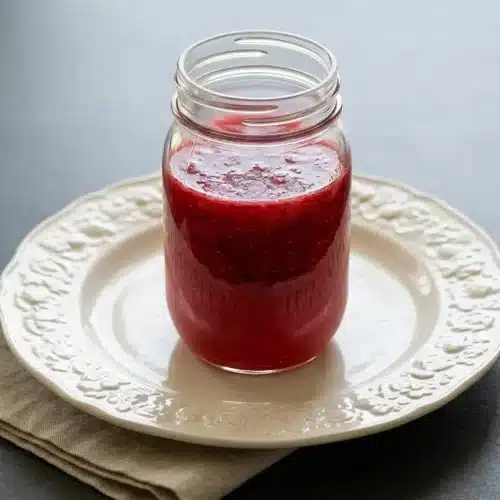
Look for broken-down fruit in a glossy, ruby-red liquid rather than intact, firm berries. - Let the sauce lose some heat, strain it into a small jar, and refrigerate it until needed.
The strained sauce should have a smoother texture without the berry seeds. - For an optional thicker finish while the sauce is still in the saucepan, use low heat for up to 15 additional minutes.
The liquid will become more concentrated and may coat the spoon more noticeably.
The optional thickening finish applies only to sauce in the saucepan, before cooling and straining. It is not a direction to heat a filled storage jar or return refrigerated sauce to the stove.
During the first simmer, keep the spoon moving across the bottom as well as around the edges. Sugar can catch where the pan gets hottest. Later, the softer berries and glossy liquid provide useful cooking cues, but you don’t need to reach a particular reduction percentage.
Safe Preservation and Strawberry Lemonade Concentrate Canning
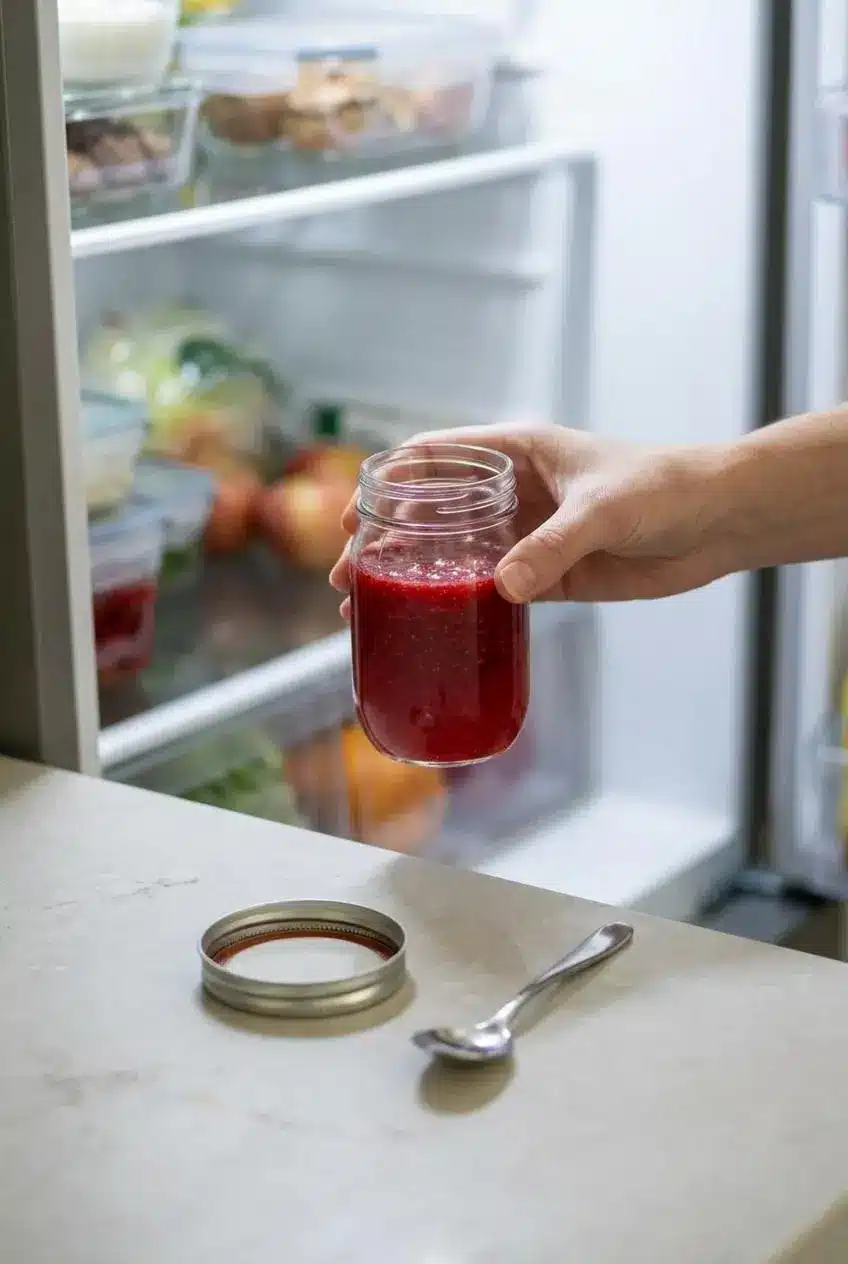
This exact berry sauce has no validated canning process provided. Keep it refrigerated rather than processing it for pantry storage. There are no processing times, headspace measurements, altitude schedules, or pantry storage limits to apply to this formula.
Refrigerator Storage for Small Batches
Refrigeration is the storage method for this sauce. After the slight cooling and straining step, keep it in a covered container in the refrigerator until use. A screw-top jar is convenient, but the lid does not turn the contents into a shelf-stable preserve.
Use a clean utensil to remove what you need, then return the remaining sauce to the refrigerator. No verified refrigerator duration accompanies this formula, so don’t assign it the storage life of a different syrup, jam, or canned juice.
Keep these two products distinct:
- This refrigerated berry sauce: Cooked, strained, and kept chilled for drinks or desserts.
- A shelf-stable concentrate: Made with a different, tested preservation formula and its complete processing directions.
Acidity, Jar Preparation, and Water Bath Processing
For pantry storage, start with a separate tested strawberry lemonade concentrate recipe from a recognized home-preservation authority, such as a university extension program. Follow the entire formula rather than borrowing a processing time and attaching it to this sauce.
Before beginning that separate recipe, confirm all of its requirements:
- The specified jar size and jar preparation, including whether sterilization is required.
- The exact fruit, sugar, and acid proportions, including the type of lemon juice.
- The required headspace and directions for removing trapped bubbles.
- The processing method and any altitude adjustment.
- The cooling procedure, seal checks, and directions for an unsuccessful seal.
Jar preparation depends on the tested process; don’t assume every recipe calls for identical treatment. Likewise, bottled lemon juice is one component of a formula, not a substitute for the rest of it.
Extra sugar, additional acid, a home pH reading, or a lid that pulls down cannot validate this sauce for pantry storage. If you have already sealed an unvalidated batch, seek qualified preservation advice rather than trying to repair it by boiling or resealing. Don’t taste questionable contents to evaluate them.
Prevent Scorching, Cloudy Syrup, and Berry Separation
A pleasant drink base needs smooth texture and balanced dilution more than it needs jam-like thickness. Use these adjustments to solve the actual problem without changing the official ingredient amounts.
- Sugar catches on the bottom: Concentrated heat and stationary sugar can cause scorching during the initial simmer. Stir constantly, sweeping the bottom of the saucepan rather than stirring only through the fruit.
- The sauce looks thin: A pourable sauce is not a failed batch. The optional low-heat finish can increase concentration during saucepan cooking, but thickness alone does not determine whether it will make a good drink.
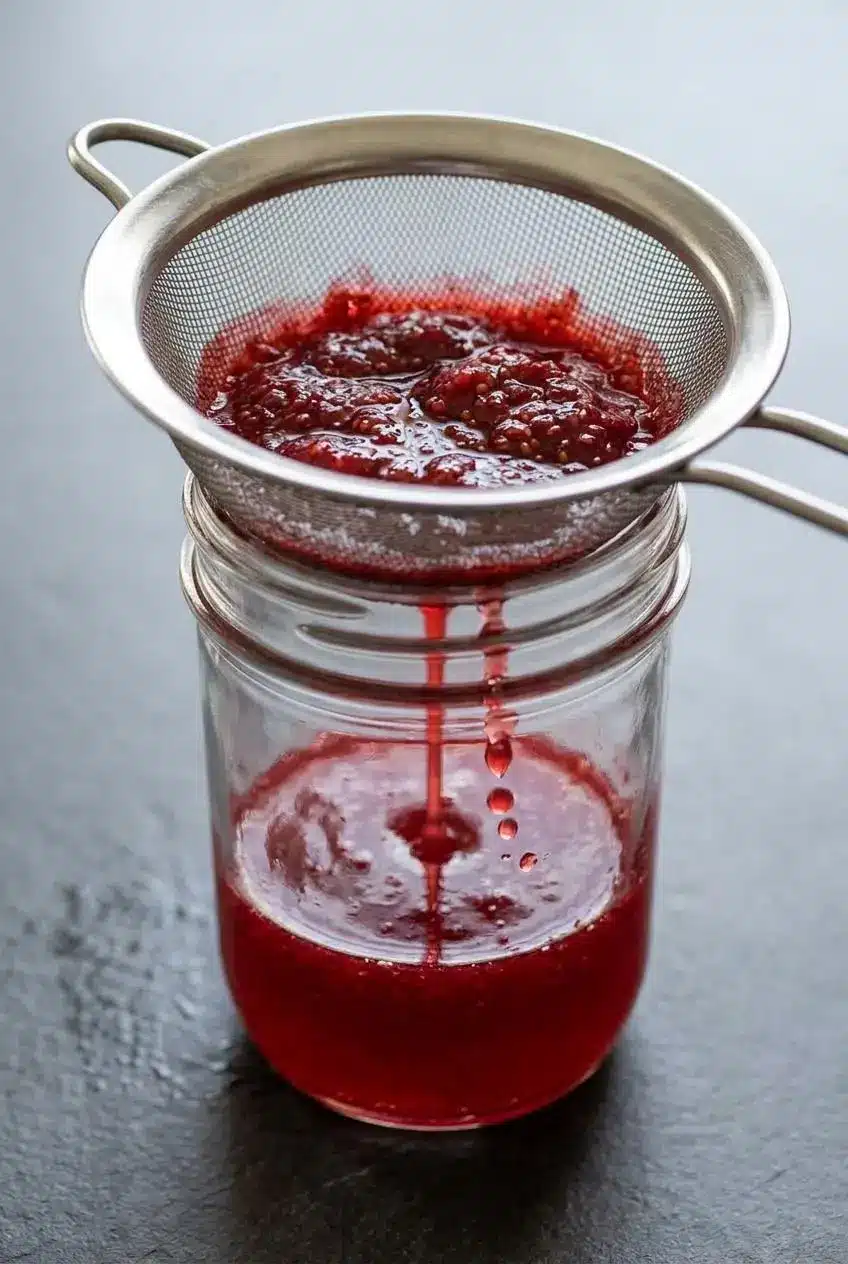
- The sauce contains seeds: Use a fine mesh strainer for a smoother result. Stir gently against the mesh to help liquid pass through while leaving seeds behind.
- The strained liquid looks cloudy: Forceful pressing can push more pulp through the mesh. For a clearer concentrate, use a lighter hand and accept that some fruit solids will remain in the strainer.
- The sauce seems too thick: Adjust it when making your drink with optional serving water. There’s no need to revise the ingredient list to make the whole batch thinner.
- The drink tastes watery: Use less serving water or more concentrate in the next small taste. Berry ripeness and reduction affect strength, so one ratio won’t suit every batch.
- Pulp settles or floats: Gentle mixing can redistribute ordinary fruit particles in properly refrigerated sauce. Mixing cannot correct unsuitable preservation or establish that a stored batch is safe.
Berry color can also change during storage. A faded shade is a quality observation, not a storage clock, and bright color is not proof of safety. Don’t rely on appearance, smell, or a lid seal alone to judge preservation.
How to Serve, Reconstitute, and Adapt Your Berry Concentrate
Taste a small drink before mixing a pitcher. This sauce has variable strength, so use dilution as a starting point rather than a promise of a particular lemonade flavor.
Dilution Ratios for Glasses and Pitchers
Try 1 part concentrate to 3 to 4 parts cold water as an optional tasting starting point. This is serving guidance, not a verified reconstitution ratio for this sauce.
- Small glass taste: Mix 1 tablespoon concentrate with 3 to 4 tablespoons cold water.
- Pitcher example: Mix 1 cup concentrate with 3 to 4 cups cold water, but test the smaller serving first.
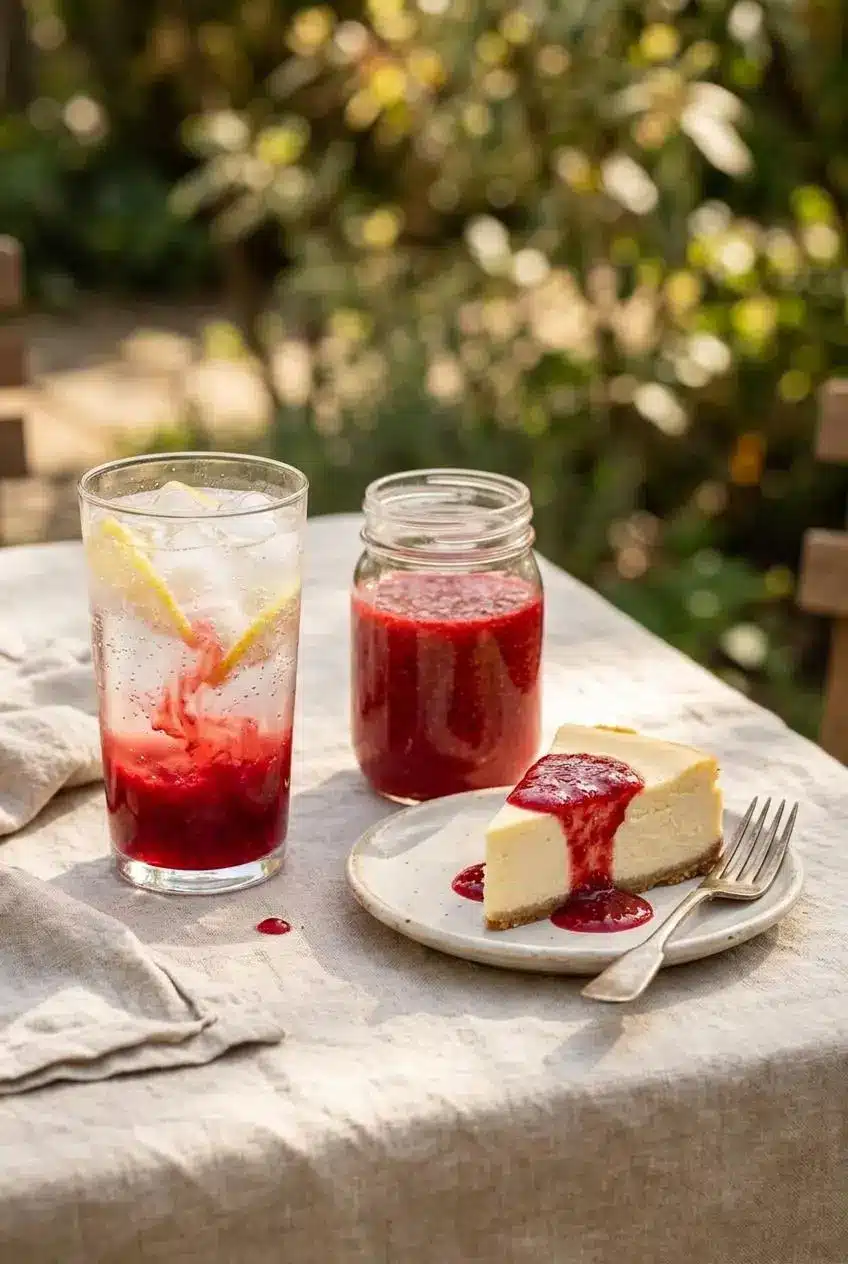
- Sparkling version: Use cold sparkling water as the serving liquid and stir gently to retain the bubbles.
These examples describe mixing proportions, not guaranteed drink servings. A thicker reduction may tolerate more water, while a lightly cooked sauce may taste better with less. Keep the berry flavor noticeable before adding optional ice, which will further dilute the drink as it melts.
Classic All-Strawberry Lemonade Concentrate
A strawberry-only version offers a softer berry profile without raspberry’s sharper flavor. Treat it as a separate optional variation rather than an adjustment to the ingredient list above. No replacement quantities or additional lemon juice amounts are established here.
If pantry storage is your goal, choose a tested strawberry-only preservation formula rather than adapting this refrigerated sauce.
Restaurant-Style and Sparkling Strawberry Lemonade
For a restaurant-style summer drink, combine the chilled berry sauce with cold still or sparkling water and optional ice or lemon slices. It gives you a fruit-forward drink without claiming to reproduce any restaurant’s exact formula.
For an icier option at a cookout, frozen strawberry lemonade offers a separate blended serving approach. Keep all drink additions separate from the stored sauce.
Berry Sauce for Desserts and Optional Aromatics
Leave the sauce undiluted when you want a bright fruit topping. Its tartness works especially well against rich or sweet desserts.
- Cheesecake: Spoon the sauce over individual slices for a berry contrast to the creamy filling.
- Vanilla ice cream: Drizzle it over a scoop so the berry flavor stays distinct.
- Cake: Serve the sauce alongside each slice rather than soaking the entire cake.
- Basil or mint: Add either herb as an optional flavor accent to an individual refrigerated serving, not to a canning formula.
Conclusion
This glossy strawberry-raspberry sauce brings tangy berry flavor to cold drinks and desserts. Straining gives it a smoother finish, while tasting a small serving helps you find the dilution you enjoy.
Keep this sauce refrigerated, and start with a separate tested formula if you want shelf-stable strawberry lemonade concentrate. For now, let that ruby-red spoonful brighten your next glass or dessert.
Frequently Asked Questions
Can You Safely Can Strawberry Lemonade Concentrate at Home?
Yes, when you use a tested preservation recipe and follow its complete formula and process. This strawberry-raspberry sauce is not validated for canning. Bottled lemon juice and a sealed lid alone do not establish canning suitability.
How Much Water Do You Mix With Strawberry Lemonade Concentrate?
Try 1 part concentrate with 3 to 4 parts water as an optional tasting starting point, not a tested ratio for this sauce. Adjust a small serving first because berry tartness and reduction change the balance.
Why Should I Use Bottled Lemon Juice Instead of Fresh for Canning?
A tested canning formula may require bottled lemon juice for standardized acidity rather than variable fresh juice. Follow the exact tested formula. Substituting bottled juice into this sauce does not validate it for canning.
Can I Use Frozen Strawberries to Make Lemonade Concentrate?
Yes. This recipe allows fresh or frozen strawberries and raspberries. Keep the listed quantities and follow the same cooking method, watching for juice release and softened fruit.
Strawberry Lemonade Concentrate Canning

Equipment
- Medium saucepan
- Small jar
Ingredients
- 1 cup fresh or frozen strawberries
- 1 cup fresh or frozen raspberries
- ⅓ cup granulated sugar
- 2 tablespoons lemon juice
- ⅓ cup water
Instructions
- Place the strawberries, raspberries, granulated sugar, lemon juice, and water in a medium saucepan and stir them together. The water will moisten the sugar around the fruit before cooking begins.
- Set the burner to medium and stir continuously as the mixture reaches a simmer, cooking for about 3 to 5 minutes until juice flows from the berries. The mixture should become looser as the released juices surround the fruit.
- Turn the burner down to medium-low and cook for about 5 to 6 minutes, allowing the berries to soften and collapse. Look for broken-down fruit in a glossy, ruby-red liquid rather than intact, firm berries.
- Let the sauce lose some heat, strain it into a small jar, and refrigerate it until needed. The strained sauce should have a smoother texture without the berry seeds.
- For an optional thicker finish while the sauce is still in the saucepan, use low heat for up to 15 additional minutes. The liquid will become more concentrated and may coat the spoon more noticeably.