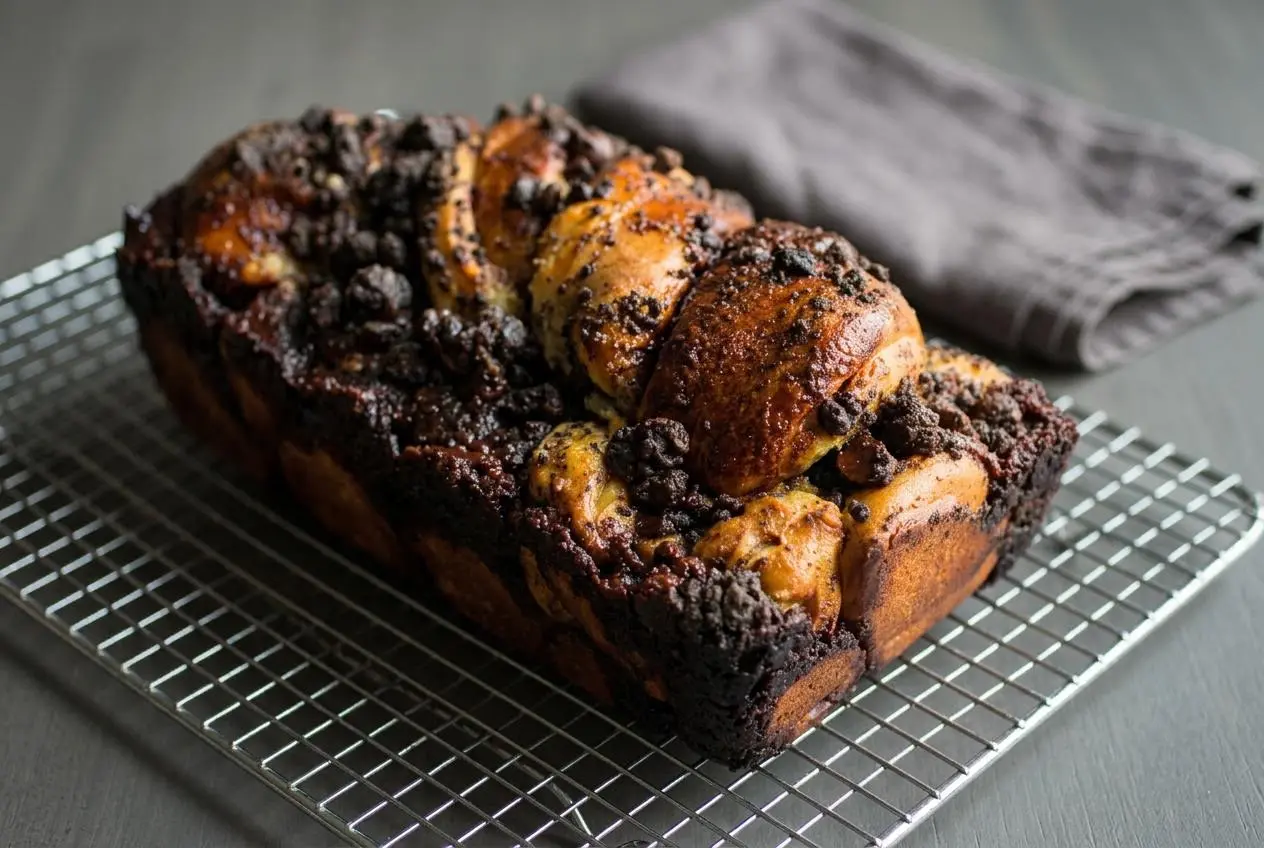
Chocolate babka is an Eastern European Jewish sweet yeast bread with a cake-like richness. This version layers brioche-style dough with dark chocolate fudge, adds cocoa streusel, and finishes with simple syrup for two buttery, tender loaves.
Glossy crusts and deep fudge ribbons make chocolate babka feel like a bakery project, and it is one worth planning for. The dough needs an overnight chill, but the work breaks into manageable stages: mixing, preparing the chocolate components, shaping, and baking.
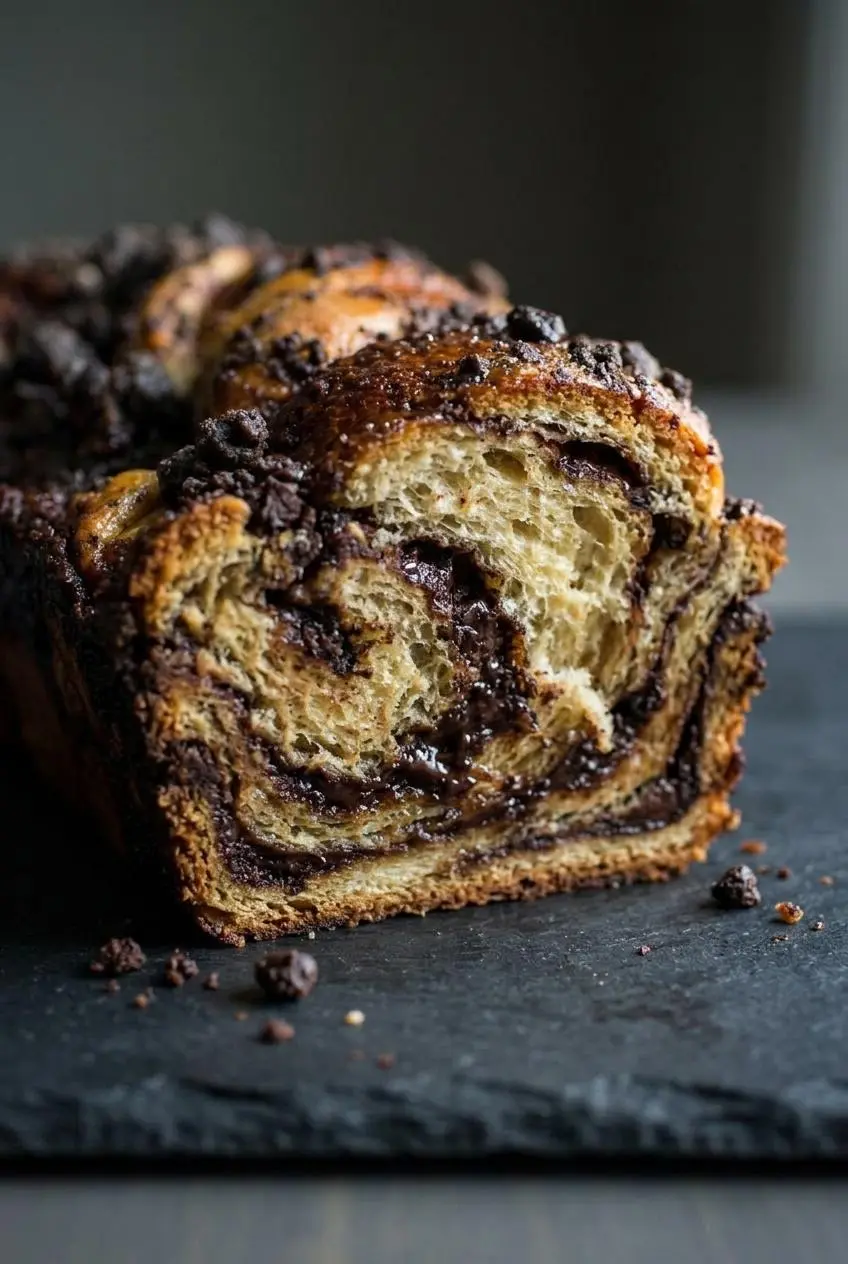
You’ll get two 9-inch loaves with soft, buttery crumb beneath a chocolate-studded crumble. The filling stays distinct rather than disappearing into the bread, and the syrup reaches beyond the crust when you apply it correctly. A brief chill makes those ribbons much easier to shape.
Set the dough butter and filling butter out separately so each portion softens without getting mixed up.
Key Ingredients Breakdown by Component
Flour and yeast build structure, eggs and butter soften the crumb, and bittersweet chocolate balances the sweetness. Cream makes the filling fudgy, cocoa streusel adds crunch, and syrup brings moisture and a glossy finish.
- ½ cup/118 milliliters whole milk
- 1 package (¼ ounce/7 grams) active dry yeast
- ⅓ cup/67 grams granulated sugar, plus a pinch
- 4 ¼ cups/531 grams all-purpose flour, more as needed
- 1 ½ teaspoons fine sea salt
- 1 teaspoon vanilla extract
- 1 teaspoon grated lemon zest (optional)
- ½ teaspoon freshly grated nutmeg
- 4 large eggs, at room temperature, lightly beaten
- 10 tablespoons/140 grams unsalted butter, at room temperature, plus more for greasing bowls and pans
- ½ cup/100 grams granulated sugar
- ¾ cup/177 milliliters heavy cream or half-and-half
- Pinch kosher salt
- 6 ounces/170 grams extra bittersweet chocolate, preferably between 66 and 74 percent cocoa, coarsely chopped
- 8 tablespoons/112 grams/1 stick unsalted butter, diced, at room temperature
- 2 teaspoons/10 milliliters vanilla extract
- ½ cup/60 grams all-purpose flour
- 3 tablespoons/45 grams granulated sugar
- 1 ½ tablespoons/11 grams cocoa powder
- ½ teaspoon kosher salt
- 4 ½ tablespoons/64 grams unsalted butter, melted
- ⅓ cup/60 grams mini semisweet chocolate chips
- ⅔ cup/135 grams granulated sugar
The repeated sugar, flour, and butter entries belong to different components, not one mixing bowl. Keep those portions separate as you measure; the breakdown below shows where each belongs.
I prefer weighing the ingredients in grams and using butter soft enough to indent easily, but not shiny or oily, so it blends smoothly into both dough and filling.
For the Enriched Brioche-Style Dough
- Liquid and leavening: ½ cup milk and the package of active dry yeast.
- Structure and sweetness: 4 ¼ cups flour, ⅓ cup sugar plus a pinch, and 1 ½ teaspoons fine sea salt.
- Aroma: 1 teaspoon vanilla, optional lemon zest, and the nutmeg.
- Richness: 4 eggs and 10 tablespoons room-temperature butter.
Eggs and butter give the dough its tender, brioche-like crumb. Nutmeg adds a gentle bakery aroma; the optional lemon zest brings brightness without making this a lemon-flavored loaf. Soft butter incorporates gradually, while melted butter would make the dough harder to manage.
For the Dark Chocolate Fudge Filling
- Cream mixture: ½ cup sugar, ¾ cup heavy cream or half-and-half, and the pinch of kosher salt.
- Chocolate mixture: 6 ounces bittersweet chocolate, 8 tablespoons diced room-temperature butter, and 2 teaspoons vanilla.
Chocolate in the 66 to 74 percent cocoa range gives the filling a pronounced chocolate flavor against the sweet dough and syrup. Cream and butter turn it into a smooth fudge that spreads at room temperature and forms generous ribbons after baking.
For the Cocoa Streusel and Simple Syrup
- Streusel: ½ cup flour, 3 tablespoons sugar, 1 ½ tablespoons cocoa, ½ teaspoon kosher salt, 4 ½ tablespoons melted butter, and ⅓ cup mini chocolate chips.
- Syrup: ⅔ cup sugar, combined with the water specified in the method.
Melted butter binds the streusel into moist clumps that bake into a crisp, sandy topping. The syrup serves a different purpose: it moistens the baked layers and gives the crust its shine.
How to Make Chocolate Babka Step by Step
This recipe makes two loaves. Read through the shaping steps before rolling, and have two 9-inch loaf pans, parchment, a skewer, and a wire rack ready.
- Heat the milk gently in a saucepan or microwave to about 110°F, then stir in the yeast and pinch of sugar and leave for 5 to 10 minutes.
A light foam should develop on the surface; the milk should feel warm rather than hot. - Combine the dough flour, ⅓ cup sugar, fine sea salt, vanilla, optional lemon zest, and nutmeg using a dough-hook mixer, food processor, or large bowl and wooden spoon, then work in the yeast mixture and eggs for about 2 minutes.
Look for a cohesive, soft dough; if it remains pasted to the bowl instead, mix in extra flour 1 tablespoon at a time, thoroughly incorporating each addition. - Work in half the dough butter for 3 to 5 minutes, scraping the bowl as necessary, then incorporate the remaining half for another 5 to 7 minutes.
The dough should become elastic and stretchy, pulling away from the bowl; use additional flour 1 tablespoon at a time only if persistent sticking prevents this. - Round the dough, turn it in a buttered bowl to coat its surface, cover with a clean towel, and leave somewhere warm and draft-free for 1 to 2 hours.
An unheated oven with its light on can provide a sheltered spot, and the dough should visibly puff even if it never doubles. - Deflate the risen dough with your hands, cover the bowl again, and refrigerate overnight, or for at least 4 hours if necessary.
The longer chill develops flavor and firms the butter, leaving the dough easier to roll. - Simmer the filling sugar, cream, and pinch of salt over medium heat for about 5 minutes, stirring occasionally, then transfer to a bowl and blend in the chopped chocolate, diced butter, and vanilla.
Once smooth, let the filling reach room temperature so it spreads without warming or tearing the dough. - Mix the streusel flour, sugar, cocoa, and kosher salt, then distribute the melted butter throughout and fold in the mini chocolate chips.
The mixture should gather into chunky, damp crumbs rather than remain powdery. - Heat the syrup sugar with ⅔ cup/158 milliliters water over medium heat, then maintain a simmer for 2 minutes, stirring occasionally.
The finished syrup should look clear, with no visible sugar crystals. - Grease two 9-inch loaf pans with butter and fit parchment inside each, extending it 2 inches above the sides.
These overhanging edges will give you handles for lifting the loaves. - Divide the chilled dough equally, roll each portion on a floured surface into a 9-by-17-inch rectangle, spread each with half the filling right to the edges, and roll tightly from a long edge before placing each coil on a towel or plastic wrap in the freezer for 10 minutes.
The brief chill should firm the filled rolls enough to expose distinct layers when cut. - Split each roll lengthwise, wind its two strands around one another, fold the resulting braid to about 9 inches, and nestle it into a prepared pan, then cover loosely with a towel and let rise warmly for 1 to 1 ½ hours.
The loaves should become puffy rather than double; alternatively, cover the pans with plastic wrap, refrigerate overnight, and leave at room temperature for 1 hour before baking. - Preheat the oven to 350°F, squeeze the streusel into clumps over both loaves, and bake for 40 to 50 minutes.
Check that a tester enters without a rubbery tug and withdraws cleanly, using the recipe’s 185 to 210°F thermometer range as an additional baking cue and a hollow-sounding unmolded bottom as a backup. - Pierce both loaves repeatedly with a skewer or paring knife immediately after baking, reaching the bottom, then distribute half the syrup over each loaf.
The deep channels help carry the syrup through the layers instead of leaving it sitting on the surface. - Place the loaves on a wire rack and allow them to cool completely before cutting.
The crumb and fudge layers should set enough to hold their shape in a slice.
Mixing and Overnight Chilling the Dough
Expect tackiness early in mixing. Don’t judge the finished texture before both butter additions have incorporated: the dough needs time to become smooth and stretchy. Adding the butter only after the initial dough comes together gives its structure a chance to develop.
The first rise may look modest. This heavy dough won’t behave like a lean sandwich bread, and dramatic doubling isn’t the goal. Refrigeration then firms the butter, making the dough much less awkward to roll thinly.
Making the Fudge Filling, Streusel, and Syrup
Spreadable filling should yield easily under a spatula without running. Hot fudge softens the chilled dough; refrigerator-cold fudge can drag and tear it. Let temperature do the work rather than pressing harder.
Keep the streusel crumbly instead of kneading it into a paste. For the syrup, clarity tells you that the sugar has dissolved.
Rolling, Freezing, Cutting, and Twisting
Spread the filling evenly to the edges so the outer turns contain chocolate too. After the brief freezer chill, cut through the full length of each roll with a sharp knife. Turn the exposed chocolate layers upward as you cross the strands for clearly defined ribbons.
This is a two-strand braid, not a three-strand plait. Keep the crossings relaxed enough to avoid squeezing out the filling, then fold the braid to fit the pan.
Final Proof, Baking, and Syrup Soaking
The final rise happens after shaping, before the streusel goes on. Look for fuller, softer-looking dough around the exposed chocolate seams.
Dark filling can make the surface appear finished before the center has baked through. Check the dough in the middle, then apply the syrup immediately after baking. Piercing deeply matters more than pouring quickly.
Expert Tips and Troubleshooting for Babka Success
Most babka problems come from dough development, filling temperature, or judging doneness by crust color alone.
- Sticky dough: First let the mixer complete the butter-incorporation stages. If the dough still clings stubbornly to the bowl, add flour 1 tablespoon at a time and mix well before deciding it needs more. A little tackiness is normal; a dry, stiff dough is not the goal.
- Greasy dough: Butter added before the initial dough forms can interfere with structure. Start with a cohesive dough, then incorporate softened butter in two stages. Avoid butter that has become oily or partly melted.
- Slow rising: Eggs and butter make this dough slower than lean bread dough. Use a warm, draft-free spot and judge its puffiness rather than waiting for a dramatic doubling. Keep it away from direct heat that could melt the butter.
- Torn dough or leaking filling: Bring the fudge to a spreadable room-temperature consistency. Don’t force stiff filling across a thin rectangle, and don’t skip the rolled-coil chill. Some chocolate showing at the cut seams is expected.
- Lumpy fudge: Stir the chocolate into the warm cream mixture gently until smooth. Good heat control helps avoid scorching; this guide to melting chocolate smoothly explains the handling in more detail.
- Gummy center: Don’t let browned streusel make the decision for you. Use the tester and thermometer cues in the baking step, checking the central dough rather than relying on a pocket of melted chocolate. Cool fully before slicing so a warm, unset interior doesn’t masquerade as underbaking.
Make-Ahead Schedule and Storage
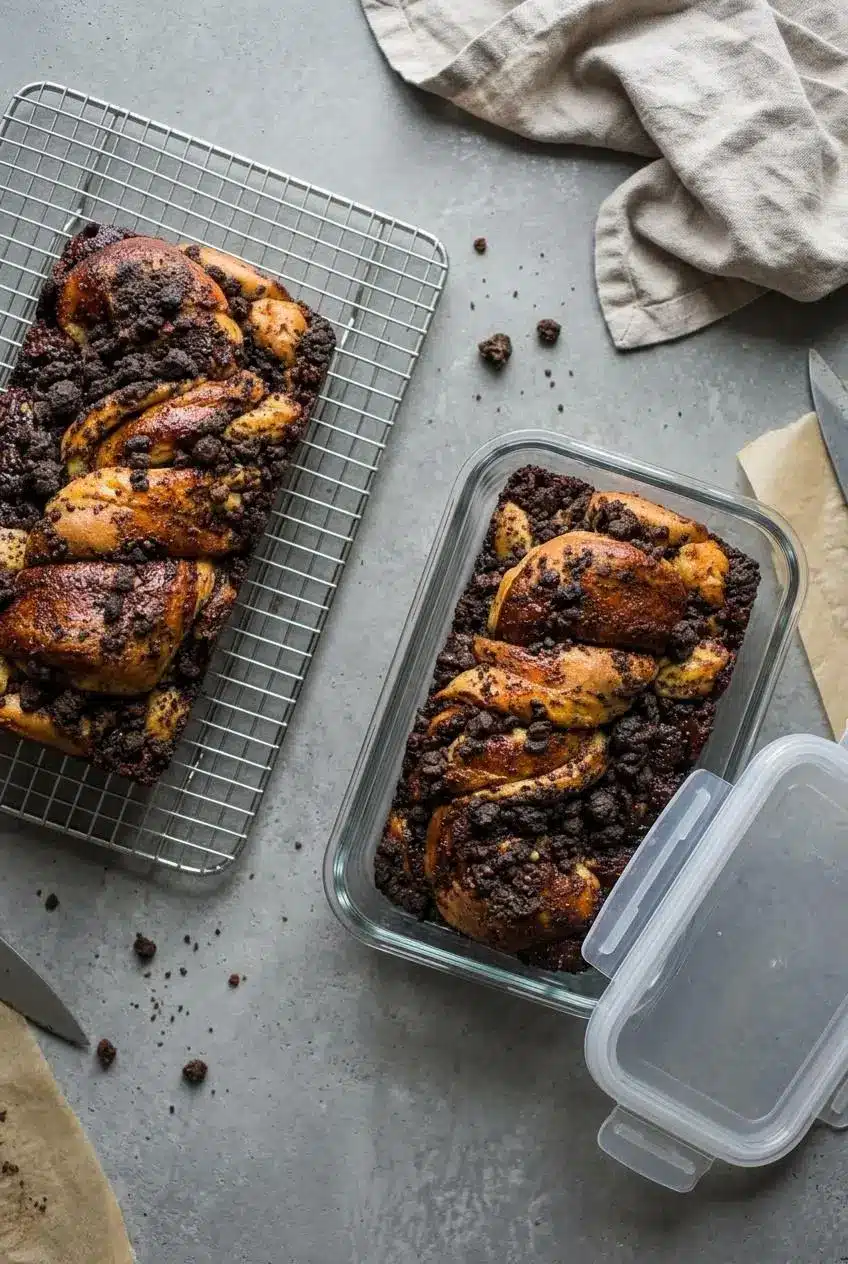
Choose your baking day first, then work backward around the dough’s overnight rest. Preparing the components separately keeps assembly calmer.
- Two-day schedule: Mix the dough, complete its first rise, and refrigerate it on Day 1. Prepare the filling and streusel alongside it, then roll, shape, proof, and bake on Day 2.
- Three-day schedule: Chill the dough overnight after its first rise, shape it the next day, and use the overnight refrigerator rise in the pans. On baking day, allow the shaped loaves their specified hour at room temperature before baking.
- Component preparation: Keep prepared filling covered in the refrigerator and let it soften to room temperature before spreading. Store prepared streusel separately, covered and refrigerated, so it stays ready to crumble.
Once the baked loaves have cooled completely, wrap them tightly or place them in a well-sealed container to protect the cut surfaces from drying. Don’t wrap while warm, when trapped steam can soften the streusel. Keep the uncut loaf intact until you need it.
For a quicker chocolate loaf project without a yeast rise, chocolate banana bread is another option.
Flavor Variations and Shaping Options
These optional changes offer a shortcut, a different presentation, or a flavored finish. Keep them separate from the dough and component measurements above.
Easy Nutella Shortcut Filling
Replace the homemade fudge filling with chocolate hazelnut spread for faster assembly. Nutella brings a sweeter, distinctly hazelnut flavor, so expect a different balance from the bittersweet filling. Use it at a spreadable consistency and retain the same rolling and chilling approach.
Shaping a Dark Chocolate Babka Ring
For a circular presentation, use one loaf’s portion of dough in a greased, parchment-lined 9-inch round cake pan or springform pan. Instead of folding the two-strand braid into a loaf, curve it into a circle and join the ends.
Leave room for expansion and judge the center with the same doneness cues rather than assuming a different pan will bake identically. If you enjoy layered pastry shaping, chocolate chip cruffins offer a separate individual-pastry project.
Espresso and Flaky Salt Syrup Upgrade
Optionally dissolve espresso powder into the simmering syrup for a roasted coffee accent, or steep a cinnamon stick in it for warm spice and remove the stick before pouring. Finish the soaked loaves with a light scattering of flaky sea salt if you like a sharper contrast to the sweetness.
How to Serve Chocolate Babka
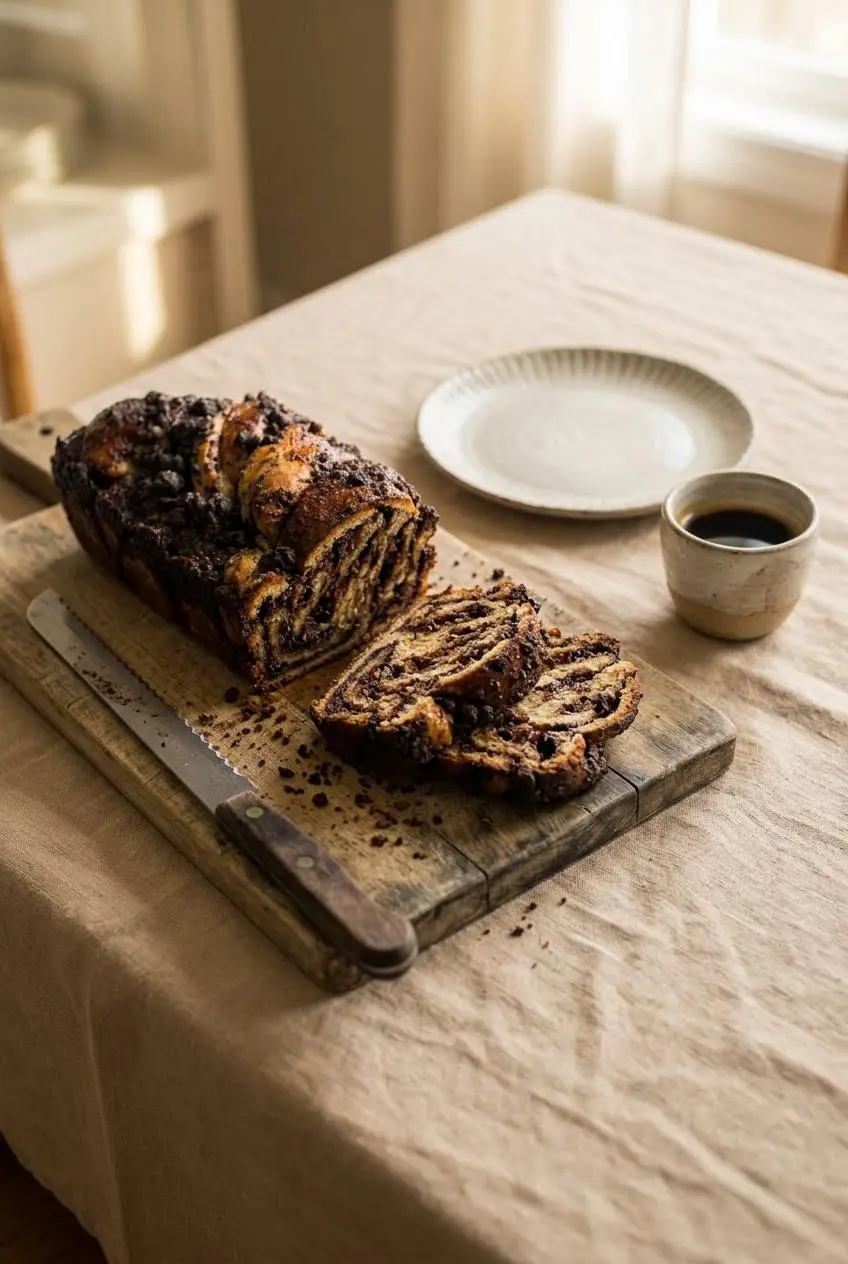
Cool the loaves completely before using a serrated knife to cut thick slices. A gentle sawing motion preserves the crumb and chocolate ribbons better than pressing straight down.
Serve at room temperature or gently warm individual slices after the filling has set. Black coffee or espresso balances the richness at brunch; French hot chocolate makes a more indulgent pairing. A whole loaf also makes a welcoming centerpiece for a Rosh Hashanah or Hanukkah table.
Conclusion
Buttery crumb, dark fudge ribbons, cocoa crunch, and a glossy syrup finish make this a rewarding baking project. Giving each component its own bowl and its own time keeps the process manageable.
Chill the filled rolls before cutting, check the center rather than just the crust, and let the finished loaves cool fully. Your patience will show in every slice.
Frequently Asked Questions
Is Chocolate Babka a Bread or a Cake?
It bridges both categories. Yeast raises an enriched bread dough, much like brioche, but the chocolate filling, streusel, and syrup give it the richness and serving style of a coffee cake.
What Nationality and Origin Is Chocolate Babka?
Babka belongs to Eastern European Jewish baking traditions, particularly those associated with Poland and Ukraine. Chocolate-filled versions later became especially familiar through American Jewish bakeries.
Can I Make Chocolate Babka Ahead of Time?
Yes. The dough includes an overnight refrigerator rest, and the shaped loaves also have an optional overnight refrigerator rise. Prepare the filling and streusel separately, keeping both covered and chilled until needed.
How Do You Store Chocolate Babka?
Let it cool completely, then wrap it tightly or use a well-sealed container. Protect exposed slices from drying, and avoid wrapping a warm loaf because condensation can soften the streusel.
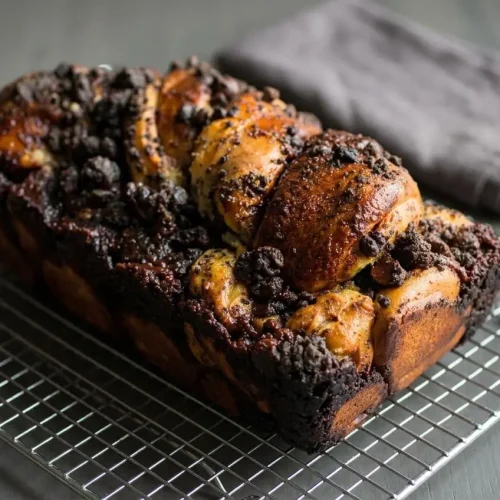
Chocolate Babka

Equipment
- electric mixer fitted with the dough hook
- Food processor
- two 9-inch loaf pans
- Parchment Paper
- Instant-read thermometer
- Skewer
- Wire rack
Ingredients
- ½ cup/118 milliliters whole milk
- 1 package (¼ ounce/7 grams) active dry yeast
- ⅓ cup/67 grams granulated sugar plus a pinch
- 4 ¼ cups/531 grams all-purpose flour more as needed
- 1 ½ teaspoons fine sea salt
- 1 teaspoon vanilla extract
- 1 teaspoon grated lemon zest (optional)
- ½ teaspoon freshly grated nutmeg
- 4 large eggs at room temperature, lightly beaten
- 10 tablespoons/140 grams unsalted butter at room temperature, plus more for greasing bowls and pans
- ½ cup/100 grams granulated sugar
- ¾ cup/177 milliliters heavy cream or half-and-half
- Pinch kosher salt
- 6 ounces/170 grams extra bittersweet chocolate preferably between 66 and 74 percent cocoa, coarsely chopped
- 8 tablespoons/112 grams/1 stick unsalted butter diced, at room temperature
- 2 teaspoons/10 milliliters vanilla extract
- ½ cup/60 grams all-purpose flour
- 3 tablespoons/45 grams granulated sugar
- 1 ½ tablespoons/11 grams cocoa powder
- ½ teaspoon kosher salt
- 4 ½ tablespoons/64 grams unsalted butter melted
- ⅓ cup/60 grams mini semisweet chocolate chips
- ⅔ cup/135 grams granulated sugar
Instructions
- Heat the milk gently in a saucepan or microwave to about 110°F, then stir in the yeast and pinch of sugar and leave for 5 to 10 minutes. A light foam should develop on the surface; the milk should feel warm rather than hot.
- Combine the dough flour, ⅓ cup sugar, fine sea salt, vanilla, optional lemon zest, and nutmeg using a dough-hook mixer, food processor, or large bowl and wooden spoon, then work in the yeast mixture and eggs for about 2 minutes. Look for a cohesive, soft dough; if it remains pasted to the bowl instead, mix in extra flour 1 tablespoon at a time, thoroughly incorporating each addition.
- Work in half the dough butter for 3 to 5 minutes, scraping the bowl as necessary, then incorporate the remaining half for another 5 to 7 minutes. The dough should become elastic and stretchy, pulling away from the bowl; use additional flour 1 tablespoon at a time only if persistent sticking prevents this.
- Round the dough, turn it in a buttered bowl to coat its surface, cover with a clean towel, and leave somewhere warm and draft-free for 1 to 2 hours. An unheated oven with its light on can provide a sheltered spot, and the dough should visibly puff even if it never doubles.
- Deflate the risen dough with your hands, cover the bowl again, and refrigerate overnight, or for at least 4 hours if necessary. The longer chill develops flavor and firms the butter, leaving the dough easier to roll.
- Simmer the filling sugar, cream, and pinch of salt over medium heat for about 5 minutes, stirring occasionally, then transfer to a bowl and blend in the chopped chocolate, diced butter, and vanilla. Once smooth, let the filling reach room temperature so it spreads without warming or tearing the dough.
- Mix the streusel flour, sugar, cocoa, and kosher salt, then distribute the melted butter throughout and fold in the mini chocolate chips. The mixture should gather into chunky, damp crumbs rather than remain powdery.
- Heat the syrup sugar with ⅔ cup/158 milliliters water over medium heat, then maintain a simmer for 2 minutes, stirring occasionally. The finished syrup should look clear, with no visible sugar crystals.
- Grease two 9-inch loaf pans with butter and fit parchment inside each, extending it 2 inches above the sides. These overhanging edges will give you handles for lifting the loaves.
- Divide the chilled dough equally, roll each portion on a floured surface into a 9-by-17-inch rectangle, spread each with half the filling right to the edges, and roll tightly from a long edge before placing each coil on a towel or plastic wrap in the freezer for 10 minutes. The brief chill should firm the filled rolls enough to expose distinct layers when cut.
- Split each roll lengthwise, wind its two strands around one another, fold the resulting braid to about 9 inches, and nestle it into a prepared pan, then cover loosely with a towel and let rise warmly for 1 to 1 ½ hours. The loaves should become puffy rather than double; alternatively, cover the pans with plastic wrap, refrigerate overnight, and leave at room temperature for 1 hour before baking.
- Preheat the oven to 350°F, squeeze the streusel into clumps over both loaves, and bake for 40 to 50 minutes. Check that a tester enters without a rubbery tug and withdraws cleanly, using the recipe’s 185 to 210°F thermometer range as an additional baking cue and a hollow-sounding unmolded bottom as a backup.
- Pierce both loaves repeatedly with a skewer or paring knife immediately after baking, reaching the bottom, then distribute half the syrup over each loaf. The deep channels help carry the syrup through the layers instead of leaving it sitting on the surface.
- Place the loaves on a wire rack and allow them to cool completely before cutting. The crumb and fudge layers should set enough to hold their shape in a slice.