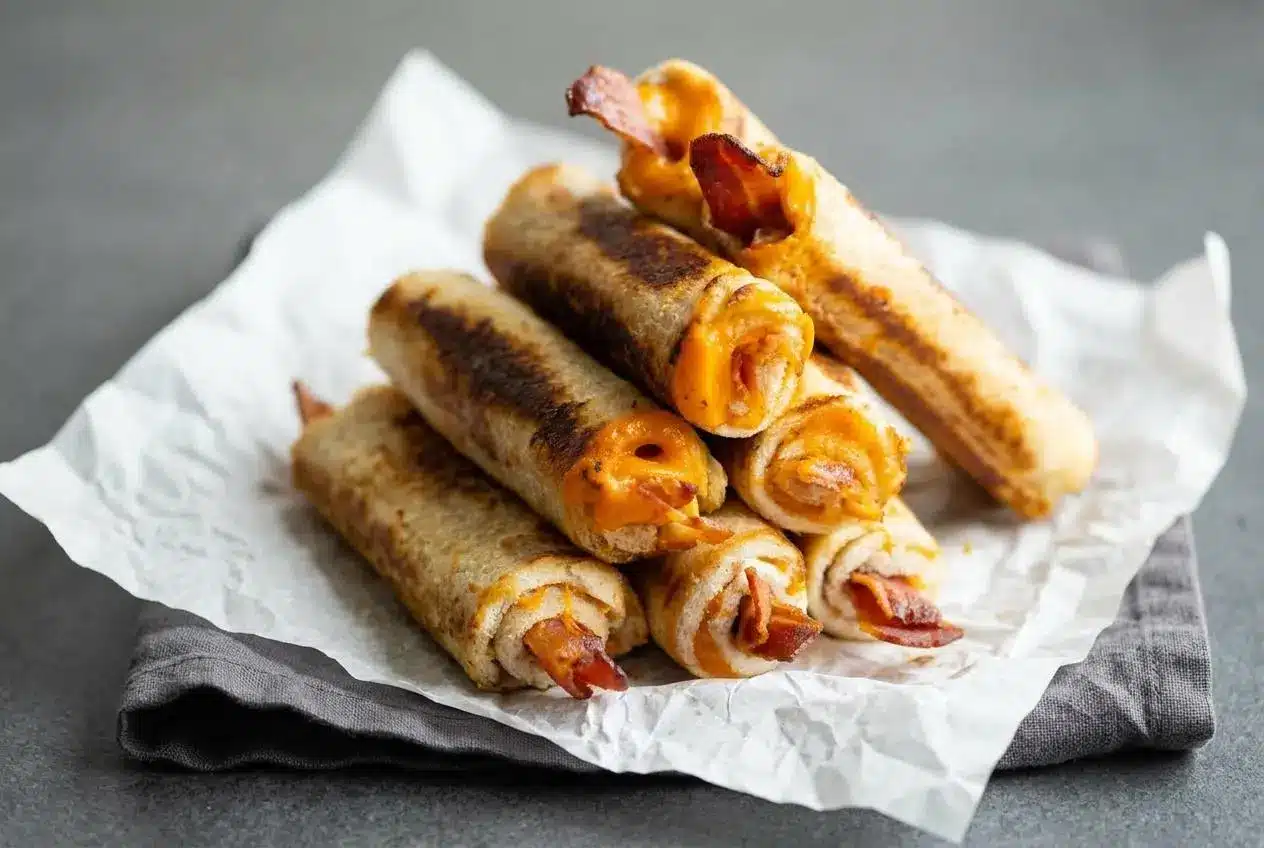
Flatten crustless soft white bread with a rolling pin, then fill with finely grated cheddar and cooked bacon. Roll tightly, seal the edge with melted butter, and toast seam-side down in a dry skillet over medium heat until golden and crisp.
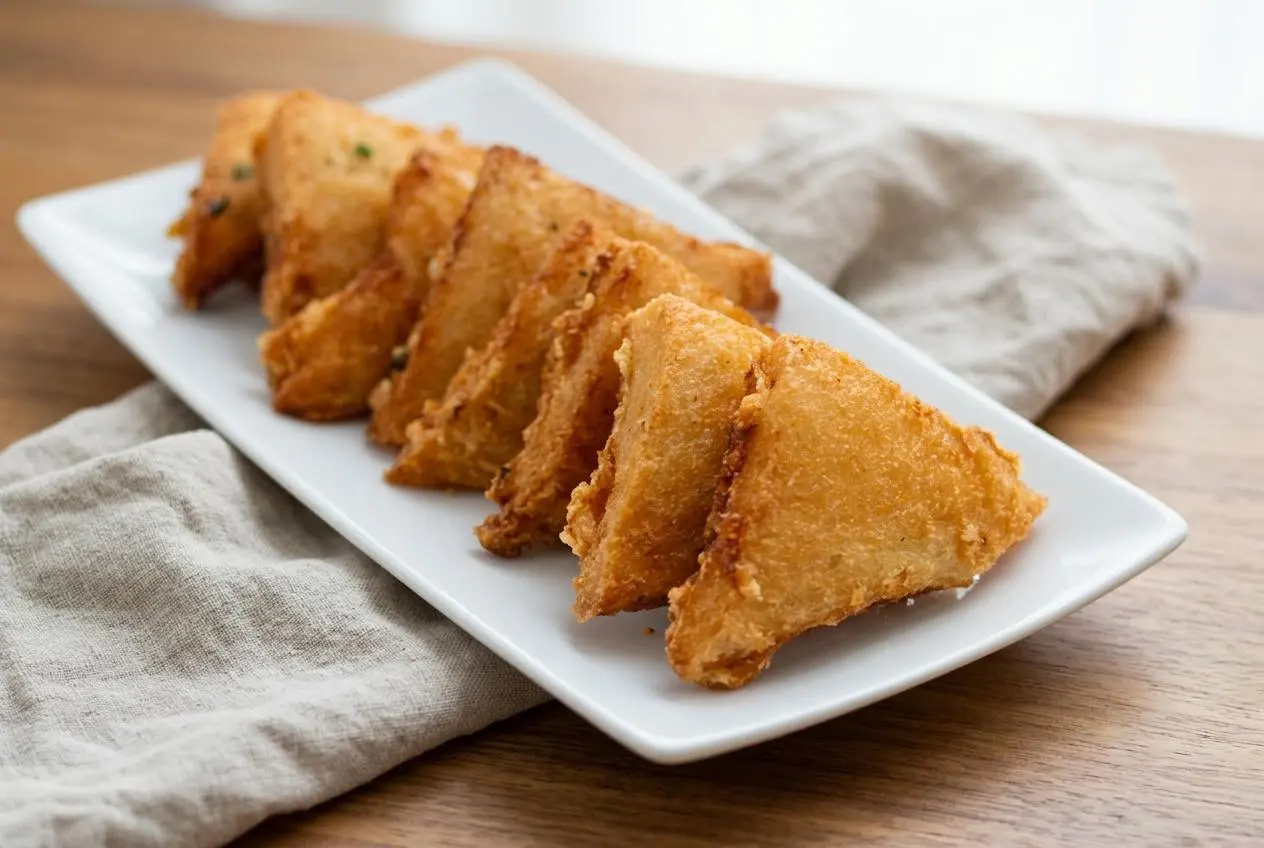
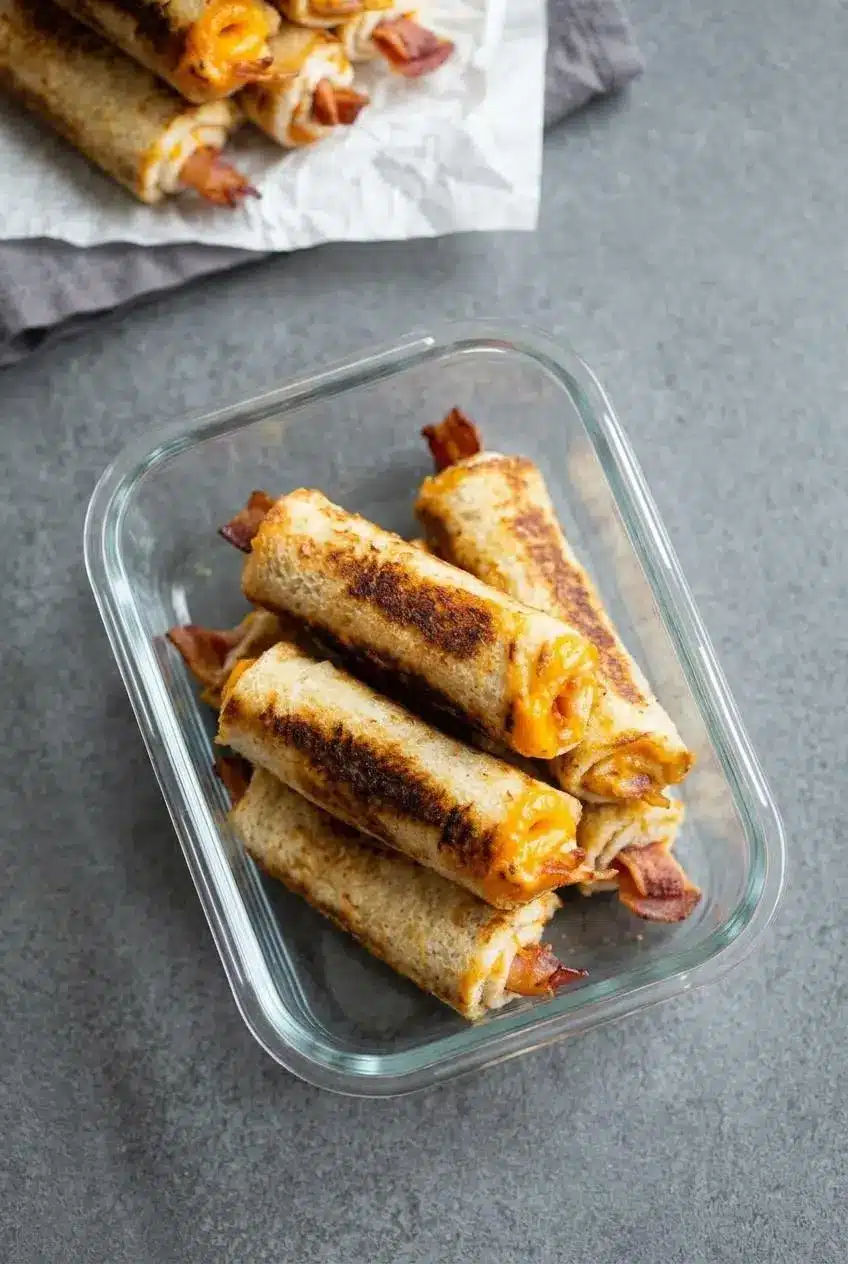
These crispy cheesy bacon rolls turn sandwich bread into a buttery, crunchy snack with a gooey cheddar center. As the bread toasts, little bubbles of cheese sizzle at the ends. They take 30 minutes and work equally well as finger food or a soup side.
You don’t need dough or rising time, just bread that bends easily and a little care with the rolling. Brushing butter onto the bread gives you control over the browning. Start with the seam.
Set your tongs and butter brush beside the stove before cooking so you can turn each roll as soon as it browns.
Ingredients You Need and Why Each One Matters
Soft bread provides a flexible wrapper, cheddar brings a melting center, and cooked bacon adds smoky flavor. Melted butter helps the seam hold and encourages a crisp, golden surface.
- 8 thick slices of Soft White Bread
- 5oz / 150g Cheddar, finely grated
- 8 thin slices of Bacon, cooked to preference (could sub wafer thin ham, or leave out completely)
- 2 tbsp Butter, melted (or as needed)
Bread: Choose fresh, thick-sliced soft white sandwich bread. Under a rolling pin, it should compress into a thin, pliable sheet without splitting. Stale or crusty bread can crack along the edges, making it harder to contain the cheese. Thick slices give you enough bread to flatten without creating fragile holes.
Cheddar: Sharp cheddar gives the filling a pronounced cheese flavor. Fine shreds spread evenly, soften quickly, and let the bread wrap closely around the bacon. Coarse shreds and bulky pieces can create lumps that push through the flattened bread.
Bacon: Cook it before assembly. The skillet stage toasts the bread and melts the cheese, rather than cooking raw bacon inside a wrapper. Thin slices roll more easily than thick-cut bacon. Wafer-thin ham is an alternative, or leave out the bacon for a meat-free cheese roll.
Butter: Brush it where it belongs: on the seam and exterior. An even coating helps the bread brown without leaving one side sitting in a puddle of fat.
I use the fine side of a box grater for the cheddar so the filling lies flat and the bread rolls tightly without tearing.
How to Make the Crispy Cheesy Bacon Rolls Step by Step
Keep the filling flat and the far edge clear as you assemble each roll. That bare border gives the buttered seam a place to stick.
Prep: 15 minutes. Cook: 15 minutes. Total: 30 minutes. Yield: 8 roll-ups.
- Trim the crusts from a bread slice, compress it with a rolling pin, and scatter a couple of pinches of cheddar across it while keeping a narrow strip at the far edge clear.
The flattened bread should feel flexible, with an even layer of cheese rather than a mound. - Position a cooked bacon slice along the near edge if using, butter the bare far border, and roll toward it snugly before setting the cylinder seam-side down; repeat with the remaining bread.
The finished roll should hold its shape without bread splitting or filling bulging through the seam. - Brush the assembled rolls with melted butter and arrange them seam-side down in a dry nonstick skillet over medium heat, working in batches if necessary and turning with tongs to brown every side.
Look for a crisp golden exterior and the first bubbling traces of cheddar at the ends rather than a large pool of escaped cheese. - Transfer the browned rolls to a serving plate and serve hot.
The bread should crunch lightly around a soft, melted cheese center.
Resting the assembled rolls on their seams helps keep them closed before cooking. Starting that same side against the skillet firms the edge before you rotate them. Use the tongs gently, supporting each roll instead of squeezing its center.
When cheddar begins to bubble at an end, check the underside and rotate if it’s golden. Don’t wait for cheese to pour out. Stay beside the stove through the final two minutes, when buttered bread can move quickly from toasted to scorched.
Pro Tips for Maximum Crunch and Zero Leaks
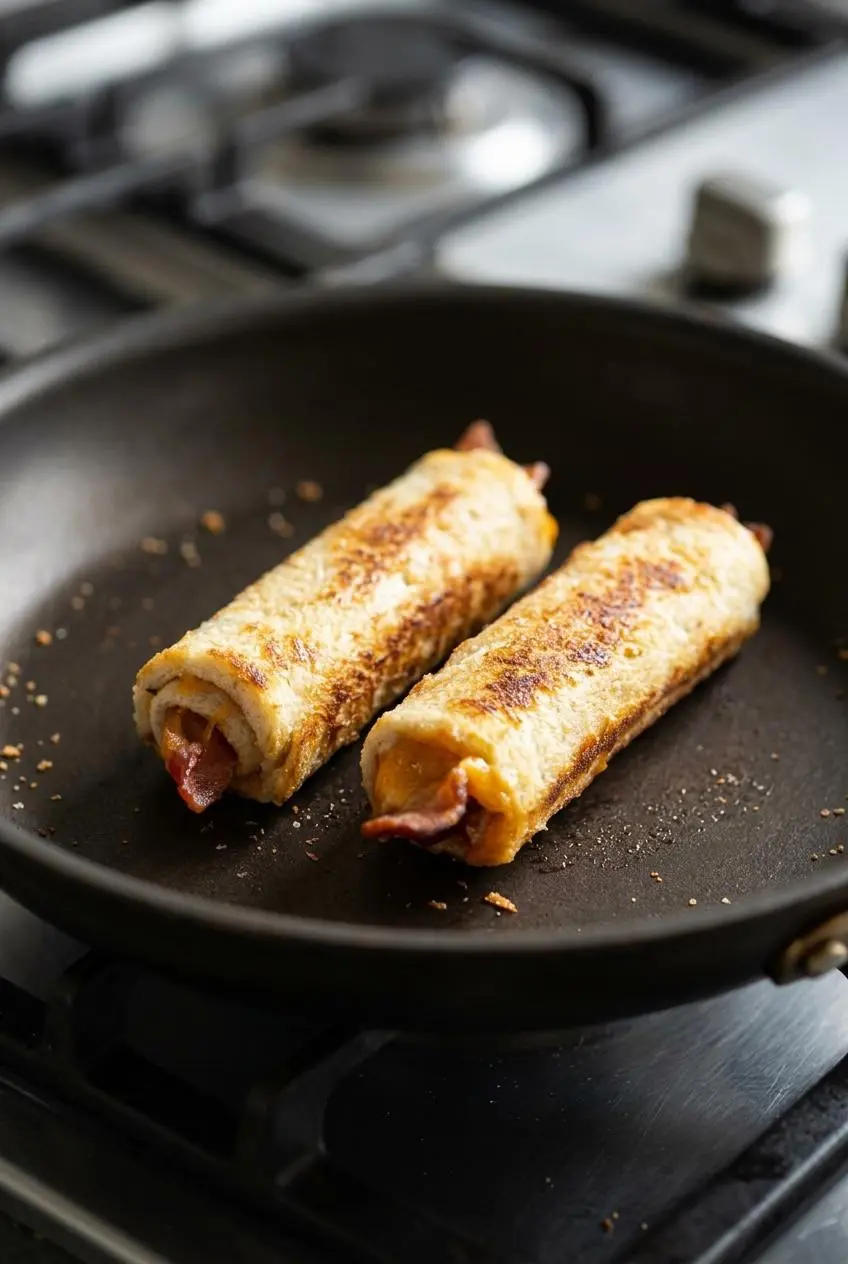
Brush the bread rather than melting butter in the skillet. Butter in the pan tends to collect underneath the first side, while brushing spreads it across the surface you want to crisp.
Medium heat gives the center time to melt while the exterior browns. If the bread darkens before the cheese softens, lower the heat slightly. Turning up the burner to hurry a batch usually gives you dark bread with an unevenly melted filling.
- Cracked bread: Dry bread or an unevenly flattened slice can split during rolling. Switch to fresh, soft bread and press evenly with the rolling pin rather than forcing a brittle slice.
- Unrolling seams: Cheese on the closing border prevents bread-to-bread contact. Keep that strip clear, brush it with butter, and rest the roll on its seam before searing it.
- Cheese spilling out: A thick mound of filling pushes outward as it melts. Spread the cheddar thinly and stop cooking once the bread is golden and the cheese starts bubbling at the ends.
- Pale spots: Uneven butter coverage or poor contact with the pan leaves patches untoasted. Brush the exterior evenly and rotate each roll so every side touches the skillet.
- Chewy bacon: The enclosed bacon won’t gain much crispness during toasting. Cook it to your preferred texture before rolling, while keeping it manageable enough to wrap.
Garlic-Chive Butter and Parmesan Seam Upgrade
For an optional savory crust, stir garlic powder and finely minced chives into the melted butter before brushing. Lightly press the buttered seam and ends into finely grated Parmesan, then cook as usual.
The Parmesan forms a delicate browned crust where it touches the skillet and can help reinforce the seam. Watch it closely because exposed cheese browns quickly. If buttery garlic flavor is your favorite part, garlic bread rolls offer another way to enjoy it.
Popular Variations: Oven-Baked, Cream Cheese, and Bakery Style
Different cheese-and-bacon rolls deliver very different textures. Choose the style before you begin, especially because raw bacon wraps need different treatment from the cooked-bacon skillet rolls.
- Skillet roll-ups: Best for close control over browning, with a crisp buttered exterior and melted cheddar inside.
- Oven rack appetizers: Useful for a party batch, particularly cream cheese rolls wrapped in thin bacon.
- Air fryer roll-ups: For the buttered sandwich-bread version with cooked bacon, try 375°F for 6 to 8 minutes, checking early for browning and cheese leakage.
- Yeasted rolls: Choose these for a fluffy dinner bread rather than a thin, crunchy wrapper.
Oven-Baked Bacon-Wrapped Cream Cheese Rolls
Spread softened cream cheese over crustless bread, roll it up, and wrap the outside with raw thin-cut bacon. Secure the bacon with a toothpick. This is a separate appetizer variation, not a direct replacement for the cheddar-filled skillet method.
Arrange the wraps on a greased, oven-safe wire rack over a foil-lined sheet pan. Bake at 350°F, allowing about 20 to 30 minutes and continuing as needed until the bacon cooks through and crisps. The rack keeps the bread above the rendered fat and exposes more of the bacon to oven heat.
Avoid thick-cut bacon here: it can remain undercooked while the bread darkens. Remove toothpicks before eating.
Bakery-Style Stuffed Yeast Rolls Option
For soft bread with a chewy golden top, start with a dough for fluffy dinner rolls. Diced cooked bacon, provolone, and sharp cheddar can go inside the shaped dough or on top before baking.
Use a cast-iron skillet or baking pan as directed by the dough method, and follow its proofing and baking cues. These take longer because the dough needs to rise; the sandwich-bread recipe’s 30-minute total doesn’t apply.
Flavor Boosters: Green Onions, Maple Glaze, and Parmesan Crust
- Green onions: Add finely sliced scallions to the cheddar filling for a fresh onion bite that balances the richness.
- Maple and cornmeal: For oven-baked bacon wraps, try a light brush of pure maple syrup and a dusting of cornmeal for sweet-savory flavor and texture.
- Monterey Jack: Swap it for cheddar when you prefer a milder, creamy cheese flavor.
- Provolone: Use finely grated provolone for a mellow filling that still rolls neatly.
- Parmesan crust: Use the seam coating described above when you want extra browned-cheese crunch.
Best Ways to Serve Cheesy Bacon Rolls
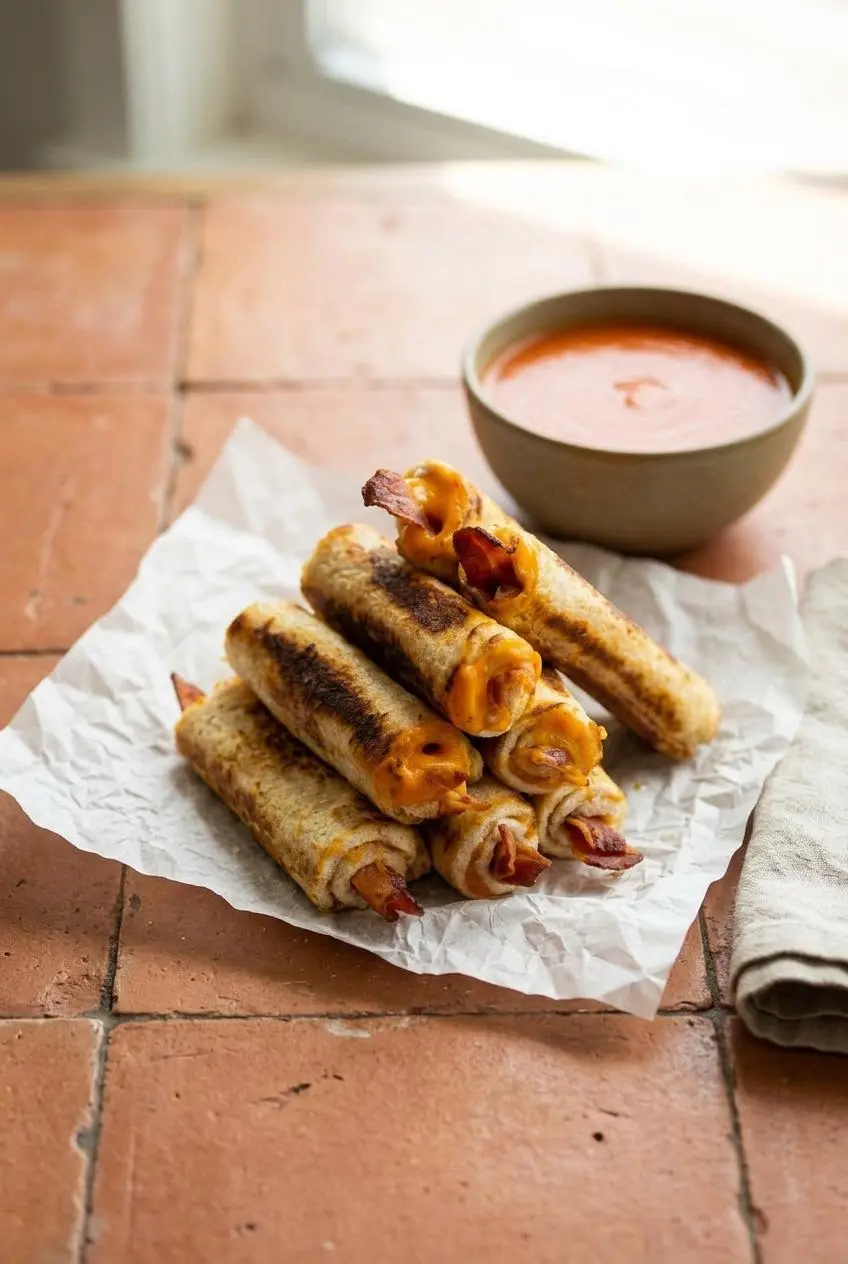
Serve the rolls hot, while the contrast between crisp bread and molten cheddar is strongest.
- Soup lunch: Set them beside creamy tomato soup or vegetable soup for dipping, keeping them out of the bowl until you’re ready to eat.
- Weekend breakfast: Pair them with fried or soft-boiled eggs, using the crisp bread to scoop up the yolk.
- Game day platter: Offer ranch or honey mustard in separate dipping bowls so the rolls stay crunchy.
For another warm soup-dipping side, cheesy garlic breadsticks fit the same cozy meal. Keep sauces beside the bread rather than pouring them over it.
Make-Ahead, Storage, and Reheating Guide
For the best texture, organize the ingredients first and toast the rolls close to serving. Grate the cheddar and cook the bacon separately, keeping perishable ingredients covered and chilled while you finish your preparation.
If assembly pauses before cooking, cover the rolls and refrigerate them rather than leaving the filled bread on the counter. There’s no need to commit to a long holding period when the cooking stage is quick.
Refrigerate cooked leftovers promptly in a covered container. Store dipping sauces separately so they don’t soak into the bread. Avoid stacking warm rolls tightly, which traps steam against their crisp surfaces.
To restore crunch, warm leftovers in a dry skillet, turning them gently, or use a toaster oven or air fryer with space around each roll. Check that the center heats through as the exterior crisps. Skip tightly wrapped foil, which holds moisture against the bread; a microwave will soften the wrapper rather than re-crisp it.
Conclusion
Soft white bread, finely grated cheddar, and cooked bacon become a golden, crunchy snack in 30 minutes. The most useful habits are brushing butter directly onto the bread and starting each roll seam-side down in a dry skillet.
Keep the filling flat, turn gently, and serve while the cheese is melted. Try the optional garlic-chive butter and Parmesan crust when you want an extra savory finish.
Frequently Asked Questions
How Do You Get Cheesy Bacon Rolls Crispy Without Burning the Butter?
Brush melted butter onto the rolls instead of adding it directly to the skillet. Use a dry nonstick skillet over medium heat and rotate with tongs as each side becomes golden. Lower the heat if the bread darkens before the cheese melts.
Can I Bake Crispy Cheesy Bacon Rolls in the Oven or Air Fryer Instead of Pan-Frying?
Yes, but distinguish buttered cheddar roll-ups from raw bacon-wrapped cream cheese appetizers. For buttered roll-ups, an oven-safe greased rack at 350°F lets heat circulate; check for golden bread and melted filling rather than relying on a fixed time. The air fryer option for cooked-bacon roll-ups is 375°F for 6 to 8 minutes, with early checks for leakage; the skillet offers closer control.
What Is the Best Bread and Cheese to Use So the Rolls Do Not Crack or Leak?
Use fresh, thick-sliced soft white sandwich bread that compresses without splitting. Finely grate cheddar, Monterey Jack, or provolone so the filling lies flat. Leave the closing border clear and avoid overfilling, regardless of the cheese you choose.
Can You Assemble Cheesy Bacon Rolls Ahead of Time and Reheat Leftovers?
For the best crunch, prepare the components first and assemble close to cooking; keep filled rolls covered and chilled if cooking is delayed. Refrigerate leftovers in a covered container, separate from dips. Re-crisp them in a dry skillet, toaster oven, or air fryer, checking that the filling heats through.

Crispy Cheesy Bacon Rolls

Equipment
- Bread knife
- Fine Cheese Grater
- Non-Stick Pan & Tongs
- Rolling Pin
- Brush (for butter)
Ingredients
- 8 thick slices of Soft White Bread
- 5 oz / 150g Cheddar finely grated
- 8 thin slices of Bacon cooked to preference (could sub wafer thin ham, or leave out completely)
- 2 tbsp Butter melted (or as needed)
Instructions
- Trim the crusts from a bread slice, compress it with a rolling pin, and scatter a couple of pinches of cheddar across it while keeping a narrow strip at the far edge clear. The flattened bread should feel flexible, with an even layer of cheese rather than a mound.
- Position a cooked bacon slice along the near edge if using, butter the bare far border, and roll toward it snugly before setting the cylinder seam-side down; repeat with the remaining bread. The finished roll should hold its shape without bread splitting or filling bulging through the seam.
- Brush the assembled rolls with melted butter and arrange them seam-side down in a dry nonstick skillet over medium heat, working in batches if necessary and turning with tongs to brown every side. Look for a crisp golden exterior and the first bubbling traces of cheddar at the ends rather than a large pool of escaped cheese.
- Transfer the browned rolls to a serving plate and serve hot. The bread should crunch lightly around a soft, melted cheese center.