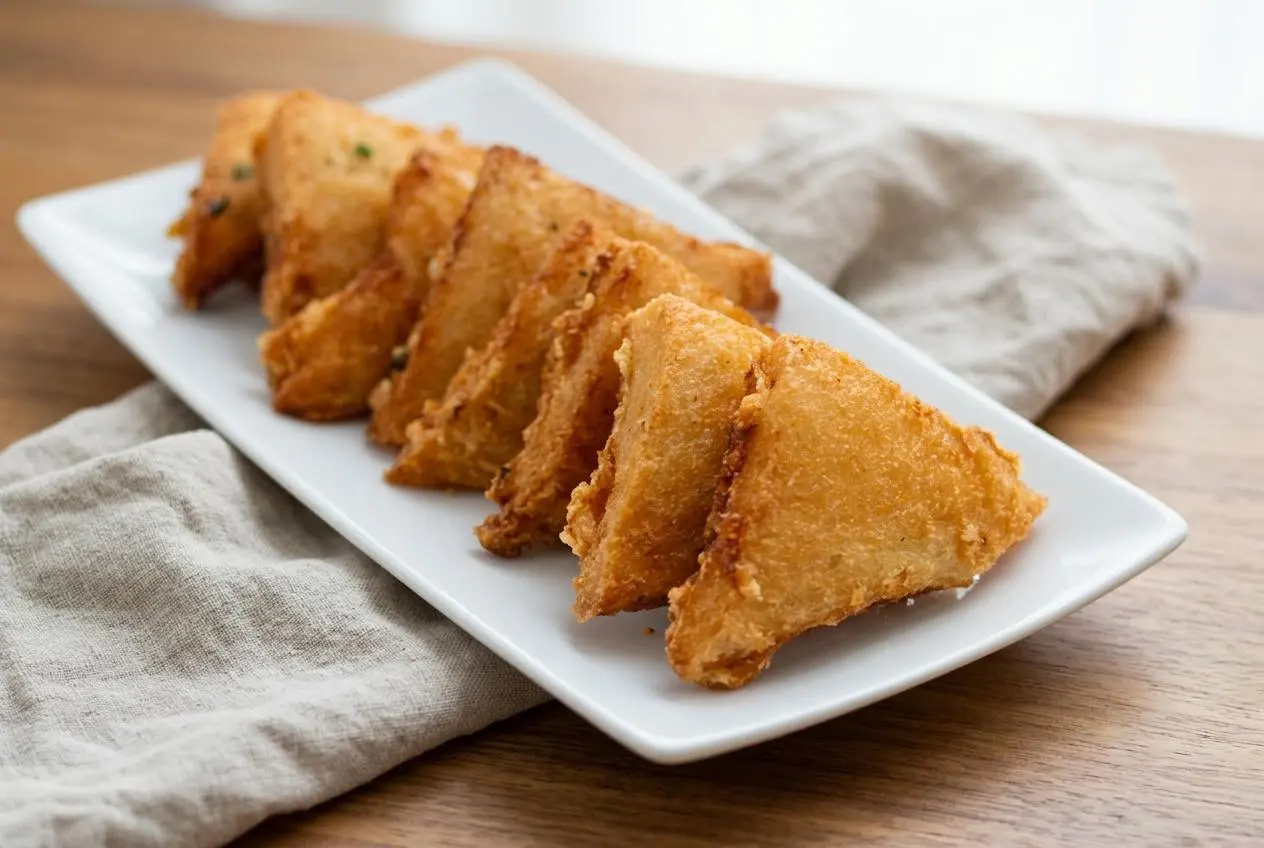
Make shrimp toast by pulsing raw shrimp, egg, salt, and scallions into a thick paste, spreading it over crustless bread triangles, and coating the topping with breadcrumbs. Shallow-fry shrimp-side down first, then turn to crisp the bread.
This shrimp toast recipe delivers golden, crunchy bread beneath a savory, springy shrimp topping. It’s a Chinese takeout-style appetizer you can make at home in 30 minutes, with a food processor doing most of the prep work.
The contrast is the draw: crisp crumbs, tender shrimp, and toasted bread in each bite. You don’t need a perfectly smooth mousse or a deep fryer to get there. Start with the shrimp side down.
Set out the breadcrumb dish before handling the shrimp paste so you can coat each triangle without juggling bowls.
Essential Ingredients and Smart Substitutions
Shrimp supplies the savory topping, egg helps it hold together, and salt and scallions sharpen the flavor. White bread supports the mousse, breadcrumbs add surface crunch, and hot oil gives both sides their golden finish.
- 1/2 lb shrimp, peeled and de-veined
- 1 egg
- pinch of salt
- 2 scallions, finely chopped
- 5 slices of white bread, crusts removed and cut into triangles (4 triangles per slice of bread)
- 1 cup bread crumbs
- oil for frying
Use raw shrimp for the topping. Processing raw shrimp produces a sticky mixture that clings to the bread and sets as it cooks. Cooked shrimp won’t develop that same tacky texture, so it isn’t a direct substitute here. Shrimp size matters less than removing the shells and drying the flesh well.
The egg helps bind the mousse, while salt seasons the shrimp throughout. Scallions bring a fresh onion flavor without overpowering the seafood. Add them after processing the shrimp so they remain small green flecks rather than disappearing into the paste.
Slightly stale or day-old white sandwich bread is a good choice because it’s firmer and easier to spread without tearing. It can also help limit oil absorption, but heat control matters more than bread age. Save thin slices of crusty baguette or ciabatta for the baked variation below.
Regular unseasoned breadcrumbs give an even coating. Panko makes a more craggy, airy crust; press its larger flakes into the mousse so they attach. Sesame seeds offer another optional coating, with a nuttier flavor and a different crunch.
Choose a neutral frying oil suited to high heat, such as canola, peanut, or vegetable oil. You want the shrimp and scallions to lead the flavor, rather than a strongly flavored oil.
I pat the peeled shrimp thoroughly dry with paper towels before processing so extra surface moisture doesn’t loosen the mousse.
How to Make Crispy Shrimp Toast Step by Step
A thick, tacky topping and controlled frying heat make the biggest difference. Allow 15 minutes for prep and 15 minutes for cooking, for a total of 30 minutes.
- Process the shrimp, egg, and salt with short pulses, then add the scallions and pulse only enough to distribute them.
Stop when the mixture looks sticky and mostly smooth, with tiny shrimp pieces still visible. - Divide the mousse among the bread triangles and spread it in an even layer all the way to their edges.
A level coating cooks more evenly than a mound and helps the bread keep its shape. - Fill a frying pot with about 1 inch of oil and heat it over medium-high heat, using 350°F to 360°F as a practical frying range.
The oil should be hot enough to bubble promptly around the coated toast without making the crumbs darken immediately. - Lower the mousse-covered face of each triangle into the breadcrumbs and press lightly but firmly to attach the coating.
The shrimp layer should carry an even covering of crumbs without thick, loose clumps. - Carefully lower a small batch into the oil with the shrimp coating facing down.
Leave space between the triangles so the oil can circulate and the pieces don’t stick together. - Turn each triangle once the topping develops golden-brown edges, then fry the bread face until golden as well.
The shrimp layer should feel set and look opaque through the center, with no translucent patches.
Use the color cues to guide turning, rather than assigning every batch the same cooking time. Bread thickness, topping thickness, and the amount of toast in the pot all affect how quickly it browns.
For a doneness check, seafood should reach an internal temperature of 145°F. A fine-tip thermometer is useful for checking the thickest part of the shrimp layer; browned breadcrumbs alone don’t tell you whether the center has cooked.
Serve the toast warm, with an optional scattering of fresh scallions or parsley. Keep dipping sauces separate so the bread stays crisp until you take a bite.
Expert Tips and Common Mistakes to Avoid
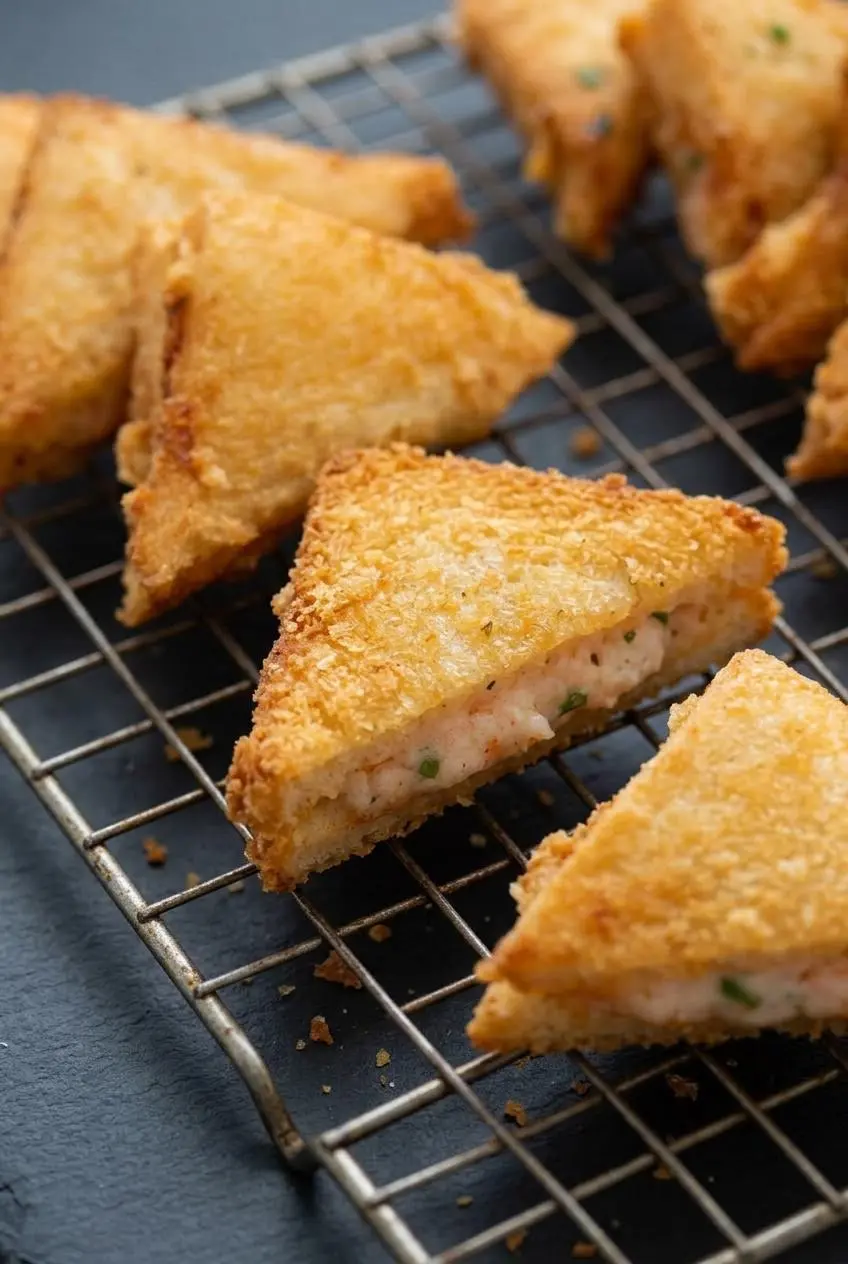
If the toast looks golden but feels greasy or the topping slips away, check heat and handling before changing the ingredients.
- Greasy bread: Oil that’s too cool lets the bread soak while it slowly browns. Monitor the frying range above and let the oil recover between batches instead of adding all the triangles at once.
- Dark crumbs with an underdone center: Excessive heat browns the outside too quickly. Lower the heat and keep the mousse layer even, especially near the middle of each triangle.
- Rubbery topping: Extended processing can warm the mixture and erase its shrimp texture. Use short pulses and stop once it becomes tacky, rather than chasing a completely silky purée.
- Topping that separates: A mound in the center or a bare border gives the mousse less contact with the bread. Spread it edge to edge, then begin frying with that side facing down so it sets before turning.
- Breadcrumbs shedding into the pot: Loose flakes need better contact with the wet topping. Press gently to anchor them, and avoid repeatedly moving the toast before its coating sets.
- Soft undersides after frying: A flat plate or damp paper towel can trap steam. Drain the finished triangles on a wire rack and keep them in a single layer rather than piling them up.
Also watch the oil for loose crumbs between batches. Stray breadcrumbs continue browning after the toast comes out, so skim them away before they scorch and cling to the next batch.
Delicious Variations (Baked, Air Fryer, and Vietnamese Style)
These optional adaptations change the bread, cooking setup, or seasoning. Keep them separate from the fried version above, and expect a slightly different texture from each.
Baked Vietnamese-Style Shrimp Toast
For Vietnamese-style baked shrimp toast, often called bánh mì quết tôm, use thin slices of baguette or ciabatta. Their sturdy structure holds a creamy topping well, while thick slices can stay chewy beneath the shrimp.
For this variation, combine chopped raw shrimp with mayonnaise, melted butter, garlic, and sweet basil to make a spreadable topping. Arrange the topped bread on a baking sheet and bake at 400°F for about 15 minutes, checking that the shrimp cooks through and the bread edges turn crisp and golden.
This version has a richer, garlicky finish rather than the breadcrumb shell of the fried toast. Spread the topping evenly and avoid letting a heavy layer of mayonnaise or butter overwhelm the shrimp.
Crispy Air Fryer Method
For air fryer shrimp toast, lightly spray the assembled, breadcrumb-coated triangles with cooking oil spray. Arrange them in a single layer with space around each piece, then air fry at 375°F for 5 to 7 minutes.
Treat that timing as a starting point, since air fryers and topping thickness vary. Check that the bread is crisp and the shrimp layer is cooked through; extend cooking if needed rather than relying on the timer alone.
For an optional cheesy garlic bread version, add garlic to the topping and finish with mozzarella or Parmesan. Keep the cheese layer light enough that it doesn’t bury the shrimp or obscure its doneness.
Restaurant-Style Ginger and Sesame Upgrade
Add freshly grated ginger and a little toasted sesame oil to the shrimp paste for an aromatic dim sum-style variation. Both flavors are assertive, so use a restrained hand and let the shrimp remain the main flavor.
Press a mixture of white and black sesame seeds with panko onto the mousse for nutty crunch. If using already-toasted seeds, watch their color closely because they can darken before the bread finishes browning.
The same shrimp-side-first frying order applies. Sesame changes the coating, not the need to cook the topping evenly.
What to Serve With Shrimp Toast
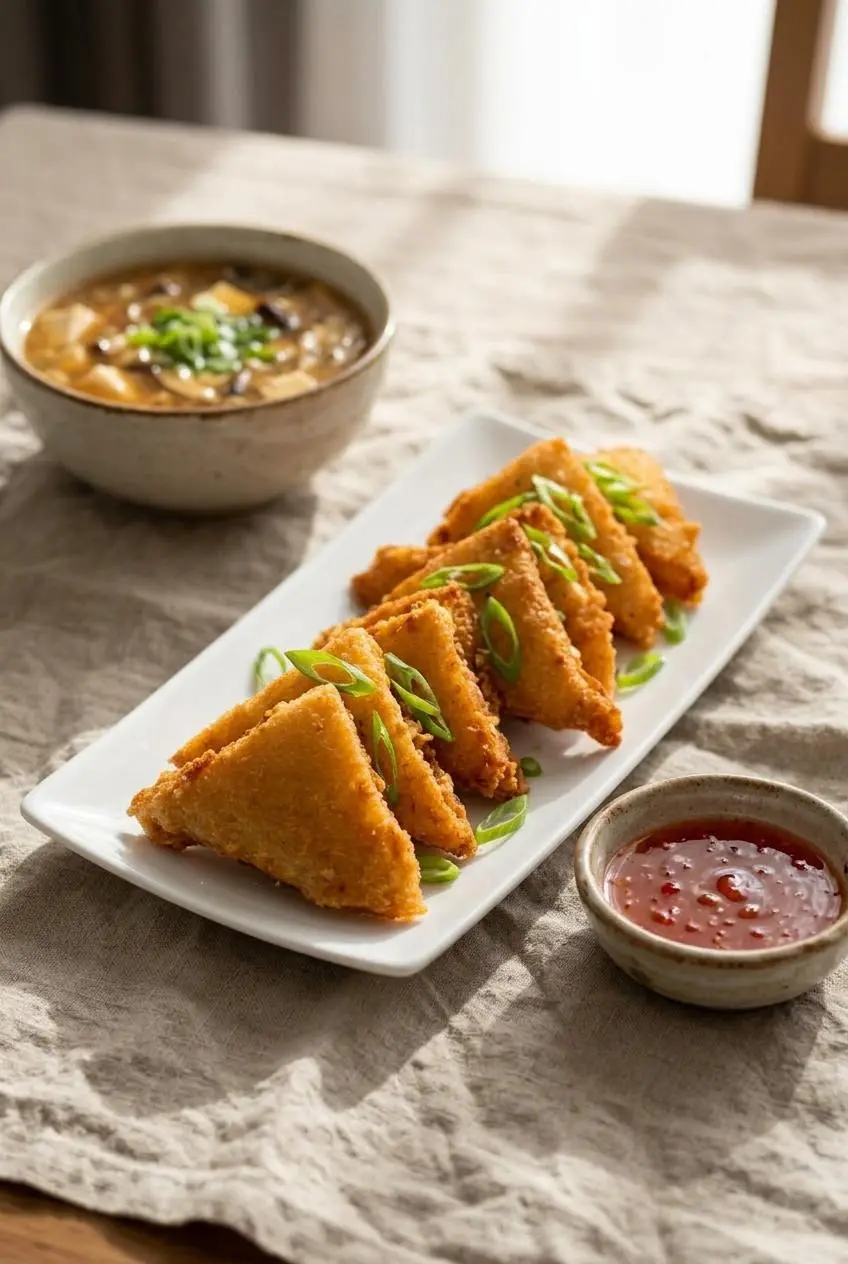
Serve shrimp toast hot with sweet chili sauce in a small bowl alongside it. The sweet heat balances the savory topping without softening the bread before serving.
- For a dim sum-style spread: Add hot and sour soup or egg drop soup, with thinly sliced scallions or cilantro over the toast just before serving.
- For dinner: Pair a small platter with shrimp lo mein for a homemade takeout-style meal.
- For holiday trays: Use smaller bread triangles for bite-size portions and arrange the cooked pieces in a single layer, replenishing the platter as batches finish.
Sweet basil works especially well with the baked variation. Whichever garnish you choose, add it at serving time so it tastes fresh against the warm shrimp.
Make-Ahead, Storage, and Reheating Guide
For party prep, organize the bread, breadcrumb dish, frying equipment, and serving platter before starting the shrimp mousse. Keep the shrimp chilled until you’re ready to work, and aim to assemble and cook close to serving for the best texture.
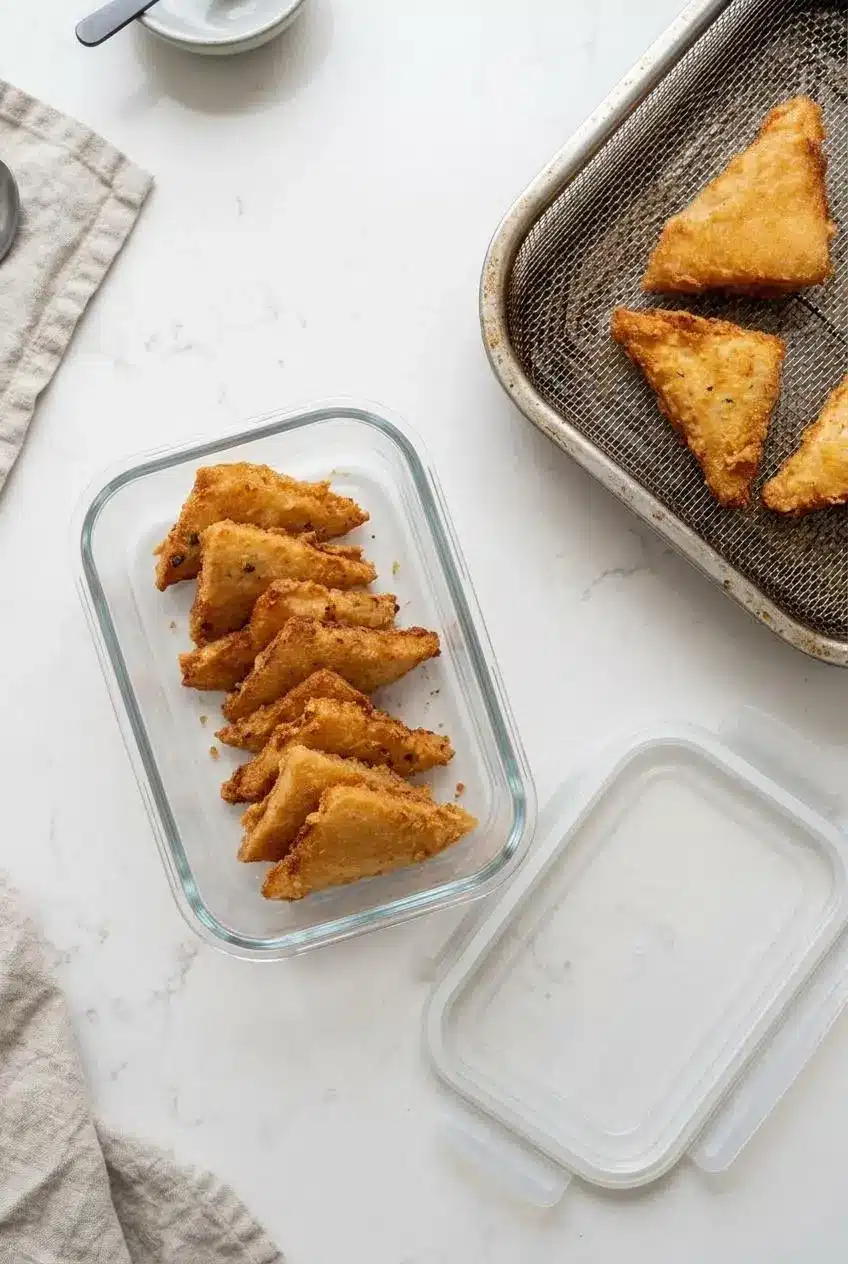
If you have cooked leftovers, let steam escape on a wire rack, then refrigerate them promptly in a covered container. Store dipping sauces separately, and avoid packing warm toast into a deep pile where condensation can soften the coating.
To restore some crunch, arrange refrigerated toast in a single layer in an oven or air fryer and heat until hot throughout and crisp at the edges. Check frequently so the exposed bread doesn’t burn before the topping warms.
Skip the microwave when crispness matters. It warms the topping but tends to leave the bread soft and chewy. Reheated toast may not match a freshly fried batch, so cook only what you plan to serve when possible.
Conclusion
Homemade shrimp toast brings together golden bread, crisp crumbs, and a savory shrimp topping in 30 minutes. Keep the mousse slightly textured, spread it evenly, and fry shrimp-side down first.
Once you’re comfortable with the fried version, try the ginger-sesame coating or the air fryer option. Serve it warm with sauce on the side, while that first bite still crunches.
Frequently Asked Questions
What Kind of Bread Is Used for Shrimp Toast?
Use white sandwich bread with the crusts removed for shallow frying; slightly stale bread is easier to spread without tearing. Choose thinly sliced baguette or ciabatta for the baked variation, where a sturdier bread supports the creamy topping.
Do You Cook the Shrimp Before Putting It on the Toast?
No. Use raw peeled and deveined shrimp so processing creates the sticky mousse that attaches to the bread. Pre-cooked shrimp won’t form the same paste and can give a crumbly, less cohesive topping.
Can I Use Panko Breadcrumbs Instead of Regular Breadcrumbs?
Yes. Panko gives the coating a lighter, more craggy crunch than fine breadcrumbs. Press the flakes gently into the wet shrimp paste so they stay attached during frying.
Can You Make Shrimp Toast Ahead of Time and Reheat It in the Oven?
For the best crunch, cook close to serving rather than planning around reheating. If you’re reheating refrigerated cooked toast, use a single layer in the oven or air fryer and heat until hot throughout and crisp, following the storage guidance above.
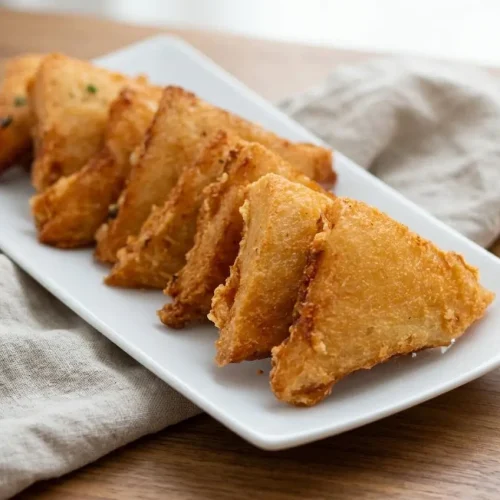
Shrimp Toast Recipe

Equipment
- Food processor
- Pot
Ingredients
- 1/2 lb shrimp peeled and de-veined
- 1 egg
- 1 pinch of salt
- 2 scallions finely chopped
- 5 slices of white bread crusts removed and cut into triangles (4 triangles per slice of bread)
- 1 cup bread crumbs
- oil for frying
Instructions
- Process the shrimp, egg, and salt with short pulses, then add the scallions and pulse only enough to distribute them. Stop when the mixture looks sticky and mostly smooth, with tiny shrimp pieces still visible.
- Divide the mousse among the bread triangles and spread it in an even layer all the way to their edges. A level coating cooks more evenly than a mound and helps the bread keep its shape.
- Fill a frying pot with about 1 inch of oil and heat it over medium-high heat, using 350°F to 360°F as a practical frying range. The oil should be hot enough to bubble promptly around the coated toast without making the crumbs darken immediately.
- Lower the mousse-covered face of each triangle into the breadcrumbs and press lightly but firmly to attach the coating. The shrimp layer should carry an even covering of crumbs without thick, loose clumps.
- Carefully lower a small batch into the oil with the shrimp coating facing down. Leave space between the triangles so the oil can circulate and the pieces don’t stick together.
- Turn each triangle once the topping develops golden-brown edges, then fry the bread face until golden as well. The shrimp layer should feel set and look opaque through the center, with no translucent patches.