Chocolate Babka

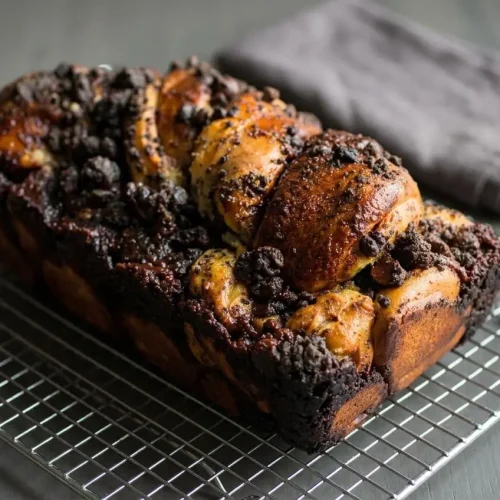
Two bakery-style loaves layer brioche-like yeast dough with dark chocolate fudge ribbons, cocoa streusel, and glossy simple syrup for a rich, buttery, tender crumb.
Equipment
- electric mixer fitted with the dough hook
- Food processor
- two 9-inch loaf pans
- Parchment Paper
- Instant-read thermometer
- Skewer
- Wire rack
Ingredients
- ½ cup/118 milliliters whole milk
- 1 package (¼ ounce/7 grams) active dry yeast
- ⅓ cup/67 grams granulated sugar plus a pinch
- 4 ¼ cups/531 grams all-purpose flour more as needed
- 1 ½ teaspoons fine sea salt
- 1 teaspoon vanilla extract
- 1 teaspoon grated lemon zest (optional)
- ½ teaspoon freshly grated nutmeg
- 4 large eggs at room temperature, lightly beaten
- 10 tablespoons/140 grams unsalted butter at room temperature, plus more for greasing bowls and pans
- ½ cup/100 grams granulated sugar
- ¾ cup/177 milliliters heavy cream or half-and-half
- Pinch kosher salt
- 6 ounces/170 grams extra bittersweet chocolate preferably between 66 and 74 percent cocoa, coarsely chopped
- 8 tablespoons/112 grams/1 stick unsalted butter diced, at room temperature
- 2 teaspoons/10 milliliters vanilla extract
- ½ cup/60 grams all-purpose flour
- 3 tablespoons/45 grams granulated sugar
- 1 ½ tablespoons/11 grams cocoa powder
- ½ teaspoon kosher salt
- 4 ½ tablespoons/64 grams unsalted butter melted
- ⅓ cup/60 grams mini semisweet chocolate chips
- ⅔ cup/135 grams granulated sugar
Instructions
- Heat the milk gently in a saucepan or microwave to about 110°F, then stir in the yeast and pinch of sugar and leave for 5 to 10 minutes. A light foam should develop on the surface; the milk should feel warm rather than hot.
- Combine the dough flour, ⅓ cup sugar, fine sea salt, vanilla, optional lemon zest, and nutmeg using a dough-hook mixer, food processor, or large bowl and wooden spoon, then work in the yeast mixture and eggs for about 2 minutes. Look for a cohesive, soft dough; if it remains pasted to the bowl instead, mix in extra flour 1 tablespoon at a time, thoroughly incorporating each addition.
- Work in half the dough butter for 3 to 5 minutes, scraping the bowl as necessary, then incorporate the remaining half for another 5 to 7 minutes. The dough should become elastic and stretchy, pulling away from the bowl; use additional flour 1 tablespoon at a time only if persistent sticking prevents this.
- Round the dough, turn it in a buttered bowl to coat its surface, cover with a clean towel, and leave somewhere warm and draft-free for 1 to 2 hours. An unheated oven with its light on can provide a sheltered spot, and the dough should visibly puff even if it never doubles.
- Deflate the risen dough with your hands, cover the bowl again, and refrigerate overnight, or for at least 4 hours if necessary. The longer chill develops flavor and firms the butter, leaving the dough easier to roll.
- Simmer the filling sugar, cream, and pinch of salt over medium heat for about 5 minutes, stirring occasionally, then transfer to a bowl and blend in the chopped chocolate, diced butter, and vanilla. Once smooth, let the filling reach room temperature so it spreads without warming or tearing the dough.
- Mix the streusel flour, sugar, cocoa, and kosher salt, then distribute the melted butter throughout and fold in the mini chocolate chips. The mixture should gather into chunky, damp crumbs rather than remain powdery.
- Heat the syrup sugar with ⅔ cup/158 milliliters water over medium heat, then maintain a simmer for 2 minutes, stirring occasionally. The finished syrup should look clear, with no visible sugar crystals.
- Grease two 9-inch loaf pans with butter and fit parchment inside each, extending it 2 inches above the sides. These overhanging edges will give you handles for lifting the loaves.
- Divide the chilled dough equally, roll each portion on a floured surface into a 9-by-17-inch rectangle, spread each with half the filling right to the edges, and roll tightly from a long edge before placing each coil on a towel or plastic wrap in the freezer for 10 minutes. The brief chill should firm the filled rolls enough to expose distinct layers when cut.
- Split each roll lengthwise, wind its two strands around one another, fold the resulting braid to about 9 inches, and nestle it into a prepared pan, then cover loosely with a towel and let rise warmly for 1 to 1 ½ hours. The loaves should become puffy rather than double; alternatively, cover the pans with plastic wrap, refrigerate overnight, and leave at room temperature for 1 hour before baking.
- Preheat the oven to 350°F, squeeze the streusel into clumps over both loaves, and bake for 40 to 50 minutes. Check that a tester enters without a rubbery tug and withdraws cleanly, using the recipe’s 185 to 210°F thermometer range as an additional baking cue and a hollow-sounding unmolded bottom as a backup.
- Pierce both loaves repeatedly with a skewer or paring knife immediately after baking, reaching the bottom, then distribute half the syrup over each loaf. The deep channels help carry the syrup through the layers instead of leaving it sitting on the surface.
- Place the loaves on a wire rack and allow them to cool completely before cutting. The crumb and fudge layers should set enough to hold their shape in a slice.
Notes
Ingredient tip: Keep the repeated flour, sugar, and butter portions separated by component before mixing, and set the dough butter and filling butter out separately so they do not get mixed up.
Texture tip: Let the chocolate fudge filling come to a spreadable room temperature before assembling, then chill each rolled coil in the freezer for 10 minutes so the chocolate ribbons cut cleanly without tearing.
Doneness: Because dark filling and streusel brown early on top, check the central dough with a tester for zero rubbery resistance and verify an internal temperature between 185 and 210°F.
Storage: Allow baked loaves to cool completely before wrapping tightly or placing in a well-sealed container so trapped steam does not soften the crisp streusel.
Nutrition information is an estimate based on common ingredients and serving sizes. Values may vary depending on brands, portions, and substitutions.