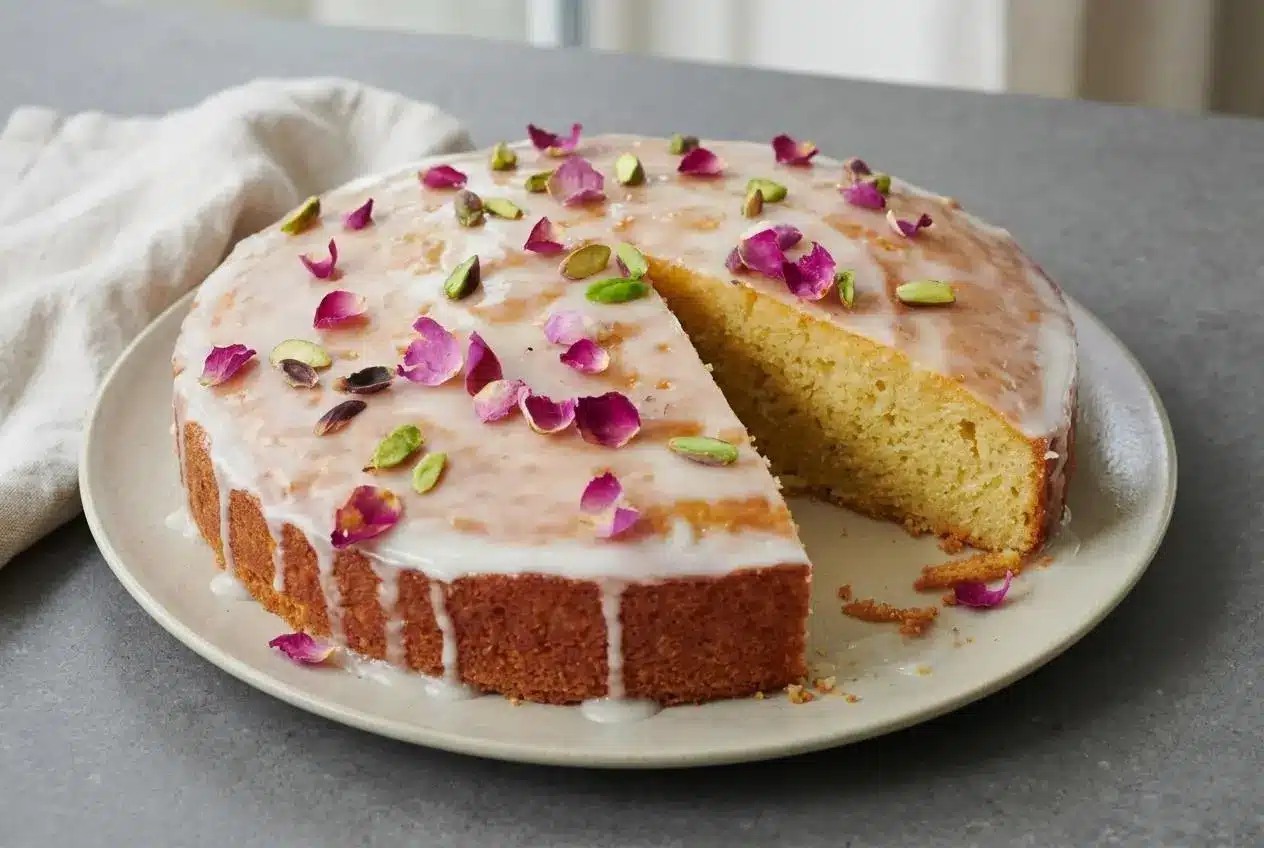
Fragrant with cardamom, lemon, and rose water, persian love cake is a tender almond cake finished with warm citrus syrup and lemon-rose icing. This version combines almond flour, wheat flour, and Greek yogurt for a moist crumb beneath a tangy, floral glaze.
Rubbing lemon zest into sugar brings out a fresh citrus scent before the batter even comes together. The syrup adds another layer of lemon and rose, while the icing gives each slice a sweet, tart finish.
The cake looks celebration-ready with optional green pistachios and pink petals, but the most useful trick happens before decorating. Warm syrup, cool cake, thick icing.
Set out a deep 9-inch springform pan and parchment before mixing; the thick batter needs room to rise.
What Is Persian Love Cake?
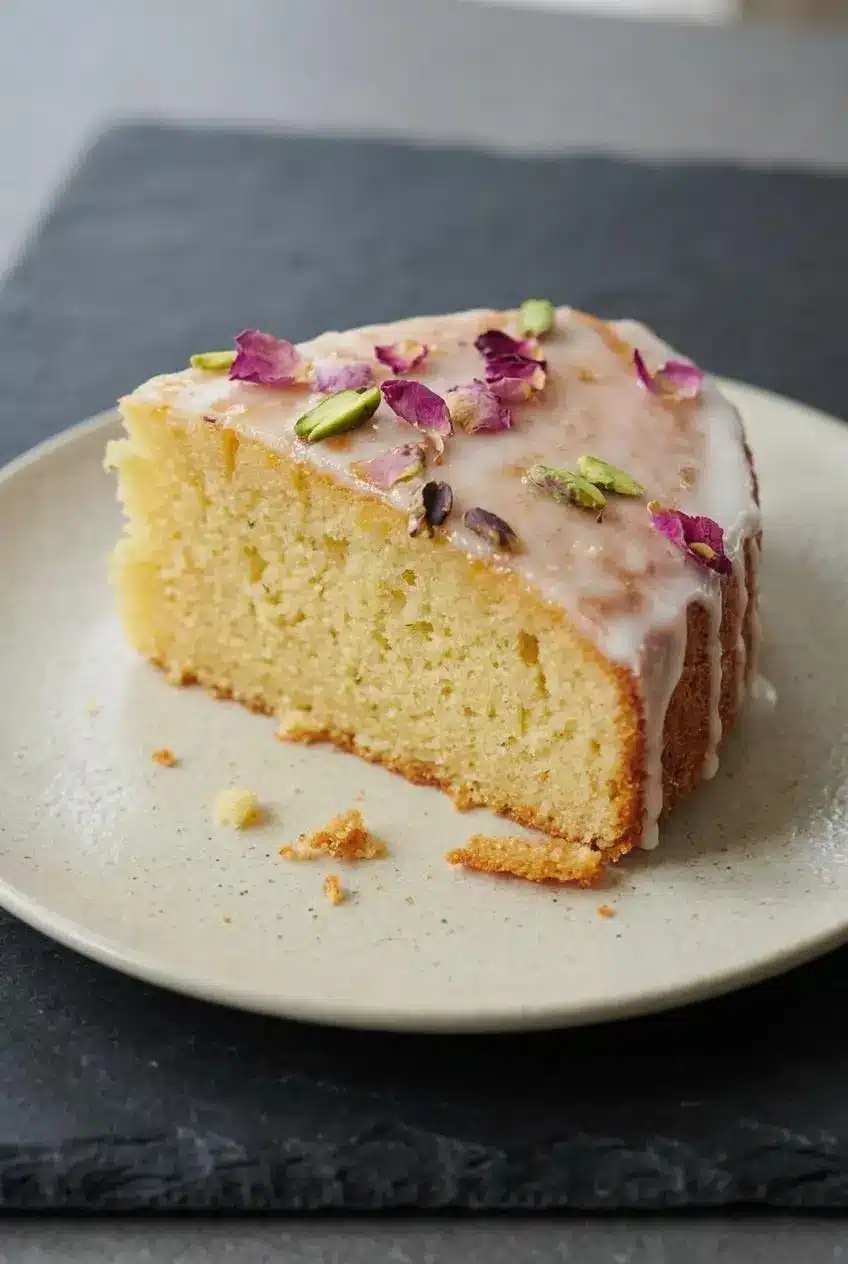
This version is a butter cake with an almond-and-wheat flour crumb, Greek yogurt, and three distinct aromatics: cardamom, lemon zest, and rose water. A warm lemon-rose syrup soaks into the baked cake, followed by icing once it has cooled completely.
The flavor should feel citrusy and gently floral rather than heavily perfumed. Its name carries romantic folklore, while modern interpretations draw on Iranian flavors. Despite the similar name, it differs from the ricotta-layered Italian love cake.
Key Ingredients and Their Roles
Almond flour supplies richness, wheat flour gives structure, and yogurt brings moisture and acidity. Butter, eggs, and leaveners shape the crumb, while lemon, cardamom, and rose water balance sweetness with bright, fragrant flavor.
FOR THE CAKE
- ½ cup/115 grams unsalted butter, softened at room temperature, plus more for greasing the pan
- 2 cups/225 grams almond flour
- 1 cup/135 grams all-purpose flour
- 1 teaspoon ground cardamom
- 1 teaspoon baking powder
- ½ teaspoon baking soda
- ¼ teaspoon kosher salt (such as Diamond Crystal)
- ¾ cup/150 grams granulated sugar
- 1 teaspoon grated lemon zest (from 1 lemon)
- 3 large eggs
- 1 cup/227 grams plain Greek yogurt
- 2 tablespoons rose water
FOR THE SYRUP
- ¼ cup granulated sugar
- 2 tablespoons lemon juice (from 1 lemon)
- 1 tablespoon rose water
FOR THE ICING AND TOPPING
- 1 cup/113 grams powdered sugar
- 1 to 2 tablespoons lemon juice (from 1 lemon), as needed
- ½ to 1 tablespoon rose water
- Raw pistachios (optional), slivered or chopped
- Dried, food-safe Damask rose petals (optional), for garnishing
Almond Flour, All-Purpose Flour, and Greek Yogurt
Almond flour contributes a rich, tender texture, while all-purpose flour helps the cake hold together for unmolding and slicing. Greek yogurt adds moisture and acidity without making the batter loose.
This is a blended-flour cake, not a gluten-free formula. Replacing the wheat flour with more almond flour changes its structure; an all-almond cake won’t necessarily bake or slice the same way.
Cardamom, Lemon Zest, and Culinary Rose Water
Cardamom gives warm, aromatic depth, lemon zest supplies citrus oils, and rose water adds floral fragrance. Check these ingredients before mixing so none overwhelms the others.
- Cardamom: Choose finely ground green cardamom that smells fresh and fragrant, rather than dusty or faint.
- Lemon zest: Grate the yellow outer peel, avoiding the bitter white layer underneath.
- Rose water: Buy a product intended for culinary use and check its strength; concentrated rose flavoring isn’t interchangeable with regular rose water.
Raw Green Pistachios and Food-Safe Damask Rose Petals
Raw green pistachios bring color and a little crunch against the soft crumb. Dried Damask rose petals add a delicate decorative finish. Both are optional, so the cake still works beautifully without them.
Choose petals sold for culinary use, not florist or ornamental roses. Appearance alone doesn’t establish whether a flower belongs on food.
I check the rose-water label for culinary use and concentration before measuring; that distinction matters more than the bottle’s floral scent.
How to Make Persian Love Cake Step by Step
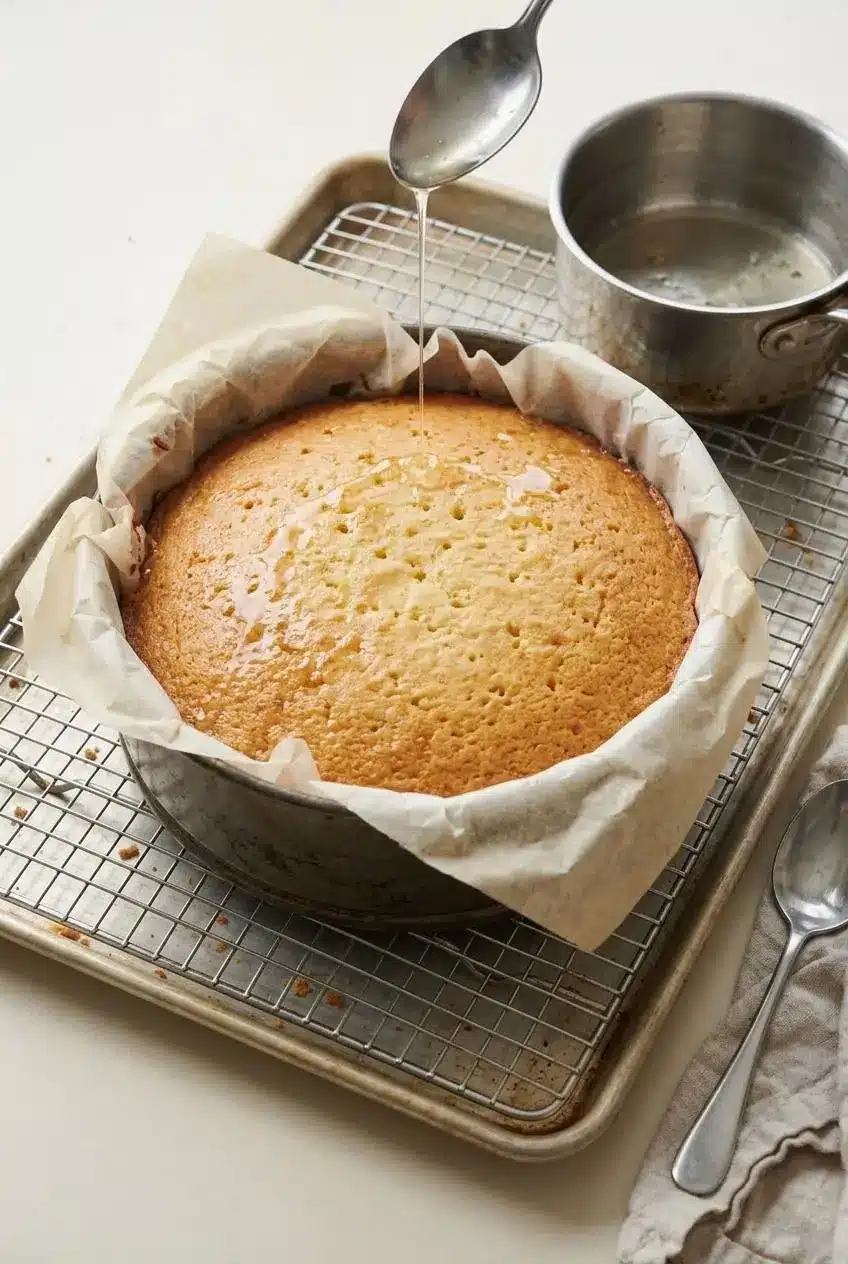
This recipe makes one 9-inch cake. Plan for complete cooling beyond the baking time: the cake needs warmth to absorb syrup, then a fully cooled surface to hold its icing.
- Set the oven to 350°F with a rack at the center, then butter a 9-inch springform pan, line it with parchment, and lightly butter the paper.
Cover the bottom and sides with a thin coating to help the delicate cake release. - Whisk both flours with the ground cardamom, baking powder, baking soda, and salt in a medium bowl.
Break up visible clumps so the leaveners and spice spread evenly through the mixture. - Work the lemon zest into the sugar with your fingertips in the mixer bowl, then add the softened butter and beat with the paddle on medium-high for about 5 minutes, scraping the bowl as needed.
The sugar should smell citrusy before mixing, and the creamed mixture should become pale and fluffy; a handheld mixer also works. - Beat in each egg separately on medium-high, incorporate the yogurt until smooth, stir in the rose water, and gently fold in the dry mixture with a flexible spatula.
Stop once the flour disappears, leaving a very thick batter rather than a flowing one. - Scrape the batter into the prepared pan, level it with an offset spatula, bake for about 35 minutes, and place the pan on a rack over a baking sheet.
Look for a golden surface and a clean toothpick from the center before taking the cake out. - Begin the syrup as the cake starts cooling by stirring the sugar and lemon juice in a small saucepan over medium heat for about 1 minute, then stir in the rose water and take the pan off the heat.
The sugar should dissolve before the rose water goes in. - Pierce the warm cake across the top with a toothpick, small skewer, or fork, spoon the syrup evenly over it, and leave it in the pan for 30 minutes.
This pause lets the syrup soak in while the fragile almond crumb begins to firm. - Release the cake from the springform pan and leave it on the cooling rack until completely cool.
The surface must no longer feel warm before you move on to icing. - Whisk the powdered sugar with 1 tablespoon lemon juice and ½ tablespoon rose water, adding more liquid only as needed within the listed ranges.
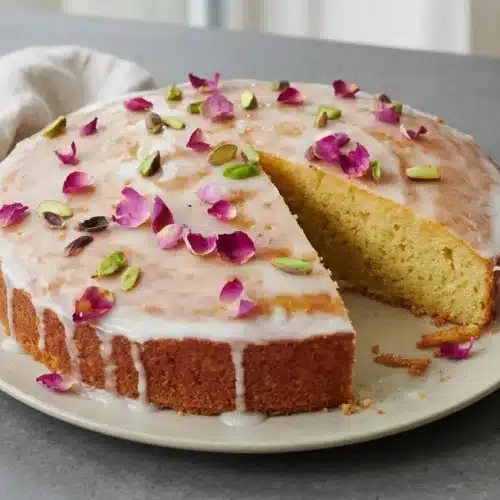
A smooth, opaque icing that pours slowly is the goal, rather than a thin glaze that immediately runs away. - Drizzle the icing across the cooled cake and scatter over the optional slivered or chopped pistachios and dried rose petals.
Let the thick icing form visible drips while leaving some of the cake’s edges exposed if desired.
Give the creaming stage its full time, then change gears when the flour goes in. Gentle folding preserves the aeration you’ve built, and the thick batter needs spreading rather than pouring. The in-pan rest after syruping also makes unmolding less likely to break the tender crumb.
Expert Tips for Decorating and Troubleshooting
The prettiest finish starts with a cake that releases cleanly and has cooled completely. Keep these optional finishing techniques separate from the mixing and baking method.
How to Prep Pistachios and Edible Rosebuds
Slivering or chopping pistachios gives a defined garnish. For a finer scattering, pulse raw green pistachios briefly into coarse crumbs, checking between pulses. Stop before the nuts become oily and start clumping into a paste.
- Loose culinary petals: These are ready to scatter; check for any firm stem fragments before using.
- Whole culinary dried rosebuds: Gently loosen the petals and separate them from stems and firm centers rather than crumbling the whole bud over the cake.
Sharp Cake Edges and Thick, Pourable Icing
For a flatter glazing surface, you can carefully invert the completely cooled cake so the bottom faces up. Support it well during the turn because the syrup-soaked crumb is delicate.
Start the icing with 1 tablespoon lemon juice and ½ tablespoon rose water. Lift the whisk and watch the icing fall: it should leave a thick ribbon, not splash like juice. Thin it gradually only within the ingredient ranges. A warm cake will make even properly mixed icing slide off.
Dense Crumb, Runny Icing, and Strong Rose Flavor
- Dense crumb: Butter that’s too firm won’t cream well, and vigorous mixing after adding flour can reduce tenderness; soften the butter properly, cream fully, and fold just until combined.
- Runny icing: Check whether the cake is still warm before blaming the icing; excess liquid is a separate issue, so start at the lower amounts.
- Strong rose flavor: Check product concentration before baking and use culinary rose water rather than concentrated flavoring; a finished cake’s floral intensity isn’t easy to undo.
- Overflow: Use the specified steep-sided 9-inch springform pan rather than a shallow cake pan; matching diameter alone doesn’t guarantee enough room.
- Cracking during unmolding: Don’t rush the in-pan cooling stage after soaking; the warm almond crumb needs support while it settles.
Gluten-Free, Dairy, and Citrus Options for This Almond Cake
Substitutions can change both flavor and structure. Treat these as optional directions, not verified equivalents to the ingredient list and method above.
How to Make Gluten-Free Persian Love Cake
The official formula contains wheat. A labeled 1-to-1 gluten-free baking flour is a possible replacement for the all-purpose component, following that product’s cake-baking guidance, but the result isn’t verified here.
Check the other ingredient labels as appropriate for your needs. Don’t replace the wheat flour with additional almond flour and expect identical structure. Semolina also contains wheat, so it isn’t a gluten-free alternative.
Buttermilk, Sour Cream, and Lime Options
- Buttermilk: Its thinner consistency can loosen this Greek-yogurt batter, so it isn’t a confirmed direct swap.
- Sour cream: Its richness and acidity can change the crumb; no tested replacement quantity is supplied here.
- Lime: Lime zest and juice offer a sharper citrus direction, though the lemon version above remains the established method.
- Orange blossom water: This gives a different floral profile rather than duplicating rose water, and product strength still matters.
If the floral, soaked-cake style is what appeals to you, rose milk cake offers another way to enjoy culinary rose water without modifying this batter.
Golden Saffron Syrup
- For an optional variation, infuse the warm lemon-rose syrup with crushed saffron threads for golden color and a subtle earthy-floral aroma; saffron isn’t required for this cake.
Serving, Make-Ahead Glazing, and Keeping the Almond Crumb Moist
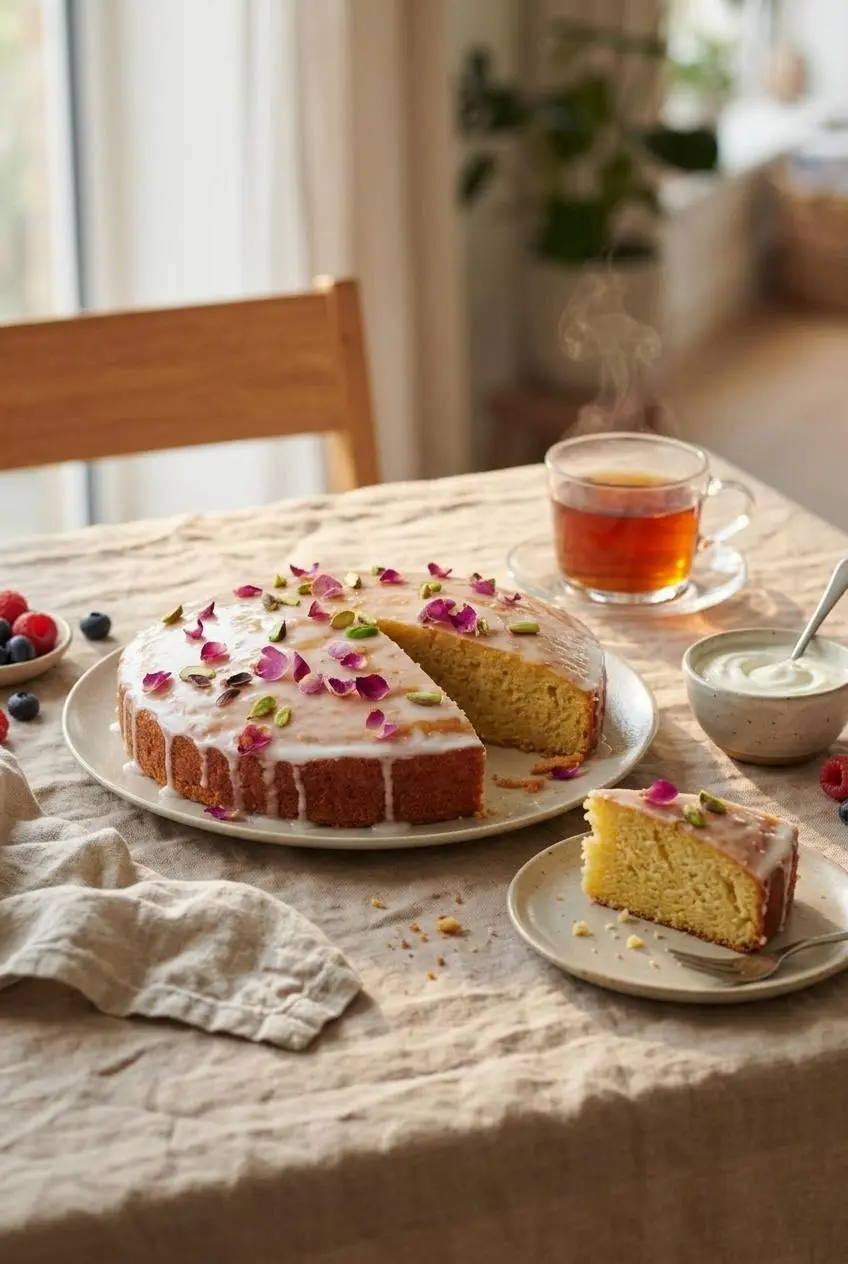
Separate the cake preparation from the final decorating so the icing stays distinct and the optional garnishes keep their texture.
Bake and Soak Ahead, Then Finish for Serving
Complete the baking and syrup-soaking stages, let the cake cool fully, and keep it covered before finishing. You can glaze the cooled cake ahead of serving or wait until you’re ready to present it.
The icing and garnishes don’t need to go on together. Add pistachios and petals shortly before serving for fresher-looking color and a cleaner decorative finish.
Counter and Refrigerator Storage
Keep the cooled cake covered to limit drying, whether holding it on the counter for serving or refrigerating it for storage. Favor refrigeration in a warm kitchen rather than leaving it exposed to heat.
Protect the icing with a cake cover or roomy container instead of pressing wrapping against it. Allow refrigerated slices to come toward room temperature for a softer crumb, and keep serving accompaniments separate.
Tea Pairings and Celebration Slices
Serve room-temperature slices with hot Persian black tea scented with cardamom. The unsweetened tea balances the sweet icing and floral crumb at an afternoon gathering, Valentine’s Day celebration, or Mother’s Day table.
A dollop of lightly sweetened Greek yogurt or mascarpone and fresh berries also fits. Keep the accompaniments modest so the lemon, almond, and rose remain the focus.
Conclusion
A tender almond crumb, bright lemon, and gently floral rose water give this cake its character. The syrup adds moisture while the tangy icing provides contrast.
Spoon the syrup over the warm cake, then wait until it cools completely before icing. Give those two stages their own time, and decorating becomes the easy finish.
Frequently Asked Questions
Why Is It Called a Persian Love Cake?
Romantic folklore tells of a woman baking a fragrant cake to win a prince’s love. That story isn’t a verified origin account; the modern name is often associated with Australian baking inspired by Iranian flavors.
What Is a Persian Love Cake Called in Farsi?
Keyk-e Eshgh is a literal rendering of “cake of love.” A literal translation doesn’t establish it as a widely recognized traditional Iranian cake name, and Keyk-e Baghlava shouldn’t be treated as an interchangeable name.
Can I Bake This Persian Love Cake in a Bundt Pan or 8-Inch Pan?
Use the specified deep 9-inch springform pan for the most predictable result; a smaller or shallow pan can overflow. A Bundt pan is an unverified alternative that needs suitable capacity and careful release preparation, not a guaranteed direct swap.
Should I Use Cardamom Seeds or Ground Cardamom Powder?
Use the listed 1 teaspoon ground cardamom. Freshly grinding the inner seeds from green cardamom pods is optional; discard the husks rather than grinding them into the spice.
Can I Glaze the Cake a Day in Advance or Should I Wait Until Serving?
You don’t need to wait until serving to glaze, but apply icing only after the cake has cooled completely and keep it covered afterward. Add the optional pistachios and petals shortly before serving, and follow the storage guidance above.
Persian Love Cake

Equipment
- 9-inch springform cake pan
- Parchment Paper
- Stand mixer
- Handheld mixer
- flexible spatula
- Offset spatula
- Cooling Rack
- Baking Sheet
- Small saucepan
- Toothpick
Ingredients
FOR THE CAKE
- ½ cup/115 grams unsalted butter softened at room temperature, plus more for greasing the pan
- 2 cups/225 grams almond flour
- 1 cup/135 grams all-purpose flour
- 1 teaspoon ground cardamom
- 1 teaspoon baking powder
- ½ teaspoon baking soda
- ¼ teaspoon kosher salt (such as Diamond Crystal)
- ¾ cup/150 grams granulated sugar
- 1 teaspoon grated lemon zest (from 1 lemon)
- 3 large eggs
- 1 cup/227 grams plain Greek yogurt
- 2 tablespoons rose water
FOR THE SYRUP
- ¼ cup granulated sugar
- 2 tablespoons lemon juice (from 1 lemon)
- 1 tablespoon rose water
FOR THE ICING AND TOPPING
- 1 cup/113 grams powdered sugar
- 1 to 2 tablespoons lemon juice (from 1 lemon), as needed
- ½ to 1 tablespoon rose water
- Raw pistachios (optional), slivered or chopped
- Dried, food-safe Damask rose petals (optional), for garnishing
Instructions
- Set the oven to 350°F with a rack at the center, then butter a 9-inch springform pan, line it with parchment, and lightly butter the paper. Cover the bottom and sides with a thin coating to help the delicate cake release.
- Whisk both flours with the ground cardamom, baking powder, baking soda, and salt in a medium bowl. Break up visible clumps so the leaveners and spice spread evenly through the mixture.
- Work the lemon zest into the sugar with your fingertips in the mixer bowl, then add the softened butter and beat with the paddle on medium-high for about 5 minutes, scraping the bowl as needed. The sugar should smell citrusy before mixing, and the creamed mixture should become pale and fluffy; a handheld mixer also works.
- Beat in each egg separately on medium-high, incorporate the yogurt until smooth, stir in the rose water, and gently fold in the dry mixture with a flexible spatula. Stop once the flour disappears, leaving a very thick batter rather than a flowing one.
- Scrape the batter into the prepared pan, level it with an offset spatula, bake for about 35 minutes, and place the pan on a rack over a baking sheet. Look for a golden surface and a clean toothpick from the center before taking the cake out.
- Begin the syrup as the cake starts cooling by stirring the sugar and lemon juice in a small saucepan over medium heat for about 1 minute, then stir in the rose water and take the pan off the heat. The sugar should dissolve before the rose water goes in.
- Pierce the warm cake across the top with a toothpick, small skewer, or fork, spoon the syrup evenly over it, and leave it in the pan for 30 minutes. This pause lets the syrup soak in while the fragile almond crumb begins to firm.
- Release the cake from the springform pan and leave it on the cooling rack until completely cool. The surface must no longer feel warm before you move on to icing.
- Whisk the powdered sugar with 1 tablespoon lemon juice and ½ tablespoon rose water, adding more liquid only as needed within the listed ranges. A smooth, opaque icing that pours slowly is the goal, rather than a thin glaze that immediately runs away.
- Drizzle the icing across the cooled cake and scatter over the optional slivered or chopped pistachios and dried rose petals. Let the thick icing form visible drips while leaving some of the cake’s edges exposed if desired.