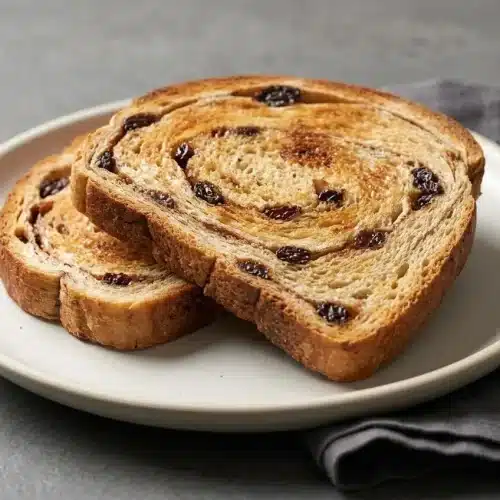
Cinnamon Raisin Sourdough Bread

This soft, sliceable cinnamon raisin sourdough bread uses ripe starter or discard alongside instant yeast, enriched with butter and egg around a sweet cinnamon sugar and raisin swirl.
Equipment
- stand mixer fitted with the dough hook
- bread machine
- 9 x 5 Loaf Pan
- Stoneware Loaf Pan
- Aluminum Foil
- Digital thermometer
Ingredients
- 1/2 cup sourdough starter (113g) ripe or discard
- 3 cups King Arthur Unbleached All-Purpose Flour (360g)
- 2 1/2 teaspoons instant yeast
- 1 tablespoon granulated sugar
- 1 1/4 teaspoons table salt (8g)
- 1 large egg
- 5 tablespoons unsalted butter (71g) softened
- 2/3 cup water (150g) lukewarm
- 1/4 cup granulated sugar (50g)
- 1 1/2 teaspoons ground cinnamon
- 2 teaspoons King Arthur Unbleached All-Purpose Flour
- 1 large egg beaten with 1 tablespoon water
- 1/2 cup raisins (75g)
Instructions
- Measure the dough flour by weight, or spoon it gently into a measuring cup and level the top, then combine the first eight ingredients and knead by hand, with a dough-hook mixer, or using a bread machine’s dough cycle. For a mixer, allow about 6 to 8 minutes at medium-low speed, looking for a soft dough with a smooth surface.
- Lightly grease a container, add the dough, and let it rise for 1 1/2 to 2 hours. Its volume should approach double before shaping begins.
- Stir the filling sugar, cinnamon, and 2 teaspoons of flour together during the first rise. The mixture should look evenly colored, without pockets of plain flour or concentrated cinnamon.
- Press the risen dough gently to release the gas, then move it onto a lightly greased work surface. The dough should remain soft and pliable rather than flattened with force.
- Use a rolling pin and your hands to form a rectangle approximately 6 inches wide and 20 inches long. A reasonably even thickness helps the filling form consistent layers.
- Coat the rectangle with egg wash, then distribute the cinnamon filling and raisins evenly while keeping a 1-inch strip free of filling along one short edge. This clean final edge gives the dough a surface that can seal without sugar and fruit getting in the way.
- Roll from the filled short edge toward the bare strip, keeping the log snug, then pinch both ends and the lengthwise seam closed. The layers should sit close together without stretching the dough until it tears.
- Grease a 9 x 5-inch loaf pan or the stoneware loaf pan, place the log inside with its seam underneath, cover, and let rise for about 1 hour. Look for a crest about 1 inch above the metal pan’s rim, or dough level with the stoneware pan’s top.
- Heat the oven to 350°F during the second rise. The shaped loaf should reach its pan-specific rise cue before baking.
- Brush the loaf with remaining egg wash if desired, bake for 40 to 45 minutes, and loosely cover the top with aluminum foil after the first 15 to 20 minutes. For this loaf, look for a golden crust and a center reading of 190°F on a digital thermometer.
- Release the baked loaf’s edges, lift it out of the pan, and brush the hot top with butter if desired, then let it cool completely before cutting. The optional butter gives the crust a soft finish, while cooling helps the crumb and swirl hold their shape.
- Wrap the fully cooled loaf well for room-temperature storage, or freeze it for longer keeping. Wait until the bread has released its warmth so moisture does not collect inside the wrapping.
Notes
Texture tip: Keep the 2 teaspoons of flour in the cinnamon sugar filling and brush the rolled dough with egg wash to absorb moisture and reduce separated layers in the swirl.
Shaping tip: Leave a 1-inch bare border along one short edge when spreading the filling and raisins so the final rolled seam seals tightly without leaking sugar.
Doneness: Tent the loaf loosely with foil after 15 to 20 minutes of baking to prevent over-browning, and bake until the center reaches 190°F on a digital thermometer.
Serving tip: Let the baked loaf cool completely before slicing so the tender crumb does not compress and the cinnamon swirl stays neat.
Storage: Wrap the completely cooled loaf well for room-temperature storage, or slice and freeze individual portions in airtight packaging for longer keeping.
Nutrition information is an estimate based on common ingredients and serving sizes. Values may vary depending on brands, portions, and substitutions.