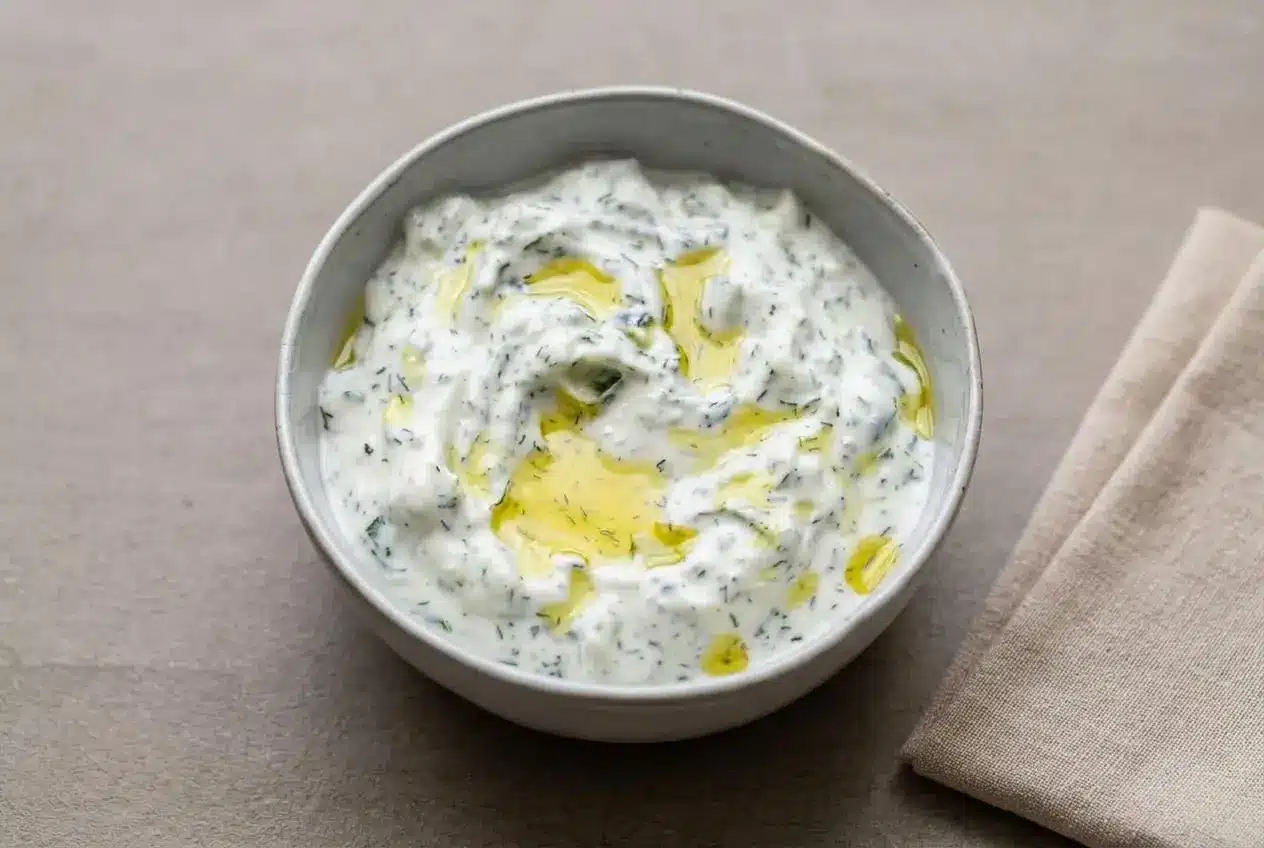
This tzatziki stays thick and creamy because the cucumber gets salted and squeezed well before it meets the yogurt. Use full-fat Greek yogurt, let the sauce chill, and you’ll get a cool, tangy dip instead of a watery one.
Tzatziki sauce recipe is a classic Greek yogurt and cucumber sauce with bright garlic, a little tang, and a fresh finish from dill or mint. It’s easy to make, but one small step makes all the difference.
If you want a dip for pita, a gyro sauce, or a fresh spoonful for grilled chicken, this version delivers that cool, creamy texture every time. The cucumber trick is worth it.
Grate the cucumber over a bowl so you can see how much liquid comes out before you squeeze it.
What Is Tzatziki Sauce?
Tzatziki is a classic Greek sauce made with yogurt, cucumber, garlic, and a little acid. It’s known for its cool, tangy, fresh flavor and a creamy texture that works as both a dip and a sauce.
When it’s made well, it tastes clean and bright, with just enough garlic to give it backbone. The best versions feel rich on the spoon, never thin or soupy.
Key Ingredients for This Tzatziki Sauce Recipe
Each ingredient pulls real weight here, from creamy structure and clean tang to freshness, aroma, and the thick texture that makes tzatziki so satisfying.
- 3/4 English cucumber, (partially peeled (striped) )
- 1 tsp kosher salt, (divided)
- 4 to 5 garlic cloves,
- 1 tsp white vinegar
- 1 tbsp Early Harvest Greek Extra Virgin Olive Oil
- 2 cups plain Greek yogurt
- Handful of chopped fresh dill or mint (optional)
- 1/4 tsp ground white pepper
The Best Yogurt for Tzatziki
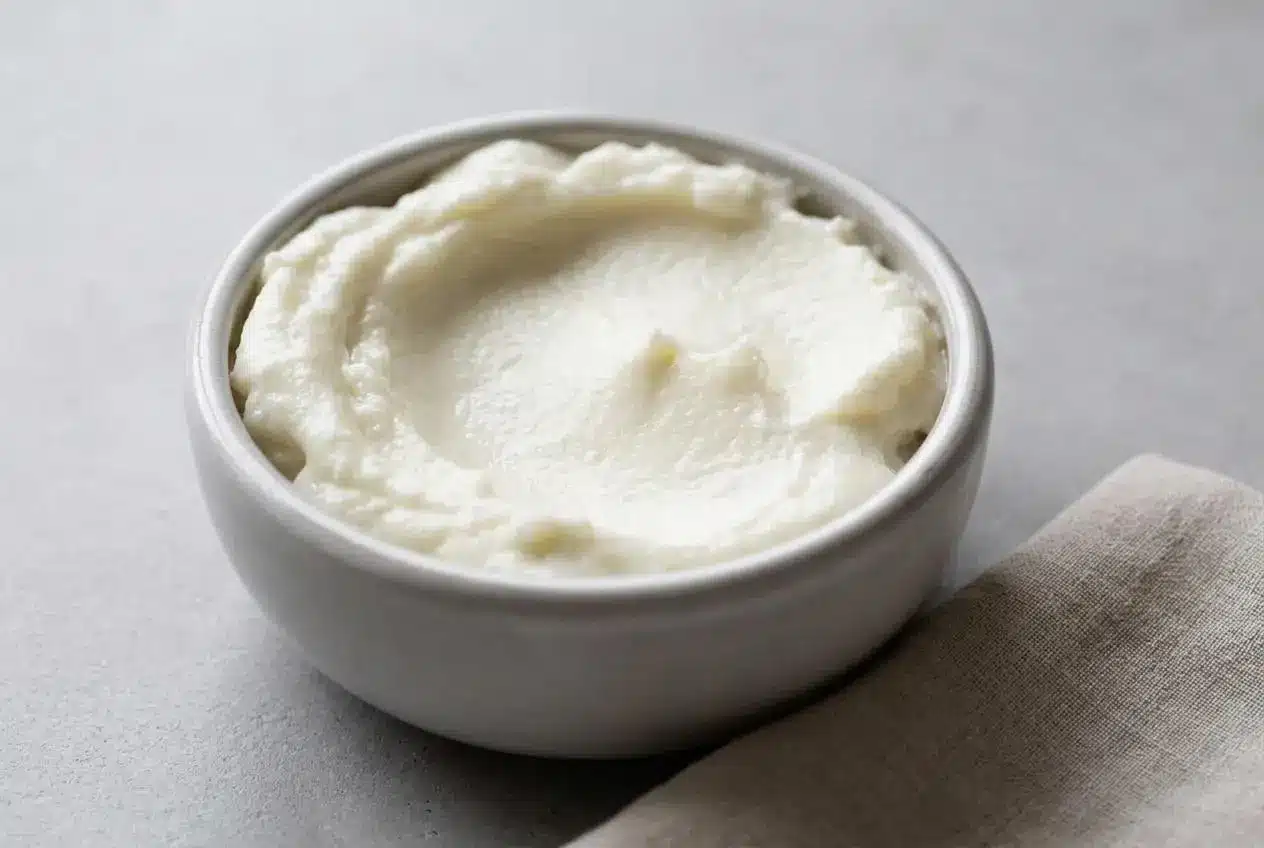
Plain Greek yogurt is what gives tzatziki its signature body. It’s already strained, so it has a dense, creamy texture that holds the cucumber and garlic without turning loose or runny.
Full-fat Greek yogurt gives the richest result and the smoothest mouthfeel. Low-fat Greek yogurt can work, but it usually tastes thinner and less plush. Regular plain yogurt is much looser, so the sauce won’t have that thick, dip-like texture most people want.
Choosing the Right Cucumber
English cucumber is a great fit here because it has thin skin, fewer seeds, and a cleaner flavor than standard waxy cucumbers. Persian cucumbers work for the same reasons. Both release less bitterness and are easier to manage in a sauce like this.
Kirby cucumbers can be used in a pinch, but they tend to have firmer seeds and a more assertive skin. That can make the sauce a bit rougher and, sometimes, slightly bitter. The partial peeling in this recipe gives you some green color and fresh cucumber flavor without too much chew.
Fresh Herbs and Aromatics
Garlic gives tzatziki its sharp, savory kick. Fresh cloves taste cleaner than jarred garlic, and the flavor softens after the sauce rests. By the next day, though, that garlic note can taste stronger.
White vinegar brightens the yogurt and wakes up the cucumber. Dill brings a grassy, classic flavor, while mint makes the sauce cooler and more refreshing. White pepper adds gentle warmth without dark flecks.
I always reach for full-fat Greek yogurt here because it gives the sauce that spoon-coating texture you want with almost no effort.
How to Make Tzatziki Sauce
This method is quick, but each step has a purpose. The biggest one is draining the cucumber well so the sauce stays thick instead of slowly turning watery in the bowl.
- Grate the cucumber with a box grater or finely chop it in a small food processor, then toss it with 1/2 tsp of the kosher salt.
The salt starts drawing out moisture right away, and the cucumber should begin looking glossy and wet. - Transfer the salted cucumber to cheesecloth or a double-thick napkin and squeeze out as much liquid as possible.
You’ll be surprised by how much comes out, and the cucumber should feel damp and clumpy, not wet. - In a large mixing bowl, combine the garlic, the remaining 1/2 tsp kosher salt, the white vinegar, and the olive oil.
The mixture should smell sharp and lively, with the salt helping the garlic break down into the liquid. - Add the drained cucumber, then stir in the Greek yogurt, white pepper, and the chopped dill or mint if using.
Mix until the sauce looks evenly creamy with no watery pockets around the edges. - Cover and refrigerate for at least 30 minutes and up to a couple of hours before serving.
This resting time thickens the texture and rounds out the garlic so the flavor tastes more blended and balanced. - Stir the tzatziki again just before serving, then spoon it into a bowl and drizzle with a little more olive oil if you like.
The finished sauce should look thick, cool, and creamy enough to mound lightly on a spoon.
Tips for the Creamiest, Most Flavorful Tzatziki
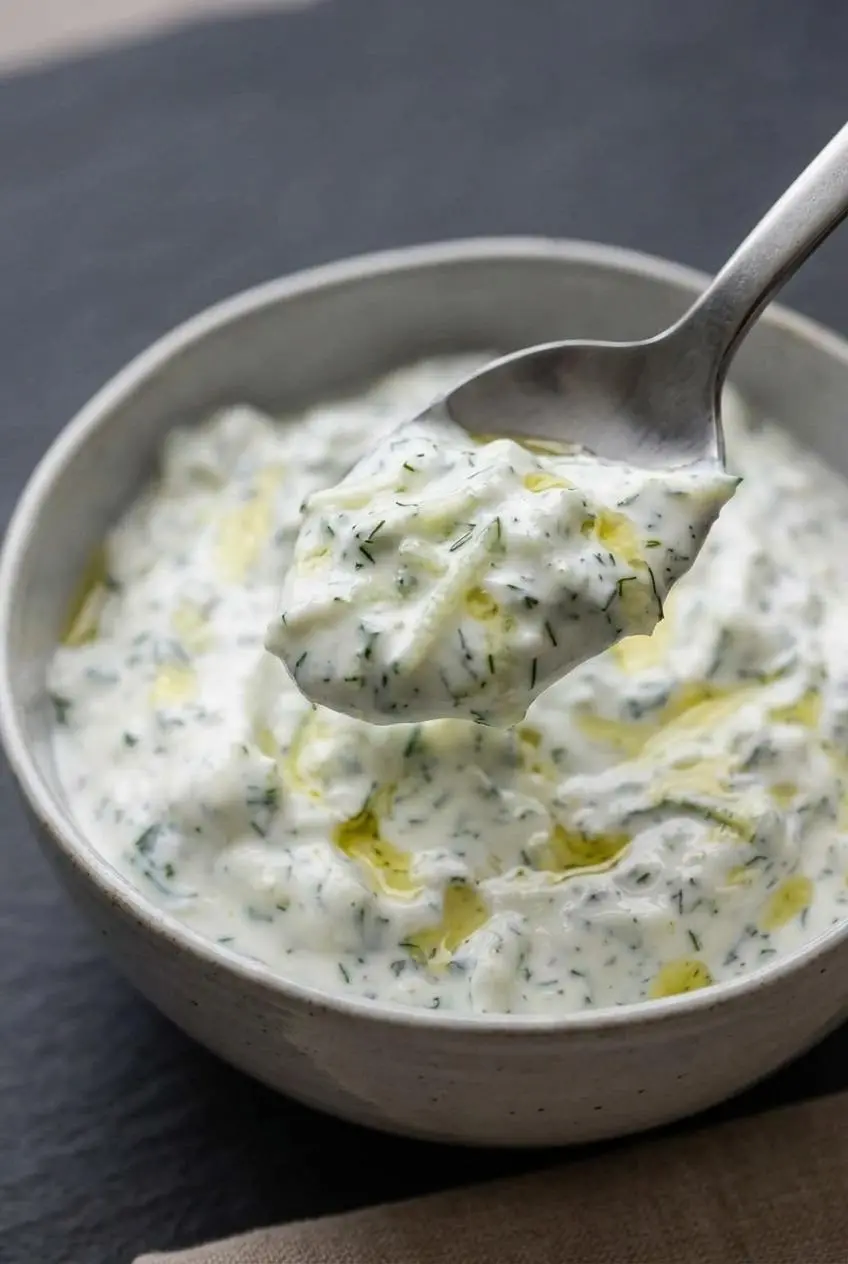
If you want that restaurant-style texture, these are the details that matter most. They’re small, but they prevent nearly every common tzatziki problem.
- Don’t skip squeezing. This is the step that keeps the sauce thick. Salting helps, but the real fix is physically pressing the water out.
- Use full-fat Greek yogurt. It has the structure and richness this sauce needs. Regular yogurt tends to loosen the mixture too much.
- Let it rest. A short chill gives the yogurt time to firm up and helps the garlic and herbs settle into the sauce.
- Start with less garlic if you’re sensitive to it. Raw garlic gets punchier as it sits, so you can always add more after the sauce chills.
- Use fresh garlic cloves. Older cloves, especially sprouted ones, can taste harsh or bitter.
- Choose English or Persian cucumbers when possible. They bring less seediness, less bitterness, and a cleaner cucumber flavor.
- Drain grated cucumber the way your kitchen allows. Cheesecloth gives the driest result, a fine-mesh strainer works if you press firmly, and a clean towel or doubled paper towel can do the job if that’s what you have.
Troubleshooting Common Tzatziki Problems
Tzatziki is forgiving, but a few things can throw it off. Here’s how to fix the most common issues without starting over.
Why Is My Tzatziki Watery?
The usual cause is cucumber that wasn’t squeezed enough. Yogurt can only hold so much moisture before the sauce starts to loosen.
- Cause: The grated cucumber went into the bowl while still wet. Fix: Strain the finished sauce in the refrigerator through a cheesecloth-lined sieve until it thickens back up.
- Cause: The yogurt was too thin. Fix: Stir in a little more thick Greek yogurt until the texture looks creamy again.
- Cause: The sauce sat too long and released more cucumber liquid. Fix: Give it a good stir first, then drain off any obvious pooling if needed.
Why Does My Tzatziki Taste Bitter?
Bitterness usually comes from the cucumber skin or seeds, or from garlic that’s old and starting to sprout.
- Cause: Tough or waxy cucumber skin. Fix: Peel more of the cucumber next time, especially if you’re not using English or Persian cucumber.
- Cause: Large mature seeds. Fix: Use a seedless variety, or scrape out the seedy center before grating.
- Cause: Strong old garlic. Fix: Switch to firm, fresh cloves with no green sprout in the center.
How to Fix Tzatziki That’s Too Garlicky
Raw garlic can sneak up on you. It mellows after a short rest, but if the sauce tastes too strong, dilution is the easiest rescue.
- Fix it with more yogurt. Stir in more Greek yogurt to soften the garlic and rebalance the sauce.
- Brighten it. A small squeeze of lemon juice can help redirect the flavor so the garlic doesn’t dominate.
- Give it a little time. A short chill can round out the sharp edge, though this works better for slightly strong garlic than seriously strong garlic.
Best Ways to Serve Tzatziki

Tzatziki earns its keep because it works with snacks, lunches, and full dinners. It’s especially good when a meal needs something cool, tangy, and creamy on the side.
- As a classic dip: Serve it with warm pita bread, pita chips, carrot sticks, celery, sliced cucumbers, or bell peppers.
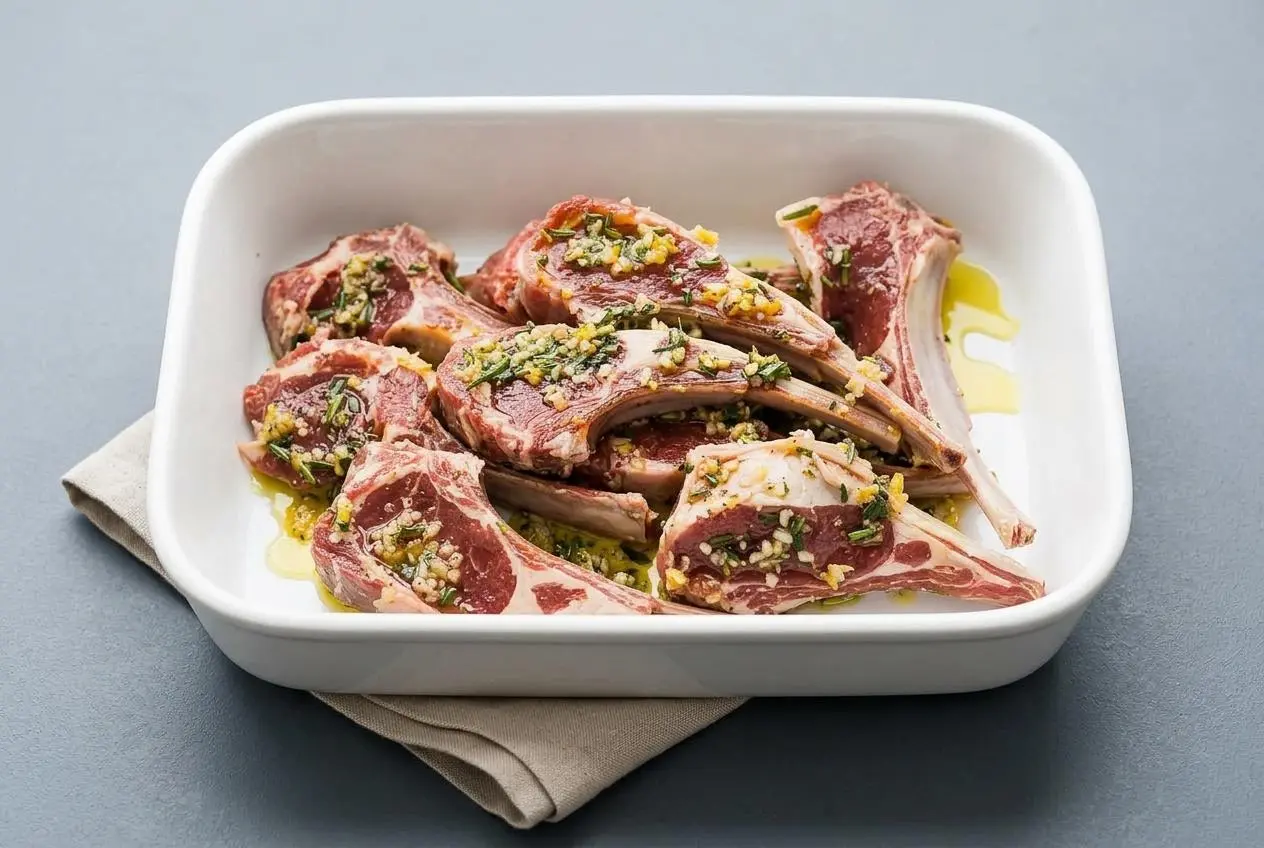
- With Greek-style mains: Spoon it over gyros, souvlaki, grilled chicken, lamb chops, or kofta meatballs.
- With seafood: Add a dollop to grilled salmon, shrimp, or crispy calamari for a cool contrast.
- On sandwiches and wraps: Spread it inside a falafel wrap or use it on a lamb or chicken burger.
- As a dressing: Thin it slightly with a little water or lemon juice and use it on a Greek salad or a grain bowl.
- With roasted vegetables: Try it alongside roasted potatoes, zucchini, or cauliflower.
Storage and Make-Ahead
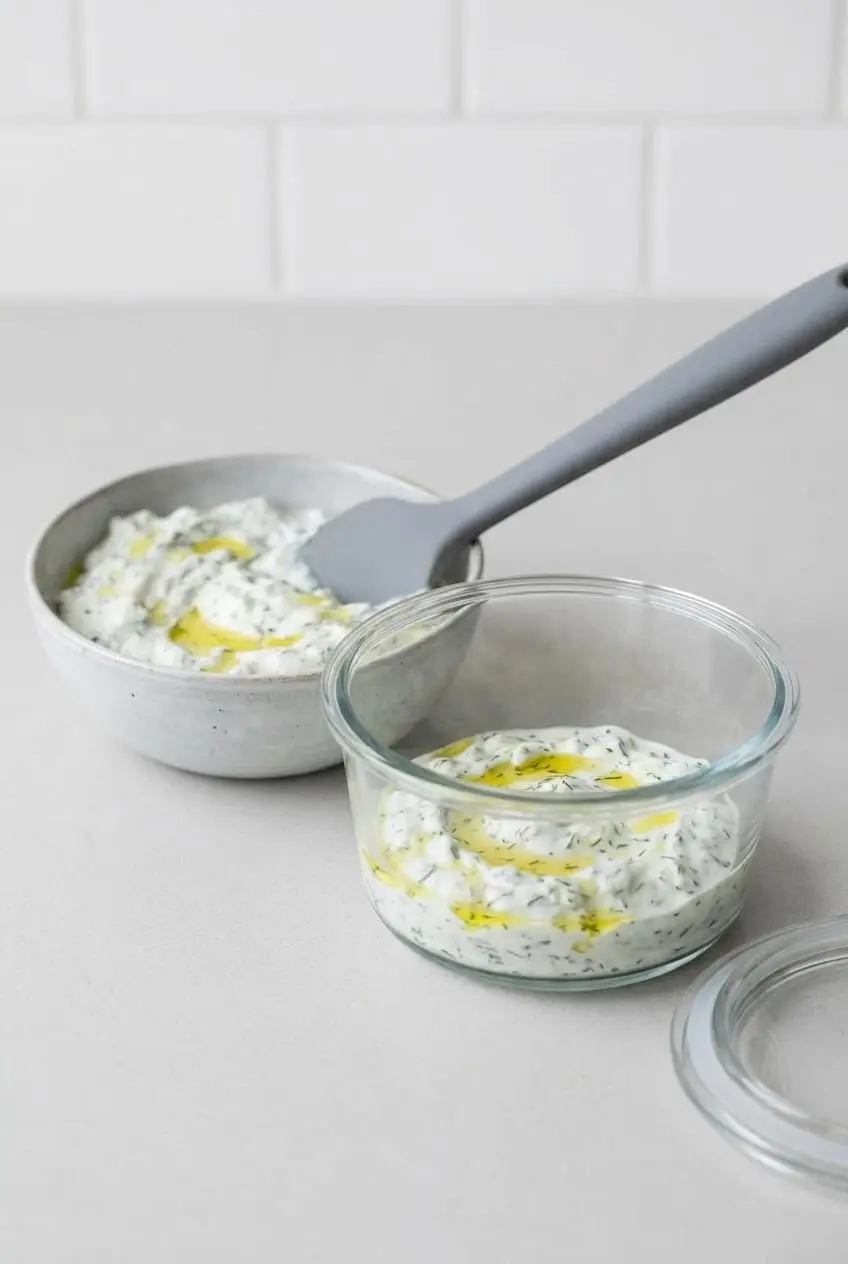
Tzatziki is a great make-ahead sauce because the flavor settles and the garlic softens after a little time in the fridge. If you’re planning ahead, keep it in an airtight container and give it a good stir before serving.
The texture is usually best while it’s still fresh and thick. As it sits, the garlic flavor gets bolder, especially by the second day, and a little liquid may collect on top. That’s normal. Stir it back together before serving, and if it seems loose, drain off a bit of surface moisture or fold in a spoonful of thick Greek yogurt.
Because this is a yogurt-based sauce with fresh cucumber, it’s better made and held chilled rather than frozen. Freezing tends to separate the yogurt and leaves the cucumber watery once thawed.
Tzatziki Variations
The classic version is hard to beat, but a few small changes can help if you’re working with different preferences or what’s already in the fridge.
Vegan or Dairy-Free Tzatziki
For a dairy-free version, use a thick, unsweetened Greek-style plant-based yogurt. Cashew and almond versions usually give the closest texture, while coconut can work if its flavor is mild. The key is choosing one that’s thick enough to hold the cucumber without turning loose.
Other Variations to Try
- Using dried herbs: Use about 1 tsp dried dill for every tablespoon of fresh. It works well, though fresh herbs taste brighter.
- For a brighter flavor: A little finely grated lemon zest adds fresh citrus aroma without making the sauce more tart.
- No mint or dill: You can skip the herbs entirely and still end up with a delicious sauce that lets the yogurt, cucumber, and garlic stand out.
Conclusion
This is the kind of tzatziki to keep in regular rotation because it’s fast, refreshing, and genuinely useful with all kinds of meals. The texture stays thick and creamy when you treat the cucumber properly from the start.
Once you make it this way, the squeeze-and-chill routine becomes second nature. That first cool, garlicky spoonful makes the extra minute worth it.
Frequently Asked Questions (FAQ)
What’s the difference between Greek yogurt and regular yogurt for tzatziki?
Greek yogurt is strained, so it’s much thicker and creamier. That thicker texture gives tzatziki its dip-like body. Regular yogurt contains more whey, so the sauce turns thinner and runnier. Full-fat Greek yogurt gives the richest texture of all.
Why does my tzatziki taste bitter?
The most common causes are cucumber skin, mature seeds, or old garlic. English or Persian cucumbers are less likely to taste bitter. If you’re unsure about the cucumber, peel it more fully and remove the seedy center. Use fresh garlic cloves, not sprouted or aging ones.
Can I make tzatziki ahead of time?
Yes, and it usually tastes even better after some chilling time. Keep it in an airtight container in the refrigerator until you’re ready to serve it. Stir before serving because a little moisture can rise to the top. Remember that the garlic flavor gets stronger as it sits.
What can I serve with tzatziki sauce?
Serve it as a dip with pita, pita chips, or crunchy vegetables. Use it as a sauce for gyros, souvlaki, grilled chicken, lamb, or falafel. Try it on wraps, sandwiches, or burgers for a cool, creamy spread. Thin it slightly and use it as a dressing for salads or grain bowls.

Tzatziki Sauce Recipe

Equipment
- Box grater or food processor
- Cheesecloth or clean kitchen towel
- Large Mixing Bowl
Ingredients
- 3/4 English cucumber partially peeled (striped)
- 1 tsp kosher salt divided
- 4-5 garlic cloves
- 1 tsp white vinegar
- 1 tbsp Early Harvest Greek Extra Virgin Olive Oil
- 2 cups plain Greek yogurt
- Handful of chopped fresh dill or mint optional
- 1/4 tsp ground white pepper
Instructions
- Grate the cucumber with a box grater or finely chop it in a small food processor, then toss it with 1/2 tsp of the kosher salt. The salt starts drawing out moisture right away, and the cucumber should begin looking glossy and wet.
- Transfer the salted cucumber to cheesecloth or a double-thick napkin and squeeze out as much liquid as possible. You’ll be surprised by how much comes out, and the cucumber should feel damp and clumpy, not wet.
- In a large mixing bowl, combine the garlic, the remaining 1/2 tsp kosher salt, the white vinegar, and the olive oil. The mixture should smell sharp and lively, with the salt helping the garlic break down into the liquid.
- Add the drained cucumber, then stir in the Greek yogurt, white pepper, and the chopped dill or mint if using. Mix until the sauce looks evenly creamy with no watery pockets around the edges.
- Cover and refrigerate for at least 30 minutes and up to a couple of hours before serving. This resting time thickens the texture and rounds out the garlic so the flavor tastes more blended and balanced.
- Stir the tzatziki again just before serving, then spoon it into a bowl and drizzle with a little more olive oil if you like. The finished sauce should look thick, cool, and creamy enough to mound lightly on a spoon.