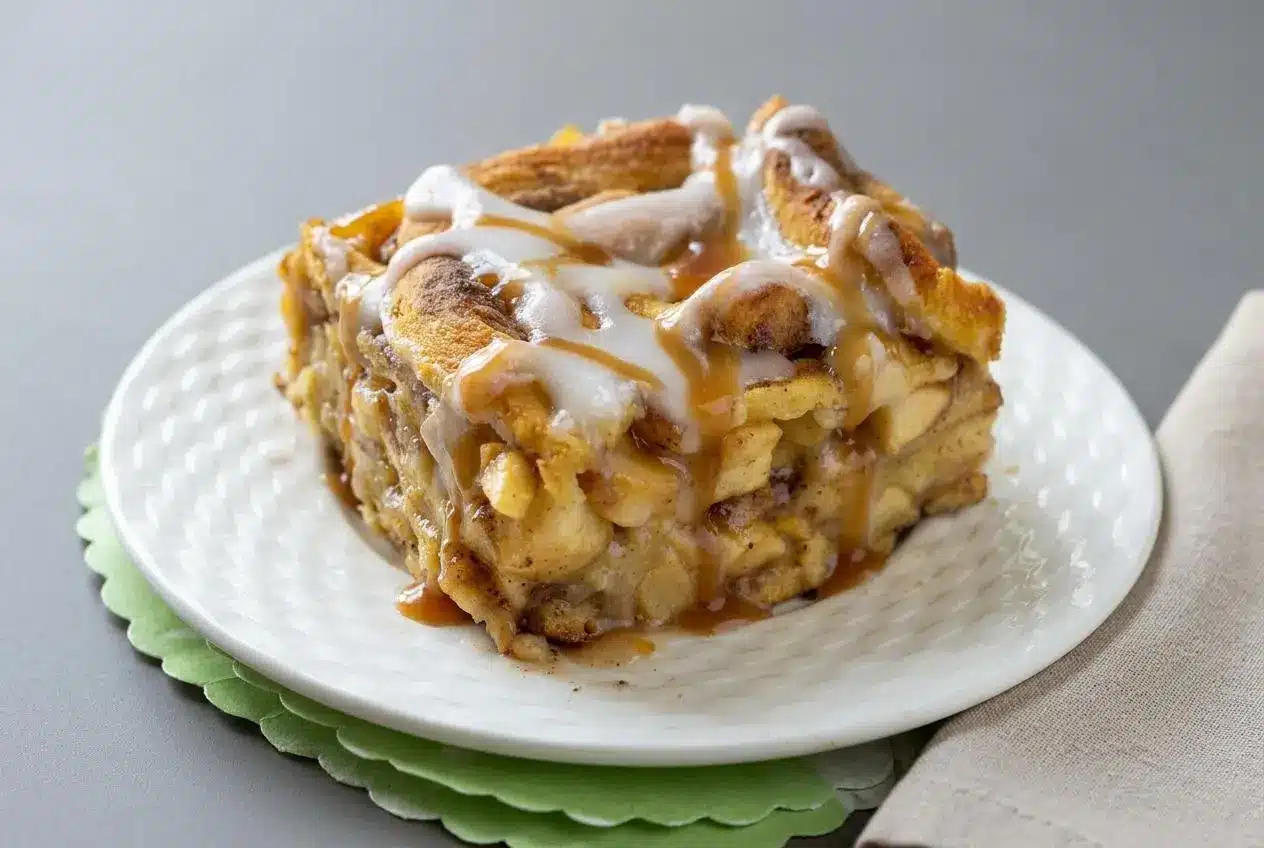
Caramel apple cinnamon roll lasagna layers flattened refrigerated cinnamon rolls with spiced diced apples and caramel sauce. It bakes into a golden dessert casserole with tender pastry, bubbling fruit, and gooey caramel.
As the cinnamon sugar warms, the kitchen smells like apple pie and fresh cinnamon rolls at once. The trick is to flatten the sticky dough enough for the middle layers to bake through.
Give the finished dish time to cool, and the apple filling will hold together much better when sliced. The golden top is worth the wait.
Keep the icing packets from the cinnamon roll cans; they go on after baking.
Essential Ingredients and Role
Each ingredient shapes the finished layers: apples bring texture and tartness, cornstarch binds their juices, cinnamon and nutmeg add warmth, and caramel brings richness to the pastry.
- 2 cans cinnamon rolls
- 4 large apples- peeled and diced (Granny Smith or Golden Delicious)
- 1/2 cup sugar
- 1 teaspoon cinnamon
- 1/4 teaspoon nutmeg
- 1 tablespoon cornstarch
- 1/4 -1/3 cup caramel sauce (or salted caramel sauce if you prefer)
The refrigerated rolls form the sweet pastry layers, while the apples soften between them. As the fruit heats, cornstarch thickens the released juices so they are less likely to soak the bottom layer. The sugar draws out apple flavor, and the spices carry that flavor through every bite.
I toss the diced apples with the sugar, cornstarch, and spices as soon as they’re cut so the coating reaches the edges of every piece.
Selecting the Right Apples
Granny Smith apples offer a firm bite and a tart contrast to the caramel and icing. Golden Delicious are a sweeter choice that also works for baking. Dice either variety rather than leaving large chunks: smaller pieces spread more evenly between the thin dough layers and make the finished dish easier to cut.
Fresh apples release juice as they bake, which is why coating them evenly with cornstarch matters. If some of the starch stays at the bottom of the mixing bowl, those uncovered pieces may leave wetter pockets in the filling.
Dough and Caramel Pairing
Use the cinnamon rolls as pastry, not as whole rolls tucked into a casserole. Slicing and flattening them creates broad layers that can meet at the edges. Pressing those edges together helps the bottom hold the fruit filling.
Caramel sauce adds gooey pockets between the apples and pastry. Salted caramel is an option if you prefer a little contrast to the sweetness. Save the icing for the cooled bake rather than adding it between layers, where it would make the filling sweeter and wetter.
Step-by-Step Layering and Baking Method for Caramel Apple Cinnamon Roll Lasagna
Plan on about 15 minutes of preparation and 40 to 45 minutes of baking, followed by at least 30 minutes of cooling. Use a glass or ceramic 8 x 8 x 2-inch dish, or a 7 x 9 x 2-inch ceramic dish. The depth gives the apple layers room without crowding the pastry.
- Heat the oven to 375°F and coat the glass or ceramic baking dish with nonstick spray.
The dish should have an even coating across its bottom and sides. - Combine the diced apples, sugar, cornstarch, cinnamon, and nutmeg in a mixing bowl.
Stir until the apple pieces are evenly coated and no dry starch remains at the bottom. - Slice the cinnamon rolls into 1/4-inch rounds, then flatten each round on a floured work surface with a rolling pin or flour-dusted hands.
The pieces will feel sticky, but they should become thin enough to form pastry layers. - Fit a layer of flattened dough across the bottom and up the sides of the prepared dish, pressing adjoining pieces together.
Look for a joined surface without large gaps beneath the fruit. - Spread half the apple mixture over the dough, drizzle with 2 to 3 tablespoons of caramel sauce, and add another layer of flattened dough.
The apples should reach across the dish without piling heavily in the center. - Add the remaining apples, drizzle with more caramel sauce, and cover with the remaining flattened dough.
Press the top pieces together so the fruit sits beneath a mostly continuous pastry layer. - Cover the dish with aluminum foil and bake for 30 minutes; remove the foil and bake for another 10 to 15 minutes.
The top should turn golden brown, with bubbling filling visible near the edges. - Let the dish cool for at least 30 minutes, then drizzle with the icing from the cinnamon roll cans and slice.
The filling will settle as it cools, making the layers easier to serve.
The foil-covered stage gives heat time to reach the dough in the middle before the exposed top browns. Once uncovered, watch the pastry rather than relying on color alone at the edges. You want a golden top and a center that looks baked between the spirals.
The fruit may look loose when the dish first comes out of the oven. Resist cutting straight into it: the cornstarch-thickened juices settle during the cooling period, and a warm slice holds its layers better than a steaming-hot one.
Mastering the Cinnamon Roll Layers Without Doughy Centers
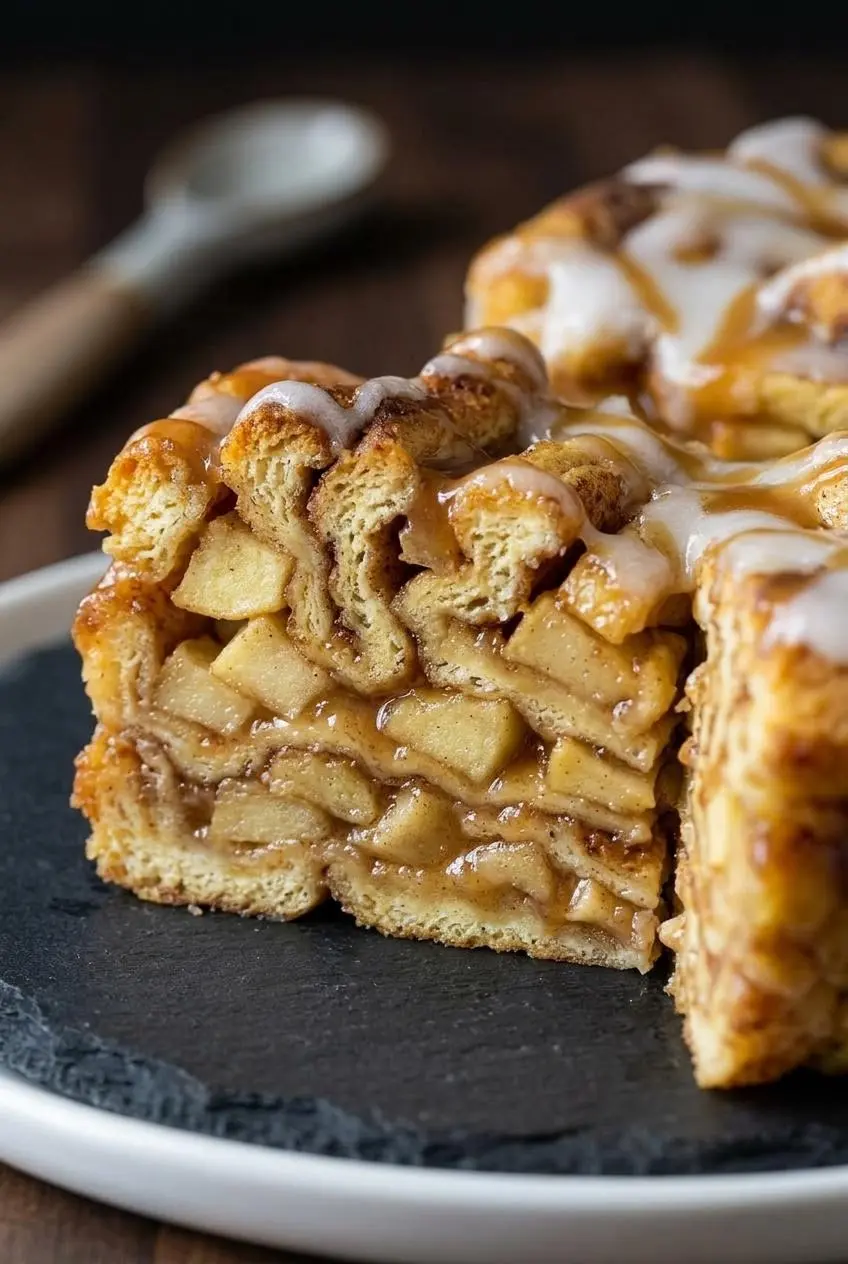
A doughy middle usually comes down to thick pastry, crowded layers, or a top that browned before the center finished baking. The covered bake and a properly sized dish work together to prevent that mismatch.
- If the dough tears while flattening: Dust the work surface, rolling pin, and your hands with flour. Press a sticky slice firmly with your thumbs if a rolling pin pulls its spiral apart; thin, joined pieces matter more than perfect circles.
- If the middle seems gummy: Check whether the sliced rounds were flattened uniformly. A thick patch in the center takes longer to bake than the thinner pieces around the dish. Aim for an even layer rather than stacking extra dough where pieces overlap.
- If the top browns early: Keep the foil in place for the full first baking stage. Baking uncovered throughout can color the top while the fruit and middle pastry are still heating.
- If the filling pools in one spot: Spread the diced apples to the corners as you assemble. A mound of fruit in the center creates a deeper, wetter section around the middle dough layer.
Glass and ceramic dishes retain heat, while a thin metal pan may bake differently. For the stated timing, use the specified glass or ceramic dish rather than assuming another pan will behave the same way. A smaller dish also makes deeper layers that are harder to cook evenly.
When the top is golden, gently check a spot between its cinnamon spirals with a toothpick. A smear of apple or caramel is expected; a clump of sticky, raw-looking dough means the pastry needs more baking. Keep an eye on the top if it goes back into the oven.
Simple Variations and Shortcuts
These options change the flavor or texture without changing the main ingredient list or assembly method above. Keep any added filling in a light layer so the pastry still has room to bake.
- Toasted nut crunch: Scatter chopped toasted pecans or walnuts between the fruit layers for contrast with the soft apples and rolls.
- Brighter spice: Stir a little fresh orange zest and a pinch of ground cardamom into the apple mixture for a fragrant variation on the cinnamon filling.
Canned Apple Pie Filling Shortcut
Yes, canned apple pie filling can stand in for the fresh apples when convenience matters. Chop any large apple slices into bite-size pieces before layering so the filling spreads evenly instead of forming thick pockets.
Canned filling is already sweetened and usually thickened, unlike the fresh diced apples in the ingredient list. Reduce or omit the added sugar to suit its sweetness, and avoid spooning excess syrup into the dish. This is an optional substitution, so follow the fresh-apple ingredient list when making the version above. For another bake built around a convenient apple filling, try apple cinnamon dump cake.
The Decadent Cream Cheese Cheesecake Layer
For a richer variation, whip softened cream cheese with powdered sugar and vanilla until spreadable, then add a thin ribbon between a fruit layer and the next layer of dough. Keep it away from the pan edges where it could cover the apple filling and hide the bubbling cue.
The cream cheese brings a cool-tasting tang to the warm spice and caramel, but a heavy layer can make the center harder to assess. If that creamy cinnamon combination is what you’re craving most, cinnamon roll cheesecake takes it in a distinctly cheesecake-style direction.
Serving and Pairing Suggestions
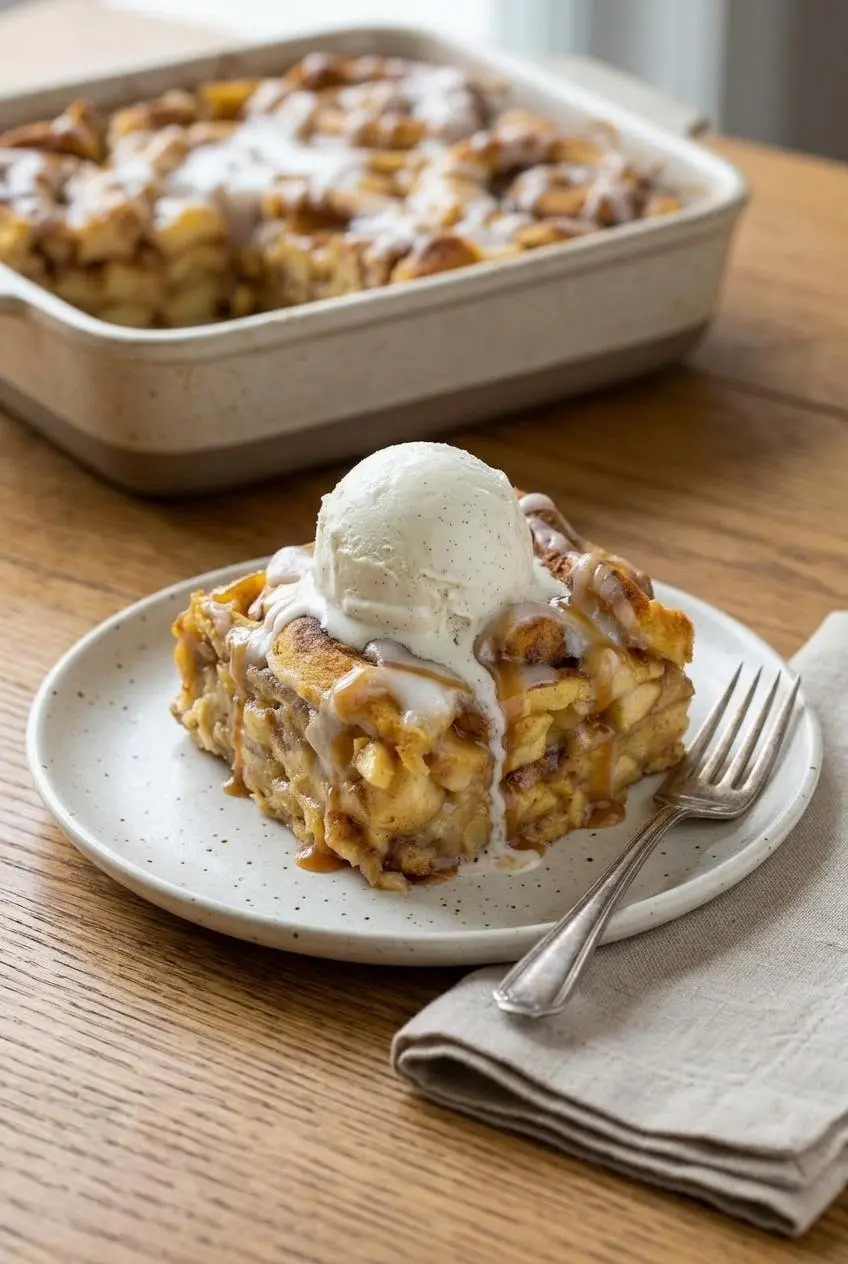
Serve this dessert warm, after its cooling rest, when the caramel is soft but the filling no longer runs freely across the plate. A scoop of cold vanilla bean ice cream gives each bite a pleasant temperature contrast. For a less sweet pairing, offer dark roast espresso or hot spiced apple cider.
It works especially well for an autumn gathering or holiday brunch because guests can take a modest square or come back for dessert. Add the icing after the bake has cooled enough to slice; it should drape over the rolls rather than disappear into a steaming top. If you’re planning a larger apple-themed dessert spread, caramel apple upside-down cake offers a different texture alongside it.
Storage and Make-Ahead Instructions
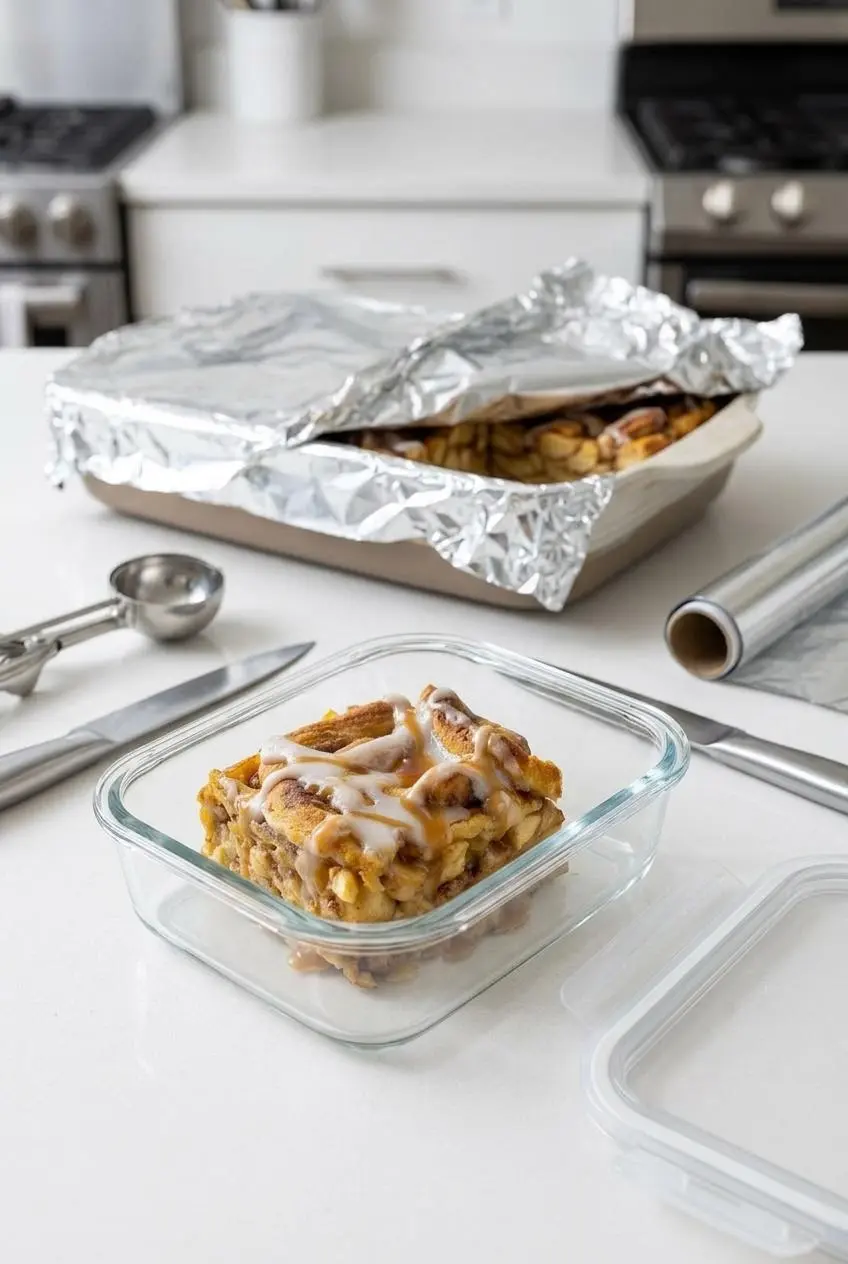
Cover leftover portions and refrigerate them promptly once they have cooled enough to put away. A shallow container helps cooked leftovers chill more quickly; perishable leftovers should be refrigerated within two hours. Keep the icing on the portions if you prefer, though it will soften into the pastry as they sit.
To warm a slice, use a microwave briefly and check it between bursts so the fruit warms without the roll becoming tough. For several portions, cover the baking dish and warm it in the oven until the center is heated through. The oven will preserve more of the top’s texture, while the microwave is handy for a single serving.
For the best-defined layers, assemble and bake the dish close to serving, then allow for the required cooling rest. You can keep the unopened cinnamon rolls chilled and set out the dish and mixing bowl beforehand. Once the apples are diced and mixed with sugar, they begin releasing juice, so leaving the fully assembled dish waiting can make the bottom pastry wetter.
Conclusion
This bake delivers the cozy flavor of spiced apples and caramel between tender cinnamon roll layers, finished with the icing already tucked into the cans.
Flatten the sticky dough evenly, keep the foil on for the first stage of baking, and let the fruit filling settle before slicing. Those small choices make serving the warm squares much easier.
Frequently Asked Questions
Can I Use Canned Apple Pie Filling Instead of Fresh Apples?
Yes. Chop large canned apple slices before layering, and reduce or omit the added sugar because the filling is already sweetened. Spoon it across the dough evenly rather than adding a thick pool of syrup.
Why Did the Center of My Cinnamon Roll Lasagna Turn Out Doughy?
The dough may have been left too thick, the apples may have been piled in the middle, or the dish may have been too small. Flatten the roll slices evenly, use the specified dish size, and keep the foil on during the first stage of baking so the center has time to cook.
How Do I Store and Reheat Leftovers?
Keep cooled leftovers covered in the refrigerator. Warm an individual portion briefly in the microwave, checking it between bursts, or cover the dish and heat it in the oven until the center is warm. The oven is the better choice when you want to preserve the top’s texture.
Can I Assemble This Dessert Lasagna the Night Before?
For the best texture, assemble it closer to baking. Sugar draws juice from the diced apples as they sit, which can wet the bottom dough layer. You can prepare your baking dish and equipment ahead, then cut and coat the apples when you’re ready to put the layers together.
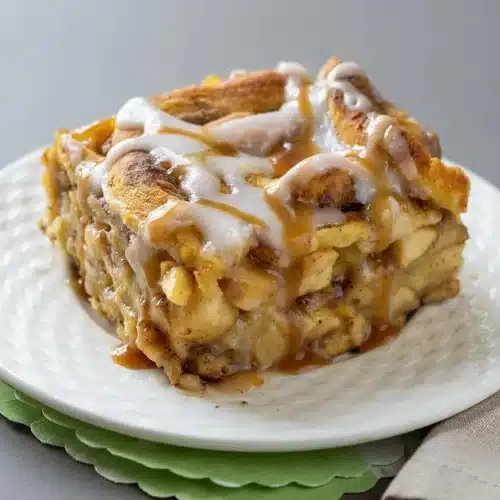
Caramel Apple Cinnamon Roll Lasagna

Equipment
- glass or ceramic 8 x 8 x 2 inch dish
- Mixing Bowl
- Rolling Pin
- Aluminum Foil
Ingredients
- 2 cans cinnamon rolls
- 4 large apples peeled and diced (Granny Smith or Golden Delicious)
- 1/2 cup sugar
- 1 teaspoon cinnamon
- 1/4 teaspoon nutmeg
- 1 tablespoon cornstarch
- 1/4 – 1/3 cup caramel sauce or salted caramel sauce if you prefer
Instructions
- Heat the oven to 375°F and coat the glass or ceramic baking dish with nonstick spray. The dish should have an even coating across its bottom and sides.
- Combine the diced apples, sugar, cornstarch, cinnamon, and nutmeg in a mixing bowl. Stir until the apple pieces are evenly coated and no dry starch remains at the bottom.
- Slice the cinnamon rolls into 1/4-inch rounds, then flatten each round on a floured work surface with a rolling pin or flour-dusted hands. The pieces will feel sticky, but they should become thin enough to form pastry layers.
- Fit a layer of flattened dough across the bottom and up the sides of the prepared dish, pressing adjoining pieces together. Look for a joined surface without large gaps beneath the fruit.
- Spread half the apple mixture over the dough, drizzle with 2 to 3 tablespoons of caramel sauce, and add another layer of flattened dough. The apples should reach across the dish without piling heavily in the center.
- Add the remaining apples, drizzle with more caramel sauce, and cover with the remaining flattened dough. Press the top pieces together so the fruit sits beneath a mostly continuous pastry layer.
- Cover the dish with aluminum foil and bake for 30 minutes; remove the foil and bake for another 10 to 15 minutes. The top should turn golden brown, with bubbling filling visible near the edges.
- Let the dish cool for at least 30 minutes, then drizzle with the icing from the cinnamon roll cans and slice. The filling will settle as it cools, making the layers easier to serve.