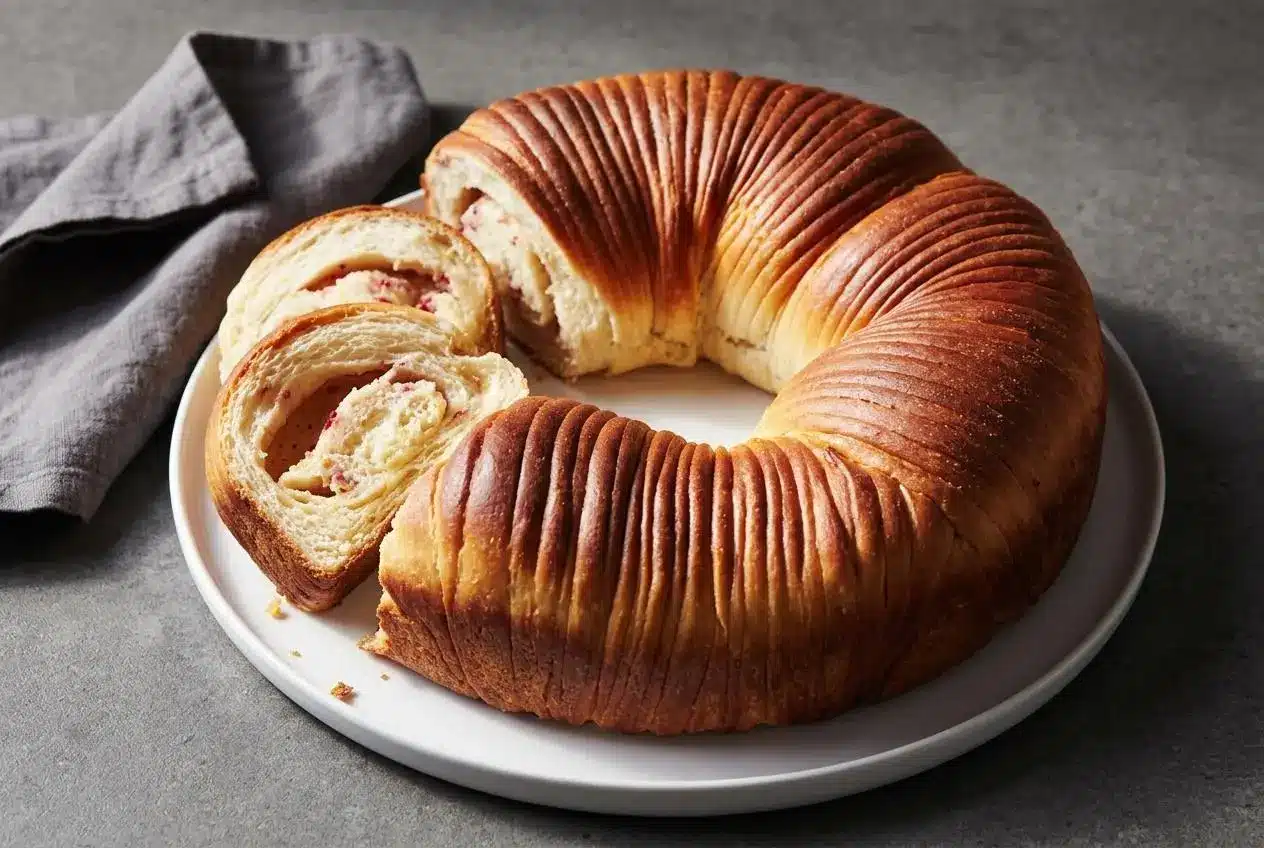
Wool roll bread is a pillowy pull-apart loaf shaped with fine dough strips that resemble coiled yarn. This version uses tangzhong for a feathery crumb and wraps a tangy lemon-raspberry cream cheese filling inside four rolls arranged in a round pan.
The golden ridges give way to soft bread and bright, creamy swirls. Although the pattern looks intricate, you create it by cutting fringe into a rectangle of dough, then rolling the filled end toward the strips.
The dough needs time to rise, but shaping becomes manageable when you work with one piece at a time. Keep the filling spreadable and let resistant dough relax. The fringe does the fancy work.
Keep the dough covered whenever you pause so its surface stays supple for rolling.
What Is Wool Roll Bread and Why Does Tangzhong Make It Soft?
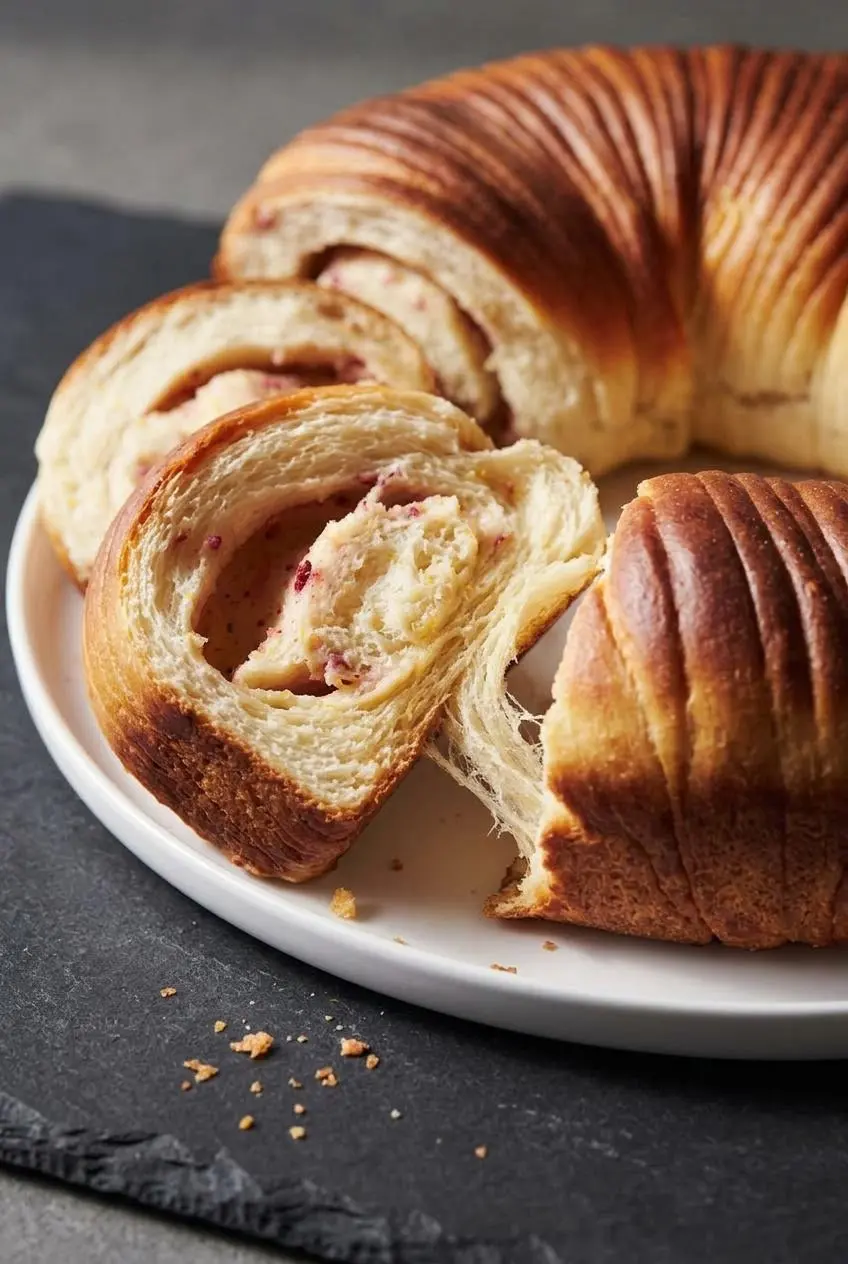
The wool-like pattern comes from narrow strips wrapped around filled dough logs. Set those logs against the wall of a round pan, and they rise together into a pull-apart ring.
Tangzhong is flour cooked with milk and water until it forms a thick paste. Cooking helps the flour’s starches hold moisture, contributing to the tender, feathery texture of this Japanese milk bread-style dough.
Some wool bread doughs use heavy cream for richness. Here, tangzhong works alongside milk, butter, and egg; it isn’t a one-for-one cream replacement. If you’re familiar with homemade white bread, the main addition is cooking that flour-and-liquid paste before mixing the dough.
Key Ingredients Explained by Role
Each ingredient supports the loaf’s structure, softness, or flavor: bread flour holds the delicate strands, dairy enriches the crumb, and lemon zest and raspberries balance the creamy filling with brightness.
- 3 tablespoons (43g) water
- 3 tablespoons (43g) milk, whole preferred
- 2 tablespoons (14g) King Arthur Unbleached Bread Flour
- 1/2 cup (113g) milk, whole preferred; cold
- 2 1/2 cups (300g) King Arthur Unbleached Bread Flour
- 1 large egg
- 4 tablespoons (57g) unsalted butter, softened
- 1 tablespoon (9g) instant yeast
- 1/4 cup (50g) granulated sugar
- 1 teaspoon (6g) table salt
- half an 8-ounce package (113g) cream cheese, softened
- 2 tablespoons (25g) granulated sugar
- zest of 2 lemons
- pinch of table salt
- 2 tablespoons (4g) freeze-dried raspberries, lightly crushed
- 2 tablespoons (15g) King Arthur Unbleached Bread Flour
- 2 tablespoons (28g) milk, whole preferred
Keep the repeated flour, milk, sugar, and salt amounts separate. They belong to different components:
- Tangzhong: The first three ingredients make the moisture-holding paste.
- Dough: The next seven ingredients, from cold milk through the teaspoon of salt, build the bread. Bread flour supports the strands; whole milk adds richness; butter and egg tenderize; instant yeast provides lift. Sugar sweetens, while salt balances flavor.
- Filling: The following six ingredients begin with cream cheese. Lemon zest adds fragrant contrast, and freeze-dried raspberries bring concentrated fruit flavor without fresh berries’ water. The filling’s flour helps control moisture.
- Wash: The final milk amount brushes over the risen loaf for its finish.
I aim for cream cheese soft enough to spread without tugging at the dough; a stiff filling makes shaping unnecessarily difficult.
How to Make Wool Roll Bread Step by Step
This recipe makes one 9-inch round loaf with 16 servings. Allow about 40 minutes of preparation and a total estimate of 4 hours 30 minutes, with rising and resting between the hands-on stages.
Cooking and Cooling the Tangzhong Starter
To make the tangzhong
- Whisk the water, 3 tablespoons milk, and 2 tablespoons bread flour together in a small saucepan.
Break up every flour lump before heating. - Stir over medium heat for 2 to 4 minutes, scraping across the bottom as the mixture thickens.
The finished paste should hold visible tracks wherever the spoon or spatula passes. - Scrape the paste into the vessel you’ll use for kneading: a large bowl, stand mixer bowl, or bread machine bucket.
It will still be hot, ready for the cold milk in the next stage.
Kneading and First Rise
To make the dough
- Pour the cold dough milk over the paste to bring it toward lukewarm, then mix in the remaining dough ingredients and knead by hand, bread machine, or mixer, allowing about 8 to 10 minutes at medium-low mixer speed.
Weigh the flour or spoon it gently into a measuring cup and level it; the finished dough should feel smooth and soft, with some tackiness and slight clinging to the bowl. - Round the dough, place it in a lightly greased bowl, and cover it for a 1 to 1 1/2-hour rise.
Look for a noticeably puffy ball rather than insisting it double in size.
Mixing the Lemon-Raspberry Cream Cheese Filling
To make the filling
- Beat the softened cream cheese with the filling sugar, lemon zest, and pinch of salt.
The mixture should look smooth, without firm cream cheese lumps. - Work in the freeze-dried raspberries and filling flour, crushing the berries as you mix.
Distribute the fruit throughout so each portion carries berry flavor.
Rolling and Cutting the Yarn Fringe
To assemble
- Ease the risen dough onto a lightly floured surface, press out the gas gently, and form four round portions of about 170g each.
Keeping the portions similar in size helps create an even ring. - Cover the rounds and leave them undisturbed for 10 minutes.
This rest lets the dough relax before rolling. - Fit parchment into a 9-inch springform pan or a 9-inch round cake pan at least 2 inches deep, then lightly grease the paper.
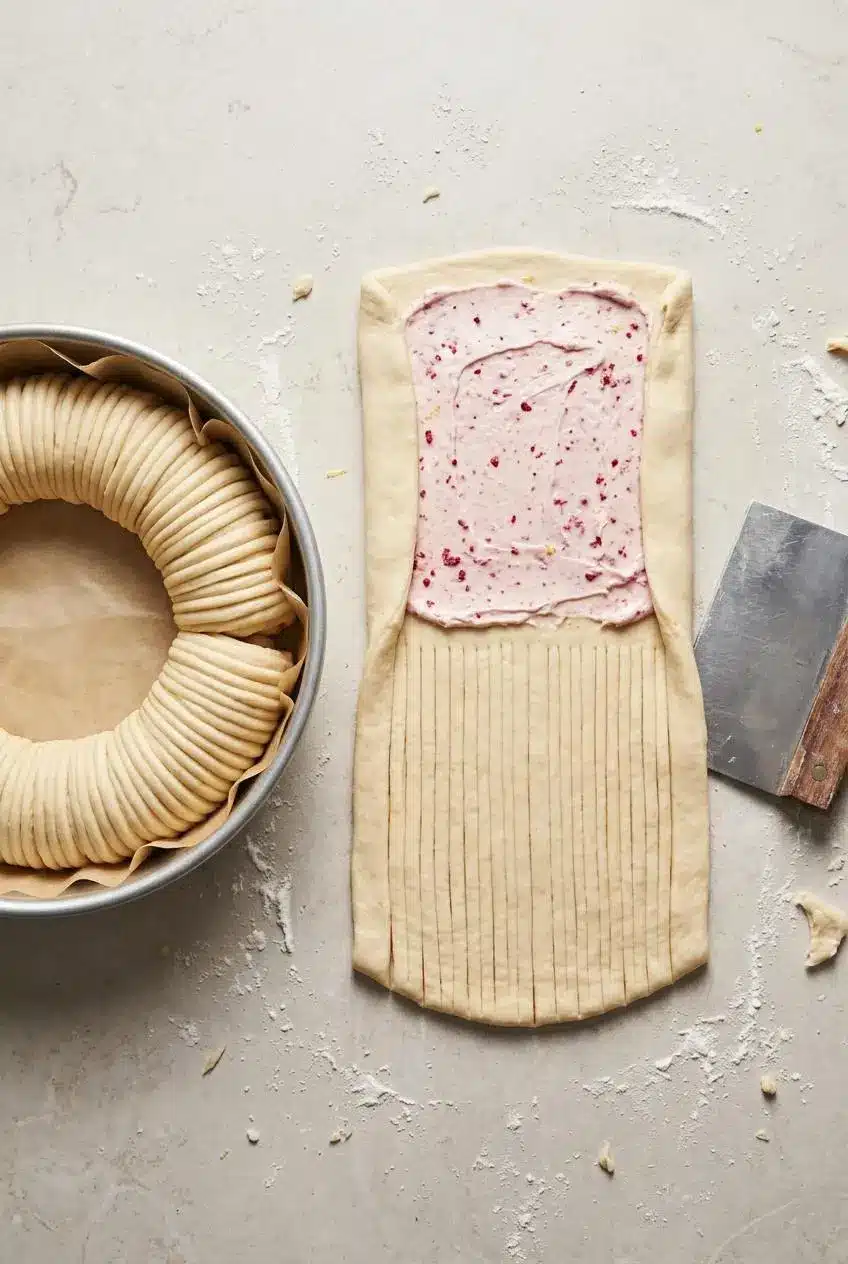
The lined bottom will help release the finished loaf. - Roll one portion into a rectangle measuring 6 inches across and 12 inches long.
If it contracts, work on another portion for about 2 minutes before returning to the relaxed dough. - Scoop one-quarter of the filling onto the rectangle’s upper half, using about 2 heaping tablespoons or 50g.
A tablespoon cookie scoop can help divide the filling evenly. - Orient the 12-inch sides vertically and spread the filling across the top 6 to 7 inches, leaving 1/4-inch side margins and the bottom 5 to 6 inches uncovered.
If spreading drags the dough, microwave the filling for 15 seconds, stir, and repeat only as needed until it spreads easily. - Slice the bare lower section into parallel strips with a bench knife or chef’s knife.
Aim for even widths between 1/8 inch and 1/4 inch for the fine yarn effect. - Turn both long side edges inward and flatten the folds with a gentle pat.
These borders help contain the filling as you roll. - Roll from the filled upper edge toward the fringe to form a log about 6 inches long.
The narrow strips should wrap over the log’s exterior. - Pat the strip ends lightly against the log, then set it seam-side down against the pan’s outer wall.
The fringe should sit snugly without stretching or squeezing the roll. - Shape the other three portions in the same way and arrange them around the pan’s perimeter.
Together, the four logs should form a complete circle. - Set the oven to 350°F.
Let it preheat while the shaped loaf completes its final rise. - Cover the pan and let the loaf rise for 60 to 75 minutes.
The rolls should look puffy before brushing and baking.
Finishing and Baking to 190°F
To finish and bake the roll
- Use a light touch to brush the remaining milk over the risen loaf.
The delicate ridges should retain their puffiness rather than flatten beneath the brush. - Bake for 28 to 32 minutes, checking the center with a digital thermometer for this recipe’s target of at least 190°F.
The top should also have a golden-brown finish. - Let the loaf cool in its pan until it is firm enough to move, then transfer it to a rack to cool completely.
Handle the tender ring carefully so the rolls stay together.
Expert Tips and Troubleshooting for Perfect Yarn Rolls
Most shaping problems come from dough tension, stiff filling, or handling the risen loaf too firmly.
- The rectangle keeps shrinking: Give it about 2 minutes to relax while you roll another piece. Forcing it or adding flour won’t resolve tight gluten.
- The filling tears the dough: Stir after each 15-second microwave interval and stop when it spreads easily. You want spreadable cream cheese, not a runny filling.
- Filling leaks from the ends: Keep to the quarter-share portion, preserve the bare side margins, and fold those edges inward before rolling. Place the seam underneath.
- The pattern looks broad: Keep fringe widths within the stated range. Press the ends lightly onto the log rather than pulling the strands tight.
- The proofed loaf collapses during brushing: Use gentle strokes with the milk wash. Avoid pushing the logs firmly against the pan wall once they’ve risen.
- The top is golden but the center isn’t ready: Continue baking until the center meets the stated baking target. Color alone doesn’t tell you whether the middle has finished.
Sweet and Savory Filling Variations for Wool Rolls
Choose a different filling only as an optional variation, not an addition to the lemon-raspberry mixture. These are flavor directions rather than equivalent formulas; heavy or wet fillings can weigh down the dough and escape during baking.
Chocolate and Cocoa Butter Filling
A light layer of softened butter, cocoa, and sugar gives the rolls a chocolate swirl. Keep it thin enough that the dough can roll neatly and the side folds can contain it.
Savory Garlic, Herb, and Cheddar Filling
Garlic butter, herbs, and cheddar offer a dinner-bread direction with flavors similar to garlic bread rolls. Pesto or mozzarella are other optional choices, but avoid a thick, oily filling and don’t combine them with the sweet cream cheese mixture.
- Berry cream cheese: Freeze-dried strawberries offer a lower-moisture fruit direction. Strawberry or other berry preserves bring a softer, wetter filling, so spread sparingly.
- Cinnamon sugar: A thin butter-and-cinnamon-sugar filling gives the loaf a breakfast-bun character without needing a heavy layer.
Storing Cream Cheese Wool Rolls
Because the filling contains cream cheese, refrigerate the completely cooled loaf, well wrapped, as a conservative choice rather than leaving it on the counter for an extended period.
Wrap cut portions closely or use a tightly covered container to limit drying. Store the loaf without an optional glaze if you want to add that finish separately when serving.
For the most straightforward schedule, cook the tangzhong when you begin mixing the dough and use the cold milk to cool it as directed. Keep the rise and rest windows separate from storage planning.
If you prefer warm bread, gently warm only the portions you plan to serve, protecting the crumb from drying out. This is serving guidance after the loaf’s complete cooling stage, not a replacement for that stage.
Best Ways to Serve Lemon-Raspberry Wool Rolls
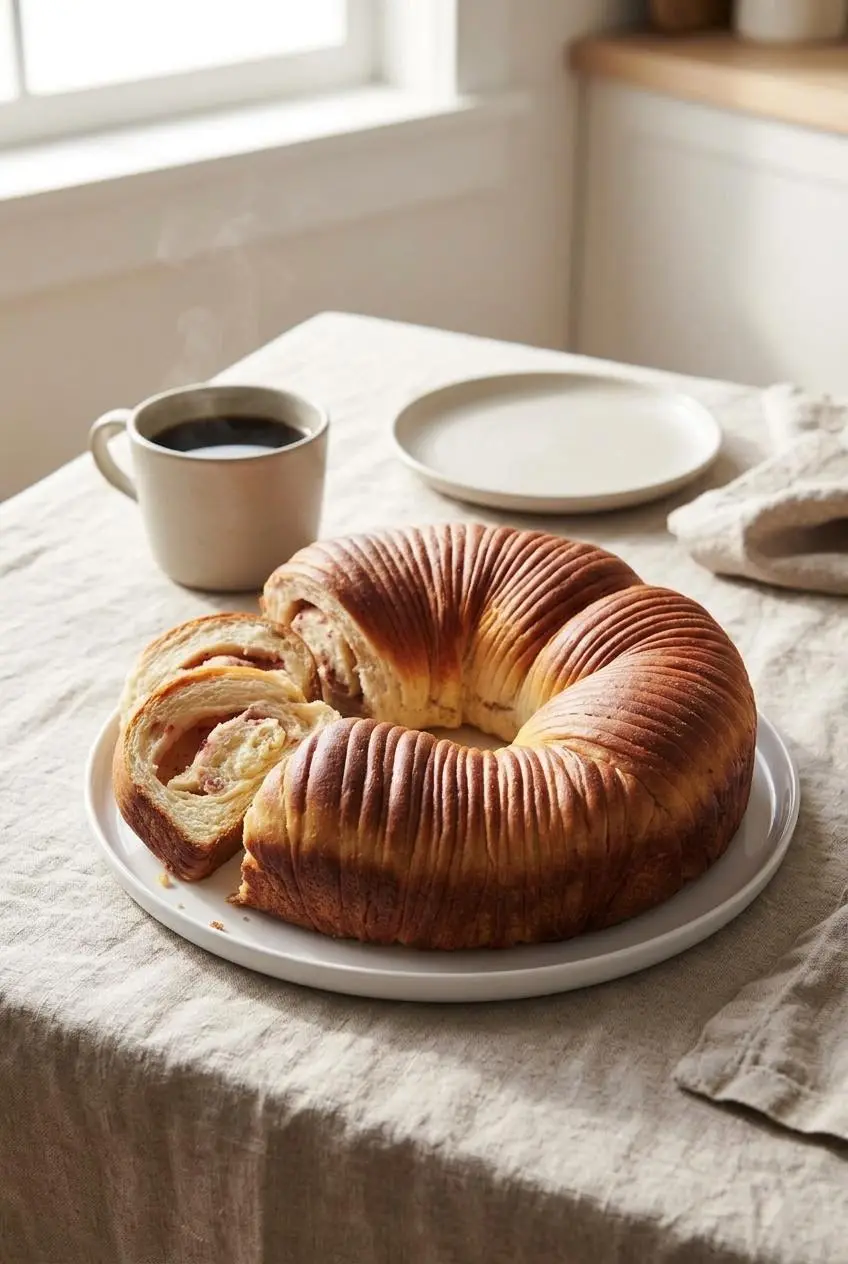
Set the whole ring on a platter for brunch or a holiday breakfast, then separate the rolls or slice smaller portions. The tangy-sweet filling pairs naturally with coffee or afternoon tea.
For a larger breakfast spread, cranberry orange bread offers another citrus-and-fruit option alongside the creamy raspberry loaf.
A light lemon-vanilla syrup or warm honey-butter glaze is an optional finishing touch for shine and extra sweetness. Apply sparingly when serving so it doesn’t overwhelm the delicate ridges; the milk wash remains unchanged.
Conclusion
Fine fringe, feathery bread, and lemon-raspberry cream cheese give this loaf its distinctive texture and bright flavor.
Let resistant dough relax, keep the filling light, and handle the risen rolls gently. Take shaping one rectangle at a time, and the ring comes together.
Frequently Asked Questions
How Do Bakeries Get Wool Roll Bread So Soft and Pillowy?
Tangzhong’s cooked starches help retain moisture, contributing to a soft crumb. Milk, butter, and egg enrich this dough, while kneading builds its structure. Follow the puffy-dough cues for both rises rather than relying on the clock alone.
Can I Use All-Purpose Flour Instead of Bread Flour for Wool Roll Bread?
Bread flour is the preferred ingredient here because it supports the shaped strands. All-purpose flour is an optional alternative, but dough handling and fringe definition may differ. Don’t assume the same result or add extra flour simply because the dough feels tacky.
What Are the Best Sweet and Savory Filling Ideas for Wool Roll Bread?
Sweet options include cocoa-sugar butter, cinnamon sugar, or berry cream cheese. Savory choices include garlic butter, herbs, and cheddar, with pesto or mozzarella as alternatives. Use these instead of the lemon-raspberry filling, keeping the layer light and moisture-conscious.
How Should You Store Cream Cheese Wool Roll Bread?
Let the loaf cool completely before wrapping it. Refrigerate the wrapped loaf as a conservative choice because of its cream cheese filling. Keep cut portions covered, and gently warm individual servings if desired.
Wool Roll Bread

Equipment
- Small saucepan
- Stand mixer
- bread machine
- 9-inch Springform Pan
- 9-inch Round Cake Pan
- parchment
- tablespoon cookie scoop
- bench knife
- Digital thermometer
Ingredients
- 3 tablespoons water (43g)
- 3 tablespoons milk (43g), whole preferred
- 2 tablespoons King Arthur Unbleached Bread Flour (14g)
- 1/2 cup milk (113g), whole preferred; cold
- 2 1/2 cups King Arthur Unbleached Bread Flour (300g)
- 1 large egg
- 4 tablespoons unsalted butter (57g), softened
- 1 tablespoon instant yeast (9g)
- 1/4 cup granulated sugar (50g)
- 1 teaspoon table salt (6g)
- half an 8-ounce package cream cheese (113g), softened
- 2 tablespoons granulated sugar (25g)
- zest of 2 lemons
- pinch of table salt
- 2 tablespoons freeze-dried raspberries (4g), lightly crushed
- 2 tablespoons King Arthur Unbleached Bread Flour (15g)
- 2 tablespoons milk (28g), whole preferred
Instructions
To make the tangzhong
- Whisk the water, 3 tablespoons milk, and 2 tablespoons bread flour together in a small saucepan. Break up every flour lump before heating.
- Stir over medium heat for 2 to 4 minutes, scraping across the bottom as the mixture thickens. The finished paste should hold visible tracks wherever the spoon or spatula passes.
- Scrape the paste into the vessel you’ll use for kneading: a large bowl, stand mixer bowl, or bread machine bucket. It will still be hot, ready for the cold milk in the next stage.
To make the dough
- Pour the cold dough milk over the paste to bring it toward lukewarm, then mix in the remaining dough ingredients and knead by hand, bread machine, or mixer, allowing about 8 to 10 minutes at medium-low mixer speed. Weigh the flour or spoon it gently into a measuring cup and level it; the finished dough should feel smooth and soft, with some tackiness and slight clinging to the bowl.
- Round the dough, place it in a lightly greased bowl, and cover it for a 1 to 1 1/2-hour rise. Look for a noticeably puffy ball rather than insisting it double in size.
To make the filling
- Beat the softened cream cheese with the filling sugar, lemon zest, and pinch of salt. The mixture should look smooth, without firm cream cheese lumps.
- Work in the freeze-dried raspberries and filling flour, crushing the berries as you mix. Distribute the fruit throughout so each portion carries berry flavor.
To assemble
- Ease the risen dough onto a lightly floured surface, press out the gas gently, and form four round portions of about 170g each. Keeping the portions similar in size helps create an even ring.
- Cover the rounds and leave them undisturbed for 10 minutes. This rest lets the dough relax before rolling.
- Fit parchment into a 9-inch springform pan or a 9-inch round cake pan at least 2 inches deep, then lightly grease the paper. The lined bottom will help release the finished loaf.
- Roll one portion into a rectangle measuring 6 inches across and 12 inches long. If it contracts, work on another portion for about 2 minutes before returning to the relaxed dough.
- Scoop one-quarter of the filling onto the rectangle’s upper half, using about 2 heaping tablespoons or 50g. A tablespoon cookie scoop can help divide the filling evenly.
- Orient the 12-inch sides vertically and spread the filling across the top 6 to 7 inches, leaving 1/4-inch side margins and the bottom 5 to 6 inches uncovered. If spreading drags the dough, microwave the filling for 15 seconds, stir, and repeat only as needed until it spreads easily.
- Slice the bare lower section into parallel strips with a bench knife or chef’s knife. Aim for even widths between 1/8 inch and 1/4 inch for the fine yarn effect.
- Turn both long side edges inward and flatten the folds with a gentle pat. These borders help contain the filling as you roll.
- Roll from the filled upper edge toward the fringe to form a log about 6 inches long. The narrow strips should wrap over the log’s exterior.
- Pat the strip ends lightly against the log, then set it seam-side down against the pan’s outer wall. The fringe should sit snugly without stretching or squeezing the roll.
- Shape the other three portions in the same way and arrange them around the pan’s perimeter. Together, the four logs should form a complete circle.
- Set the oven to 350°F. Let it preheat while the shaped loaf completes its final rise.
- Cover the pan and let the loaf rise for 60 to 75 minutes. The rolls should look puffy before brushing and baking.
To finish and bake the roll
- Use a light touch to brush the remaining milk over the risen loaf. The delicate ridges should retain their puffiness rather than flatten beneath the brush.
- Bake for 28 to 32 minutes, checking the center with a digital thermometer for this recipe’s target of at least 190°F. The top should also have a golden-brown finish.
- Let the loaf cool in its pan until it is firm enough to move, then transfer it to a rack to cool completely. Handle the tender ring carefully so the rolls stay together.