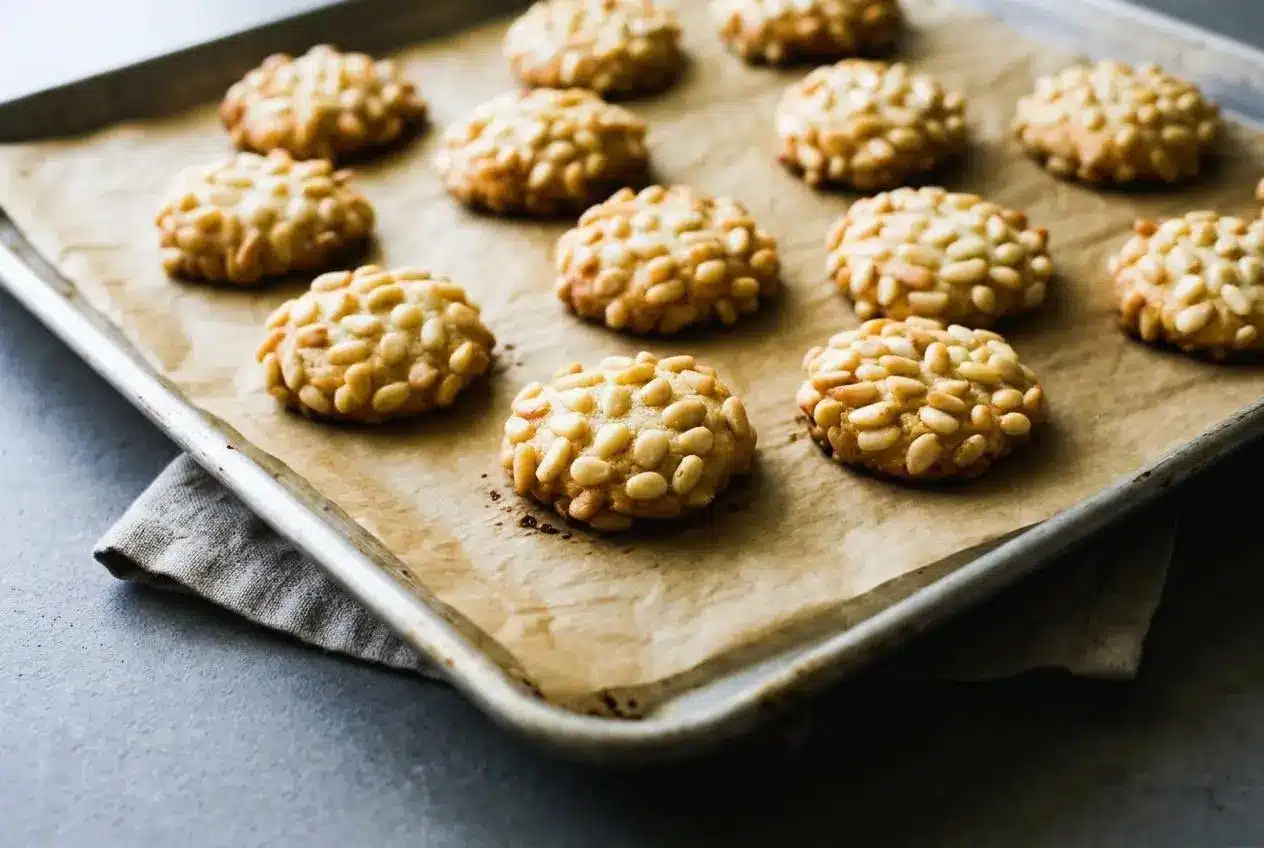
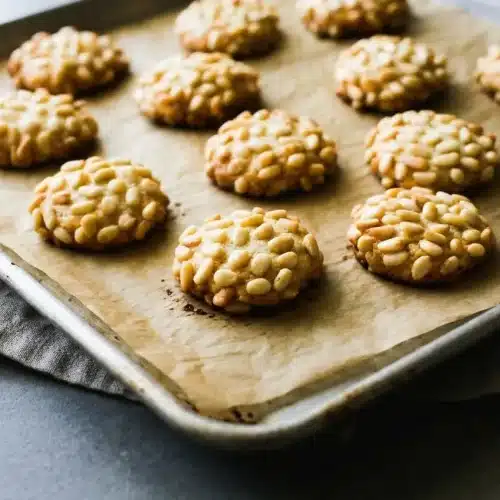
Pignoli cookies are Italian almond cookies with a crunchy pine nut coating and soft, chewy centers. Almond paste gives them their rich flavor, while gentle baking keeps the centers tender and turns the edges light golden.
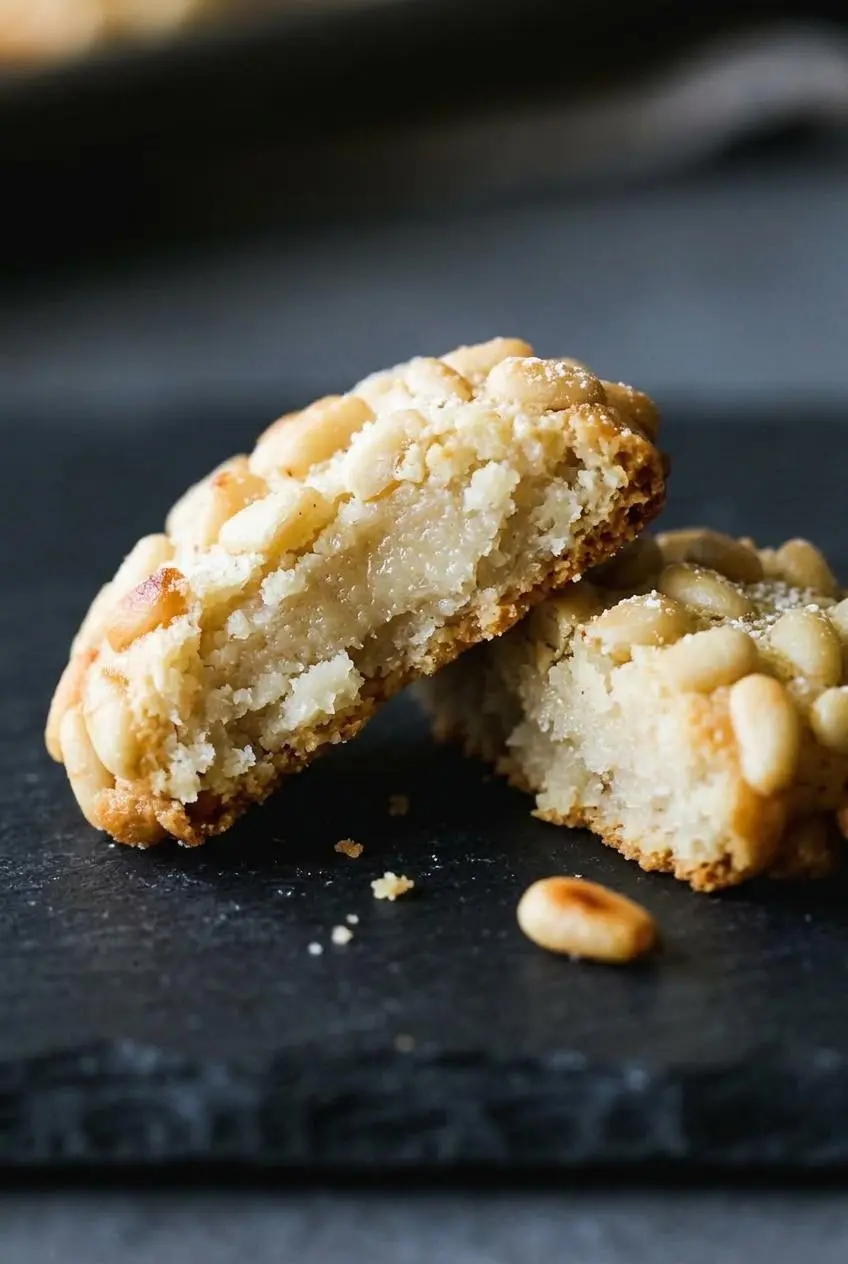
Golden pine nuts give way to a sweet almond center with a pleasantly dense, macaron-like chew. These cookies belong on a bakery tray, but you can shape and bake them at home with a food processor and a kitchen scale.
The most useful trick is knowing when to stop baking. The centers should still look pale and soft when the edges take on color. Pale centers are the goal.
Weigh the egg white before mixing; a larger white can make this dough noticeably wetter.
What Are Pignoli Cookies?
Closely associated with Sicily, these Italian bakery cookies take their name from their pine nut coating. Pronounce pignoli “peen-YOH-lee.” Pignoli, also called pinoli, means pine nuts.
The flavor combines sweet almonds with the buttery richness of baked pine nuts. Unlike a crisp almond biscuit, a chewy pignoli has a tender interior beneath its nut-covered surface.
Pine nuts and almond paste help explain the price at Italian bakeries. Both can be costly ingredients, especially with a generous coating of nuts. Baking at home lets you control the texture and may reduce the cost, depending on local ingredient prices.
Key Ingredients and Almond Paste Guide
Almond paste supplies flavor and structure, egg white binds the dough, and flour controls its consistency. Sugar adds sweetness, almond extract deepens the aroma, pine nuts provide crunch, and optional powdered sugar gives the finished cookies a delicate coating.
- 200 g (7 oz) package of almond paste (I recommend Odense)
- 120 g (1/2 cup) granulated sugar
- 1/4 tsp almond extract
- 1 large egg white (about 33 g, cracked weight without the shell)
- 45- 65g (~1/3- 1/2 cup) all purpose flour, almond flour, or 1:1 GF flour
- 227 g (~1 1/2 cups) pine nuts
- Powdered sugar, optional
Use the gram weights for the almond paste and egg white rather than relying on package size or the word “large.” The egg white provides moisture as well as binding, so its weight directly affects how easily the dough rolls.
The flour range allows for differences in paste consistency and flour choice. Aim for soft, tacky dough, not a dry dough that leaves your hands perfectly clean. Keep the powdered sugar finish optional.
I’d prioritize weighing the egg white over trying to correct an overly wet dough with extra flour later.
Almond Paste vs. Marzipan
Choose almond paste, not marzipan. Their sugar levels and textures differ, and the proportions vary by brand. Marzipan is generally sweeter and intended for shaping or decorating rather than serving as a direct replacement here.
That difference affects more than flavor: extra sugar and a different almond balance can change spreading and structure. Check the package name before opening it.
Odense vs. Solo Almond Paste
- Odense tube paste: Usually firmer, making it easier to break into pieces and blend evenly with sugar.
- Solo canned paste: Can be softer, so judge the dough after its hydration rest before adjusting flour within the listed range.
- Marzipan: A different product, not a brand alternative for this dough.
Consistency can change with the product and its condition. Softer paste does not automatically require the maximum flour amount. Let the dough rest first; an optional brief chill may help with handling if it remains difficult to shape.
Checking Pine Nuts Before Baking
Check the nuts before committing them to the batch. They should have a clean, mild aroma, without a sharp, paint-like, or otherwise unpleasant smell. Their oils can turn rancid, and baking won’t improve that flavor.
Keep leftover pine nuts airtight in a cool place, following the package’s storage directions. There’s no required toasting step here; the coating bakes with the cookies.
How to Make Pignoli Cookies Step by Step
Have a baking sheet, parchment, food processor, small whisking bowl, shallow nut bowl, and cooling rack ready. The dough makes approximately 22 to 24 cookies, depending on portioning. Allow for the hydration rest and pan cooling in addition to mixing and baking.
- Set the oven to 325°F/160°C and cover a baking sheet with parchment.
The lined surface helps the delicate cookies release after cooling. - Cut the almond paste into small pieces, then process it with the granulated sugar and almond extract.
Stop when the mixture looks damp and finely crumbly, like wet sand, without large paste chunks. - Whisk the egg white in a separate small bowl until frothy throughout.
A loose layer of bubbles is the goal, rather than stiff peaks. - Process the frothy white and flour into the almond mixture just until smooth, then allow up to 5 minutes for hydration, adding a sprinkle of flour and pulsing again only if the rested dough remains loose or wet.
The finished dough should hold together softly and feel mostly tacky, with slight stickiness. - Spread the pine nuts in a wide, shallow bowl.
A broad layer gives each dough portion room to pick up its coating. - Drop tablespoon-sized portions weighing 15 to 16 g each into the nuts.
Consistent portions help the cookies reach the same doneness together. - Turn each portion through the nuts to cover every surface, arrange on the prepared sheet, and repeat with the remaining dough.
The coating should cling around each rounded portion; for overnight preparation, cover the shaped cookies with plastic wrap and refrigerate until baking. - Bake on the center rack for 20 minutes for a chewy texture, beginning your check at 18 minutes, or choose 23 to 25 minutes for a crispier result.
At the chewy endpoint, expect lightly golden edges surrounding pale, soft centers that may appear slightly underdone. - Leave the cookies on their baking sheet for 10 minutes after removing them from the oven, then move them to a wire rack to cool completely.
The fragile centers become firmer during this pan rest. - Dust the cooled cookies with powdered sugar if desired.
A light coating leaves the golden pine nuts visible beneath it.
Don’t wait for an evenly brown surface when you want chewy cookies. The pale center is an intentional doneness cue, and the pan rest finishes setting the texture without additional oven time.
Expert Tips and Troubleshooting for Chewy Pignoli Cookies
Most texture problems begin with measurement or handling, so check those before changing the dough.
- Cookies spread: Recheck the paste type and egg-white weight, and let the dough hydrate before shaping.
- Dough smears instead of rolling: Check its consistency after resting, then use the permitted small flour adjustment if it remains wet.
- Dough crumbles: Review the flour and paste weights; adding more flour will make the problem worse.
- Nuts scatter off the dough: Improve contact with gentle pressure rather than loosely tossing the portions.
- Cookies break during transfer: Give them the full pan rest before lifting them to the rack.
How to Mix the Dough Without a Food Processor
As an equipment alternative, grate chilled almond paste with a box grater or break it into very small pieces. Combine it with the sugar and almond extract using a stand mixer fitted with a paddle or a hand mixer.
Whisk the white separately until frothy, then incorporate it with the flour. Keep the same hydration rest and tacky-dough checkpoint. Scrape the bowl as needed to avoid pockets of unmixed paste. Avoid a narrow blender jar, where this thick mixture can become trapped.
Why Is the Dough Too Sticky or Too Dry?
Expected tackiness feels slightly adhesive but still holds a rounded shape. Wet dough smears or slumps. First confirm the 33 g egg white, 200 g almond paste, and flour measurement, then allow the hydration rest before deciding it needs correction.
For wet dough, add only a sprinkle of flour within the listed range and reassess. A brief chill is optional for easier handling. For dry dough, review weighing errors and flour choice rather than adding unlisted liquids. Lightly dampened hands can help with normally tacky dough.
How to Keep Pine Nuts From Falling Off
Roll every surface through the nuts and press gently enough to establish contact without flattening the portion. Bare patches and overly dry dough both make shedding more likely.
Keep handling to a minimum after coating. Once baked, let the cookies set on the pan before moving them.
Making Two Batches for Holiday Trays
Two separate batches are often easier than one oversized batch in a standard processor. An overloaded bowl can leave paste chunks beneath otherwise mixed dough.
Follow your appliance’s dough-load guidance rather than judging by bowl capacity alone. Keep each batch at the listed quantities for manageable blending and consistent portioning.
Optional Flour, Nut, and Citrus Variations for Pignoli Cookies
The flour alternatives already appear in the ingredient list. The coating swap and citrus addition below are optional changes, not required parts of the method.
Gluten-Free Pignoli Cookies With Almond Flour
- Choose almond flour or 1:1 gluten-free flour within the listed 45 to 65 g range, judging the rested dough by feel rather than expecting identical results across flours; check packaged ingredients for suitable gluten-free labeling and avoid cross-contact when needed.
The all-purpose-flour version is not gluten-free. Almond flour changes the dough’s structure, so keep the soft, tacky checkpoint in mind.
Budget-Friendly Slivered Almond Option
- Use blanched slivered almonds as an optional coating if they cost less where you shop, recognizing that their shape, bite, and almond flavor differ from pine nuts.
This remains a nut-containing cookie, and it won’t have the same buttery pine nut finish.
Sicilian Orange Zest and Sea Salt
- Optionally add finely grated fresh orange zest and a pinch of flaky sea salt to the almond paste mixture for citrus aroma and contrast with the sweet almond richness.
For another aromatic citrus bake, try lemon lavender cookies.
Making Pignoli Cookies Ahead and Keeping the Nuts Crisp
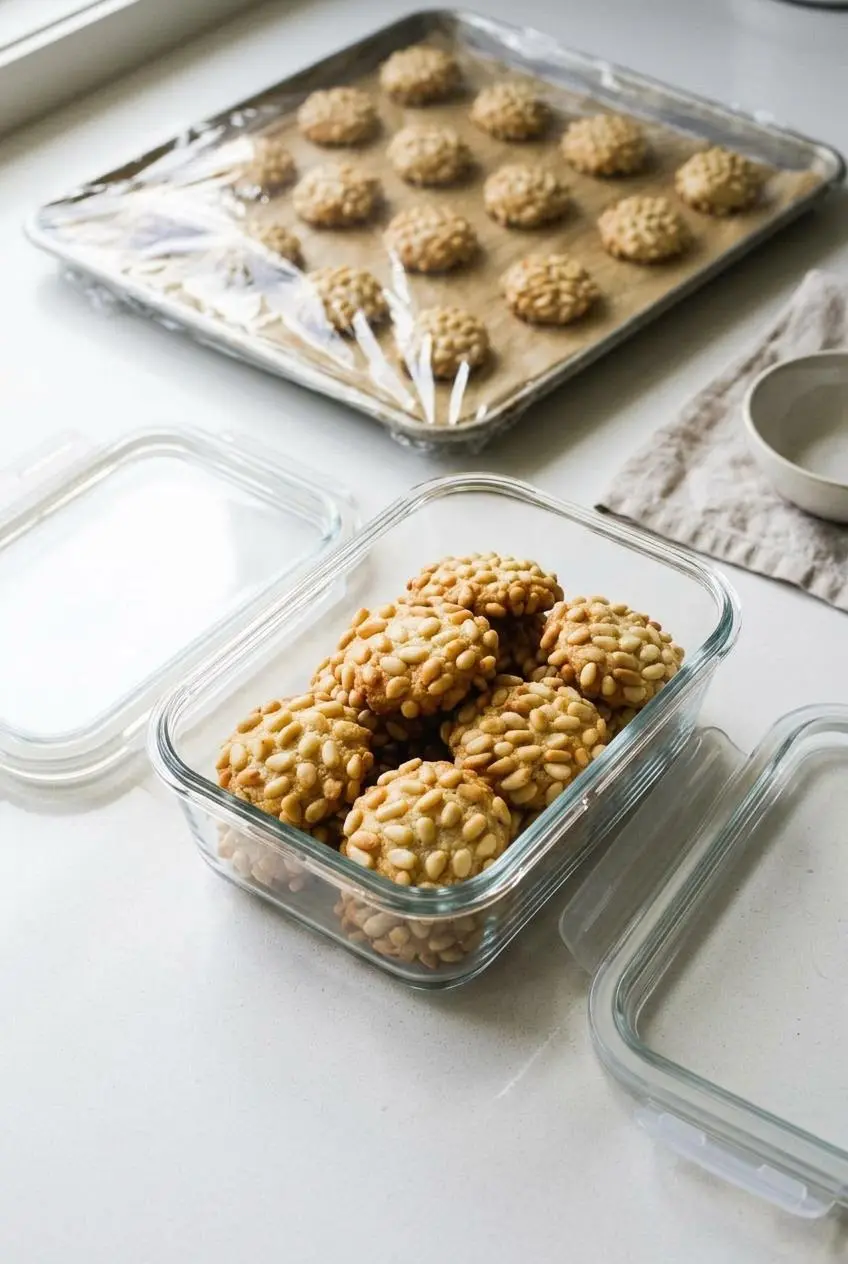
For advance preparation, fully coat the shaped dough balls, cover them with plastic wrap, and refrigerate overnight. Follow the same baking directions and check the stated color and texture cues rather than assuming chilled dough needs a different baking time.
Let baked cookies cool completely before placing them in an airtight container at room temperature. Sealing them while warm traps moisture, which can soften the pine nut coating. Keep the container away from heat and humidity.
While shaping, avoid tasting raw egg dough and prevent cross-contamination by cleaning hands and surfaces after contact with the uncooked mixture.
Serving Pignoli Cookies on a Holiday Dessert Tray
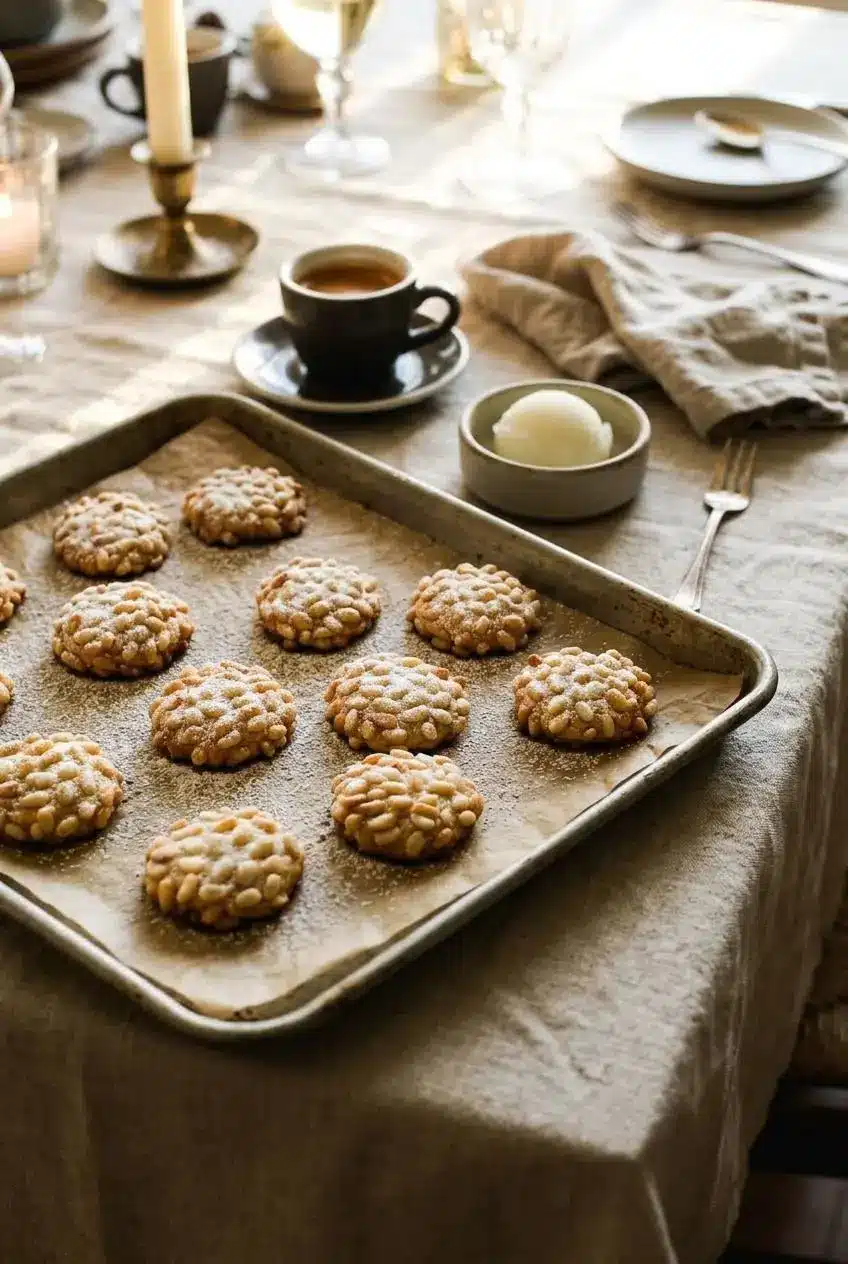
A light dusting of the optional powdered sugar gives these cookies a festive finish without hiding their pine nut coating.
- Serve with espresso or cappuccino after dinner.
- Pair with lemon sorbet or vanilla gelato for a cool contrast to the rich almond center.
- Add buttery shortbread cookies to a holiday tray for a crisp contrast to their chewiness.
Conclusion
A crunchy pine nut coating and chewy almond center make these cookies worth baking carefully. Accurate weights and the hydration rest help keep the dough manageable.
Watch for golden edges and pale centers, then let the cookies settle on the pan. Give that delicate chew a little patience.
Frequently Asked Questions
Why Are Pignoli Cookies So Expensive?
Pine nuts can be expensive, and each cookie uses a generous coating. Almond paste adds to the ingredient cost; homemade savings depend on the prices you pay.
Can I Use Solo Almond Paste Instead of Odense?
Yes, but compare consistency rather than assuming the products behave identically. Softer paste may need flour toward the upper end of the listed range after resting; chilling remains optional for handling.
Can I Make Pignoli Cookies Without a Food Processor?
Yes, try grated almond paste with a stand mixer paddle or hand mixer. Keep the separate frothy-white stage and hydration rest, and avoid a narrow blender jar.
Can I Double This Pignoli Cookie Recipe?
Yes, though two separate batches make blending easier in a standard processor. For one larger batch, follow your appliance’s dough-load guidance; capacity alone doesn’t guarantee even mixing.
Pignoli Cookies

Equipment
- Baking Sheet
- Parchment Paper
- Food processor
- Cookie Scoop
- Wire rack
Ingredients
- 200 g (7 oz) package of almond paste (I recommend Odense)
- 120 g (1/2 cup) granulated sugar
- 1/4 tsp almond extract
- 1 large egg white (about 33 g, cracked weight without the shell)
- 45- 65 g (~1/3- 1/2 cup) all purpose flour, almond flour, or 1:1 GF flour
- 227 g (~1 1/2 cups) pine nuts
- Powdered sugar optional
Instructions
- Set the oven to 325°F/160°C and cover a baking sheet with parchment. The lined surface helps the delicate cookies release after cooling.
- Cut the almond paste into small pieces, then process it with the granulated sugar and almond extract. Stop when the mixture looks damp and finely crumbly, like wet sand, without large paste chunks.
- Whisk the egg white in a separate small bowl until frothy throughout. A loose layer of bubbles is the goal, rather than stiff peaks.
- Process the frothy white and flour into the almond mixture just until smooth, then allow up to 5 minutes for hydration, adding a sprinkle of flour and pulsing again only if the rested dough remains loose or wet. The finished dough should hold together softly and feel mostly tacky, with slight stickiness.
- Spread the pine nuts in a wide, shallow bowl. A broad layer gives each dough portion room to pick up its coating.
- Drop tablespoon-sized portions weighing 15 to 16 g each into the nuts. Consistent portions help the cookies reach the same doneness together.
- Turn each portion through the nuts to cover every surface, arrange on the prepared sheet, and repeat with the remaining dough. The coating should cling around each rounded portion; for overnight preparation, cover the shaped cookies with plastic wrap and refrigerate until baking.
- Bake on the center rack for 20 minutes for a chewy texture, beginning your check at 18 minutes, or choose 23 to 25 minutes for a crispier result. At the chewy endpoint, expect lightly golden edges surrounding pale, soft centers that may appear slightly underdone.
- Leave the cookies on their baking sheet for 10 minutes after removing them from the oven, then move them to a wire rack to cool completely. The fragile centers become firmer during this pan rest.
- Dust the cooled cookies with powdered sugar if desired. A light coating leaves the golden pine nuts visible beneath it.