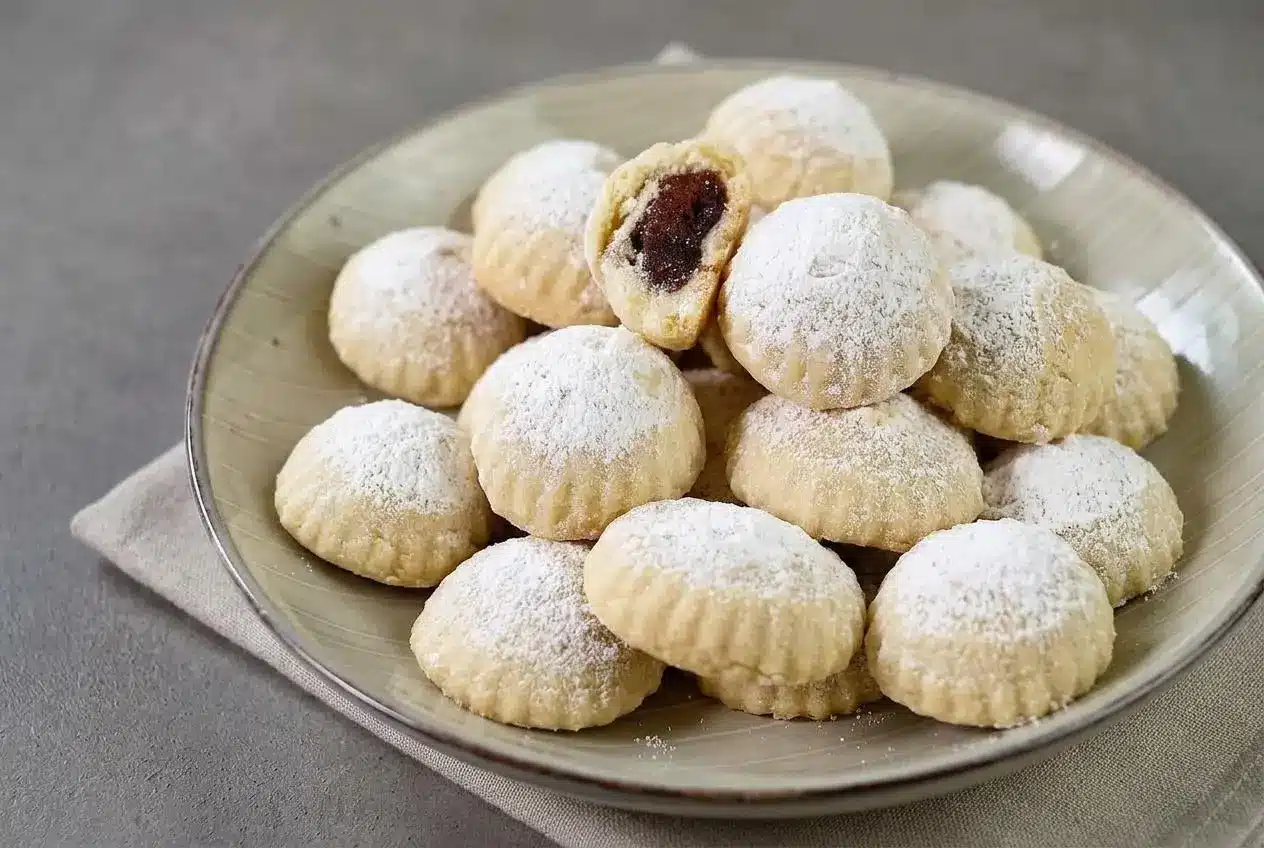
Maamoul date cookies are Middle Eastern shortbread cookies wrapped around a sweet date filling. This flour-based version makes a tender, buttery shell scented with rose water, with no yeast or semolina needed. Shape them by hand or press them into a maamoul mold.
The pleasure is in the contrast: delicate, floral shortbread outside and a soft, rich date center inside. Soft Medjool dates make the filling easy to blend, while ghee or butter gives the dough its crumbly tenderness.
You don’t need specialty equipment for beautiful cookies. A fork can decorate hand-shaped discs, and a mold adds a more intricate pattern. The trick is knowing when to stop baking.
Look for a matte, dry surface and barely golden color, rather than waiting for a browned crust.
Key Ingredients and Smart Substitutions
Flour provides structure, ghee or butter creates tenderness, and milk brings the dough together. Sugar balances the crust, floral water adds aroma, and dates supply the soft, sweet center. The optional sugar dusting adds a delicate finish.
For the Dough
- ¾ cup ghee or 1 cup butter, (you may substitute up to ¼ cup ghee with a neutral oil)
- 2 ½ cups all-purpose flour
- 2 tablespoons sugar
- 2 tablespoons rose water or orange blossom water
- 2-3 tablespoons milk as needed
For the Filling
- ¾ lb soft Medjool dates pitted and chopped, or ~13 oz ready-made date paste
Optional Dusting
- Confectioner’s sugar
Choose dates that feel yielding, not leathery. They process more readily into a cohesive paste without added water. Ready-made date paste offers another route; the listed amounts are alternatives, not an exact weight conversion.
I’d add the milk gradually and judge the dough by feel: soft enough to wrap around the filling, without a wet coating on your fingers.
Flour vs Semolina in Maamoul Dough
All-purpose flour produces a delicate crust similar to classic shortbread cookies. Rubbing fat through the flour helps create that tender, crumbly bite.
This dough needs a 30-minute rest for moisture to distribute and shaping to become easier. Semolina doughs commonly need longer hydration and have a different texture. Neither style automatically requires yeast, and this version contains none. Don’t substitute semolina directly into these proportions.
Ghee, Butter, and Floral Water Options
- Ghee: Use the listed ¾ cup for richness, with the option to replace up to ¼ cup of that ghee with neutral oil.
- Butter: Use the listed 1 cup instead of ghee. Butter contains water, so add milk cautiously and stop when the dough becomes pliable; it may need less.
- Dairy-free adaptation: Vegan stick butter and plant milk are optional, untested substitutes. Product moisture varies, so no dependable numerical liquid adjustment or identical texture is promised.
- Floral water: Orange blossom water is already an alternative at the listed amount. For nonfloral flavor directions, see the optional variations below.
How to Make Maamoul Date Cookies Step by Step
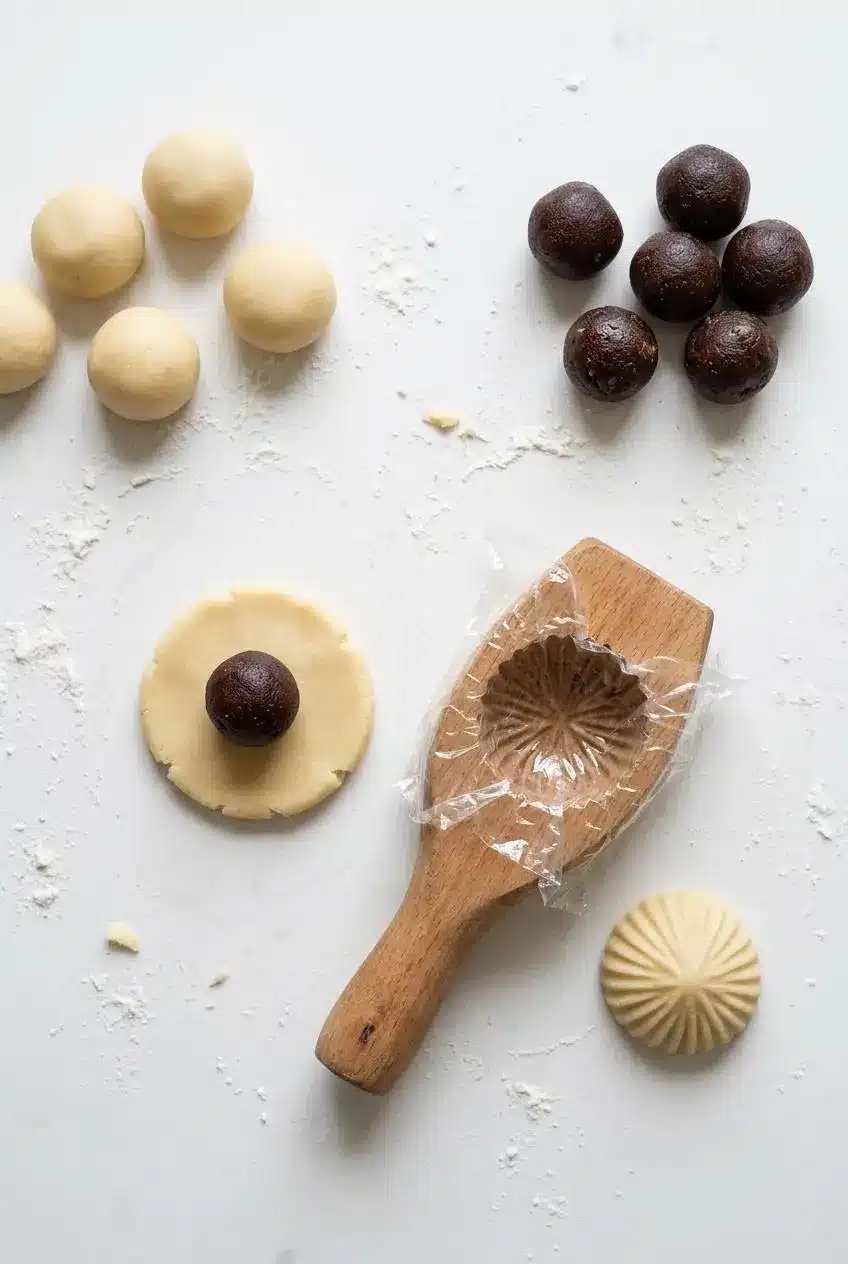
This recipe yields 32 cookies. Allow for the separate dough rest, shaping, baking, and cooling rather than relying on a tight elapsed-time estimate.
Mixing and Resting the Shortbread Dough
The flour-fat mixture starts crumbly. Floral water and gradual additions of milk bring it together into dough that bends around the filling without crumbling apart.
Prepare the Dough
- Set the oven to 350°F (180°C) before starting the dough.
This is the baking temperature for the cookies’ lightly colored finish. - Stir the sugar into melted ghee or butter, then use your fingertips to work the mixture through the flour in a bowl.
Expect a crumbly mixture, using as much flour as it absorbs, typically 2¼ to 2½ cups. - Work in the rose water or listed orange blossom alternative, then knead while adding the milk gradually.
A little initial stickiness should give way to a soft, pliable dough as you continue kneading. - Leave the dough undisturbed for 30 minutes, then portion it into 32 pieces and roll each into a ball.
The rested dough should feel easier to shape, with smooth surfaces and evenly sized portions.
Preparing the Smooth Medjool Date Filling
A smooth filling spreads evenly inside the shell. Dividing both mixtures into 32 portions helps keep the filling distribution and dough thickness consistent.
Prepare the Filling
- Run the chopped dates through a food processor until they form a cohesive paste.
The filling should look smooth rather than chunky, with no firm pieces to push through the dough. - Roll the paste into 32 equally sized balls, using lightly oiled hands or gloves when needed.
Each portion should hold together neatly without leaving a thick, sticky coating on your fingers.
Shaping by Hand or With a Maamoul Mold
Choose one shaping route, not all three. Wrapping the filling by hand before molding is the preferred option because you can check the seam and shell thickness before adding the pattern.
Shape the Cookies
- For hand shaping, open a dough ball into a round in your palm, enclose one date ball, pinch the seam shut, and gently flatten into a disc before decorating with a fork or nut pick.
Keep the filling centered and the shell evenly thick so no thin patch exposes the dates. - For the first mold alternative, cover the mold’s interior with part of one dough portion, add its date filling, and close with the remaining dough.
Smooth the closure so the filling stays enclosed without an overloaded center. - For the preferred mold alternative, make a sealed, hand-shaped cookie first and gently press it into the mold.
The surface should pick up the design while the dough remains intact around the filling. - Release molded cookies by tapping the mold’s edge against a firm surface with your other palm beneath it, using thin plastic wrap or a light flour dusting to help prevent sticking.
The cookie should come out whole, with its patterned surface undisturbed.
Baking and Cooling Cues
Pale cookies can still be fully baked. Watch the surface and underside rather than expecting the deep color of a crisp butter cookie.
Bake
- Arrange the cookies on a baking sheet 1-2 inches apart, placing hand-shaped cookies smooth side up and molded cookies patterned side up.
Keep the decorated surfaces facing upward so their details remain visible. - Bake for 15-20 minutes, transfer to a wire rack to cool, and add the optional confectioner’s sugar only after cooling.
At the end of baking, look for a matte, dry top and faint golden color, with pale blonde bottoms rather than a browned crust. - Pack the cooled cookies into an airtight container, or freeze them for longer keeping.
Let them cool completely before packing so trapped warmth doesn’t create moisture.
Expert Tips and Troubleshooting for Perfect Maamoul
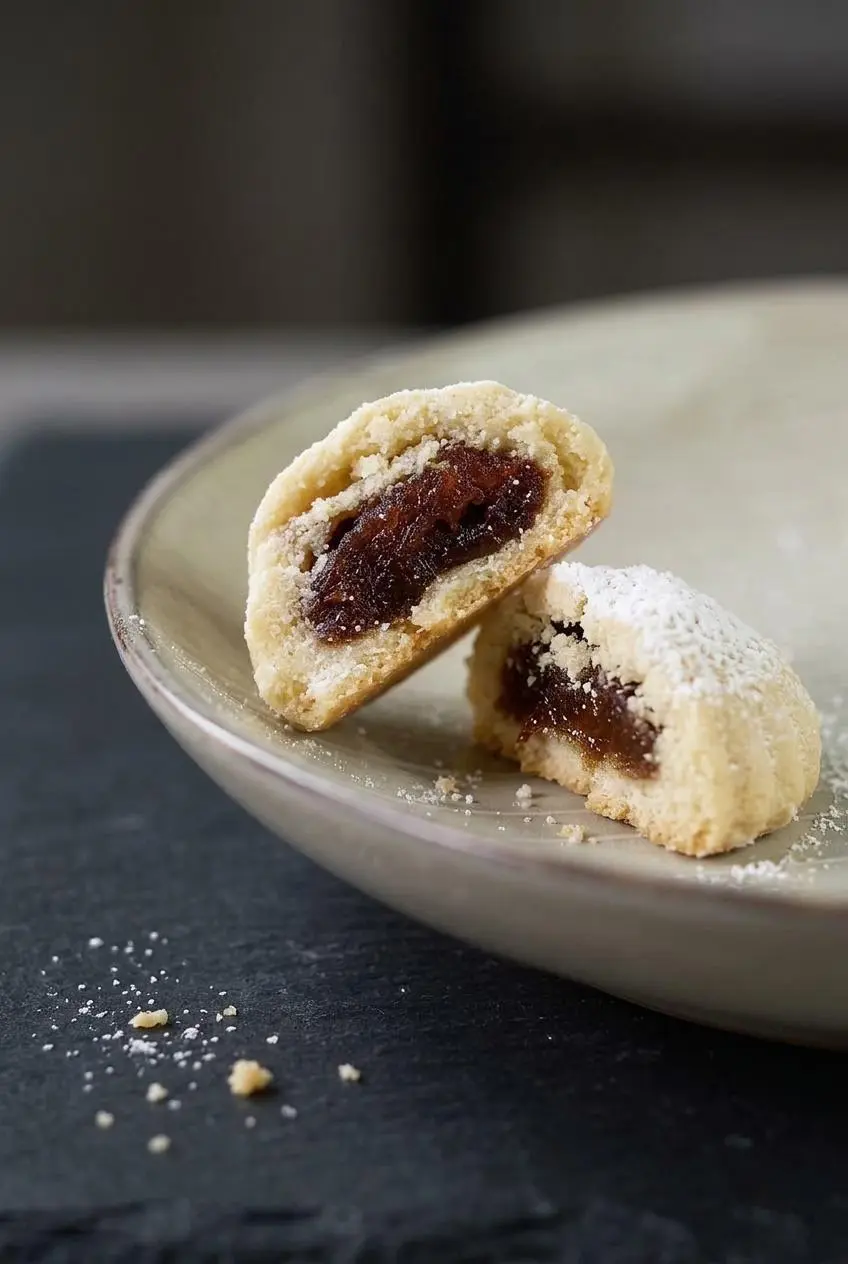
Most shaping problems come from uneven wrapping, excess filling, or dough that hasn’t had its rest.
- Cracked shell or exposed dates: An oversized filling ball stretches the dough too thin. Keep both mixtures evenly portioned, wrap with consistent thickness, and don’t skip the rest.
- Paste sticking to your hands: Warm fingers can make dates harder to handle. Lightly oil your hands or use gloves before rolling the filling.
- Dry, stubborn dates: As an optional rescue, simmer them with 2 to 4 tablespoons water until softened. Aim for a smooth, shapeable paste, not a wet filling.
- Cookies stuck in the mold: Use thin plastic wrap or lightly dust the recesses with flour. Tap the edge while supporting the cookie underneath instead of pulling at the dough.
- Blurred patterns: Start with a smoothly sealed cookie and apply even pressure. Avoid adding yeast or leavening, which would change this dough and can distort the impression.
- Hard centers and dry crust: Overbaking can dry both layers. Stop at a dry surface and light golden color; don’t wait for deep browning.
Flavor Variations, Serving, and Storage Guide
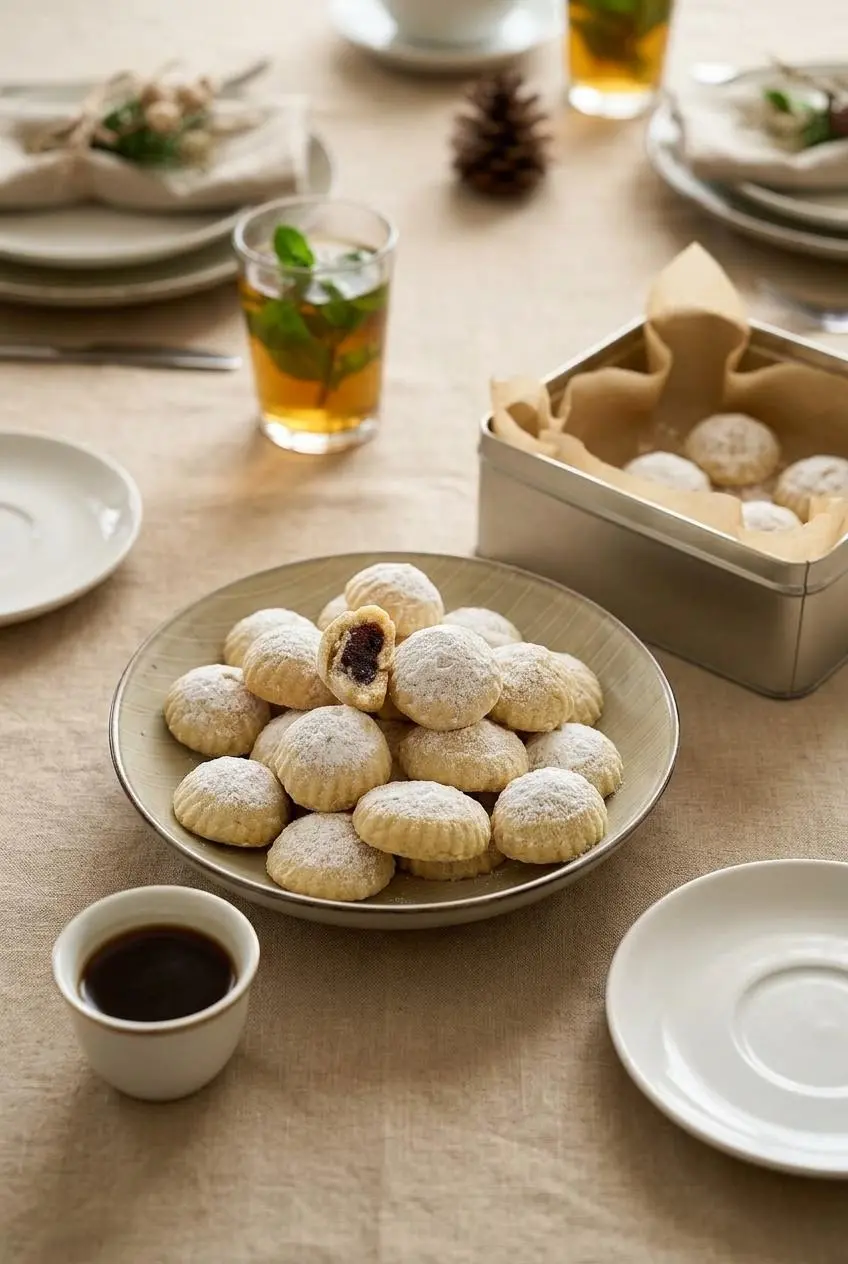
Keep optional flavor changes separate from the dough’s moisture decisions, especially when leaving out floral water.
Orange Blossom, Vanilla, or Cardamom Without Rose Water
Use orange blossom water at the listed amount for a different floral aroma. For a nonfloral direction, optional vanilla or ground cardamom can provide fragrance, but neither is an equal-volume replacement for floral water. Omitting that liquid changes hydration, so watch the dough’s pliability as you add the listed milk.
Optional Spiced Date Filling and Whole Wheat Pastry Flour
- Cardamom and sesame: Optionally add a pinch of cardamom with toasted sesame seeds or tahini to the filling for warm, nutty flavor.
- Cinnamon: An optional pinch gives the dates a warmer aroma without changing the cookie’s overall character.
- Whole wheat pastry flour: Optionally replace half the all-purpose flour for a nuttier crust, recognizing that texture and moisture needs may differ.
Serving Maamoul for Eid, Easter, and Christmas
Arrange cooled cookies on holiday platters with Arabic coffee or unsweetened mint tea. Add the optional sugar dusting after cooling. For a mixed tea-time platter, Earl Grey cookies offer another aromatic choice.
For gifting, use airtight tins with parchment between layers to protect the delicate patterns.
Keeping the Date Centers Soft for Holiday Batches
Let the cookies cool completely, then store them airtight at room temperature, away from heat and moisture. Arrange them gently rather than packing tightly enough to crush the designs.
For longer keeping, freeze the cooled cookies in a well-sealed container with parchment separating the layers. No specific room-temperature or freezer storage duration is supplied here.
If you prefer a warm cookie, optional gentle oven warming should be brief and closely watched. Prolonged warming can dry the shortbread and firm the date center; room-temperature serving needs no reheating.
Conclusion
Tender flour-based dough and a naturally sweet date center make maamoul a lovely holiday bake. Even portioning, careful sealing, and light baking matter more than elaborate decoration.
Share whether you shaped yours by hand or used a mold. Either way, aim for a delicate shell around that soft date center.
Frequently Asked Questions
Why Is This Maamoul Made With All-Purpose Flour Instead of Semolina?
All-purpose flour gives this version a tender shortbread texture with a 30-minute dough rest. Semolina doughs commonly need longer hydration and produce a different bite. A direct flour-for-semolina swap isn’t recommended here.
What Can I Substitute for Rose Water in Maamoul Cookies?
Use the listed orange blossom water alternative at the same amount. Optional vanilla or cardamom offers nonfloral flavor, but doesn’t replace the moisture supplied by floral water.
Can I Use Regular Butter or Vegan Butter Instead of Ghee?
Yes, the listed choice is ¾ cup ghee or 1 cup butter. Add milk gradually because butter already contains water. Vegan stick butter and plant milk are optional, untested adaptations with product-dependent moisture and potentially different texture.
How Do I Shape Maamoul Cookies Without a Wooden Mold?
Flatten dough in your palm, center the date filling, wrap, and seal completely. Flatten gently into a disc and decorate with a fork or nut pick, keeping the shell evenly thick.
Are Maamoul Date Cookies Healthy and How Many Calories Do They Have?
The estimated calorie count is 105 per cookie for a 32-cookie yield; ingredient choices can change that estimate. These are date-filled sweets containing added sugar and rich fat, rather than sugar-free cookies or a health food.
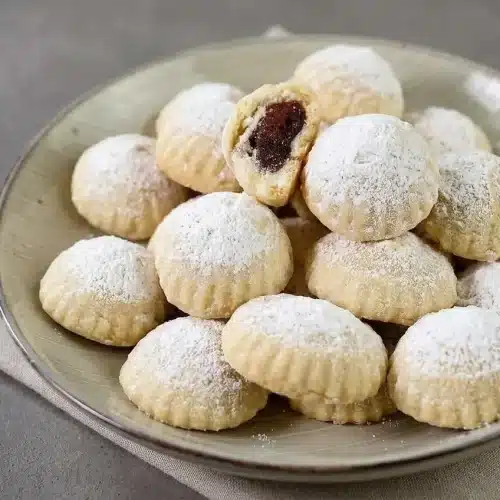
Maamoul Date Cookies

Equipment
- Food processor
- Maamoul Mold
- Airtight Cookie Container
Ingredients
For the Dough
- ¾ cup ghee or 1 cup butter, (you may substitute up to ¼ cup ghee with a neutral oil)
- 2 ½ cups all-purpose flour
- 2 tablespoons sugar
- 2 tablespoons rose water or orange blossom water
- 2-3 tablespoons milk as needed
For the Filling
- ¾ lb soft Medjool dates pitted and chopped, or ~13 oz ready-made date paste
Optional Dusting
- Confectioner’s sugar
Instructions
Prepare the Dough
- Set the oven to 350°F (180°C) before starting the dough. This is the baking temperature for the cookies’ lightly colored finish.
- Stir the sugar into melted ghee or butter, then use your fingertips to work the mixture through the flour in a bowl. Expect a crumbly mixture, using as much flour as it absorbs, typically 2¼ to 2½ cups.
- Work in the rose water or listed orange blossom alternative, then knead while adding the milk gradually. A little initial stickiness should give way to a soft, pliable dough as you continue kneading.
- Leave the dough undisturbed for 30 minutes, then portion it into 32 pieces and roll each into a ball. The rested dough should feel easier to shape, with smooth surfaces and evenly sized portions.
Prepare the Filling
- Run the chopped dates through a food processor until they form a cohesive paste. The filling should look smooth rather than chunky, with no firm pieces to push through the dough.
- Roll the paste into 32 equally sized balls, using lightly oiled hands or gloves when needed. Each portion should hold together neatly without leaving a thick, sticky coating on your fingers.
Shape the Cookies
- For hand shaping, open a dough ball into a round in your palm, enclose one date ball, pinch the seam shut, and gently flatten into a disc before decorating with a fork or nut pick. Keep the filling centered and the shell evenly thick so no thin patch exposes the dates.
- For the first mold alternative, cover the mold’s interior with part of one dough portion, add its date filling, and close with the remaining dough. Smooth the closure so the filling stays enclosed without an overloaded center.
- For the preferred mold alternative, make a sealed, hand-shaped cookie first and gently press it into the mold. The surface should pick up the design while the dough remains intact around the filling.
- Release molded cookies by tapping the mold’s edge against a firm surface with your other palm beneath it, using thin plastic wrap or a light flour dusting to help prevent sticking. The cookie should come out whole, with its patterned surface undisturbed.
Bake
- Arrange the cookies on a baking sheet 1-2 inches apart, placing hand-shaped cookies smooth side up and molded cookies patterned side up. Keep the decorated surfaces facing upward so their details remain visible.
- Bake for 15-20 minutes, transfer to a wire rack to cool, and add the optional confectioner’s sugar only after cooling. At the end of baking, look for a matte, dry top and faint golden color, with pale blonde bottoms rather than a browned crust.
- Pack the cooled cookies into an airtight container, or freeze them for longer keeping. Let them cool completely before packing so trapped warmth doesn’t create moisture.