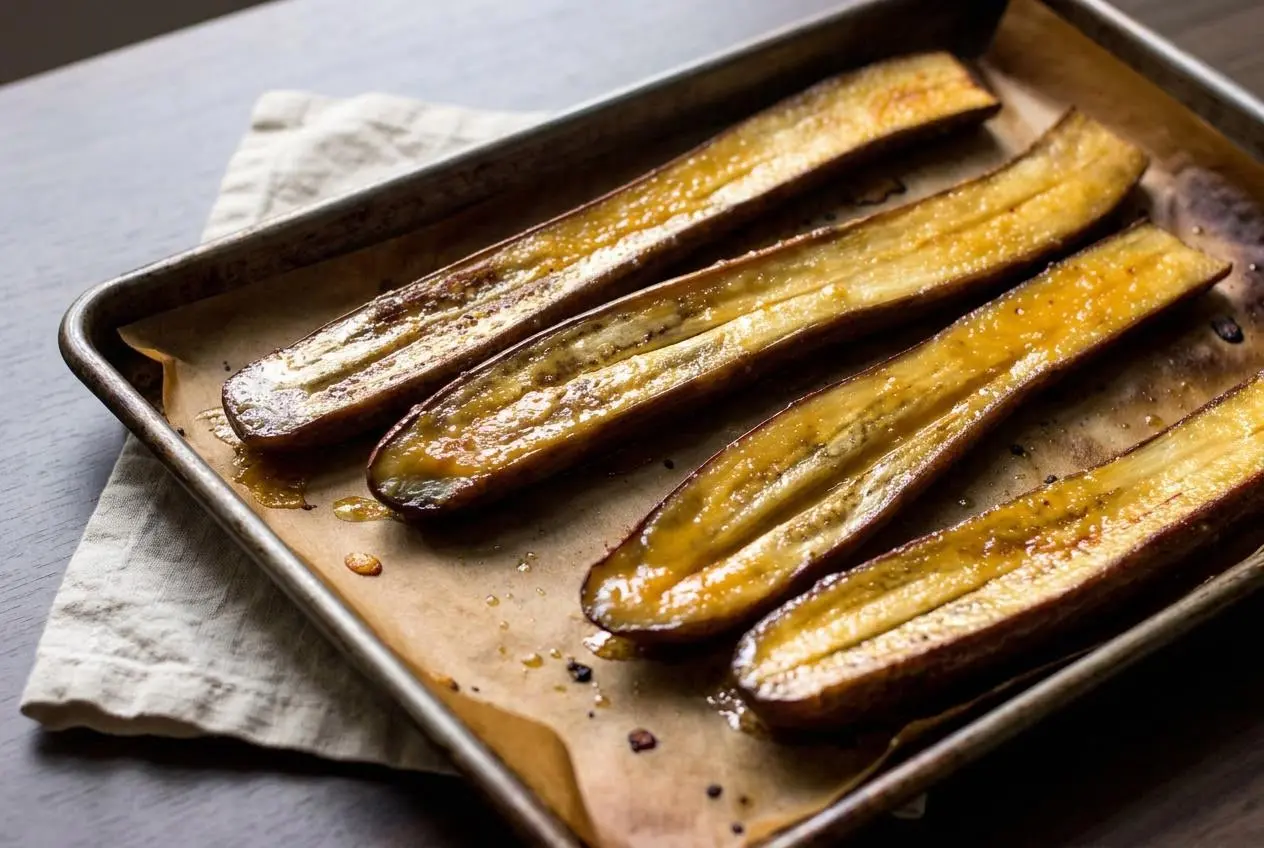
Miso glazed eggplant, or nasu dengaku, pairs custard-soft eggplant with a sweet-savory miso coating. Roast the halves until tender, brush them with the warm glaze, then broil briefly until the surface turns shiny and bubbles.
The contrast makes this dish special: silky flesh beneath a rich, caramelized topping. The oven does most of the softening, while a brief broiler finish brings the glaze to life.
Allow about 45 minutes, including the salting rest, for four appetizer or side-dish servings. Serve the eggplant alongside dinner or spoon it over rice. The trick is underneath the glaze.
Choose eggplants of similar thickness so the halves soften at roughly the same pace.
Key Ingredients and Smart Substitutions
Eggplant provides the creamy texture, while salt seasons the flesh. Miso supplies savory depth, mirin and sugar balance its saltiness, sake loosens the glaze, and sesame oil adds aroma while coating the roasting surface.
- 2 long Japanese eggplants or 4 small Italian eggplants (about ¾ pound)
- Salt to taste
- 1 teaspoon sesame oil, plus additional for the baking sheet
- 1 tablespoon mirin
- 1 tablespoon sake
- 2 tablespoons white or yellow miso
- 1 tablespoon sugar
Mirin contributes sweetness as well as liquid; sake adds moisture without the same sweetness. Sugar helps create the glossy finish. Keep the measured sesame oil for the glaze and use the additional oil to brush the baking sheet.
I’d keep the initial salting light and blot carefully afterward, since miso brings plenty of seasoning.
Choosing the Best Eggplant and Miso Paste
Long Japanese eggplants have slender halves that soften readily. Small Italian eggplants are plumper but work well at the listed total weight. Look for firm flesh and smooth skin rather than soft, wrinkled patches.
A large globe eggplant isn’t a count-for-count replacement: its thicker center may need different cooking time. Tenderness, rather than the clock alone, determines when it’s ready for glazing.
- White miso: Usually mild and relatively sweet, making it well suited to this balanced glaze.
- Yellow miso: Generally offers a deeper savory flavor while remaining a good choice here.
- Red miso: Can taste stronger and saltier; an optional adaptation needs careful tasting and lighter initial salting.
- Awase miso: A blend whose intensity varies, so check its flavor rather than assuming it matches white miso.
Substitutes for Sake and Mirin
These optional substitutions change the glaze’s balance, so treat them as adaptations rather than identical replacements.
- Missing sake: Dry sherry or dry white wine can contribute liquid and a different aroma, but both remain alcoholic alternatives.
- Missing mirin: Account for its sweetness as well as its liquid contribution; a dry alcoholic substitute won’t supply both.
- Alcohol-free glaze: Water or alcohol-free dashi can provide liquid, with extra sugar and a few drops of rice vinegar adjusted separately for balance; this isn’t a tested replacement formula with fixed ratios.
Choose vegetarian dashi if needed, since some versions contain fish. Check mirin-style product labels for alcohol, too. The brief boil in the method doesn’t establish that the finished glaze is alcohol-free.
Step-by-Step Method for Miso Glazed Eggplant
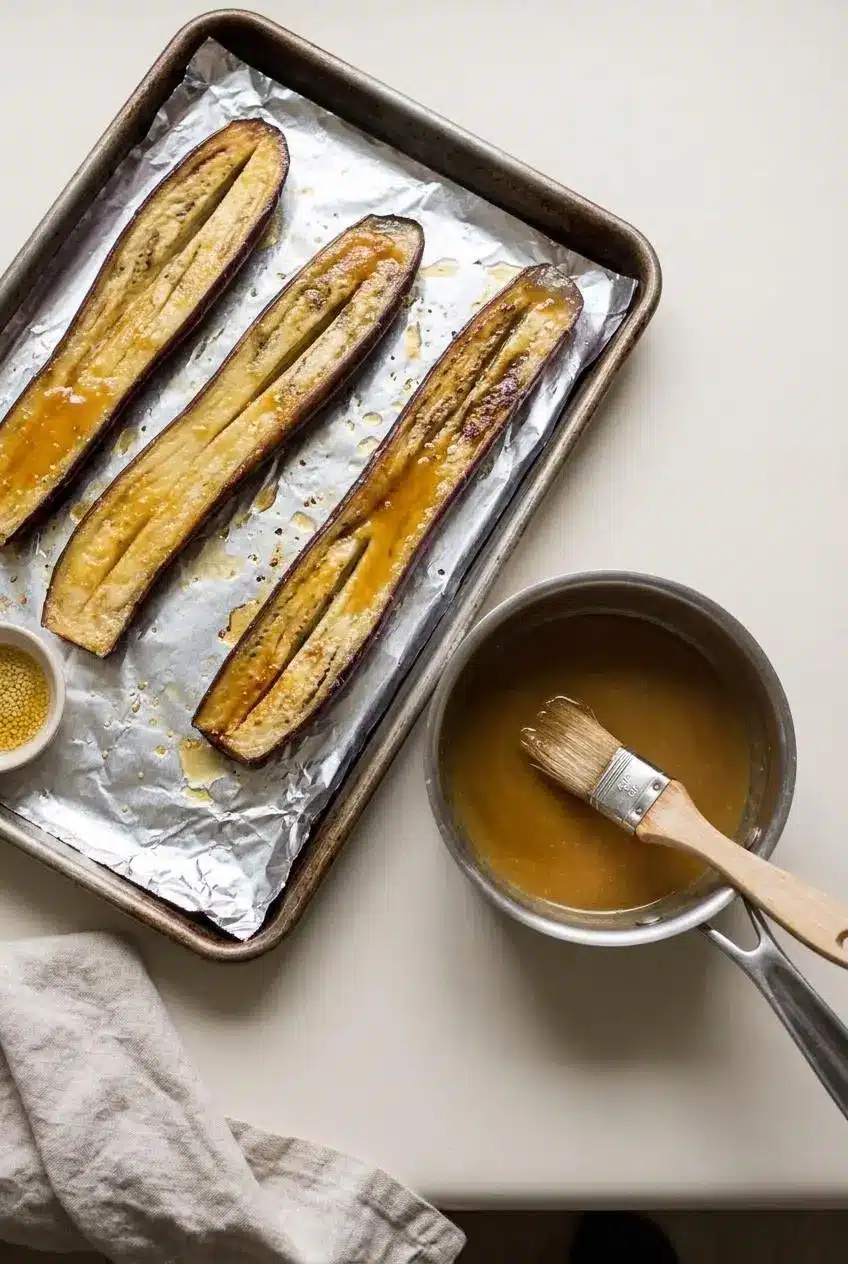
Soften the eggplant fully before adding the sweet coating. The broiler finishes the surface; it doesn’t replace the roasting stage.
Total time: About 45 minutes. Yield: 4 appetizer or side-dish servings.
- Split each eggplant lengthwise, remove the stem and leafy cap, then use a paring knife to make one central slit through the flesh down to the skin without puncturing it.
Leave the skin intact to support the soft flesh, sprinkle lightly with salt, and rest for 10 minutes while heating the oven to 425°F and preparing a foil- or parchment-lined baking sheet brushed with sesame oil. - Pat away the surface moisture with paper towels, arrange the halves flesh-side down on the prepared sheet, and roast for 15 to 20 minutes.
Once the skins start to wrinkle and the flesh yields easily, take out the sheet, gently turn the halves flesh-side up, and switch the oven to broil. - Heat the mirin and sake in your smallest saucepan over high heat, boil for 20 seconds without substantially reducing the liquid, then lower the heat and add the miso and sugar.
Whisk over medium-low heat until the sugar dissolves and the glaze looks evenly blended, keeping it below a boil, then take the pan off the heat and whisk in the teaspoon of sesame oil. - Spread all the glaze over the exposed flesh and broil about 2 inches below the heat for approximately 1 minute, watching continuously.
Remove the eggplant when the coating becomes shiny and starts bubbling, then serve hot or allow it to cool as desired before cutting diagonally into 1- to 1-½-inch slices.
The central slit lets the flesh open without breaking its supporting skin. Crosshatch scoring is an optional approach, not a requirement here. Either way, cutting through the skin makes the softened halves harder to turn intact.
The glaze has two distinct heating stages: a brief boil for the mirin and sake, followed by gentle whisking after adding miso and sugar. Don’t carry that initial high heat into the second stage.
Expert Tips and Troubleshooting Common Mistakes
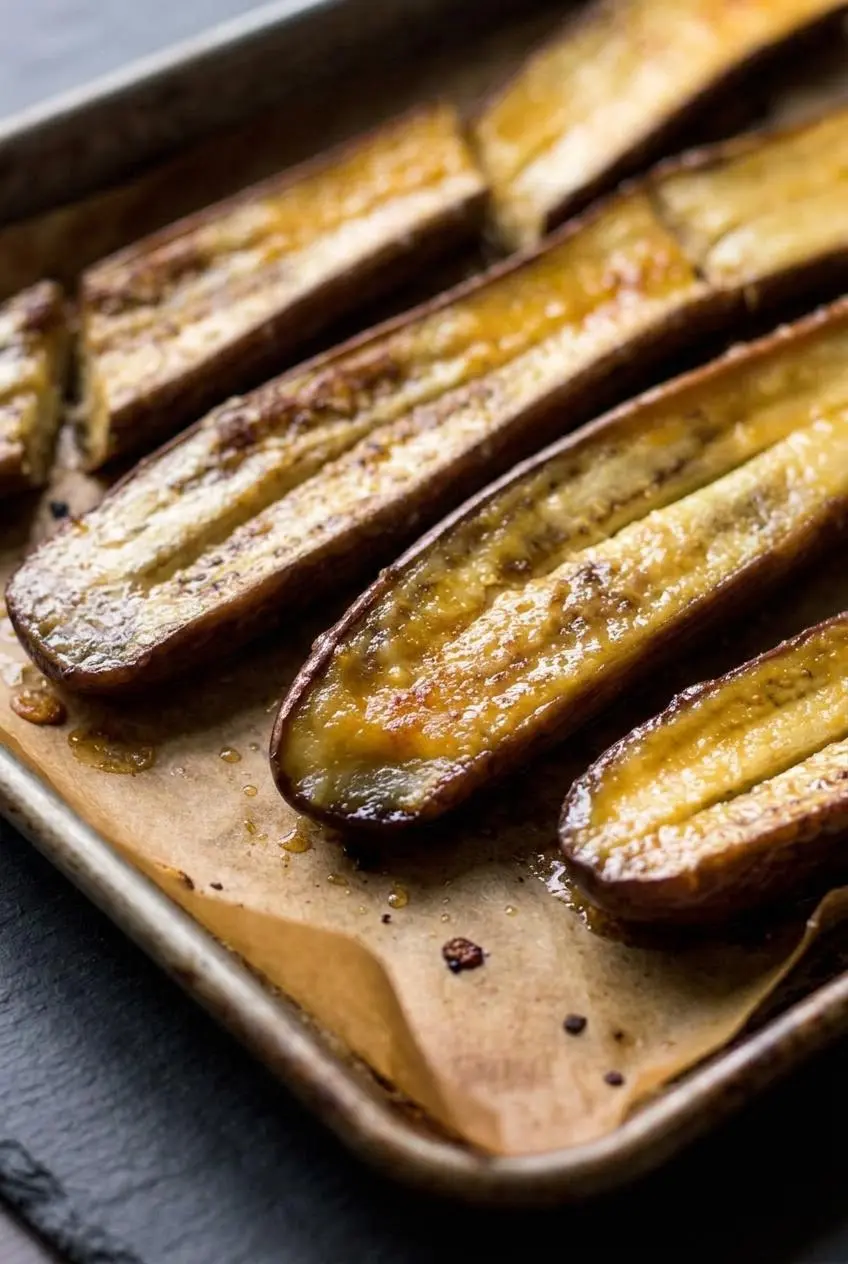
Most problems come from glazing firm eggplant or treating the broiler time as a timer you can walk away from.
Oven Roasting vs Stovetop Pan-Frying
- Hands-on effort: Roasting needs less attention while the flesh softens; skillet cooking requires closer monitoring and turning.
- Oil use: The oven method softens the cut surfaces against a lightly oiled sheet, while pan-frying can encourage greater oil absorption.
- Timing: The listed eggplants roast for 15 to 20 minutes after salting; covered skillet cooking can be quicker, but thickness determines the pace.
- Texture: Roasting emphasizes evenly softened flesh, while pan-frying adds more direct surface browning; both options use a broiler finish.
How to Prevent Burnt Glaze or Spongy Flesh
- Burnt coating: Sweet glaze scorches quickly under direct heat, so stay beside the oven and remove the sheet at glossy bubbles rather than waiting for black patches.
- Spongy center: The eggplant hasn’t softened enough; finish roasting before glazing instead of trying to cook the center under the broiler.
- Watery surface: Moisture left after salting can dilute the coating, so blot the cut faces thoroughly before roasting.
- Grainy glaze: Miso needs gentle heat and thorough whisking; avoid boiling once it enters the saucepan.
- Excessive saltiness: Stronger miso and generous initial salting can overwhelm the sweetness, so choose the suggested miso and salt lightly.
Broilers vary considerably, even at the listed rack distance. Follow your appliance’s instructions for door position rather than automatically leaving it ajar.
Check the baking-sheet lining before broiling: a material suitable for roasting may not tolerate direct broiler heat. In particular, don’t assume parchment can stay beneath the broiler; follow its heat limits and your appliance instructions.
Miso Eggplant Variations and Stovetop Options
Keep these optional changes separate from the oven method above. Each shifts the flavor or cooking style without changing the goal of tender flesh beneath a bubbling coating.
Quick Stovetop Pan-Fried Method
For a skillet alternative, pan-fry the prepared halves, turning as needed, and cover the pan to help the centers soften. Check the thickest part before glazing: it should yield easily rather than feel springy.
Transfer the tender halves to a broiler-suitable baking sheet, add the glaze, and finish beneath the broiler. This can shorten the softening stage for slender eggplants, but it isn’t an entirely stovetop-only method or a guaranteed faster total.
Honey Miso Glaze and Fresh Garnishes
Honey can replace sugar as an optional sweetener, bringing a floral note. There’s no tested honey-to-sugar ratio here, so adjust thoughtfully rather than assuming a direct swap. Honey also means the variation isn’t vegan, and its sweet coating still needs constant attention under the broiler.
- Sesame seeds: Add a little crunch against the soft flesh.
- Sliced scallions: Bring a fresh, sharp contrast.
- Shiso: Adds a distinctive herbal aroma.
- Chili oil or shichimi: Provides heat to contrast with the sweet glaze.
Ginger and Citrus for a Brighter Finish
For an optional brighter version, stir freshly grated ginger juice into the warm glaze off the heat. Finish with a light squeeze of lemon or yuzu after broiling. Ginger adds warmth, while citrus cuts through the rich, salty-sweet coating without needing more glaze.
Make-Ahead Miso Eggplant, Leftovers, and Serving Ideas
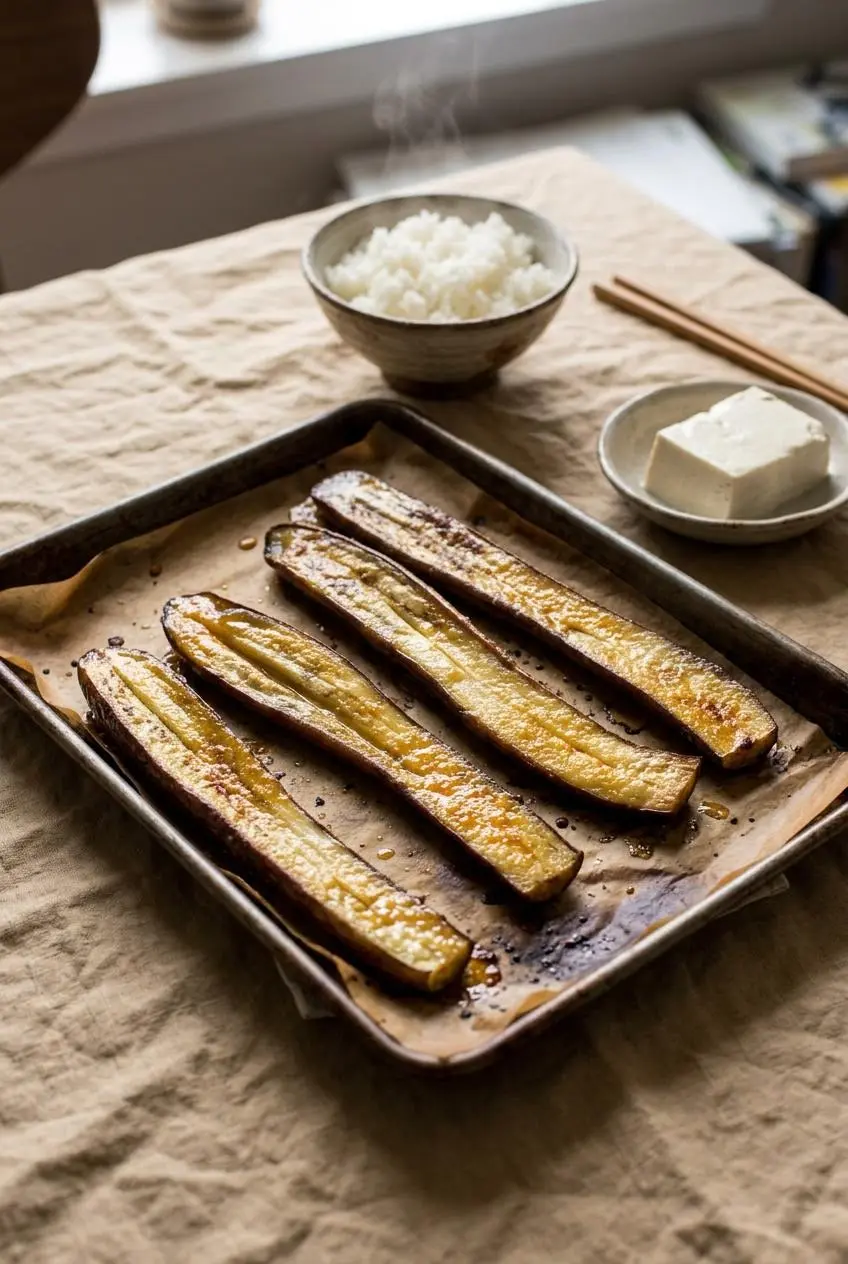
To separate the preparation from serving, roast the eggplant and prepare the glaze through Step 3, reserving the coating and final broiling for the finish.
Cool and refrigerate the components promptly in covered containers rather than leaving cooked eggplant on the counter. If it’s chilled, warm the flesh gently before the final glaze finish; the brief broil alone may not heat the center throughout.
Keep cooked leftovers refrigerated in an airtight container. Enjoy them cold or warm them gently, knowing the surface won’t exactly recreate its freshly broiled gloss. Reheat the portion you plan to serve rather than repeatedly warming the whole batch.
The listed yield makes four appetizer or side-dish portions. For a rice bowl, serve the eggplant over steamed short-grain rice with chilled tofu alongside. As a side, it also fits well with grilled fish.
A bowl of classic miso soup rounds out the meal. Serve the eggplant hot or let it cool for a room-temperature serving, without treating that serving option as extended counter storage.
Conclusion
Silky eggplant and a glossy, sweet-savory glaze make a satisfying contrast. White or yellow miso keeps the coating balanced without overpowering the tender flesh.
Get the center soft before glazing, then give the broiler your full attention. Those bubbling edges are your cue to bring dinner to the table.
Frequently Asked Questions
Why Do You Cut an Incision in the Eggplant Without Slicing All the Way Through the Skin?
The intact skin supports each half when you turn it. It also contains the softened flesh and glaze. The method uses one central slit; crosshatching is optional, not required.
How Do I Keep the Miso Glaze From Burning Under the Broiler?
Watch continuously during the approximately 1-minute finish, about 2 inches from the heat. Remove the eggplant when the glaze shines and bubbles, since broiler strength varies. Follow the appliance directions for oven-door position.
What Can I Use Instead of Sake and Mirin in Miso Glaze?
For an optional alcohol-free adaptation, use water or alcohol-free dashi and adjust sweetness and acidity separately. Dry sherry and dry white wine are alcoholic alternatives with different flavors. These swaps aren’t tested fixed-ratio replacements for the listed glaze.
Can I Make Miso Glazed Eggplant Ahead of Time and How Do I Store Leftovers?
Prepare through Step 3, then cool and refrigerate the eggplant and glaze separately before finishing. Warm chilled flesh before the final broil rather than relying on that finish alone. Keep leftovers covered and refrigerated; serve cold or gently warmed.
Miso Glazed Eggplant

Equipment
- Paring knife
- Baking Sheet
- Foil
- parchment
- Paper towels
- Saucepan
- Broiler
Ingredients
- 2 long Japanese eggplants or 4 small Italian eggplants (about ¾ pound)
- Salt to taste
- 1 teaspoon sesame oil plus additional for the baking sheet
- 1 tablespoon mirin
- 1 tablespoon sake
- 2 tablespoons white or yellow miso
- 1 tablespoon sugar
Instructions
- Split each eggplant lengthwise, remove the stem and leafy cap, then use a paring knife to make one central slit through the flesh down to the skin without puncturing it. Leave the skin intact to support the soft flesh, sprinkle lightly with salt, and rest for 10 minutes while heating the oven to 425°F and preparing a foil- or parchment-lined baking sheet brushed with sesame oil.
- Pat away the surface moisture with paper towels, arrange the halves flesh-side down on the prepared sheet, and roast for 15 to 20 minutes. Once the skins start to wrinkle and the flesh yields easily, take out the sheet, gently turn the halves flesh-side up, and switch the oven to broil.
- Heat the mirin and sake in your smallest saucepan over high heat, boil for 20 seconds without substantially reducing the liquid, then lower the heat and add the miso and sugar. Whisk over medium-low heat until the sugar dissolves and the glaze looks evenly blended, keeping it below a boil, then take the pan off the heat and whisk in the teaspoon of sesame oil.
- Spread all the glaze over the exposed flesh and broil about 2 inches below the heat for approximately 1 minute, watching continuously. Remove the eggplant when the coating becomes shiny and starts bubbling, then serve hot or allow it to cool as desired before cutting diagonally into 1- to 1-½-inch slices.