For a thick, clean-slicing fruit pie, reduce any excess juices, bake until the filling bubbles and reaches 200°F to 212°F, then let it cool fully before cutting.
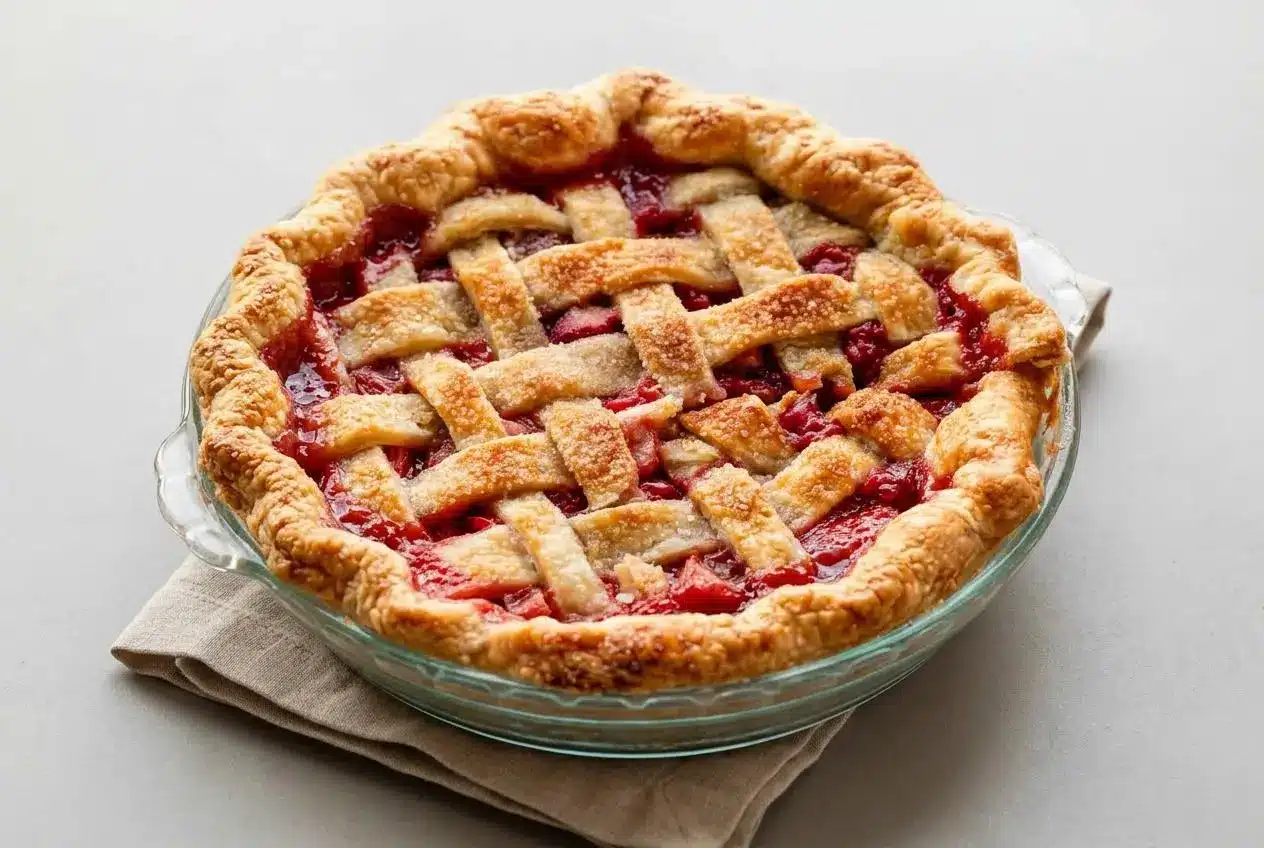
This strawberry rhubarb pie pairs tart, tender rhubarb with sweet strawberries in a buttery double crust. The filling turns glossy and jammy as it bakes, while the lattice lets steam escape.
Brown sugar softens the rhubarb’s sharp edge, and orange juice brightens every bite. The patient cool-down is where the magic happens.
Keep one dough disc chilled while rolling the other so the butter stays firm and the crust remains easier to handle.
Essential Ingredients for the Best Strawberry Rhubarb Pie
Each ingredient supports the pie’s balance: tart fruit gives structure, sugars round out acidity, cornstarch sets the juices, and butter enriches the filling beneath the crisp crust.
- All Butter Pie Crust or Homemade Pie Crust (both recipes make 2 crusts, 1 for bottom and 1 for top)
- 3 cups (about 300g) sliced rhubarb (1/2-inch pieces)
- 2 and 1/2 cups (about 380g) chopped fresh strawberries
- 1/3 cup (67g) packed light brown sugar
- 1/3 cup (67g) granulated sugar
- 1/4 cup (32g) cornstarch
- 1/4 teaspoon salt
- 1 Tablespoon (15g/ml) orange juice
- 1/2 teaspoon pure vanilla extract
- 1 Tablespoon (14g) cold unsalted butter, cut into small cubes
- egg wash: 1 large egg beaten with 1 Tablespoon (15g/ml) milk
- optional: coarse sparkling sugar, for topping
Rhubarb brings the signature tart backbone and holds its shape better than strawberries as it softens. Strawberries add juicy sweetness, while brown sugar gives the filling a gentle caramel note. Granulated sugar keeps the fruit flavor clear, and orange juice adds a bright citrus lift alongside the vanilla.
Cornstarch is the structure builder here. It thickens the fruit juices into a soft, glossy filling instead of a stiff gel. Cold butter melts into the fruit, adding richness, while the egg wash helps the lattice bake to a deep golden finish.
Use stalks only, and discard every rhubarb leaf. Rhubarb leaves contain high levels of oxalic acid and should not be eaten.
I look for firm rhubarb stalks and slice them evenly so the pieces soften at the same pace as the strawberries.
Fruit Selection: Fresh Versus Frozen
Fresh strawberries and rhubarb give the most predictable filling because they release less surface moisture. Choose ripe strawberries that smell fragrant but are still firm enough to chop cleanly. Very soft berries can release extra juice as they sit with the sugar.
Frozen fruit can work, but thaw it completely and drain it thoroughly before mixing it with the sugars and cornstarch. Frozen strawberries tend to shed more liquid than frozen rhubarb, so leaving that moisture in the bowl can dilute the filling and soften the lower crust.
Wash fresh fruit under cool running water just before prep, then dry it well before chopping. Clean hands and produce washed without soap help reduce the risk of foodborne illness while preserving quality, as described in safe washing practices for fresh fruits and vegetables.
Thickener Showdown: Cornstarch Versus Tapioca
Cornstarch gives this filling its tender, glossy set. Once the juices bubble thoroughly in the oven, the starch thickens the liquid and leaves the berry-rhubarb flavor front and center.
Instant or minute tapioca is a workable optional swap if you prefer a clearer, slightly firmer filling. Use 3 tablespoons of instant tapioca in place of the 1/4 cup of cornstarch. Tapioca holds up well with acidic fruit, though small tapioca granules can remain faintly noticeable in a very smooth filling.
Flour can thicken fruit filling, but it often makes the juices look cloudy and can mute the bright berry flavor. Cornstarch or instant tapioca produces a cleaner result here.
Step-by-Step Guide to Assembling and Baking Strawberry Rhubarb Pie
Cold dough, controlled fruit juices, and steady baking make the difference between a flaky pie and a wet, slumped crust. Follow the order below so the filling and pastry stay at their best.
- Prepare the pie dough through step 5 of your chosen crust method, then refrigerate the dough for at least 2 hours before rolling.
The discs should feel cold and firm rather than soft or greasy when they come out of the refrigerator. - Combine the rhubarb, strawberries, brown sugar, granulated sugar, cornstarch, salt, orange juice, and vanilla in a large bowl.
Stir until the fruit is evenly coated and the cornstarch disappears into the juices. - Roll one chilled dough disc on a floured surface into a 12-inch circle, rotating it a quarter turn every few passes, then ease it into a 9-inch pie dish.
Press the dough gently into the base and sides without stretching it, keeping the second disc cold. - Lift the fruit into the lined dish with a slotted spoon and reserve any liquid left in the bowl, then refrigerate the pie shell.
Leaving excess liquid behind at this point protects the bottom crust from becoming waterlogged. - If a substantial pool of juice remains, simmer it in a small saucepan over medium-low heat for 3 to 4 minutes, stirring constantly, then cool it for 5 minutes and gently fold it over the fruit.
The syrup should look slightly reduced and glossy rather than thin and watery. - Scatter the cold butter cubes over the fruit, then return the pie to the refrigerator while preparing the top crust.
Keeping the filling cold helps the butter and pastry stay distinct until baking begins. - Roll the second chilled disc into a 12-inch circle and cut it into strips about 1 inch wide with a pastry wheel, sharp knife, or pizza cutter.
The strips should stay cool enough to lift without stretching or tearing. - Weave the strips over and under one another across the filling, seal them to the bottom crust, trim the excess, and flute or crimp the edge.
Leave open spaces in the lattice so fruit steam can escape as the filling bubbles. - Brush the top and edge with egg wash, add coarse sparkling sugar if using, and refrigerate the finished pie for 20 to 30 minutes while the oven heats.
The crust should feel firm again before it goes into the oven. - Set the pie on the center rack with a parchment-lined baking sheet on the rack beneath it, bake at 400°F for 20 minutes, then lower the oven to 350°F, add a pie crust shield, and bake for 50 minutes more.
The pie is done when the crust is deep golden, slow thick bubbles appear through the lattice, and the center reads 200°F to 212°F on an instant-read thermometer. - Transfer the baked pie to a cooling rack and leave it undisturbed for at least 5 to 6 hours before slicing.
A fully cooled pie gives a clean knife pull instead of spilling hot fruit juices onto the plate. - Cover leftovers tightly and keep them at room temperature for up to 2 days or in the refrigerator for up to 5 days.
Cool the pie completely before covering so trapped steam does not soften the crust.
Rolling and Chilling the Butter Crust
Roll from the center outward rather than pressing repeatedly at the edges. This keeps the circle even and avoids a thick middle with thin, fragile sides. Turn the dough often and add only enough flour to prevent sticking, since excess flour can make pastry dry.
Ease the dough into the pie dish with your fingertips and let it settle naturally into the corners. Pulling or stretching it may cause the crust to shrink as it bakes. The final chill before baking firms up the butter again, which helps create defined flaky layers.
Weaving the Classic Lattice Top
Start by laying several strips in one direction across the filling. Fold back alternating strips, place a perpendicular strip over the center, then unfold the folded strips. Repeat that alternating pattern until the top is woven.
The lattice is more than decoration. Those gaps release moisture steadily as the fruit cooks, so the filling can concentrate instead of steaming heavily beneath a sealed top crust. Press the strip ends firmly into the lower crust before trimming and crimping.
Baking Stages and Doneness Indicators
The opening 400°F bake gives the pastry a fast burst of heat, helping the butter-rich crust begin to set before the fruit produces its full volume of juice. Lowering the oven to 350°F lets the rhubarb soften and the filling cook through without over-darkening the top.
Watch the filling, not just the crust. A pale crust with quiet juices usually means the center needs more time. Look for thick, slow bubbles that rise through the lattice and make a soft, rapid boiling sound. An instant-read probe should meet slight resistance as it passes through tender rhubarb in the center.
How to Guarantee a Thick, Non-Runny Filling
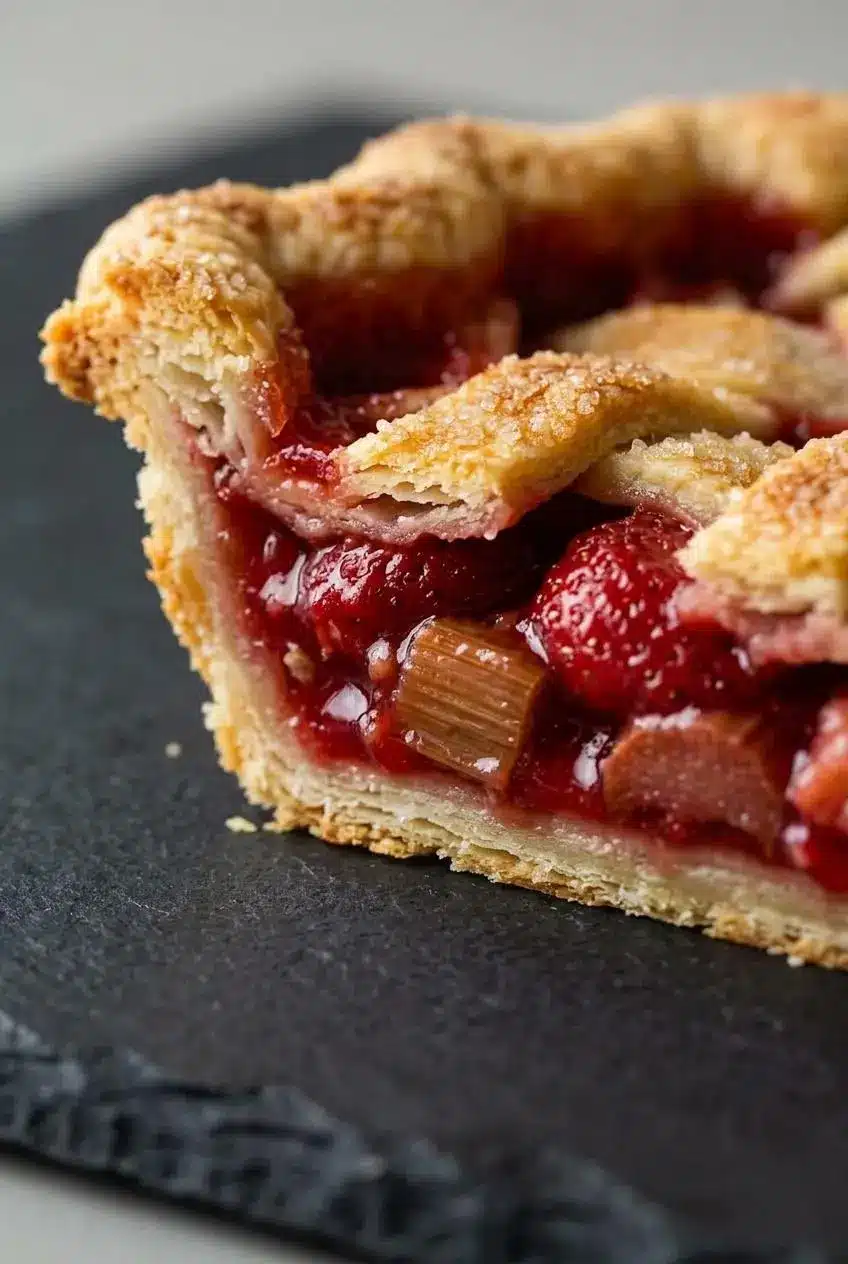
A fruit pie turns soupy when too much moisture remains or when the starch has not had enough heat and cooling time to set. The fix is a combination of measured cornstarch, reduced juices, a properly baked filling, and patience after the pie leaves the oven.
- Problem: liquid pools in the mixing bowl. Transfer the fruit with a slotted spoon, then briefly simmer the leftover juices before returning them to the pie. This concentrates strawberry flavor and removes some excess water before baking.
- Problem: the filling looks thin after the crust browns. Keep baking until thick bubbles break through the lattice and the center reaches the stated temperature range. The fruit juices need enough heat for the cornstarch to do its work.
- Problem: slices collapse after cutting. Leave the pie at room temperature for 5 to 6 hours. The filling is fluid while hot, then firms as the starch network cools.
- Problem: frozen fruit leaves the filling loose. Thaw and drain the fruit thoroughly before adding sugar and thickener, then reduce pooled juices if needed.
That small saucepan step is especially useful when strawberries are exceptionally ripe or the fruit has been sitting long enough to macerate. The same gentle simmering approach used for stovetop strawberry compote creates a more concentrated, spoon-coating syrup before it returns to the pie.
Protecting the Crust and Preventing a Soggy Bottom
A glass or metal pie dish conducts heat more directly than ceramic, helping the bottom crust bake through while the fruit filling bubbles. Place the pie on the center rack and keep the parchment-lined baking sheet on the rack below it. It catches drips while helping reflect heat toward the base.
After the first 20 minutes, fit a pie shield or a loose foil ring around the crimped edge. The rim browns faster than the center, and shielding it gives the filling time to thicken without burning the fluted crust.
Storing Leftover Pie
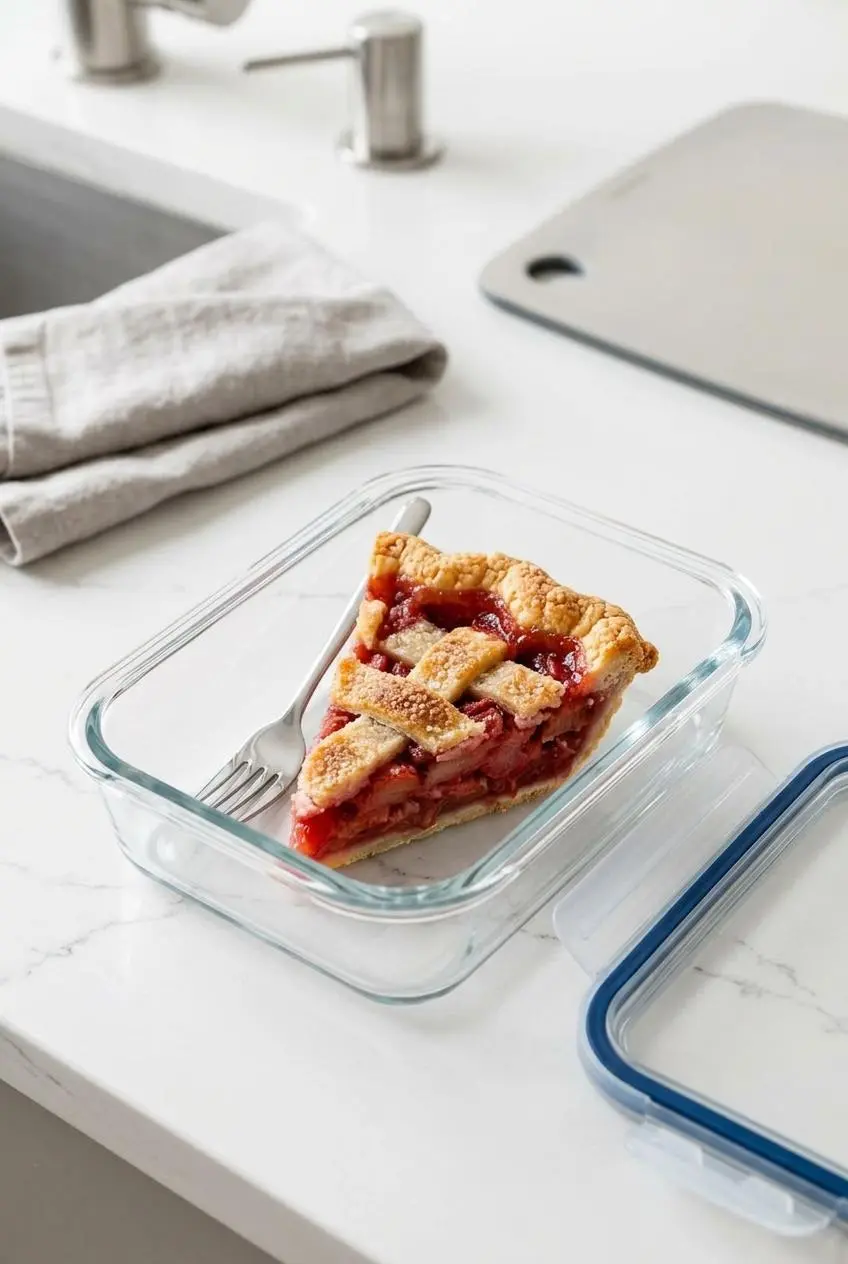
Let the pie cool completely before covering it tightly. Store leftovers at room temperature for up to 2 days, or refrigerate them for up to 5 days. Refrigeration keeps the fruit filling firm, though the crust will soften slightly from moisture.
For a crisper slice, warm an individual portion briefly in the oven rather than heating the whole pie repeatedly. Serve it once the filling is pleasantly warm, not piping hot, so the slice still holds together.
Popular Variations and Crust Alternatives
Keep the sweet-tart strawberry and rhubarb center intact, then change the topping or presentation when you want a different finish. These are optional directions, separate from the lattice pie above.
Brown Sugar Streusel Crumble
For a strawberry rhubarb crumble pie, skip the lattice and cover the fruit with a coarse mixture of cold butter, flour, rolled oats, and brown sugar. The crumble bakes into a crisp, toasty lid with a softer, more rustic look than woven pastry.
Scatter the topping generously without packing it down. Leave some uneven clumps so heat can move through the topping and the fruit can still bubble beneath it.
Whipped Cream Single Crust Finish
For an open-face presentation, blind bake a single crust, spoon in cooked and fully cooled strawberry-rhubarb filling, and finish with freshly whipped vanilla cream. This version puts the fruit front and center and works best when the filling has fully set before assembly.
If you have extra strawberries and rhubarb after trimming, turn them into strawberry rhubarb chia jam for toast, yogurt, or a spoonful alongside the pie.
Adapting Ratios for Frozen Rhubarb
- Thaw frozen rhubarb and strawberries completely before measuring and mixing.
- Drain the fruit thoroughly in a colander for 30 minutes to remove excess surface moisture.
- Add an extra 1/2 tablespoon of starch to help manage the remaining moisture.
- Use the optional juice-reduction step if liquid continues to collect after the fruit is mixed with sugar.
Serving Suggestions for Every Occasion
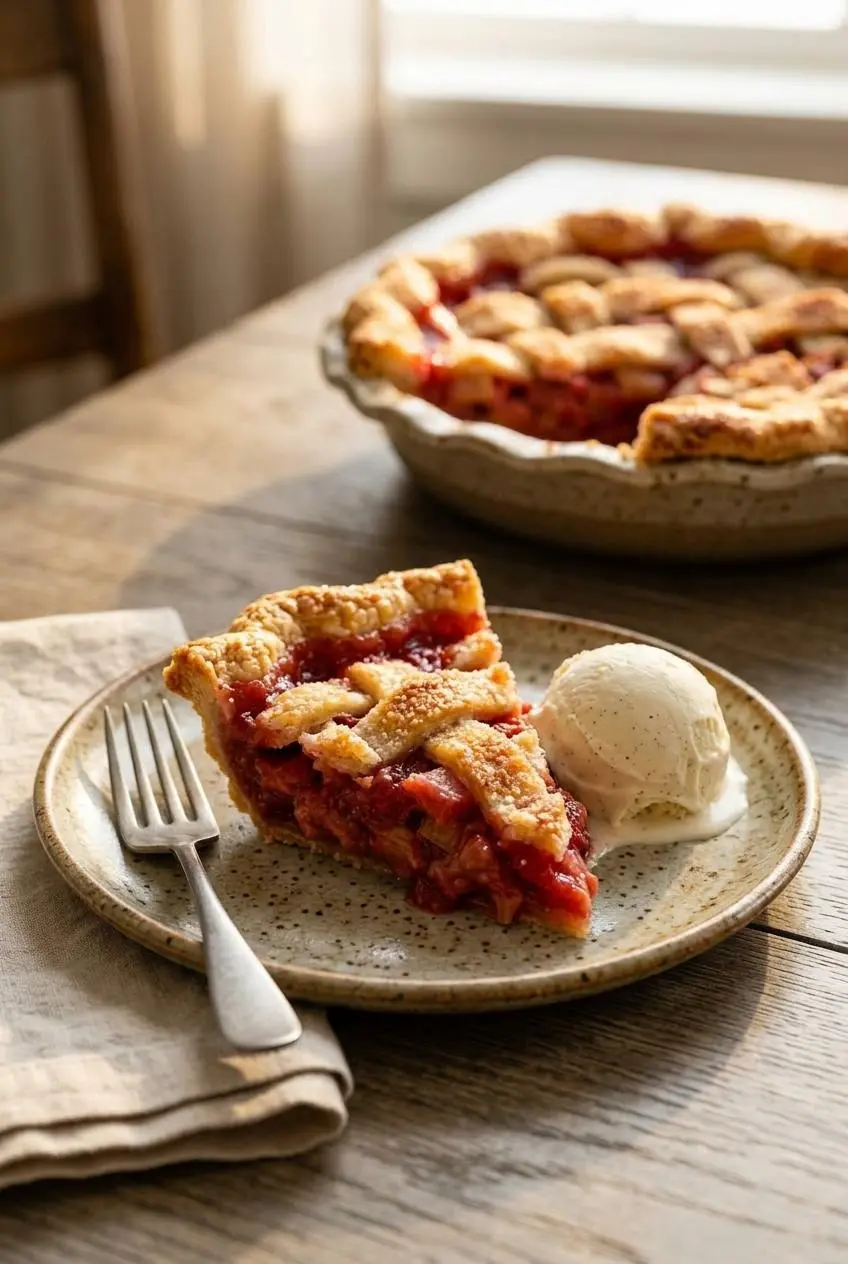
For spring dinners, summer picnics, or a holiday dessert table, serve the pie at room temperature so the filling stays neat and the flavors come through clearly. A scoop of slow-churned bourbon vanilla ice cream is especially good against the tart rhubarb.
For a lighter, bright-fruit pairing, add a scoop of refreshing strawberry sorbet. A dollop of lightly sweetened mascarpone cream also brings a mellow tang that suits the filling without covering it up.
Conclusion
A well-chilled crust, bubbling fruit filling, and a full cooling period are the three habits that turn this pie into a clean-slicing classic. Let the fruit juices reduce when needed, and do not rush the rest after baking.
For a floral accent, add fresh orange zest or a pinch of cardamom as an optional finishing touch. Give the pie time to settle, then enjoy every sweet-tart, flaky slice.
Frequently Asked Questions
How Do You Keep Strawberry Rhubarb Pie From Being Runny?
Use the full 1/4 cup of cornstarch called for in the filling. Reduce excess macerated juices when the fruit leaves a noticeable pool in the bowl. Bake until the filling bubbles thickly through the lattice. Cool the pie for at least 5 to 6 hours before slicing.
Can I Use Frozen Rhubarb or Strawberries?
Yes. Thaw both fruits completely, then drain them thoroughly before mixing with the sugar and thickener. Frozen strawberries release substantial moisture, so use the juice-reduction step if the bowl collects a lot of liquid.
Can I Substitute Tapioca for Cornstarch?
Yes. Replace the 1/4 cup of cornstarch with 3 tablespoons of instant or minute tapioca. The filling will set with a clear, glossy look and a slightly firmer texture.
How Do I Know When the Pie Is Completely Done Baking?
Look for a deep golden crust and thick, slow bubbles breaking through the lattice. For the clearest check, insert an instant-read thermometer into the center of the filling. It should register between 200°F and 212°F.
Why Does the Pie Need to Cool for So Many Hours Before Slicing?
The filling remains loose while it is hot. As it cools toward room temperature, the cornstarch structure firms around the fruit and holds the juices in place. Cutting too soon releases that liquid before it has time to set.
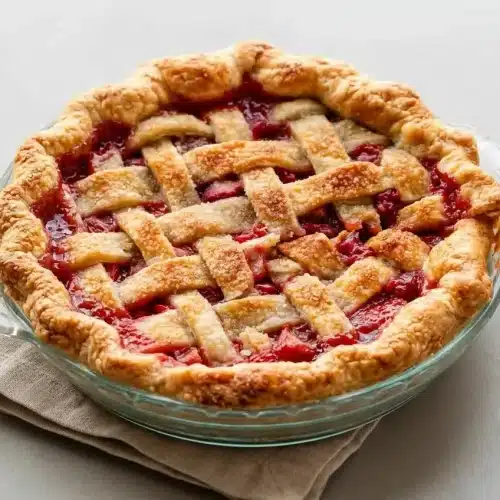
Strawberry Rhubarb Pie

Equipment
- Glass Mixing Bowl
- Rolling Pin
- 9-inch Pie Dish
- Small saucepan
- Pastry Wheel or Pizza Cutter
- Pastry brush
- Baking Sheet
- pie crust shield
- Instant-read thermometer
- Cooling Rack
Ingredients
- All Butter Pie Crust or Homemade Pie Crust both recipes make 2 crusts, 1 for bottom and 1 for top
- 3 cups sliced rhubarb about 300g, 1/2-inch pieces
- 2 1/2 cups chopped fresh strawberries about 380g
- 1/3 cup packed light brown sugar 67g
- 1/3 cup granulated sugar 67g
- 1/4 cup cornstarch 32g
- 1/4 teaspoon salt
- 1 Tablespoon orange juice 15g/ml
- 1/2 teaspoon pure vanilla extract
- 1 Tablespoon cold unsalted butter 14g, cut into small cubes
- egg wash: 1 large egg beaten with 1 Tablespoon (15g/ml) milk
- coarse sparkling sugar, for topping optional
Instructions
- Prepare the pie dough through step 5 of your chosen crust method, then refrigerate the dough for at least 2 hours before rolling. The discs should feel cold and firm rather than soft or greasy when they come out of the refrigerator.
- Combine the rhubarb, strawberries, brown sugar, granulated sugar, cornstarch, salt, orange juice, and vanilla in a large bowl. Stir until the fruit is evenly coated and the cornstarch disappears into the juices.
- Roll one chilled dough disc on a floured surface into a 12-inch circle, rotating it a quarter turn every few passes, then ease it into a 9-inch pie dish. Press the dough gently into the base and sides without stretching it, keeping the second disc cold.
- Lift the fruit into the lined dish with a slotted spoon and reserve any liquid left in the bowl, then refrigerate the pie shell. Leaving excess liquid behind at this point protects the bottom crust from becoming waterlogged.
- If a substantial pool of juice remains, simmer it in a small saucepan over medium-low heat for 3 to 4 minutes, stirring constantly, then cool it for 5 minutes and gently fold it over the fruit. The syrup should look slightly reduced and glossy rather than thin and watery.
- Scatter the cold butter cubes over the fruit, then return the pie to the refrigerator while preparing the top crust. Keeping the filling cold helps the butter and pastry stay distinct until baking begins.
- Roll the second chilled disc into a 12-inch circle and cut it into strips about 1 inch wide with a pastry wheel, sharp knife, or pizza cutter. The strips should stay cool enough to lift without stretching or tearing.
- Weave the strips over and under one another across the filling, seal them to the bottom crust, trim the excess, and flute or crimp the edge. Leave open spaces in the lattice so fruit steam can escape as the filling bubbles.
- Brush the top and edge with egg wash, add coarse sparkling sugar if using, and refrigerate the finished pie for 20 to 30 minutes while the oven heats. The crust should feel firm again before it goes into the oven.
- Set the pie on the center rack with a parchment-lined baking sheet on the rack beneath it, bake at 400°F for 20 minutes, then lower the oven to 350°F, add a pie crust shield, and bake for 50 minutes more. The pie is done when the crust is deep golden, slow thick bubbles appear through the lattice, and the center reads 200°F to 212°F on an instant-read thermometer.
- Transfer the baked pie to a cooling rack and leave it undisturbed for at least 5 to 6 hours before slicing. A fully cooled pie gives a clean knife pull instead of spilling hot fruit juices onto the plate.
- Cover leftovers tightly and keep them at room temperature for up to 2 days or in the refrigerator for up to 5 days. Cool the pie completely before covering so trapped steam does not soften the crust.