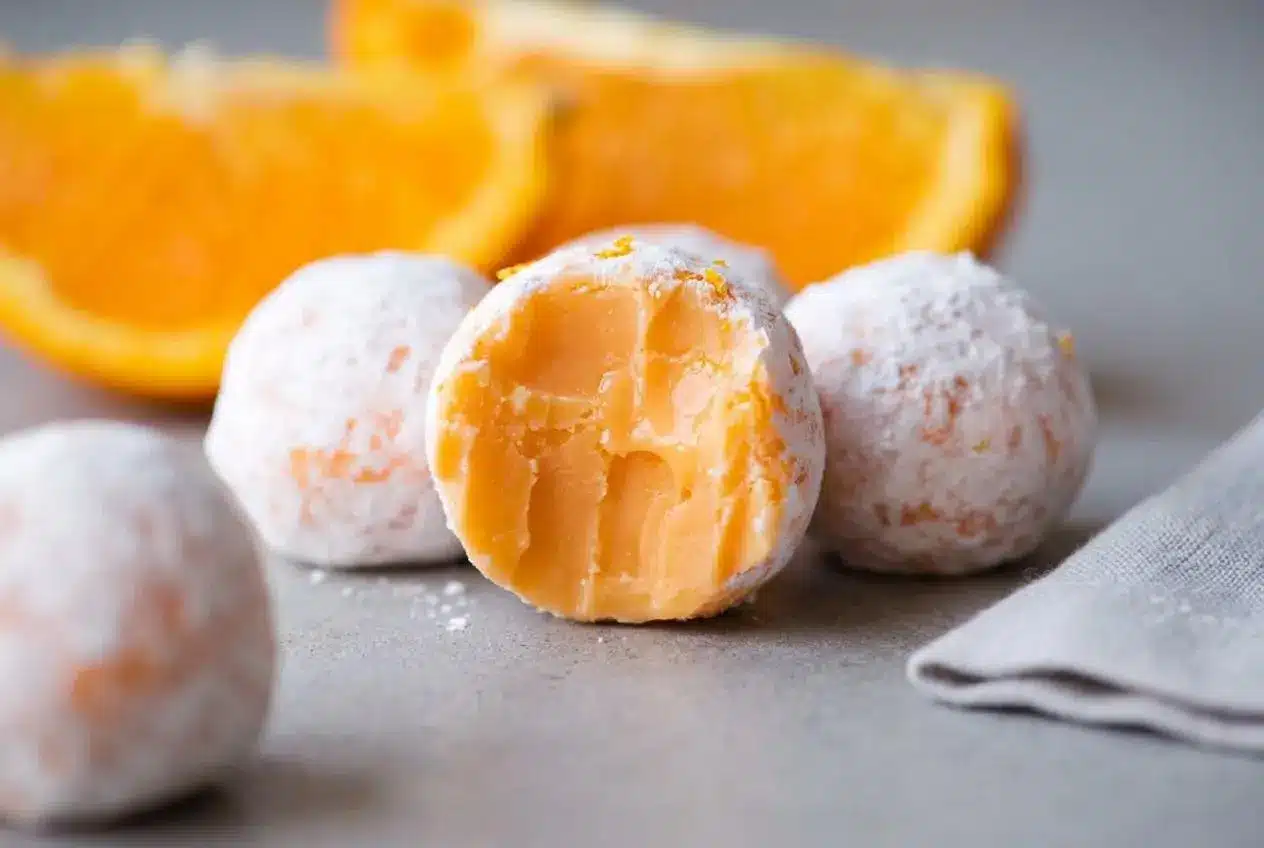
Orange creamsicle truffles are no-bake candies made by melting white chocolate with warm cream, butter, and orange zest, then chilling the ganache and coating it in powdered sugar.
These orange creamsicle truffles bring the bright citrus and vanilla-like sweetness of a classic frozen treat into a soft, velvety candy. Fresh zest keeps the flavor fragrant rather than artificial.
Gentle heat protects the white chocolate, while patient chilling makes rolling far less messy. That glossy orange ganache is worth the wait.
Set out the strainer, spatula, and containers before heating the butter so the warm citrus mixture can go straight onto the chocolate.
Essential Ingredients for Orange Creamsicle Truffles
Each ingredient supports the finished texture and flavor: white chocolate creates the creamy center, dairy adds richness, orange lends aroma, and powdered sugar gives the truffles their soft snowy coating.
- 1 cup chopped white chocolate
- 1/4 cup unsalted butter
- 2 tablespoons orange zest
- 3 tablespoons heavy whipping cream
- 1/2 teaspoon orange extract
- oil-based orange food coloring (optional)
- 1/2 cup powdered sugar (divided)
Selecting Quality White Chocolate
Choose a white chocolate baking bar made with cocoa butter whenever possible. Cocoa butter melts smoothly at body temperature and gives the ganache its soft, clean melt. Chop the bar finely so the residual heat from the cream mixture can reach every piece.
Many white baking chips contain vegetable fats, such as palm kernel oil, which can melt less evenly. They may still work, but the finished ganache can turn firmer, waxier, or greasy if the mixture gets too hot. A baking bar, including options from Ghirardelli or Baker’s, is usually the more dependable choice.
Extracting Flavor From Fresh Orange Zest
Use a fine Microplane to remove only the bright orange surface of the peel. Stop before reaching the white pith, which tastes bitter. Warm butter pulls the zest’s aromatic oils into the fat, giving the filling a fuller citrus flavor than extract alone.
Heavy whipping cream rounds out that citrus intensity and helps form a smooth white chocolate ganache. Orange extract reinforces the aroma after heating, while optional oil-based orange coloring adds a cheerful creamsicle shade without introducing water. Water-based coloring can make white chocolate seize.
I keep the zest fluffy as I grate it and avoid pressing the fruit hard against the grater, which helps leave the bitter pith behind.
How to Make Orange Creamsicle Truffles
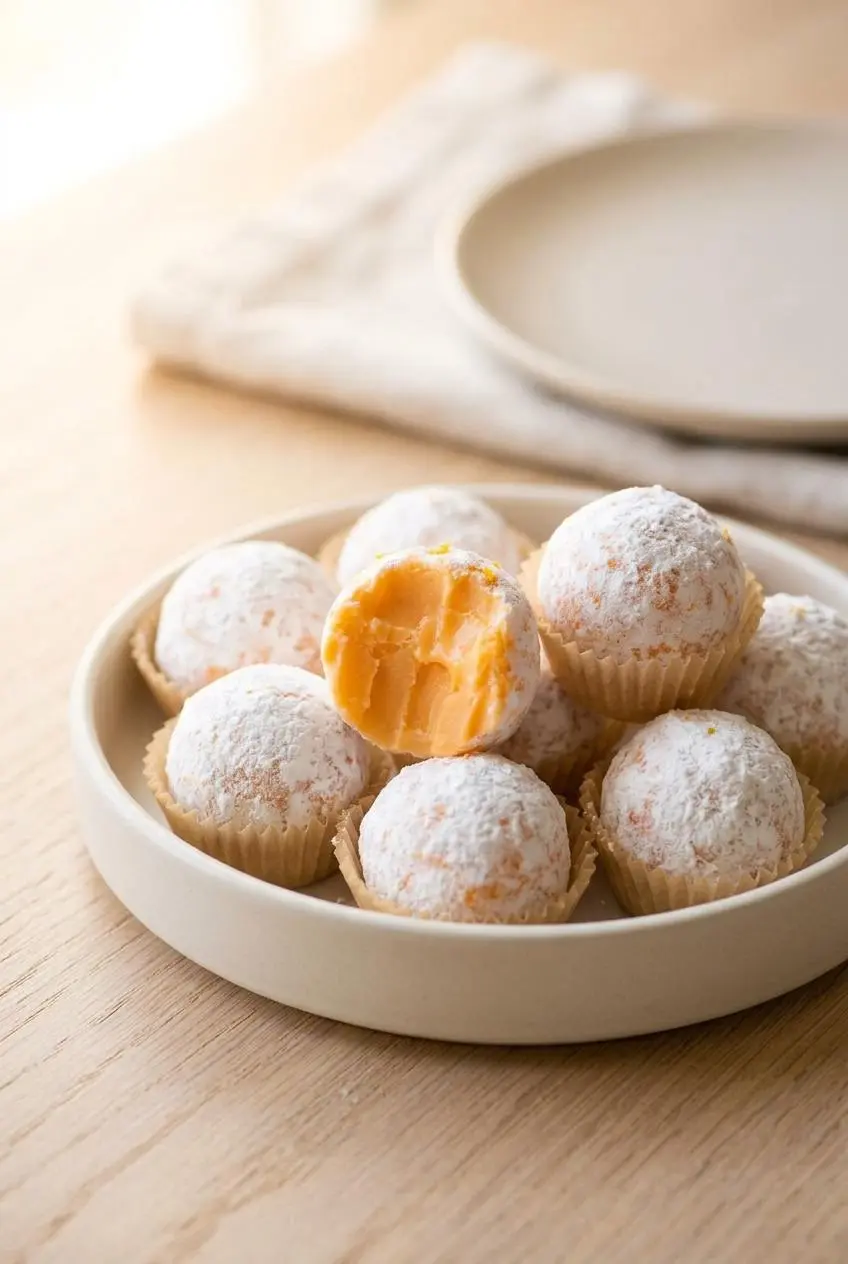
Work steadily through the warm ganache stage. The goal is a glossy, thick mixture that melts from gentle residual heat rather than aggressive boiling.
- Place the chopped white chocolate in a small, wide sealable container and position a mesh strainer and spatula nearby.
Keeping everything ready prevents the hot citrus cream from cooling before it reaches the chocolate. - Heat the unsalted butter and orange zest in a small saucepan over medium heat, whisking as the mixture comes to a boil.
Once bubbling, cook for 1 minute and keep whisking so the zest infuses without scorching. - Pour in the heavy whipping cream while whisking, then continue cooking for 1 to 2 minutes.
Look for gentle bubbles gathering around the edges rather than a rapid boil, then remove the pan from the heat. - Strain the hot butter and cream mixture over the chopped white chocolate, pressing the zest against the mesh with a spatula.
The strained liquid should smell deeply orange while the ganache stays free of gritty zest pieces. - Leave the mixture untouched for 1 minute, then add the orange extract and optional oil-based food coloring before whisking.
Stop when the ganache looks glossy and thick; a few tiny pieces of chocolate may remain and will melt as you stir. - Seal the container and place it in the freezer for 1 hour, or until the ganache is firm enough to handle.
The mixture should hold its shape when scraped with a spoon instead of flowing back into the container. - Put 1/4 cup powdered sugar into a clean sealable container and the remaining 1/4 cup powdered sugar into a small bowl.
Keep damp cloths or paper towels nearby because the filling softens quickly against warm hands. - Scoop about 1 tablespoon of chilled ganache, roll it into a ball, and toss it in the powdered sugar in the bowl.
Transfer the coated truffle to the larger container and repeat until all the ganache has been shaped. - Seal the larger container and shake it gently to cover the truffles with the remaining powdered sugar.
The extra sugar should settle around each ball, ready to refresh the coating if moisture dulls it later. - Return the sealed container to the freezer for 1 hour, or until the truffles feel firm.
The centers should be set enough to lift cleanly without leaving a soft impression. - Serve the truffles as desired.
The best texture is cool and creamy, with a delicate powdered sugar finish.
Troubleshooting Common Truffle Mistakes
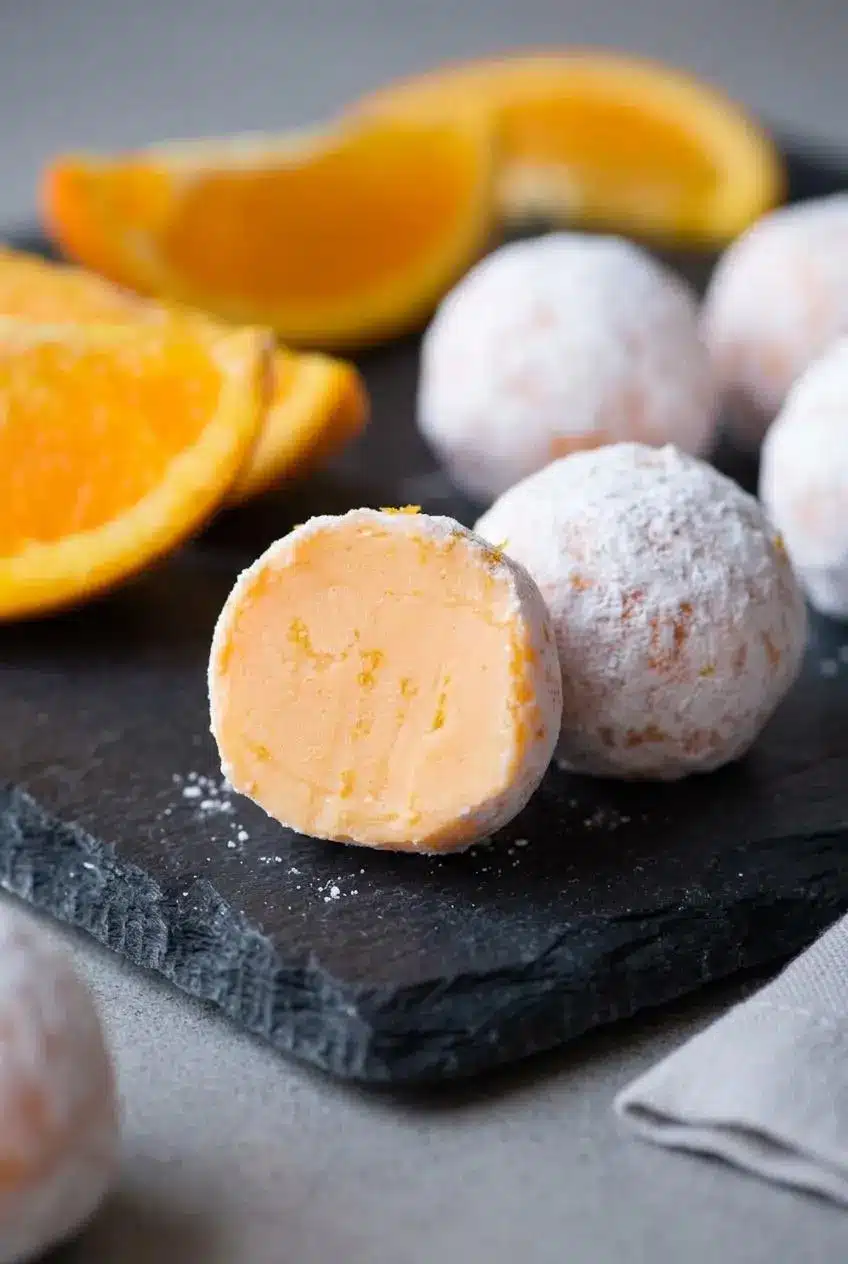
White chocolate ganache is sensitive to excess heat and moisture, but most texture problems have a practical fix.
- Greasy or separated ganache: The mixture likely became too hot or lost its emulsion. Whisk vigorously with a teaspoon of warm heavy whipping cream until it comes back together and looks glossy.
- Grainy or seized chocolate: Water-based food coloring or a wet utensil may be the culprit. Use only oil-based coloring and make sure the bowl, whisk, and strainer are completely dry before starting.
- Ganache too soft to roll: Return it to the freezer in 15-minute intervals until it holds a scoopable shape. Cool your hands under cold water, dry them well, and lightly dust them with powdered sugar before rolling.
- Powdered sugar disappearing: Powdered sugar absorbs moisture from the dairy filling and the air, so it can become translucent. Keep extra sugar in the container and gently shake the truffles to renew the coating shortly before serving.
- Bitter orange flavor: Too much pith can overwhelm the candy. Zest only the brightly colored peel and strain the warmed zest out before the ganache chills.
- Tempted to add orange juice: Skip it. Fresh juice adds water and acidity, which can curdle the dairy and seize the white chocolate. Zest and extract provide the orange flavor without upsetting the ganache.
White chocolate behaves differently from the darker ganache used for classic chocolate truffles, so low heat and dry equipment matter more here.
Flavor Variations and Coating Alternatives
Keep the main method as written, then use these optional ideas when you want a different finish or a slightly more bakery-style flavor.
For a deeper orange-and-vanilla profile, stir a little vanilla bean paste into the warm strained mixture along with the orange extract. It gives the filling the familiar aroma associated with creamsicle desserts. If that flavor combination is a favorite, an orange creamsicle cake makes a fitting choice for a larger celebration dessert.
Crisp White Chocolate Dipped Shell
For a firmer outer layer, shape the truffles as directed and chill the centers until very firm before dipping them into melted white confectionery coating or tempered white chocolate. Lift each truffle with a fork, tap away the excess coating, and let it set on a lined surface.
Finish the shell with finely chopped candied orange peel before the coating sets. The bright, chewy citrus pieces make a nice contrast to the smooth filling.
Tangy Cream Cheese Twist
For a cheesecake-style center, blend softened brick cream cheese into cooled orange ganache before chilling it for shaping. The cream cheese adds tang and a denser, richer texture, so chill the mixture until it is firm enough to roll cleanly.
Keeping Truffles Fresh
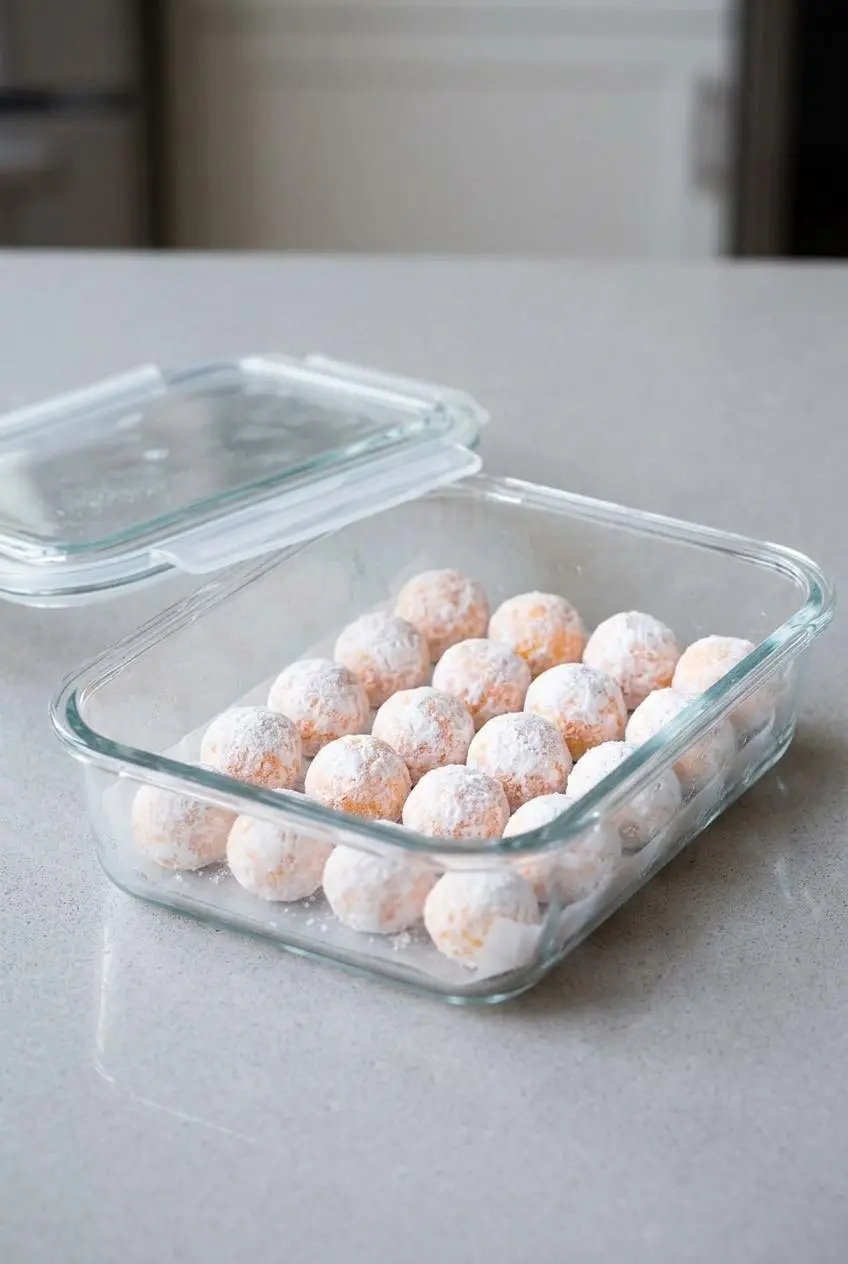
Store the finished truffles in a tightly sealed container and keep them chilled, especially because the filling contains heavy cream. Layer them with wax paper if stacking is needed so the coating stays as neat as possible.
Powdered sugar naturally draws in moisture over time, particularly in a humid kitchen or after chilling. For the prettiest finish, keep some of the reserved sugar around the truffles and give the container a gentle shake before serving. For gifts, pack the candies in a snug container with wax paper between layers and keep them cool until delivery.
Conclusion
These little treats balance bright orange zest with sweet white chocolate cream for a smooth, nostalgic bite. Gentle heat and patient chilling are the two details that make the ganache behave.
Stick with the powdered sugar coating for a soft finish, or choose the optional white chocolate shell for a crisp bite. A touch of vanilla bean paste makes the creamsicle flavor feel even more familiar.
Frequently Asked Questions
What Chocolate Brand Works Best for Creamsicle Truffles?
White chocolate baking bars made with cocoa butter are the strongest choice for a smooth ganache. Ghirardelli and Baker’s are dependable options. Avoid lower-quality chips with vegetable fats when possible, since they can make the filling stiff or oily.
Why Does Powdered Sugar Melt on Refrigerated Truffles?
Powdered sugar pulls in moisture from the ganache and surrounding air, so the coating can dissolve and look wet. Keep extra powdered sugar in the storage container and toss the truffles again shortly before serving for a fresh white finish.
Can I Dip These Truffles in Melted Chocolate Instead?
Yes. Chill the rolled centers until very firm, then dip them in melted white chocolate or white confectionery coating. Use a fork to lift each truffle, tap off the excess, and let the shell set before serving.
How Long Can Orange Creamsicle Truffles Stay Fresh?
Keep them in a tightly sealed container in the refrigerator to protect the cream-based filling and preserve the texture. Refresh the powdered sugar coating before serving if it has absorbed moisture, and discard any truffles with an off smell, taste, or texture.
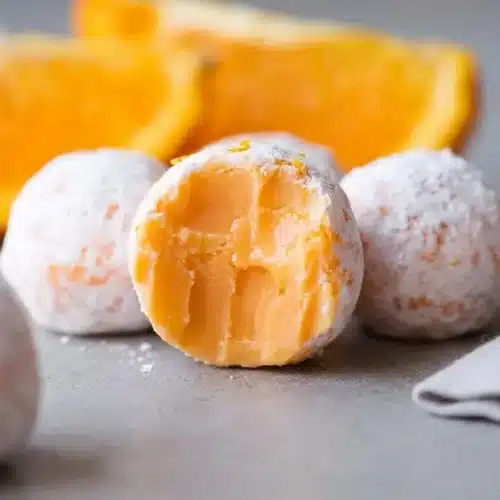
Orange Creamsicle Truffles

Equipment
- Small saucepan
- mesh strainer
- Spatula
- sealable container
- Whisk
- Cookie Scoop
Ingredients
- 1 cup chopped white chocolate
- 1/4 cup unsalted butter
- 2 tablespoons orange zest
- 3 tablespoons heavy whipping cream
- 1/2 teaspoon orange extract
- oil-based orange food coloring (optional)
- 1/2 cup powdered sugar (divided)
Instructions
- Place the chopped white chocolate in a small, wide sealable container and position a mesh strainer and spatula nearby. Keeping everything ready prevents the hot citrus cream from cooling before it reaches the chocolate.
- Heat the unsalted butter and orange zest in a small saucepan over medium heat, whisking as the mixture comes to a boil. Once bubbling, cook for 1 minute and keep whisking so the zest infuses without scorching.
- Pour in the heavy whipping cream while whisking, then continue cooking for 1 to 2 minutes. Look for gentle bubbles gathering around the edges rather than a rapid boil, then remove the pan from the heat.
- Strain the hot butter and cream mixture over the chopped white chocolate, pressing the zest against the mesh with a spatula. The strained liquid should smell deeply orange while the ganache stays free of gritty zest pieces.
- Leave the mixture untouched for 1 minute, then add the orange extract and optional oil-based food coloring before whisking. Stop when the ganache looks glossy and thick; a few tiny pieces of chocolate may remain and will melt as you stir.
- Seal the container and place it in the freezer for 1 hour, or until the ganache is firm enough to handle. The mixture should hold its shape when scraped with a spoon instead of flowing back into the container.
- Put 1/4 cup powdered sugar into a clean sealable container and the remaining 1/4 cup powdered sugar into a small bowl. Keep damp cloths or paper towels nearby because the filling softens quickly against warm hands.
- Scoop about 1 tablespoon of chilled ganache, roll it into a ball, and toss it in the powdered sugar in the bowl. Transfer the coated truffle to the larger container and repeat until all the ganache has been shaped.
- Seal the larger container and shake it gently to cover the truffles with the remaining powdered sugar. The extra sugar should settle around each ball, ready to refresh the coating if moisture dulls it later.
- Return the sealed container to the freezer for 1 hour, or until the truffles feel firm. The centers should be set enough to lift cleanly without leaving a soft impression.
- Serve the truffles as desired. The best texture is cool and creamy, with a delicate powdered sugar finish.