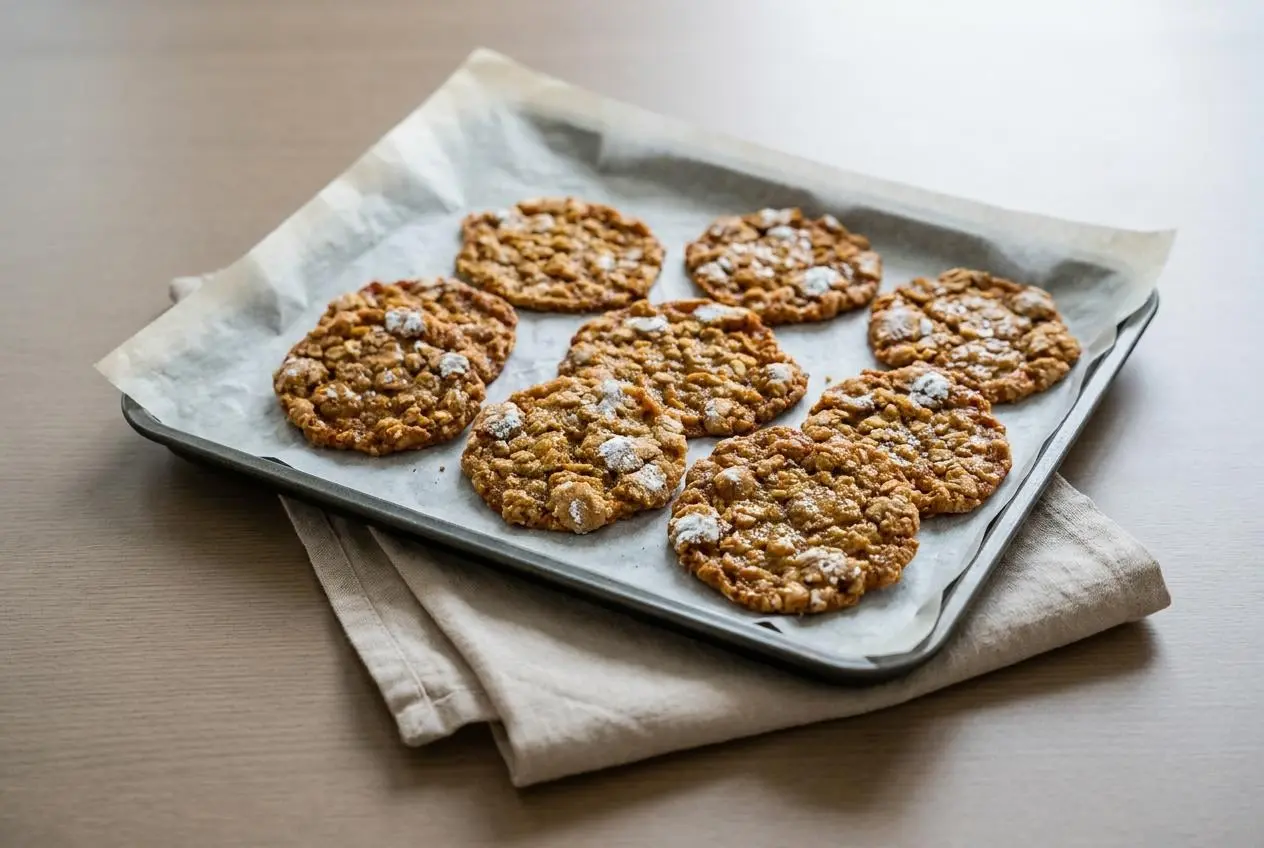
Oatmeal Crackle Cookies get their soft centers and crisp edges from brown sugar, butter, quick oats, and a powdered sugar coating that breaks into bright cracks as it bakes. Expect a warm brown sugar aroma and buttery oat crunch.
These cookies spread generously, so careful portioning and plenty of space on the baking sheet matter. The key to a clean white finish is keeping the dough cool enough to hold its sugar coating. The crackle starts here.
Use parchment paper and leave about 2 1/2 inches between dough mounds so the cookies can spread without merging.
Key Ingredients and Ingredient Roles
Each ingredient has a job: butter brings richness, brown sugar adds moisture, oats provide structure and crunch, and the leaveners help balance spread with lift.
- 1 cup butter, room temperature
- 2 cups light brown sugar
- 2 large eggs
- 1 teaspoon vanilla
- 1 1/2 cups flour
- 1 teaspoon baking soda
- 1 teaspoon baking powder
- 1 ½ teaspoons salt
- 3 cups quick oats
- ~ 3/4 cup powdered sugar, for rolling
Light brown sugar gives the dough its moist, chewy middle and a deeper caramel flavor than granulated sugar alone. It also encourages the cookies to spread and develop browned edges.
Room temperature butter blends smoothly with the sugar, helping the dough develop an even structure. Cold butter can leave dense pockets, while overly warm butter may make the cookies spread too quickly.
Quick oats make a cohesive dough with fine, compact cracks. Old-fashioned rolled oats can also work, but they create a more textured cookie with broader spread and crunchier, lacy edges. Choose quick oats for the most uniform crackle pattern.
Flour gives the cookies enough structure to hold their shape, while baking soda and baking powder work together to support spread and lift. The salt keeps the brown sugar flavor from tasting flat, and vanilla rounds out the buttery aroma.
I prefer measuring the flour by spooning it into the cup and leveling it, because extra flour can make these cookies dense instead of crisp around the edges.
How to Make Oatmeal Crackle Cookies Step-by-Step
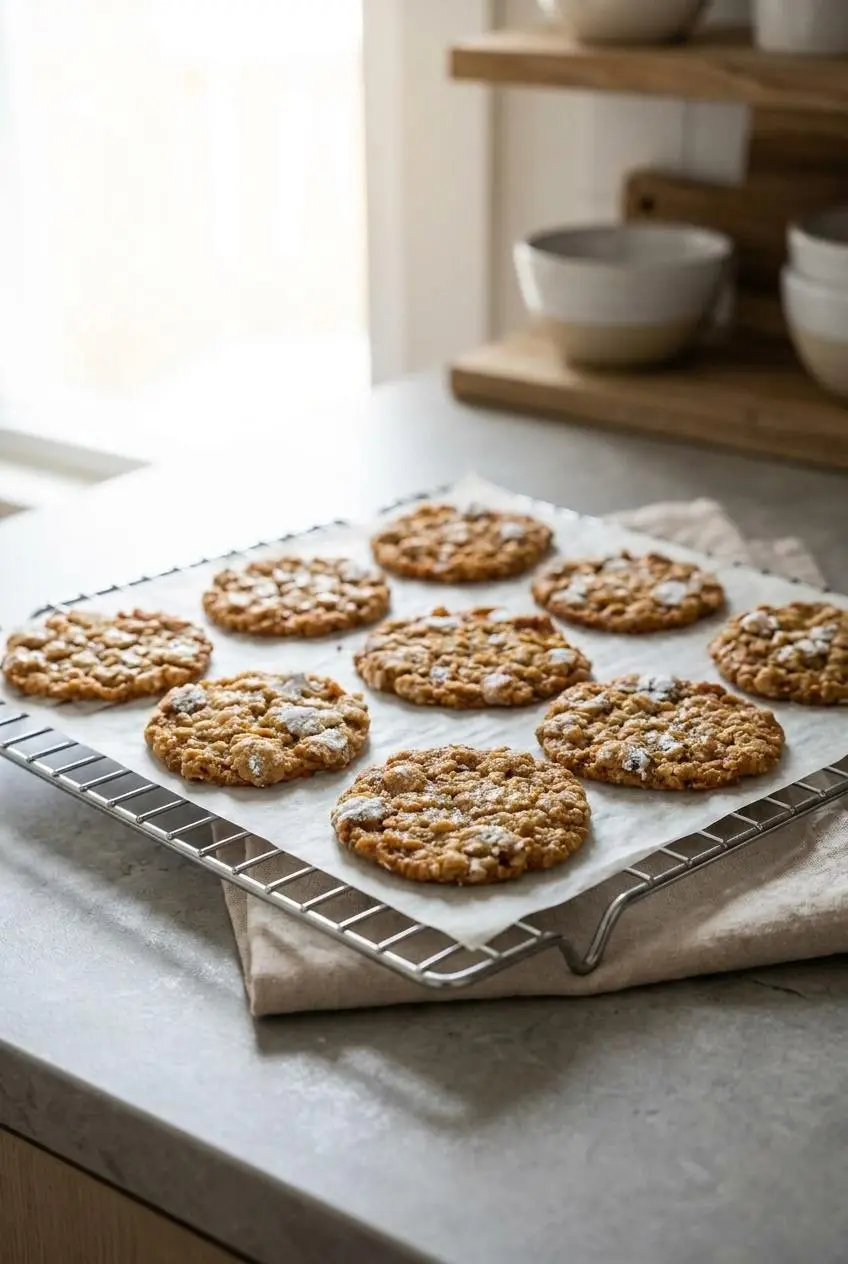
The dough comes together quickly, but the creaming stage deserves attention. A smooth butter and brown sugar mixture gives the cookies a more even texture and helps them spread consistently.
- Heat the oven to 350 degrees Fahrenheit and cover two baking sheets with parchment paper.
The lined pans should be ready before the dough is mixed so the cookies can go straight into the oven. - Beat the room temperature butter with the brown sugar in a large bowl until the mixture looks smooth, then blend in the eggs one at a time and add the vanilla.
The finished mixture should be creamy and uniform, with no visible streaks of butter. - Add the flour, baking soda, baking powder, and salt to the bowl, mixing only until the dry ingredients disappear; fold in the oats until they are distributed throughout the dough.
Stop as soon as the dough comes together so the cookies stay tender rather than heavy. - Pour the powdered sugar into a small bowl for coating the dough.
Use a bowl wide enough to turn each portion without pressing or warming the dough. - Scoop portions of about 1 ½ tablespoons, roll each mound in the powdered sugar, and arrange eight portions on each prepared baking sheet.
The dough should have generous space around it because the butter-rich cookies spread as they bake. - Bake the trays at 350 degrees Fahrenheit for 12 to 14 minutes.
Look for a golden brown perimeter and set edges while the centers remain slightly soft beneath their cracked tops. - Leave the cookies on the baking sheets until fully cool, then transfer them to an airtight container.
Once cool, the edges should offer light crisp resistance while the centers stay softer.
A tablespoon cookie scoop keeps the portions close in size, which helps the batch finish baking evenly. If one tray has noticeably larger mounds, those cookies may still look pale in the center when the smaller ones are ready.
Tips for the Perfect Sugar Crackle Finish
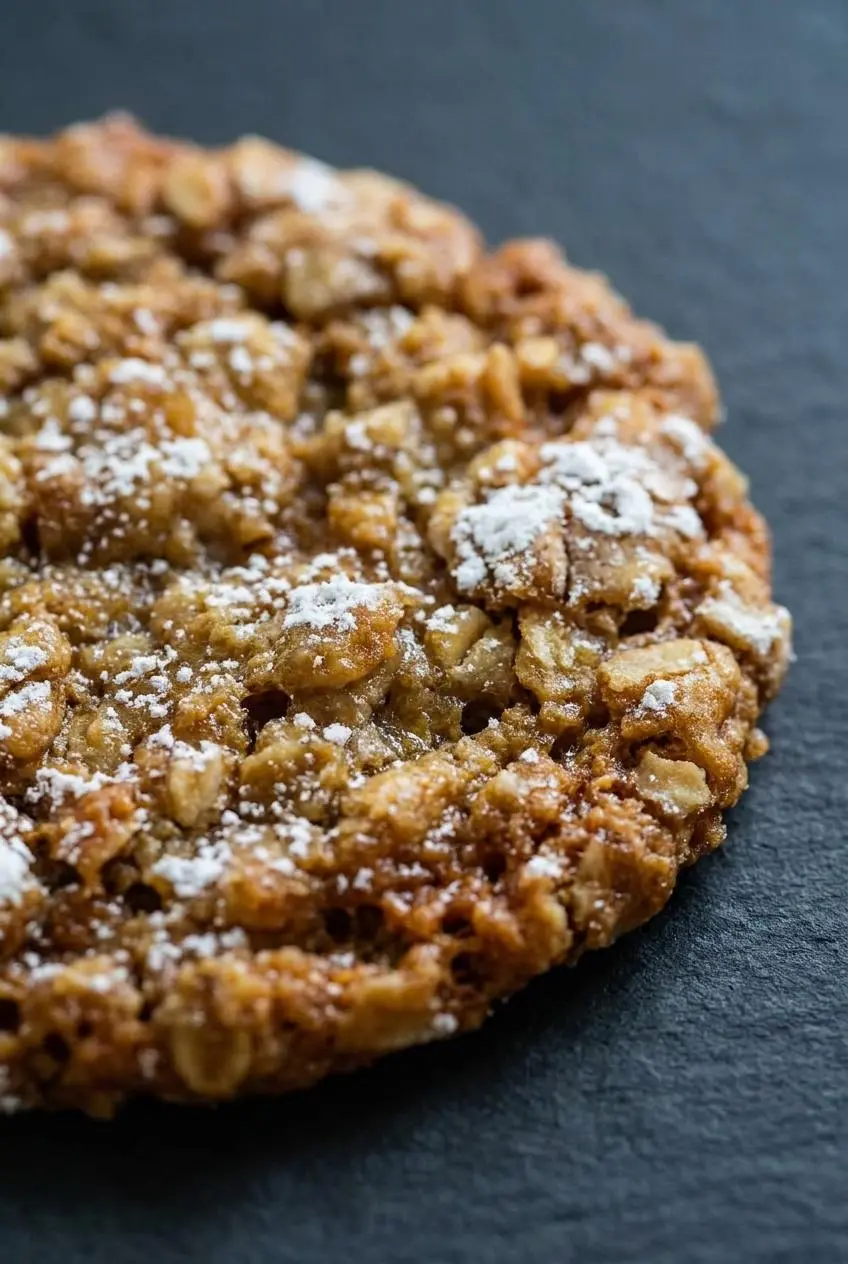
The powdered sugar must remain on the surface long enough for the dough to expand beneath it. These small handling choices make the cracks brighter and more distinct.
- Use a sugar barrier. For a more pronounced powdered sugar crinkle coating, roll each dough ball in granulated sugar first, then coat it generously in powdered sugar. The first layer helps separate the dough’s moisture from the white coating as the cookie spreads.
- Roll cool dough balls. Do not coat portions while they are warm from mixing or from sitting near a hot oven. Warm dough can make the powdered sugar look damp before baking begins.
- Coat immediately before baking. If sugared dough sits too long, the coating has more time to absorb moisture and lose its bright finish.
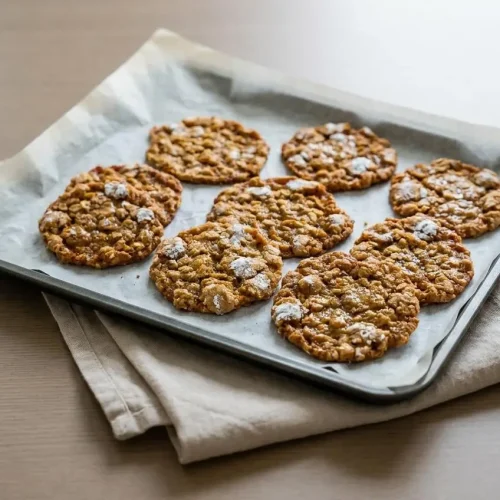
- Leave room for expansion. Eight cookies per baking sheet gives the dough space to spread into separate rounds. Crowded cookies can merge into thin, flat patches with fewer defined cracks.
- Check the edges, not just the center. The perimeter should look golden and set, while the center cracks remain a little soft. Cookies that look completely firm in the oven may cool harder than intended.
- Add gentle spice if desired. A subtle pinch of cinnamon and nutmeg in the dough can deepen the brown sugar flavor without changing the cookie’s main oat character.
The powdered sugar will naturally break apart as the cookie expands. The goal is not a perfectly smooth white surface, but strong contrast between the pale coating, golden edges, and darker cracks.
Make-Ahead Dough Guidance
For the most predictable texture, portion and bake the dough after mixing rather than holding raw oat dough for an extended period. Oats continue to take on moisture as the dough sits, which can make the portions feel sticky and cause spreading to become less consistent.
If baking must pause, keep the dough portions covered and avoid letting them sit uncovered near heat. Do not thaw or warm dough portions before baking if they have been kept cold, since warmer dough tends to spread more quickly.
This recipe does not provide a supported freezing method for raw dough. For the clearest crackle and the firmest edges, prepare the dough, coat the portions, and bake them while the mixture still has its intended structure.
Troubleshooting Common Baking Issues
Most problems with these cookies come from dough temperature, portion size, or moisture in the sugar coating. Match the symptom to the likely cause before changing the recipe.
- Cookies spread too much or merge together: The butter may have been overly warm, the portions may have been too large, or the pan may have been overcrowded. Keep the dough at a workable temperature, use consistent 1 ½ tablespoon portions, and bake eight cookies per sheet.
- The powdered sugar disappears: Dough moisture can dissolve the coating, especially when the balls are warm or the sugar is applied too early. Roll each portion in granulated sugar first, follow with a heavy powdered sugar coating, and place the cookies in the oven promptly.
- The cookies turn out dense: Too much flour or overmixing after the oats are added can weigh down the dough. Spoon the flour into the measuring cup, level it, and stop mixing as soon as the oats are evenly distributed.
- The centers are dry: The cookies may have stayed in the oven beyond the point where the edges set. Start checking near the shorter end of the baking window and remove them when the middle still looks slightly soft.
- The crackles look faint: Thin sugar coverage, damp dough balls, or excessive space between cracks can reduce contrast. Use a generous powdered sugar coating and check that the dough is not warm when rolled.
- The bottoms brown too quickly: A dark baking sheet can intensify browning. Parchment helps with release, but begin checking the cookies early if the pan visibly darkens the bottoms before the tops are set.
Storage and Freshness Tips
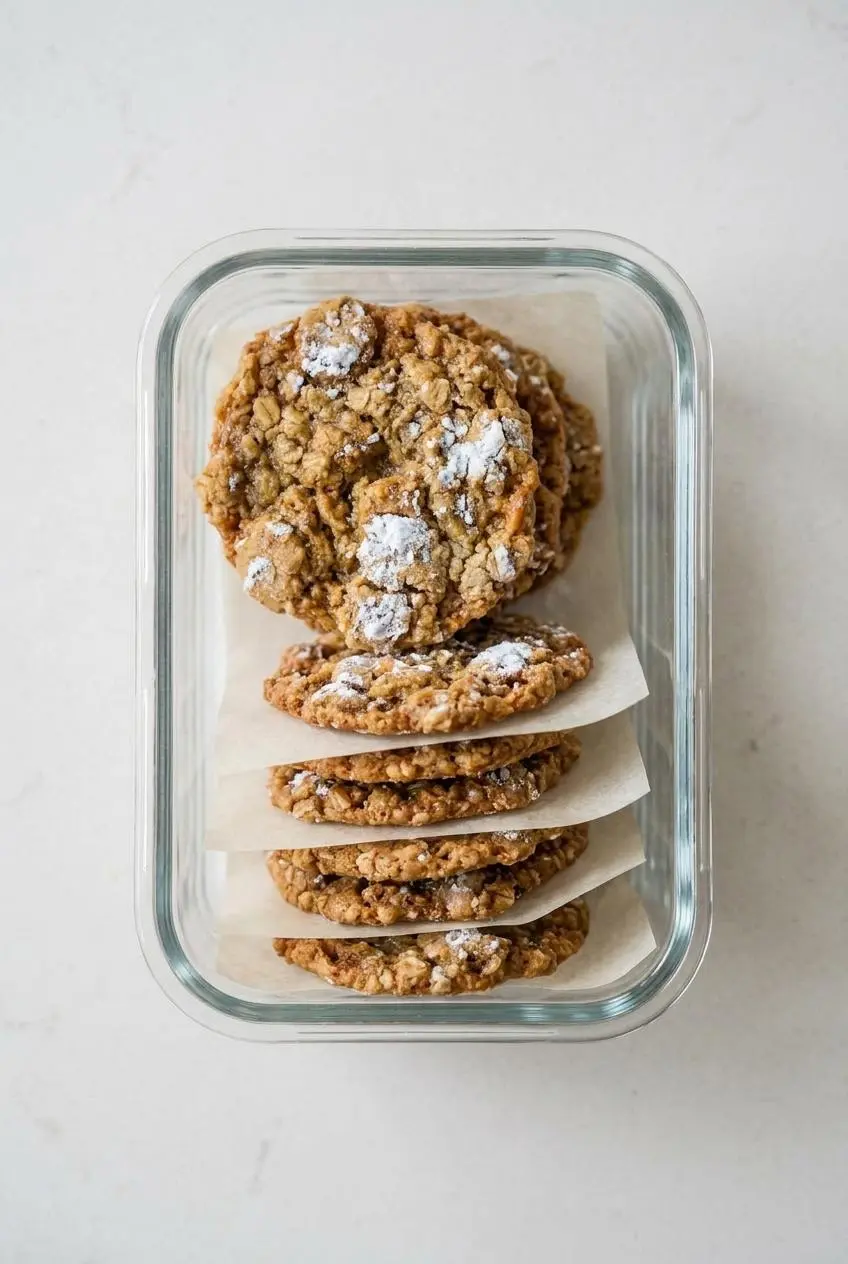
Cool the cookies completely before storing them. Trapping warmth in a container can soften the crisp edges and make the powdered sugar coating look damp.
Place the cooled cookies in an airtight container at room temperature, separating layers with parchment paper. Keep the container away from humidity and do not add bread slices or other moisture sources, since they soften the outer crunch.
For the best texture, place the crispest cookies around the outside of the container and avoid packing them tightly. When serving, let the cookies sit uncovered briefly so the edges can regain some of their light crisp resistance.
Delicious Flavor Variations
Keep the official dough unchanged when you want the classic cookie, then try one of these optional additions for a different texture or flavor.
Crispy Chocolate Chip Crackle Cookies
Fold mini semi-sweet chocolate chips and crisp rice cereal into the oat dough before portioning. The chips add a bittersweet chocolate note, while the cereal brings extra light crunch against the chewy oat center.
For another hearty chocolate combination, try these banana oatmeal chocolate chip cookies when you want a softer fruit-forward cookie.
Lemon Zest Oat Crinkles
Add fresh lemon zest and a little citrus juice to the dough for a brighter, tangy variation. The lemon lifts the brown sugar flavor and gives the powdered sugar cracks a fresh contrast, while the oats keep the cookie pleasantly hearty.
Conclusion
These Oatmeal Crackle Cookies balance crisp golden edges, soft centers, and a striking powdered sugar finish. Quick oats create compact cracks, while brown sugar and butter give the cookies their rich aroma and chewy middle.
For the brightest coating, use the optional granulated sugar barrier before powdered sugar, keep the portions evenly sized, and bake them with room to spread. A little attention at the rolling stage makes every crackle clearer.
FAQ
Can I Freeze Oatmeal Crackle Cookie Dough for Later?
This recipe does not provide a supported freezing method for the raw dough. For the most reliable texture, portion and coat the dough after mixing, then bake it while the dough is still well structured.
Why Did My Powdered Sugar Melt Into the Cookies While Baking?
The dough was likely warm, or moisture reached the powdered sugar before baking. Roll the portions in granulated sugar first, coat them generously with powdered sugar, and bake them soon after coating.
Should I Use Rolled Oats or Quick Oats for Crackle Cookies?
Quick oats give the most cohesive dough and compact, traditional crackle lines. Old-fashioned rolled oats create more visible oat texture, broader spread, and crispier, lacy edges.
How Do I Store Oatmeal Crackle Cookies So They Remain Crispy?
Cool the cookies completely before placing them in an airtight container at room temperature. Separate layers with parchment, keep humidity out, and skip bread slices or other moisture sources that can soften the edges.
Oatmeal Crackle Cookies

Equipment
- Baking Sheets
- Parchment Paper
- Large Mixing Bowl
- Small bowl
- Cookie scoop or spoon
Ingredients
- 1 cup butter room temperature
- 2 cups light brown sugar
- 2 large eggs
- 1 teaspoon vanilla
- 1 1/2 cups flour
- 1 teaspoon baking soda
- 1 teaspoon baking powder
- 1 ½ teaspoons salt
- 3 cups quick oats
- ~ 3/4 cup powdered sugar for rolling
Instructions
- Heat the oven to 350 degrees Fahrenheit and cover two baking sheets with parchment paper. The lined pans should be ready before the dough is mixed so the cookies can go straight into the oven.
- Beat the room temperature butter with the brown sugar in a large bowl until the mixture looks smooth, then blend in the eggs one at a time and add the vanilla. The finished mixture should be creamy and uniform, with no visible streaks of butter.
- Add the flour, baking soda, baking powder, and salt to the bowl, mixing only until the dry ingredients disappear; fold in the oats until they are distributed throughout the dough. Stop as soon as the dough comes together so the cookies stay tender rather than heavy.
- Pour the powdered sugar into a small bowl for coating the dough. Use a bowl wide enough to turn each portion without pressing or warming the dough.
- Scoop portions of about 1 ½ tablespoons, roll each mound in the powdered sugar, and arrange eight portions on each prepared baking sheet. The dough should have generous space around it because the butter-rich cookies spread as they bake.
- Bake the trays at 350 degrees Fahrenheit for 12 to 14 minutes. Look for a golden brown perimeter and set edges while the centers remain slightly soft beneath their cracked tops.
- Leave the cookies on the baking sheets until fully cool, then transfer them to an airtight container. Once cool, the edges should offer light crisp resistance while the centers stay softer.