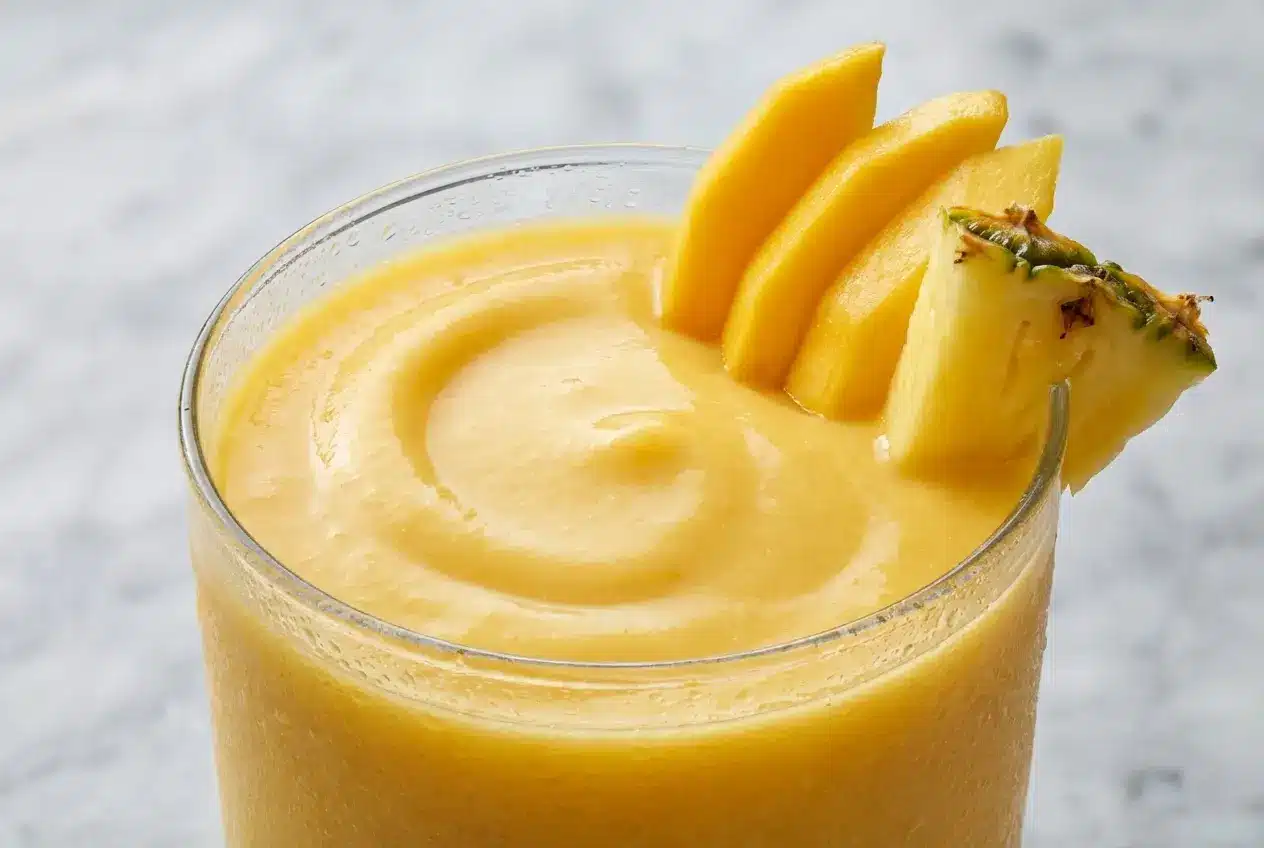
One sip of this smoothie and my kitchen feels a little closer to a breezy beach, with the scent of ripe mango and pineapple drifting up from the blender. A Mango Pineapple Smoothie is the kind of quick breakfast or sunny afternoon snack that tastes indulgent, but comes together in just minutes.
I come back to this version because it has a small chef’s trick that makes all the difference. Fresh ginger and a tiny pinch of sea salt wake up the tropical fruit, brighten the natural sugars, and turn a simple blend into something vibrant, creamy, and packed with Vitamin C.
Why You’ll Love This Recipe
Tropical flavor that pops: In my kitchen, the biggest difference comes from the half teaspoon of freshly grated ginger and that tiny pinch of sea salt. Together they make the mango taste fuller and the pineapple taste brighter, not flat or one-note.
Velvety, not watery: Because this smoothie leans on frozen fruit instead of a heavy hand with ice, the texture stays thick, creamy, and lush. You get that frosty smoothie-shop feel without watering down the tropical fruit.
A smart little boost: Mango, pineapple, and citrus bring plenty of Vitamin C, while flax seeds add dietary fiber and a gentle nutty richness. It is the kind of breakfast that feels fresh and easy, but still keeps you satisfied.
Ingredients and Substitutions
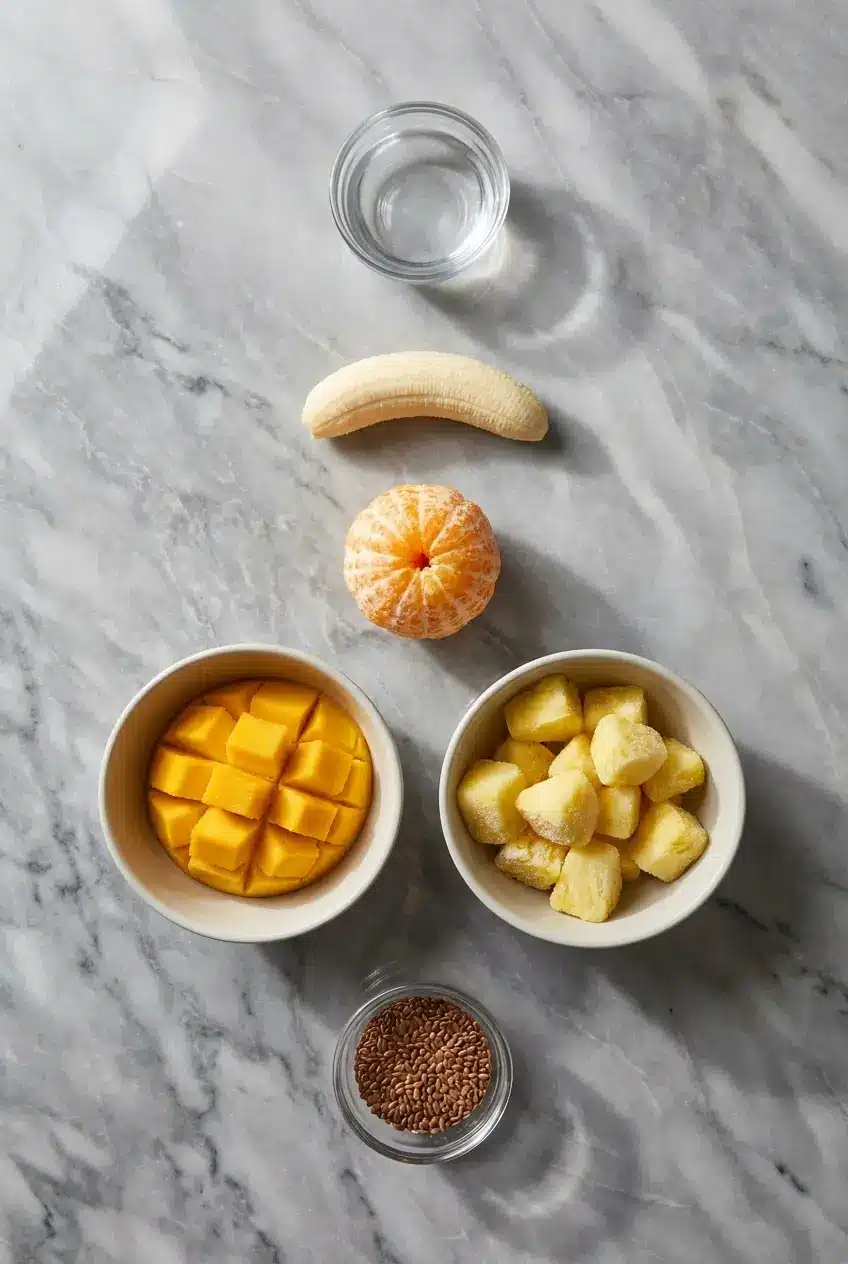
These simple ingredients build a bright, creamy smoothie with balanced sweetness, citrusy lift, and a tropical finish that tastes far more layered than the short list suggests.
Ingredients
- 1 cup water or almond milk, original/unsweetened
- 1 small banana or 1/2 of a large one
- 2 clementines or 1 orange, peeled
- 1 medium ripe mango, 2 cups, peeled
- 1 1/4 cups frozen pineapple chunks
- 1 Tbsp flax seeds
Ingredient Notes & Substitutions
Liquid base: Water keeps the fruit flavor clean and bright, while unsweetened almond milk adds a softer, creamier finish without making the smoothie heavy. If I want more electrolytes after a hot day, coconut water works beautifully, and if I want extra protein, a spoonful of Greek yogurt gives it a richer body.
Banana: A small banana gives the smoothie that naturally silky texture and mellow sweetness that helps tie the tart pineapple and citrus together. If you want a lower-sugar option, half an avocado makes a lovely substitute and gives the same creamy mouthfeel with a more neutral flavor.
Mango: Use a ripe mango that smells fragrant near the stem and gives slightly when pressed, much like a peach. That soft ripeness is what creates the smooth, almost custardy texture that makes a tropical smoothie feel luxurious.
Flax seeds: Flax seeds add Omega-3s, dietary fiber, and a subtle nutty note that rounds out the fruit. Chia seeds or hemp hearts can step in if needed, though flax blends especially well in a high-speed blender and keeps the finish smooth.
Fresh ginger: This is the quiet secret that keeps the smoothie from tasting overly sweet. A little goes a long way, and beyond flavor, ginger is often appreciated for efficient digestion and nausea relief, which makes it a lovely addition to a morning blend.
Sea salt: Just a pinch does not make the smoothie salty, it simply sharpens the fruit and helps the tropical notes taste more vivid. I treat it the same way pastry cooks use salt in desserts, as a flavor amplifier rather than a dominant ingredient.
How to Make Mango Pineapple Smoothie
Build the Blender in the Right Order
- Start by pouring the water or almond milk into the blender jar first. This gives the blades room to move and helps create a vortex, so the thicker fruit gets pulled down smoothly instead of sticking around the sides.
- Add the softer ingredients next, the banana, peeled clementines or orange, and the peeled ripe mango. Layering them over the liquid helps everything begin blending evenly and gives the base a naturally creamy texture.
Add the Flavor Boosters
Grate the fresh ginger straight into the blender, then add the flax seeds and a tiny pinch of sea salt. At this stage, you will already catch that lovely aroma, sweet citrus and mango in front, with a gentle spicy note from the ginger underneath.
Finish with Frozen Fruit
Add the frozen pineapple chunks last, right on top. That little stacking trick helps press the softer ingredients toward the blades and gives the smoothie its cold, thick, frothy texture without relying on too much ice.
Blend Until Silky
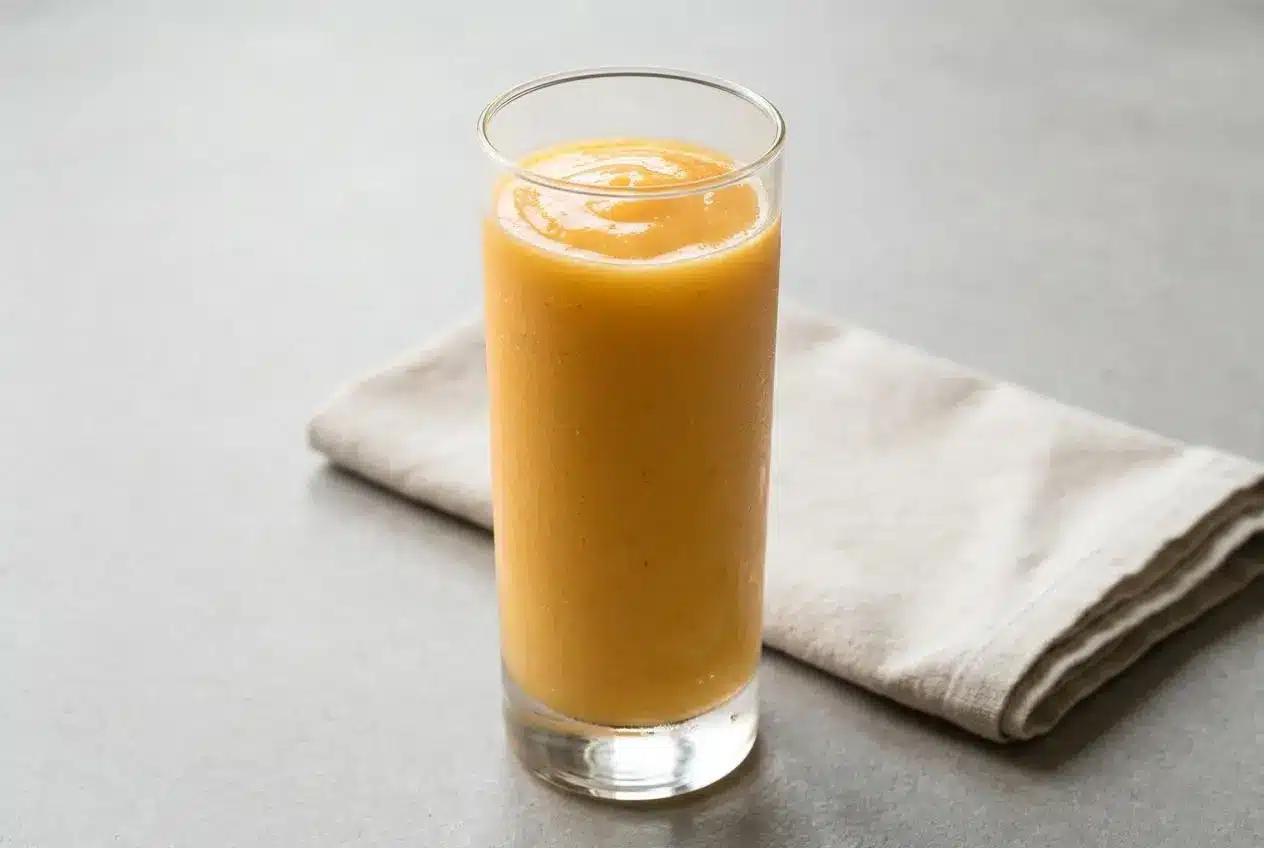
Blend on high until the mixture turns completely smooth and a bright, vibrant yellow, with no visible flecks of flax or fibrous pineapple left behind. When it is ready, the smoothie should smell sweet and tropical with a fresh ginger zing, and it should pour thickly but still glide easily into a glass.
Secrets for a Perfectly Creamy Smoothie
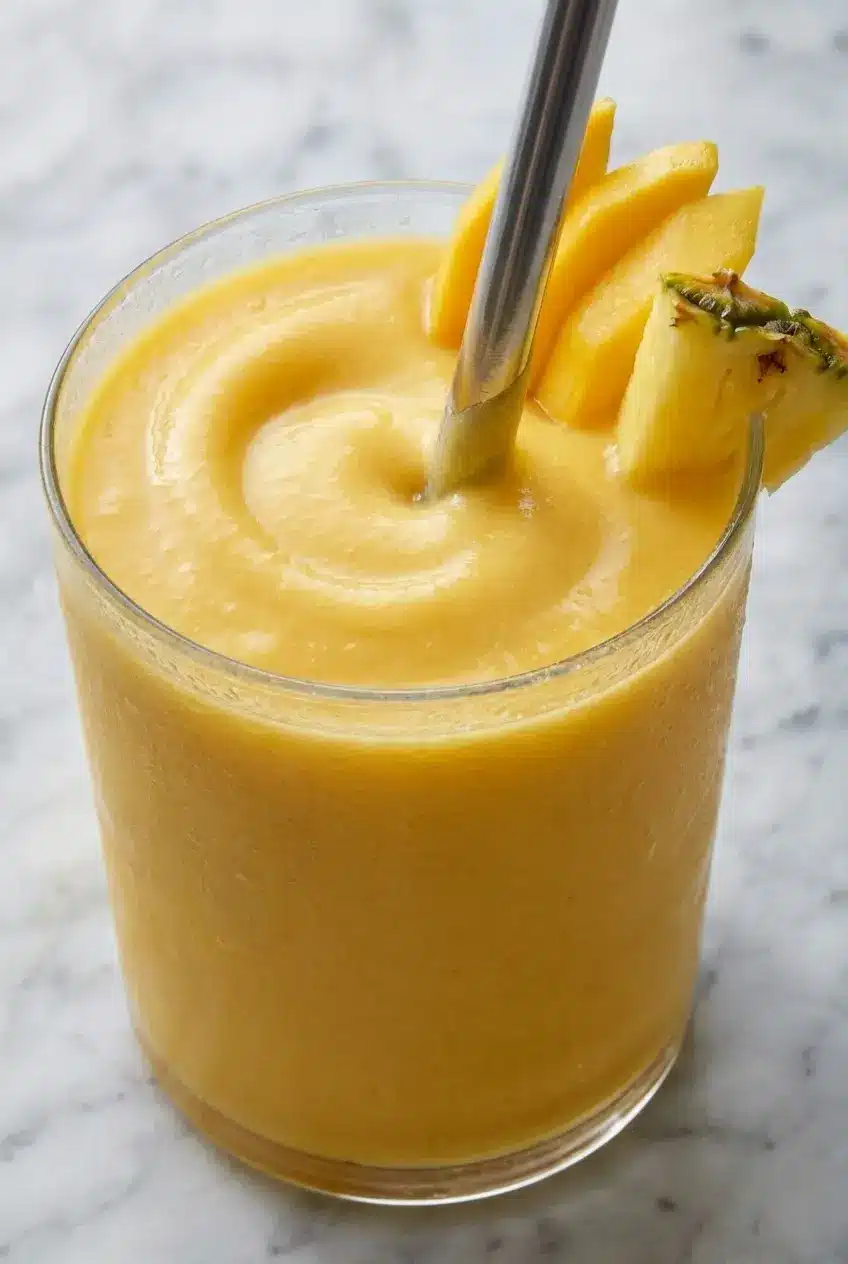
The best smoothies use at least one frozen fruit element, because frozen fruit gives body and a fluffy, almost milkshake-like texture without diluting flavor. Ice can chill a drink, but too much of it mutes the mango and pineapple and leaves you with a thinner, less expressive sip.
A high-speed blender matters more here than people think. It breaks down flax seeds, pineapple fibers, and citrus membranes into a velvety blend, so the finished smoothie feels lush rather than grainy.
That tiny pinch of salt is not just a chef’s whim. Salt can suppress bitterness and enhance sweetness, which is exactly why the pineapple tastes brighter and the mango seems even more fragrant with only the smallest amount.
If your smoothie turns out too thick, loosen it gradually with liquid, just 1 tablespoon at a time, until it moves freely. If it is too thin, add more frozen fruit or a spoonful of Greek yogurt, then blend again until the texture turns creamy and full-bodied.
How to Choose and Prep the Ripe Mango
A good mango for smoothies should have a slight give when you press it gently, similar to a ripe peach. I also look for a fruity scent near the stem end, because aroma is usually a better clue than skin color.
For easy dicing, slice the flesh away from the flat pit on both sides, score each half in a crisscross pattern, then push the skin outward so the cubes pop up like a hedgehog. From there, the pieces can be trimmed off neatly with a knife, which keeps the prep quick and your fingers safely out of the way.
If I have extra ripe mango on the counter, I often freeze it myself rather than buying pre-bagged fruit. Home-frozen mango usually tastes sweeter and more fragrant, and if you end up with a surplus, those soft golden cubes also make a wonderful base for mango ice cream later in the week.
Mastering Smoothie Prep and Storage
Frozen smoothie packs are one of my favorite make-ahead tricks for busy mornings. I dice the mango and pineapple, portion them into measured freezer bags or wide-mouth glass jars, and keep the softer fresh ingredients ready in the fridge so breakfast takes only a minute or two.
The key is flash freezing the fruit first. Spread the mango and pineapple pieces on a tray in a single layer until firm, then transfer them to your container, and you will avoid one giant frozen block that is hard on both the blender and your patience.
Fresh-prepped frozen fruit also gives you more control over ripeness. You can freeze mango and pineapple at their sweetest point, which means better flavor, more natural sugars, and a brighter tropical finish in the final smoothie.
Pro Tips & Troubleshooting
Pro Tips
- Always pour the liquid into the blender first so the blades can move freely and pull the fruit down into a smooth vortex.
- For an extra-cold serving, place your glass in the freezer for 10 minutes before pouring. It keeps the smoothie frosty a little longer and feels especially nice on warm mornings.
- If you are using fresh pineapple instead of frozen, add exactly 1 cup of ice so the texture stays chilled and thick enough to feel like a proper smoothie.
- A high-speed blender gives the smoothest result, especially when flax seeds and fibrous pineapple are involved.
- If a ripe mango is getting too soft to slice neatly, it is still perfect for blending, and any extra can be turned into a silky mango chili sauce for grilled chicken, shrimp, or roasted vegetables.
Common Mistakes to Avoid
- Using underripe mangoes, which can make the smoothie tart, stringy, and less fragrant.
- Leaving too much white pith on the clementines or orange, because that bitterness can linger in the background.
- Adding too much ice, which dulls the tropical fruit flavor and weakens the natural sweetness.
- Pouring in extra liquid all at once when the smoothie seems thick, instead of adjusting a tablespoon at a time.
Serving & Storage
Serving Ideas
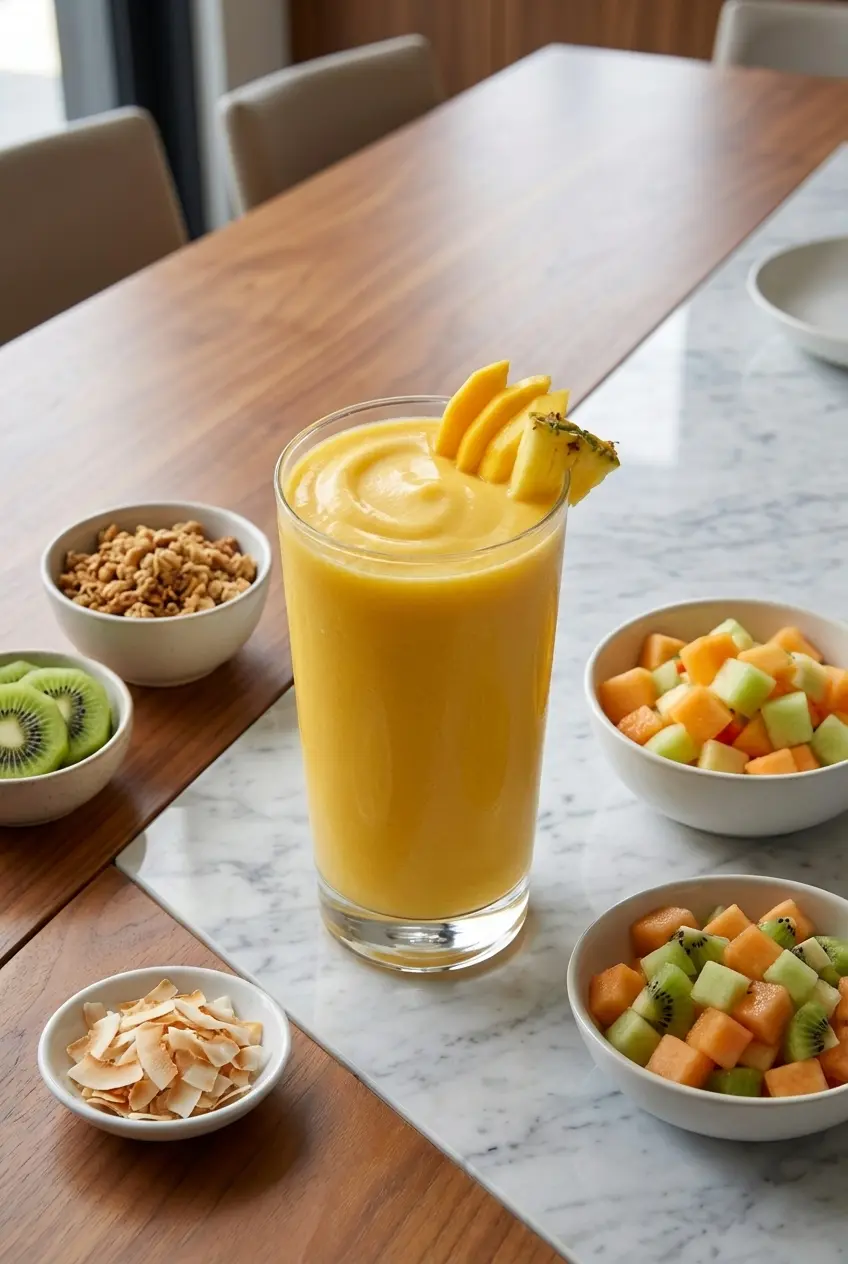
This smoothie is lovely on its own with a pineapple wedge, a lime wheel, or a sprinkle of toasted coconut flakes over the top. If I want to turn it into a fuller breakfast, I pour it into a bowl and finish it like a smoothie bowl with granola, sliced kiwi, and hemp seeds.
For a refreshing warm-weather breakfast spread, I like pairing it with something crisp and juicy rather than heavy. A chilled melon mosaic salad fits beautifully here, because it echoes the fresh tropical fruit without competing with the smoothie’s creamy texture.
A wide-mouth stainless steel straw is especially nice if you love thick smoothies. It lets you enjoy that velvety consistency without thinning the drink out just to make it easier to sip.
Storage & Make-Ahead
Smoothies are at their best right after blending, when the texture is airy and the color is brightest. If needed, you can keep this one in an airtight jar in the fridge for up to 24 hours.
Natural separation is completely normal, especially with fruit puree and flax seeds. Just give the jar a good shake or stir before drinking, and it will come back together nicely.
Mango Pineapple Smoothie

Equipment
- High-Speed Blender
Ingredients
- 1 cup water or almond milk, original/unsweetened
- 1 small banana or 1/2 of a large one
- 2 clementines or 1 orange, peeled
- 1 medium ripe mango, 2 cups, peeled
- 1 1/4 cups frozen pineapple chunks
- 1 Tbsp flax seeds
Instructions
Build the Blender in the Right Order
- Start by pouring the water or almond milk into the blender jar first. This gives the blades room to move and helps create a vortex so the fruit blends smoothly.
- Add the softer ingredients next: the banana, peeled clementines or orange, and the peeled ripe mango. Layering these over the liquid ensures an even base texture.
Add the Flavor Boosters
- Add the flax seeds to the blender jar. These provide a boost of dietary fiber and a subtle nutty richness that balances the tropical fruit.
Finish with Frozen Fruit
- Place the frozen pineapple chunks right on top. This stack helps press the softer ingredients toward the blades and creates a cold, thick, frothy texture.
Blend Until Silky
- Blend on high until the mixture is vibrant yellow and completely smooth, with no visible flecks of flax or pineapple fibers remaining.
Notes
Nutrition
Conclusion
This Mango Pineapple Smoothie stands out because of the little details, the fresh ginger for sparkle and the pinch of sea salt for depth. Those two tiny additions make the tropical fruit taste brighter, sweeter, and far more alive in the glass.
It is also an easy way to bring more Vitamin C and dietary fiber into your morning without fuss. Once you try it, you can keep it classic or play with your own twists, and either way, it is the kind of breakfast that starts the day on a sunny note.
Frequently Asked Questions
Can I make this smoothie ahead of time?
How can I make my smoothie thicker?
Do I have to use a banana?
What are the benefits of adding flax seeds to a smoothie?