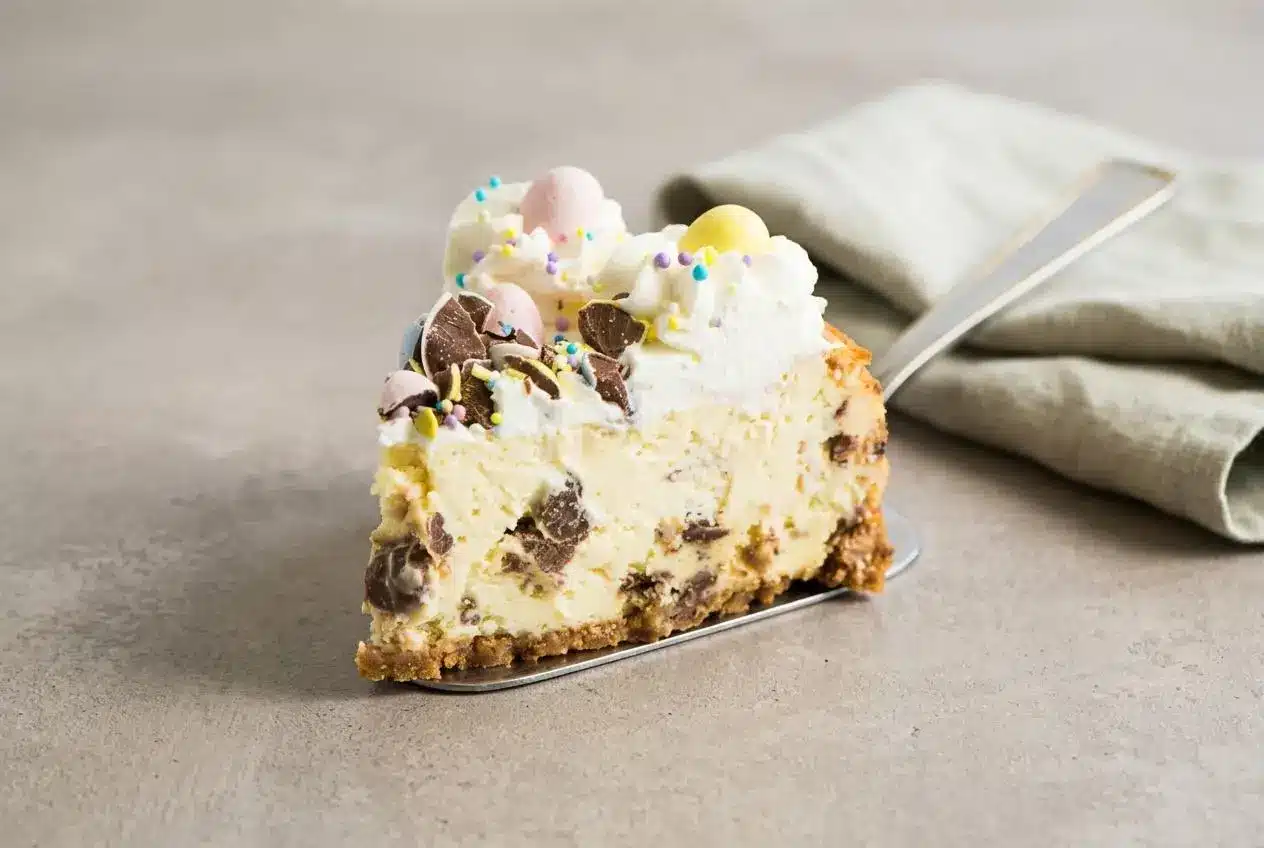
This mini egg cheesecake is a full-size, baked 9-inch dessert with chopped Cadbury Mini Eggs, tangy vanilla filling, a graham cracker crust, and whipped cream. Overnight chilling gives it a creamy, sliceable texture, with chocolate pieces tucked into every serving.
Pastel candy shells bring a little crunch to the velvety filling, while sour cream keeps the sweetness balanced. The Mini Eggs here are the chocolate candies, not a reference to the cake’s size.
Plan to bake before serving day so the cheesecake has time to cool and chill overnight. The mixing is straightforward, and you won’t need a water bath. Watch for that gentle center jiggle.
Set out the cream cheese before mixing, but keep the heavy cream cold until you make the topping.
Key Ingredients and Why Each One Matters
Butter binds the graham crumbs, cream cheese and eggs give the filling structure, and sour cream adds tang. Vanilla rounds out the chocolate candy, salt balances the sweetness, and cold heavy cream creates a soft contrast to the dense cheesecake.
Crust
- 1 1/4 cups graham cracker crumbs (from about 8 graham cracker sheets)
- 3 tablespoons granulated sugar
- 6 tablespoons unsalted butter (melted)
Cheesecake
- 1 1/2 pounds full-fat cream cheese (at room temperature)
- 1 cup granulated sugar
- 1 cup full-fat sour cream
- 1 teaspoon vanilla extract
- 1/8 teaspoon salt
- 3 large eggs
- 2 cups chopped Cadbury mini eggs
Topping
- 1 cup cold heavy cream
- 1/3 cup powdered sugar
- 1 teaspoon vanilla extract
- additional chopped Cadbury mini eggs (for garnish)
Choose full-fat brick-style cream cheese rather than a tub spread. Its firm consistency suits this baked filling; spreadable and reduced-fat products can change the batter’s texture and final set. Room-temperature cream cheese also blends more readily with the sugar.
Full-fat sour cream supplies richness as well as acidity. Eggs turn the dairy mixture into a sliceable baked custard, while the melted butter holds the crumb crust together. Aim to smooth the cream cheese before the eggs enter the bowl, when you can mix without worrying about adding too much air.
For the topping, use cold heavy cream that can hold stiff peaks. Lower-fat cream won’t provide the same piping structure, although product names vary, so check the carton rather than rejecting every cream labeled “whipping cream.”
I keep the heavy cream refrigerated until the bowl and beaters are chilled, especially when the topping needs to hold piped edges.
How to Chop Mini Eggs Without Them Rolling Away
Work on a stable cutting board and carefully halve each candy egg individually, keeping your fingers clear of the blade. Rest the halves on their flatter sides before chopping them into smaller pieces. Work slowly rather than forcing a knife through candy that keeps rolling.
Aim for distinct chocolate pieces, not powder or large chunks. Oversized pieces make slicing awkward, while a food processor can leave an uneven mixture of dust and stubborn chunks.
How to Make Mini Egg Cheesecake Step by Step
This cheesecake serves 8, with about 40 minutes of prep, a 55-to-65-minute bake, cooling, and overnight chilling. The listed 1 hour 35 minute total excludes chilling and cooling, so don’t plan on serving it straight from the oven.
Have a 9-inch springform pan, electric mixer, baking sheet, and wire rack ready. The baking sheet matters: springform pans can let melted butter escape.
1. Prep and Freeze the Graham Cracker Crust
Crust
- Heat the oven to 350°F and coat a 9-inch springform pan with cooking spray.
The prepared pan should have an even, light coating inside. - Stir the melted butter and sugar through the graham cracker crumbs, then pack the mixture over the pan’s bottom and 1 inch up its sides.
The crumbs should look evenly damp and hold together when pressed. - Place the crust in the freezer while preparing the filling.
The pressed crumb layer will firm up without a separate prebake.
2. Mix the Creamy Mini Egg Filling
Cheesecake
- Use an electric mixer to work the cream cheese and sugar together in a large bowl.
Continue until the mixture looks smooth, without visible cream cheese lumps. - Blend in the sour cream, vanilla, and salt, then incorporate each egg separately on low speed, stopping as soon as it blends in.
The batter should become creamy without turning foamy. - Scrape the bowl’s bottom and sides, then mix for about 30 seconds more.
The batter should have a consistent texture with no dense streaks clinging to the bowl. - Fold the chopped Mini Eggs through the filling with a spatula.
The candy pieces should be distributed throughout the batter.
3. Bake, Cool Gradually, and Chill Overnight
- Fill the chilled crust with the batter, place the springform pan on a baking sheet, and bake for 55 to 65 minutes.
Expect noticeable puffing, a set outer area, and a center that barely trembles when the pan is gently tapped. - Transfer the pan to a wire rack, wait 10 minutes, and carefully pass a knife between the cheesecake and the pan’s edge.
Releasing the edge lets the cake shrink as it cools without pulling against the sides. - Let the cheesecake reach room temperature, then loosely cover it with plastic wrap and refrigerate overnight.
The cake will settle as it cools, and waiting before covering prevents trapped steam from dampening the crust.
4. Whip the Cream and Garnish
Topping
- Begin the topping after the cheesecake’s overnight chill, refrigerating the mixing bowl and electric mixer beaters for 20 to 30 minutes.
Cold equipment helps the cream hold a firm shape for piping. - Whip the heavy cream until thickened, then beat in the powdered sugar and vanilla until stiff peaks form.
When you lift the beaters, the cream should hold its shape rather than droop. - Cover the cold cheesecake with a layer of cream and pipe the remaining cream around its edge, or spread all the cream over the top.
Both finishes should leave a soft, shape-holding topping. - Add the chopped Mini Egg garnish when ready to slice and serve.
Freshly added candy keeps its colors cleaner against the white cream.
Pro Tips and Troubleshooting for a Crack-Free Cheesecake
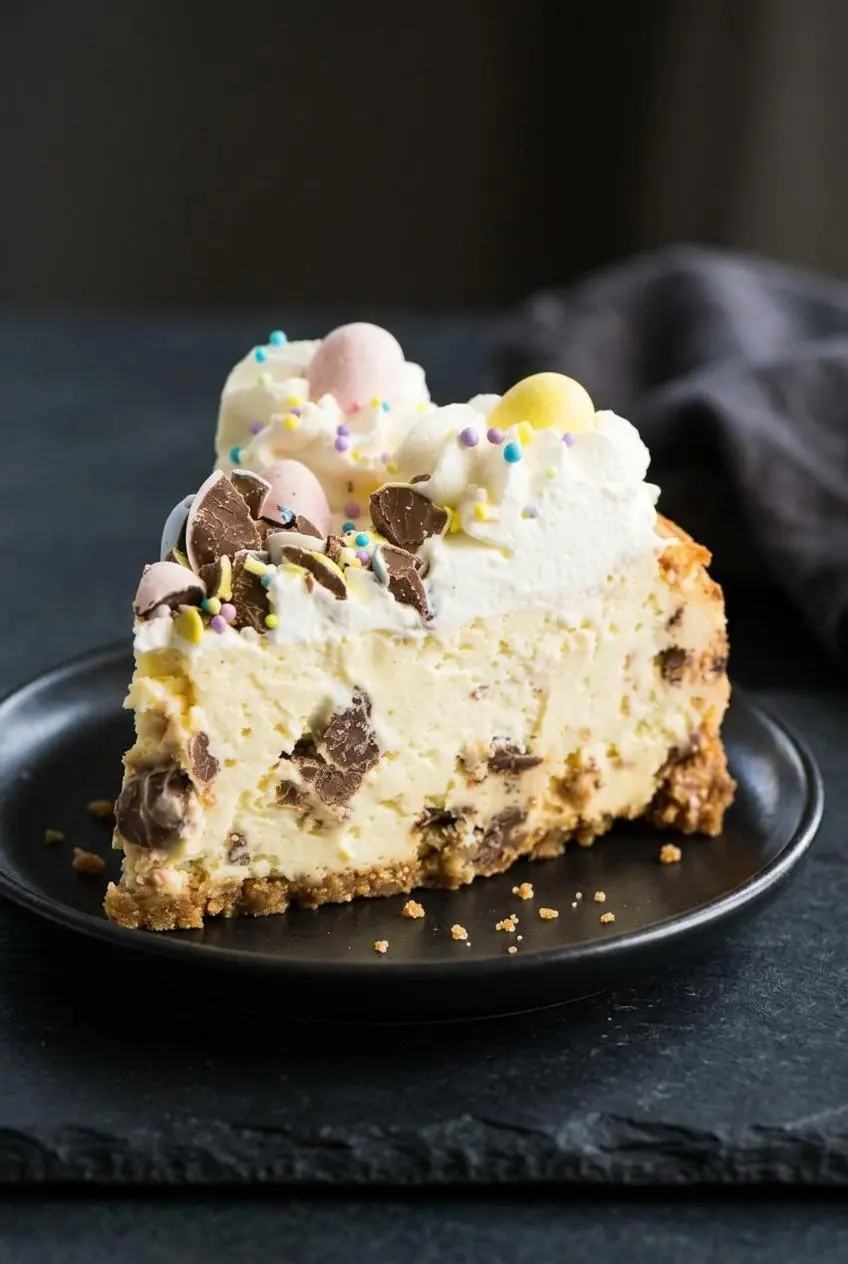
Gentle mixing and careful cooling reduce cracking, but a little puffing and settling are normal. Judge the center’s movement rather than expecting the cake to stay perfectly flat throughout baking.
- Lumpy batter: Cold cream cheese resists smoothing. If needed, unwrap it, place it in a microwave-safe dish, and soften cautiously at 50% power, checking frequently and stopping before it becomes hot or melts. Eggs can warm gently in warm, not hot, water.
- Surface cracks: Vigorous mixing after adding eggs can trap excess air. Keep the mixer low, then loosen the baked edge after its rack rest to reduce tension as the filling contracts.
- A deeply sunken center: Modest settling is expected; a pronounced collapse can indicate excess incorporated air or insufficient setting. Appearance alone won’t identify every cause, so check both mixing habits and the baking cue next time.
- Dry or overbaked filling: Don’t wait for a completely rigid center. Look for a set outer ring and a small, gently jiggling center, not a loose wave moving across the filling.
- Soggy crust: Covering a warm cheesecake traps condensation. Let it cool fully before adding plastic wrap.
- Ragged slices: Large candy chunks catch the knife and break up the filling. Chop the candy into manageable pieces before folding it in.
Moisture in whipped cream gradually dissolves the candy’s sugar shell, allowing pastel colors to spread. Add the chopped garnish immediately before serving. Whole Mini Eggs can be an optional extra decoration, but they don’t replace the chopped garnish.
Mini Egg Cheesecake Variations and Format Swaps
Choose the format before mixing because baked and unbaked cheesecakes rely on different ways of setting.
- Springform cheesecake: The full-size version uses eggs to set its baked custard filling.
- Muffin-tin cheesecakes: Smaller baked portions need a much shorter oven window.
- No-bake cheesecake: A separate egg-free formula uses whipped cream and chilling for structure.
How to Bake Individual Mini Cheesecakes in a Muffin Tin
For miniature portions, use a standard muffin tin with paper liners and divide crust and filling among the cups. Bake at 350°F, using approximately 18 to 22 minutes as an adaptation guide, not a tested timing guarantee. Look for set edges and centers that barely jiggle.
This conversion doesn’t have an established yield or batter allocation. It also doesn’t apply to a mini muffin tin, whose smaller cavities need different timing. Let the portions cool and chill before topping.
No-Bake Mini Egg Cheesecake Option
A no-bake version needs its own filling formula. The general approach combines full-fat cream cheese, powdered sugar, and vanilla, then folds in stiff-whipped heavy cream and chopped candy before an overnight chill in a prepared crust.
Use a dedicated classic no-bake cheesecake formula for the proportions. That variation omits the baked filling’s eggs and sour cream; simply leaving this batter unbaked will not produce the intended dessert.
Chocolate Ganache and Toasted Coconut Bird Nests
For an optional Easter finish, use smooth chocolate ganache instead of the whipped-cream presentation, then arrange toasted shredded coconut in little rings resembling nests. Place candy in the nests close to serving. This decoration stays separate from the required topping and doesn’t need to change the filling.
Other optional directions change the crust or flavor, rather than the official ingredient list:
- Gluten-free graham crackers: Use a suitable crumb-crust formula and check every packaged ingredient, including the candy, before describing the finished cake as gluten-free.
- Oreo cookies: A chocolate cookie crust adds cocoa contrast, but cookie filling changes its butter needs, so don’t assume an equal-volume substitution.
- Digestive biscuits: These offer another crumb-crust direction, with sweetness and texture that differ from graham crackers.
- Browned butter and flaky salt: Browned butter in an adapted crust adds toasted, nutty flavor, while a light sprinkle of flaky salt on the topping contrasts with the candy’s sweetness; neither change belongs to the method above.
Make-Ahead and Freezer Planning for Easter Cheesecake
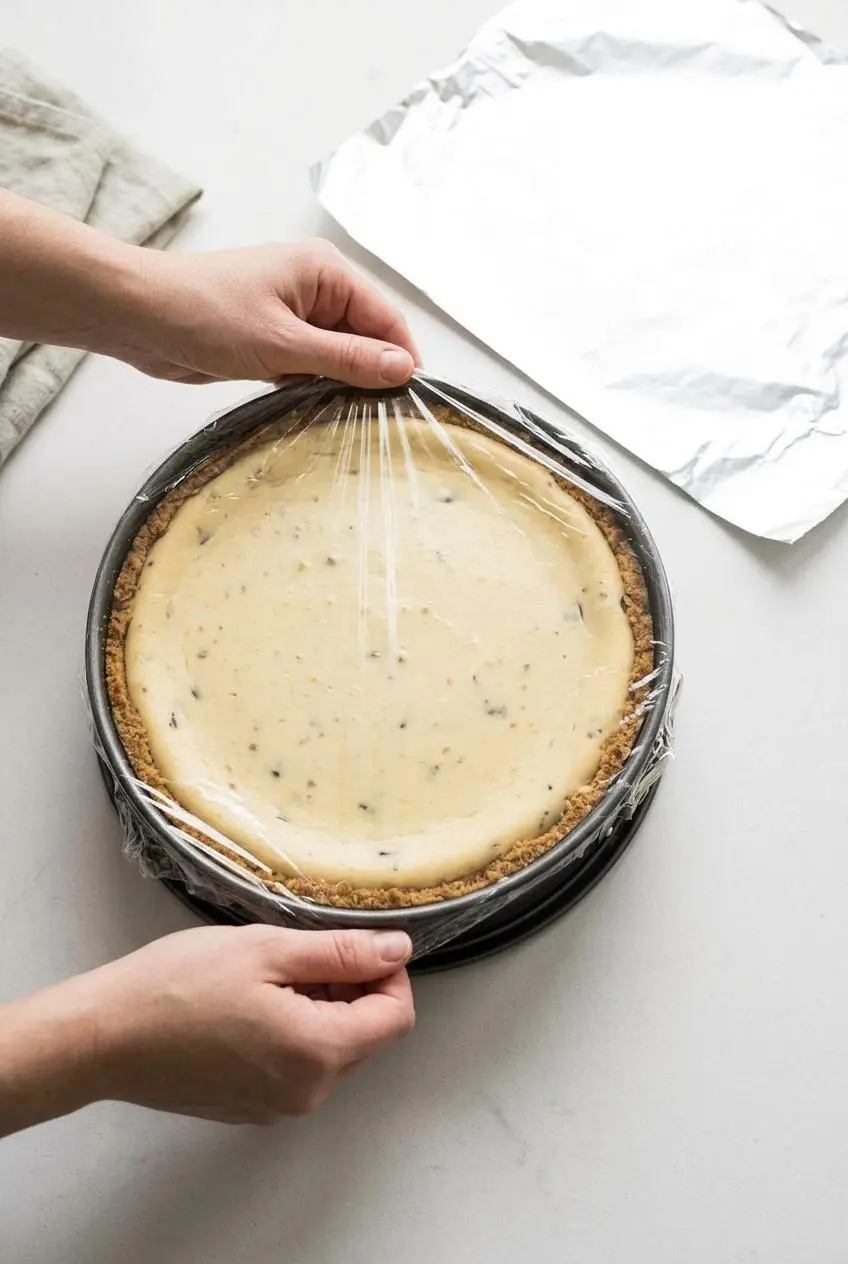
The overnight chill makes this dessert well suited to advance preparation. Keep baking, topping, and garnishing as separate tasks so the crust stays dry and the candy colors stay distinct.
- Bake and cool: Complete the crust and filling, bake, loosen the edge, and cool fully before covering.
- Chill overnight: Leave the covered cheesecake refrigerated while the filling firms.
- Finish for serving: Prepare the whipped cream after chilling and add the candy garnish at the last moment.
Keep leftovers covered in the refrigerator. For longer storage, freeze the fully cooled, chilled cheesecake tightly wrapped for up to 2 months, preferably before adding whipped cream or candy. Plastic wrap followed by foil helps protect the untopped cake.
Thaw the wrapped cheesecake in the refrigerator before decorating. Add freshly whipped cream and the chopped candy once it has thawed, rather than freezing the finished cream-and-candy topping.
How to Serve and Decorate Mini Egg Cheesecake for Easter
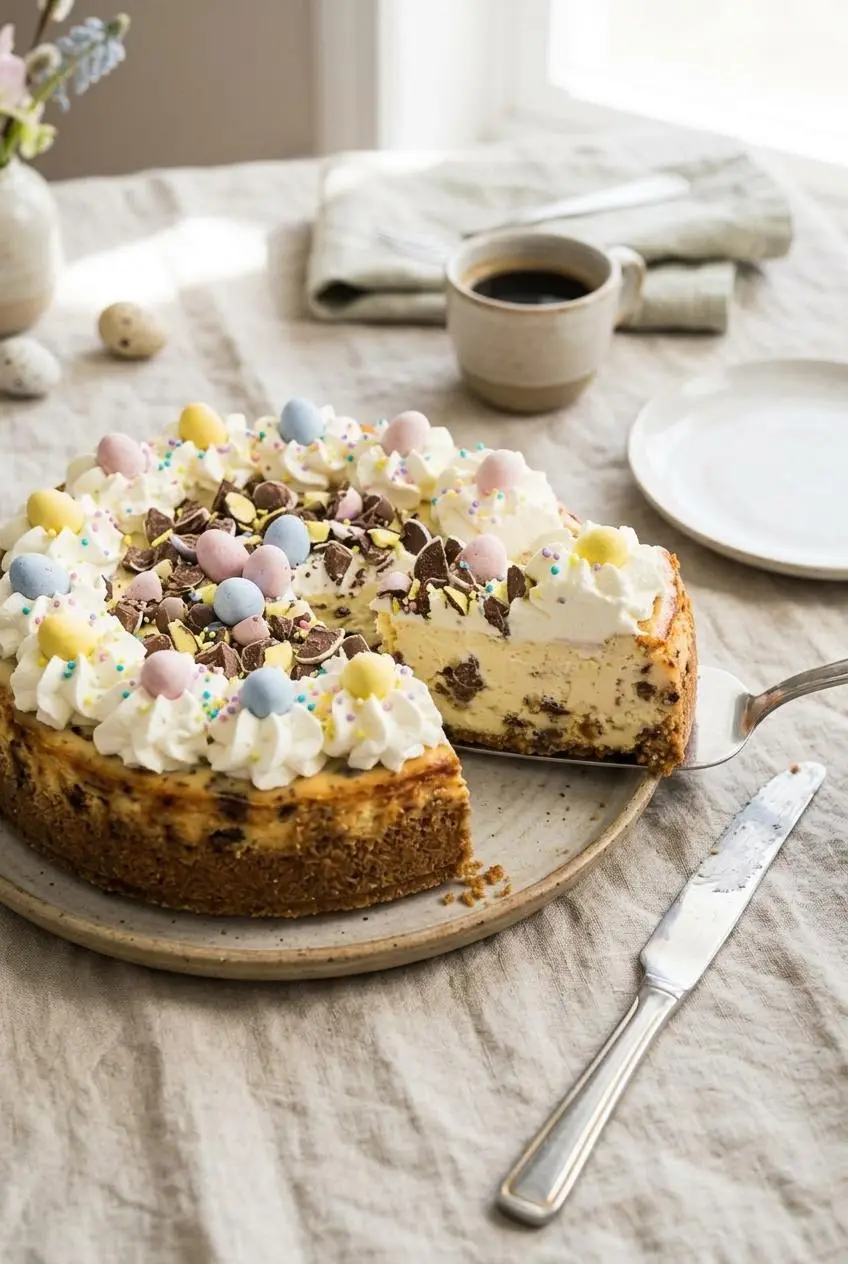
Serve the cheesecake chilled so the filling holds cleanly around the chocolate pieces. Spread the whipped cream for a relaxed finish, or pipe it around the edge to frame the pastel chopped-candy garnish.
For neater portions, warm a knife, wipe it dry, and clean it between cuts. Press through deliberately rather than dragging the blade through the candy. Coffee or espresso makes a welcome pairing with the sweet chocolate filling.
Conclusion
A buttery crumb crust, tangy filling, and chopped chocolate eggs make this cheesecake a cheerful Easter centerpiece with plenty of texture.
Smooth the cream cheese first, mix the eggs gently, and allow the overnight chill. Save the candy garnish for serving, and the finishing touch stays easy.
Frequently Asked Questions
Can I Make Mini Egg Cheesecake Without Baking?
Yes, but use a separate egg-free formula with sweetened cream cheese and folded whipped cream. Plan for overnight chilling; don’t leave the egg-containing batter above unbaked.
How Do I Modify This Recipe to Make Individual Mini Cheesecakes in a Muffin Tin?
Use paper-lined standard muffin cups, not a mini muffin tin. At 350°F, approximately 18 to 22 minutes is an adaptation guide; check for set edges and barely jiggling centers. This optional conversion has no tested yield or guaranteed baking time.
Can I Use a Food Processor to Chop Cadbury Mini Eggs for the Filling?
A processor can create excessive powder while leaving uneven chunks. For better control, carefully halve each egg on a stable board, then coarsely chop the flatter pieces with fingers clear of the blade.
Can You Make Mini Egg Cheesecake in Advance and Freeze It?
Yes. Cool it completely, chill it overnight, and wrap it tightly before adding toppings. Follow the freezer planning above, then thaw in the refrigerator. Add whipped cream after thawing and candy close to serving.
Mini Egg Cheesecake

Equipment
- 9-inch Springform Pan
- Electric Mixer
- Baking Sheet
- Wire rack
Ingredients
Crust
- 1 1/4 cups graham cracker crumbs (from about 8 graham cracker sheets)
- 3 tablespoons granulated sugar
- 6 tablespoons unsalted butter (melted)
Cheesecake
- 1 1/2 pounds full-fat cream cheese (at room temperature)
- 1 cup granulated sugar
- 1 cup full-fat sour cream
- 1 teaspoon vanilla extract
- 1/8 teaspoon salt
- 3 large eggs
- 2 cups chopped Cadbury mini eggs
Topping
- 1 cup cold heavy cream
- 1/3 cup powdered sugar
- 1 teaspoon vanilla extract
- additional chopped Cadbury mini eggs (for garnish)
Instructions
Crust
- Heat the oven to 350°F and coat a 9-inch springform pan with cooking spray. The prepared pan should have an even, light coating inside.
- Stir the melted butter and sugar through the graham cracker crumbs, then pack the mixture over the pan’s bottom and 1 inch up its sides. The crumbs should look evenly damp and hold together when pressed.
- Place the crust in the freezer while preparing the filling. The pressed crumb layer will firm up without a separate prebake.
Cheesecake
- Use an electric mixer to work the cream cheese and sugar together in a large bowl. Continue until the mixture looks smooth, without visible cream cheese lumps.
- Blend in the sour cream, vanilla, and salt, then incorporate each egg separately on low speed, stopping as soon as it blends in. The batter should become creamy without turning foamy.
- Scrape the bowl’s bottom and sides, then mix for about 30 seconds more. The batter should have a consistent texture with no dense streaks clinging to the bowl.
- Fold the chopped Mini Eggs through the filling with a spatula. The candy pieces should be distributed throughout the batter.
- Fill the chilled crust with the batter, place the springform pan on a baking sheet, and bake for 55 to 65 minutes. Expect noticeable puffing, a set outer area, and a center that barely trembles when the pan is gently tapped.
- Transfer the pan to a wire rack, wait 10 minutes, and carefully pass a knife between the cheesecake and the pan’s edge. Releasing the edge lets the cake shrink as it cools without pulling against the sides.
- Let the cheesecake reach room temperature, then loosely cover it with plastic wrap and refrigerate overnight. The cake will settle as it cools, and waiting before covering prevents trapped steam from dampening the crust.
Topping
- Begin the topping after the cheesecake’s overnight chill, refrigerating the mixing bowl and electric mixer beaters for 20 to 30 minutes. Cold equipment helps the cream hold a firm shape for piping.
- Whip the heavy cream until thickened, then beat in the powdered sugar and vanilla until stiff peaks form. When you lift the beaters, the cream should hold its shape rather than droop.
- Cover the cold cheesecake with a layer of cream and pipe the remaining cream around its edge, or spread all the cream over the top. Both finishes should leave a soft, shape-holding topping.
- Add the chopped Mini Egg garnish when ready to slice and serve. Freshly added candy keeps its colors cleaner against the white cream.