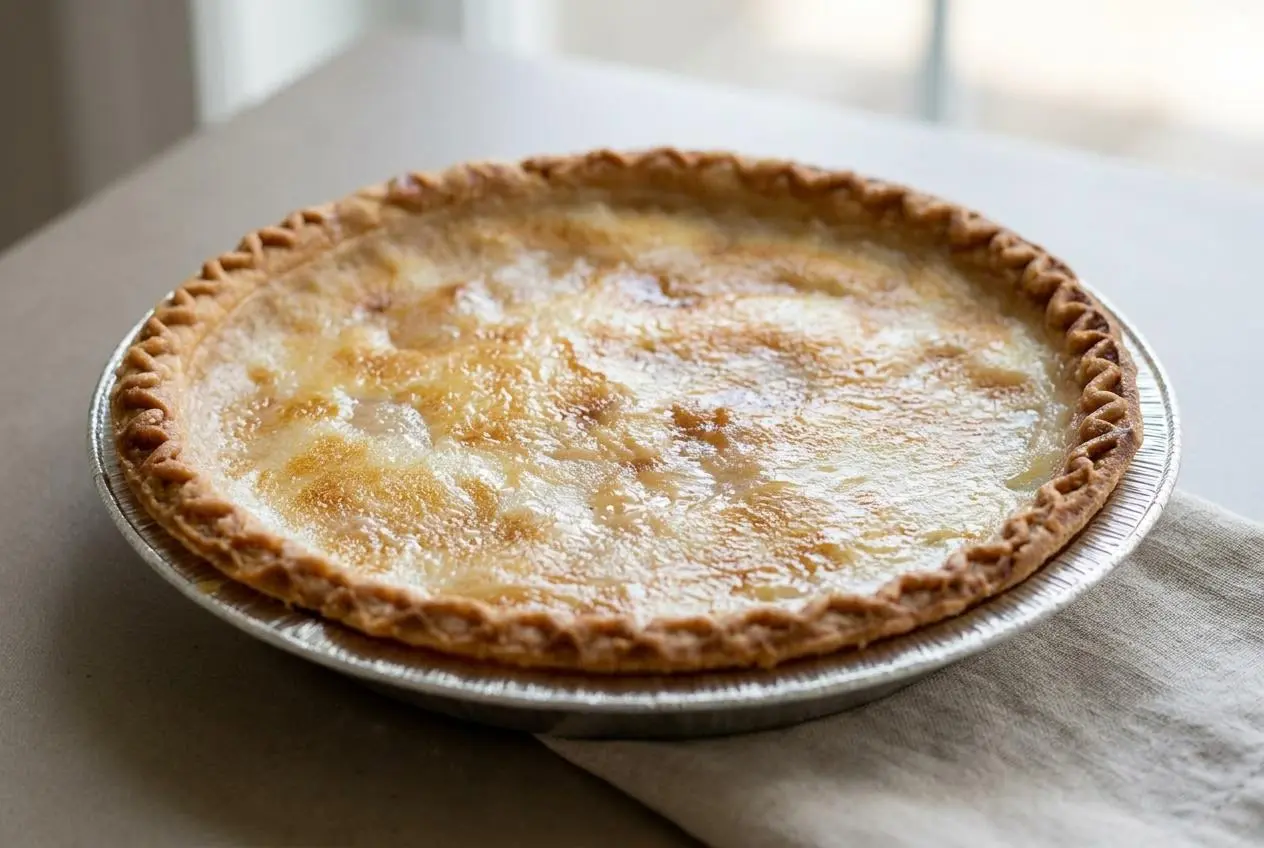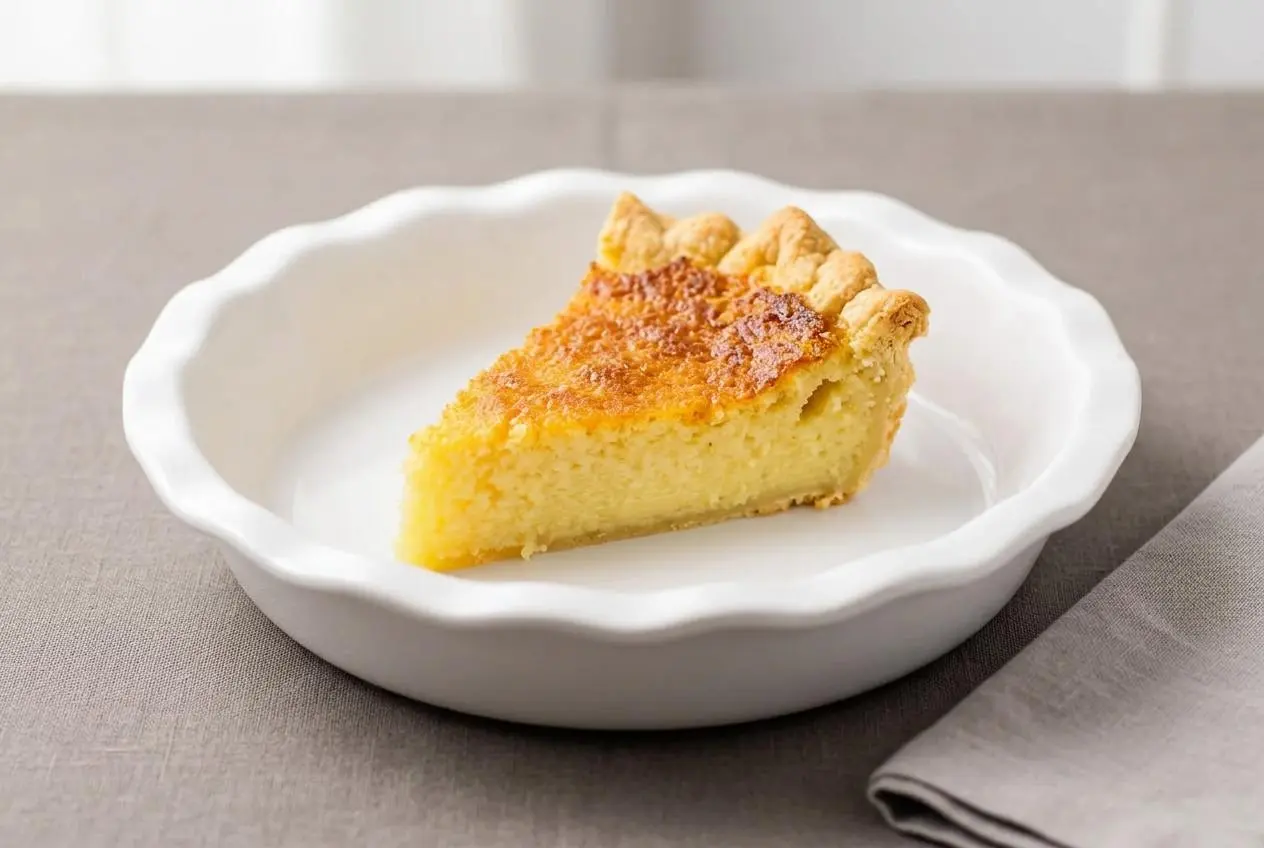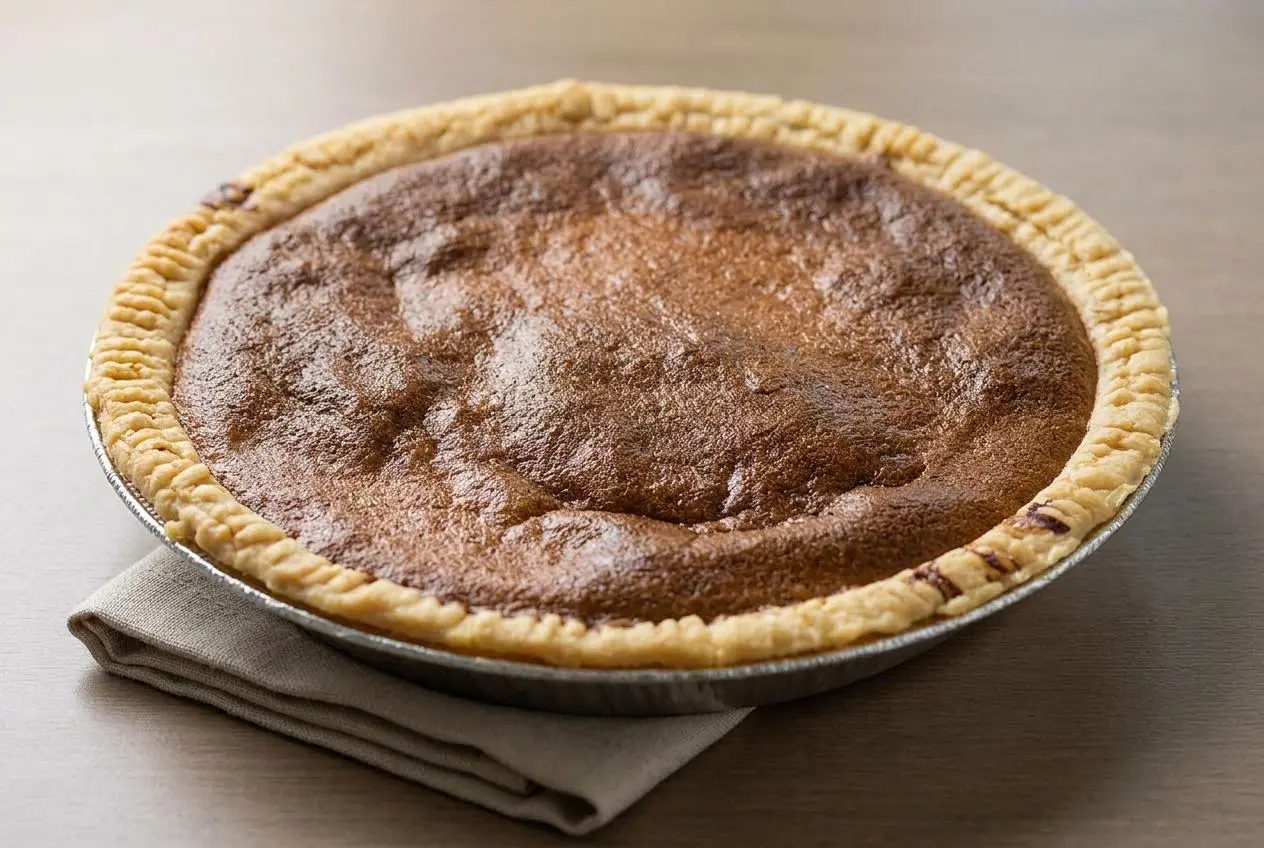
Egg pie is a rich custard dessert made with egg yolks, condensed milk, evaporated milk, and vanilla baked in a flaky pastry shell until gently set.
This egg pie recipe creates a smooth, sweet filling with a dark golden top and a slice that holds together beautifully once cooled. The satin custard feels rich without becoming heavy.
The aroma of warm vanilla and browned milk sugar brings the bakery feel right into your kitchen. That airy top is the part worth watching.
Keep the egg whites at stiff peaks before folding them in so their foam stays buoyant enough to rise to the surface.
Essential Ingredients for Silky Egg Pie
Each ingredient shapes the finished pie: yolks build custard structure, dairy adds richness, whipped whites create the browned top, and vanilla with salt keeps the sweetness balanced.
- 6 pcs egg yolks from large eggs (room temperature)
- 2 pcs egg whites from large eggs (whipped to stiff peaks)
- 1 10-oz can condensed milk
- 1 cup evaporated milk (microwave for 1 minute on high )
- 1/2 tsp vanilla extract
- 1/4 tsp salt
- 1 9-inch pie shell
Room-temperature yolks blend more smoothly with the dairy and give the filling its rich, firm-set texture. Condensed milk supplies concentrated sweetness and body, while evaporated milk contributes creamy flavor without thinning the custard. They are different products: condensed milk is sweetened and thick, while evaporated milk is unsweetened milk with some water removed.
The whipped egg whites are what make this Filipino egg pie distinctive. They form a light foam that rises above the denser yolk custard, then browns into the classic bakery-style surface. Vanilla softens the egg flavor, and salt keeps the sweetness from tasting flat.
I warm the evaporated milk until it is comfortably hot but not bubbling, which helps the condensed milk and yolks come together without leaving stubborn streaks.
How to Make Egg Pie Step by Step
The key to a smooth custard is gentle mixing, careful straining, and stopping the bake while the center still has movement.
- Heat the oven to 350°F before preparing the filling.
Starting with a fully heated oven helps the foam begin browning as soon as the pie goes in. - Thaw the pie shell following its package directions while you make the custard.
The shell should be flexible enough to hold the filling without cracking around the rim. - Combine the 6 egg yolks, condensed milk, warm evaporated milk, vanilla extract, and salt in a large bowl.
Stir until the mixture looks uniform and glossy, with no thick ribbons of condensed milk remaining. - Gently fold the stiff egg whites into the yolk mixture.
Stop once the filling looks foamy, since vigorous stirring can knock the air out of the whites. - Pour the mixture through a fine-mesh sieve into the pie shell, then lift only the collected foam from the sieve and spread it over the surface.
Discard the thicker bits left behind so the custard bakes with a smooth, even texture. - Set the pie on a baking sheet and bake at 350°F for 15 minutes, then reduce the oven to 325°F and bake for 30 to 45 minutes, rotating the baking sheet halfway through.
The top should turn dark brown, the edges should feel set when the pan is nudged, and the center should retain a small gelatin-like wobble. - Cool the pie completely before cutting, then chill it if you prefer cold slices.
The custard will settle as it cools, and a little gentle deflation across the surface is normal.
Straining does more than catch stray egg strands. It removes chalazae and any dense bits of egg white, leaving the custard noticeably smoother. The lower oven temperature after the first 15 minutes matters just as much: it lets the center finish setting without forcing the eggs to tighten too quickly.
Mastering the Flaky Pie Crust
A sturdy crust gives this soft custard something crisp to lean on. A refrigerated shell works well when thawed properly, while a homemade pie crust gives you more control over butter flavor and thickness.
For a particularly crisp base, consider briefly par-baking the shell with pie weights before adding the filling. This is especially useful with homemade pastry or a crust that tends to soften under wet fillings. Let the par-baked shell cool slightly, then brush its inside lightly with leftover egg white before filling it. That thin coating creates a moisture barrier as the crust finishes baking.
Do not stretch pastry to make it fit the pan. Press it gently into the corners instead, because stretched dough pulls back as it bakes and can shrink below the rim. If the shell is unbaked, place the baking sheet on the lowest oven rack so bottom heat reaches the pastry quickly.
Secrets to the Signature Golden-Brown Top
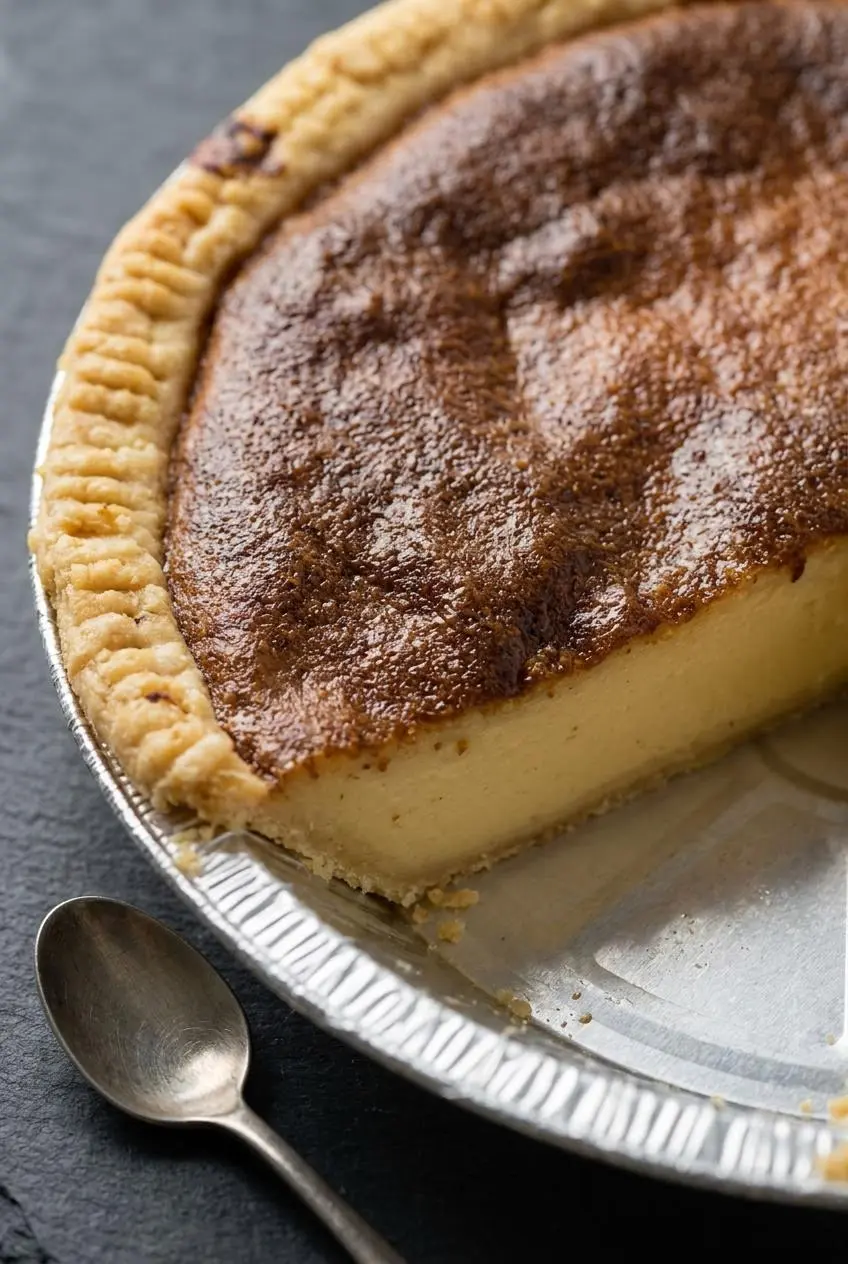
The deep brown surface comes from the whipped egg white foam, not from an overbaked custard. When egg whites reach stiff peaks, they hold tiny air pockets that make the foam lighter than the yolk-and-milk mixture beneath it.
As the filling passes through the sieve, that foam gathers on top. Scoop only the airy layer onto the pie, leaving behind the thicker residue. A thin, even blanket of foam gives the finished pie a more consistent color rather than a patchy surface.
The first 15 minutes at 350°F encourage the milk sugars and egg proteins in the foam to brown. Lowering the heat to 325°F then lets the custard cook more gently underneath. The goal is a glossy dark-golden cap with a creamy center, not a dry, puffed pie.
Troubleshooting Common Custard Pie Mistakes
Custard pies are forgiving when you know what the surface and center are telling you. These fixes target the problems that most often affect texture.
Preventing Soggy Bottoms
- Problem: The bottom crust turns pale and pasty. Cause: Liquid filling reaches the dough before the pastry has a chance to set. Fix: Use a brief par-bake when needed, brush the warm crust with egg white, and bake on a preheated heavy baking sheet placed low in the oven.
- Problem: The rim shrinks before the custard is done. Cause: The pastry was stretched into the pan. Fix: Ease the dough into the corners and leave a little overhang rather than pulling it tight.
Avoiding Curdled or Weeping Filling
- Problem: Liquid pools on the surface or around slices. Cause: Overbaked egg proteins squeeze out moisture as they tighten. Fix: Pull the pie when the outer 2 to 3 inches are puffed and set but the middle still moves softly like set gelatin.
- Problem: The custard has grainy patches. Cause: The filling cooked too aggressively or contained egg strands. Fix: Respect the drop to 325°F and strain the mixture before it reaches the crust.
Stopping Surface Cracks
- Problem: Deep cracks split the browned top. Cause: Fast expansion from excessive heat or prolonged baking. Fix: Reduce the oven temperature after the initial bake and remove the pie while the center still jiggles.
- Problem: One side browns much faster than the other. Cause: Uneven heat in the oven. Fix: Rotate the baking sheet halfway through the longer baking stage.
Popular Variations: Filipino Bakery vs Southern Style
These versions share a custard-and-crust format, but their dairy choices, flavoring, and top layers create very different pies. Keep them separate from the main method so the original texture stays intact.
Authentic Filipino Bakery Style
This is the style reflected in the main recipe: sweetened condensed milk and evaporated milk create a dense, sweet custard, while whipped egg white foam forms the deeply browned top. The contrast between the dark surface and pale silky interior is the signature bakery look.
Classic Southern Nutmeg Custard Pie
A Southern-style custard pie usually relies on fresh whole milk, often includes melted butter, and finishes with freshly grated nutmeg rather than a whipped egg white top. It has a paler surface and a gentler dairy flavor, with nutmeg providing the main aroma.
Easy One-Bowl Weeknight Custard
For an optional streamlined version, whisk whole eggs without separating or whipping the whites. The result is still smooth and satisfying, but it will have a paler top and will not develop the airy browned layer that defines Filipino egg pie.
Citrus and Cardamom Variation
For a fragrant optional change, steep fresh orange zest and a pinch of ground cardamom in the warm evaporated milk before straining the filling. Orange brightens the rich dairy sweetness, while cardamom adds a soft floral warmth. For another custard dessert with warming spice, try this spiced eggnog pie.
How to Store, Chill, and Reheat Egg Pie
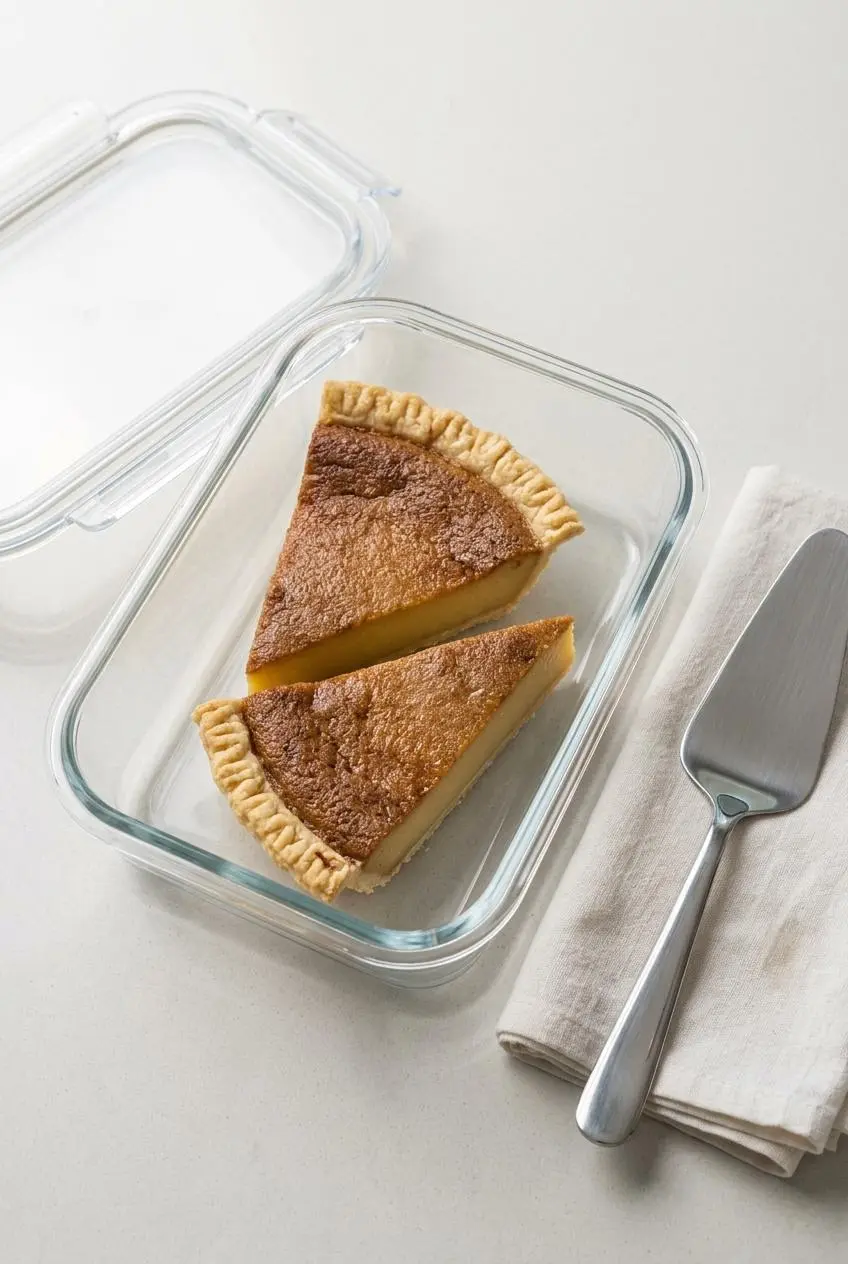
Let the pie cool completely at room temperature before covering and refrigerating it promptly. To prevent condensation from softening the surface, loosely cover the whole pie or place individual slices in an airtight container after they have cooled.
Serve chilled for the cleanest slices and the firmest custard. If you prefer a less-cold slice, set out only the portion you plan to eat until it loses its refrigerator chill. Gentle warming can soften the custard, so avoid strong heat that may make it weep or separate.
Serving Suggestions for Merienda and Desserts
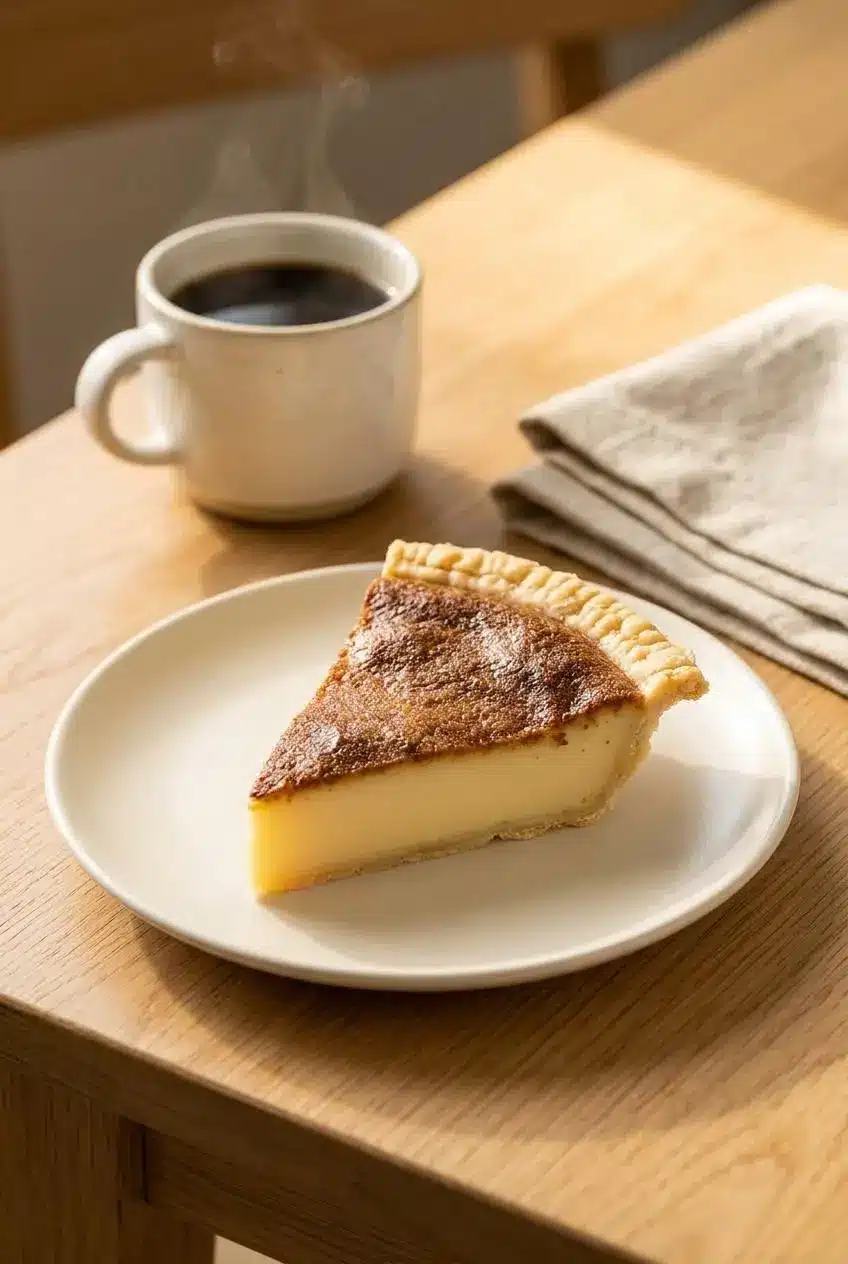
Egg pie shines as an afternoon merienda with hot black coffee, jasmine tea, or espresso. The slight bitterness of the drink balances the sweet condensed-milk custard nicely.
- Add a light dusting of powdered sugar for a bakery-style finish.
- Serve each slice with unsweetened whipped cream to soften the sweetness without covering the browned top.
- Pair it with tart fresh berries for a bright contrast to the rich custard.
For clean slices, use a sharp knife warmed under hot water, wipe it with a damp cloth, and repeat between cuts. This small step keeps the dark top from dragging through the creamy filling.
Conclusion
A great egg pie balances crisp pastry with velvety, sweet custard and a deep golden top. Strain the filling, watch for that gentle center jiggle, and let the pie cool fully before slicing.
Once you recognize the set edges and softly wobbling center, this bakery-style dessert becomes far less intimidating. Serve it chilled, cut it cleanly, and enjoy every silky slice.
Frequently Asked Questions
Are Egg Pie and Egg Custard Pie the Same Thing?
They belong to the same custard pie family because both bake an egg-and-milk filling in pastry. Filipino egg pie uses condensed and evaporated milk with a browned egg white foam top. American custard pie more often uses fresh milk or cream and nutmeg.
How Do You Know When Egg Pie Is Done Baking?
The outer edges should look puffed and feel set when you gently shake the pan. The center should still wobble softly like set gelatin, especially in the middle. It firms as the pie cools.
Why Did My Egg Pie Crack or Turn Watery?
Cracks and watery separation usually mean the custard baked too long or at too much heat. Reduce the oven to 325°F after the initial bake, rotate the pan, and remove the pie while the center still has a gentle jiggle.
Do You Need to Refrigerate Egg Pie?
Yes. Because the filling contains eggs and dairy, keep the cooled pie covered and chilled. Chilling also improves the texture, helping the custard hold neat slices instead of spreading when cut.
Egg Pie Recipe

Equipment
- Hand mixer
- Mixing Bowls
- Baking Sheets
Ingredients
- 6 pcs egg yolks from large eggs (room temperature)
- 2 pcs egg whites from large eggs (whipped to stiff peaks)
- 1 10-oz can condensed milk
- 1 cup evaporated milk microwave for 1 minute on high
- 1/2 tsp vanilla extract
- 1/4 tsp salt
- 1 9-inch pie shell
Instructions
- Heat the oven to 350°F before preparing the filling. Starting with a fully heated oven helps the foam begin browning as soon as the pie goes in.
- Thaw the pie shell following its package directions while you make the custard. The shell should be flexible enough to hold the filling without cracking around the rim.
- Combine the 6 egg yolks, condensed milk, warm evaporated milk, vanilla extract, and salt in a large bowl. Stir until the mixture looks uniform and glossy, with no thick ribbons of condensed milk remaining.
- Gently fold the stiff egg whites into the yolk mixture. Stop once the filling looks foamy, since vigorous stirring can knock the air out of the whites.
- Pour the mixture through a fine-mesh sieve into the pie shell, then lift only the collected foam from the sieve and spread it over the surface. Discard the thicker bits left behind so the custard bakes with a smooth, even texture.
- Set the pie on a baking sheet and bake at 350°F for 15 minutes, then reduce the oven to 325°F and bake for 30 to 45 minutes, rotating the baking sheet halfway through. The top should turn dark brown, the edges should feel set when the pan is nudged, and the center should retain a small gelatin-like wobble.
- Cool the pie completely before cutting, then chill it if you prefer cold slices. The custard will settle as it cools, and a little gentle deflation across the surface is normal.