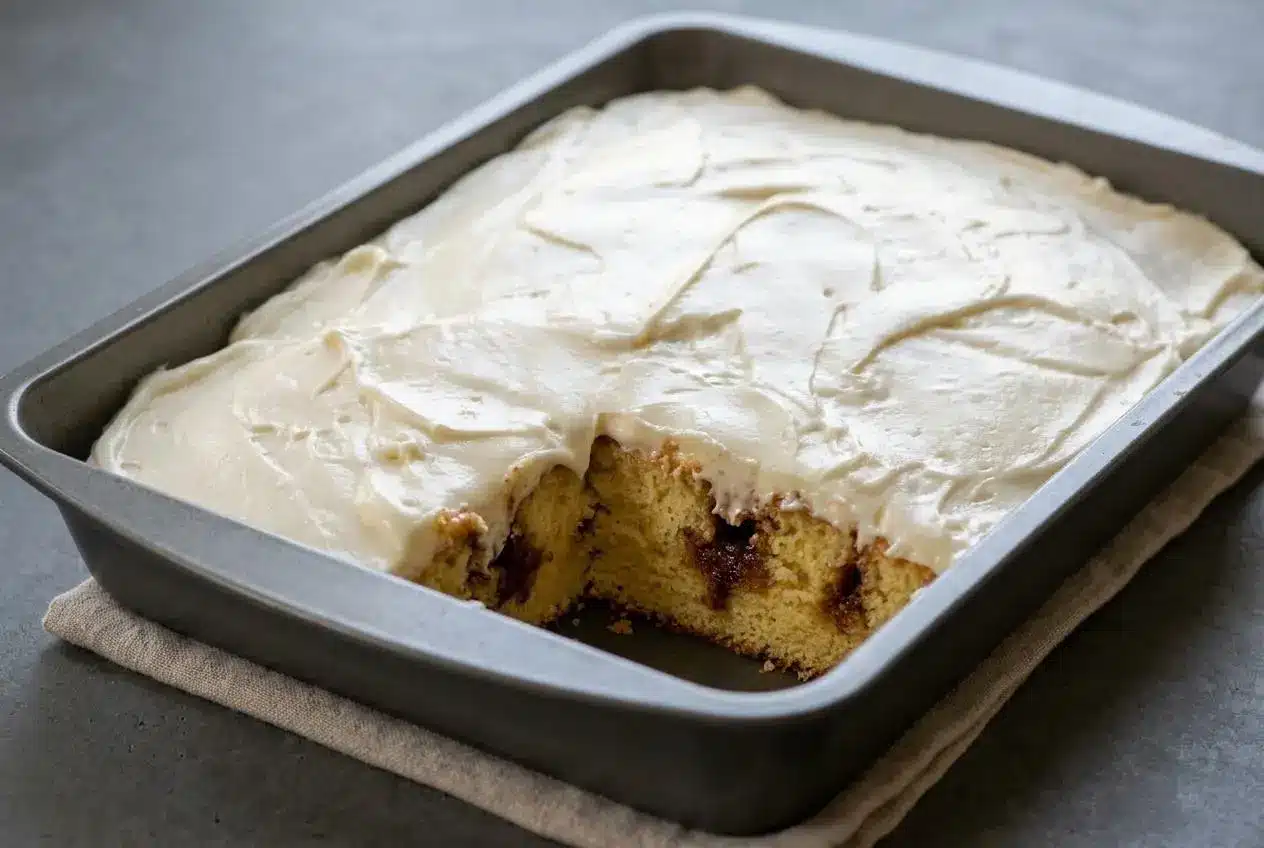
A cinnamon roll poke cake is a tender 9×13-inch sheet cake filled with brown sugar, cinnamon, and sweetened condensed milk, then topped with creamy cream cheese frosting.
This cinnamon roll poke cake brings the buttery, spiced aroma of a bakery cinnamon roll to a soft vanilla cake without mixing or proofing yeast dough. Each spoonful of filling settles into the cake’s little channels for a gooey center.
Cool cream cheese frosting balances the warm brown sugar swirl, so every square tastes rich without becoming overly sweet. The clean-slice trick comes at the end.
Use the round handle of a wooden spoon and leave a small space between holes so the filling spreads through the cake instead of collecting underneath it.
What Makes Cinnamon Roll Poke Cake So Irresistible
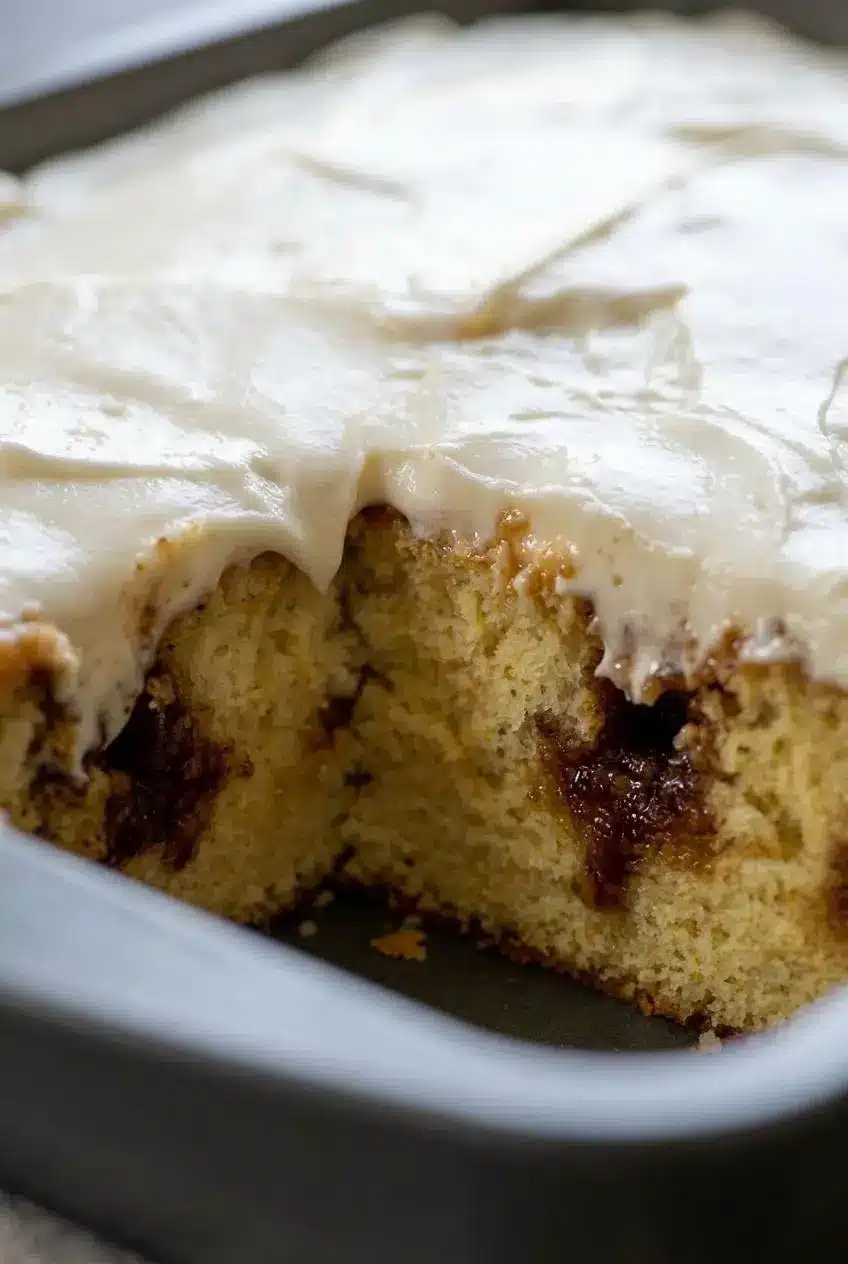
Poke cake works because the holes give a rich filling somewhere to go. Instead of sitting on top, the warm cinnamon mixture sinks into the tender crumb and creates pockets that echo the soft, sticky middle of a cinnamon roll.
Sweetened condensed milk gives the filling its thick, luscious body, while brown sugar and cinnamon bring that familiar caramel-like bakery flavor. The frosting adds a cool tang that keeps the buttery filling from tasting flat or cloying.
A boxed cake mix makes this dessert especially practical for brunches, potlucks, and casual celebrations. You get the comfort of cinnamon rolls without rolling dough, waiting for it to rise, or worrying about shaping spirals. If filled sheet cakes are your thing, this Boston cream poke cake uses the same satisfying soak-into-the-crumb idea in a different flavor direction.
The key is control. The cake should absorb the filling through deep channels, while the base stays intact enough to cut into tidy squares after chilling.
Essential Ingredients and Role Breakdown
Each ingredient supports a specific part of the finished cake: the mix gives structure, the filling adds moisture and spice, and the frosting brings creamy richness and tangy balance.
For the cake
- 1 box vanilla cake mix, plus ingredients called for on box
For the filling
- 1 (14 oz) can sweetened condensed milk
- 4 tablespoons (1/4 cup) unsalted butter, melted
- 1/2 cup brown sugar, packed
- 1 teaspoon cinnamon
- 1/4 teaspoon salt
For the frosting
- 8 oz cream cheese
- 1/2 cup (1 stick) unsalted butter, softened
- 2 1/2 cups powdered sugar
- 1 teaspoon pure vanilla extract
- 1/4 teaspoon salt
- 1-2 tablespoons heavy cream
The Cake Base Options
Vanilla cake mix provides a dependable, tender structure that can hold a generous filling without falling apart. A white cake mix also works as an optional swap when you want a lighter-colored crumb and stronger contrast against the dark cinnamon channels. Yellow cake mix is another good option if you prefer a slightly richer, buttery flavor.
The Gooey Cinnamon Roll Filling
Sweetened condensed milk acts as the rich carrier for the filling, helping it flow into the holes while keeping the crumb moist. Melted butter rounds out the flavor, and packed brown sugar supplies a deeper molasses note than granulated sugar. Cinnamon gives the mixture its warm bakery aroma, while the small amount of salt sharpens the sweetness.
Whisk until the brown sugar looks fully dissolved rather than sandy. If the sugar seems dry or stubborn, gently warm the mixture just enough to smooth it out before pouring.
The Cream Cheese Frosting
Cream cheese gives the frosting the tang that makes cinnamon-roll-style icing so appealing. Powdered sugar thickens it, softened butter adds a smooth finish, and heavy cream lets you loosen the texture only if needed. For a deeper look at getting the texture right, this cream cheese frosting guide is useful.
I bring the cream cheese and butter fully to room temperature before beating because even a cool center can leave tiny lumps in an otherwise silky frosting.
How to Make Cinnamon Roll Poke Cake
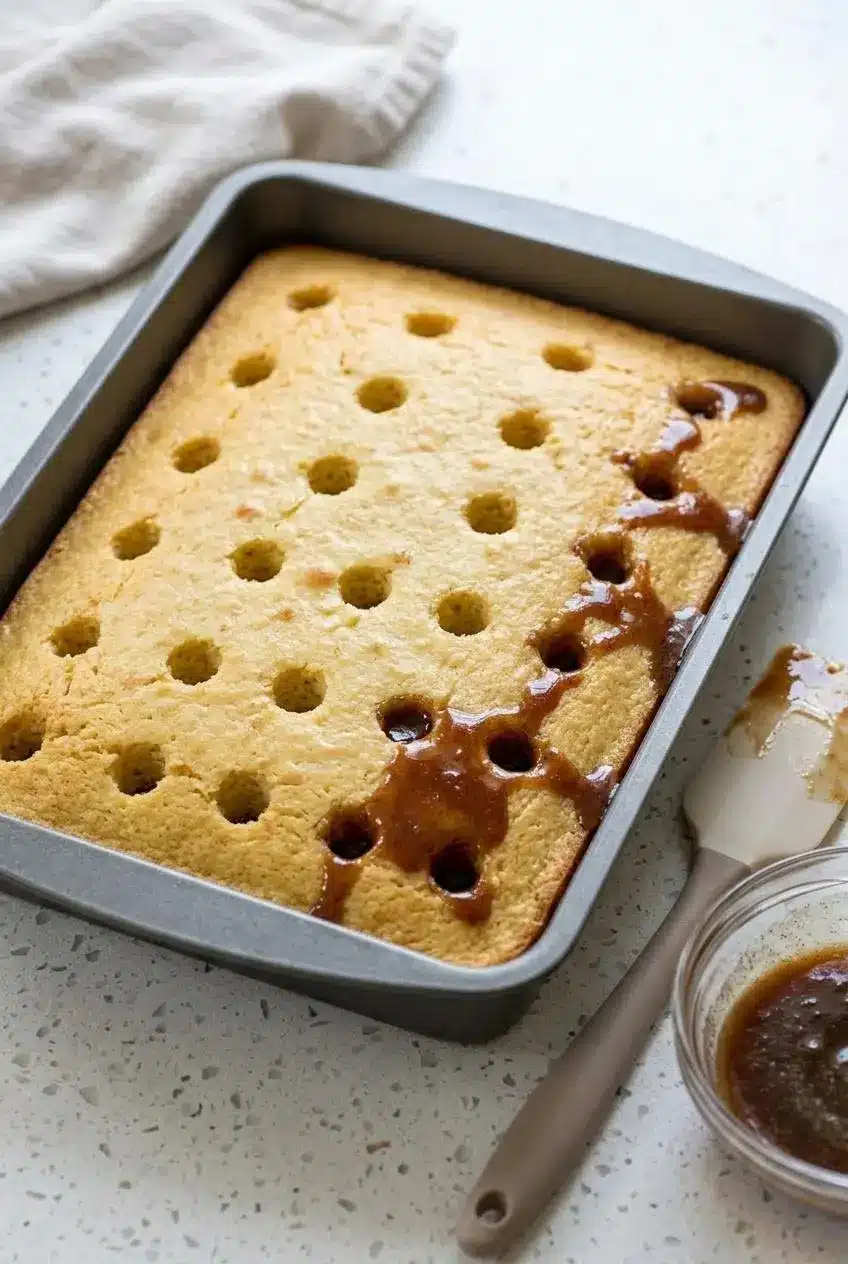
Work in stages so the cake can set, the filling can absorb evenly, and the frosting stays smooth on top rather than melting into the crumb.
- Heat the oven to 350°F and grease a 9×13-inch baking dish with butter or nonstick spray.
Coat the bottom and corners well so the finished cake releases cleanly. - Prepare the vanilla cake batter as directed on the box, pour it into the dish, and bake for about 20 minutes.
Check the center with a toothpick, and remove the cake when the tester comes out clean. - Let the baked cake cool slightly before moving on.
The crumb should feel set on top instead of soft and steamy, which helps it take in filling without turning gummy. - Whisk the sweetened condensed milk, melted butter, brown sugar, cinnamon, and salt in a clean bowl.
Keep whisking until the mixture looks smooth and the sugar no longer feels grainy. - Beat the softened cream cheese and butter with an electric mixer until completely smooth.
The mixture should look creamy and uniform, with no visible cream cheese specks. - Mix in the powdered sugar gradually on low speed, then add the vanilla, salt, and 1 tablespoon heavy cream before beating on high.
Stop when the frosting looks light and fluffy, adding the remaining tablespoon of cream only if you want a softer spread. - Use a wooden spoon handle to poke holes across the cake, stopping about 80 percent of the way down, then pour on the filling and press it into the holes with a rubber spatula.
The filling should settle into the channels without flowing around the cake’s edges or pooling at the bottom. - Wait until the filling has soaked in, then spread the cream cheese frosting evenly over the surface and chill for 30 minutes before slicing.
The cake should feel cool to the touch, and the chilled frosting will hold neat edges when cut.
Baking Success Tips and Common Pitfalls to Avoid
Small details make the difference between a gooey cake and a soggy one. These quick fixes keep the filling, crumb, and frosting working together.
- Filling pools underneath the cake: The holes likely reached the bottom of the pan. Poke deeply, but stop before the spoon handle touches the base so the cake keeps a sturdy bottom layer.
- The crumb turns mushy: Filling poured onto a piping-hot cake can overwhelm the soft interior. Let the cake cool slightly first, then give the filling a moment to settle before frosting.
- The brown sugar filling feels grainy: Briefly warm the butter and brown sugar mixture, then whisk again until the crystals melt into the condensed milk. Use gentle heat rather than cooking the mixture.
- The frosting has lumps: Cold cream cheese or butter is usually the culprit. Let both soften thoroughly, then beat them together before adding any powdered sugar.
- The frosting drags crumbs across the top: Give the filling time to absorb and make sure the cake surface has cooled before spreading. Use broad, gentle strokes with the spatula.
- The cinnamon flavor seems muted: Make sure the cinnamon is whisked evenly through the filling. Its aroma should be noticeable as the brown sugar and butter combine.
Flavor and Texture Variations to Try
Keep the main cake as written, then use these optional ideas when you want to shift the crumb, frosting, or crunch without changing the core method.
- White cake mix: Swap in white cake mix for a paler, lighter crumb that makes the cinnamon filling stand out in distinct dark swirls.
- Maple cardamom accent: Add pure maple extract and a pinch of ground cardamom to the filling for a deeper, gently aromatic variation. Keep the flavors subtle so cinnamon stays in front.
- Toasted nut topping: Scatter toasted chopped pecans or walnuts over the finished frosting for buttery crunch reminiscent of a sticky bun.
- Individual cinnamon desserts: For a portable option built around the same warm spice and creamy icing profile, try these cinnamon roll cupcakes.
Whipped Cream Cheese Frosting
For a lighter topping, softly whip heavy cream separately and fold it into the finished cream cheese frosting. The result is airier and less dense, while still keeping the tangy flavor that belongs with cinnamon filling. Fold gently so the frosting stays fluffy rather than deflating.
Pecan Praline Crunch Addition
Toasted chopped pecans bring a nutty, buttery crunch that plays well against the soft cake and creamy frosting. Walnuts work too, with a slightly earthier flavor. Add the nuts over the icing shortly before serving so they keep their texture.
Refrigerator Storage and Serving
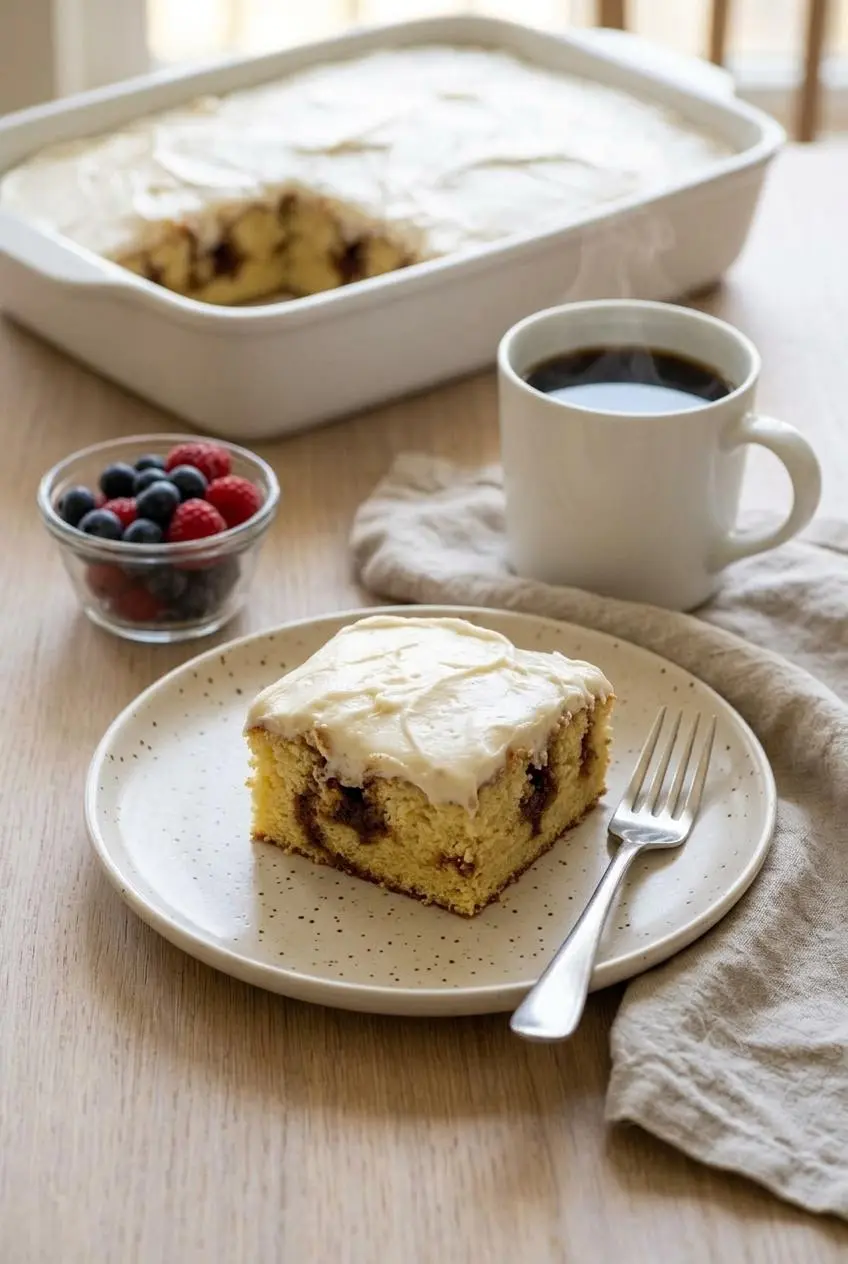
Because the frosting contains cream cheese and butter, keep the cake covered in the refrigerator when it is not being served. Slice only what you need, then cover the remaining cake snugly to protect the frosting and keep the crumb from drying out.
For the neatest squares, serve the cake chilled or let an individual slice sit briefly until it is pleasantly cool rather than firm. It also works beautifully at brunch beside fresh berries or with a mug of dark roast coffee.
If you are planning for a gathering, bake, fill, frost, and chill the cake before guests arrive so the layers have time to settle. Avoid leaving it out longer than needed, especially in a warm room.
Conclusion
This cinnamon roll-inspired cake delivers soft vanilla crumb, gooey brown sugar cinnamon pockets, and tangy cream cheese frosting in every slice. The boxed mix shortcut keeps the process approachable while the filling gives it that bakery-style comfort.
Take your time with the hole depth, let the filling absorb, and chill before cutting. Those three details turn a good sheet cake into clean, satisfying squares.
Frequently Asked Questions
Can I Make Cinnamon Roll Poke Cake With White Cake Mix?
Yes. White cake mix makes a tender, light-colored base that highlights the cinnamon filling. It also gives the brown sugar channels stronger contrast when you cut the cake into squares.
Does Cinnamon Roll Poke Cake Need to Be Stored in the Refrigerator?
Yes. Keep it covered and refrigerated because the frosting contains cream cheese and butter. Serve chilled or slightly cool for the cleanest slices and the most stable frosting.
How Do I Prevent the Poke Cake From Becoming Soggy?
Let the cake cool slightly before adding the filling, and do not poke all the way to the bottom of the pan. Pour the filling evenly, then use a rubber spatula to guide it into the holes instead of forcing it into one area.
Can I Freeze Leftover Cinnamon Roll Poke Cake?
This method does not include freezing directions, so it is best to keep leftover slices covered and refrigerated instead. That protects the cream cheese frosting texture and keeps the filled crumb at its best for serving.
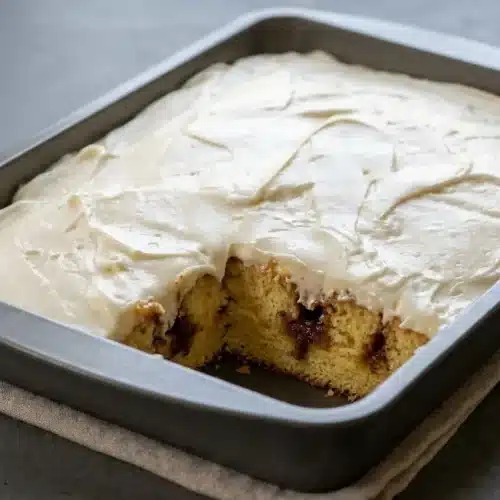
Cinnamon Roll Poke Cake

Equipment
- 9×13-inch baking dish
- Mixing Bowl
- Electric Mixer
- Wooden Spoon
- Rubber spatula
Ingredients
For the cake
- 1 box vanilla cake mix, plus ingredients called for on box
For the filling
- 1 can sweetened condensed milk 14 oz
- 4 tablespoons unsalted butter, melted 1/4 cup
- 1/2 cup brown sugar, packed
- 1 teaspoon cinnamon
- 1/4 teaspoon salt
For the frosting
- 8 oz cream cheese
- 1/2 cup unsalted butter, softened 1 stick
- 2 1/2 cups powdered sugar
- 1 teaspoon pure vanilla extract
- 1/4 teaspoon salt
- 1-2 tablespoons heavy cream
Instructions
- Heat the oven to 350°F and grease a 9×13-inch baking dish with butter or nonstick spray. Coat the bottom and corners well so the finished cake releases cleanly.
- Prepare the vanilla cake batter as directed on the box, pour it into the dish, and bake for about 20 minutes. Check the center with a toothpick, and remove the cake when the tester comes out clean.
- Let the baked cake cool slightly before moving on. The crumb should feel set on top instead of soft and steamy, which helps it take in filling without turning gummy.
- Whisk the sweetened condensed milk, melted butter, brown sugar, cinnamon, and salt in a clean bowl. Keep whisking until the mixture looks smooth and the sugar no longer feels grainy.
- Beat the softened cream cheese and butter with an electric mixer until completely smooth. The mixture should look creamy and uniform, with no visible cream cheese specks.
- Mix in the powdered sugar gradually on low speed, then add the vanilla, salt, and 1 tablespoon heavy cream before beating on high. Stop when the frosting looks light and fluffy, adding the remaining tablespoon of cream only if you want a softer spread.
- Use a wooden spoon handle to poke holes across the cake, stopping about 80 percent of the way down, then pour on the filling and press it into the holes with a rubber spatula. The filling should settle into the channels without flowing around the cake’s edges or pooling at the bottom.
- Wait until the filling has soaked in, then spread the cream cheese frosting evenly over the surface and chill for 30 minutes before slicing. The cake should feel cool to the touch, and the chilled frosting will hold neat edges when cut.