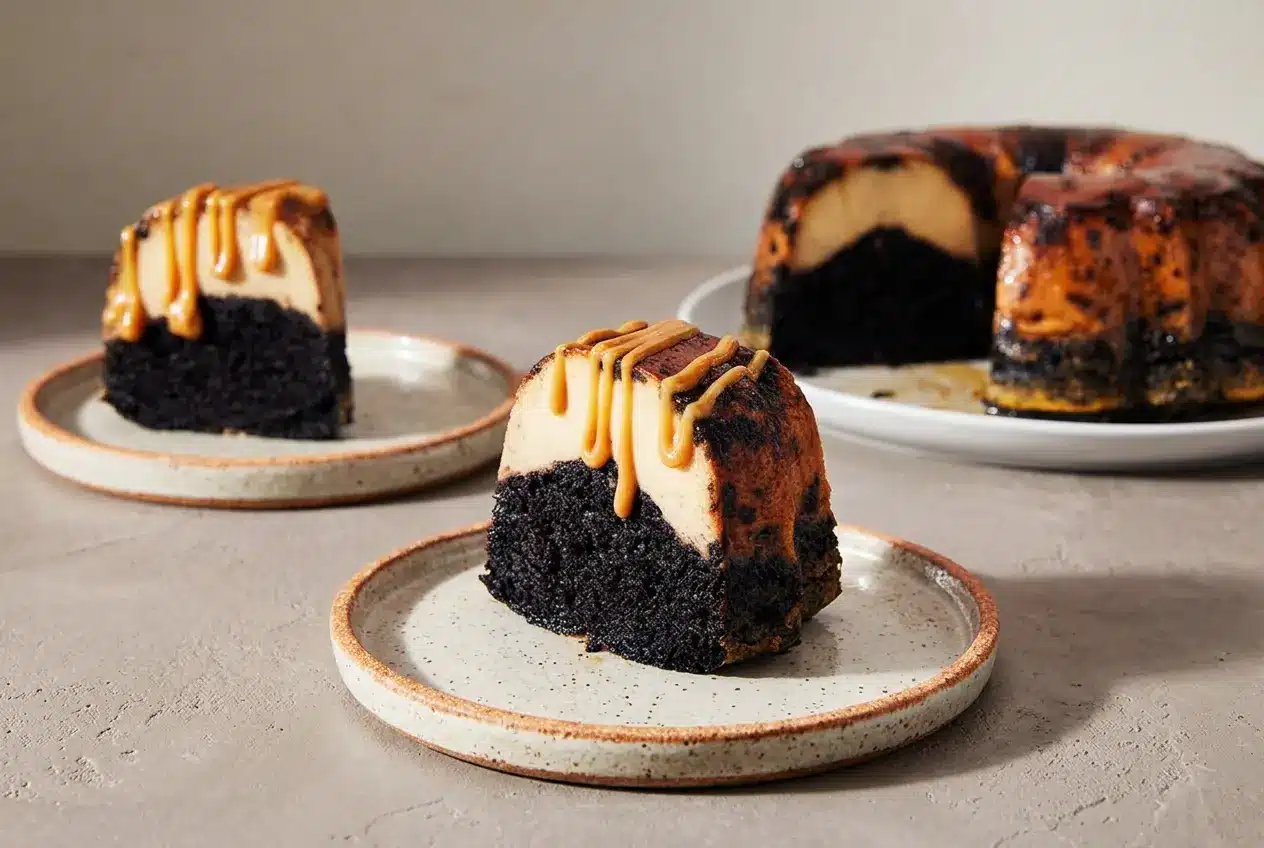
This chocoflan recipe combines silky cream cheese flan, fudgy chocolate cake, and amber caramel in one Bundt pan. Bake the layers together in a water bath, cool and chill thoroughly, then warm the pan before flipping onto a rimmed platter.
Chocoflan, also called pastel imposible, brings two desserts together without baking them separately. Thick chocolate batter goes into the pan before the pourable custard, yet the layers exchange positions in the oven.
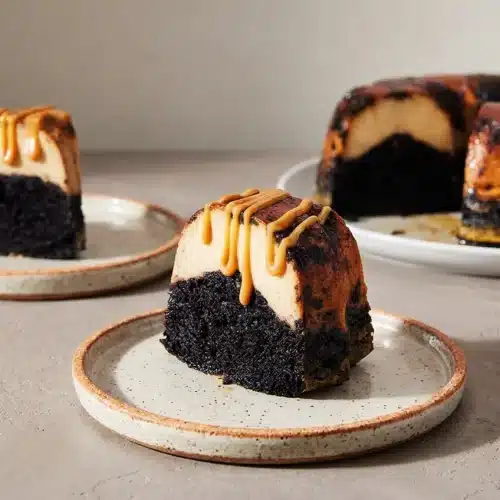
The contrast makes each slice special: smooth custard, dark cocoa cake, and caramel that runs around the edges. The trickiest part comes after baking. Give the flip a little patience.
Choose a classic Bundt pan with rounded curves rather than intricate crevices that can trap the flan.
Key Ingredients for the Caramel, Cake, and Flan Layers
Each ingredient helps build the contrast: sugar becomes amber caramel, cocoa and espresso deepen the chocolate flavor, buttermilk and oil provide moisture, and eggs, milk, and cream cheese give the flan its smooth structure.
- 1/2 cup (99g) granulated sugar
- 1/2 cup (113g) water, hot*
- 1/2 teaspoon espresso powder
- 1/2 cup (99g) vegetable oil
- 1/2 cup (113g) buttermilk
- 1 large egg, at room temperature
- 1 1/2 teaspoons King Arthur Pure Vanilla Extract
- 1 1/2 cups (180g) King Arthur Unbleached All-Purpose Flour
- 1 cup (198g) granulated sugar
- 6 tablespoons (31g) black cocoa*
- 6 tablespoons (32g) Dutch-process cocoa
- 1 teaspoon baking powder
- 1/2 teaspoon baking soda
- 1/2 teaspoon table salt
- one 14-ounce can (397g) sweetened condensed milk
- 1 1/2 cups (340g) evaporated milk
- 5 large eggs, at room temperature
- 4 ounces (113g) cream cheese, softened
- 2 teaspoons King Arthur Pure Vanilla Extract
- 1 teaspoon King Arthur Pumpkin Pie Spice, optional
- 1/8 teaspoon table salt
- Dulce de leche, for drizzling
The first sugar measurement makes the caramel; the second sweetens the cake. Black cocoa provides dark color and a roasted cocoa character, while Dutch-process cocoa rounds out the chocolate flavor. Espresso adds depth, and buttermilk balances the sweetness.
Sweetened condensed milk supplies sweetness and richness to the flan. Evaporated milk adds milk flavor without the same sweetness, and cream cheese gives the custard body. Use the prescribed room-temperature eggs and softened cream cheese so the mixture blends smoothly.
I’d give the cream cheese’s softness more attention than the blender speed: firm pieces are harder to incorporate into a smooth custard.
How to Make Chocoflan
Keep the caramel, cake, and flan measurements separate as you work. The batter should be thick enough to spread, while the blended custard should pour easily.
Prep: 45 minutes. Cook: 1 hour 50 minutes. Total: 6 hours 30 minutes. Yield: one Bundt cake, 16 servings.
- Set the oven to 350°F, generously coat a simply shaped 12-cup Bundt pan with nonstick spray, and nest it inside a roasting pan.
A classic curved design gives the delicate custard fewer places to catch during release. - Heat the caramel sugar in a small, heavy-bottomed skillet over medium heat, stirring frequently with a flexible spatula for about 7 to 10 minutes, then immediately pour it into the prepared Bundt pan.
Watch the sugar progress from dry grains to clumps and finally a fully melted amber syrup. - Dissolve the espresso powder in the hot water in a medium bowl or 4-cup liquid measuring cup, then whisk in the oil, buttermilk, egg, and vanilla.
The liquid should look evenly combined before you set it aside. - Sift the flour, cake sugar, both cocoas, baking powder, baking soda, and salt into a large bowl, then whisk everything together.
The dry mixture should have an even cocoa color without visible pockets of flour. - Whisk the wet mixture into the dry mixture until incorporated, then scrape the batter over the caramel and spread it evenly with a spatula.
Expect a thick chocolate batter rather than a thin, pourable mixture. - Process all the flan ingredients in a food processor or high-speed blender with at least a 5-cup capacity for about 25 to 30 seconds.
Stop when the cream cheese has incorporated and the custard looks completely smooth. - Ladle the custard gently across the surface of the chocolate batter using a ladle or large scoop.
Keep the spoonfuls delicate so they disturb the thick batter as little as possible. - Drape aluminum foil loosely over the Bundt pan, move the roasting pan into the oven, and add hot water to reach 2 to 3 inches up the Bundt pan’s sides.
The foil should cover the pan without fitting tightly against the mixture. - Bake covered for 1 hour, remove the foil, and continue baking uncovered for 40 to 50 minutes.
A toothpick or thin knife inserted into the cake near the center should emerge mostly clean, although moist, fudgy crumbs are fine. - Lift the Bundt pan out of the water bath, cool it completely on a rack for about 2 hours, then cover loosely with foil and refrigerate for at least 2 hours or overnight.
The dessert should be thoroughly chilled before you begin the release process. - Begin unmolding about 1 hour before serving by letting the chilled pan stand at room temperature for 30 to 45 minutes, then loosen the outer edge and center tube with an offset spatula or butter knife.
Work around both boundaries so neither edge remains attached to the pan. - Return the Bundt pan to the roasting pan, surround it with boiling water reaching 2 to 3 inches up its sides, wait 20 to 25 minutes, and invert promptly onto a large rimmed serving plate.
Some caramel may remain inside the pan even when the cake releases successfully.
For the cake, you may replace the espresso powder and hot water with 1/2 cup (113g) hot coffee.
For an optional extra-smooth finish, pass the blended custard through a fine-mesh sieve before gently ladling it over the cake batter. This is an optional handling choice, not a requirement for the recipe.
Why Chocoflan Is Called the “Impossible Cake”
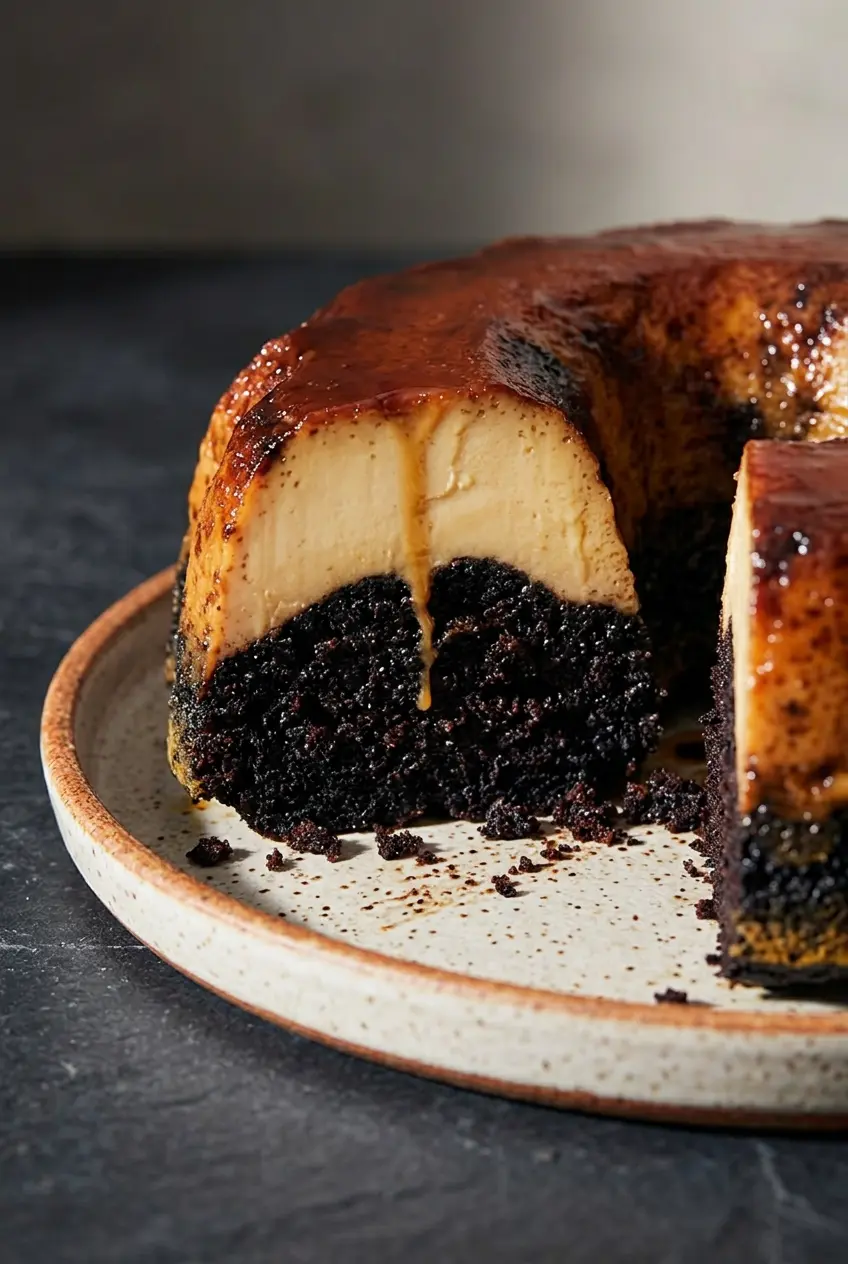
The “impossible” part is the reversal: cake batter starts beneath the flan mixture but finishes above it during baking. After inversion onto the plate, the flan sits on top.
Baking powder and baking soda expand the cake batter, making it lighter as it sets. The denser egg-and-milk custard settles toward the caramel. Gentle ladling preserves the initial separation; you don’t need to swirl or rearrange anything.
The water bath, or bain-marie, moderates the heat around the custard. The initial foil cover protects the surface during the first baking stage, followed by an uncovered finish.
How to Unmold Chocoflan Cleanly & Troubleshooting Tips
A clean release starts with generous greasing and ends with a thoroughly chilled dessert. Don’t try to flip it straight from the oven.
- Custard catches in the flutes: Intricate pan designs create more sticking points; choose broad, rounded curves and grease generously.
- Cake seems stuck after chilling: Follow the complete tempering, edge-loosening, and boiling-water bath sequence before inverting.
- The cake has a rounded bottom: An uneven cake surface can make the dessert sit less flat; spread the batter evenly during assembly and avoid pressing down on the delicate flan after release.
The Boiling-Water Bath Release Method
Let the chilled pan temper first, then loosen both the outside edge and the center tube. Return it to the roasting pan and add the boiling water as directed. This warms the caramel before the flip.
Use a rimmed plate large enough to catch the caramel. Keep your hands protected from the hot pan and water, and make the inversion one controlled movement.
How to Prevent Curdled or Bubbly Flan
Blend until smooth, then ladle gently rather than pouring forcefully. Keep the water bath and both foil stages intact. These details help protect the custard’s texture, although they don’t promise a completely bubble-free surface.
Use the cake’s toothpick cue rather than extending the bake until every crumb disappears. A few fudgy crumbs are expected.
Handling Caramel Left in the Bundt Pan
Caramel remaining in the pan doesn’t mean the dessert failed. You don’t need to scrape hardened sugar onto the delicate flan or keep warming the unmolded cake to recover every bit.
For cleanup, boiling water can help dissolve hardened sugar in the empty pan. Keep the pan off the stovetop unless its manufacturer specifically permits direct heat.
Flavor and Method Variations
Keep these optional ideas separate from the scratch recipe, since different caramel products and cake mixtures won’t necessarily behave identically.
Cajeta or Dulce de Leche Caramel Base
Cajeta brings a distinctive goat’s-milk caramel flavor, while dulce de leche offers a mellow, cooked-milk sweetness. Either represents an alternative to dry-sugar caramel, rather than an identical replacement. For another take on that flavor pairing, try this chocolate and caramel cake.
Warm Spiced Mexican Chocoflan With Cinnamon or Pumpkin Pie Spice
The listed pumpkin pie spice is optional and adds warm aroma to the flan. Cinnamon offers another Mexican chocolate-inspired direction, but it isn’t part of the official ingredient list.
Par-Baked Flan vs. Simultaneous Inversion and Cake Mix Shortcuts
- Simultaneous inversion: This scratch version bakes both mixtures together and lets them exchange positions.
- Par-baked flan: Other versions partially set the custard separately, so their assembly and baking schedule differ.
- Cake mix: Shortcut versions reduce batter preparation, but their proportions and timing aren’t interchangeable with this recipe.
How to Serve and Garnish Chocoflan
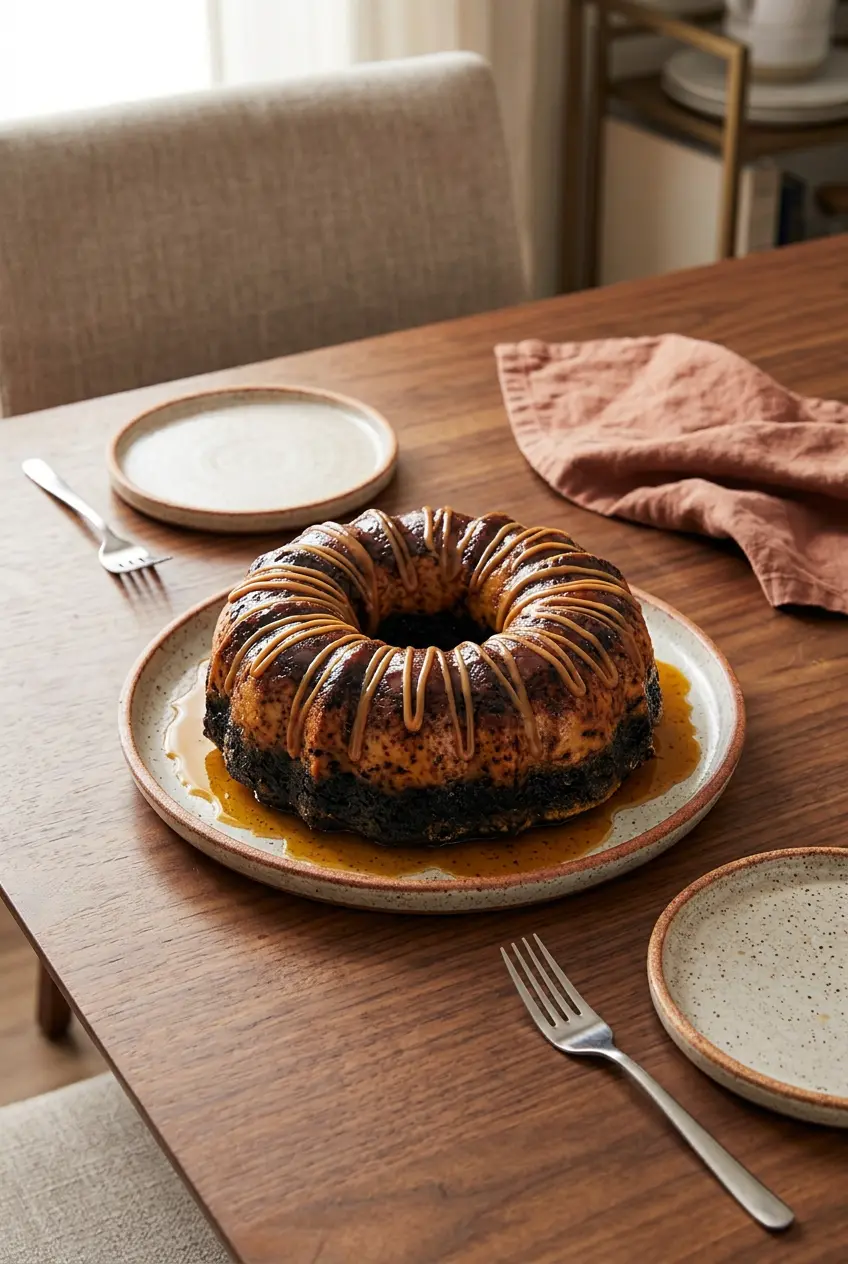
The rimmed platter does useful work: it catches the caramel surrounding the cake. Add the dulce de leche drizzle if desired, keeping it light enough that the flan and chocolate remain distinct.
Unsweetened whipped cream or fresh berries make optional contrasts to the rich custard. Neither needs to become part of the cake itself.
Storage and Make-Ahead Guidelines
Plan backward from serving, allowing for the full cooling, chilling, tempering, and release stages. The overnight chilling option makes it easier to separate baking from unmolding.
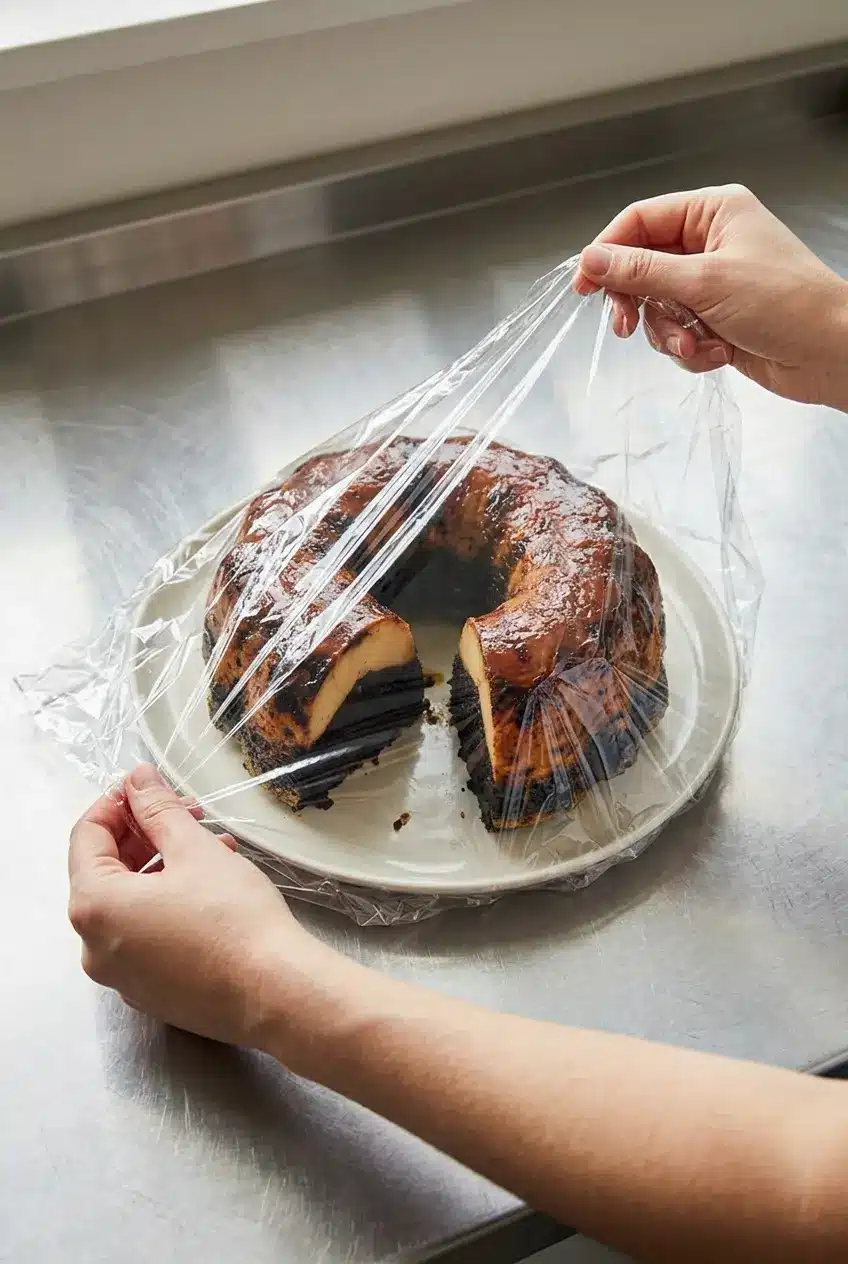
Keep leftovers refrigerated and loosely covered with plastic, leaving space above the glossy flan so the covering doesn’t pull at its surface. Freezing isn’t recommended for this dessert.
Final Thoughts on Making Chocoflan at Home
Chocoflan delivers its contrast in one pan: dark, fudgy cake beneath silky cream cheese custard and caramel.
Watch for moist cake crumbs at the end of baking, then give cooling and release their full attention. A patient finish makes the flip much less intimidating.
Frequently Asked Questions
Why Is Chocoflan Called the Impossible Cake?
The cake and custard exchange positions during baking. Leavening lifts the chocolate cake while the denser flan settles toward the caramel.
How Long Do I Have to Wait to Flip Chocoflan?
Wait until it has cooled completely and chilled thoroughly. Then complete the room-temperature tempering and hot-water release stages listed in the method.
Is Chocoflan Mexican or Filipino?
Chocoflan, or pastel imposible, is associated with Mexican baking. Filipino cuisine also has custard cakes, commonly pairing leche flan with sponge or chiffon cake.
Is Chocoflan Difficult to Make?
It’s approachable, but it requires patience. The blender handles the custard; watching the caramel and allowing enough chilling and release time need the most attention.
Can I Use Cajeta or Dulce de Leche Instead of Melting Sugar for the Caramel?
Yes, those are popular alternative styles, but they won’t produce exactly the same result as dry-sugar caramel. Dulce de leche is also an optional finishing drizzle here.
Why Did My Chocoflan Stick to the Bundt Pan?
Likely causes include intricate flutes, insufficient greasing, or caramel that hasn’t warmed enough for release. Follow the full loosening and hot-water bath sequence rather than forcing the cake out.
Chocoflan Recipe

Equipment
- 12-cup Bundt pan
- Roasting pan
- Small heavy-bottomed skillet
- Food processor or high-speed blender
Ingredients
- 1/2 cup (99g) granulated sugar
- 1/2 cup (113g) water hot*
- 1/2 teaspoon espresso powder
- 1/2 cup (99g) vegetable oil
- 1/2 cup (113g) buttermilk
- 1 large egg at room temperature
- 1 1/2 teaspoons King Arthur Pure Vanilla Extract
- 1 1/2 cups (180g) King Arthur Unbleached All-Purpose Flour
- 1 cup (198g) granulated sugar
- 6 tablespoons (31g) black cocoa*
- 6 tablespoons (32g) Dutch-process cocoa
- 1 teaspoon baking powder
- 1/2 teaspoon baking soda
- 1/2 teaspoon table salt
- one 14-ounce can (397g) sweetened condensed milk
- 1 1/2 cups (340g) evaporated milk
- 5 large eggs at room temperature
- 4 ounces (113g) cream cheese softened
- 2 teaspoons King Arthur Pure Vanilla Extract
- 1 teaspoon King Arthur Pumpkin Pie Spice optional
- 1/8 teaspoon table salt
- Dulce de leche for drizzling
Instructions
- Set the oven to 350°F, generously coat a simply shaped 12-cup Bundt pan with nonstick spray, and nest it inside a roasting pan. A classic curved design gives the delicate custard fewer places to catch during release.
- Heat the caramel sugar in a small, heavy-bottomed skillet over medium heat, stirring frequently with a flexible spatula for about 7 to 10 minutes, then immediately pour it into the prepared Bundt pan. Watch the sugar progress from dry grains to clumps and finally a fully melted amber syrup.
- Dissolve the espresso powder in the hot water in a medium bowl or 4-cup liquid measuring cup, then whisk in the oil, buttermilk, egg, and vanilla. The liquid should look evenly combined before you set it aside.
- Sift the flour, cake sugar, both cocoas, baking powder, baking soda, and salt into a large bowl, then whisk everything together. The dry mixture should have an even cocoa color without visible pockets of flour.
- Whisk the wet mixture into the dry mixture until incorporated, then scrape the batter over the caramel and spread it evenly with a spatula. Expect a thick chocolate batter rather than a thin, pourable mixture.
- Process all the flan ingredients in a food processor or high-speed blender with at least a 5-cup capacity for about 25 to 30 seconds. Stop when the cream cheese has incorporated and the custard looks completely smooth.
- Ladle the custard gently across the surface of the chocolate batter using a ladle or large scoop. Keep the spoonfuls delicate so they disturb the thick batter as little as possible.
- Drape aluminum foil loosely over the Bundt pan, move the roasting pan into the oven, and add hot water to reach 2 to 3 inches up the Bundt pan’s sides. The foil should cover the pan without fitting tightly against the mixture.
- Bake covered for 1 hour, remove the foil, and continue baking uncovered for 40 to 50 minutes. A toothpick or thin knife inserted into the cake near the center should emerge mostly clean, although moist, fudgy crumbs are fine.
- Lift the Bundt pan out of the water bath, cool it completely on a rack for about 2 hours, then cover loosely with foil and refrigerate for at least 2 hours or overnight. The dessert should be thoroughly chilled before you begin the release process.
- Begin unmolding about 1 hour before serving by letting the chilled pan stand at room temperature for 30 to 45 minutes, then loosen the outer edge and center tube with an offset spatula or butter knife. Work around both boundaries so neither edge remains attached to the pan.
- Return the Bundt pan to the roasting pan, surround it with boiling water reaching 2 to 3 inches up its sides, wait 20 to 25 minutes, and invert promptly onto a large rimmed serving plate. Some caramel may remain inside the pan even when the cake releases successfully.