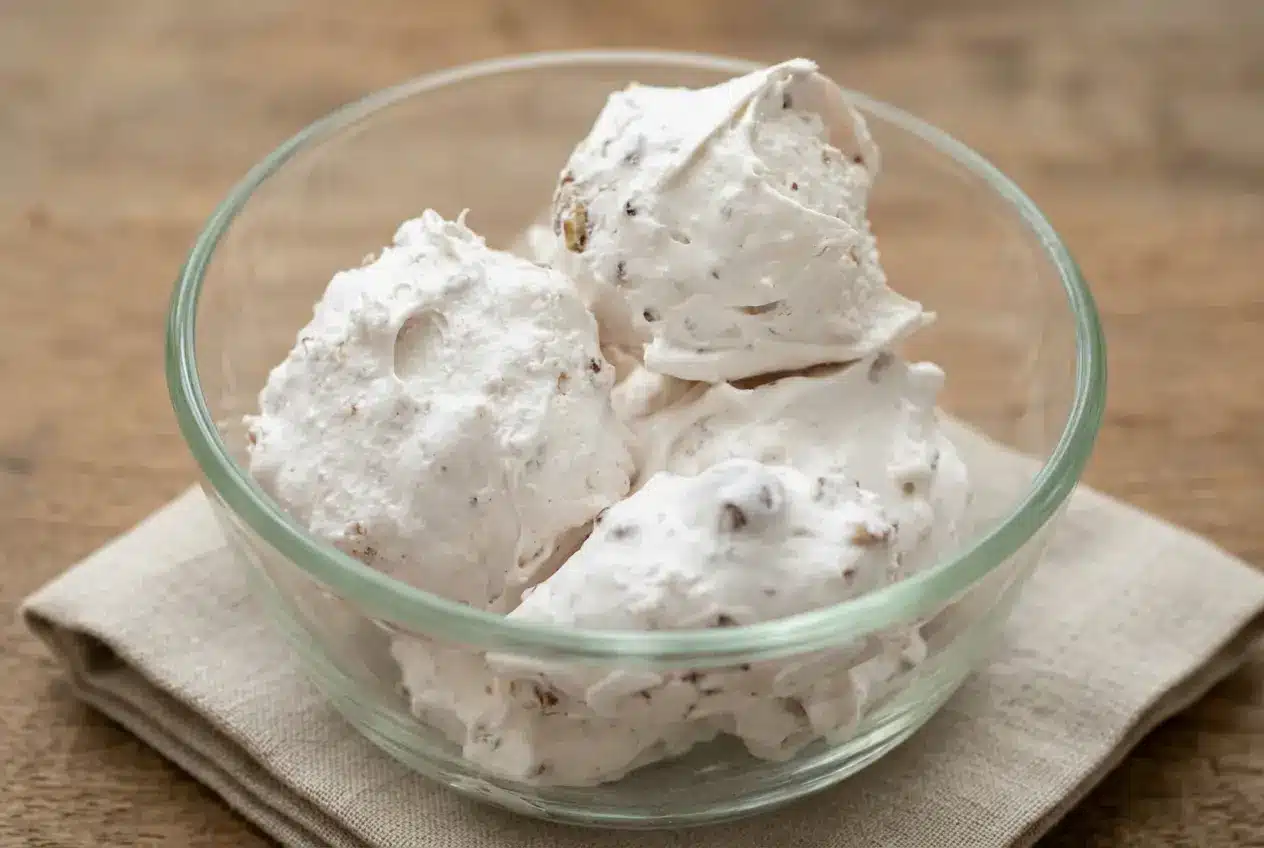
To make divinity candy, beat hot sugar syrup into stiffly whipped egg whites in two stages, then mix in vanilla and pecans. The result is an airy, cloud-like sweet with crunchy nuts that holds its shape when glossy ribbons thicken into firm peaks.
Old-fashioned divinity candy is a Southern favorite with a delicate exterior and a sweet, melt-in-your-mouth center. Unlike baked cookies or chewy caramels, these spoon-shaped confections get their structure from boiled syrup and whipped egg whites.
The pecans bring welcome crunch, while vanilla softens the sweetness. A candy thermometer handles the syrup stages; texture tells you when to stop beating. Watch for that shape-holding mound.
Set out parchment paper and portioning spoons before heating the syrup, because finished divinity firms up quickly.
Key Ingredients & Equipment Needed
Sugar builds the candy’s structure, egg whites supply its airy lift, and corn syrup helps keep the texture smooth. Water supports even dissolving, while pecans, salt, and vanilla add crunch, balance, and aroma.
- 2½ Cups Sugar
- ½ Cup Water
- ½ Cup Light Corn Syrup
- 1 Cup Pecans (chopped)
- ¼ teaspoon Salt
- 2 Egg Whites
- 1 teaspoon Vanilla
Sugar, water, and corn syrup: Granulated sugar provides sweetness and the framework that firms as the candy cools. Water lets the sugar dissolve before boiling concentrates the syrup. Light corn syrup interferes with sugar crystal formation, reducing the chance of a gritty bite.
Egg whites: Beating traps air in the whites, creating the foam that carries the syrup. Freshly separated whites work well. Carton whites vary by product, so check that the label specifically allows whipping or meringue preparation rather than assuming every carton will behave alike.
Pecans, salt, and vanilla: Chopped pecans break up the sweetness with nutty crunch. Salt balances the flavor, and vanilla adds a warm finish without changing the candy’s pale color substantially.
Use a large, heavy-bottomed saucepan for steady heating and an accurate candy thermometer for both syrup stages. Keep the thermometer’s sensing tip in the syrup without touching the pan bottom. A sturdy stand mixer handles the thickening mixture, and parchment provides a surface for dropping the candy.
Start with a thoroughly clean, grease-free mixer bowl and whisk. Even a little residual fat can interfere with the egg whites’ volume.
I favor evenly chopped pecans here: large chunks can drag through a spoonful, while smaller pieces distribute crunch throughout each mound.
Step-by-Step Instructions for Classic Divinity Candy
This method adds syrup twice: the first addition builds a sweetened foam, and the more concentrated second addition helps the mixture develop its finished candy texture. Follow the sequence rather than combining the pours.
Prep: 5 minutes. Cook: 20 minutes. Total: 55 minutes. Yield: about 3 dozen pieces. Let the texture, rather than the clock alone, guide the final beating and setting.
- Combine the light corn syrup, sugar, salt, and water in a large saucepan, stirring to moisten the sugar evenly.
The mixture should have no dry pockets before heating. - Heat the mixture while moving a spoon steadily through it until the sugar has dissolved.
Look for a smooth syrup without visible sugar granules. - Stop stirring and let the syrup cook to 250°F on a candy thermometer.
Watch the reading with the sensing tip clear of the saucepan bottom. - Use the stand mixer to whip the egg whites into a firm foam.
When you lift the whisk, the peaks should stand upright rather than fold over. - With the mixer beating continuously, feed approximately half of the hot syrup into the whites in a narrow, gradual stream.
Aim along the inside of the bowl, clear of the moving whisk, to limit splashing. - Return the saucepan containing the remaining syrup to the burner and heat it to 270°F.
The syrup will become more concentrated as it cooks. - Keep the mixer running as you gradually pour the remaining hot syrup into the whipped mixture.
Use the same controlled stream, avoiding direct contact with the spinning whisk. - Beat the mixture until it becomes thick enough to retain a distinct mound.
It should look shiny but substantial, with ribbons that hold rather than immediately disappear. - Distribute the vanilla and chopped pecans through the thickened candy.
The nuts should appear evenly scattered throughout the mixture. - Use spoons to portion individual mounds onto parchment, then leave them to cool and set completely.
Finished pieces should retain their peaks instead of spreading into puddles.
For both syrup additions, pour close to the inside wall of the bowl without letting the stream strike the whisk. Pouring onto the moving wires can scatter hot syrup and leave hardened sugar threads around the bowl. Keep your hands clear of the stream.
As beating continues, the mixture offers more resistance and gathers into heavier ribbons. The mixer may sound more loaded. Those changes tell you to watch closely, but they do not replace checking whether the candy holds its shape.
The beater test: Stop the mixer before lifting the whisk. The candy should cling in a thick mass rather than run off in a loose sheet. Aim for a satiny shine, not a wet, flowing gloss; you do not need to beat it completely dull.
The spoon-drop test: Before adding the vanilla and nuts, place a small test spoonful on parchment. If it stays mounded with a defined peak, proceed. If it spreads, continue beating and check again. Once it passes, work promptly through mixing and portioning.
What Is Divinity Candy? (History & Texture)
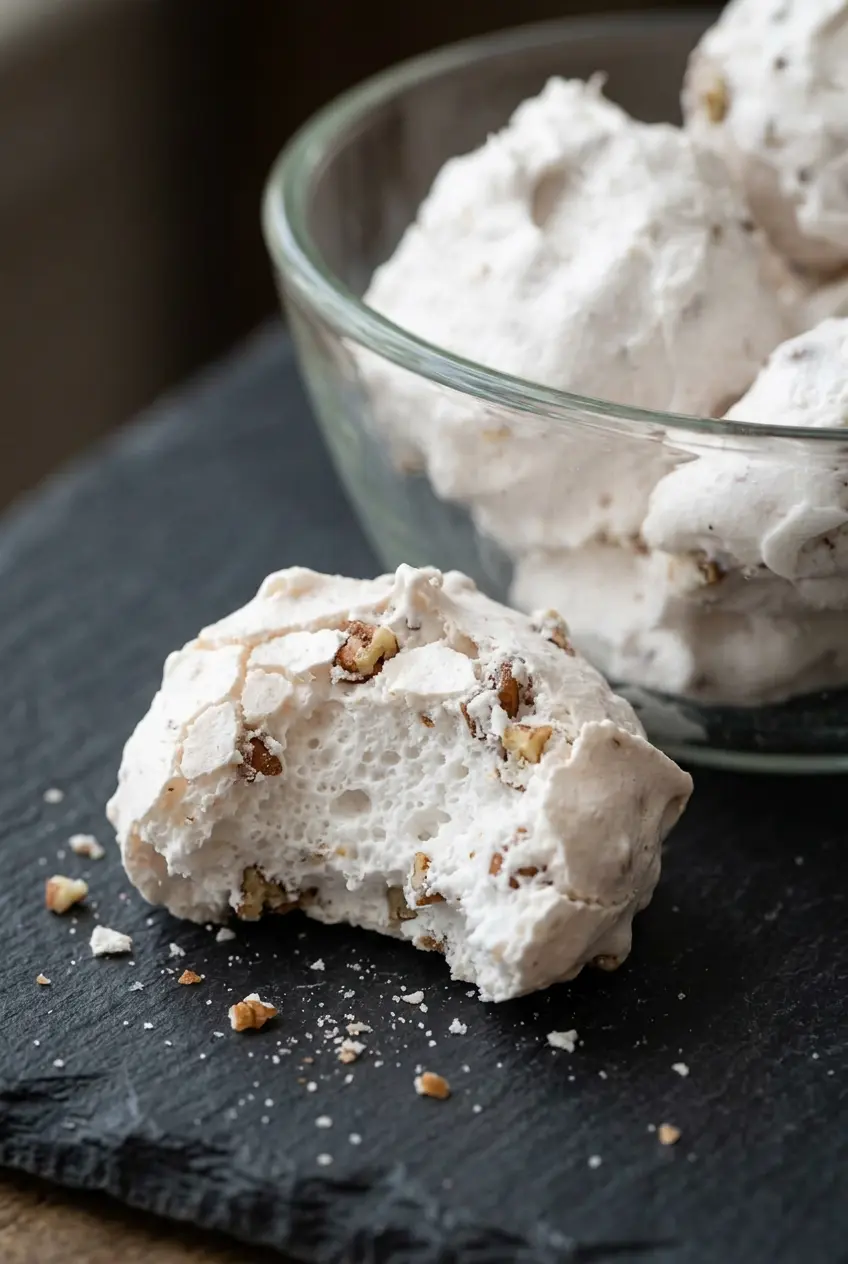
Divinity is an airy American sugar confection strongly associated with Southern holiday candy trays. Its texture falls somewhere between meringue, marshmallow, and nougat, though it has its own delicate, lightly crumbly bite.
It became popular in the early twentieth century as commercial corn syrup grew more common in home kitchens. Like old-fashioned potato candy, it belongs to a tradition of nostalgic homemade sweets often shared during the holidays.
Baked meringues dry in the oven; divinity sets without baking. Typical marshmallows use gelatin for elastic bounce, while this candy relies on egg whites and concentrated syrup. French nougat shares the whipped-white-and-syrup approach but often has a denser, chewier texture and includes honey.
Essential Tips & Troubleshooting for Perfect Divinity
Most divinity problems trace back to moisture, sugar crystals, thermometer readings, or the point at which you stop beating. Identify the texture problem before trying to correct it.
Why Weather and Humidity Matter
Choose a dry, low-humidity day whenever possible. Sugar attracts moisture, so damp air can leave the candy tacky or interfere with its ability to form distinct, dry-surfaced mounds.
Avoid working beside a steaming dishwasher or simmering pot. A dry work area helps, but it cannot guarantee a firm batch when the surrounding air is very humid.
Preventing Sugar Crystallization
- Grainy syrup: Stray sugar crystals can encourage more crystals to form. Before boiling, wash clinging granules down the saucepan walls with a wet pastry brush.
- Crystals developing during cooking: Stirring or unnecessary movement can encourage crystallization. Once the sugar dissolves, leave the boiling syrup undisturbed.
- Unexpected texture despite following the method: An inaccurate thermometer may be misleading you. Check it in boiling water against the expected boiling point for your elevation, keeping the sensing tip away from the pan.
If the thermometer reads incorrectly, follow its calibration directions or replace it before making candy. At higher elevations, use locally appropriate candy-making guidance rather than treating sea-level readings as universal.
Fixing Divinity That Is Too Soft or Too Hard
- Loose mixture still in the bowl: If the syrup reached its intended stages, the candy may simply need more beating. Continue until a parchment test mound stops spreading.
- Persistent sticky puddles: Undercooked syrup or humid conditions may be responsible. More beating cannot reliably correct either problem; check the thermometer and weather before another batch.
- Dry, crumbly candy: Excessive syrup cooking or beating can take the mixture past its workable stage. Portion promptly once it passes the mound test rather than chasing a completely matte finish.
There is no dependable universal rescue for an overcooked or overbeaten batch. Adding unmeasured water or extra syrup can create another texture problem, so prevention is the more useful approach.
Flavor Variations & Substitutions
Keep these optional changes separate from the classic pecan version, and avoid generous additions that weigh down the whipped candy.
- Toasted pecans: For deeper nuttiness, optionally dry-toast the pecans and let them cool completely before using them.
- Pecan crowns: An optional pecan half on each freshly dropped mound adds a decorative finish.
- Chocolate chip divinity: Gently fold miniature chocolate chips in at the end; residual warmth may soften them and create chocolate streaks.
Peppermint Divinity Candy
Crushed peppermint candies add cool flavor and little crunchy flecks. Alternatively, choose a water-based mint extract for peppermint flavor without the candy pieces. Keep the flavor restrained so it complements rather than overwhelms the confection.
Jeweled Holiday Divinity (Candied Fruit & Dried Berries)
Finely chopped candied cherries, dried cranberries, or dried apricots add colorful flecks alongside the nuts. Blot any excess surface moisture before adding fruit, and separate sticky clumps so they distribute evenly.
Nut & Extract Swaps (Walnuts, Almonds, & Water-Based Extracts)
- Walnuts: Bring a slightly earthy contrast to the sweetness.
- Almonds: Add a firmer, clean-tasting crunch when chopped.
- Pistachios: Contribute green color and a distinctive nutty flavor.
- Macadamias: Offer a rich, buttery bite.
- Extracts: Water-based almond, lemon, orange, or coconut flavorings offer alternatives to vanilla; avoid flavored oils, which can interfere with the whipped foam.
How to Store Divinity Candy
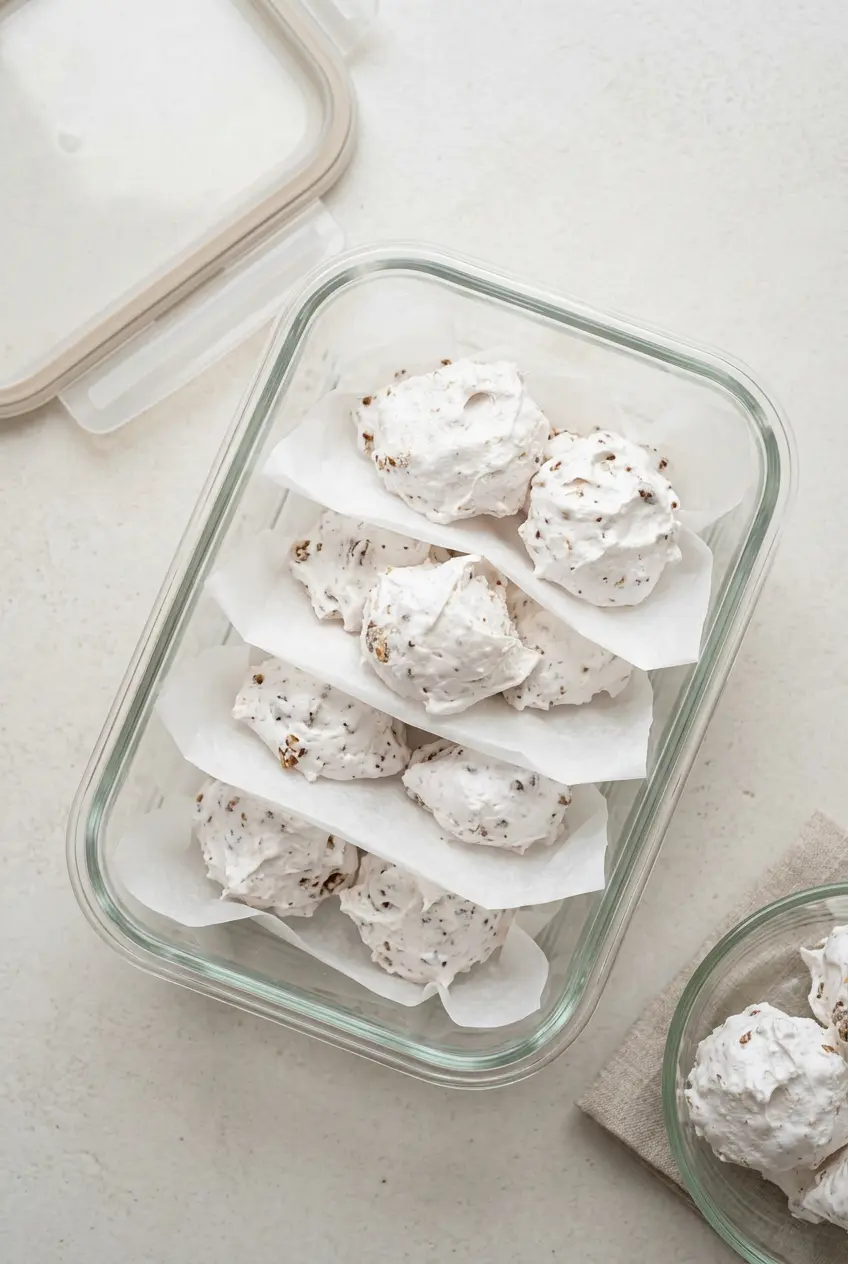
Protect the finished candy from moisture to preserve its delicate surface. Let the pieces cool and set completely at room temperature before packing them.
Place fully set, dry-surfaced pieces in an airtight container, separating layers with parchment or wax paper. Do not seal warm or tacky mounds, which can trap moisture inside the container.
Keep the container in a cool, dry place away from steam and heat. Avoid unnecessary refrigeration for texture preservation, since moisture and condensation can make the surface sticky. This guidance addresses candy texture, not a verified shelf-life limit.
Serving & Holiday Gifting Ideas
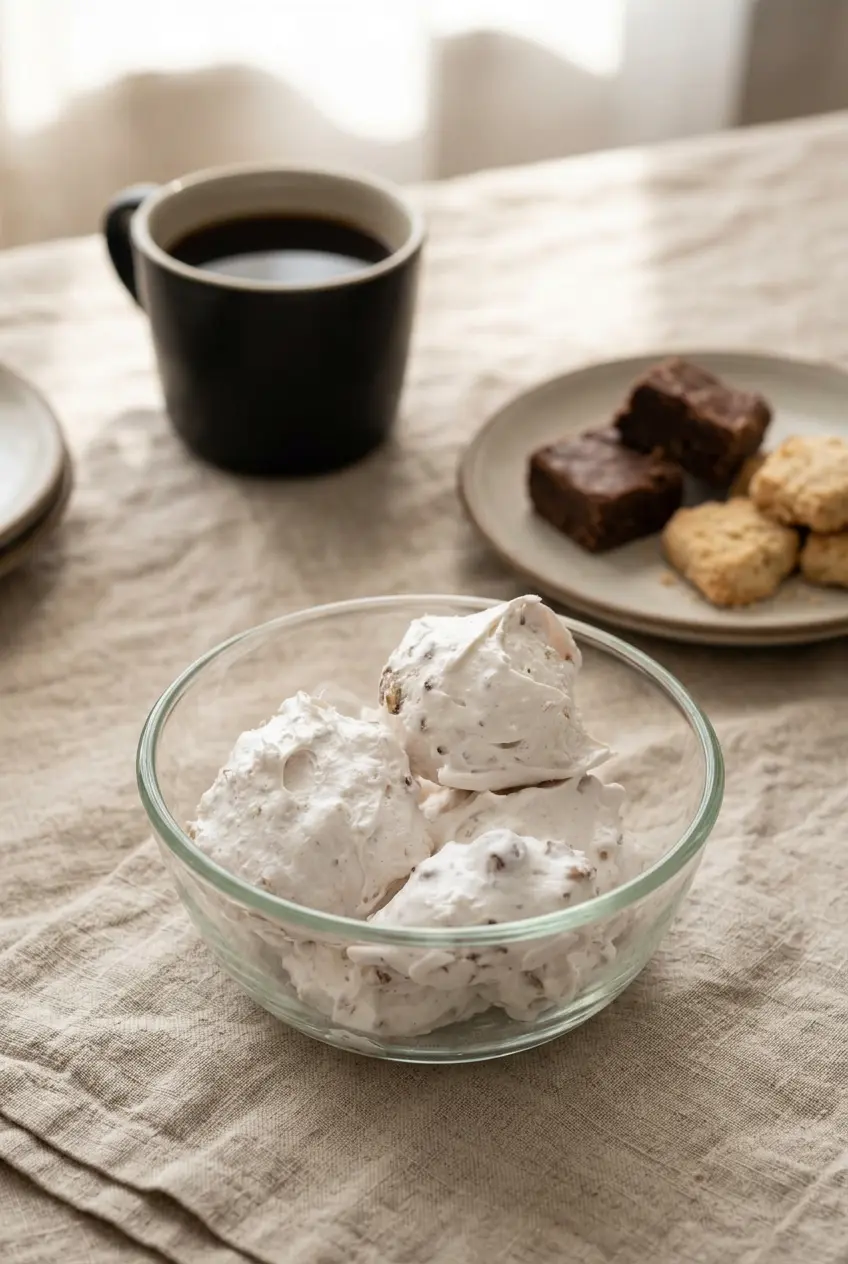
Serve fully set pieces in small portions, letting their airy texture contrast with less sweet accompaniments.
- With a hot drink: Unsweetened black coffee, espresso, or herbal tea balances the candy’s concentrated sweetness.
- On a holiday platter: Pair the light mounds with rich Texas fudge, crisp peanut brittle, and buttery shortbread for contrasting textures.
- For gifting: Package dry, fully set pieces in clear cellophane bags tied with ribbon, and protect the delicate peaks from crushing.
Conclusion
Good divinity combines an airy center, delicate sweetness, and pecan crunch. Choose a dry day, follow both thermometer stages, and beat until a test spoonful holds its shape.
Keep the classic vanilla-and-pecan combination or try an optional holiday variation. Share your favorite nut pairing, and give those delicate peaks a little room on the candy tray.
Frequently Asked Questions
Is Divinity Just Meringue?
No. Both begin with whipped egg whites and sugar, but divinity also uses concentrated corn syrup and sugar syrup. Unlike baked meringue cookies, divinity sets in spooned mounds without an oven.
Is Divinity the Same as Marshmallow?
No. Typical marshmallows use gelatin for a springy, elastic texture. This divinity uses egg whites and cooked syrup, producing a more delicate, less bouncy bite.
Why Is My Divinity Candy Not Setting or Staying Sticky?
Humidity, undercooked syrup, or insufficient beating are common causes. If the syrup stages were correct, continue beating until a parchment test spoonful holds a mound rather than spreading.
Can You Use Carton Egg Whites to Make Divinity Candy?
Some carton whites work, but check that the package specifically permits whipping or meringue preparation. Performance varies, so use stiff peaks as your cue rather than assuming they will whip exactly like freshly separated whites.
How Do You Prevent Sugar Crystals From Ruining Divinity Syrup?
Dissolve the sugar completely, then stop stirring during the boil. Wash stray crystals from the saucepan walls with a wet pastry brush before boiling, and avoid unnecessary movement of the pan.
How Should You Store Divinity Candy?
Let the pieces cool and set completely before placing them in an airtight container. Separate layers with parchment or wax paper and protect the container from heat and humidity.
Divinity Candy

Equipment
- Large heavy-bottomed saucepan
- Candy thermometer
- Stand mixer
- Parchment Paper
Ingredients
- 2½ Cups Sugar
- ½ Cup Water
- ½ Cup Light Corn Syrup
- 1 Cup Pecans chopped
- ¼ teaspoon Salt
- 2 Egg Whites
- 1 teaspoon Vanilla
Instructions
- Combine the light corn syrup, sugar, salt, and water in a large saucepan, stirring to moisten the sugar evenly. The mixture should have no dry pockets before heating.
- Heat the mixture while moving a spoon steadily through it until the sugar has dissolved. Look for a smooth syrup without visible sugar granules.
- Stop stirring and let the syrup cook to 250°F on a candy thermometer. Watch the reading with the sensing tip clear of the saucepan bottom.
- Use the stand mixer to whip the egg whites into a firm foam. When you lift the whisk, the peaks should stand upright rather than fold over.
- With the mixer beating continuously, feed approximately half of the hot syrup into the whites in a narrow, gradual stream. Aim along the inside of the bowl, clear of the moving whisk, to limit splashing.
- Return the saucepan containing the remaining syrup to the burner and heat it to 270°F. The syrup will become more concentrated as it cooks.
- Keep the mixer running as you gradually pour the remaining hot syrup into the whipped mixture. Use the same controlled stream, avoiding direct contact with the spinning whisk.
- Beat the mixture until it becomes thick enough to retain a distinct mound. It should look shiny but substantial, with ribbons that hold rather than immediately disappear.
- Distribute the vanilla and chopped pecans through the thickened candy. The nuts should appear evenly scattered throughout the mixture.
- Use spoons to portion individual mounds onto parchment, then leave them to cool and set completely. Finished pieces should retain their peaks instead of spreading into puddles.