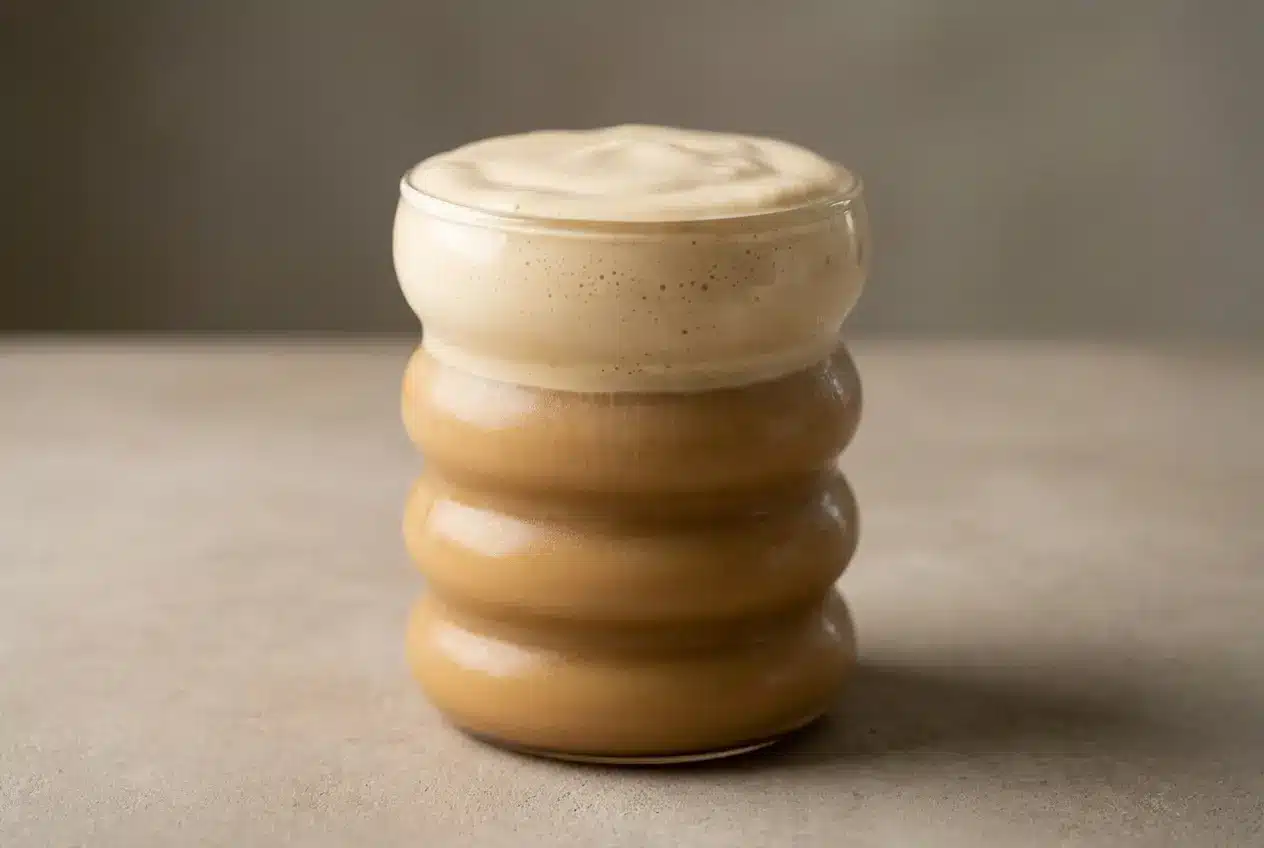
Cookie butter cold foam is a creamy, pourable iced coffee topping made by frothing heavy cream, milk, and softened speculoos spread. It adds caramelized cookie flavor and warm spice to cold brew or an iced latte, with optional vanilla to round out the sweetness.
This cookie butter cold foam puts the spiced cookie flavor directly in the topping, rather than relying on syrup in the coffee. The result is a velvety layer that brings richness to each sip.
It takes about 3 minutes and makes one serving, so it fits comfortably into a morning coffee routine. The important part is knowing when to stop frothing. Aim for a ribbon, not a stiff peak.
Check the spread before measuring: very firm cookie butter needs the brief softening step so it blends more evenly.
Key Ingredients for the Perfect Foam
Heavy cream gives the foam richness and body, while milk keeps it pourable. Cookie butter brings caramelized sweetness and speculoos spice; optional vanilla adds a rounded aroma that complements the cookies.
- 3 tbsp heavy cream
- 2 tbsp milk (2% or whole)
- 1 tbsp cookie butter (such as Biscoff spread)
- ¼ tsp vanilla extract (optional)
The cream-and-milk balance matters. Cream supplies the fuller texture, while milk loosens the mixture so you can pour it over your drink. Cream alone can move toward stiff whipped cream, which isn’t the goal here.
Use smooth cookie butter for an even texture. Biscoff spread supplies both flavor and body, unlike cookie butter extract, which primarily contributes aroma. Syrup adds sweetness and liquid as well as flavor, so these formats aren’t interchangeable by equal measures.
I’d choose smooth spread over crunchy here: the appeal is a silky topping, with any cookie crunch reserved for the garnish.
How to Make Cookie Butter Cold Foam Step-by-Step
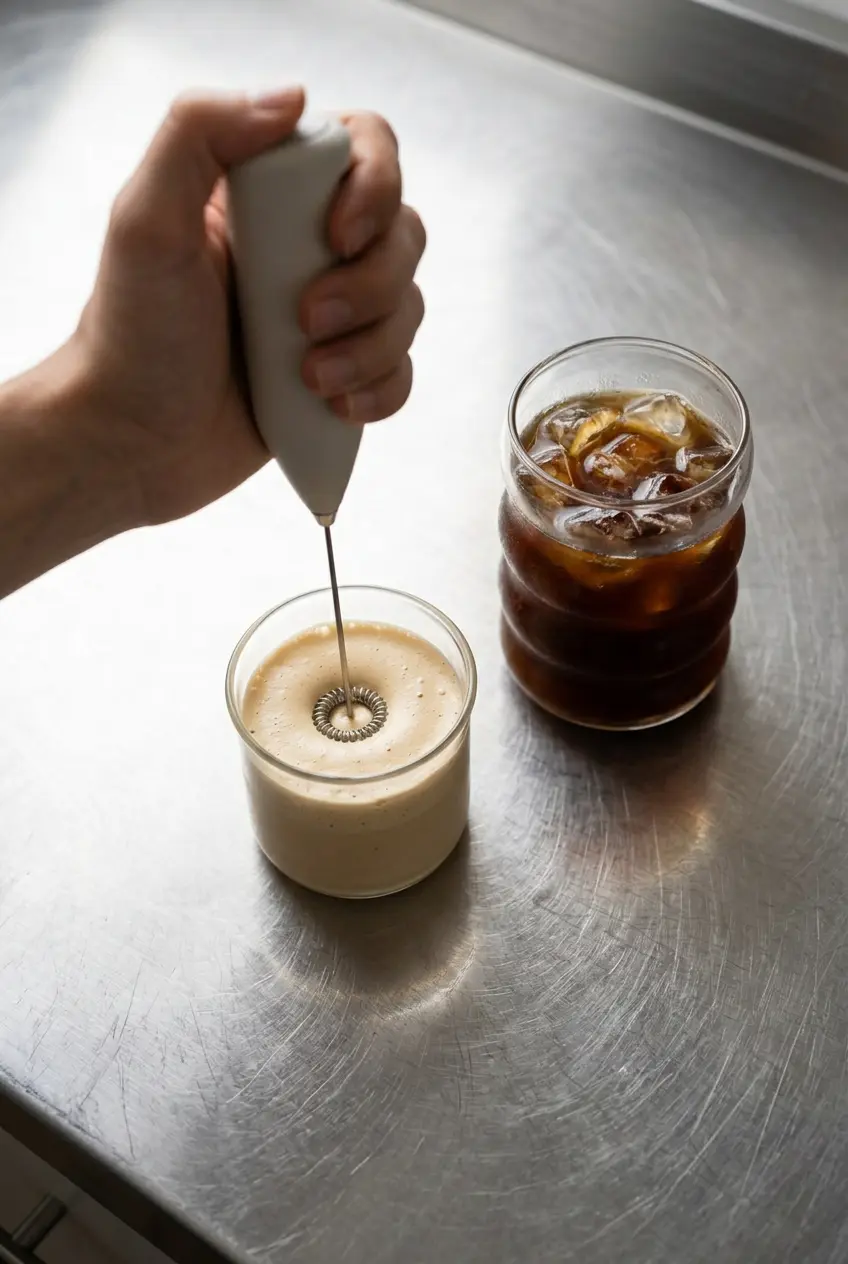
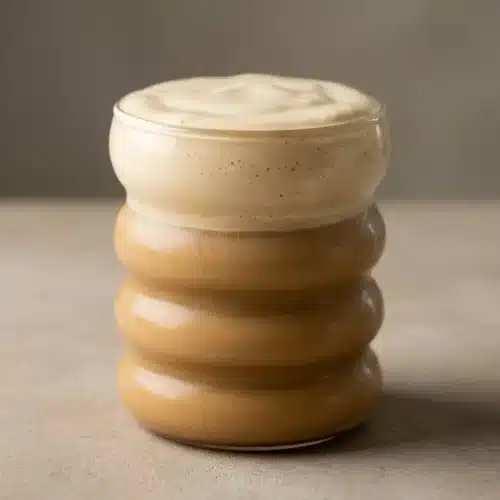
Watch the consistency as closely as the clock. The finished foam should look thick and creamy but still flow when you tilt the cup.
- Give very thick cookie butter about 5–10 seconds in the microwave.
Look for a slightly softened, pliable consistency rather than a hot liquid. - Add the milk, heavy cream, cookie butter, and optional vanilla to a small glass or frothing cup.
The spread should be soft enough to blend into the dairy. - Aerate with a handheld milk frother for about 20–30 seconds.
Stop at a thick, creamy consistency that remains pourable rather than stiff. - Fill a serving glass with ice and your chosen iced coffee, cold brew, or iced latte.
The drink should be ready to receive the topping. - Tip the frothing cup gently to release the foam over the coffee in a slow stream.
Aim for a creamy layer across the surface rather than one heavy dollop. - Enjoy the finished drink immediately.
The topping should still have its freshly frothed, airy texture.
For an optional smoother start, whisk the softened spread with a small splash of the measured milk before adding the remaining dairy. This helps you work out dense streaks without changing the ingredient amounts.
No handheld frother? A clean French press, tightly sealed mason jar, or electric hand mixer offers an alternative:
- French press: Move the plunger up and down through the mixture, watching for thickening.
- Mason jar: Leave room for the mixture to expand, secure the lid, and shake vigorously until airy.
- Hand mixer: Use a small bowl and stop as soon as the mixture becomes creamy and pourable.
These methods can produce different amounts of volume. Use the texture cue rather than assuming they will match the frother’s timing.
Troubleshooting and Barista Tips for Silky Foam
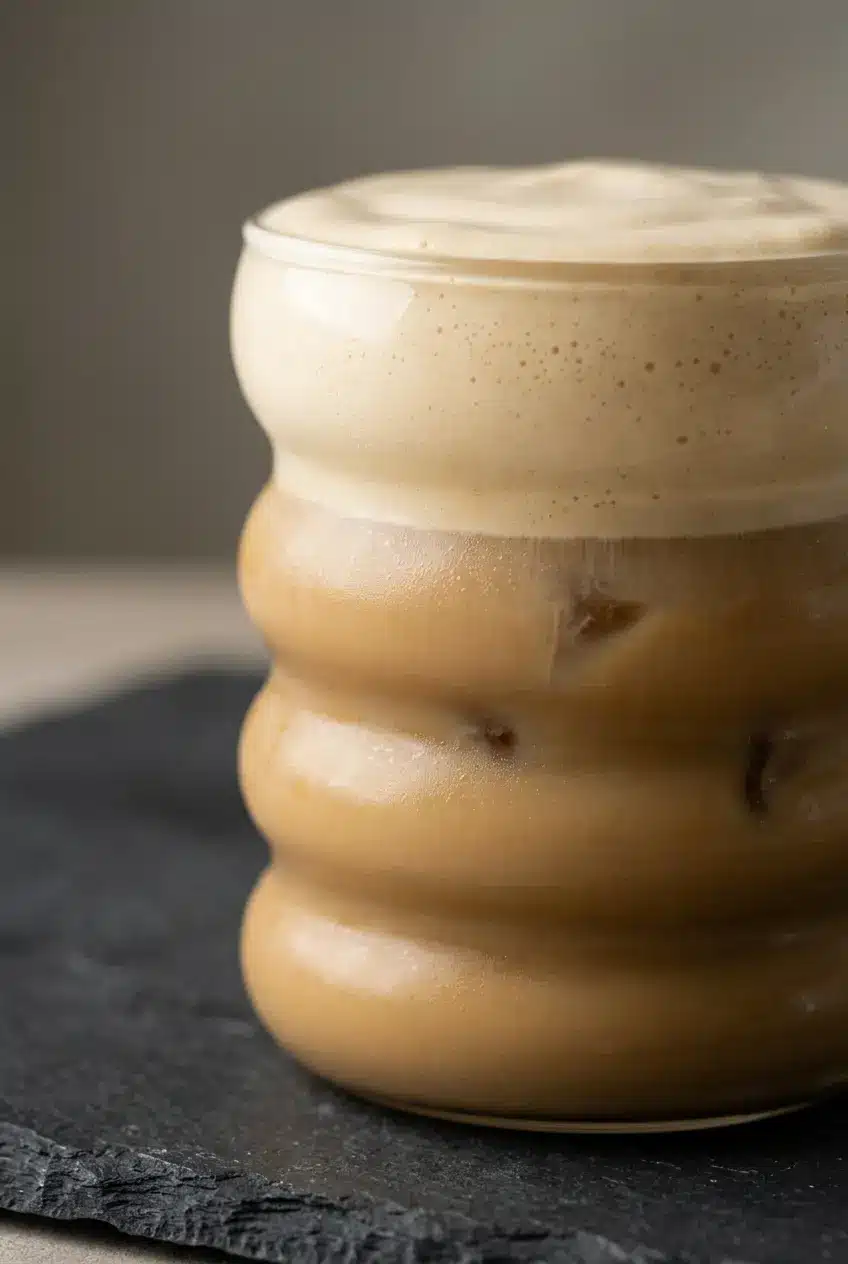
Most texture problems come down to firm spread, altered proportions, or frothing past the pourable stage.
- Cookie butter clumps or sinks: Firm spread may remain in dense streaks. Use the conditional softening step, then blend it thoroughly with the dairy before pouring.
- The foam looks thin: Check that you measured both milk and cream correctly and that the spread has blended in. Continue frothing only until the mixture reaches the thick-and-creamy endpoint.
- The topping becomes stiff: It has gone beyond pourable foam. Gently whisk in a small splash of milk to loosen it, recognizing that this adjusts the measured mixture.
- The foam quickly loses volume: Extra cookie butter can make the topping heavier. Keep to the measured amount rather than adding more spread for stronger flavor.
- The topping mixes straight into the drink: Have the coffee and ice in the glass before pouring the foam. Adding coffee afterward disturbs the layer.
A uniform pale tan color is a useful blending cue. Visible dark streaks suggest the spread still needs to disperse. For the finish, think of a slow, thick ribbon rather than a spoonable mound.
Dairy-Free and Flavor Variations
Treat these as optional directions, separate from the measured dairy recipe. Changes in the cream, milk, or flavoring can change how the foam pours and holds its shape.
Dairy-Free & Vegan Cookie Butter Cold Foam
Barista oat milk paired with dairy-free whipping cream or coconut cream is an option to explore. Coconut cream may add a noticeable coconut flavor, while whipping alternatives vary by brand.
Check every ingredient label, including the spread and vanilla, before calling the finished combination dairy-free or vegan. Don’t expect every plant-based pairing to froth like dairy cream.
Cookie Butter Syrup or Extract Foam
- Spread: Brings spiced cookie flavor, sweetness, and substantial body.
- Cookie butter syrup: Offers a liquid flavoring format, with sweetness and thickness that vary by product.
- Cookie butter extract: Adds concentrated aroma without the same body or sweetness as spread.
Brown sugar syrup or maple syrup can provide an optional sweetness direction, especially alongside a stronger coffee. Neither replaces the cookie flavor itself, and additional sweetener may be unnecessary with a sweetened drink.
Extra-Spiced or Chocolate Cookie Butter Foam
- Cinnamon: Emphasizes the warm, familiar spice notes in speculoos.
- Nutmeg: Adds a more fragrant, warming accent.
- Unsweetened cocoa powder: Takes the flavor toward chocolate and spiced cookies without adding another sweet syrup.
Best Drinks and Copycat Cold Brew Pairings
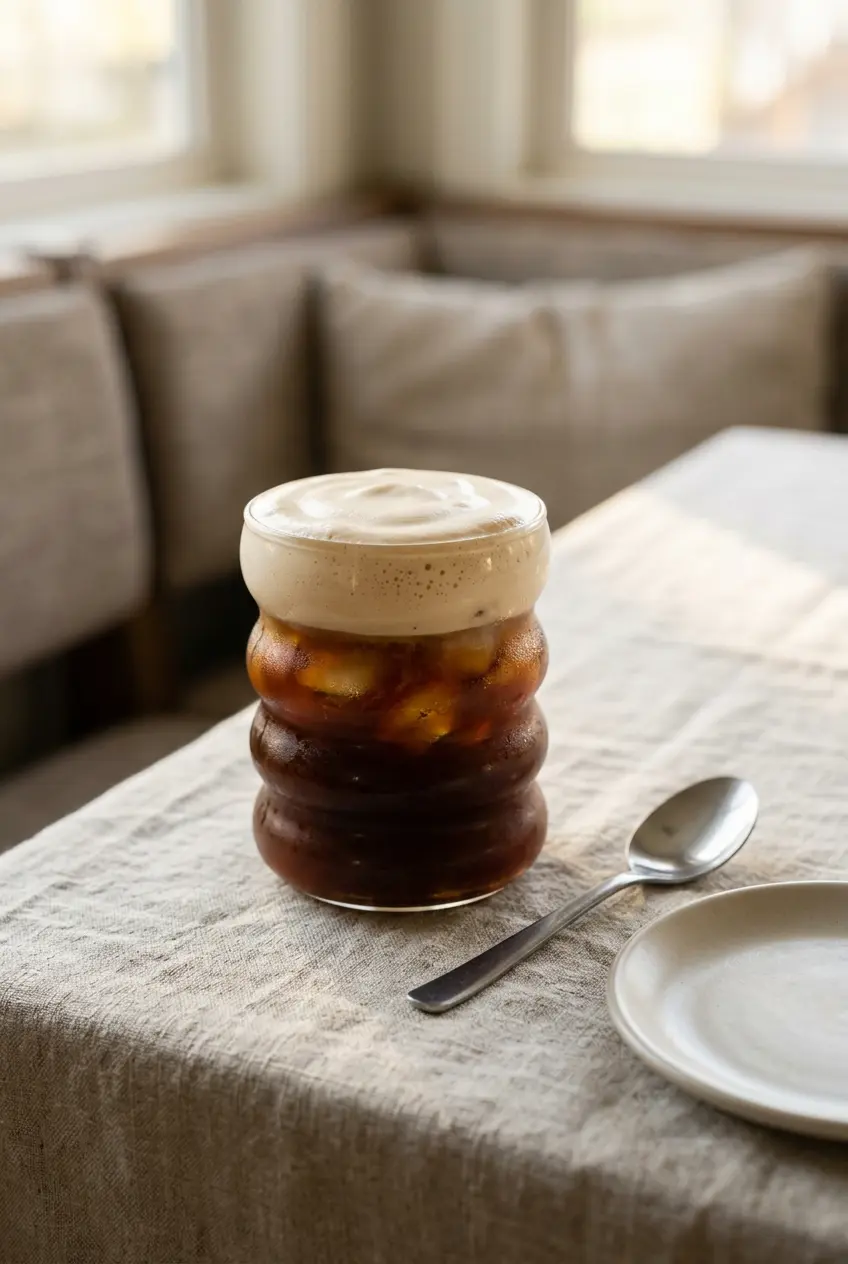
Choose the coffee underneath with sweetness in mind. Unsweetened coffee gives the cookie topping more contrast; a sweetened latte makes the combination more dessert-like.
Dunkin’-Style Brown Sugar & Cookie Crumble Upgrade
For a Dunkin’-inspired combination, pair brown-sugar-sweetened cold brew with this foam and crushed Biscoff cookies. It’s a coffeehouse-style serving idea, not a claim about the commercial formula.
Add the optional cookie crumbs right before serving so they contribute crunch rather than sitting in the foam and softening.
Iced Lattes, Shaken Espresso, and Chai Pairings
- Espresso drinks: Try an iced espresso latte, iced Americano, or shaken espresso for a stronger coffee contrast.
- Tea drinks: Iced chai echoes the warm spices, while iced matcha offers an earthy contrast.
- Warm drinks: Hot coffee or a warm latte is another optional serving direction.
For a complete espresso drink with the same spiced-cookie theme, try a cookie butter latte.
Planning for Freshly Frothed Foam
Plan the coffee and topping as separate components, with the frothing reserved for serving. Measure the ingredients and have the frothing cup and serving glass ready to keep the final preparation quick.
This method calls for immediate serving, rather than storing finished foam. It doesn’t establish a shelf life for a premixed dairy-and-cookie-butter mixture, so freshly preparing the topping is the clearest approach.
Conclusion
A spiced cookie topping can make iced coffee feel like a café treat without a complicated preparation. Keep the measured cream-and-milk balance and watch for that thick, creamy, pourable finish.
Choose your favorite coffee underneath and keep garnishes suited to its sweetness. A silky layer of cookie flavor is the finishing touch.
Frequently Asked Questions
Does Dunkin’ Still Have Cookie Butter Cold Foam?
Current availability isn’t confirmed here; check your local store’s menu or app. This homemade topping offers a way to enjoy the flavor without depending on menu availability.
How Do I Stop Cookie Butter From Sinking to the Bottom of My Cold Foam?
Briefly soften very thick spread before combining it with the dairy. Blend until the mixture looks uniform, then froth to a thick, creamy consistency.
Can I Make Cookie Butter Cold Foam Without a Handheld Milk Frother?
Yes. A French press, sealed mason jar, or electric hand mixer offers an alternative. Watch the texture rather than using the handheld frother’s timing for every method.
Can I Make Dairy-Free Cookie Butter Cold Foam?
You can explore barista oat milk with dairy-free whipping cream or coconut cream. Confirm the labels for every ingredient and expect different frothing results across products.
Can I Use Cookie Butter Syrup Instead of Biscoff Spread?
Syrup is an optional flavoring direction, but it isn’t an equal-measure replacement established by this recipe. Spread adds body as well as sweetness and spice; syrup changes the liquid balance.
Can I Make Cookie Butter Cold Foam Ahead of Time?
For this method, prepare the foam for immediate serving. Organize the coffee and measured ingredients separately, then froth when you’re ready to finish the drink.
Cookie Butter Cold Foam

Equipment
- Handheld milk frother
- Frothing cup or small glass
Ingredients
- 3 tbsp heavy cream
- 2 tbsp milk (2% or whole)
- 1 tbsp cookie butter (such as Biscoff spread)
- ¼ tsp vanilla extract (optional)
Instructions
- Give very thick cookie butter about 5–10 seconds in the microwave. Look for a slightly softened, pliable consistency rather than a hot liquid.
- Add the milk, heavy cream, cookie butter, and optional vanilla to a small glass or frothing cup. The spread should be soft enough to blend into the dairy.
- Aerate with a handheld milk frother for about 20–30 seconds. Stop at a thick, creamy consistency that remains pourable rather than stiff.
- Fill a serving glass with ice and your chosen iced coffee, cold brew, or iced latte. The drink should be ready to receive the topping.
- Tip the frothing cup gently to release the foam over the coffee in a slow stream. Aim for a creamy layer across the surface rather than one heavy dollop.
- Enjoy the finished drink immediately. The topping should still have its freshly frothed, airy texture.