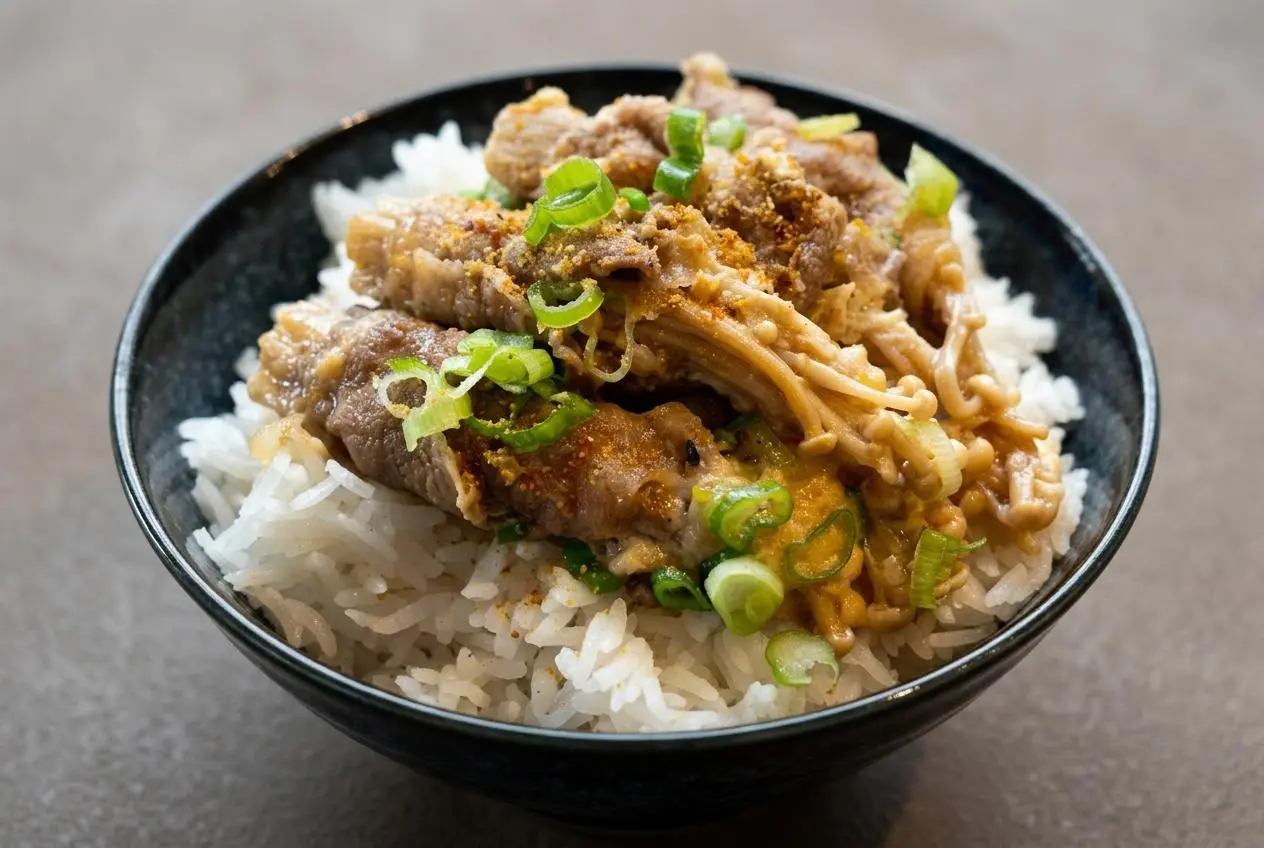
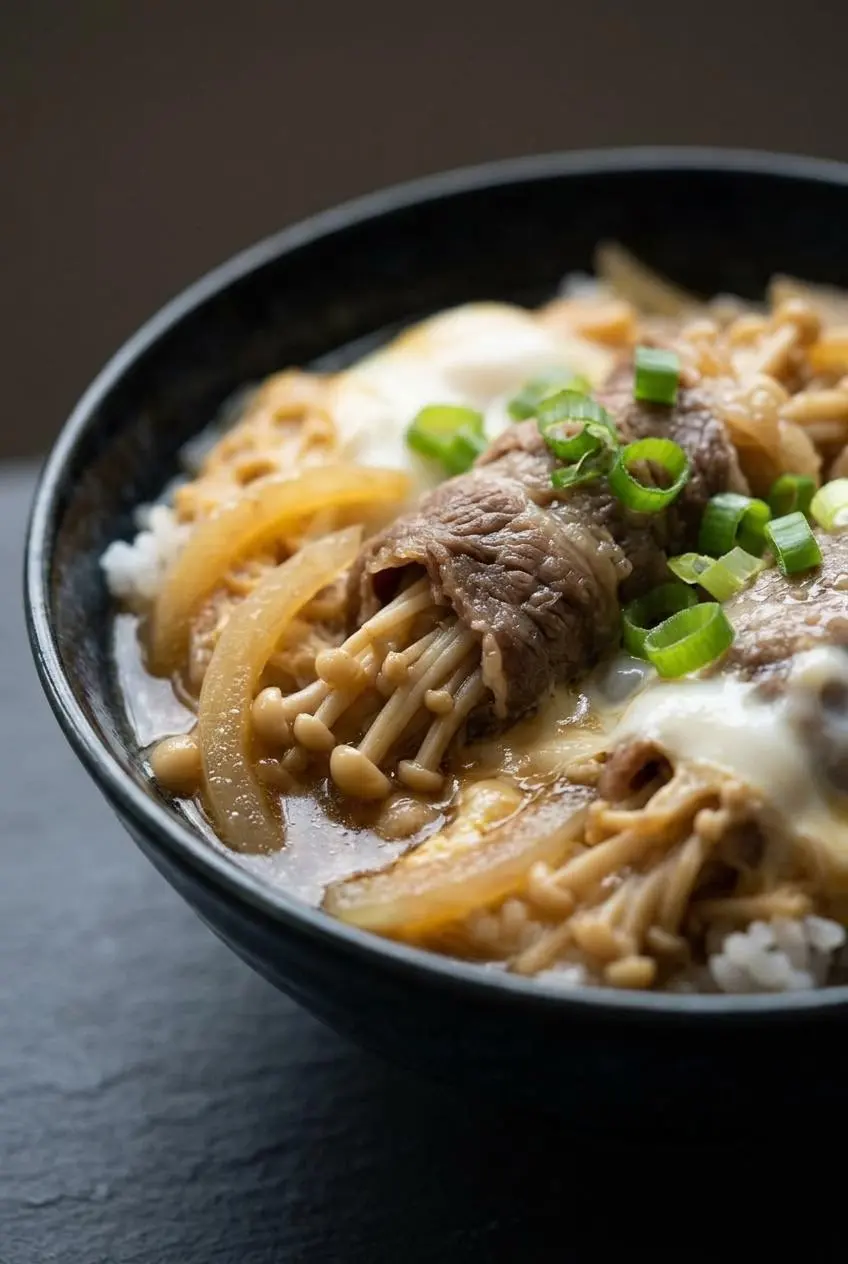
Enoki beef rolls wrap thinly sliced beef around enoki mushroom bundles, then simmer them over onions in a savory-sweet dashi sauce. A poured egg topping adds velvety richness, making these Japanese-inspired rolls especially good spooned over rice.
The appeal is the contrast: tender beef on the outside, pleasantly chewy mushroom strands inside, and egg catching the sauce between each bundle. This gyudon-inspired version uses a covered simmer rather than a browned, dry-seared finish.
You don’t need elaborate wrapping skills, but the beef’s thickness and temperature make a real difference. Keep the bundles manageable and the slices cool enough to handle neatly. The sauce deserves a spoon.
Set out a pan with a matching lid before you begin; trapped steam helps cook the mushroom-filled centers.
Ingredients and Smart Substitutions
Beef gives the rolls structure and richness, enoki adds chew, and onions bring sweetness. The sauce balances savory depth with sugar, while egg softens the finish and scallions add freshness.
- 15 pieces thinly sliced beef (rib eye or striploin are great cuts)
- 150 g enoki mushrooms (~1 pack)
- 2 tsp oil
- 1 small yellow onion, sliced
- 2 large eggs, scrambled
- 1 scallion, whites and greens chopped
Sauce
- 1/4 cup dashi (can be substituted with beef or chicken stock)
- 1 tbsp sake
- 1 tbsp mirin
- 1.5 tbsp soy sauce
- 1/2 tbsp granulated sugar
The onion bed contributes sweetness and keeps the rolls nestled in the cooking liquid. Egg adds richness without turning the sauce creamy, and both parts of the scallion brighten the finished dish.
Here, “scrambled” means beaten together for pouring, not separately cooked scrambled eggs. Mix the raw eggs until the yolks and whites blend before adding them to the pan.
I’d choose wide, intact beef slices over ragged pieces because they’re easier to wrap around a mushroom bundle.
Best Cuts of Thinly Sliced Beef
Look for ribeye or striploin labeled for hotpot or shabu-shabu. These thin slices bend around the mushrooms more readily than steak slices intended for grilling. Marbling adds richness and helps the cooked beef feel tender.
As an optional handling trick, use partially frozen slices that bend without feeling floppy. The meat should curve around the filling while still holding its shape. If it cracks when bent, it’s too rigid to wrap comfortably.
Choosing and Trimming Enoki Mushrooms
Choose a cluster with intact slender stems and small caps rather than crushed or slimy strands. Cut away the dense bottom root block, gently rinse with cold water, and divide the remaining stems into 15 similar bunches.
Even portions matter more than perfect cylinders. An oversized center makes a roll difficult to close and can leave the beef stretched thin.
If a package says “seafood mushrooms,” check the actual variety rather than assuming it contains enoki. Retail names vary. Rinsing removes loose dirt but doesn’t replace thorough cooking; follow any cooking directions on the package.
How to Make Enoki Beef Rolls Step by Step
This recipe yields 15 rolls, not 15 full meal servings. Have the bundles, sauce, and beaten eggs ready before heating the pan so you can move smoothly through the covered cooking stages.
- Remove the compact root block from the enoki, rinse the stems gently under cold water, and separate them into 15 evenly sized portions.
Keep each portion gathered at one end so the loose strands remain manageable. - Wind one beef slice around each mushroom portion, then put the assembled bundles aside.
A snug wrap should gather the stems without squeezing them into a bulky knot. - Stir the dashi, sake, mirin, soy sauce, and sugar together in a bowl, then reserve the mixture.
The sugar should dissolve into the liquid rather than collect at the bottom. - Soften the sliced onion in a pan with 2 tsp oil over medium heat for about 4–5 minutes.
Look for flexible slices that will form an even bed beneath the rolls. - Arrange the bundles on the onions, add the sauce, and cover the pan for about 5 minutes of simmering.
The lid holds in steam, and the mushrooms should soften and draw together slightly as they cook. - Distribute the beaten eggs over the bundles and cover again for an additional 1 minute, or until the topping begins to set.
The egg should start turning opaque while retaining a soft appearance. - Allow the rolls to cool briefly, then scatter the chopped scallions over the top.
The scallion pieces add a fresh contrast to the warm beef and egg.
Treat the mushroom and egg cues as texture checks, not proof of safe doneness. Cook the beef, mushrooms, and eggs thoroughly, and follow applicable package cooking directions rather than relying on appearance alone.
Essential Tips and Troubleshooting for Neat, Tender Rolls
Most wrapping problems start before the pan heats up. Keep the filling compact and avoid tugging on delicate beef slices.
Keeping the Beef from Tearing or Unravelling
- Torn beef: Very soft slices stretch easily; try the firm-but-flexible, partially frozen texture described above and lift each slice gently.
- Opening seams: Wrap snugly and position the loose end against the onion bed to support it during simmering.
- Bulging bundles: Redistribute an oversized mushroom portion before wrapping rather than pulling the beef tighter.
Seam-side-down placement supports the wrap here. It doesn’t create a browned seal, because these rolls simmer over onions rather than sear against a dry pan.
Brothy Sauce or a Thicker Glaze
Expect a spoonable sauce that runs into rice, not a guaranteed sticky glaze. Mushroom and onion moisture can make it look thinner as cooking progresses.
- For a brothy bowl: Keep the cooking liquid and spoon it over the rice with the rolls.
- For greater sauce cling: Optional longer reduction concentrates flavor, but it also concentrates saltiness and can toughen thin beef.
- To protect the egg: Avoid trying to reduce the sauce extensively after adding the topping; continued heat firms it quickly.
Keeping the Egg Soft Rather Than Rubbery
The brief covered finish lets steam reach the poured egg. Once the topping reaches the appropriate doneness, remove the pan from the heat rather than keeping it simmering while you prepare the rest of dinner.
Egg continues to firm in the hot pan. A prolonged hold changes a velvety topping into tight curds, so have your bowls ready.
Dashi Sauce and Alcohol-Free Pantry Swaps
The sauce needs both savory depth and sweetness; substitutions change that balance, so keep them separate from the measured sauce above.
- Dashi: Adds a light savory backbone; beef or chicken stock is the listed substitute, though either changes the flavor and potentially the saltiness.
- Instant dashi: Prepare products such as Hondashi following their package directions rather than guessing the concentration.
- Soy sauce: Supplies salt and savory intensity, so a salty stock can make the finished sauce taste stronger.
- Sake: Adds aroma and depth to the simmering liquid.
- Mirin and sugar: Round out the soy sauce with sweetness.
For an optional alcohol-free approach, use broth for liquid and sugar for sweetness, recognizing that the aroma will differ. Another untested option is to omit sake and mirin and add an extra 1/2 teaspoon of sugar. That won’t replace their liquid volume or reproduce the same flavor.
Cabbage, Korean-Inspired, and Egg-Free Rolls With Serving Ideas
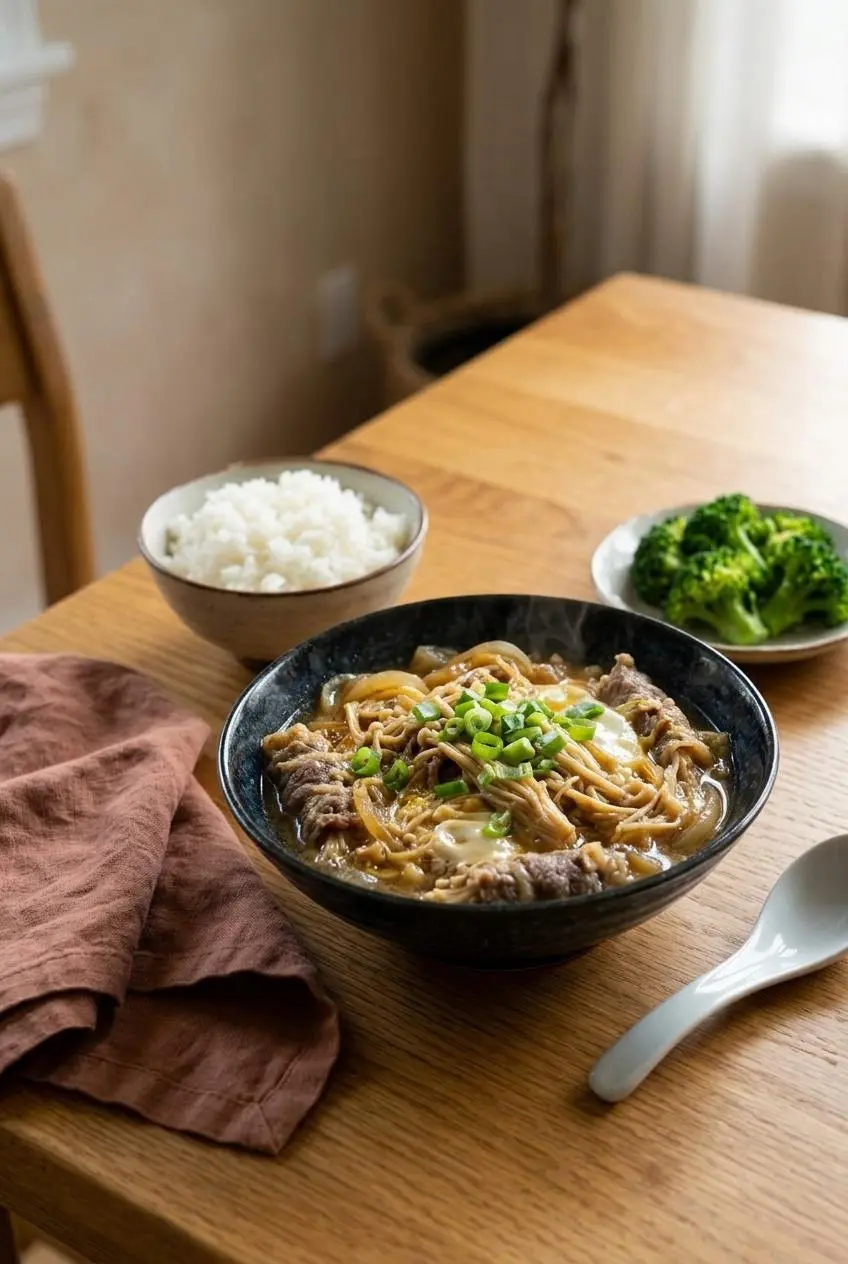
The onion-and-egg simmer makes a saucy rice-bowl dish. These optional variations move toward crunchier fillings, spicy seasoning, or a browned appetizer-style finish.
Cabbage and Vegetable Stuffed Enoki Rolls
- Thinly sliced cabbage: Adds sweetness and texture, but keep the filling slender enough for the beef to close.
- Julienned carrots: Bring color and a firmer bite; bulky pieces make wrapping awkward.
- White radish: Offers a different vegetable contrast when cut into fine strips.
These additions change the filling, so don’t assume the same cooking cues will apply unchanged.
Korean-Inspired Savory Enoki Beef Rolls
- Use gochujang and sesame oil as an optional spicy, savory flavor direction.
- Treat this as a different seasoning approach, not an equivalent replacement for the dashi sauce.
Pan-Seared Glazed Rolls Without Egg
- Omitting the egg and choosing a dry-seared approach creates browned beef and a more appetizer-like result.
- A clinging glaze differs from the spoonable onion broth here and needs its own cooking approach.
For a related wrapped-beef dish with scallions, try classic beef negimaki.
Optional Cornstarch or Ginger Finish
- A light dusting of cornstarch on the inside of the beef is an untested option intended to encourage sauce cling.
- A toasted sesame-oil and grated-ginger finish offers a nuttier aroma and fresh pungency.
Neither option belongs in the required ingredients or covered-simmer method.
Turning the Rolls Into a Rice-Bowl Dinner
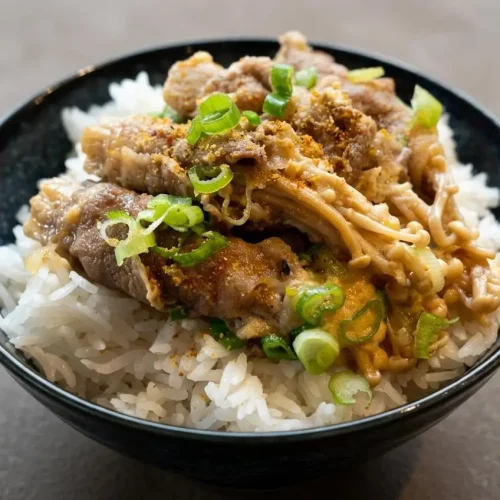
Spoon the rolls, onions, egg, and sauce over steamed short-grain rice. Keep the chopped scallions as the finishing touch.
Bok choy, steamed broccoli, or pickled radish provide contrast without competing with the savory sauce. Plain vegetables work particularly well when the cooking liquid tastes assertively seasoned.
Making Ahead and Reheating Beef Rolls Without Drying Them Out
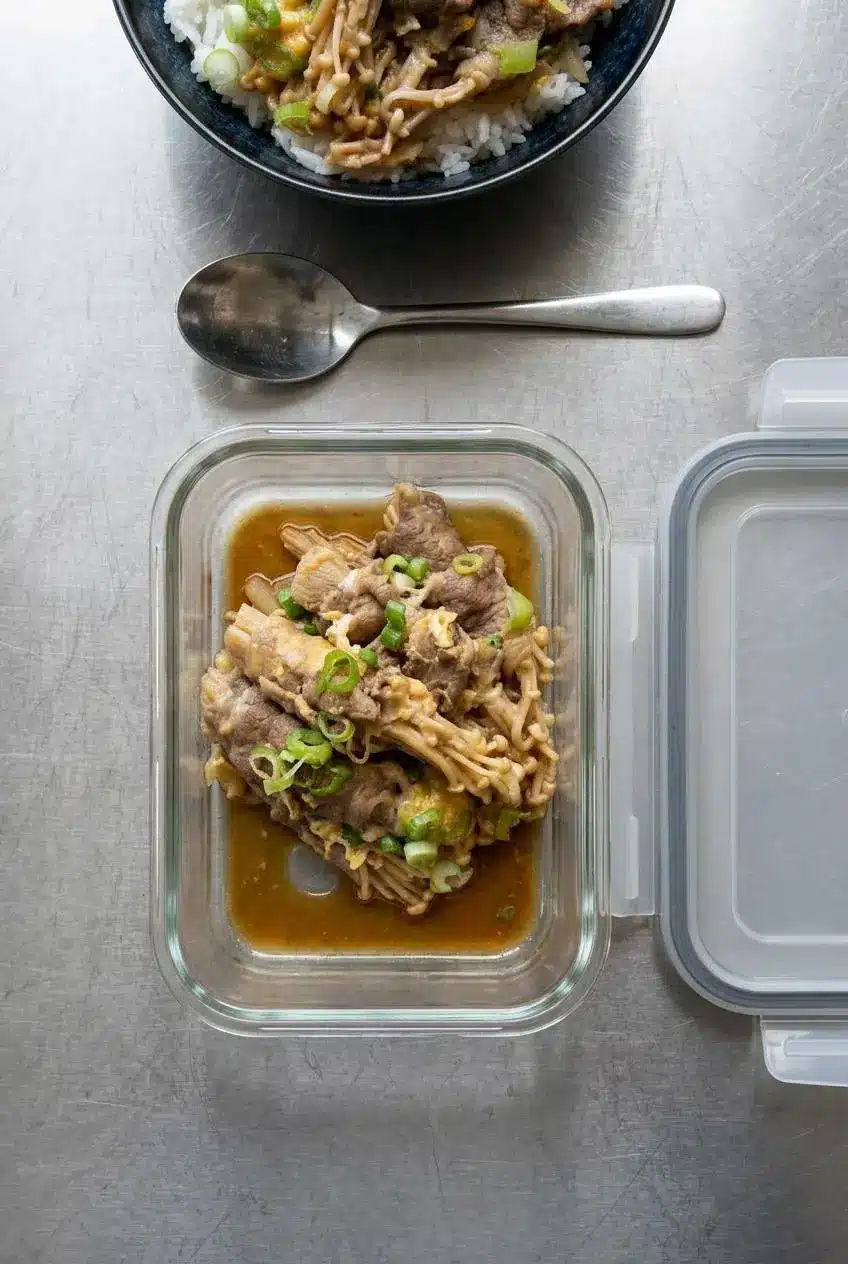
Keep the sauce with the rolls when storing leftovers; it helps protect their texture during reheating.
- Organize preparation: Trim and portion the mushrooms separately from the beef, keeping raw ingredients chilled and away from cooked food.
- Refrigerate promptly: Transfer leftovers to an airtight container with their sauce rather than leaving the pan out until completely cold.
- Reheat with moisture: Use a covered skillet or microwave with retained sauce or a small splash of broth, heating thoroughly without prolonged cooking.
- Warm only what you need: Repeated heating makes thin beef and egg firmer.
Conclusion
These rolls bring tender beef, chewy mushrooms, and savory onion sauce together in a satisfying rice-bowl dinner. The egg adds richness while leaving plenty of sauce to spoon over each serving.
Choose thin, intact slices and keep the mushroom bundles evenly sized. Careful wrapping makes the rest much easier, so give that step a little attention before the pan heats up.
Frequently Asked Questions
Which Cut of Beef Is Best for Enoki Beef Rolls?
Choose thinly sliced ribeye or striploin labeled for hotpot or shabu-shabu. Marbling contributes richness and tenderness, while thin slices wrap more easily than thick steak pieces.
How Do I Keep Enoki Beef Rolls From Unravelling While Cooking?
Use firm but flexible, partially frozen slices and wrap the mushrooms snugly. Rest each loose seam against the onion bed for support, without adding a separate browning stage.
What Can I Substitute for Dashi, Sake, and Mirin in the Sauce?
Use beef or chicken stock instead of dashi, allowing for differences in flavor and saltiness. For an optional alcohol-free version, use the broth-and-sugar approach above, understanding that it won’t taste identical.
How Do I Store and Reheat Leftover Enoki Beef Rolls?
Refrigerate promptly in an airtight container with the cooking sauce. Reheat thoroughly in a skillet or microwave with sauce or a splash of broth, avoiding prolonged heating that toughens the beef and egg.
Enoki Beef Rolls

Equipment
- Pan
Ingredients
- 15 pieces thinly sliced beef (rib eye or striploin are great cuts)
- 150 g enoki mushrooms (~1 pack)
- 2 tsp oil
- 1 small yellow onion sliced
- 2 large eggs scrambled
- 1 scallion whites and greens chopped
Sauce
- 1/4 cup dashi (can be substituted with beef or chicken stock)
- 1 tbsp sake
- 1 tbsp mirin
- 1.5 tbsp soy sauce
- 1/2 tbsp granulated sugar
Instructions
- Remove the compact root block from the enoki, rinse the stems gently under cold water, and separate them into 15 evenly sized portions. Keep each portion gathered at one end so the loose strands remain manageable.
- Wind one beef slice around each mushroom portion, then put the assembled bundles aside. A snug wrap should gather the stems without squeezing them into a bulky knot.
- Stir the dashi, sake, mirin, soy sauce, and sugar together in a bowl, then reserve the mixture. The sugar should dissolve into the liquid rather than collect at the bottom.
- Soften the sliced onion in a pan with 2 tsp oil over medium heat for about 4–5 minutes. Look for flexible slices that will form an even bed beneath the rolls.
- Arrange the bundles on the onions, add the sauce, and cover the pan for about 5 minutes of simmering. The lid holds in steam, and the mushrooms should soften and draw together slightly as they cook.
- Distribute the beaten eggs over the bundles and cover again for an additional 1 minute, or until the topping begins to set. The egg should start turning opaque while retaining a soft appearance.
- Allow the rolls to cool briefly, then scatter the chopped scallions over the top. The scallion pieces add a fresh contrast to the warm beef and egg.