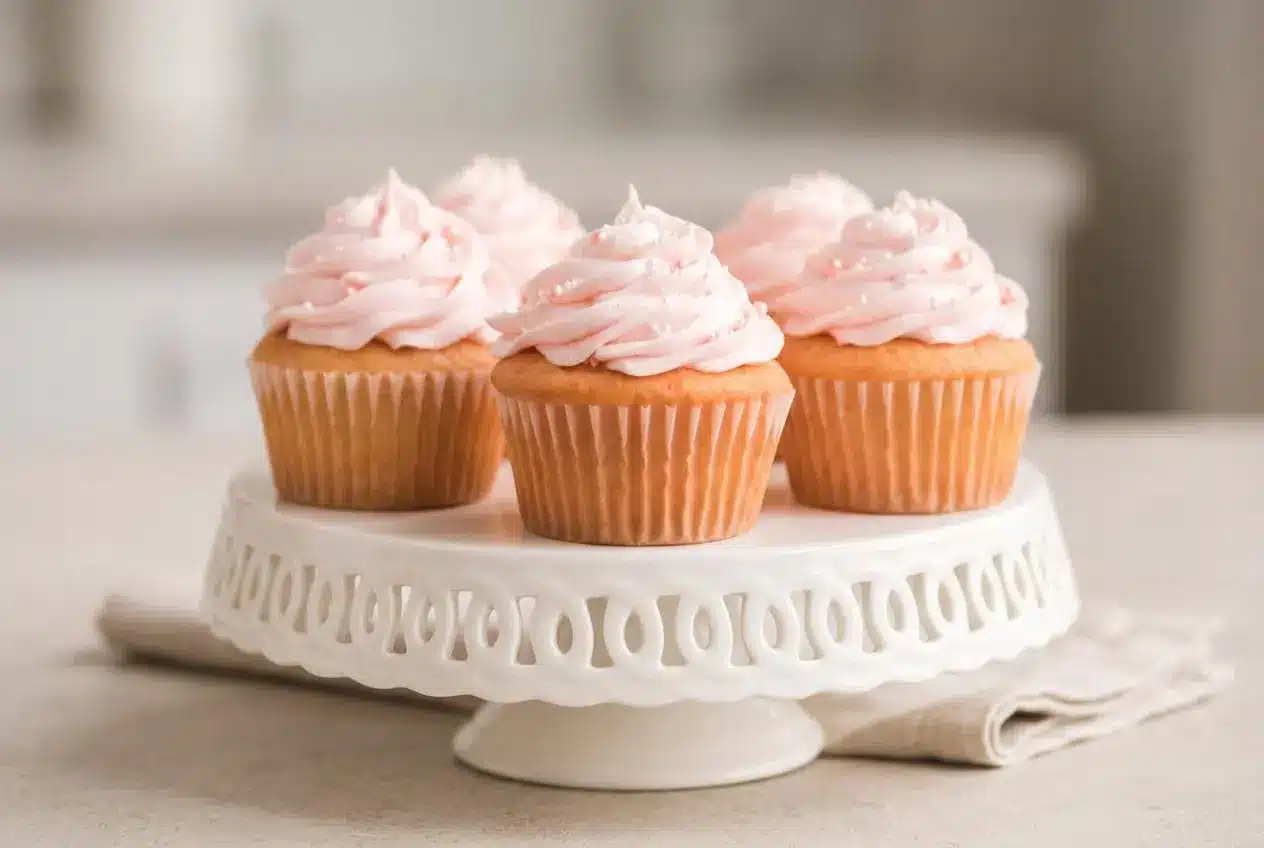
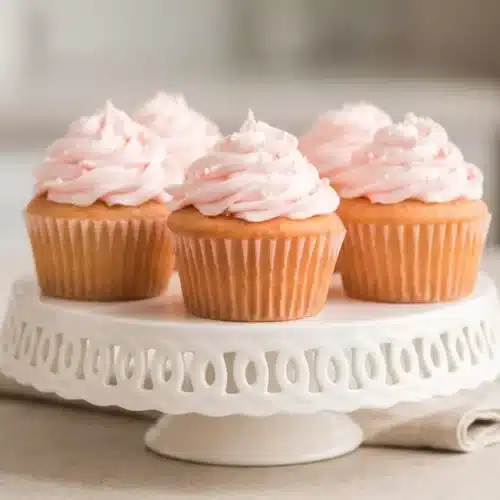
Champagne Cupcakes are tender vanilla cupcakes flavored with reduced sparkling wine and finished with champagne buttercream. Simmering the wine concentrates its fruity character while controlling the liquid in the batter, giving you a celebration dessert with a soft crumb and creamy frosting.
Warm vanilla and gently bubbling pink champagne set the mood for these scratch cupcakes. The wine adds a subtle fruity accent rather than an overpowering flavor, while the buttercream carries a brighter sparkling wine finish.
They fit bridal showers, New Year’s celebrations, and any dessert table that calls for something a little dressed up. Butter and oil work together for a tender texture that holds its shape beneath piping. The flavor starts in the saucepan.
Keep a liquid measuring cup beside the stove so you can check the reduction’s volume rather than guessing from the saucepan.
Ingredients for Champagne Cupcakes
Flour and eggs build the cupcake structure, butter and oil soften the crumb, and vanilla rounds out the wine’s fruity aroma. Baking powder supplies lift, salt balances sweetness, and confectioners sugar gives the buttercream its smooth body.
Pink Champagne Cupcakes
- 1 1/2 cups pink champagne
- 2 2/3 cups flour
- 1 1/2 teaspoons baking powder
- 1/4 teaspoon salt
- 1/2 cup salted butter
- 1 Tablespoon vanilla extract
- 1/2 cup vegetable oil
- 2 cups sugar
- 4 eggs
- pink food coloring
Pink Champagne Buttercream Icing
- 1-2 Tablespoons pink champagne reduction
- 1/2 cup unsalted butter room temperature
- 2 cups confectioners sugar
- 1/2 teaspoon vanilla extract
- 1-2 Tablespoons milk
Butter and vegetable oil serve different purposes. Butter brings dairy richness and vanilla-friendly flavor. Oil stays fluid as the cupcakes cool, helping the crumb feel soft rather than firm. Keep both in the batter rather than treating them as interchangeable.
Room-temperature eggs blend more readily into the fat mixture than refrigerator-cold eggs. The cupcake butter should feel pliable but still hold its shape. For the frosting, real butter gives a clean, rich finish that shortening doesn’t replicate.
Flour provides structure, but too much can make the cupcakes heavy. Spoon it into the measuring cup and level the surface instead of packing it down. Pink food coloring supplies a more dependable blush than the wine alone; incorporate it while combining the batter’s wet ingredients.
Choose sparkling wine for its flavor, not its price tag. An expensive vintage bottle isn’t necessary for baking.
- Brut: A dry sparkling wine keeps the flavor crisp against the sugar in the cake and frosting.
- Spanish Cava: Often a good choice when you want a dry profile with a gentle yeasty character.
- Prosecco: Look for a dry style for a softer pear or apple accent without excessive sweetness.
- Rosé or pink sparkling wine: A natural fit here, with fruit notes that may lean toward berries and a faint pink tint.
Sweeter wines such as Asti can push the finished flavor toward sweetness rather than contrast. Check the bottle’s style, since “pink” describes color, not sweetness. For a nonalcoholic alternative, see the sparkling cider option below.
I look for butter that takes a gentle finger imprint without looking shiny or melted, and eggs that no longer feel refrigerator-cold.
How to Make the Champagne Cupcakes
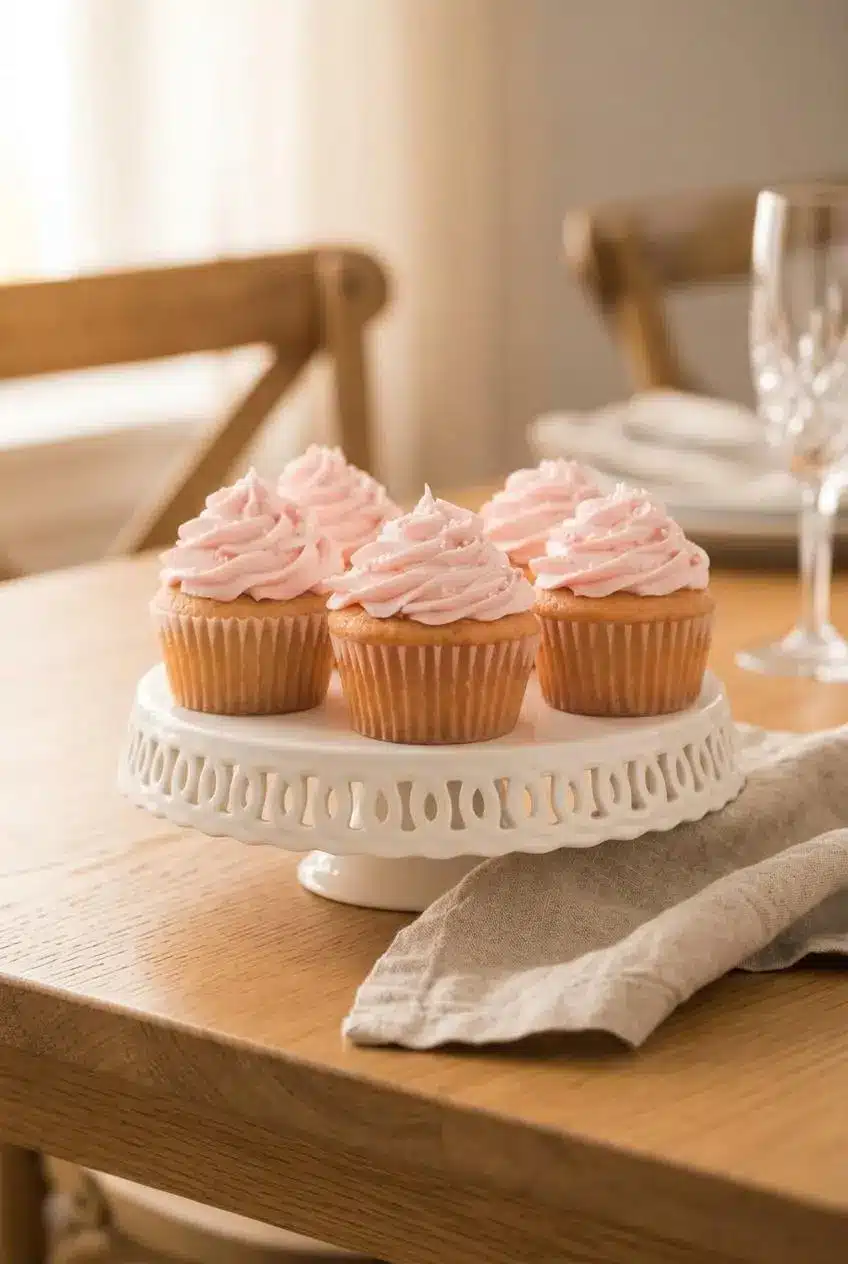
This recipe makes 24 cupcakes, with about 20 minutes of active preparation and 18–20 minutes of baking. Allow additional time for the wine reduction and cupcakes to cool; those cooling checkpoints matter more than rushing to meet the clock.
Cupcakes
- Heat the oven to 325°F and fit paper liners into the cupcake pan.
The liners should sit flat in the wells so the batter can rise evenly. - Simmer 1 1/2 cups pink champagne in a saucepan for about 6–8 minutes, checking for a final volume of 3/4 cup, then cool it to room temperature and set aside 1–2 Tablespoons for frosting.
The finished reduction should remain pourable, with gentle bubbling during cooking rather than a thick, sticky syrup. - Whisk the flour, baking powder, and salt together in a small bowl.
An evenly blended dry mixture distributes the leavening throughout the batter. - Work the salted butter and vanilla together with an electric mixer until the mixture becomes creamy.
Look for a uniform texture with no firm butter pieces, and a slightly lighter appearance as the mixer incorporates air. - Mix the sugar, vegetable oil, and eggs into the butter mixture until evenly combined.
The mixture should look cohesive rather than showing separate pools of oil. - With the mixer at medium speed, add the flour mixture and remaining cooled reduction in alternating portions, letting each nearly blend before the next and scraping the bowl’s sides and base as needed.
Stop once the batter looks uniform, without dry pockets or flour streaks, to avoid unnecessary mixing. - Portion the batter into the liners to 3/4 full and bake for 18–20 minutes.
A toothpick inserted into the center should come out without wet batter, though a few moist crumbs are fine.
Let the baked cupcakes cool completely on a wire rack before frosting. A cupcake that feels warm at the center can soften buttercream even when its surface seems cool.
Pink Champagne Buttercream Frosting
- Whip the room-temperature unsalted butter, confectioners sugar, vanilla, and 2 Tablespoons of reserved champagne reduction with an electric mixer, adding milk as needed for the desired consistency.
The buttercream should develop a soft satin sheen and hold a ridge when you lift the beater, without looking runny or grainy.
Add milk gradually rather than pouring it all in at once. The reduction already contributes liquid, so you may not need the full amount listed. For piping, aim for frosting that moves through the tip without losing the shape of its ridges.
As an optional variation, fold fresh lemon zest into the finished buttercream for a brighter citrus accent. Keep this outside the cupcake batter so the sparkling wine remains the main flavor.
A star tip gives the frosting defined edges. Use modest swirls to distribute this batch across the cupcakes; very tall bakery-style towers require substantially more frosting. Edible gold sprinkles or fresh raspberries make festive optional finishing touches.
Mastering the Champagne Reduction
The reduction controls both flavor and moisture. Pouring the full unreduced amount into this batter would change its liquid balance, while substituting plain wine for the reduced portion would give a different flavor.
Start with 1 1/2 cups and stop at 3/4 cup. The approximate 6–8 minute simmer is a guide, not the final checkpoint: saucepan width and burner strength affect how quickly liquid evaporates. Measure the volume to confirm the endpoint.
Expect steady, gentle bubbles and a fruity aroma with a faint yeasty edge. Pink wine may deepen slightly toward golden pink as it reduces, but color varies by bottle. Volume is more dependable than color.
Keep the reduction fluid. If it begins coating the pan like syrup, it has gone beyond the intended texture. Don’t continue cooking just to chase a stronger aroma; some delicate aromas escape with the steam.
Cooling protects the butter mixture. Hot reduction can melt the butter, leaving a looser batter or soupy frosting. Room temperature is the useful checkpoint, not simply “no longer steaming.”
Measure the frosting portion separately after cooling, then use the remainder in the cupcake batter. Don’t add more wine to replace what you reserved. That reserved portion is already part of the recipe’s liquid balance.
For an optional citrus accent, steep a strip of fresh lemon peel in the cooling reduction, then remove it before mixing. This adds a subtle aroma without introducing extra juice.
Using Boxed Cake Mix as a Quick Shortcut
A boxed white or yellow cake mix offers a separate route when you want sparkling wine flavor without making the scratch batter. Follow the package for its oil, eggs, oven temperature, and baking directions rather than combining those directions with the scratch method above.
Replace the water called for on the box with an equal volume of cooled champagne reduction. Reduce enough wine to supply that amount, using the same half-volume endpoint. Don’t assume the scratch recipe’s reduction will match every brand’s liquid requirement.
The reduction must cool before mixing. A white mix gives the wine a relatively neutral backdrop, while a yellow mix brings a richer vanilla profile. Either will have its own texture and sweetness, so the result won’t be identical to the scratch cupcakes.
A splash of pure vanilla is an optional flavor boost. Some doctored mixes also use an extra egg yolk for richness, but package formulas differ; leaving the egg count as directed is the more predictable starting point.
You can use the champagne buttercream above to finish the shortcut cupcakes. Reserve its reduction separately before measuring the liquid needed for the cake mix.
Troubleshooting Common Cupcake Challenges
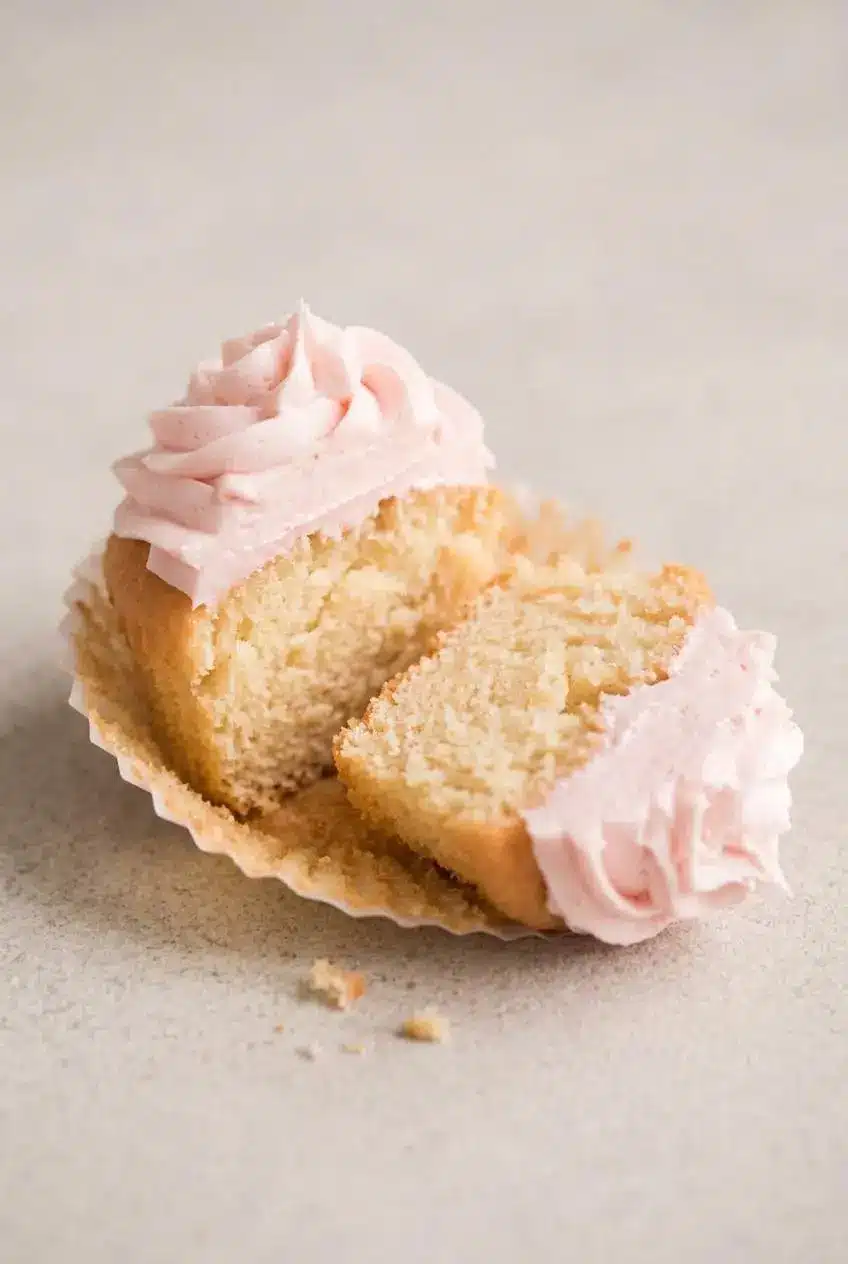
Most texture problems trace back to liquid temperature, mixing, liner fill, or doneness. Identify the likely cause before changing ingredients in the next batch.
Preventing Sinking and Gummy Centers
- Overflowing tops: Batter filled above 3/4 of the liner can spread across the pan before its structure sets; keep the fill level consistent.
- Centers that fall after baking: Underbaking leaves the middle unable to support itself; check a center cupcake for wet batter before removing the pan.
- Heavy or gummy crumb: An incorrectly measured reduction can upset the liquid balance; confirm its volume instead of judging by simmer time alone.
- Tough texture: Prolonged mixing after the flour goes in develops more structure than you want; stop when the batter becomes uniform.
- Greasy, uneven batter: Warm reduction can melt the butter; cool it fully before starting the alternating additions.
Keep the oven door closed while the cupcakes establish their structure. Begin checking near the stated baking window rather than repeatedly opening the door early. A sudden temperature drop can interfere with the rise.
Use the toothpick test rather than browning alone. These bake at a relatively gentle temperature, and their pale tops may not turn deeply golden before the centers are done.
Rescuing Separated Champagne Buttercream
- Curdled-looking frosting with firm butter flecks: The butter may be too cold to blend; wrap a warm towel briefly around the bowl while mixing and stop warming once it becomes creamy.
- Soupy frosting: Warm reduction or overly soft butter may have loosened the mixture; chill the bowl briefly until the butter firms slightly, then whip again.
- Frosting that loses its piping ridges: Excess milk may have thinned it; hold back additional milk and check whether cooling restores structure.
- Persistent sugar lumps: Clumps in the confectioners sugar can remain visible; break them up or sift the sugar before making another batch.
Don’t reach immediately for extra sugar when the problem is temperature. It can make the frosting sweeter without correcting melted or overly cold butter. Look for a smooth sheen and a soft peak before filling the piping bag.
Child-Friendly Sparkling Cider Swap
For a version without wine, choose a nonalcoholic sparkling apple cider and use it in both the cupcakes and buttercream. Check the label carefully, since “cider” can also refer to an alcoholic drink.
- Sparkling apple cider: Reduce it using the same half-volume target, watching the volume rather than assuming it will evaporate at exactly the same rate as wine.
- White grape juice: An optional alternative with a gentler fruit flavor, though it will generally make the flavor sweeter.
These swaps change the flavor, and the carbonation won’t remain as bubbles in the baked cupcakes. Baking powder supplies the lift. For another pink dessert option alongside them, try pink velvet cupcakes.
Party Prep and Storage
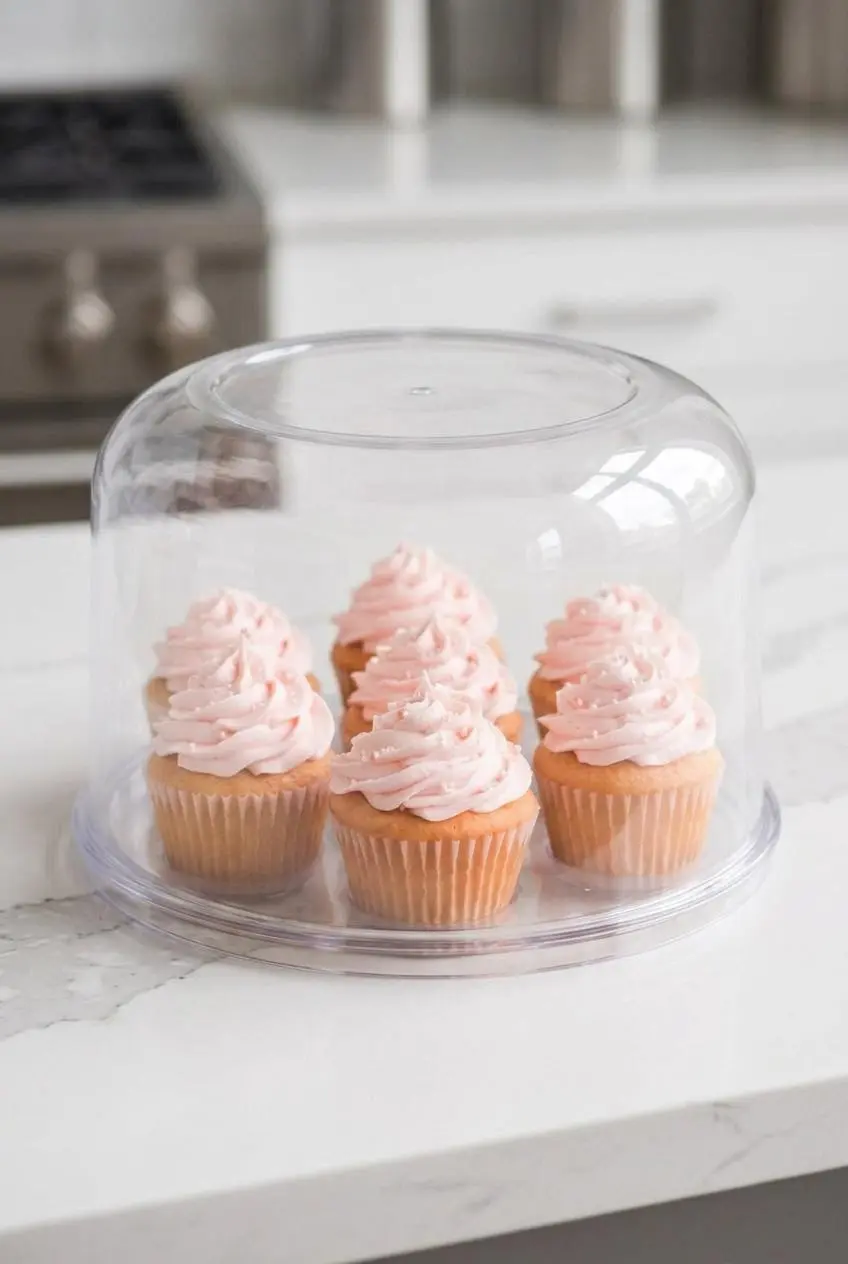
Organize the decorating around cooling, not a fixed countdown. Have the liners, piping bag, and serving container ready before baking so you aren’t assembling equipment while the cupcakes wait.
Once the cupcakes cool completely, keep them in a well-sealed container to limit drying. Avoid enclosing them while warm, since trapped steam can dampen the liners and make the surfaces sticky.
Keep frosted cupcakes covered and chilled as a cautious storage approach, especially in a warm kitchen. Choose a container tall enough that the lid won’t touch the frosting, and keep it away from strongly scented foods.
Refrigeration firms the buttercream. Before serving, let the cupcakes lose their refrigerator chill so the frosting feels creamy rather than hard. Keep the container covered while they adjust, and add moisture-sensitive sprinkles or fresh fruit close to serving.
For transport, use a cupcake carrier or snug inserts that keep each cupcake upright. Hold the carrier level and protect it from heat; a warm car can soften carefully piped swirls quickly.
Conclusion
These cupcakes bring together a tender vanilla crumb, subtle sparkling wine flavor, and smooth buttercream. The most important checkpoint is the reduction: measure its endpoint and let it cool completely before mixing.
Finish with neat swirls and your choice of festive sprinkles or fresh raspberries. Give the cupcakes time to cool, keep the frosting creamy, and let the decorations suit the occasion.
Frequently Asked Questions
What Do Champagne Cupcakes Taste Like?
They taste primarily like tender vanilla cake with a delicate fruity accent. Depending on the wine, you may notice berry, pear, or floral notes. The buttercream carries the clearest sparkling wine flavor, balanced by butter and confectioners sugar.
Does the Alcohol Bake Out of Champagne Cupcakes?
Don’t assume simmering and baking remove all the alcohol. The amount remaining in this particular recipe hasn’t been established, and the frosting receives no further cooking after you add the reduction. If avoiding alcohol matters, use the nonalcoholic cider option in both components.
What Champagne Is Best for Cupcakes?
A dry Brut sparkling wine is a good starting point. Dry Cava, Prosecco, or rosé can also work, each adding a different fruity character. Avoid choosing a very sweet wine unless you want a sweeter finish; an expensive bottle isn’t necessary.
Can You Use This Recipe to Make a Layered Cake Instead of Cupcakes?
You can explore a layer-cake adaptation, but the cupcake baking time won’t transfer directly to larger pans. Pan depth and size affect how the center sets, and a confirmed layer-cake pan arrangement and baking time aren’t established here. For the most predictable result, bake the cupcakes as directed.
Champagne Cupcakes

Equipment
- Cupcake pan
- Oven
- Large Mixing Bowl
- Electric Mixer
Ingredients
Pink Champagne Cupcakes
- 1 1/2 cups pink champagne
- 2 2/3 cups flour
- 1 1/2 teaspoons baking powder
- 1/4 teaspoon salt
- 1/2 cup salted butter
- 1 Tablespoon vanilla extract
- 1/2 cup vegetable oil
- 2 cups sugar
- 4 eggs
- pink food coloring
Pink Champagne Buttercream Icing
- 1-2 Tablespoons pink champagne reduction
- 1/2 cup unsalted butter room temperature
- 2 cups confectioners sugar
- 1/2 teaspoon vanilla extract
- 1-2 Tablespoons milk
Instructions
Cupcakes
- Heat the oven to 325°F and fit paper liners into the cupcake pan. The liners should sit flat in the wells so the batter can rise evenly.
- Simmer 1 1/2 cups pink champagne in a saucepan for about 6–8 minutes, checking for a final volume of 3/4 cup, then cool it to room temperature and set aside 1–2 Tablespoons for frosting. The finished reduction should remain pourable, with gentle bubbling during cooking rather than a thick, sticky syrup.
- Whisk the flour, baking powder, and salt together in a small bowl. An evenly blended dry mixture distributes the leavening throughout the batter.
- Work the salted butter and vanilla together with an electric mixer until the mixture becomes creamy. Look for a uniform texture with no firm butter pieces, and a slightly lighter appearance as the mixer incorporates air.
- Mix the sugar, vegetable oil, and eggs into the butter mixture until evenly combined. The mixture should look cohesive rather than showing separate pools of oil.
- With the mixer at medium speed, add the flour mixture and remaining cooled reduction in alternating portions, letting each nearly blend before the next and scraping the bowl’s sides and base as needed. Stop once the batter looks uniform, without dry pockets or flour streaks, to avoid unnecessary mixing.
- Portion the batter into the liners to 3/4 full and bake for 18–20 minutes. A toothpick inserted into the center should come out without wet batter, though a few moist crumbs are fine.
Pink Champagne Buttercream Frosting
- Whip the room-temperature unsalted butter, confectioners sugar, vanilla, and 2 Tablespoons of reserved champagne reduction with an electric mixer, adding milk as needed for the desired consistency. The buttercream should develop a soft satin sheen and hold a ridge when you lift the beater, without looking runny or grainy.